
 Architectural shingles
 Metal roofing
 Tile roofing
 GAF
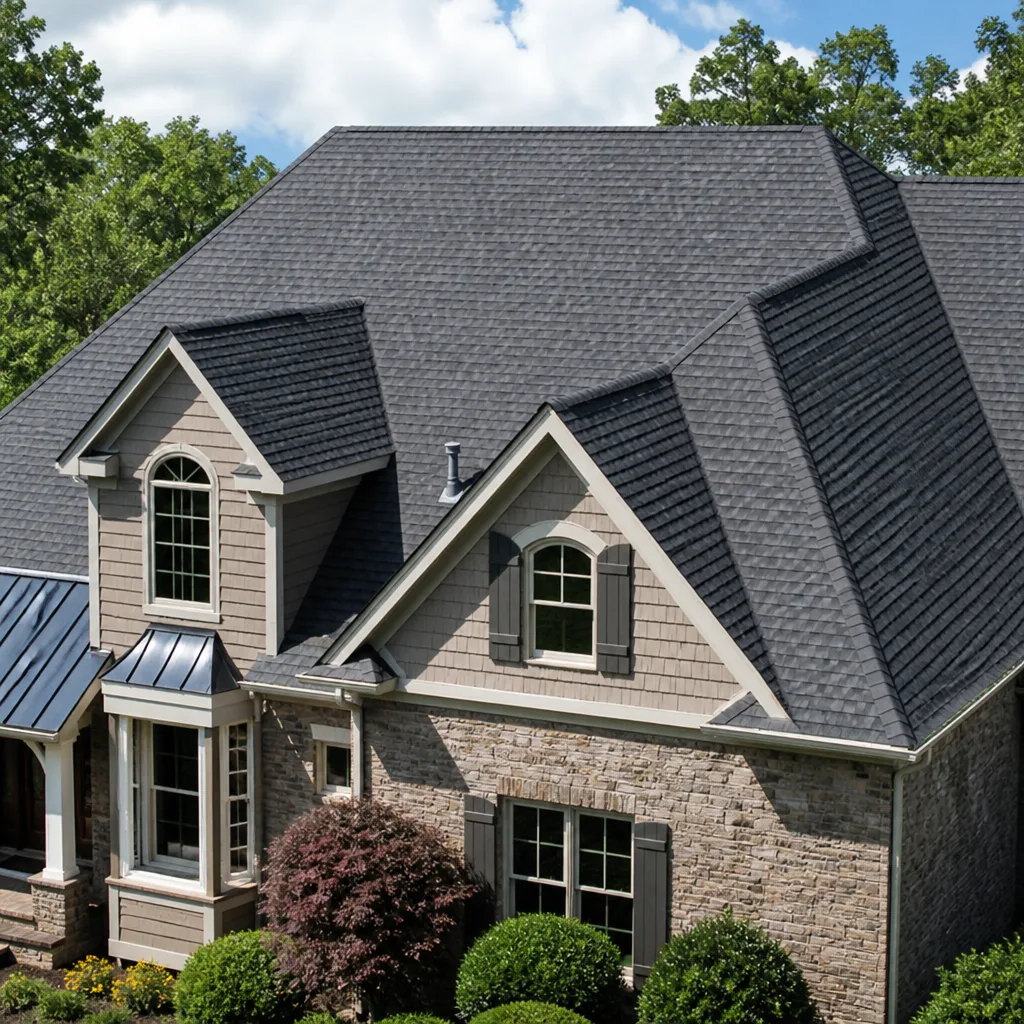 Owens Corning
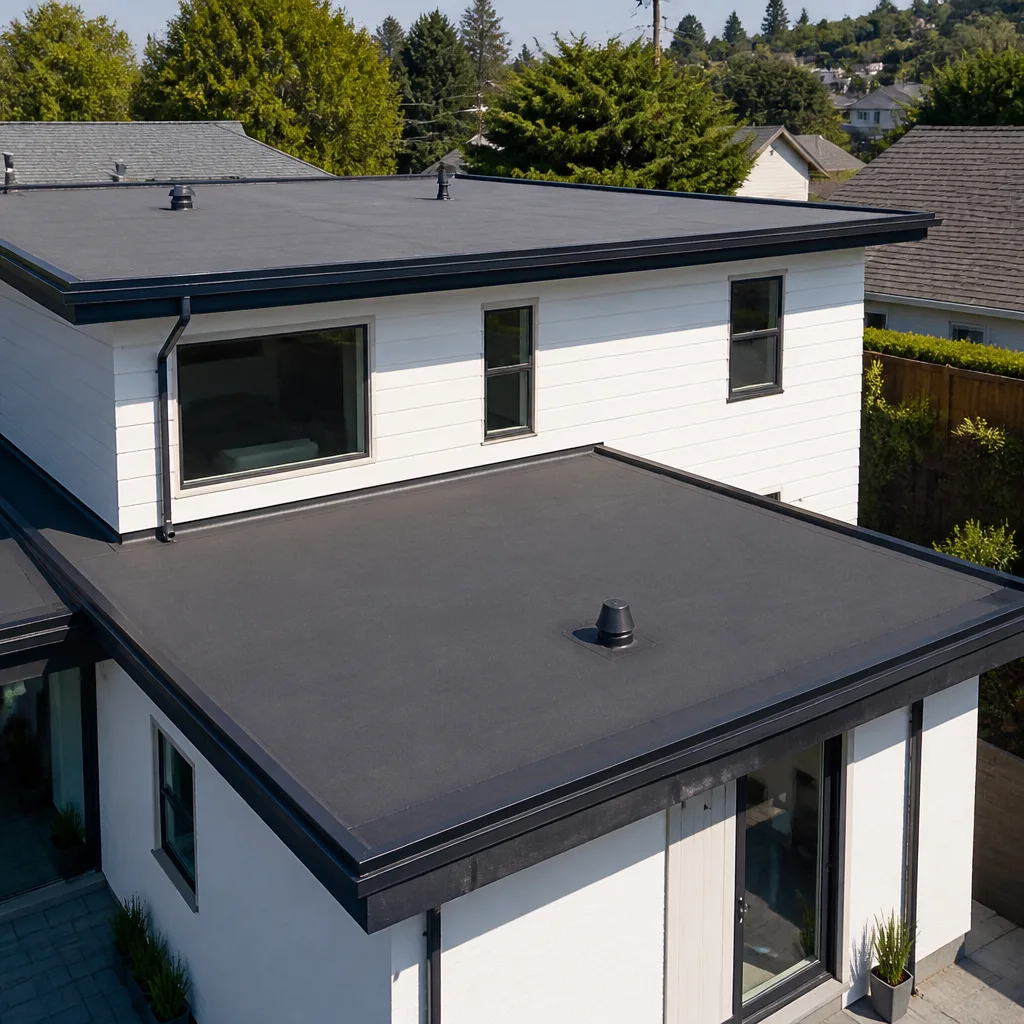 Flat & low-slope
Free roof inspection with deck photos before we talk money - GAF and Owens Corning certified installation
GAF Flashing Replacement: The Boulder City Owner’s Guide
GAF flashing replacement in Boulder City typically runs $285 to $650 installed for a single penetration or wall detail, and $850 to $1,900 for a full chimney or valley re-flash, depending on roof pitch and access. We install GAF-compatible flashing, and most single-point jobs are done in one visit. You usually find out it failed the same way everybody else does: a brown ring spreading on a ceiling tile after a monsoon, or granules and black sealant cracking off a vent boot you happened to see from the ladder. In Boulder City, that call comes in waves – right after the July storms, and again in February when the freeze-thaw cycle has had a whole winter to work on old seals.
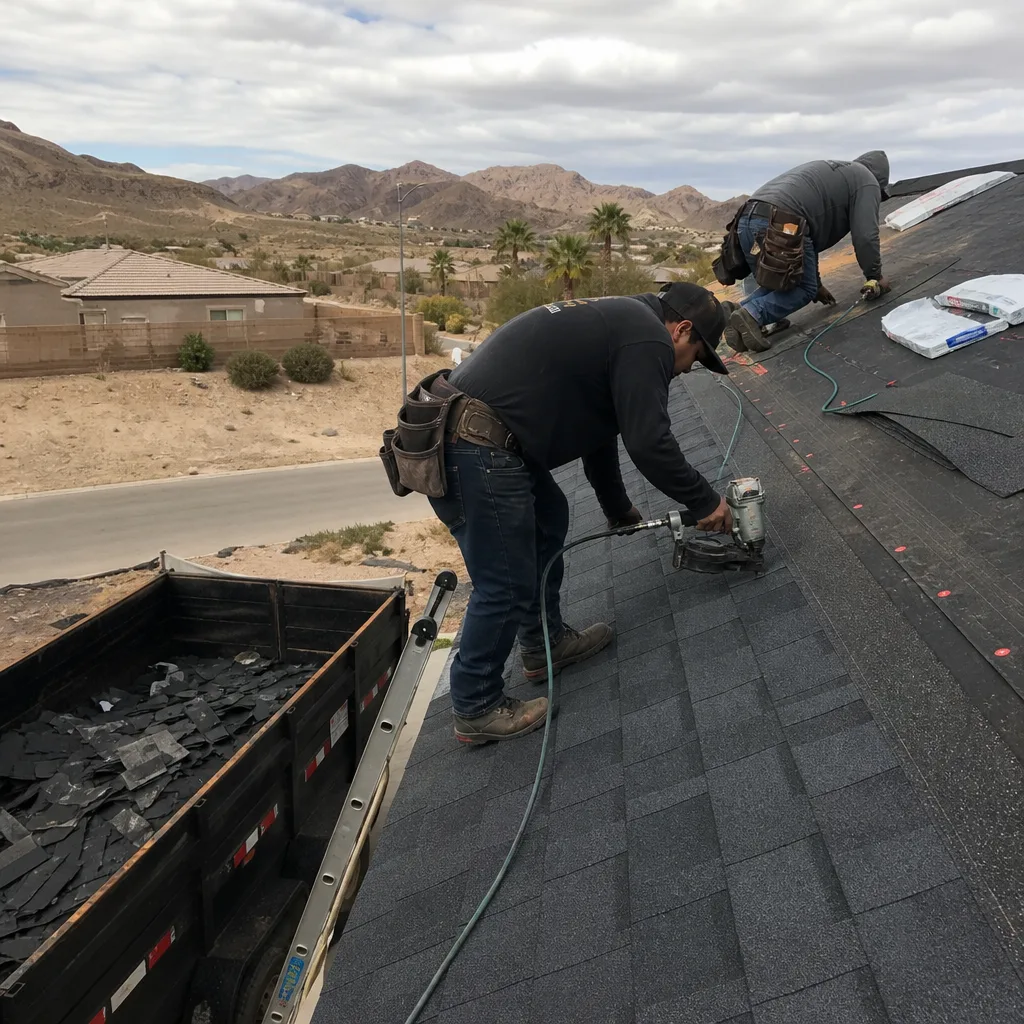
Which GAF Models This Applies To
GAF flashing shows up on three common roof systems around here: Timberline HDZ and Timberline UHDZ shingle roofs, GAF Liberty self-adhered low-slope systems on flat patio covers and additions, and the weathered-wood and charcoal Timberline roofs that went on a lot of Boulder City homes in the late 1990s and 2000s. If your roof is a Timberline install, the flashing is almost certainly GAF’s own: their StormGuard, their vent boots, their starter and rake trim. The shingle line doesn’t change the metal – a 2-inch by 3-inch vent boot over a 2-inch pipe is the same boot whether it’s under HDZ or UHDZ.
Here’s the part that catches people. GAF makes boots for 1.5-inch, 2-inch, and 3-inch pipe sizes, and the 1.5-inch collar will slide right over a 2-inch pipe if a guy isn’t paying attention – then it splits at the first summer. Measure the pipe, not the old boot. On the OEM-versus-aftermarket question: GAF-branded boots are fine, but a lead boot or a high-grade EPDM collar from a name like Oatey outlasts the standard rubber boot in our sun. We’ll show you both and tell you which one we’d put on our own roof.
Styles & brands we work with
- Architectural shingles
- Metal roofing
- Tile roofing
- GAF
- Owens Corning
- Flat & low-slope
Signs Your GAF Flashing Replacement Is Failing
Flashing fails quietly. By the time you see a stain, water has usually been getting behind the shingles for a season or two. These are the symptoms we find on Boulder City roofs, and what each one means:
- Cracked or split rubber boot collar. UV destroys EPDM in this climate faster than almost anywhere – eight to twelve years and the collar goes brittle and splits at the top. That split is a direct path into your attic.
- Missing or lifted shingles around a wall or chimney. Wind gets under the step flashing and peels the shingle course. Once the shingle lifts, the flashing is exposed and the seal behind it is gone.
- Rust streaks or white chalky oxidation on the metal. Steel flashing under cheap paint rusts through from the back. Galvanized and copper don’t, which is why we point it out before it’s a hole.
- Drip-edge and rake trim pulling away from the fascia. Usually a nailing problem or a fascia board that’s rotting from a leak that started higher up. The trim isn’t the failure – it’s the messenger.
- Sealant smeared over the joint, cracking and peeling. Somebody patched it with caulk instead of re-flashing it. Caulk buys one season in the desert and then makes the real fix harder.
Two checkable facts worth knowing. First, the boot that goes over a plumbing vent should sit on a bed of roofing cement with the collar snug and the metal flange lapped over the shingle below and under the shingle above – get that layering backwards and it leaks no matter how tight the boot is. Second, step flashing along a sidewall should be a minimum 4-inch by 4-inch by 4-inch piece interwoven with each shingle course, not one long bent piece. If you see one long strip, that’s a shortcut, not a flashing job.
See the difference
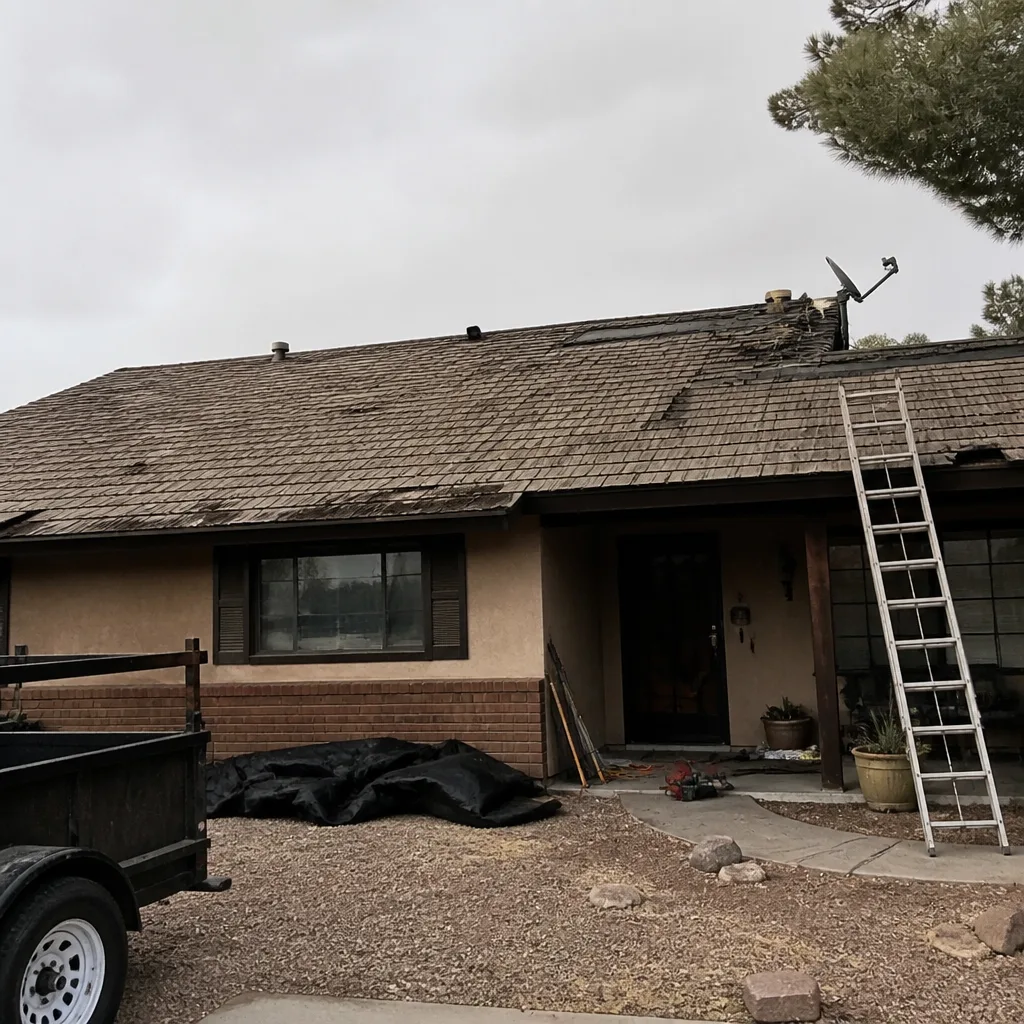 Before
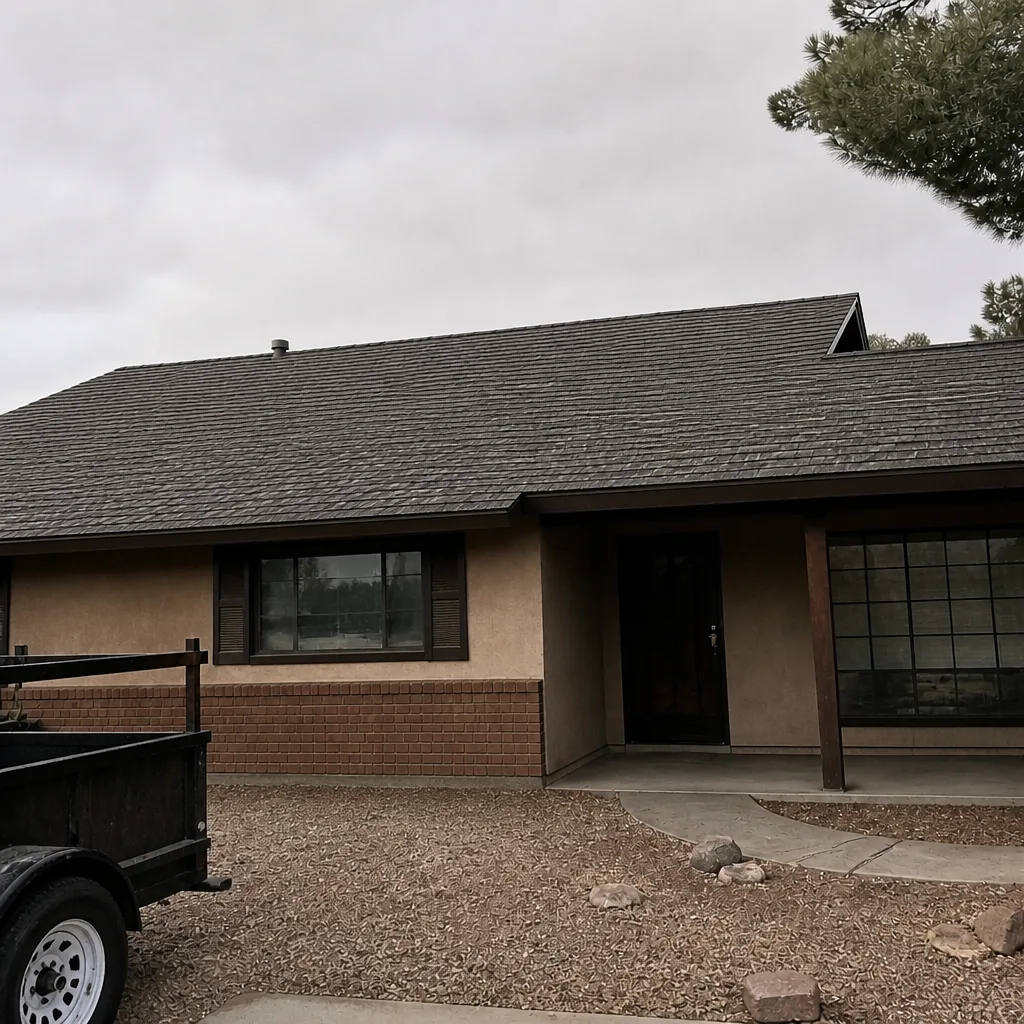 After
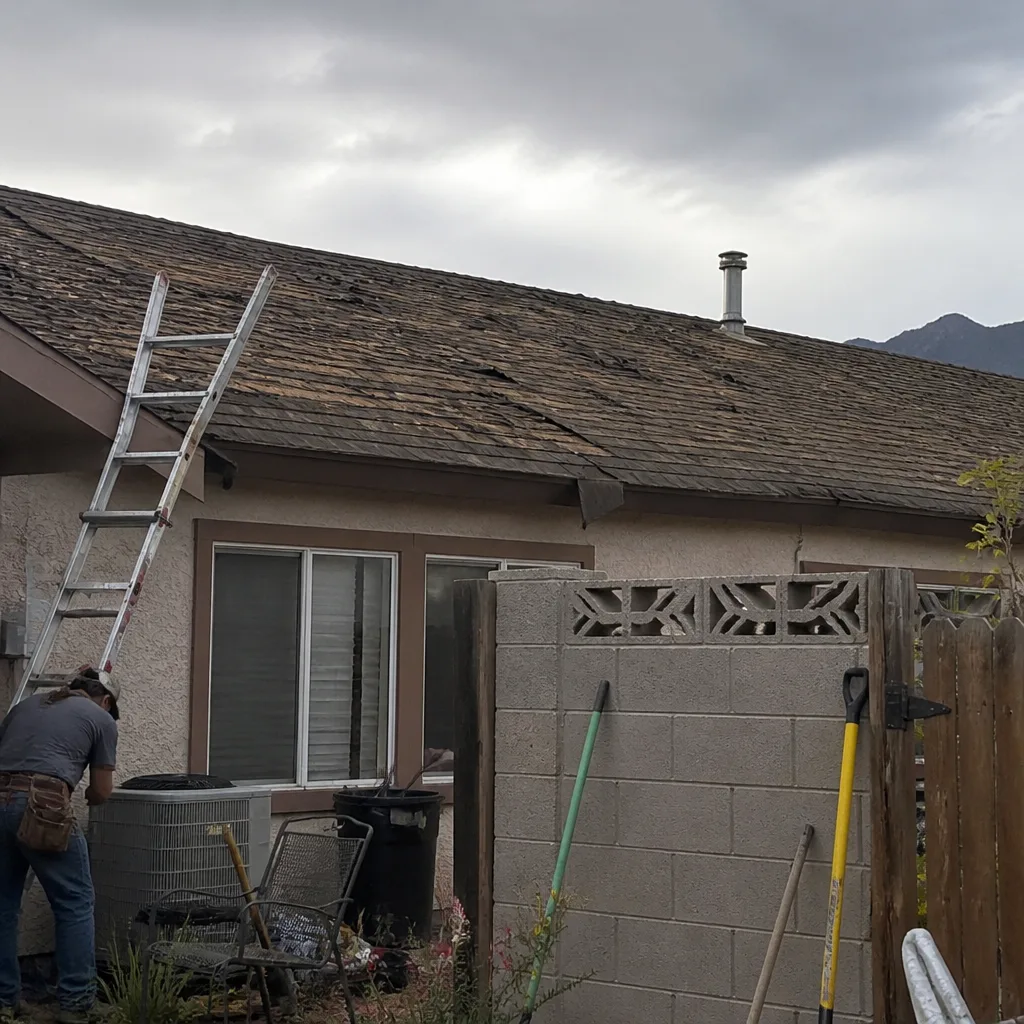 Before
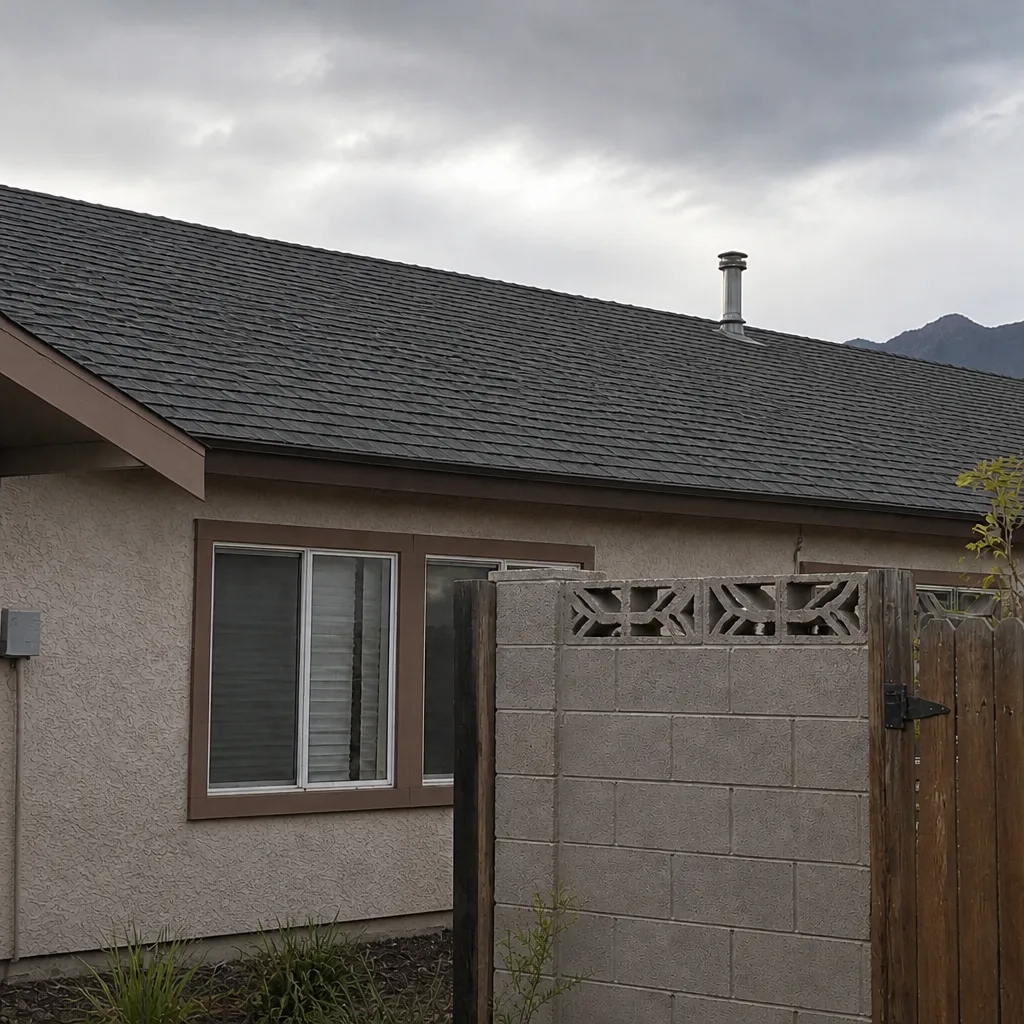 After
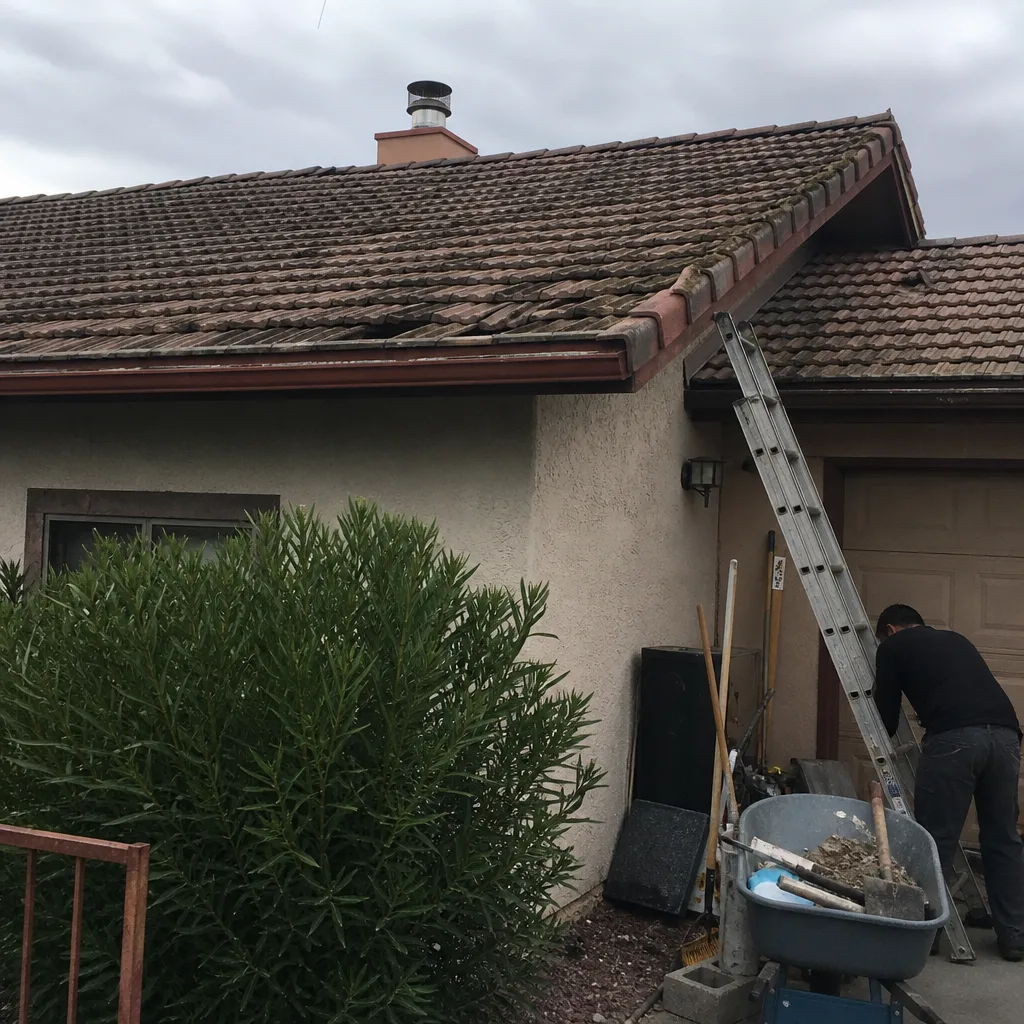 Before
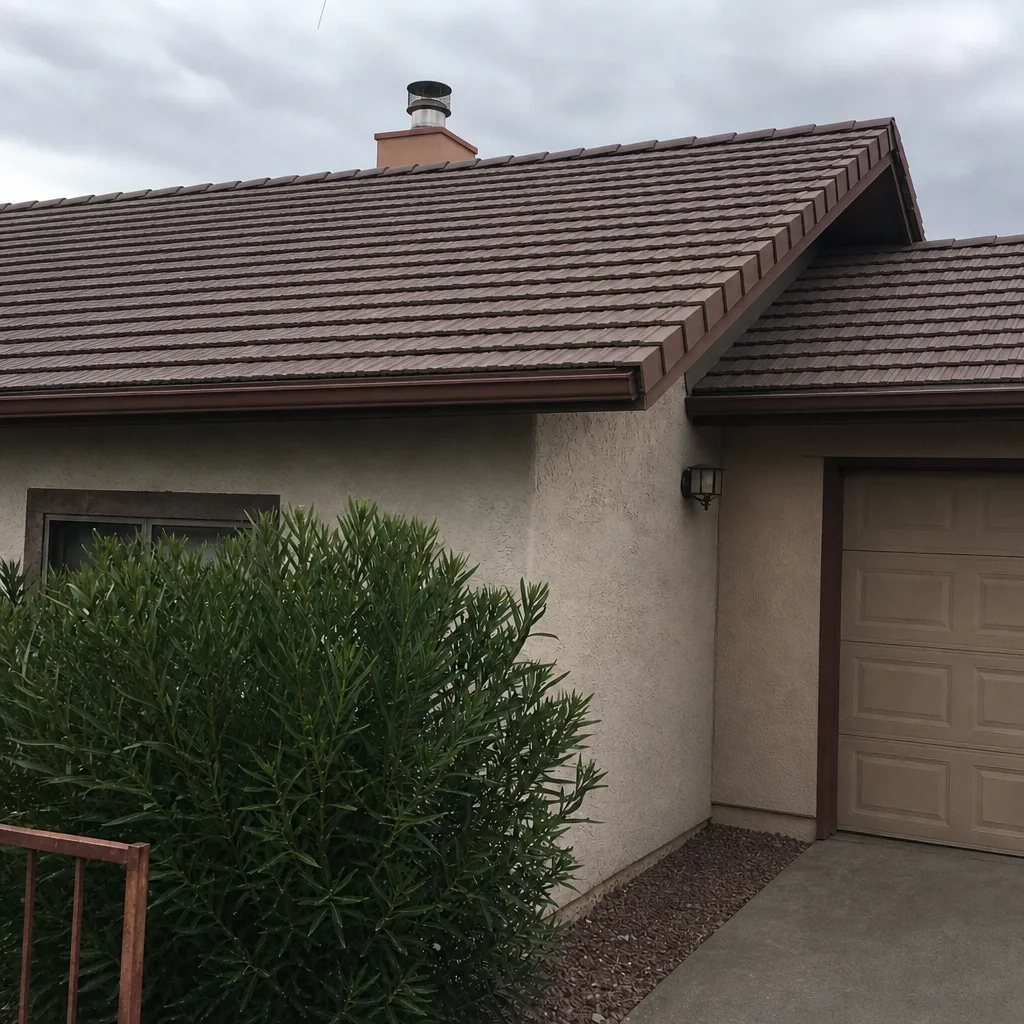 After
Replacement Cost & What’s Included
Here’s the ballpark for Boulder City, and we’ll give you the written number before anybody climbs. A single vent boot runs $285 to $450 installed. A sidewall or wall-to-roof step flashing repair runs $400 to $750, depending on how many courses need to be opened. A chimney re-flash is the big one: $850 to $1,900, because you’re dealing with counterflashing set into the masonry, a cricket on the uphill side if the chimney’s wide, and a lot of careful shingle work. Drip edge on a typical Boulder City single-story runs $6 to $11 per linear foot installed.
What drives the range: roof pitch and stories (steep and tall costs more), how much shingle has to come up to reach the flashing, and whether the deck underneath is sound. Parts and labor are broken out in the written estimate so you’re not guessing. Every flashing job is backed by the same 90-Day Done Right Promise in writing we put on every roofing job – if it’s not done right, we make it right, and one call brings us back. Current standing offers apply: $40 off any repair over $200, and a senior and veteran 10% discount.
DIY or Call Us?
You can safely check some of this yourself. Get on a ladder and look at the vent boots from the side – cracked collar, split rubber, lifted flange, you’ll see it. Look at the chimney and sidewalls for smeared caulk or one-piece flashing. Take a photo from the ground with your phone zoomed in. That’s the honest line for a homeowner.
Where it goes wrong is climbing on the roof. This is steep, hot work, and a slip from a two-story roof in August is a bad afternoon. Beyond the fall risk, flashing is a layering discipline – shingle over metal over underlayment in a specific order – and getting the order wrong gives you a leak you can’t see for a year. We don’t hand out step-by-step instructions for this, because a real roofer on the roof reads the deck and the water path in about a minute. If you’ve found a problem, call us at (844) 761-8186 and we’ll come look. There’s no trip charge inside our own county, and a live person answers the phone, day or night.
FAQs
Eight to twelve years for a standard rubber boot under full sun here, and longer – fifteen to twenty years – for a lead boot or a copper flashing detail. The Boulder City sun and our freeze-thaw swings are what kill the rubber; the metal usually outlives the boot by a decade. If your boot is original to a 2000s-era roof, it’s due.
Sometimes, yes – a boot that’s still solid but has a lifted flange can be re-seated and properly cemented for $285 to $400, well under a full replacement. But once the rubber collar itself is cracked, replacing the boot is the only honest fix; caulking a split collar just delays the leak. We’ll tell you which one you’re looking at on the roof.
A single vent boot is usually done in under an hour; a chimney re-flash takes most of a day because of the shingle work around the masonry and the counterflashing. We schedule so the roof is watertight before we leave, never open overnight.
We match the boot or flashing to the pipe or detail by measurement, not by what’s in a catalog picture, and we install products from GAF, CertainTeed, Owens Corning, IKO, Atlas, Tamko, and Boral. We keep ourselves independent and unaffiliated with GAF – we install what fits your roof and holds up here, and we’ll tell you when an aftermarket part is the better call on your Boulder City home.
When you’re ready for a straight answer and a written number, call (844) 761-8186 to schedule your free estimate. Ask anyone on your street – the name on the truck is the name on the license.
Written by the team at Shepherd & Sons Roofing Boulder City, serving Boulder City and nearby areas.