
 Metal roofing
 Architectural shingles
 Tile roofing
 GAF
 Owens Corning
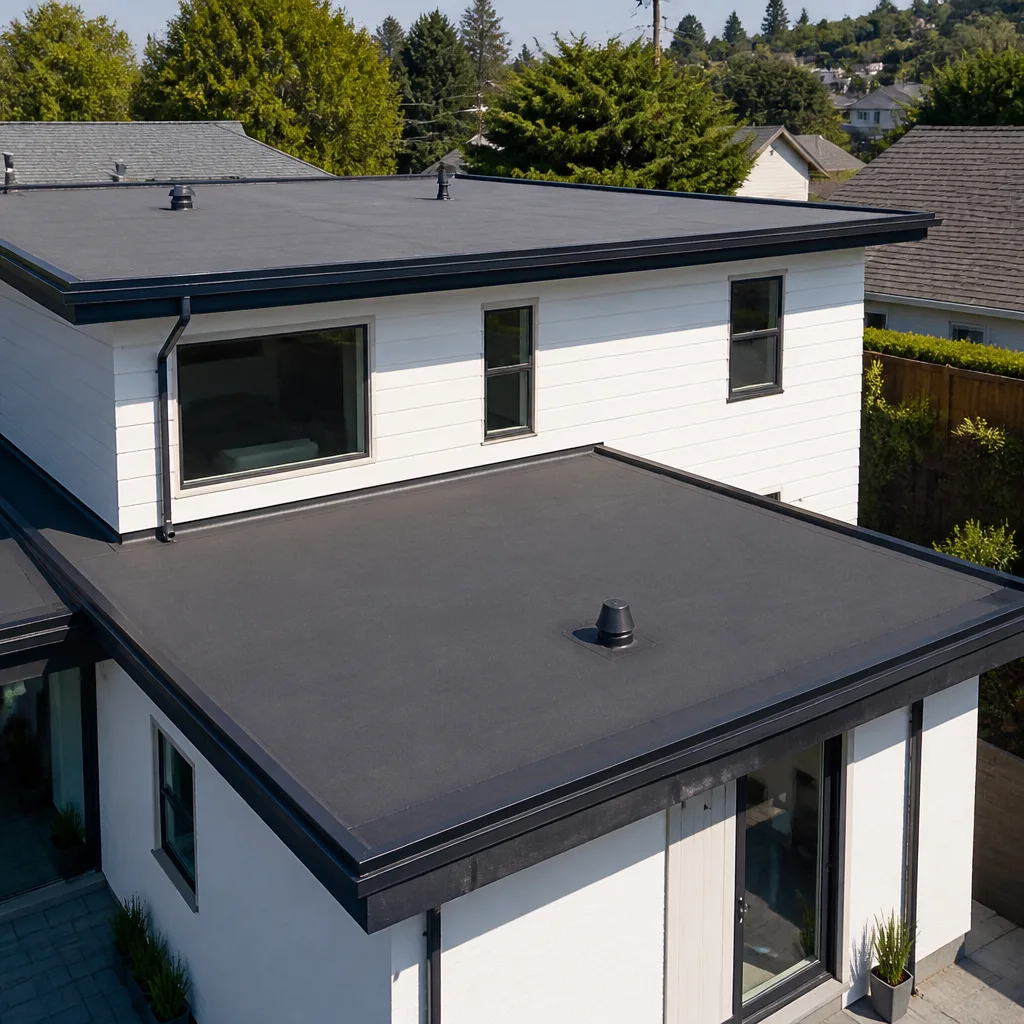 Flat & low-slope
Free roof inspection with deck photos before we talk money - GAF and Owens Corning certified installation
Styles & brands we work with
- Architectural shingles
- Metal roofing
- Tile roofing
- GAF
- Owens Corning
- Flat & low-slope
See the difference
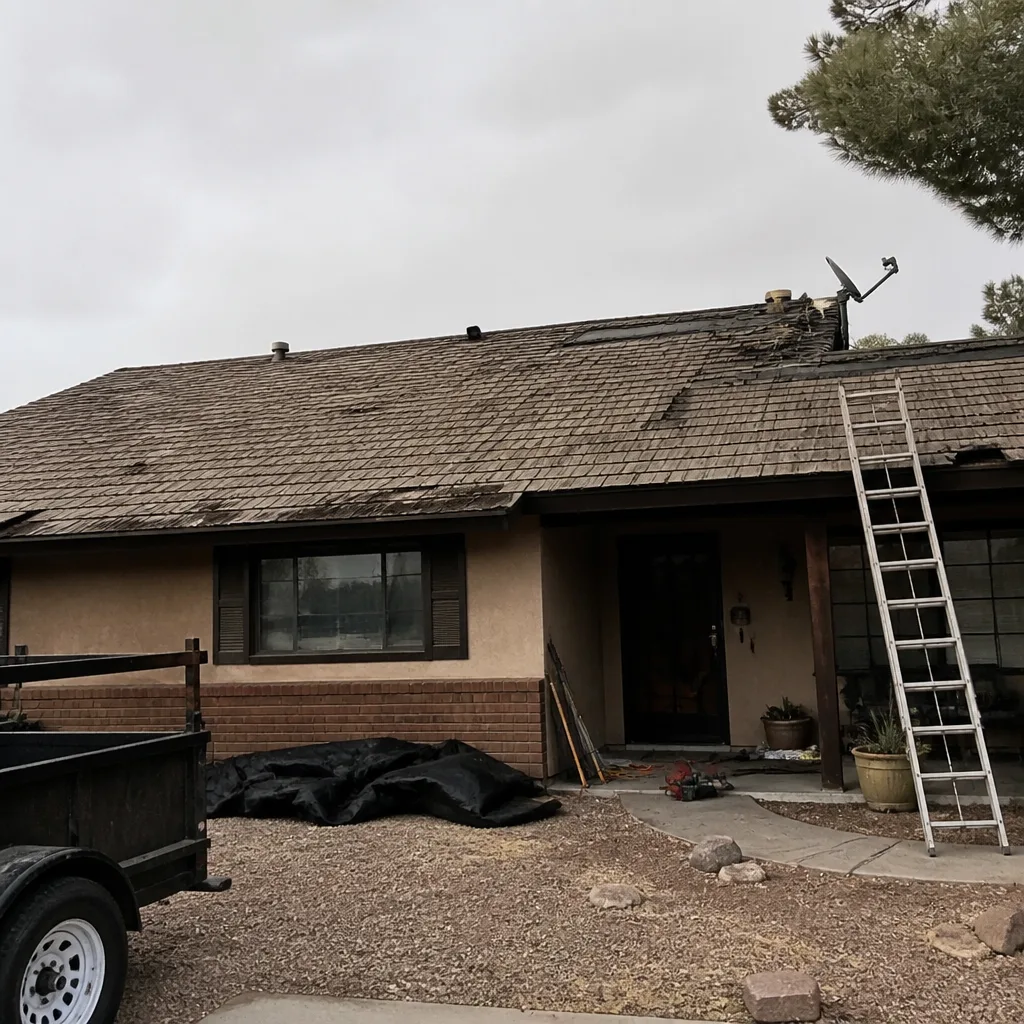 Before
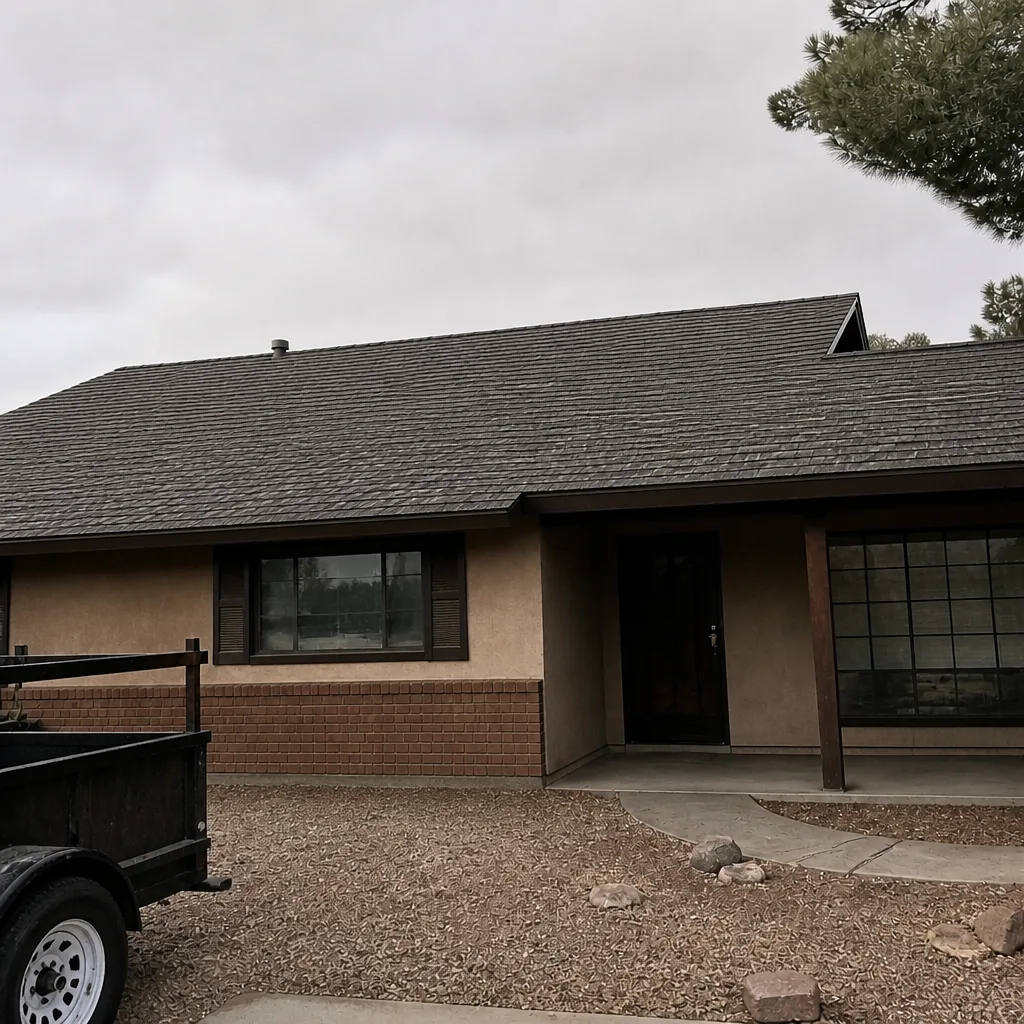 After
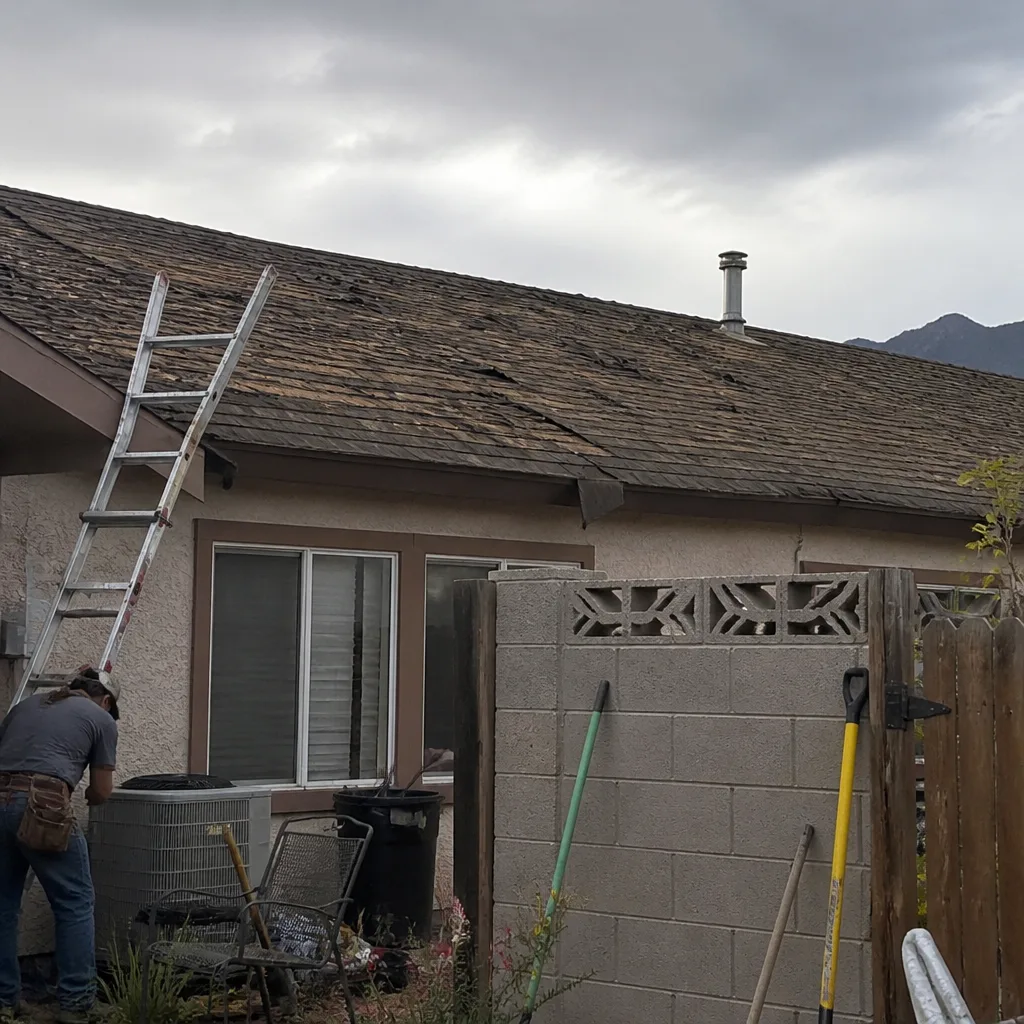 Before
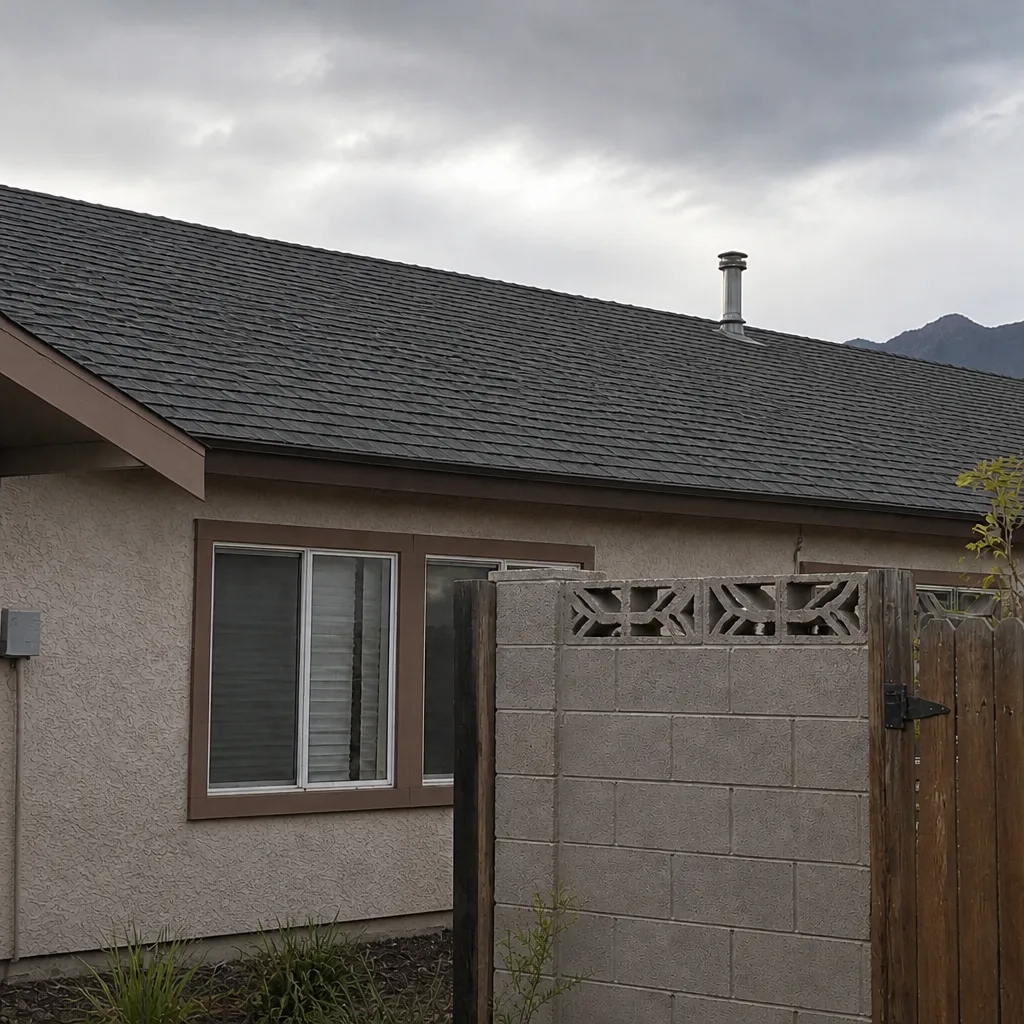 After
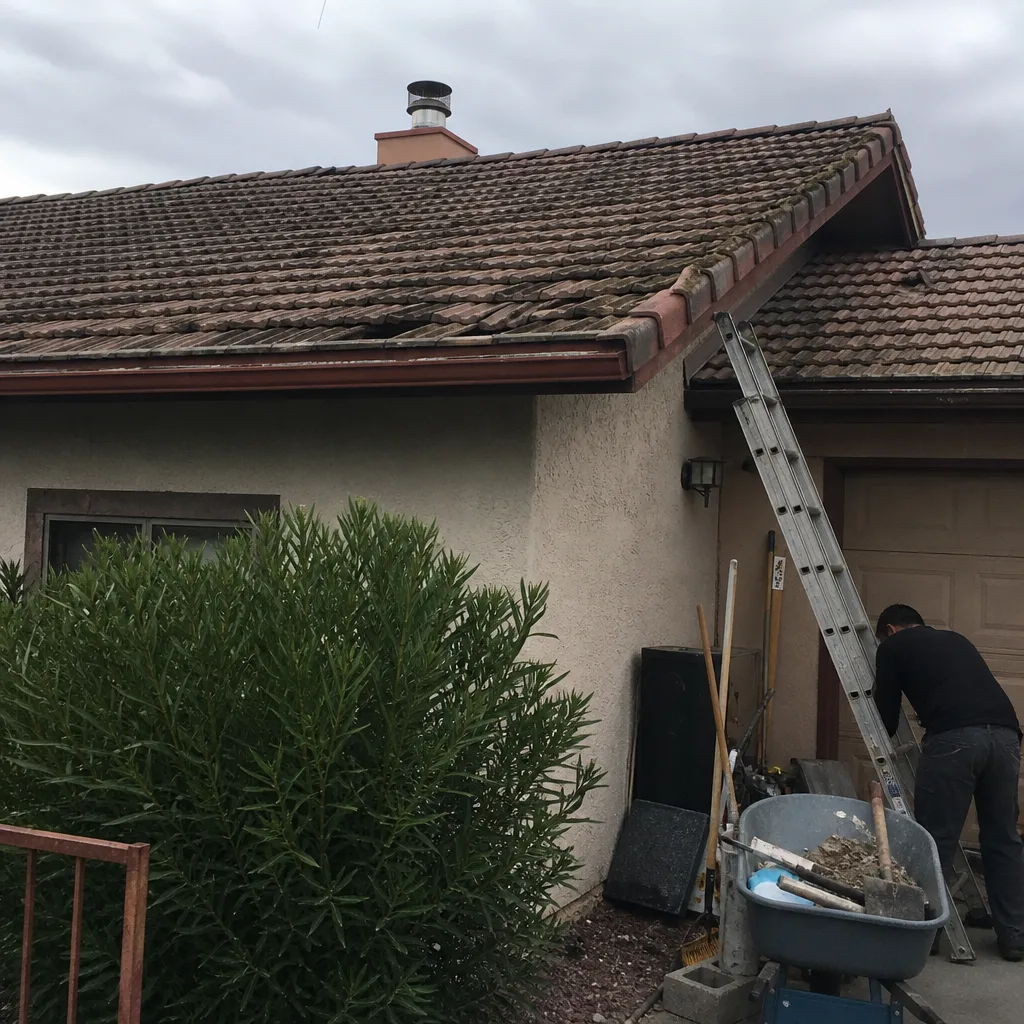 Before
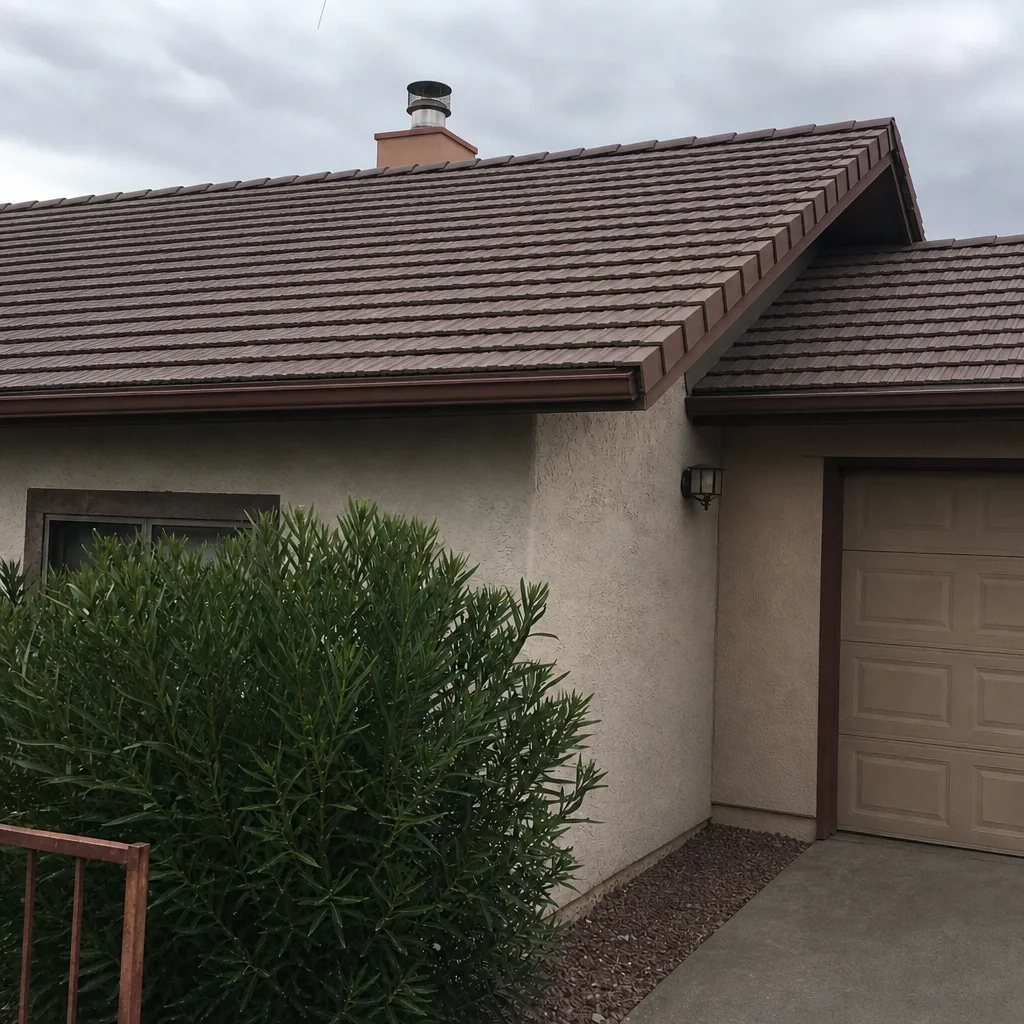 After
How to Find a Roof Leak in Boulder City, NV: Test for Wind-Driven Rain, Not Just Water Falling Straight Down
If a straight-down hose test found nothing but your roof still leaks every monsoon, the most likely culprit is wind-driven rain pushing sideways into a failed seal at a penetration or flashing edge – most often dried-out caulk around an HVAC pipe boot. You find that leak by aiming water at a low, 30-45 degree angle into each penetration and flashing edge from the southwest, the direction Boulder City’s monsoon storms usually come from. A vertical stream never reproduces a 50 mph gust, so standard low-to-high hose tests come up dry on roofs that leak every August. If you’d rather have it diagnosed properly, call (844) 761-8186.
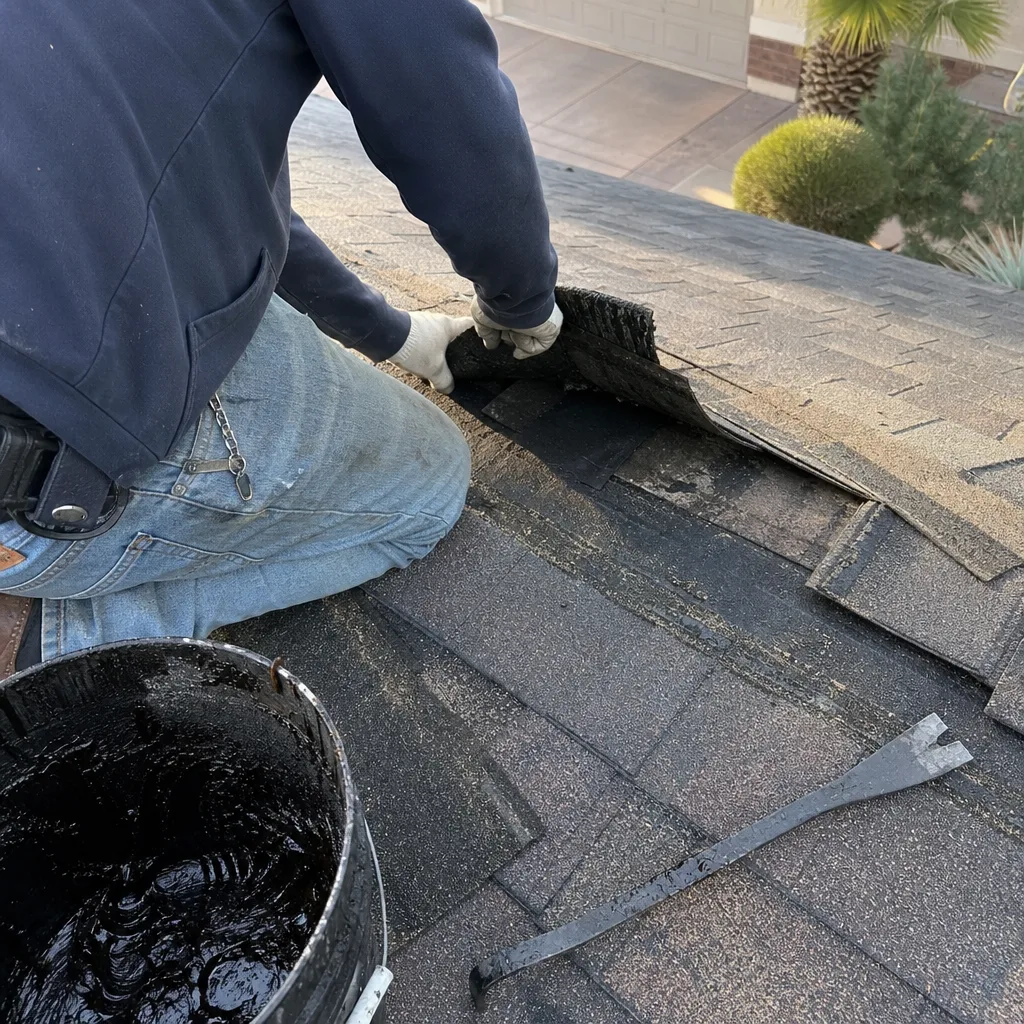
Why the standard hose test fails on Boulder City roofs
Every online guide tells you the same thing: start at the bottom of the roof, work your way up, watch for the drip. That method assumes water falls straight down and enters through a hole facing the sky. On Boulder City homes, that’s rarely what happens.
Our monsoon storms drive rain sideways at an angle. A roof that sheds a vertical hose stream perfectly can still funnel water through a cracked pipe-boot seal, a lifted flashing edge, or a hairline gap in ridge mortar when the rain hits it at speed. We see this constantly in the older core of town and out toward the newer subdivisions – a homeowner convinced the roof is fine because the hose test “proved” it, then a wet ceiling stain two weeks after the first big storm.
The fix is to change the test, not the roof. Aim the water where the wind aims it.
The wind-angle test: how to actually reproduce the leak
Set a helper inside the attic or under the ceiling with a flashlight while you work the hose from above. Start low, but angle the nozzle at 30-45 degrees into each suspect area, holding it there for a solid five to ten minutes per spot. Don’t move up until you’ve given the water time to travel. A few specifics that matter:
- Work from the southwest. That’s the prevailing direction for Boulder City’s monsoon storms, so testing from that side replicates the real failure condition.
- Hit every penetration and flashing edge, not the field of the roof. The flat middle of a shingle run rarely leaks on its own. The trouble lives at the seams, boots, and edges.
- Give each spot time. Water that enters a wall cavity can take several minutes to show up inside. Move too fast and you’ll miss it.
- Watch for wet, not stained. You’re looking for a fresh damp patch or an active drip during the test, not an old brown mark.
The three highest-probability leak sources on Boulder City homes
1. Pipe boot caulk at HVAC and plumbing penetrations
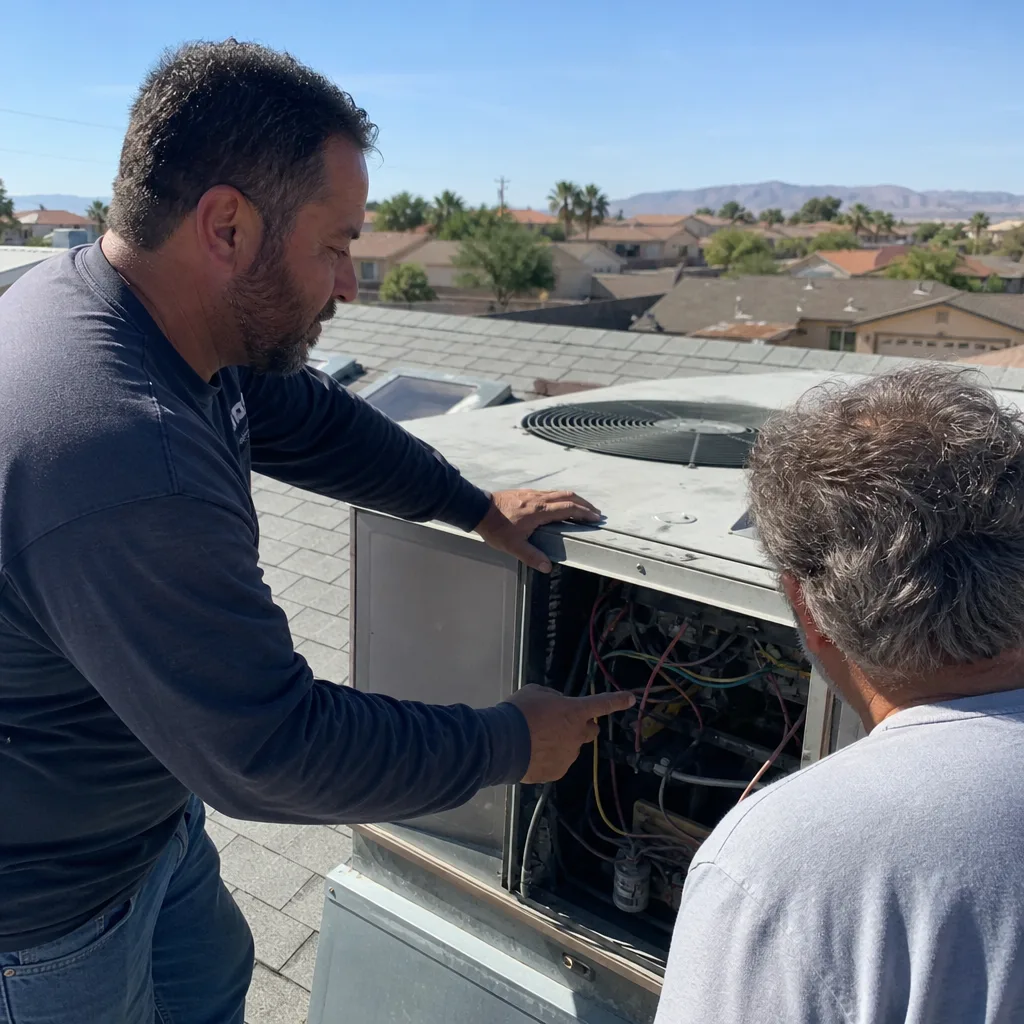
This is the number one leak we find, and it’s a desert problem. The rubber boot around a vent pipe or HVAC penetration sits in full sun and takes a brutal UV beating. The caulk around it dries, shrinks, and cracks within a few years. Once that seal fails, sideways rain walks right into the gap. In Boulder City’s intense sun, we see boots fail faster here than homeowners expect – the sun does more damage to that caulk in a few summers than rain does in a decade.
2. Ridge and hip mortar on tile roofs
Tile roofs in the older parts of town take a beating from thermal expansion. The sun heats the tile to well over 140 degrees by afternoon, then it cools sharply at night. That constant expansion and contraction crumbles the mortar along ridges and hips. Once it cracks, wind-driven rain gets under the tile and into the underlayment. If you can crumble the mortar with a screwdriver, it’s a leak waiting to happen.
3. Wall-to-roof step flashing on additions
Boulder City’s mid-century infill era left a lot of additions and add-ons, and step flashing where a wall meets the roof is where non-roofing trades often get it wrong. Proper step flashing interleaves with the shingle courses one piece at a time. When it’s installed wrong – or patched over instead of replaced – water finds the gap the first time it’s driven sideways against that wall. This is the leak that fools the most people, because the roof surface itself looks perfectly fine.
Reading attic stains in a desert climate
Here’s something that trips up DIY leak hunters. In humid climates, a water stain in the attic sheathing grows dark mold fast, which makes fresh leaks easy to spot. In Boulder City’s dry air, stains stay faint – and old stains can linger for years without ever growing. So following a faint brown mark in the sheathing can lead you straight to an old, already-fixed leak while the active one hides somewhere else.
That’s why the wet-surface test matters more than the stain hunt. Match a fresh damp patch during a controlled test to the spot you’re spraying. If you can’t match it, the stain isn’t your answer. If you’re not comfortable climbing into the attic or getting on the roof, that’s the point to call someone rather than press your luck. Our Roof Repair crew works these desert-specific failures every week.
Ponding water or wind-driven rain? Tell them apart first
On Boulder City’s 1930s bungalows with low-slope roofs, there’s a second, completely different leak mechanism: standing water. A clogged drain or a debris dam holds water on the roof until it finds a seam and seeps through. That’s not a flashing failure, and fixing it is a different job.
How to tell which you have:
- Timing: a ponding leak often shows up hours after the rain stops, once water has pooled and sat. A wind-driven leak shows up during the storm, usually fast.
- Location: ponding problems cluster in low spots and near drains or scuppers. Wind-driven leaks cluster at penetrations, ridges, and wall seams.
- Look up: if you can see a low area, a sag, or debris piled at a drain, ponding is your suspect. If the roof drains clean but still leaks, it’s wind-driven.
This distinction matters before you call anyone, because a quote for a flashing repair won’t fix a drainage problem, and the reverse. For a closer look at how these desert leaks get handled, see Roof Repair in Boulder City.
When to stop looking and call
Some of this you can check safely from the ground with binoculars or a slow, careful look from a ladder. But getting up on a low-slope roof after rain is slick and dangerous, and attic work in summer heat is no joke. If you’re not sure-footed or the roof is steep, stay off it.
The good news: Bill answers his own phone 24/7 – a real person, not a call center – and can often walk you through a quick phone diagnosis before anyone drives out. That sometimes saves you a service call entirely and always saves you time. When a visit is needed, the crew is background-checked and includes Bill’s own sons on the roof with him. Every roofing job is backed by the written 90-Day Done Right Promise. Ask the storm chasers who roll through after a hailstorm where their address is – ours hasn’t changed since 1996.
One more local note: in Boulder City’s Historic District, re-roofing can require material and profile choices that match the original desert character, so a color or shingle swap may need design review before anyone orders product. We check those guidelines before the first shingle goes on. We install CertainTeed, Owens Corning, IKO, and Atlas products, so name the shingle and there’s a good chance we’ve set it.
FAQs
Run a wind-angle test: aim a hose at a 30-45 degree angle into each penetration and flashing edge from the southwest and hold it there five to ten minutes per spot while someone watches inside. This reproduces the sideways monsoon rain that a straight-down hose test misses, and pipe-boot caulk, ridge mortar, and step flashing are the spots to check first.
Because monsoon rain hits sideways, not straight down. A seal that sheds vertical water fine can still let wind-driven rain through dried caulk or a cracked flashing edge. That’s why your roof passes a hose test and still leaks in August – the failure only shows up under angled, driven rain.
You can check penetrations and flashing edges safely from a ladder or with binoculars, and a helper inside can watch for damp spots. But climbing a wet low-slope roof is dangerous, so if the test doesn’t turn up an obvious wet patch, call. We can often narrow it down over the phone before anyone drives out.
Most localized leak repairs here run a few hundred dollars, depending on the source and access, and there’s $40 off any repair over $200. We give you the number upfront and offer a free second opinion on any written estimate. Call (844) 761-8186 for an exact quote.
If you’d rather have it looked at, Shepherd & Sons Roofing Boulder City offers a no-pressure assessment in Boulder City – call (844) 761-8186 for a free estimate. Same address since 1996, and a live person picks up day or night.
Written by the team at Shepherd & Sons Roofing Boulder City, serving Boulder City, NV.