
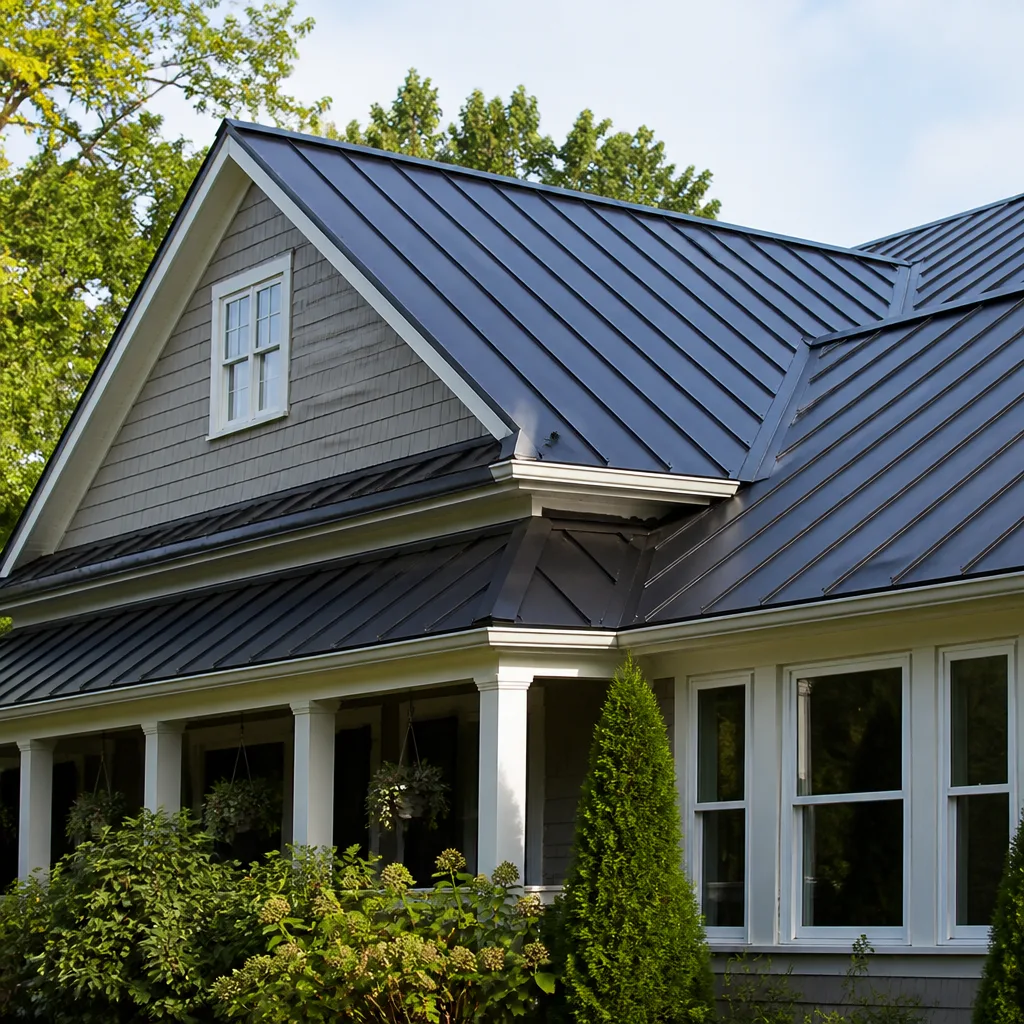
 Metal roofing
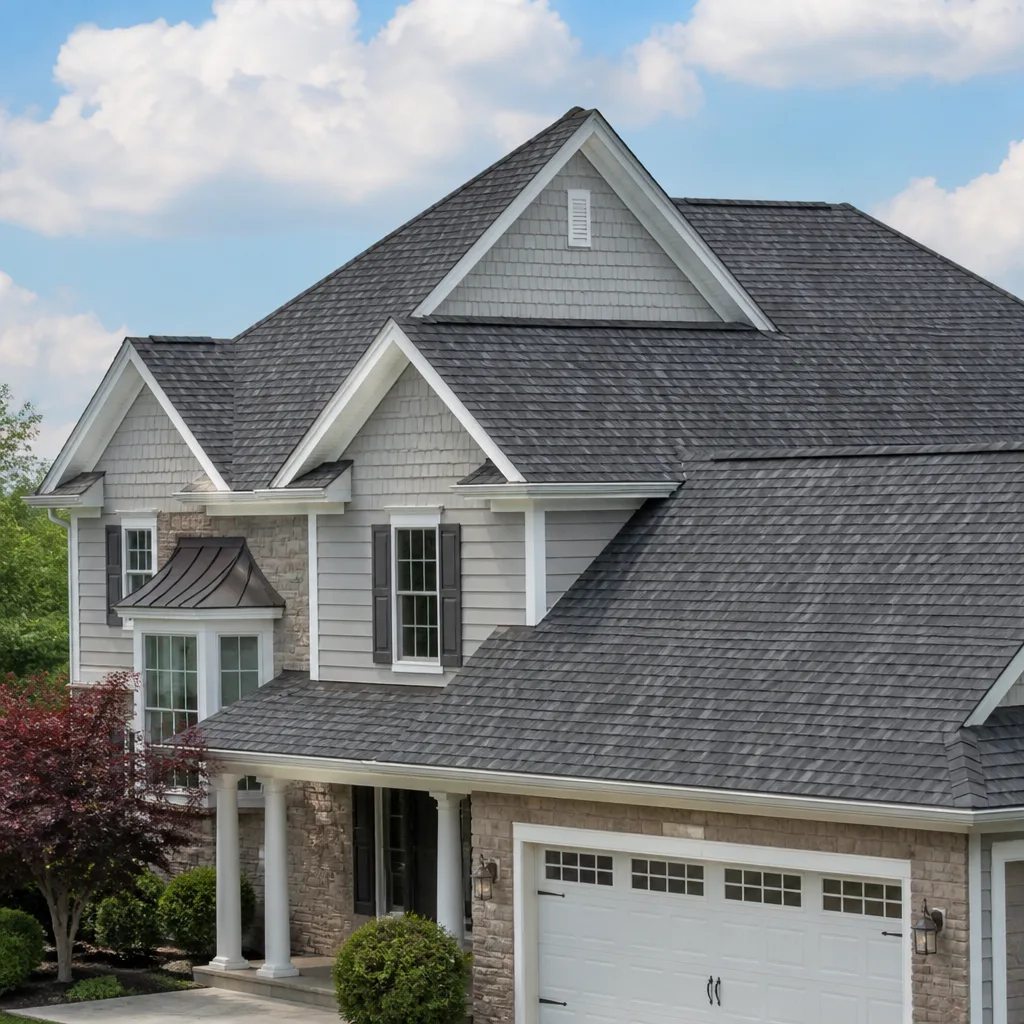 Architectural shingles
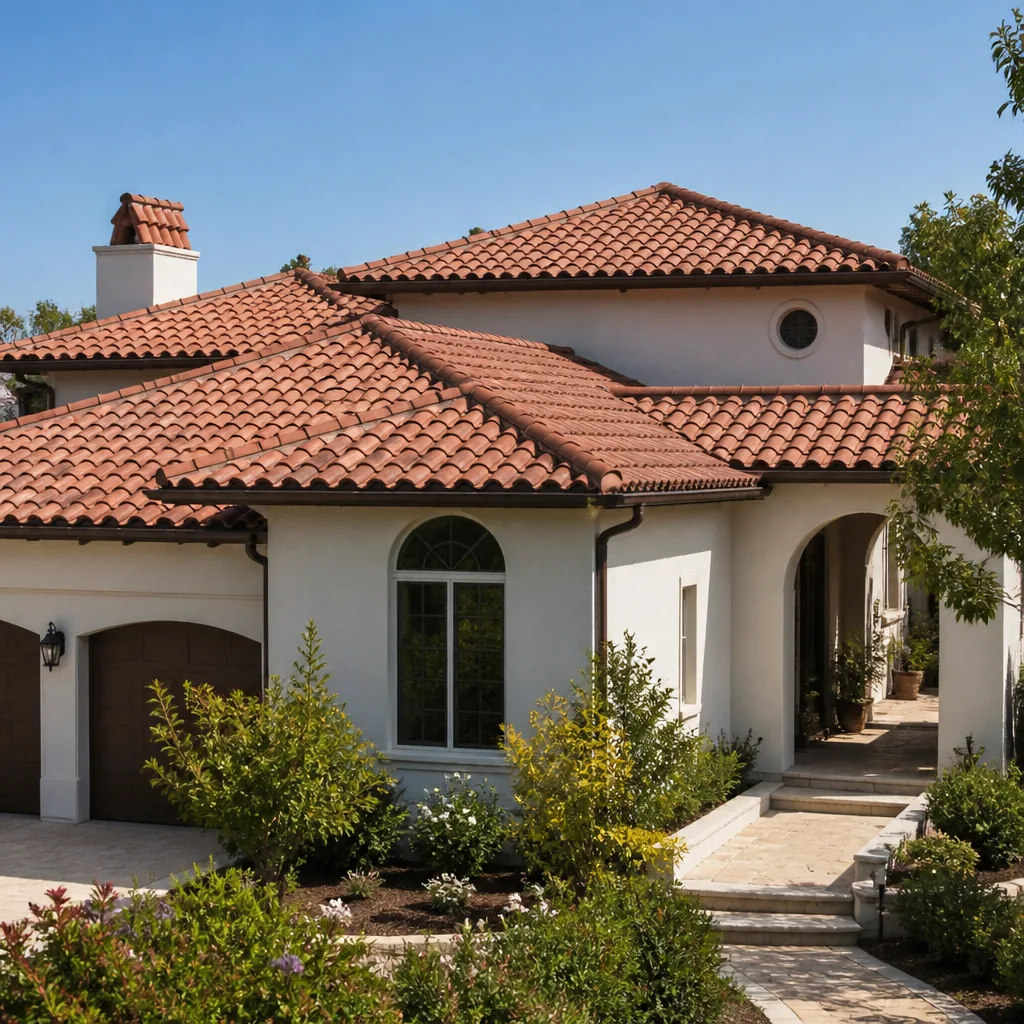 Tile roofing
 GAF
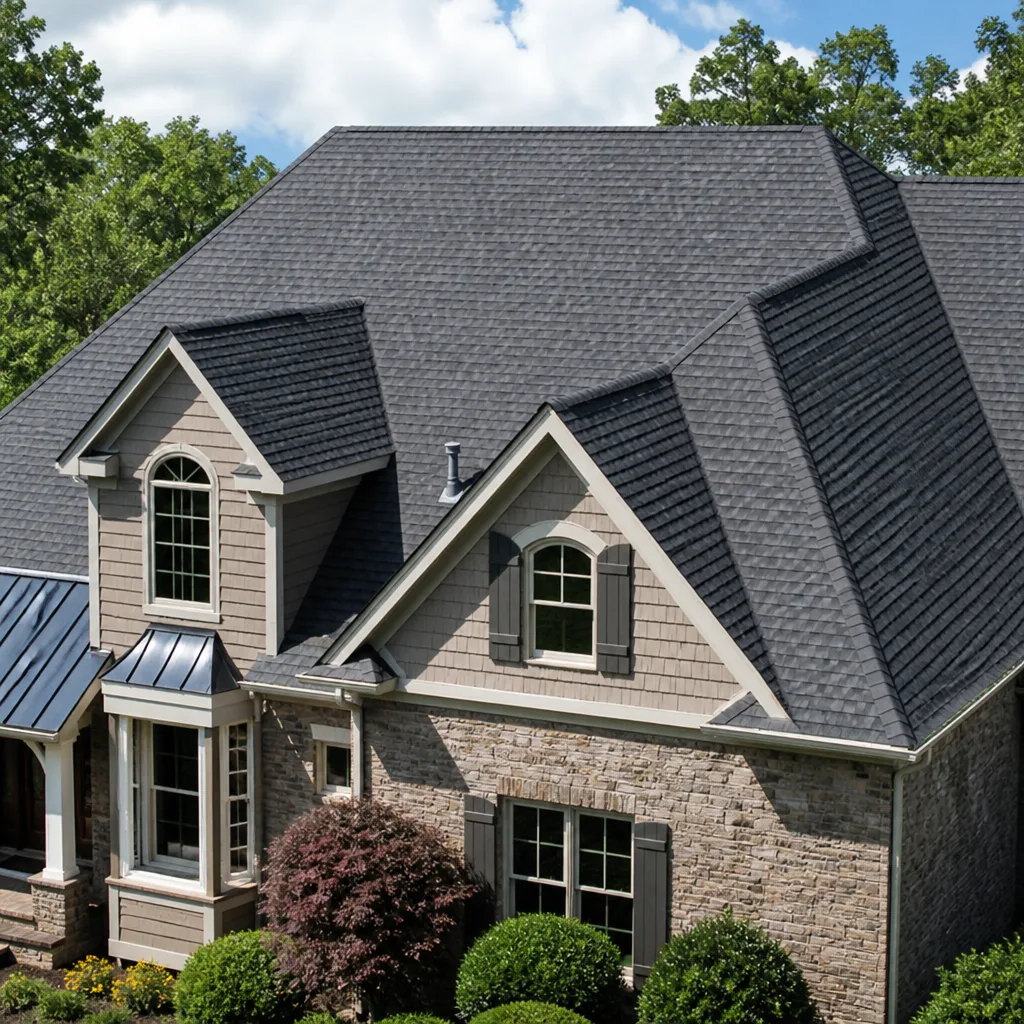 Owens Corning
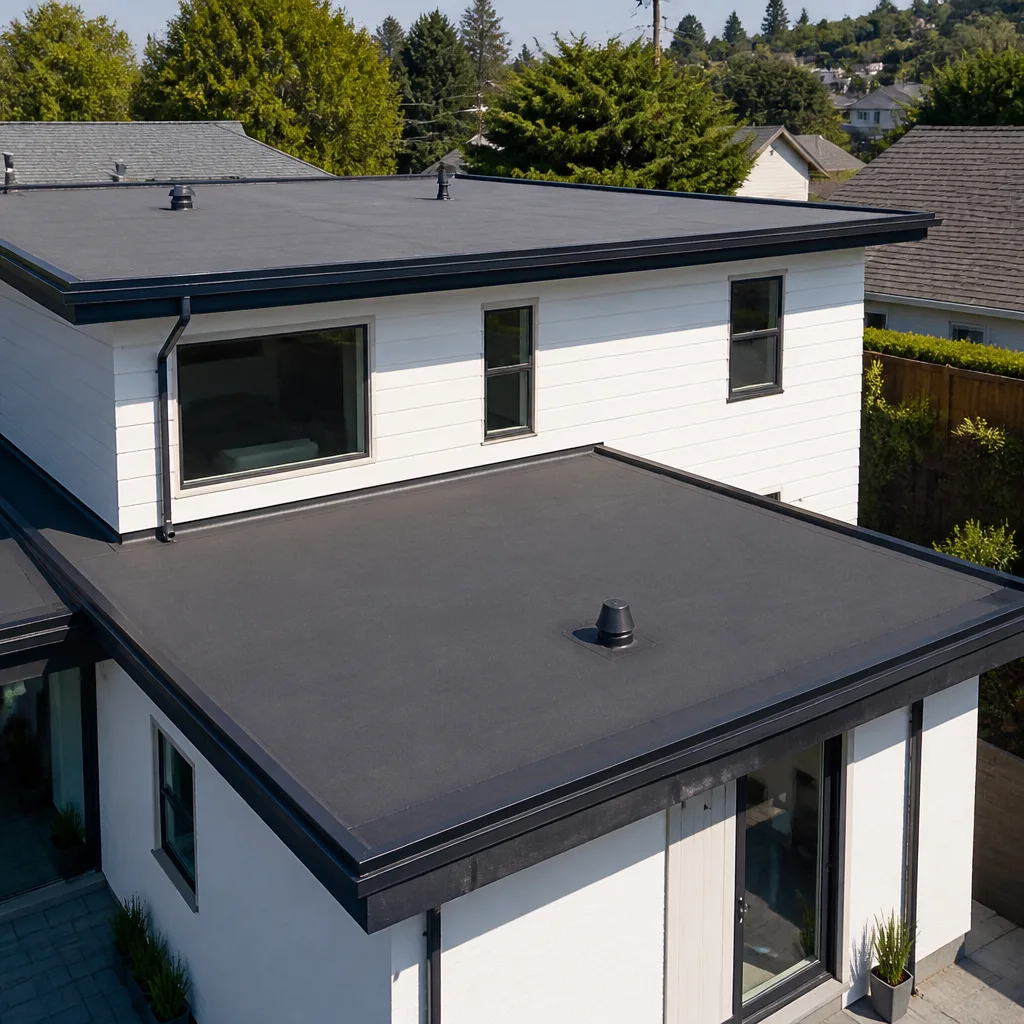 Flat & low-slope
Free roof inspection with deck photos before we talk money - GAF and Owens Corning certified installation
Styles & brands we work with
- Architectural shingles
- Metal roofing
- Tile roofing
- GAF
- Owens Corning
- Flat & low-slope
See the difference
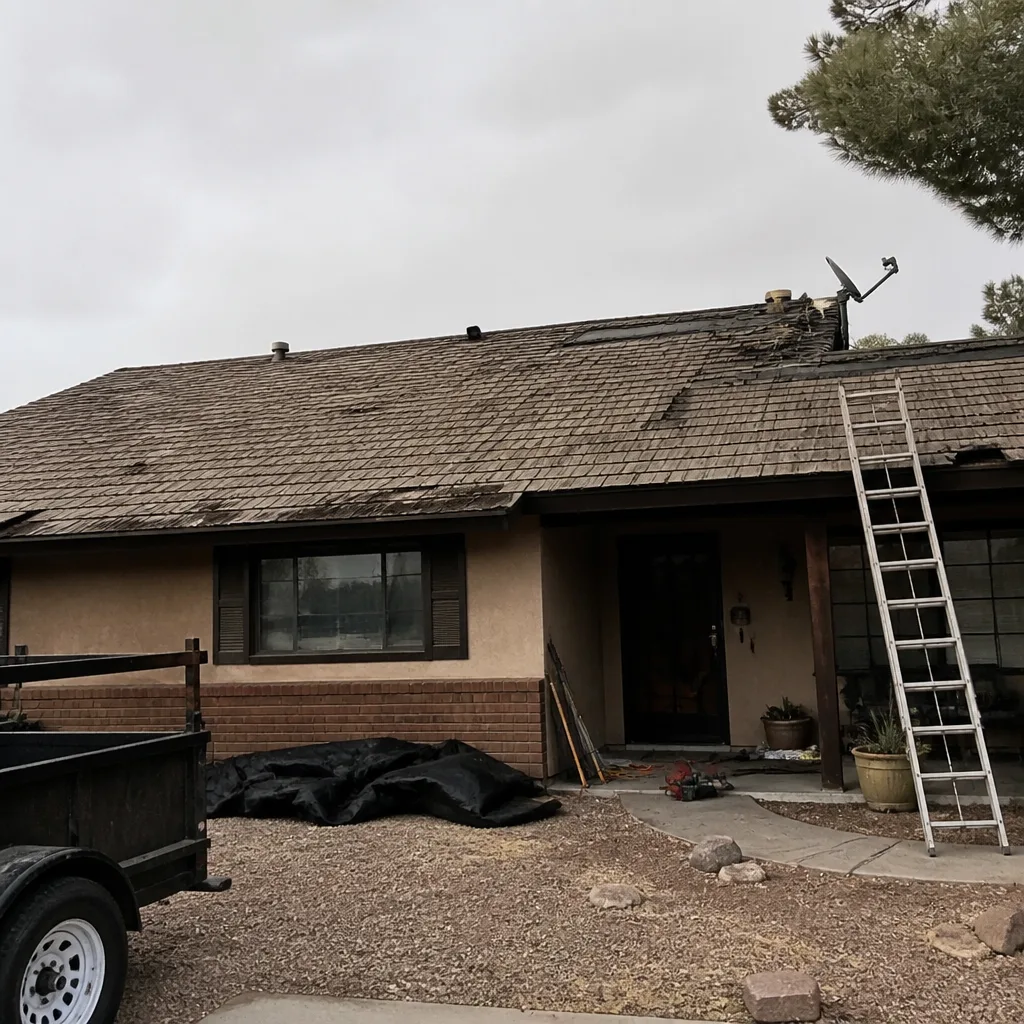 Before
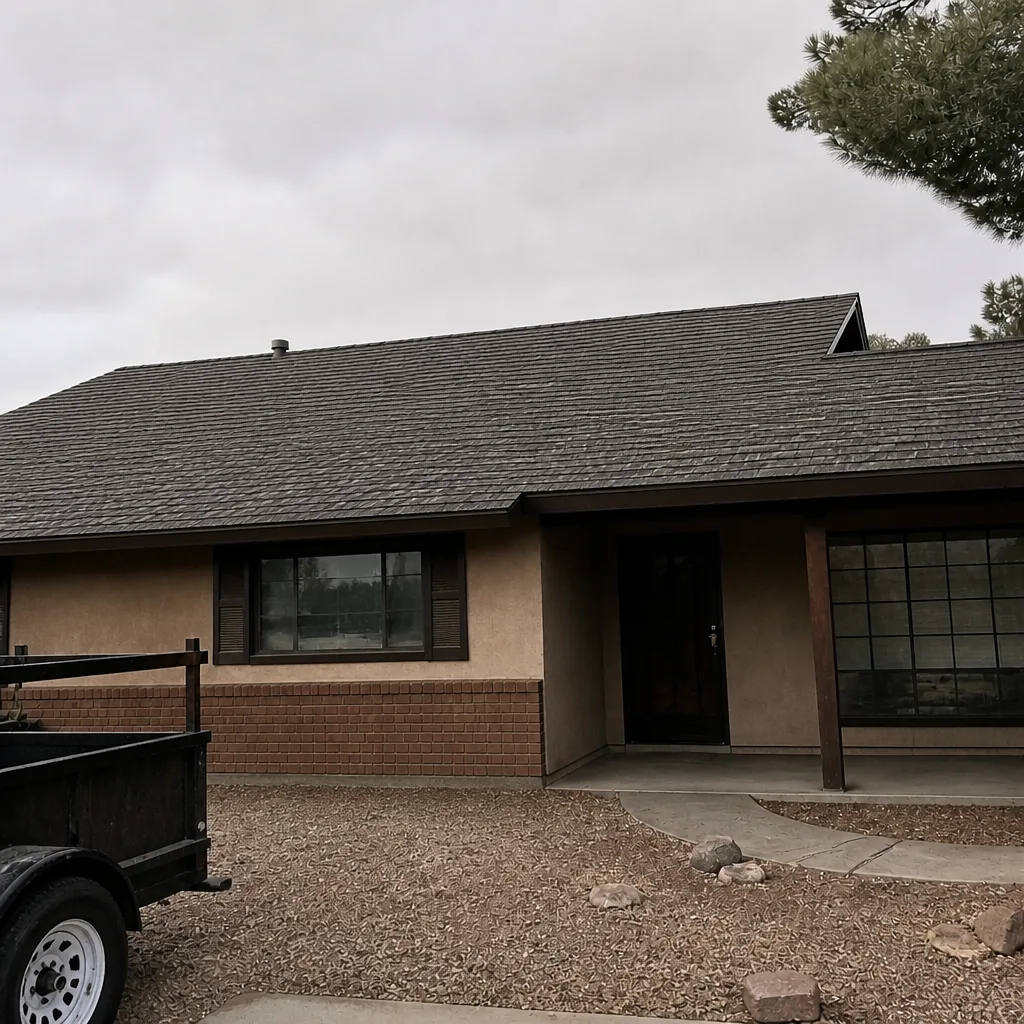 After
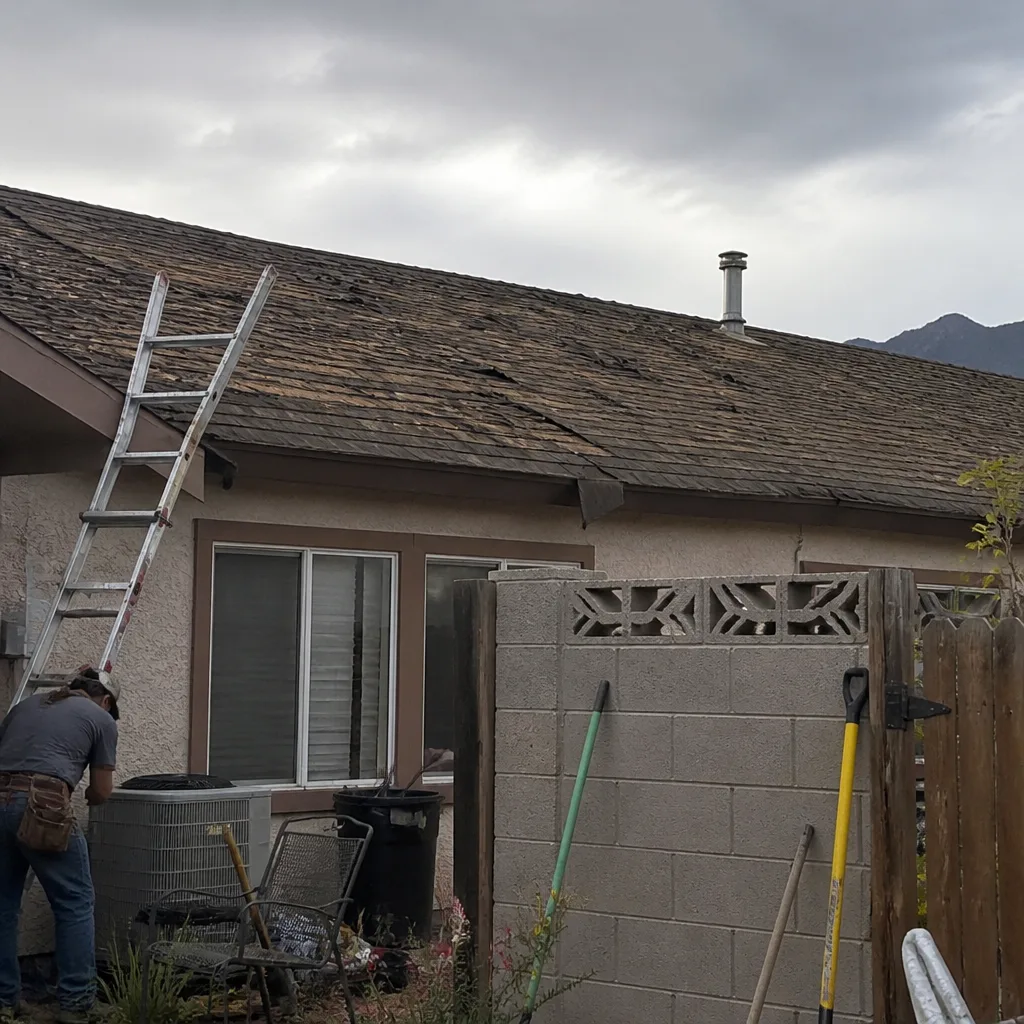 Before
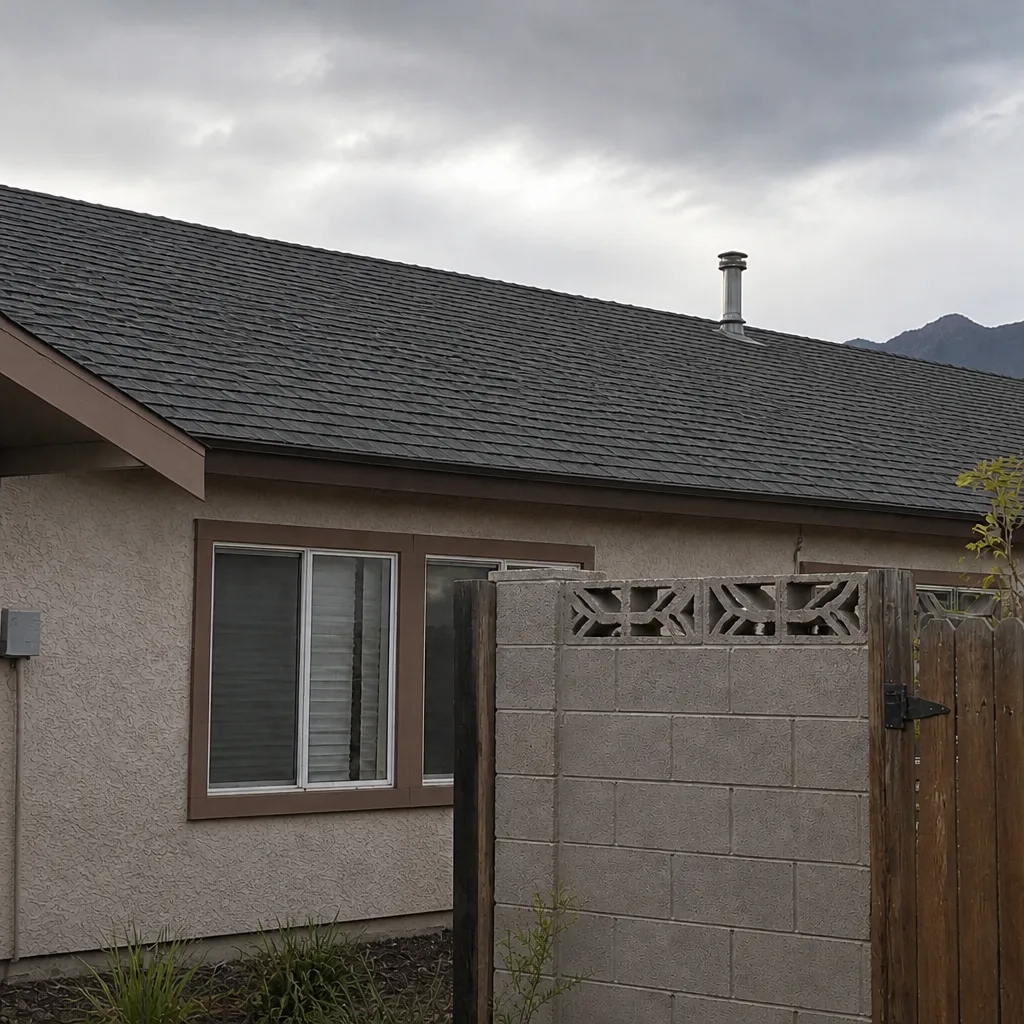 After
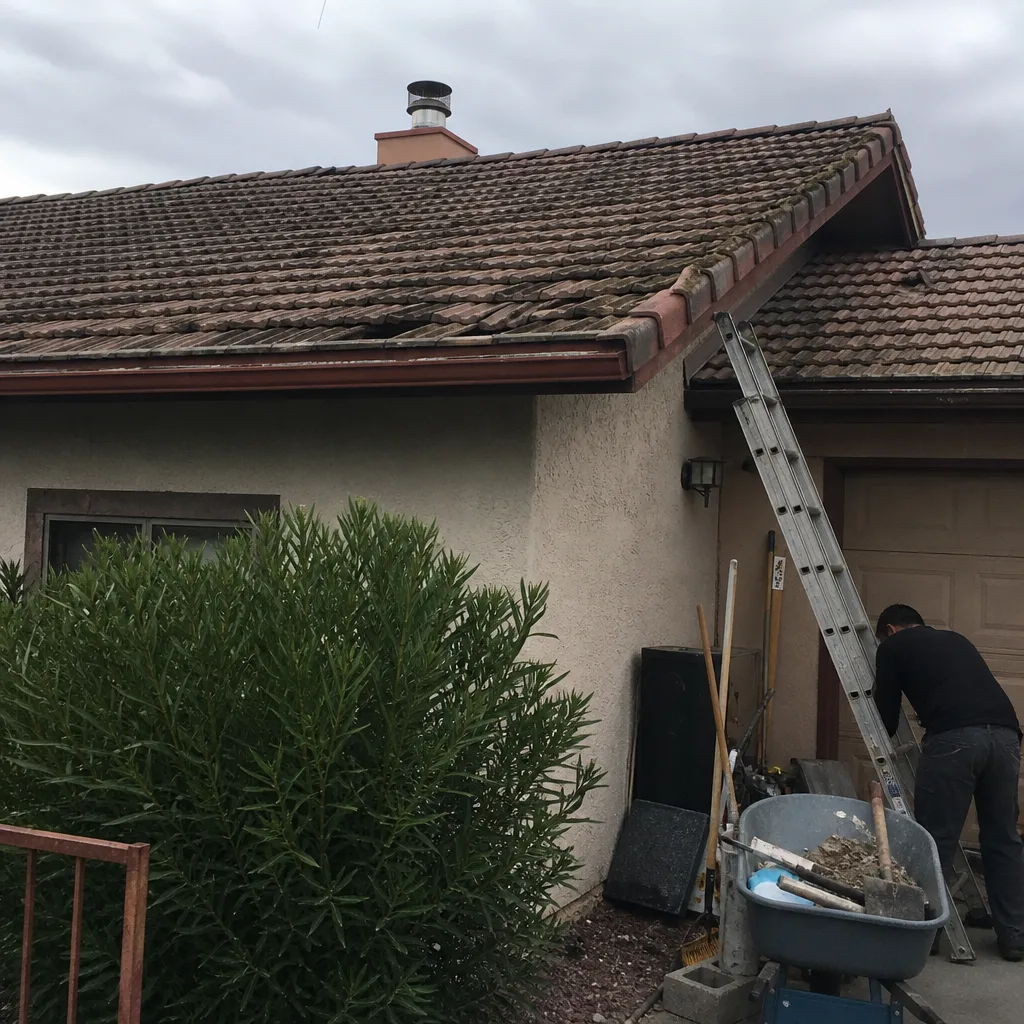 Before
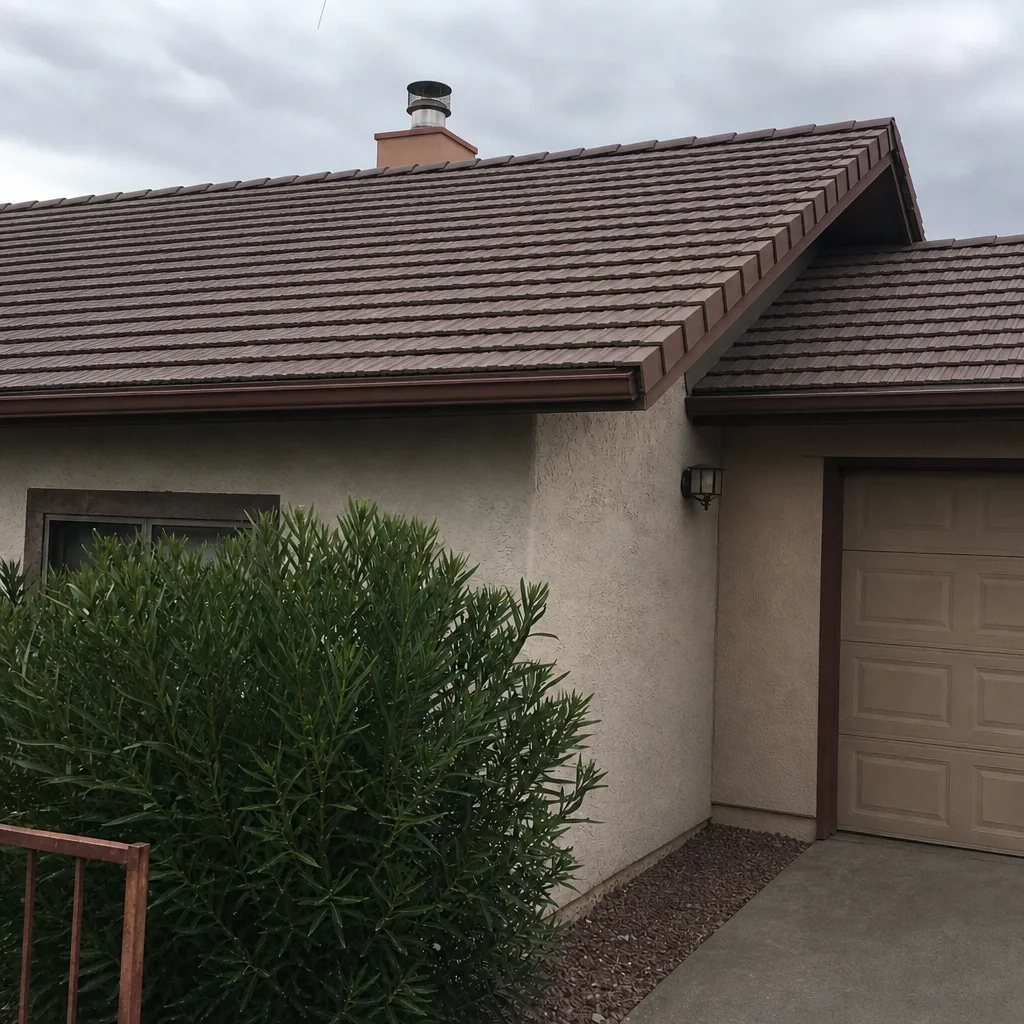 After
Metal Roof vs Shingles in Boulder City, NV: What Actually Holds Up Here
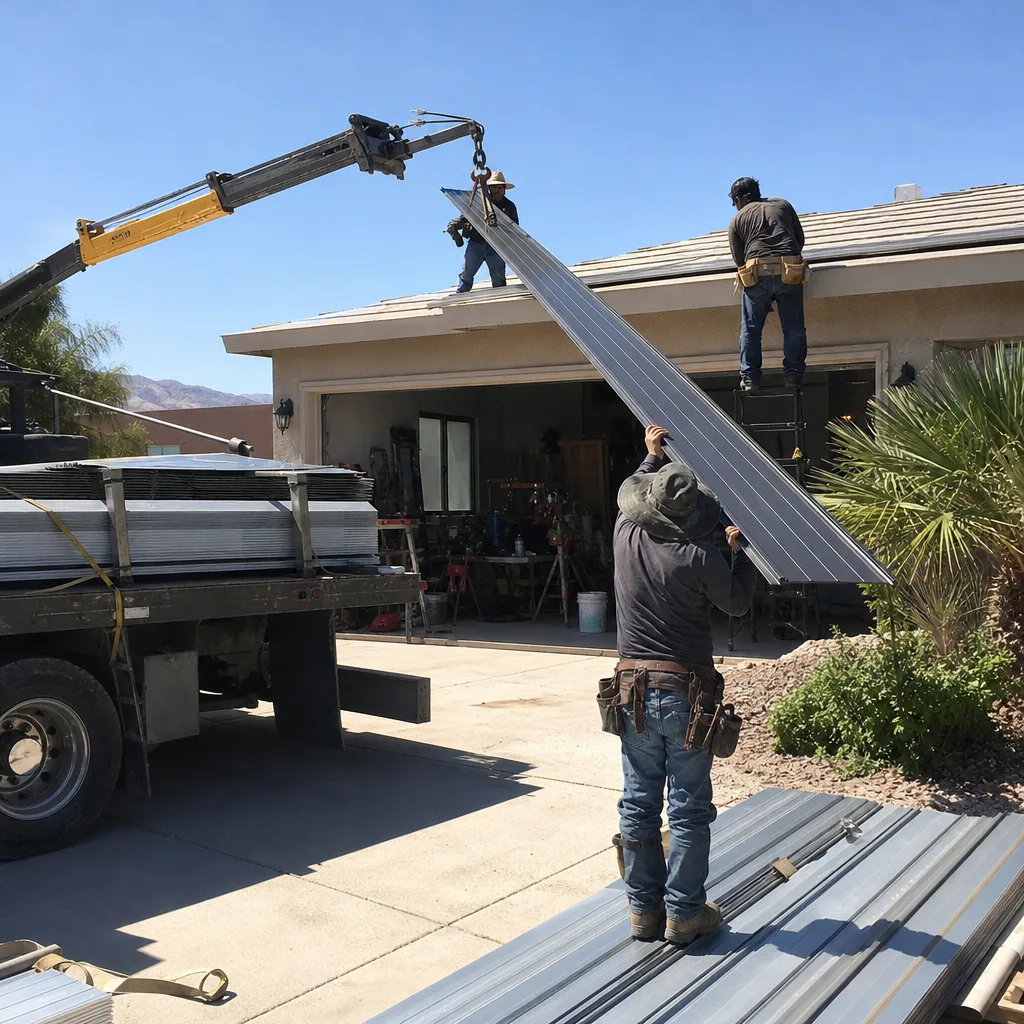
Choose metal if your Boulder City roof is outside the Historic District and you plan to stay in the house more than 15 years. Choose shingles if you’re inside the district and want the fastest path through design review, or if budget is the deciding factor. That’s the honest bottom line. The reason the answer isn’t one-size is that Boulder City’s Mojave sun ages asphalt faster than the label promises, and its Historic District can approve or reject a metal roof based on color and profile alone. Call (844) 761-8186 and we’ll tell you which side of that line your address falls on.
Why the shingle label doesn’t match Boulder City reality
Shingle manufacturers rate their products under ASTM lab conditions with a standard UV exposure assumption. Boulder City sits around 2,500 feet in the Mojave Basin, where the summer UV index regularly hits 11 or 12. That combination delivers roughly 30 percent more UV-index hours than the reference conditions those ratings were built on. The compounding effect is real, and we see it every week.
What that means on an actual roof: a “30-year” architectural shingle in Boulder City routinely shows granule loss in the gutters and mat brittleness you can feel with a thumb before the 15-year mark. We’ve pulled shingles off Boulder City homes at year 12 that crumbled at the ridge like a dry cracker. Sun-facing south and west slopes go first. That’s also why we tell folks to look at what’s in the gutter after a windy day, not what’s printed on the wrapper. If you’re already seeing grit, a roof repair assessment is cheaper than waiting for a leak.
The Historic District approval question comes before the material question
This is the part most metal-vs-shingle articles skip. Boulder City is a federally-chartered planned community, and the older core was built in the 1930s by the Bureau of Reclamation for Hoover Dam workers. The Historic District’s design review doesn’t just care that you re-roofed; it cares what the roof looks like from the street.
Standing-seam metal in a muted finish – Weathered Zinc or Charcoal – has cleared review in the district. Exposed-fastener corrugated metal typically has not. Those two products can be priced within a few hundred dollars of each other, and one gets approved while the other gets flagged. So before you price a metal roof on a historic-core address, you need a pre-application conversation with the city, not just a material quote from a contractor. A homeowner who orders corrugated panels before checking is looking at a return, a restock fee, and a setback.
Here’s the operator detail that saves people real money: Bill has been ordering materials for Boulder City roofs since 1996. He knows which metal profiles have come back approved from review and which shingle colors pass without a fight. That institutional knowledge is worth more than any spec sheet when your address is inside the historic guidelines.
Side-by-side: metal vs shingles for a Boulder City roof
| Factor | Standing-seam metal | Architectural shingles |
|---|---|---|
| Realistic lifespan here | 40-60 years with proper install | 12-20 years before granule loss and brittleness (label says 30+) |
| UV performance | Coating degrades slowly; low-emissivity finishes hold reflectance | Granule loss accelerates under 11-12 UV index summers |
| Attic temperature in July | 20-30°F cooler with a low-emissivity coating | Dark asphalt drives attic heat load up |
| Monsoon wind-driven rain | Continuous panel locks at the rib resist uplift | Individual tabs test adhesion once they age |
| Historic District review | Muted profile and color only | Usually simpler; color changes may still need a nod |
| Upfront cost (typical range) | Roughly 2-3x shingle cost per square | Lower entry cost, higher replacement frequency |
Two things in that table deserve a plain answer. First, the thermal gap. Metal with a low-emissivity coating can drop attic temperature 20-30°F versus dark asphalt in direct Mojave sun, and here that translates to a real cut in AC load through July and August. The savings math is more compelling in Boulder City than in a temperate climate, because the cooling season is longer. Second, wind. Boulder City’s monsoon microbursts create uplift events that test tab adhesion on aging shingles. A properly installed standing-seam roof has continuous locks at the rib and handles that direction of wind-driven rain better than individual tabs. The nailing pattern earns the wind rating, not the shingle wrapper – so whoever installs it matters as much as what they install.
On brands: the shingle lines we set most often in Boulder City are Owens Corning and CertainTeed, with IKO as a budget option, and we match metal profiles to whatever the review board has accepted before. Name the shingle and we’ve likely set it.
What this looks like on houses we actually work on
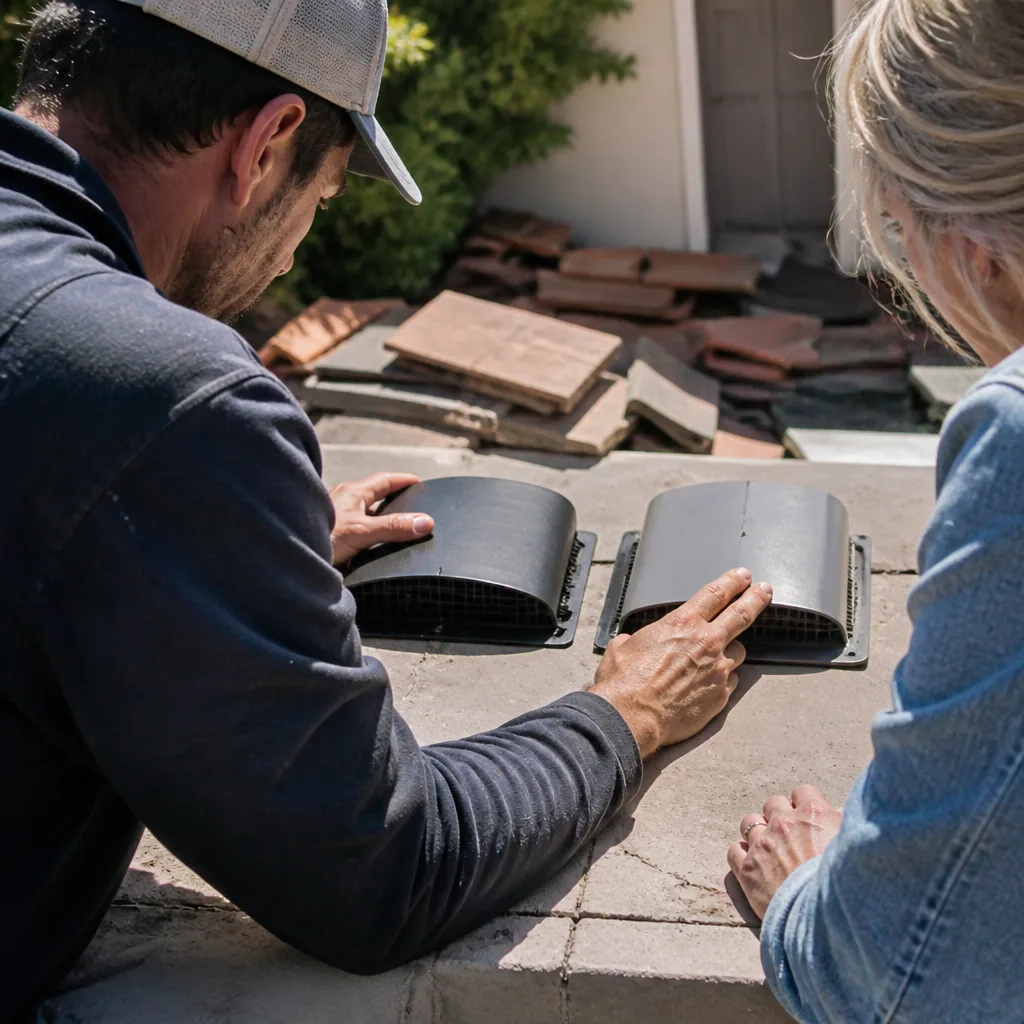
Boulder City’s core is 1930s Bureau of Reclamation worker housing and small bungalows, with mid-century infill and newer subdivisions on the outskirts. Those buildings ask different questions, so here’s how the comparison shakes out by scenario rather than by generic feature list.
- Original 1930s bungalow in the historic core: often a low-slope or patched roof that needs careful tear-off and matching materials. Design review drives the decision before price does.
- Mid-century infill with a steeper pitch: metal and shingles are both viable; the tiebreaker is how long you plan to own the house.
- Newer subdivision on the outskirts: no historic constraint, so metal’s 40-60 year life and lower attic load make the numbers back up properly.
- Heavily patched roof showing grit in the gutters: replacement questions start with real-world shingle age, not the label.
If you want the full rundown on profiles, finishes, and what we install, see our Metal Roofing guide before you decide anything.
The recommendation, stated plainly
Outside the Historic District and planning to stay: metal. The UV math and the cooling-season length make the upfront premium pay back faster here than shingle salespeople tend to admit. Inside the Historic District: shingles are the smoother path unless you’ve confirmed a muted standing-seam profile will pass review first. Either way, get a second written estimate before you sign – a free second opinion on any estimate is standard with us, and it costs you nothing to compare.
FAQs
Metal typically runs about two to three times the cost of architectural shingles per square, and the gap narrows when you factor in shingle replacement inside the metal roof’s lifespan. Ask any bidder how many squares they counted – a roof is measured in squares, and a low count is how phone quotes turn into door quotes. Call (844) 761-8186 for an exact number; estimates are free.
Expect 12 to 20 years before granule loss and brittleness show up, even on a shingle rated for 30. The elevation and Mojave sun push roughly 30 percent more UV-index hours than the lab conditions behind those ratings. If your roof is past year 12, have it looked at before monsoon season.
Yes, meaningfully – a metal roof with a low-emissivity coating can drop attic temperatures 20-30°F versus dark asphalt in direct summer sun, which cuts your cooling load through the long Boulder City cooling season. The exact savings depend on your attic insulation and AC setup. Call (844) 761-8186 to talk through your house; estimates are free.
Sometimes – standing-seam metal in a muted Weathered Zinc or Charcoal finish has been approved, while exposed-fastener corrugated typically has not. Get a pre-application conversation with the city before ordering material, and let someone who has been through review guide the profile choice.
Call (844) 761-8186 for a free estimate. We answer live, 24/7, show you the deck photos before we talk money, and stand behind every roofing job with our written 90-Day Done Right Promise. Senior and veteran discount available, and no trip charge inside our own county.
Written by the team at Shepherd & Sons Roofing Boulder City, serving Boulder City, NV.