
Last updated November 17, 2026
 Metal roofing
 Architectural shingles
 Tile roofing
 GAF
 Owens Corning
 Flat & low-slope
Free roof inspection with deck photos before we talk money - GAF and Owens Corning certified installation
Seasonal Roofing Care for Boulder City: Year-Round Homeowner’s Guide
Scheduling a roof inspection in August in Boulder City is like scheduling surgery during a staffing shortage. The heat makes safe access nearly impossible and material handling unreliable, yet that’s exactly when most homeowners panic-call after spotting a leak. Here’s the truth we’ve learned after years on Boulder City roofs: this town doesn’t have the four gentle seasons the maintenance calendars describe. It has two brutal ones – a UV-heavy summer and a wind-driven winter – and two short transition windows where preventive work is actually safe and effective. This guide reorganizes the year around what really happens to a roof in the Mojave, so you know when to look, what to look for, and when to leave it alone.
Quick Answer
The highest-value time to inspect and repair a Boulder City roof is October through November, before winter wind events arrive and while daytime temperatures still let sealants and flashing materials cure properly. The second-best window is March through April, when you can catch damage from the summer before UV exposure locks it in. Summer and mid-winter are for observation and emergency calls, not planned maintenance – the heat and the winds make careful work risky and unreliable.
Styles & brands we work with
- Architectural shingles
- Metal roofing
- Tile roofing
- GAF
- Owens Corning
- Flat & low-slope
Table of Contents
- Why Boulder City Roofs Only Really Have Two Working Seasons
- The October-November Window: Your Highest-Value Inspection Time
- What Monsoon Season Actually Does to a Boulder City Roof
- The Spring Temperature Swing: 55°F Nights, 95°F Days
- Summer Roofing Realities: Why Heat Changes Everything
- The Month-by-Month Reference Card
- Common Mistakes to Avoid
- When to Call a Professional
Why Boulder City Roofs Only Really Have Two Working Seasons
Coastal and northern roofing guides are built around freeze-thaw cycles and snow load. Boulder City has almost none of that. What we have instead is relentless ultraviolet radiation, a summer monsoon that arrives sideways, and winter wind that funnels through the Eldorado Valley and hammers exposed ridges. Those three forces do most of the damage a Boulder City roof will ever see, and they don’t line up with a tidy spring-and-fall cleanup schedule.
Think of the year in four parts:
- Two damaging seasons: the UV-heavy summer (roughly May through September) and the windy winter (roughly December through February).
- Two working windows: the September-October cool-down and the March-April warm-up, when temperatures and wind both allow safe access and reliable material work.
This matters because scheduling is not a matter of convenience here – it’s a matter of whether the job can be done correctly. Sealant that skins over before it bonds, adhesive that fails to set, or crews working midday in triple-digit heat all produce a roof that looks finished but isn’t. The smart Boulder City maintenance calendar puts real work in the two windows and limits the brutal seasons to observation and emergencies.
Most of what we tell neighbors comes down to one idea: catch problems while the weather cooperates. That’s the whole game.
The October-November Window: Your Highest-Value Inspection Time
If you do one thing for your roof all year, make it a thorough inspection and any minor repairs in October or early November. This is the single highest-value window on the Boulder City calendar, and here’s why.
First, the winter wind is coming. The gusts that push through the valley each winter work on every loose shingle, lifted flashing edge, and tired sealant joint. A ridge cap that’s already lifting in October will be on your lawn by January. Tightening it in the fall, while the weather is calm, is cheap. Chasing it after a wind event is not.
Second, temperatures in October and November still let sealants and flashing materials cure the way they’re designed to. Roofing sealants have a working temperature range. In the 70s and low 80s they flow, bond, and set correctly. In the peak of summer they skin over too fast to bond well, and in a cold snap they don’t cure at all. October in Boulder City sits right in the sweet spot.
A useful fall checklist:
- Walk the perimeter at ground level and look for lifted, cracked, or missing shingles, especially on south- and west-facing slopes.
- Check flashing around chimneys, vents, and skylights for gaps or pulling.
- Clear the gutters and look for granules collecting at the downspout outlets – that’s shingle wear telling you something.
- Look inside the attic after the first windy day for new daylight or water staining.
If anything on that list looks off, a fall repair is the right call. Our Roof Repair in Boulder City page covers what a proper repair includes and why timing matters so much.
What Monsoon Season Actually Does to a Boulder City Roof
Boulder City’s monsoon arrives in July and runs into September. It doesn’t look like steady rain. It looks like a wall of water hitting a roof sideways for twenty minutes, then sun. That combination – driven rain followed by fast drying and intense UV – is uniquely hard on a roof, and it produces damage that’s easy to miss if you don’t know where to look.
The monsoon finds weaknesses you didn’t know you had. Water pushed sideways gets under shingles that shed straight-down rain fine. It works into flashing joints, around vent boots, and behind fascia. Then the sun comes back and bakes everything dry, so nothing looks wet by the time you inspect. That’s why post-monsoon checks need to happen after the storm passes, not during the next dry spell weeks later.
What to check after a monsoon event:
- Ceiling stains or new discoloration on interior walls, especially near exterior corners and under valleys.
- Granules washed into gutters or piled at downspout outlets.
- Lifted or curled shingle tabs on the windward slopes.
- Water staining on fascia boards or soffit, which often means water got behind the edge.
If you find any of this, don’t wait for the next storm to confirm it. A leak that shows up in September is usually a flashing or sealant failure that a fall repair can still catch before winter. For the deeper structural repairs that sometimes come out of a bad monsoon season, our Roof Replacement & Installation in Boulder City page walks through when a repair is enough and when it isn’t.
The Spring Temperature Swing: 55°F Nights, 95°F Days
March and April in Boulder City are a roofing paradox. Nights can still dip into the 50s while afternoons climb into the 90s. That swing does real work on your roof, and it’s the second-best window of the year to catch problems before summer.
Here’s what’s happening. Materials expand and contract with temperature. Sealants and flashing that flexed all winter start moving again as the days heat up. A joint that was tight in February can open an eighth of an inch by April. If you find that gap in March, it’s a five-minute fix. If you find it in July, after summer UV has baked the surrounding material and locked in a failure, it can be a much bigger repair.
The spring inspection is about catching winter damage and preventing summer damage. Look for:
- Shingles that cracked or lifted over the winter wind season.
- Flashing that pulled away from chimneys, vents, or skylights.
- Sealant joints that look checked, cracked, or separated.
- Any granule loss that got worse over the winter.
Spring is also the right time to plan, not panic. If your roof is nearing the end of its service life, a spring assessment gives you the whole summer to weigh options and schedule replacement in the fall window, when it can be done right. Our Metal Roofing in Boulder City page is worth a read if you’re weighing long-term options against the Mojave sun, since metal handles UV and heat differently than asphalt.
Summer Roofing Realities: Why Heat Changes Everything
We want to be plain about this: a roof quote that doesn’t mention heat staging is a quote from someone who hasn’t done summer work in Boulder City. Summer here isn’t just uncomfortable – it changes what’s physically safe and what actually works.
Roof surfaces in direct July sun can get hot enough to be unsafe to touch with a bare hand, and the heat makes shingles soft and easily damaged by foot traffic. That’s why serious work in summer has to happen early – often before 9 a.m. – while surfaces are still workable. Material handling is harder too: adhesives set too fast, sealants skin over before they bond, and crews tire faster in the heat, which raises the risk of mistakes on steep pitches.
What this means for you:
- Summer is for observing, not for planned maintenance. Save the real inspections for fall and spring.
- If you spot a leak in summer, that’s an emergency call, not a maintenance appointment – the sooner the better, because a monsoon leak can get much worse fast.
- When you get a quote in summer, ask how the job will be staged around the heat. A pro will have an answer ready.
We’re honest with homeowners about this. There are jobs we’ll schedule for the fall window rather than rush in August, because doing it right matters more than doing it now. If you’re in the middle of a summer problem, don’t sit on it – call and we’ll talk through whether it’s something to address now or plan for later. Estimates are free.
The Month-by-Month Reference Card
Here’s the reference we’d give our own neighbor – a plain look at what actually matters each month in Boulder City, not a corporate checklist.
- January: Watch for wind damage after big gusts. Check for lifted shingles and flashing. Interior leak checks after any rain.
- February: Winter wind season winding down. Note anything loose – you’ll fix it in March.
- March: Prime inspection window opens. Catch winter damage and sealant movement early. Plan any larger work now.
- April: Second-best window continues. Get repairs done before summer heat locks in failures.
- May: Heat ramping up. Last easy month for minor work. Clear gutters before monsoon.
- June: Observation only. Any leak is worth an early call before the monsoon.
- July: Monsoon begins. Check for wind-driven water intrusion after every storm.
- August: Peak heat and monsoon. Emergency calls only – don’t schedule planned work now.
- September: Monsoon tapering. Post-monsoon checks. The fall window is about to open.
- October: Highest-value window. Full inspection, minor repairs, prep for winter wind.
- November: Fall window closes. Finish repairs while sealants still cure well.
- December: Winter wind arrives. Observation and emergency response.
That’s the whole year in one list. The two windows in March-April and October-November are when the real preventive work gets done. The rest is watching and responding.
Common Mistakes to Avoid
- Scheduling a planned inspection in August. The heat makes safe access and reliable material work nearly impossible. If you have a problem in summer, call it an emergency – don’t wait for a routine maintenance slot.
- Waiting for a visible leak before checking the roof. By the time water shows up inside, the failure has usually been there through at least one season. The fall and spring windows exist precisely to catch problems before they get that far.
- Skipping the post-monsoon check. Boulder City’s sideways rain finds weaknesses that look fine in dry weather. A quick look after each storm catches issues while they’re still small.
- Assuming “it’s not that old” means “it’s fine.” UV exposure in the Mojave ages roofing faster than in milder climates regardless of what the shingle warranty says. Age on paper and condition on the roof aren’t the same thing.
- Taking one quote and one price on the phone at face value. Ask any bidder how many squares they counted, and get a written second opinion. We offer a free second opinion on any written estimate for exactly this reason.
- Clearing your own gutters on a hot roof. A summer gutter cleaning on a hot asphalt roof is a fall hazard and can damage the shingles underfoot. Save it for a cool morning or let a pro handle it.
- Ignoring the winter wind forecast. A ridge cap or shingle that’s already loose in October becomes a problem by December. Tighten it in the fall when it’s easy.
When to Call a Professional
Call us when you’re not sure – that’s what free estimates are for. In particular, call if you see water stains on a ceiling or wall, granules collecting heavily in gutters, shingles that are lifting, curling, or missing, flashing that’s pulled away from a chimney or skylight, or any daylight showing in the attic. Call after a big monsoon or wind event if anything looks off, and definitely call before you sign any replacement quote, so you’ve got a second opinion in writing.
We don’t expect you to climb a ladder and run your own inspection. If you’re in a fall or spring window and want eyes on the roof, that’s the right time to reach out. You can start from our Shepherd & Sons Roofing Boulder City home page, or just call and we’ll come out when the weather lets us do it right. Shepherd & Sons Roofing Boulder City offers free estimates in Boulder City – call (844) 761-8186.
See the difference
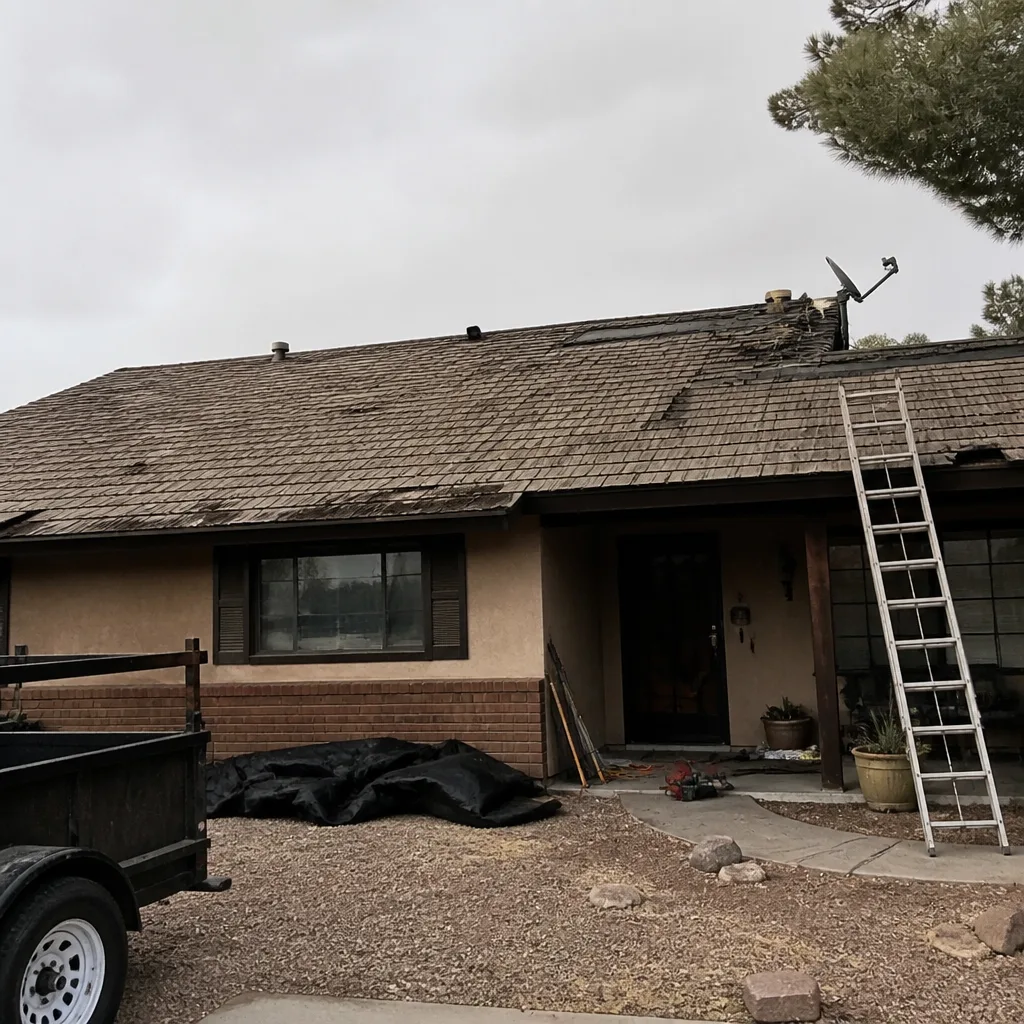 Before
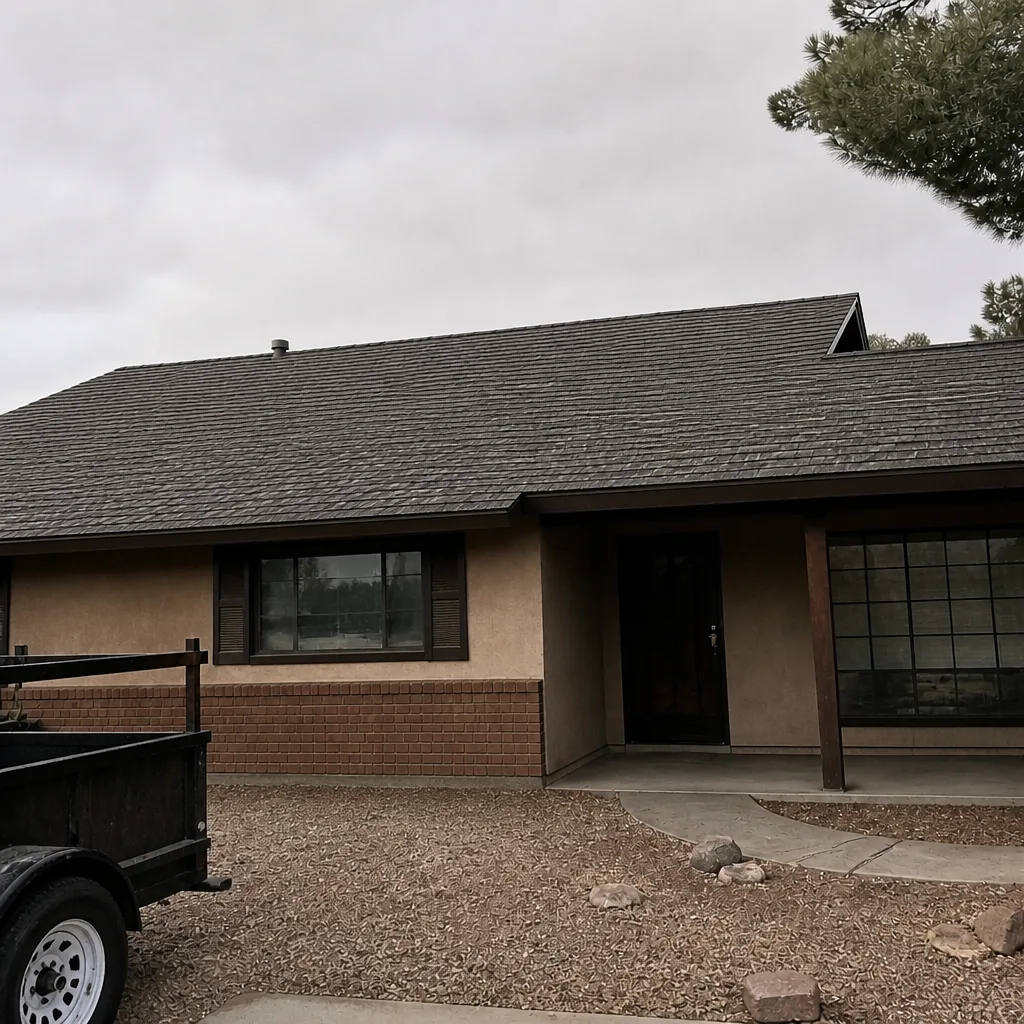 After
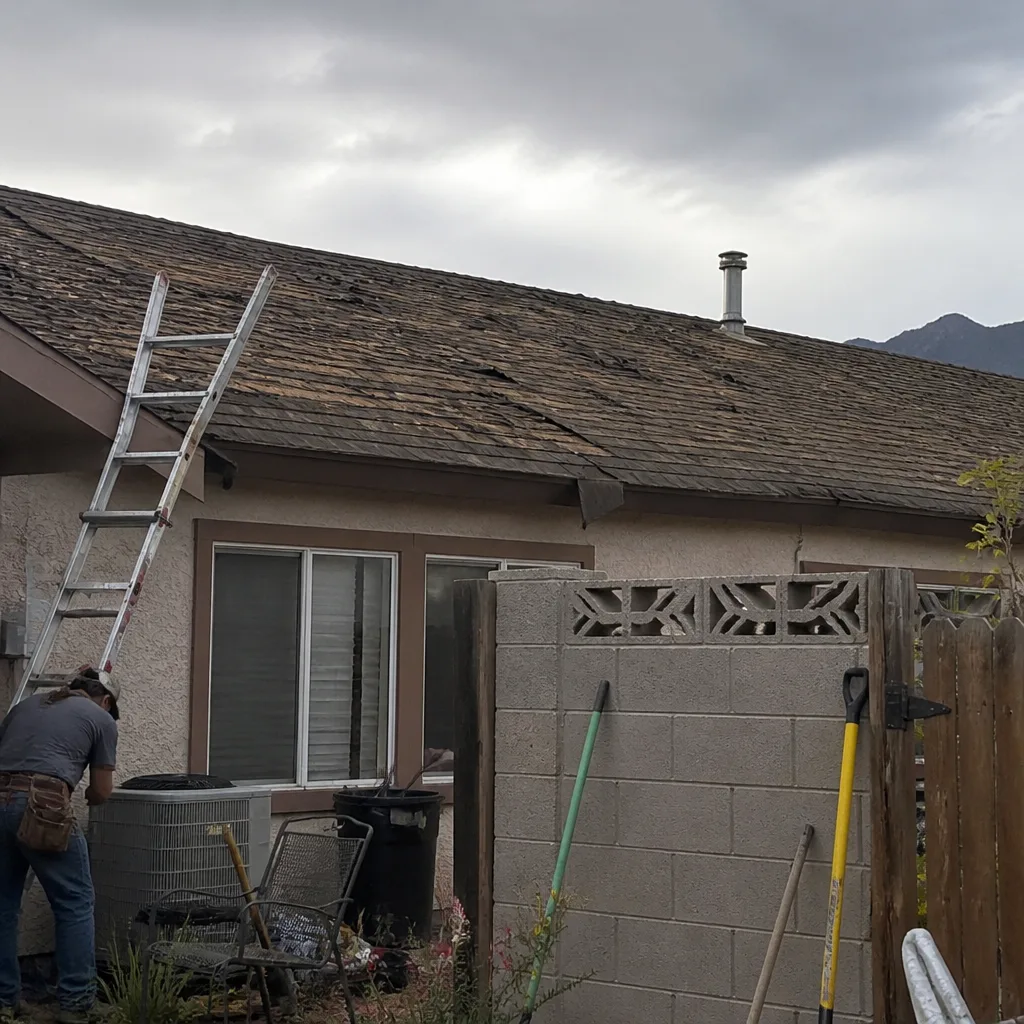 Before
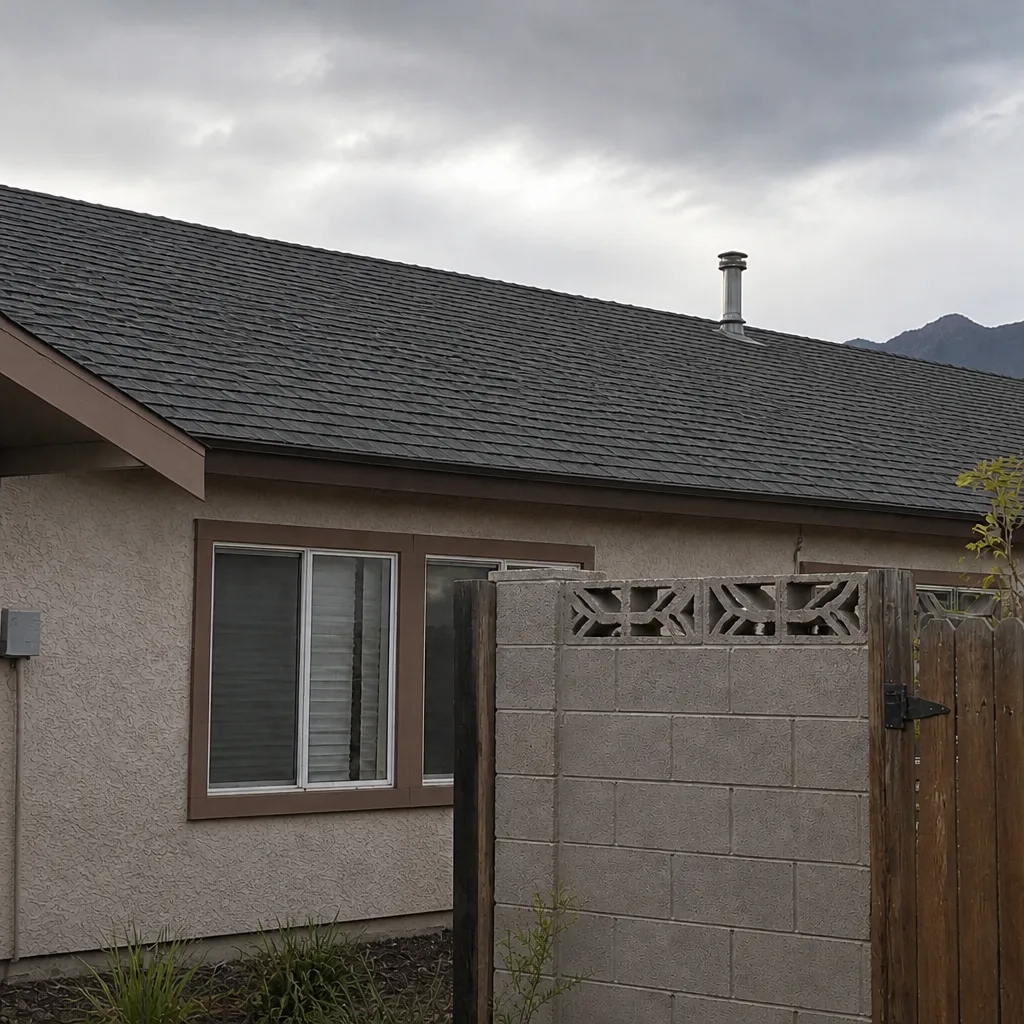 After
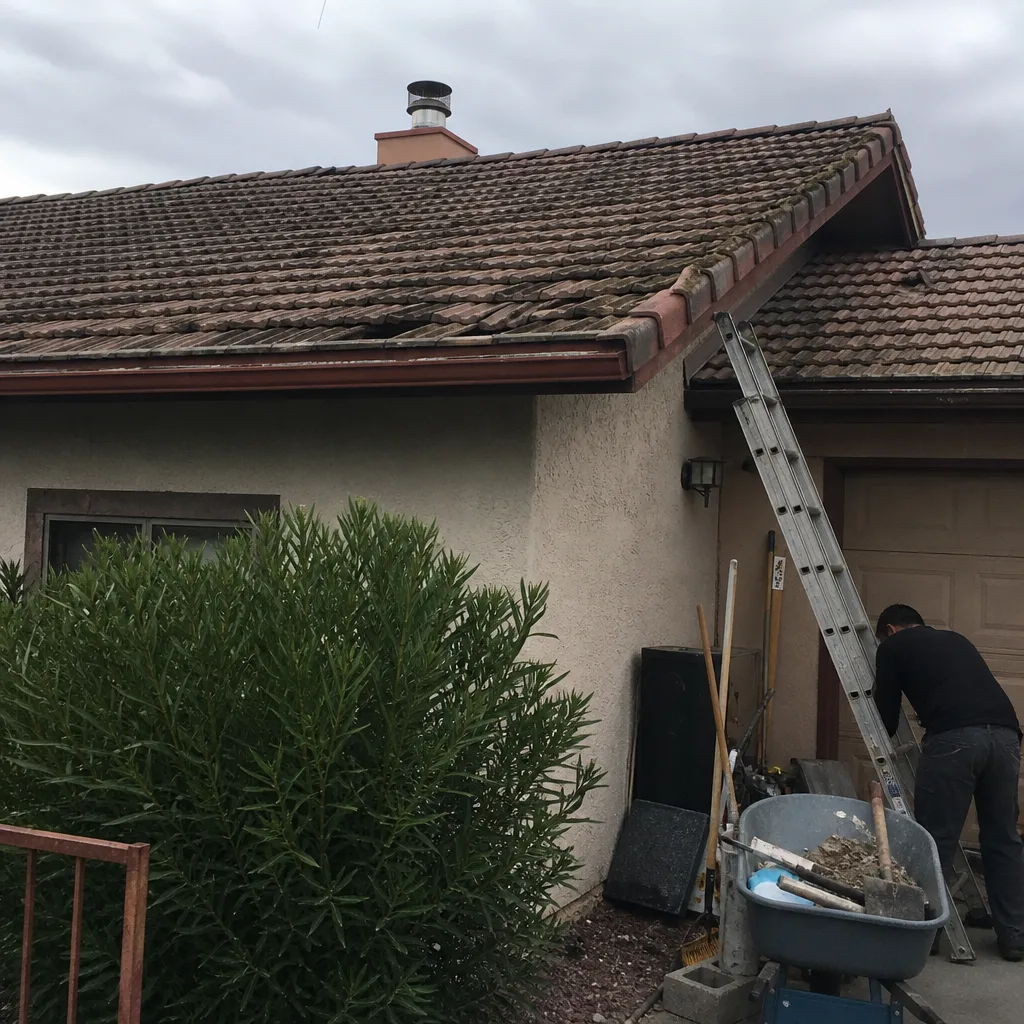 Before
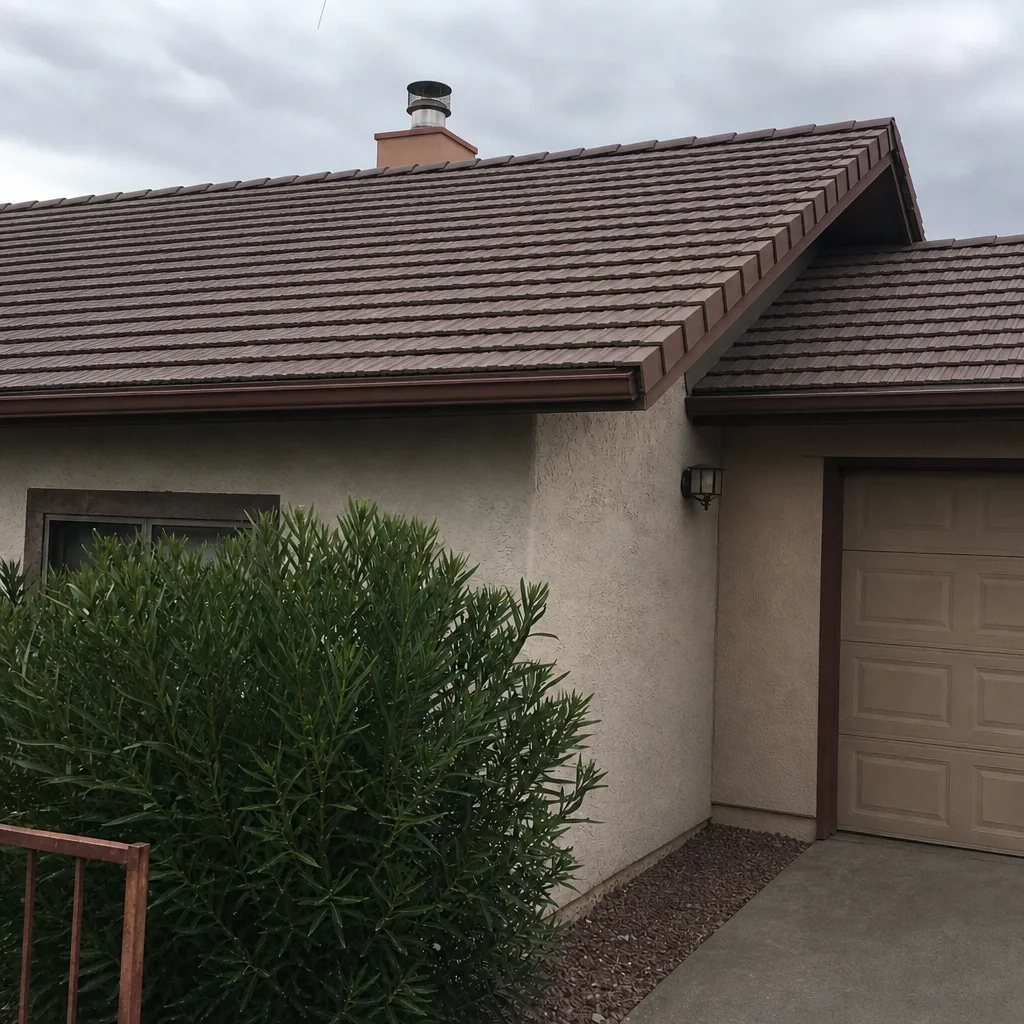 After
Frequently Asked Questions
October through November is the single best window for a roof inspection in Boulder City. It’s before the winter wind events, and it’s cool enough that sealants and flashing cure properly. March through April is the strong second choice for catching winter damage before summer heat locks it in.
Yes, but summer heat makes it a careful job. Emergency leaks get priority, and work is staged early in the day while surfaces are still workable. Planned maintenance and non-urgent repairs are better scheduled for the fall or spring windows, when the job can be done correctly. Call us and we’ll tell you honestly whether it’s an emergency or something to plan.
Monsoon rain in Boulder City hits sideways and hard, then dries fast under intense sun. That combination finds weaknesses that straight-down rain doesn’t – it gets under shingles, behind flashing, and into vent boots. Check for interior stains, granules in gutters, and lifted shingles after every storm.
UV damage usually shows as granule loss, cracked or brittle shingles, and fading, especially on south- and west-facing slopes. Wind damage shows as lifted, creased, or missing shingles and flashing that’s pulled away. A quick look at which slopes are affected and what kind of damage is showing usually tells the story.
Metal handles UV and heat differently than asphalt, and many homeowners in the Mojave choose it for long-term durability. Whether it’s right for your roof depends on the pitch, the structure, and your budget. It’s worth a conversation – we install products from GAF and CertainTeed among others, and we’re glad to walk you through the tradeoffs.
Yes – a live person answers our phone around the clock, including nights and weekends after a storm. For emergency concerns, call and we’ll talk through what’s happening. For scheduled inspections, we’ll find a window that works for you. Estimates are free, and there’s no trip charge inside our own county.
The Bottom Line
Boulder City roofing isn’t about four textbook seasons – it’s about two damaging ones and two working windows. Put your real inspection and repair work in October-November, before winter wind, and in March-April, before summer UV locks in failures. Use summer and the depths of winter for observation and emergencies only, and do your post-monsoon checks diligently. That schedule isn’t fancy, but it’s honest, and it’s how you get the most out of a roof in the Mojave. If you’d like us to take a look, call and we’ll come out when the weather lets us do the job right – and we’ll show you the deck photos before we talk money.
Written by the team at Shepherd & Sons Roofing Boulder City.