
Last updated November 17, 2026
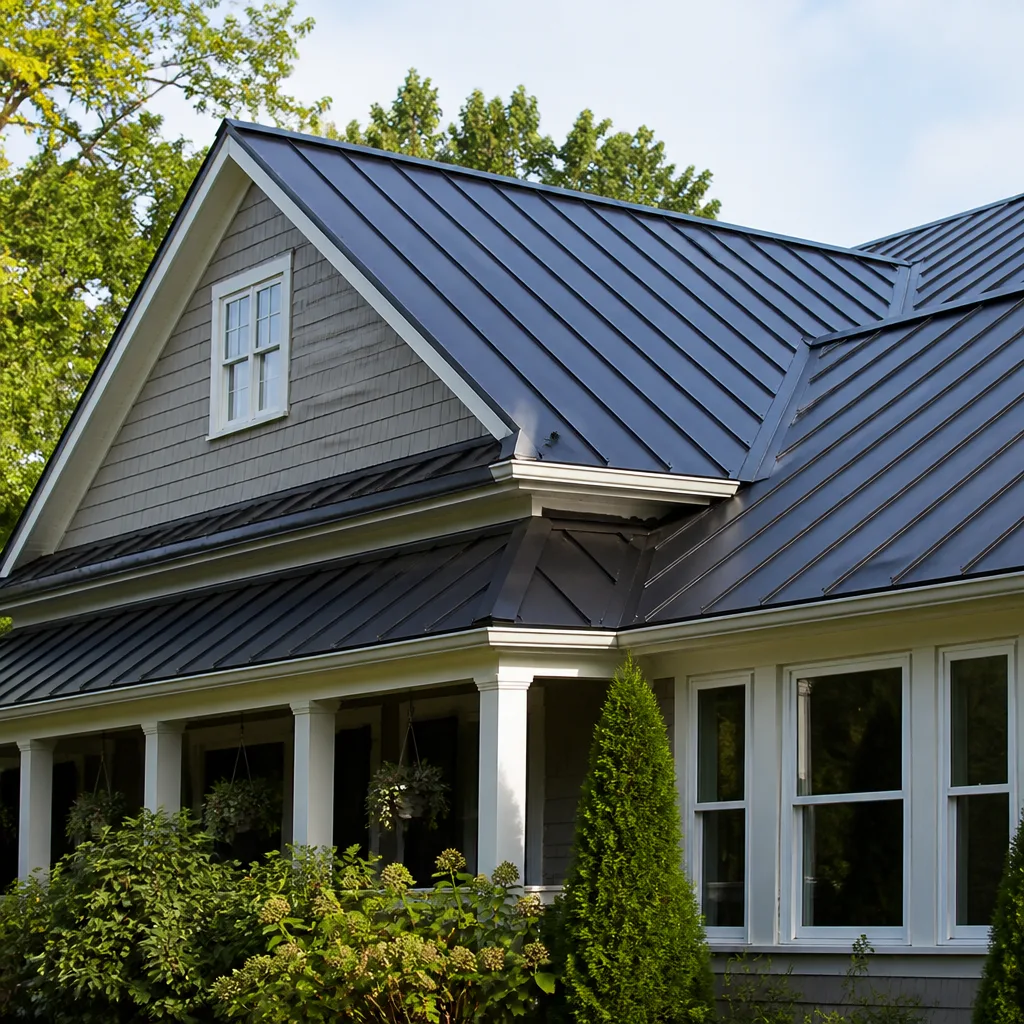 Metal roofing
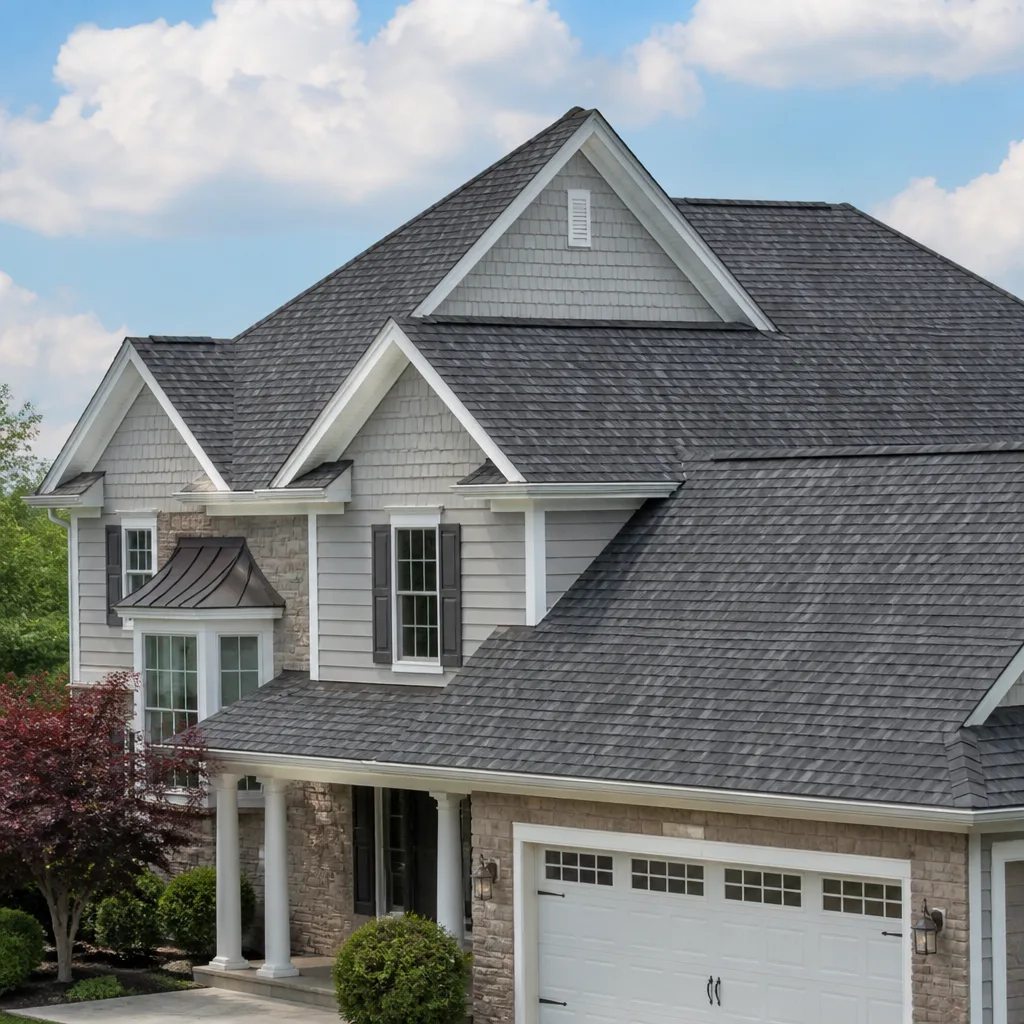 Architectural shingles
 Tile roofing
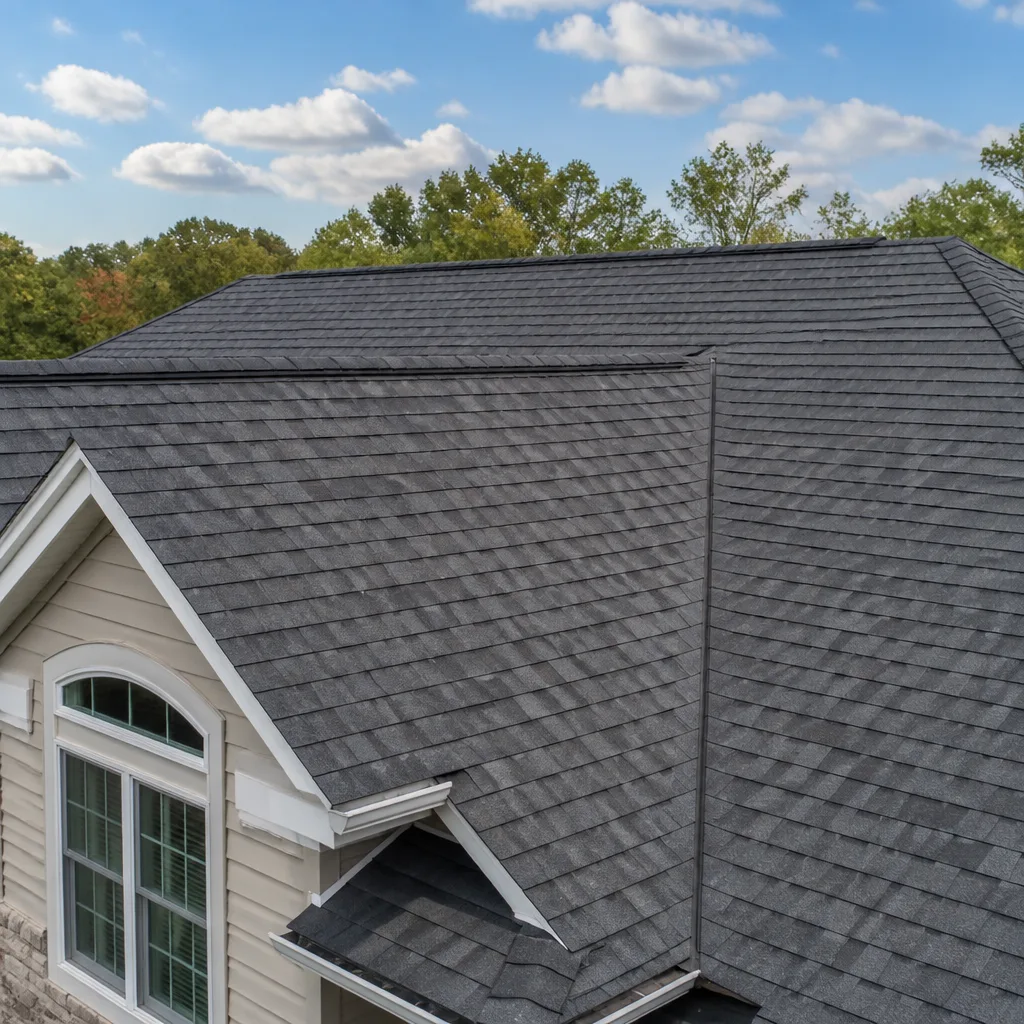 GAF
 Owens Corning
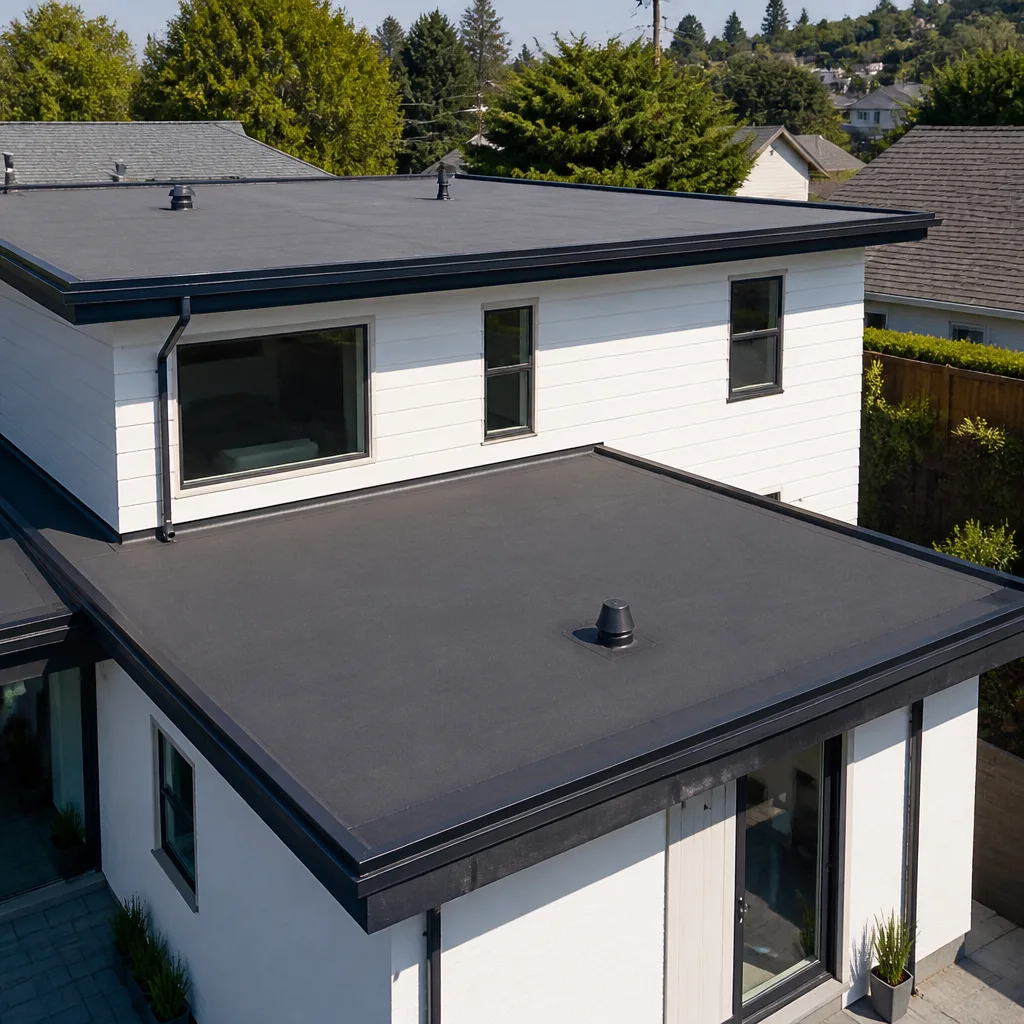 Flat & low-slope
Free roof inspection with deck photos before we talk money - GAF and Owens Corning certified installation
Roofing Warning Signs: A Boulder City Homeowner’s Reference Guide
The most expensive roofing mistake isn’t ignoring a visible leak. It’s ignoring the blister pattern on your flat cap sheet or the shadow line shift on your ridge that shows up two summers before water ever enters the house. In our experience working Boulder City roofs, the difference between a $400 repair and a $14,000 replacement almost always comes down to catching the quiet signals early. This guide walks through the subtle, easy-to-miss warning signs that appear on Boulder City homes two to four years before a failure, with the specific patterns, timelines, and attic checks that tell you what stage your roof is actually in.
Quick Answer
Most Boulder City roofing failures announce themselves years in advance through surface signals: blistering and alligatoring on flat sections, granule buildup in downspouts, daylight pinpoints in the attic, and lifted tab edges on west and southwest exposures. Catching these early-stage signs gives you a repair window that costs hundreds instead of thousands. If you see any two or more of the patterns below, it’s time for a professional inspection.
Styles & brands we work with
- Architectural shingles
- Metal roofing
- Tile roofing
- GAF
- Owens Corning
- Flat & low-slope
Table of Contents
- Blistering and Alligatoring on Flat and Low-Slope Sections
- How to Read Your Attic in Summer
- What Granule Migration in Downspouts Tells You
- Fascia and Soffit Staining: Flashing vs. Field Failure
- Wind Corridor Warning Signs on West and Southwest Exposures
- Shadow Line Shifts Along the Ridge
- A Rough Timeline: From ‘Normal’ to ‘Act Now’
- What to Fix First When You Find Multiple Signs
Blistering and Alligatoring on Flat and Low-Slope Sections
Many Boulder City ranch homes have low-slope additions, patio covers, or full flat roof sections over garages. These are the areas where blistering and alligatoring show up first, and they’re the sections most homeowners never look at because they’re not visible from the driveway.
Blistering looks like small raised bubbles in the cap sheet or modified bitumen surface, usually a half-inch to two inches across. Each blister is a pocket where trapped moisture or off-gassing has pushed the membrane away from the layer beneath. When you press one with your thumb on a warm afternoon, it feels soft and gives slightly. That softness is the tell. A healthy cap sheet stays firm.
Alligatoring is the deeper stage. The surface cracks into a pattern that looks like dried mud or reptile skin, with the cracking running in every direction rather than following the seams. When alligatoring is confined to a few square feet near a drain or penetration, it usually means those areas are due for a targeted patch. When it spreads across a whole section, the cap sheet is near the end of its service life and you’re looking at a replacement conversation rather than a repair.
Boulder City’s summer heat accelerates this faster than most homeowners expect. A cap sheet that would last 18 years in a cooler climate often shows its first blisters here by year 10 or 11. If you’ve got a flat section and you’re past that mark, get eyes on it before the monsoon season rather than after.
How to Read Your Attic in Summer
You can learn a lot about your roof without ever getting on it. Your attic is a diagnostic tool, and summer is the best time to use it. Here’s a simple walkthrough you can do yourself in about fifteen minutes. The only rule is that you don’t climb onto the roof itself – leave that to a professional.
- Check the temperature. On a 100-degree Boulder City afternoon, an attic with proper ventilation should run roughly 15 to 25 degrees hotter than outside. If it’s noticeably hotter than that, or if the heat feels trapped and still, you may have blocked soffit vents or inadequate ridge venting. Poor ventilation cooks shingles from underneath and shortens their life.
- Look for daylight pinpoints. With the attic dark, any pinhole of daylight through the roof deck is a direct path for water. Even one pinpoint means the underlayment and decking in that spot have been compromised. Mark it with a piece of tape from inside so a roofer can find it fast.
- Feel the decking surface. Run your hand along the underside of the roof deck. A healthy deck feels dry and firm. Soft spots, a spongy give, or visible dark staining means moisture has been getting in – often from a flashing failure you can’t see from above.
- Look for water stains and efflorescence. Brown rings on the rafters or a white powdery residue on the decking both point to moisture that has dried and returned more than once. That repeating pattern is what separates a one-time event from an active problem.
If you find any of these, don’t panic and don’t start poking at the decking. Note what you saw and call for an inspection. We’ve walked plenty of attics in Boulder City and can usually tell from the staining pattern alone whether the leak started at a vent boot, a chimney flashing, or a field shingle.
What Granule Migration in Downspouts Tells You
Every asphalt shingle sheds a small amount of granules over its life. That’s normal. The question is how much, and how fast. When you clean your gutters, look at what’s in the bottom. A handful of dark grit after a season is routine. A quarter-inch layer accumulated over a few months means the shingle surface is breaking down faster than it should.
Here’s a rough timeline that matches what we see on Boulder City roofs, most of which take heavy UV exposure year-round:
- Normal shedding: A thin scattering of granules in the gutter after a windy week. The shingles still look textured and the granule surface is intact.
- Early warning: Noticeable granule buildup every month or two, and you can start to see the backing mat showing through in a few spots. You’re probably 18 to 30 months from needing repair or replacement on the affected slope.
- Act now: Heavy granule accumulation, bare patches where the black asphalt backing shows through clearly, and shingles that look smooth rather than textured. The roof is shedding its UV protection and the field is failing. Plan to act this season, not next.
Granule loss is the single most reliable indicator of UV fatigue on a shingle roof. Once the granules are gone, the asphalt underneath takes the full sun. On Boulder City’s east-facing slopes, that process runs faster than on west-facing ones, so check your gutters on both sides of the house separately rather than assuming the whole roof is aging at the same rate.
Fascia and Soffit Staining: Flashing vs. Field Failure
Where the stain shows up tells you where the money should go. This is one of the distinctions that saves Boulder City homeowners the most money, and one of the ones competitors gloss over.
If you see staining on the fascia board – the wood trim at the edge of the roof – or on the soffit underneath the eaves, the leak is often not in the field of the roof at all. It’s usually a flashing failure. Flashing is the metal work around chimneys, vents, valleys, and where a wall meets the roof. Those are the points where water gets a chance to work its way in, and they fail long before the shingles in the middle of the slope do.
Look at the stain pattern this way:
- Stain runs in a vertical line down the fascia near a chimney or wall: Almost always the counter-flashing or step flashing has pulled loose or the sealant has dried out. That’s a small repair, usually under a few hundred dollars.
- Stain spreads horizontally across the fascia and along the soffit: Water is getting behind the gutter or the drip edge, often from a backed-up gutter or a lifted starter course. Fixable, but check the gutter hangers and the drip edge while you’re at it.
- Stain is concentrated at a vent pipe boot: The rubber boot has cracked or slipped. These boots have a shorter life than the shingles, so they’re a frequent source of leaks even on a younger roof.
- Stain runs up under the soffit from the inside out: This usually means the leak is above and behind, not at the fascia at all. Your attic check will narrow it down.
The takeaway: fascia and soffit staining almost always means “look at the flashing first, not the shingles.” A roofer who bills you for a field repair without checking the flashing hasn’t diagnosed the problem – they’ve just guessed.
Wind Corridor Warning Signs on West and Southwest Exposures
Boulder City sits in a wind corridor, and the west and southwest exposures take the brunt of it. The warning sign to watch for here is lifted tab edges – the bottom edge of a shingle curling up slightly rather than lying flat against the course beneath it. From the ground, you’ll see it as a row of shingles where the bottom edge looks “lifted” or has a slight wave to it. At the ridge or the edge of a gable, you may see the tabs standing up.
Lifted tabs matter because they break the wind rating. The nailing pattern and the seal-down strip earn the wind rating, not the shingle wrapper. Once the sealant strip fails, wind gets under the tab and peels it back. That’s how a single shingle loss turns into a section loss in one storm.
On the west and southwest slopes, run a visual check after any significant wind event. Look for:
- Tabs that have curled or lifted along the bottom edge
- Missing shingles (obvious, but easy to miss from the front of the house)
- Shingle fragments in the yard or gutter after a windstorm
- A wavy or rippled appearance along a course line
If you catch lifted tabs early, a roofer can re-seal them with roofing cement and a few nails, and that stops the peeling before the next storm. Once the tabs are gone, you’re into replacement territory for that slope. We see this pattern most often on Boulder City homes along the higher-elevation edges of town, where the wind funnels harder between the hills.
Shadow Line Shifts Along the Ridge
The ridge is the top edge of the roof, and it’s the first thing the late-afternoon sun hits. Walk out at about 5 p.m. and look at the ridge line from the street. A straight, even shadow means the ridge cap is intact. A shadow line that has shifted, dipped, or started to show the shingle edges standing proud of the cap means the ridge cap shingles have loosened.
Ridge cap failure is subtle, but it matters because ridge caps are the last line of defense over the most vulnerable seam on the roof. When those cap shingles lift or the sealant strip fails, wind-driven rain can get underneath and run down the field. In our experience, a shifted ridge shadow on a Boulder City roof is often the first visible sign of a ventilation or sealant problem, and it usually shows up 18 to 24 months before any interior damage.
The fix is usually straightforward – re-seal or replace the ridge cap – but only if a roofer is checking the ridge specifically. Many general roof inspections skip it because it’s hard to see from the ground. Ask any bidder whether they walked the ridge.
A Rough Timeline: From ‘Normal’ to ‘Act Now’
Every roof ages at its own pace, but the sequence of warning signs is fairly consistent. Here’s the rough progression we see on Boulder City asphalt roofs, from benign to urgent:
- Years 1-8: Normal granule shedding, tight ridge cap, intact flashing. Inspect annually, look at the gutters, and check the attic in summer.
- Years 8-12: First blisters appear on flat and low-slope sections. Granule shedding increases. Lifted tabs show on west/southwest slopes after wind events. This is your cheapest window to do targeted repairs.
- Years 12-16: Alligatoring spreads on flat sections, granule shedding becomes heavy, and the first fascia or soffit staining shows up. One or two repairs a year become routine. A replacement conversation becomes reasonable.
- Years 16+: Bare patches appear, shingles show lifting across multiple slopes, and interior leaks are likely. Every repair from here is money spent on a roof that’s nearly done. Plan for replacement.
This timeline is a guide, not a rule. Boulder City’s heat and UV exposure can compress the early stages, and a windstorm can accelerate the late ones. The point is that the visible signs you can catch from the ground track the actual condition of the roof – if you know what to look for.
What to Fix First When You Find Multiple Signs
If you’ve found two or more of the signs above, don’t panic-order a replacement. The priority order matters:
- First, stop the active leaks. Anywhere water is currently entering (daylight pinpoints, fascia staining near a flashing, a cracked vent boot) gets addressed first. These are the ones causing interior damage.
- Second, secure the wind damage. Re-seal lifted tabs and replace loose ridge caps before the next wind event turns a small loss into a slope-wide one.
- Third, evaluate the field. Once the leaks are stopped and the wind damage is sealed, assess the overall field. If the granule loss and alligatoring are widespread, you’re deciding between a replacement now and a replacement later, not between repair and replacement.
For anything beyond a targeted repair, start with our Roof Repair in Boulder City service – that’s the honest first call for most of these signs. If the field is genuinely past its life, we’ll say so, and we’ll walk through what a full Roof Replacement & Installation in Boulder City involves before you commit. If you’re considering a metal roof for its wind and UV performance in this climate, we install Metal Roofing in Boulder City as well – shingles from GAF, CertainTeed, and Tamko, and standing-seam panels that hold up to the wind corridor better than most asphalt.
Common Mistakes to Avoid
- Looking only from the driveway. The most expensive warning signs – lifted tabs, ridge cap shifts, alligatoring on flat sections – usually aren’t visible from ground level. A pair of binoculars and a walk around the perimeter catch more than you’d think, but a professional roof inspection catches everything.
- Judging the roof by a single sign. One lifted tab isn’t a crisis. Two or more warning signs together are a pattern, and the pattern is what tells you the stage. Track what you find rather than reacting to each sign in isolation.
- Assuming a flat section is “fine because it’s not leaking.” Water is patient. A flat roof can look intact from above and still be two summers from a failure underneath. Get the blisters and alligatoring checked rather than waiting for the interior stain.
- Skipping the attic check because it’s a hassle. Fifteen minutes in the attic in July tells you more about your roof’s real condition than an hour on the ground – and it’s free.
- Hiring the storm chaser who knocks after a wind event. Boulder City sees its share of out-of-town roofers who show up after a big windstorm and are gone before the next one. Ask anyone on your street – the name on the truck is the name on the license. If you can’t find a real local address, keep looking.
- Paying for a “free” inspection that turns into a pressure pitch. A real inspection ends with a written report, deck photos, and a clear answer about what needs fixing now versus what can wait. If the bidder rushes to a replacement number without showing you what they found, walk away.
- Ignoring fascia staining until the wood rots. What starts as a small flashing leak can rot the fascia and the soffit behind it. A flashing repair is usually under a few hundred dollars. Replacing fascia and soffit is not.
See the difference
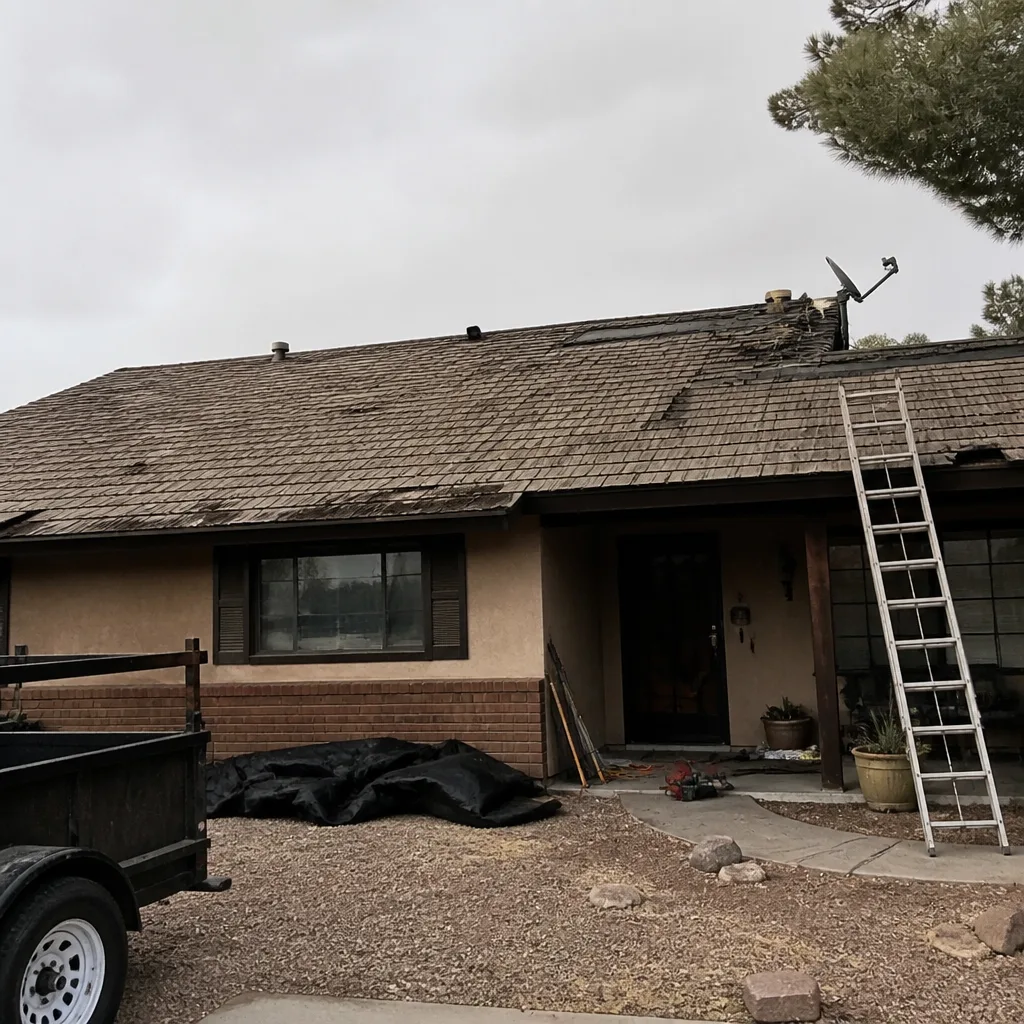 Before
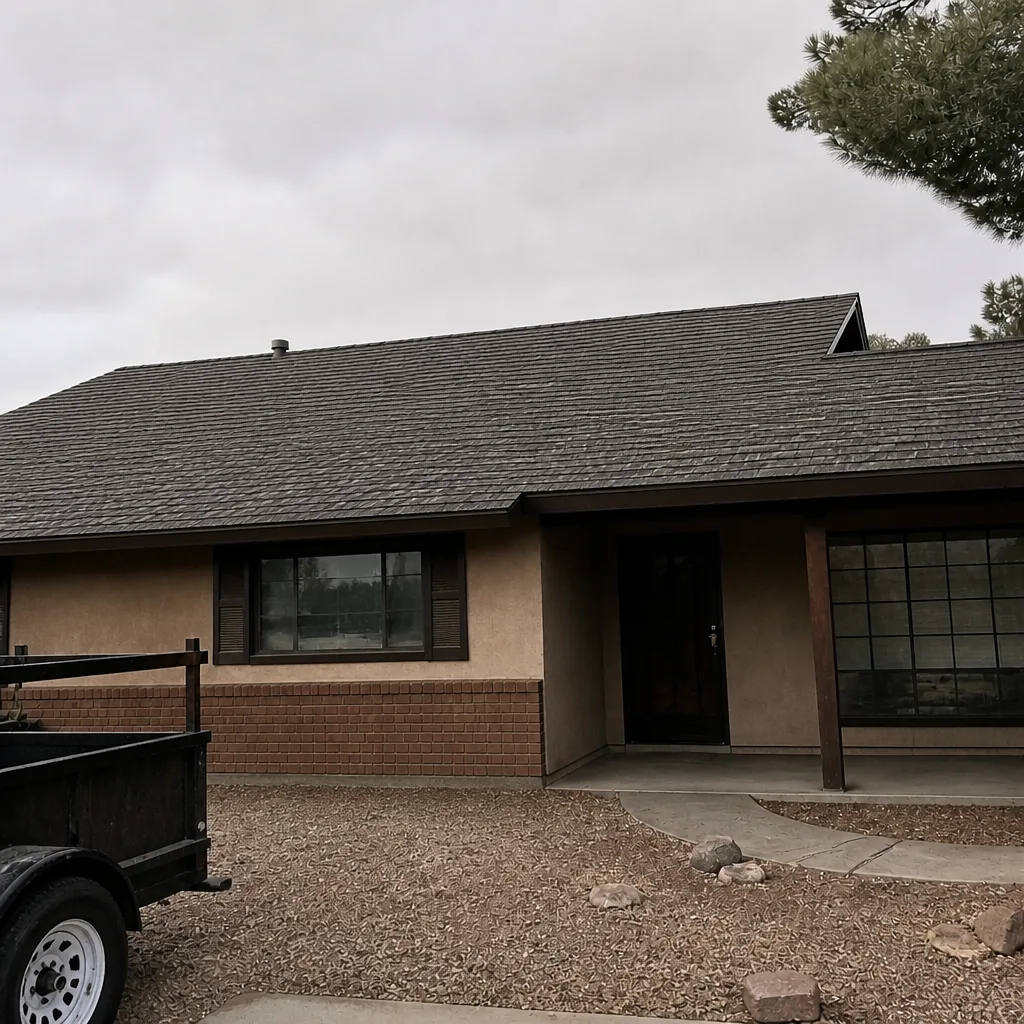 After
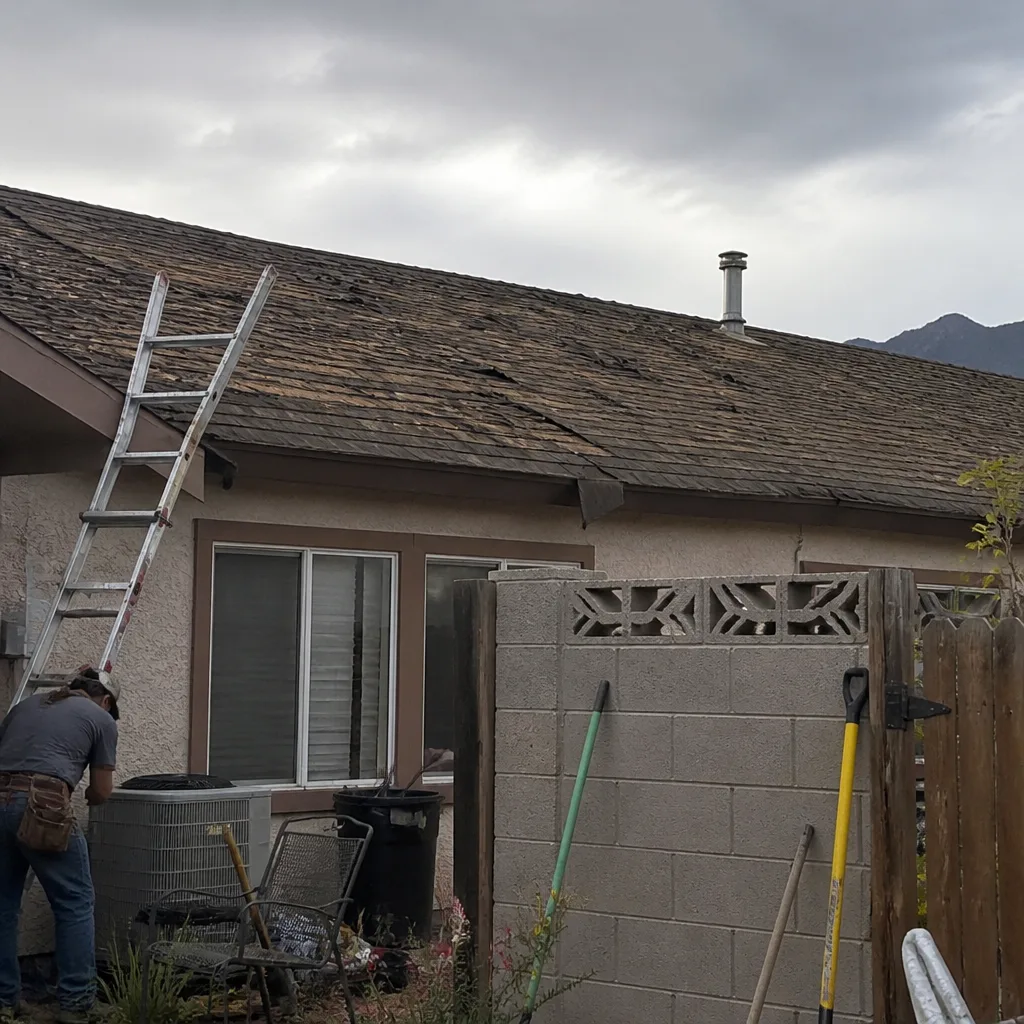 Before
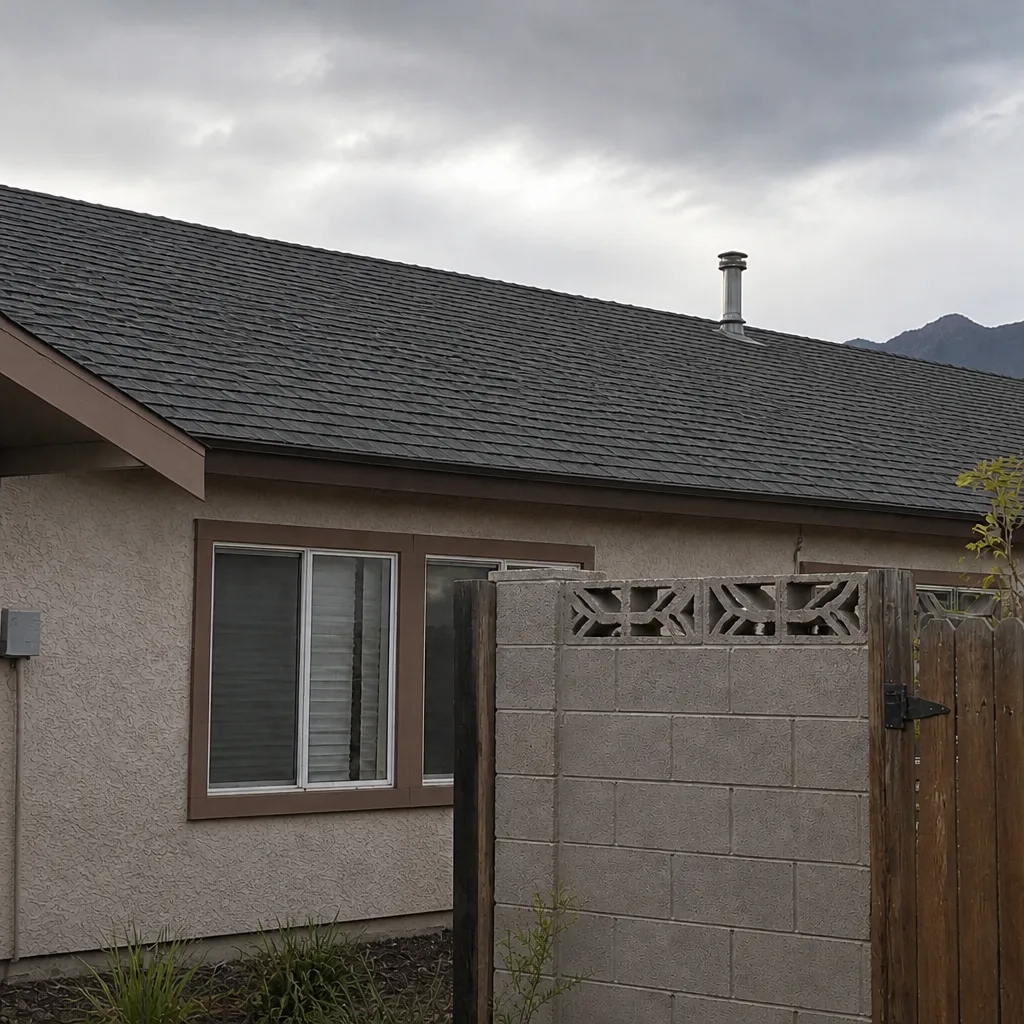 After
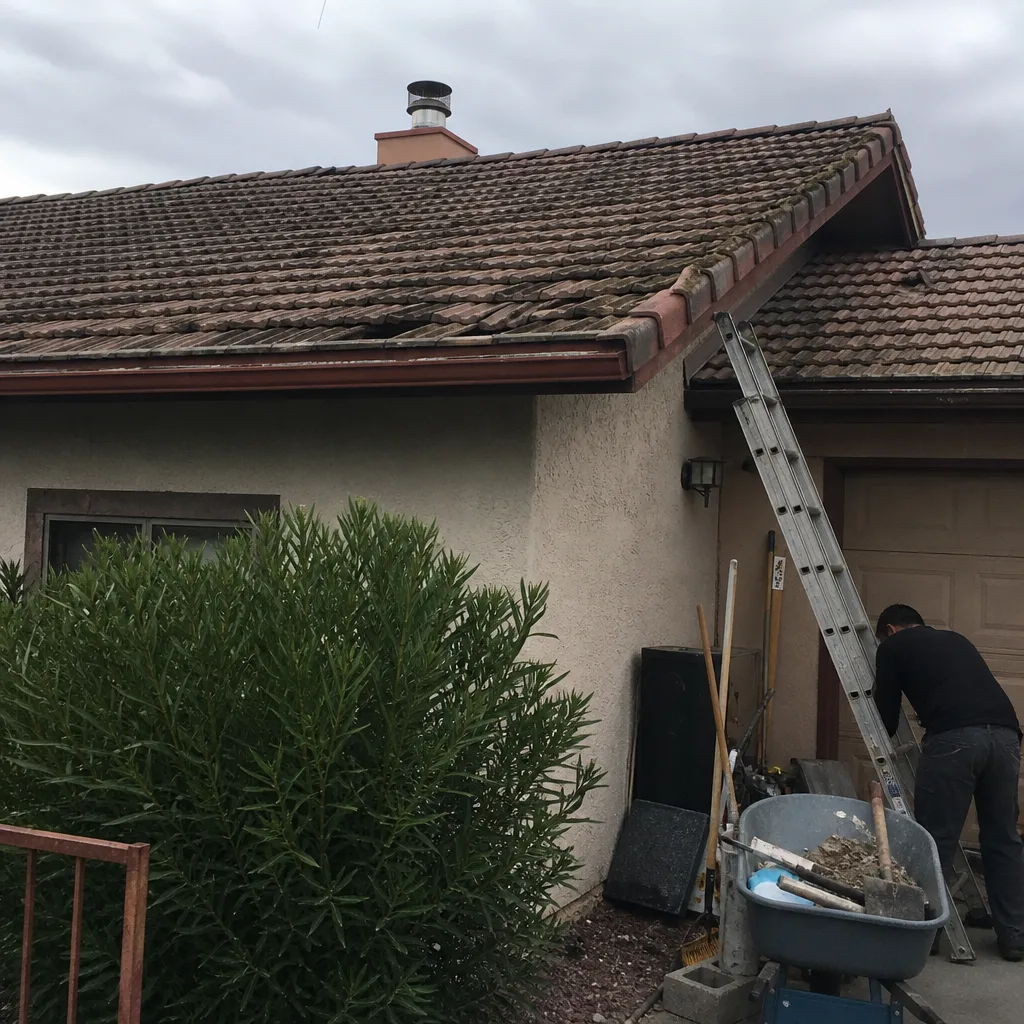 Before
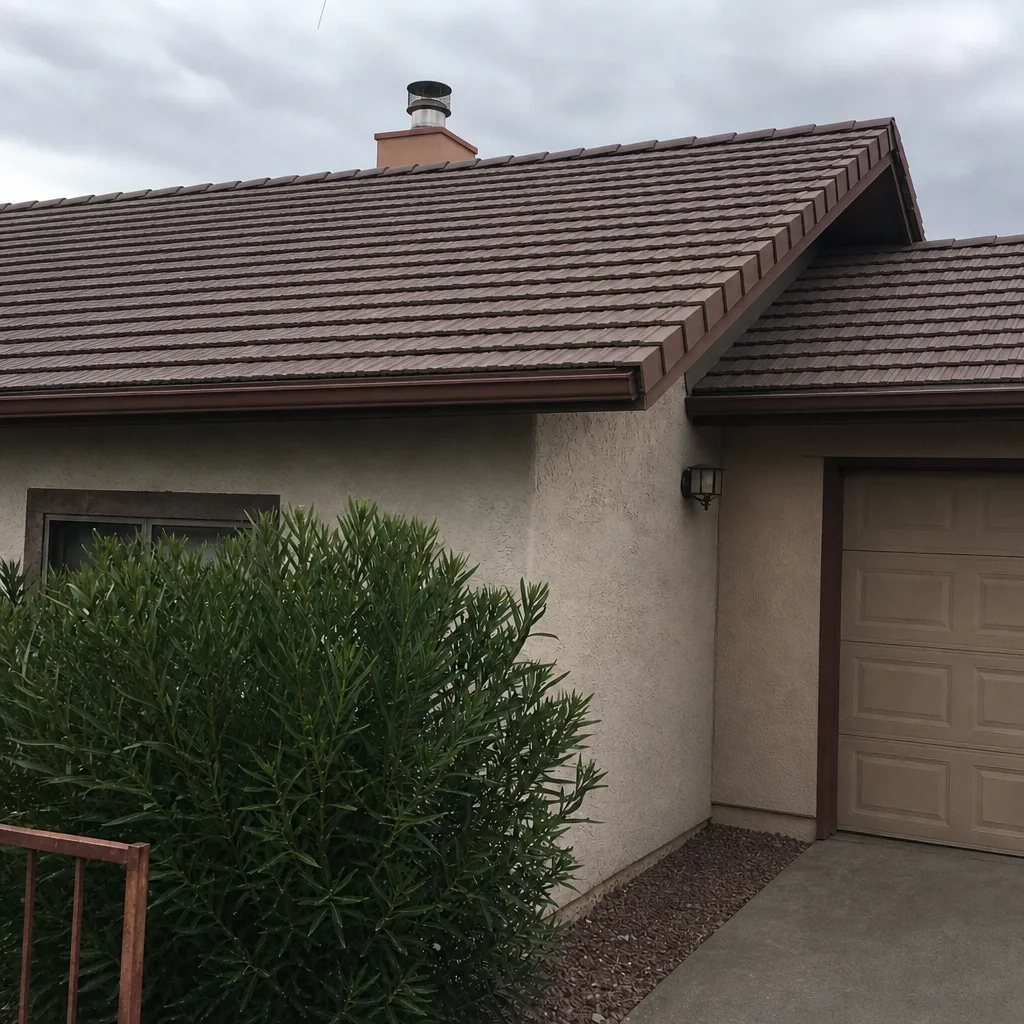 After
When to Call a Professional
Call a roofer when you find two or more of the warning signs in this guide, when you can see daylight in the attic, when the granule shedding has gotten heavy, or when wind has lifted tabs on more than a few shingles. Don’t climb up to investigate yourself – the roof is not a safe place for a homeowner, and the flat sections and wind-damaged slopes are exactly where a slip happens. We’ve been at the same address since 1996 and we’ve seen every one of these patterns on Boulder City roofs, often before the homeowner noticed the first sign. Bill and his crew will walk the roof, photograph the deck and the problem areas, and give you a written line-item estimate before any work starts.
Shepherd & Sons Roofing Boulder City offers free estimates in Boulder City – call (844) 761-8186 and Bill will come out.
Frequently Asked Questions
Check your gutters first. A thick layer of granules in the downspout or gutter channel is the earliest visible signal that your shingles are shedding their UV protection. It’s free to check and tells you more about shingle age than anything else you can see from the ground.
Go up in the afternoon on a hot day, keep the attic dark, and look for daylight pinpoints, brown water stains, and soft spots on the decking. Feel the underside of the roof for moisture. If you find any of these, note the location and call a roofer to check the top side.
Yes. Press a blister gently on a warm afternoon – if it gives under your thumb, the cap sheet is breaking down. Look for alligator cracking spreading across the surface. Widespread blistering and alligatoring mean you’re in the replacement window, not the repair window.
Boulder City’s UV and heat cut shingle life short. Most asphalt shingles here start showing their first warning signs around year 10 to 12 and reach end-of-life somewhere around year 16 to 18. Proper attic ventilation can add a few years. A cheap shingle in direct southwest sun may go sooner.
Fascia staining usually comes from a flashing failure – a chimney, a wall junction, a vent boot, or a drip edge – not a field shingle. The water is getting behind the roofing but hasn’t yet made it all the way inside. Fix the flashing before it does.
Yes, on any significant estimate. A written second opinion will confirm the scope and catch anything missed. Shepherd & Sons Roofing offers a free second opinion on any written estimate in Boulder City, and we’ll show you the deck photos before we talk money. Call (844) 761-8186 to schedule it.
The Bottom Line
Most expensive roof failures in Boulder City announce themselves two to four summers before the first leak, in the form of blisters on flat sections, granules in the downspouts, daylight in the attic, fascia staining at the flashing, lifted tabs on the windward slopes, and shifted shadow lines at the ridge. Catching any two of these together gives you a repair window that costs a few hundred instead of a replacement that costs five figures. Walk your gutters, check your attic this summer, and get a professional inspection the moment a pattern shows up. The earlier you look, the more money you keep.
If you’ve spotted any of these signs on your Boulder City home, call Shepherd & Sons Roofing Boulder City at (844) 761-8186 for a free estimate. We’ll show you the deck photos before we talk money, and you’ll get a written line-item quote with no surprises.
Learn more about our full roofing services on our Shepherd & Sons Roofing Boulder City home page.
Written by the team at Shepherd & Sons Roofing Boulder City.