
Last updated November 17, 2026
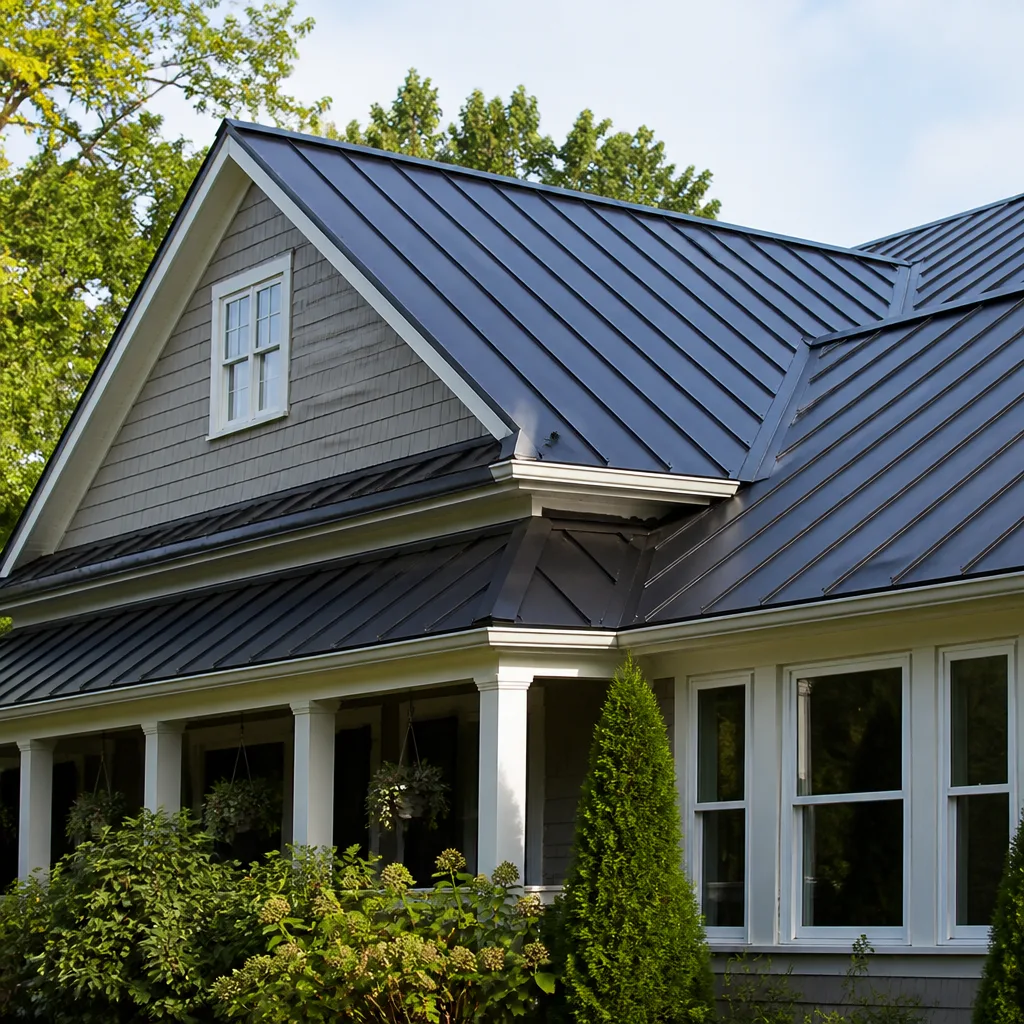 Metal roofing
 Architectural shingles
 Tile roofing
 GAF
 Owens Corning
 Flat & low-slope
Free roof inspection with deck photos before we talk money - GAF and Owens Corning certified installation
How Long Does Metal Roofing Take? Timelines and What to Expect
A quote that promises a one-day metal roof installation on a 2,000 sq ft house should raise an eyebrow. Not because it’s physically impossible, but because it usually means somebody isn’t letting panels acclimate, isn’t checking expansion gaps, and isn’t doing the flashing work that eats the most hours on any metal job. We’ve torn off metal roofs in Boulder City that were “finished” in a weekend and were oil-canning and leaking at the valleys inside six months. This guide walks you through what the extra days actually buy you: the real day-by-day timeline, why trim work takes as long as panel work, and how Boulder City heat and monsoon season shape the schedule.
Quick Answer
A typical metal roof on a 2,000 sq ft single-story home takes 3 to 5 days for exposed-fastener panels and 5 to 8 days for standing seam, from tear-off to final inspection. Add 1 to 2 days for a complex hip roof with multiple penetrations, and expect a 2 to 4 week booking lead time in Boulder City during spring and fall. The installation itself is the short part; acclimation, flashing, and trim are what stretch the calendar.
Styles & brands we work with
- Architectural shingles
- Metal roofing
- Tile roofing
- GAF
- Owens Corning
- Flat & low-slope
Table of Contents
- Why Metal Takes Longer Than Shingles
- The Acclimation Step Most Contractors Skip
- Day-by-Day: Standing Seam vs. Exposed Fastener
- Why Flashing and Trim Take as Long as the Panels
- Weather Windows in Boulder City
- What “Done” Actually Means on a Metal Roof
- Common Mistakes to Avoid
- Frequently Asked Questions
Why Metal Takes Longer Than Shingles
Asphalt shingles forgive a lot. If a shingle crew gets a course slightly out of square, the next course hides it. If a nail misses the nailing strip, the tab above covers it. If a flashing detail is a half-inch off, the shingle bends and the roofer walks away. Metal does none of that. Panels are cut to length at the factory or on a brake. Once a standing seam panel is hemmed and clipped, there’s no fudging it. The panel either lands square on the eave or it doesn’t, and if it doesn’t, the whole run comes off.
That single fact explains most of the timeline difference. A shingle crew working a simple gable roof can lay 20 to 30 squares in a day with the right manpower. A metal crew on the same roof might set 10 to 15 squares in a day, and that’s after the tear-off and deck prep are done. We’re not slower because we’re older. We’re slower because the material punishes the shortcuts asphalt forgives, and a roofer who rushes a standing seam job in Boulder City is setting up the homeowner for oil-canning, popped fasteners, and leak points at every penetration.
If you’re comparing bids and one number looks dramatically lower because the timeline is compressed to “one day,” ask what’s being skipped. The answer is almost always acclimation, expansion gaps, or the trim work. You can see more on how we approach Metal Roofing in Boulder City if you want the full scope of what a proper install covers.
The Acclimation Step Most Contractors Skip
Metal expands when it heats and contracts when it cools. In Boulder City, surface temperatures on a dark metal roof can reach 150°F or higher in July, while a metal panel sitting in a shaded warehouse might be at 75°F. Panels delivered from that warehouse in the morning and cut and fastened by afternoon go down at one dimension and try to grow by another dimension once the sun hits them. That movement is where oil-canning, wavy panel edges, and the pops and creaks come from.
Acclimation means letting the panels sit on the job site long enough to reach ambient temperature before they’re cut and fastened. Depending on the panel type, that’s usually a few hours to a full day of staging. On jobs we run in Boulder City, panels get dropped the day before install so the metal settles before a single cut is made. It’s an unglamorous step and it adds a day to the calendar. Skipping it saves a day and adds six months of complaints.
Here’s what acclimation actually involves on a real job:
- Panels delivered and staged flat on the ground, not leaning against a wall, so they warm evenly.
- Stacked with spacers between bundles so air moves through them and condensation doesn’t form.
- Left long enough for the metal to reach roughly the temperature it will see during install.
- Cut and hemmed the following morning while temperatures are still moderate.
If a Boulder City bidder tells you panels will arrive and go on the roof the same day, ask them how they’re accounting for thermal movement. There’s a good answer and a bad one, and the bad one is “they don’t move much.”
Day-by-Day: Standing Seam vs. Exposed Fastener
The two metal systems most homeowners choose between are standing seam, where the fasteners are hidden inside a raised seam, and exposed fastener, where screws with rubber washers run through the panel. Standing seam takes longer because every seam is a mechanical operation that has to be hemmed and clipped, but it moves less and lasts longer. Exposed fastener is faster but requires more care at the washer so over-tightening doesn’t crush the gasket.
Standing Seam, Standard Ranch House (2,000 sq ft, simple gable)
- Day 1: Tear-off of the old roofing, deck inspection, replacement of any rotten sheathing, installation of peel-and-stick underlayment at eaves and valleys.
- Day 2: Synthetic underlayment over the field, eave and rake trim set, first panel run chalk-lined and set.
- Day 3: Panel field completed, seams hemmed, clips installed, penetrations (vents, flues, satellite mounts) flashed.
- Day 4: Ridge cap, hip caps if any, sidewall and headwall flashing, valley trim, and the punch-list walk.
- Day 5: Final inspection pass, debris haul-off, gutter reattachment if the old gutters are being reused.
Exposed Fastener, Same House
- Day 1: Tear-off, deck repair, underlayment.
- Day 2: Panel installation with fasteners at every pan and seam, panel trim cut on-site.
- Day 3: Ridge, eave and rake trim, penetration flashing, punch-list.
Hip roofs with multiple penetrations, skylights, or complex valleys can add 1 to 2 days to either system. The Roof Replacement & Installation in Boulder City page covers the scheduling side if you’re planning more than just the metal roofing portion of a project.
Why Flashing and Trim Take as Long as the Panels
If you want to know the quality of a metal roof crew, don’t look at the panel field. Look at the flashing. Panels are the easy part. Every penetration, every transition from roof to wall, every valley and ridge and chimney needs a piece of metal cut, bent, and set so that water can’t get behind it. On a typical Boulder City ranch house we’ll set somewhere between twelve and twenty separate flashing pieces on a metal job. Each one is a custom cut. Each one takes time.
Here’s why that ratio matters. A crew that treats flashing as a quick afterthought can finish a metal roof in three days flat. A crew that treats every flashing detail as its own small job will take five or six. When you’re comparing bids and timelines, the longer one isn’t a slowdown; it’s a signal that the roofer knows where the leaks will happen. Water doesn’t find the middle of a panel. It finds the chase around the plumbing vent and the meeting point between the wall flashing and the rake trim.
Ask any bidder to show you photos of their past flashing work at a chimney or sidewall. If they can’t produce one, they’re either new to metal or they know the flashing is where their installs have failed. You can always call us at (844) 761-8186 for a free second opinion on any written estimate if you’re not sure what you’re looking at in a competing bid.
Weather Windows in Boulder City
Boulder City weather sets the schedule on metal jobs more than any other factor. Monsoon season runs roughly July through early September, and the afternoon thunderstorms can drop a half-inch of rain on a job site in twenty minutes with no warning. Metal panels are slick when wet. Panels are also slick when hot. A crew that’s halfway through a panel field when the sky opens up has a real safety problem and a real schedule problem.
That’s why we book metal roofs around the weather, not through it. Spring and fall are the sweet spots. Summer jobs get scheduled earlier in the day so the crew is off the roof before the afternoon build-up, and install-days in July and August sometimes slip if the forecast turns. Winter is usually workable, but cold mornings slow the peel-and-stick underlayment set time, and the panels themselves need a warmer window to seal properly at the seams.
What that means for you as a homeowner: if you want a metal roof on your Boulder City home before summer, get on the schedule in late winter or early spring. Roofing crews can only lay so many squares a week, and metal is more weather-dependent than shingle work. We usually see a two to four week lead time on metal jobs in the busy window and a shorter one in the shoulder seasons. We won’t promise you a faster date to win the bid; we’ll tell you the earliest honest date and show up on it.
What “Done” Actually Means on a Metal Roof Job
A metal roof can look finished while it’s not. The panels are on, the ridge is set, and from the street it’s a done deal. But a metal roof isn’t done until the punch list is clear. These are the items we walk through before we call a job closed, and if a bidder you’re talking to doesn’t have a punch-list process, that’s worth noticing:
- Every fastener checked for proper seating and correct torque, with no over-driven washers on exposed fastener systems.
- Every seam run end-to-end with a hand check for a fully closed hem or a properly set clip.
- Every flashing piece checked for a positive lap, proper sealant, and a clean termination edge.
- All panel ends trimmed so rake trim covers the cut edge without exposed material.
- Gutter attachments re-secured and tested with a hose at the downspouts.
- All fasteners swept up out of the yard, driveway and landscaping.
- A written walkthrough with the homeowner, with photos of the deck and underlayment before panels went down.
That last item is the one we care about most. We show you the deck photos before we talk money, and we show them again at the end. If a Boulder City roofer hand you a bill without ever showing you what was under the old roof, ask them why. The Roof Repair in Boulder City page has more on how we handle those conversations on smaller jobs too.
See the difference
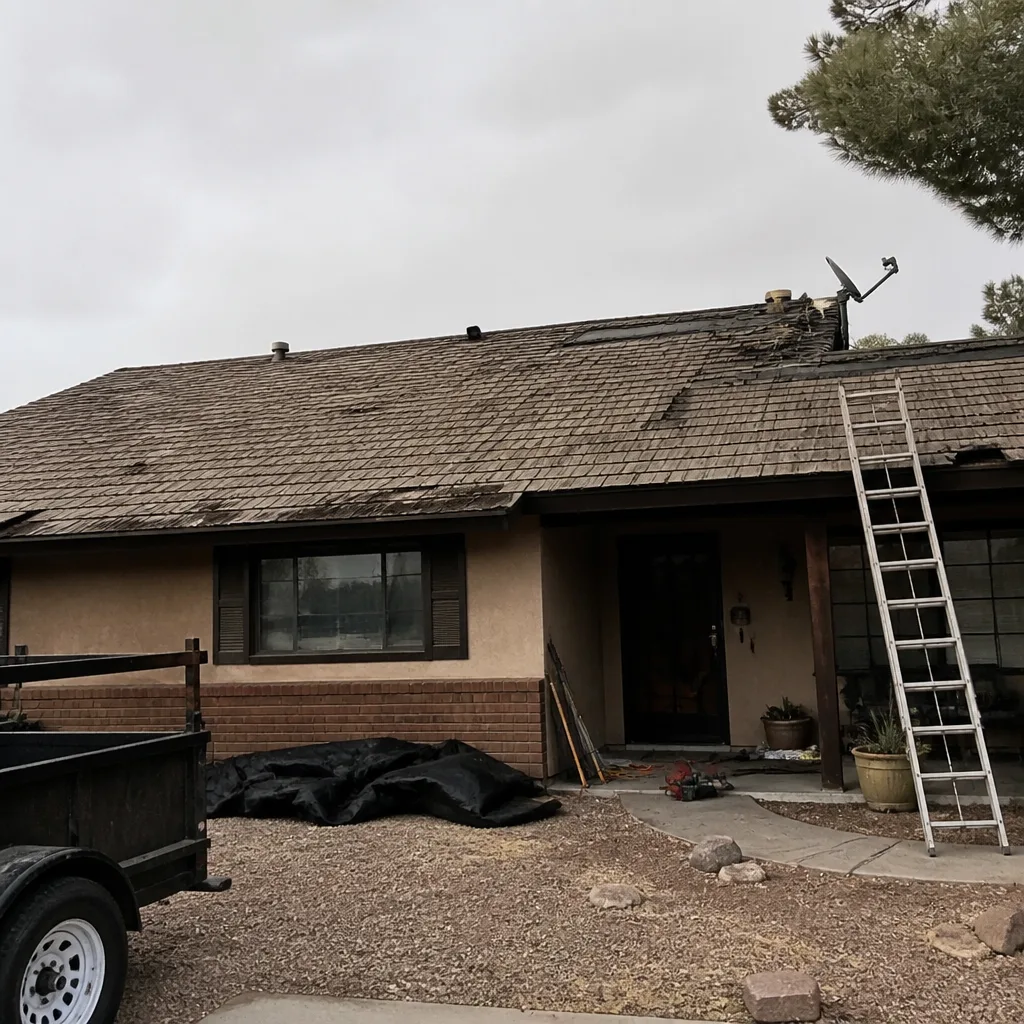 Before
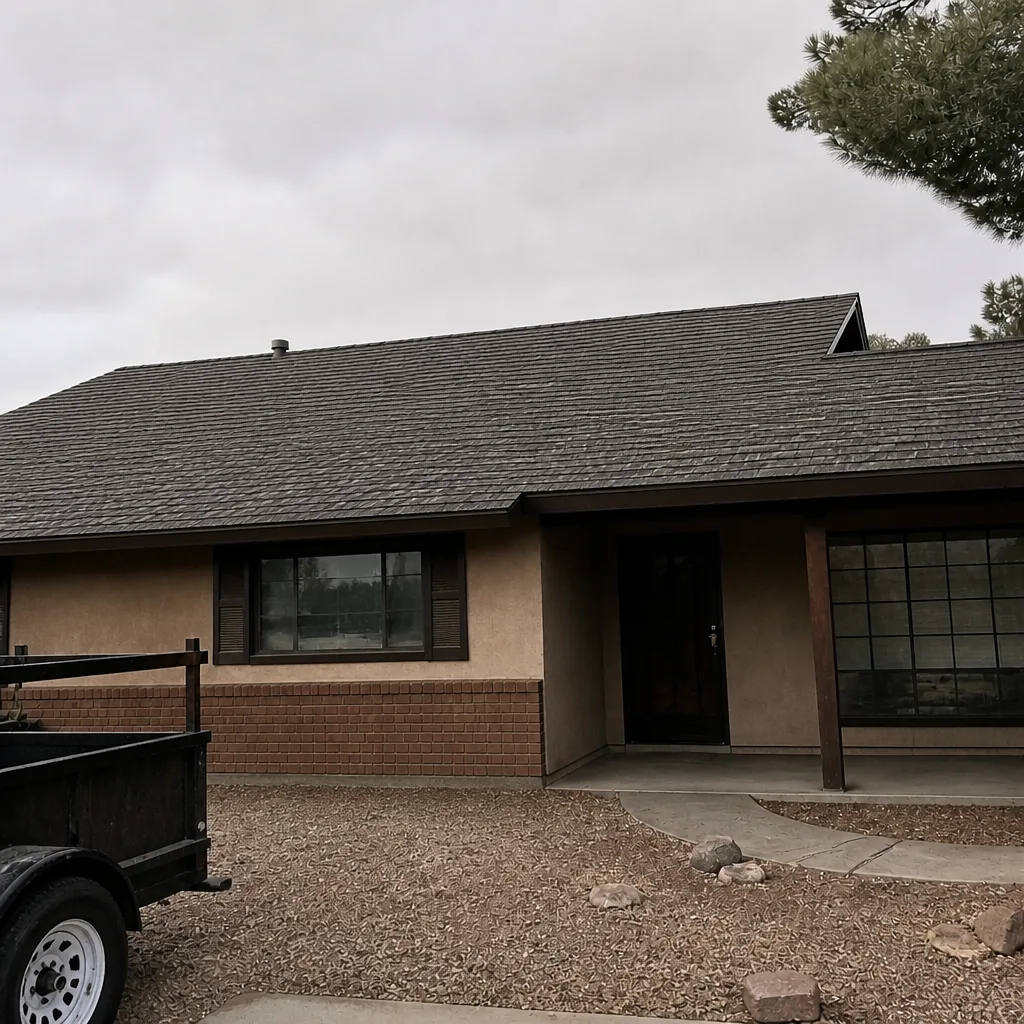 After
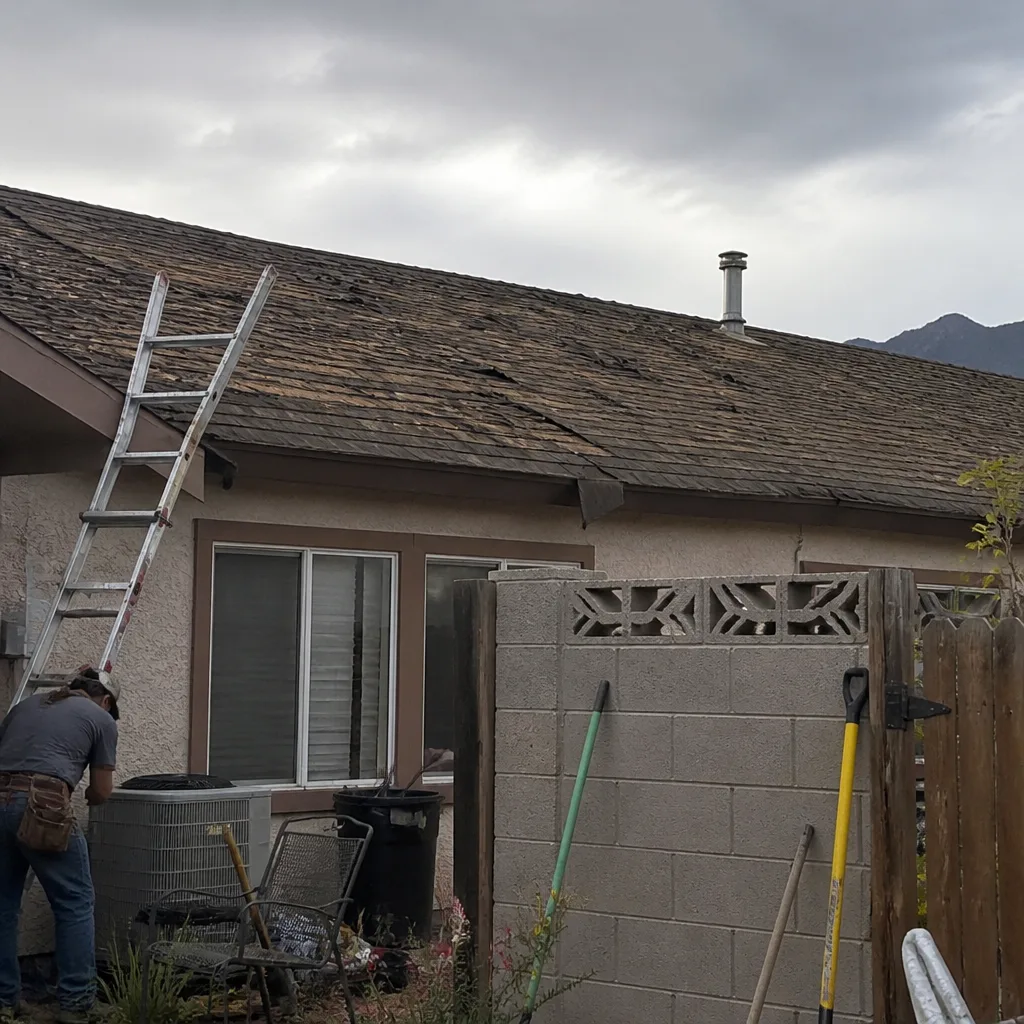 Before
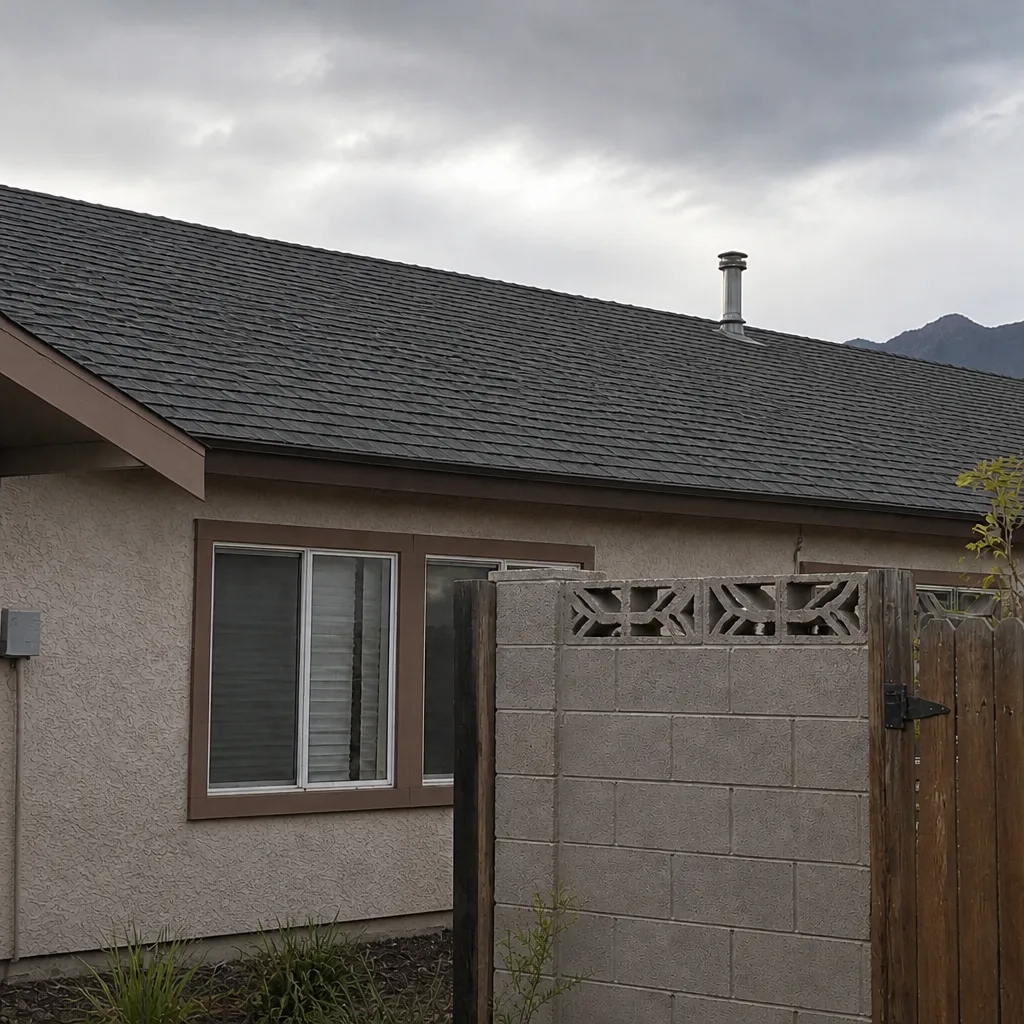 After
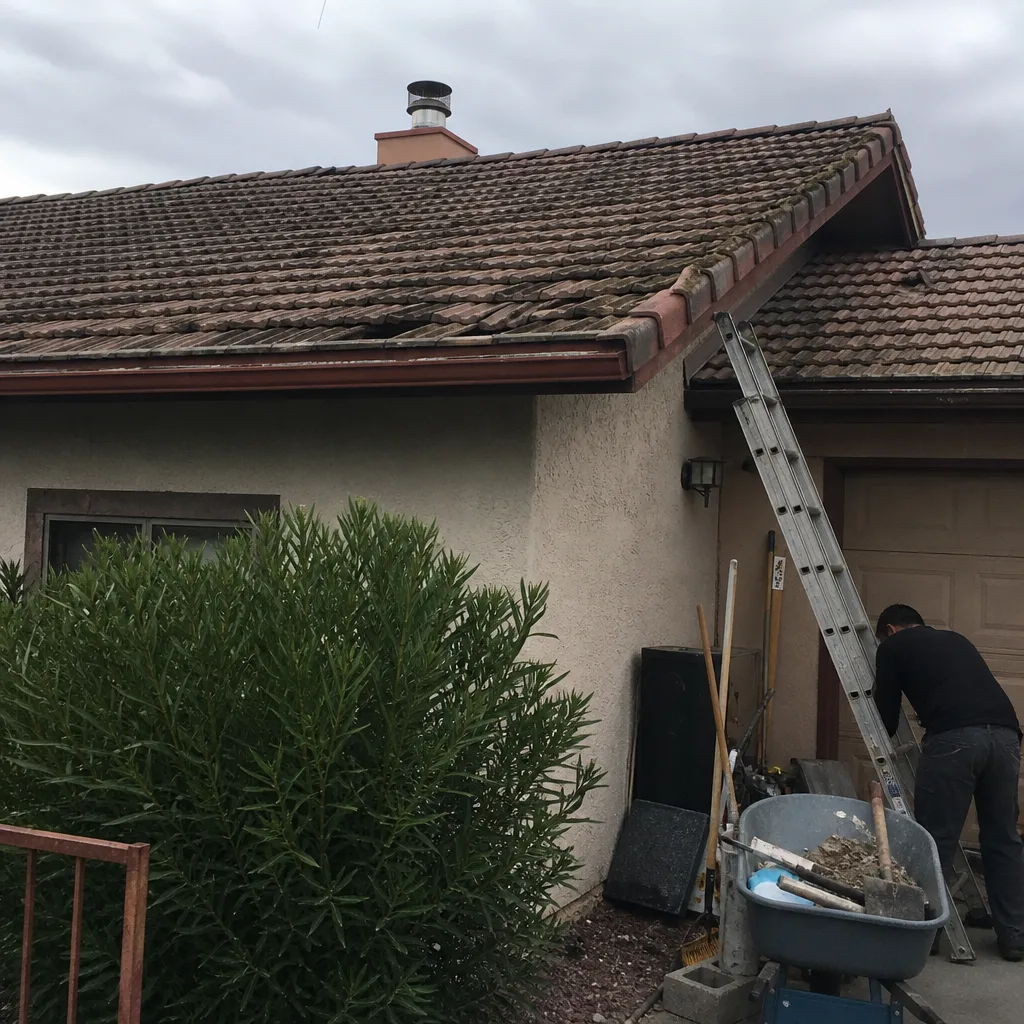 Before
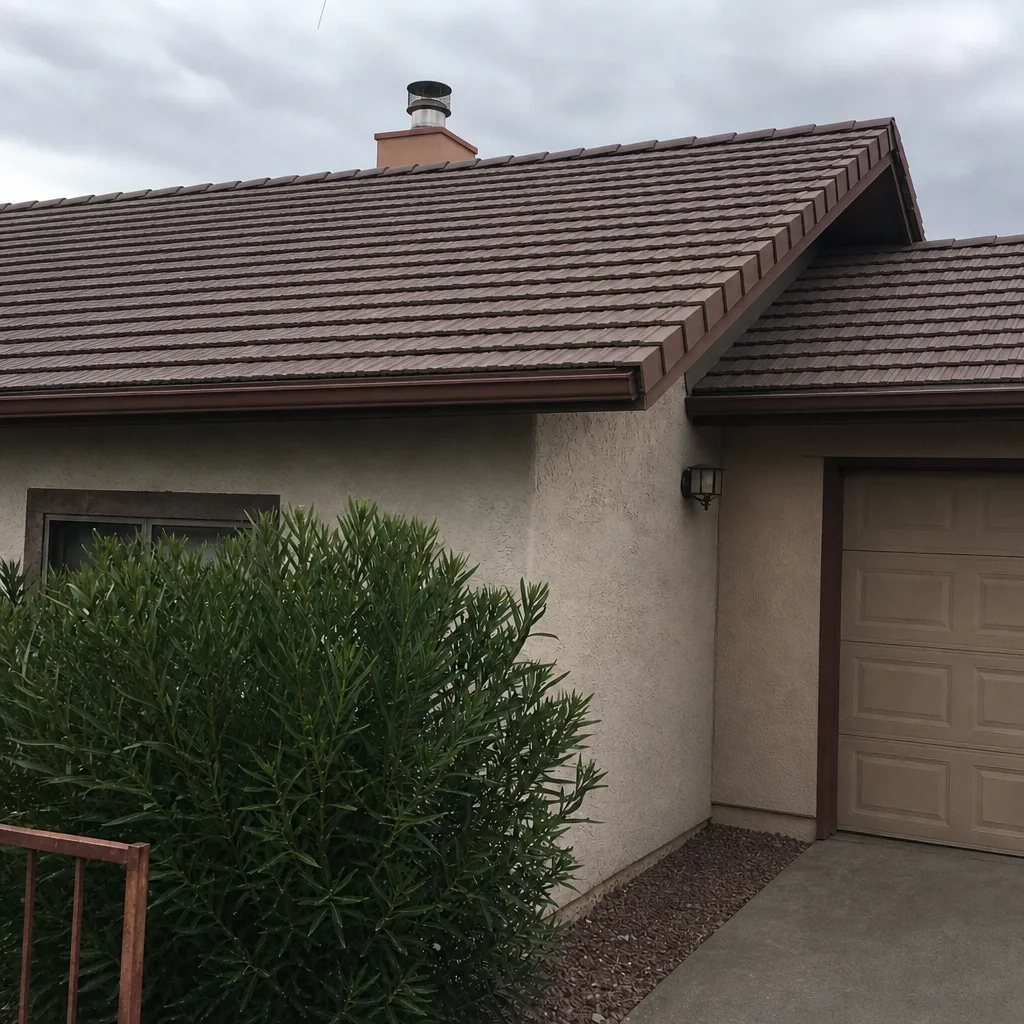 After
Common Mistakes to Avoid
- Booking a one-day install. It’s a red flag, not a selling point. Metal needs acclimation and trim time, and anybody promising otherwise is planning to skip something.
- Skipping the deck inspection. Panels hide rot. If the old roof came off and nobody replaced a single sheet of sheathing, either the deck was perfect (rare) or nobody looked.
- Under-sized vents through the panels. Metal roofs run hotter than shingle roofs. Attic ventilation needs to match the system, or you’ll have a hot attic and higher cooling bills in August.
- Over-tightened fasteners on exposed fastener panels. When the rubber washer gets crushed, the screw leaks. It’s the single most common failure we see on metal roofs in Boulder City.
- Reusing old gutters. Metal roofs shed water faster than shingles and the runoff is a heavier load. New gutters sized to the panel system, or at least checked, will save you a flooded foundation.
- Letting a storm chaser leave town before the punch list closes. If the company doesn’t have an address you can drive to, they don’t have a reason to come back for the little things.
- Ignoring the manufacturer’s nailing or clip pattern. The wind rating comes from the attachment pattern, not the panel gauge. A CertainTeed or Owens Corning system rated for high winds only hits that rating when the pattern is followed.
When to Call a Professional
Metal roofing isn’t a homeowner project, and not just because of the height. Panel cuts, hemming, flashing bends, and the sequencing of panels around penetrations all require specific tools and specific training. If your roof has more than a single leak or a couple of missing fasteners, or if you’re considering a full replacement, you want a crew that’s installed this exact panel system before. Shepherd & Sons Roofing Boulder City offers free estimates in Boulder City, and we’ll bring photos of similar jobs and walk you through the schedule before you sign anything. Call (844) 761-8186 for a free estimate. We pull permits, we’re licensed and insured, and every metal job carries our 90-Day Done Right Promise in writing.
Frequently Asked Questions
No, not on a normal residential home. A metal roof needs acclimation time before panels are cut, and it needs flashing and trim work that takes as long as the panels themselves. A one-day install almost always means somebody is skipping the steps that keep the roof watertight.
A properly installed standing seam metal roof typically lasts 40 to 70 years depending on panel gauge and coating, while asphalt shingles run 20 to 25 years in Boulder City’s sun. The metal roof pays back the extra days of installation over decades of less maintenance. Call (844) 761-8186 for an honest comparison on your specific house.
Yes. Summer install days get scheduled earlier in the morning so crews are off the roof before afternoon temperatures hit their peak, and acclimation time on panels can stretch in July and August because of the temperature swing between warehouse and rooftop. Spring and fall jobs usually run the smoothest.
Yes, we pull the permits and we pass the inspections. Metal roofing requires specific attachment specs that the inspector will check, and the paperwork is part of the job. If a bidder tells you no permit is needed for metal, that’s worth asking about.
Not on our jobs. We give you a written line-item quote with the square count, the panel system, the trim package, and the disposal cost, and we stick to it. If the deck turns out to have more damage than was visible, we show you photos and you approve any change before we touch it.
Late spring and early fall are ideal. Monsoon season in July and August brings afternoon storms that can push install days, and cold winter mornings slow underlayment set times. Booking in late winter for a spring install usually gets you the earliest honest date. Call (844) 761-8186 to check the current schedule.
The Bottom Line
Metal roofing takes 3 to 8 days of actual install time depending on the system and the roof complexity, plus a booking lead that runs a few weeks in the busy season. The extra time compared to shingles is not a slowdown; it’s the acclimation, the flashing work, and the punch list that keep a metal roof watertight and quiet for decades. A roofer who compresses the schedule is a roofer who plans to skip those steps. If you’re pricing a metal roof in Boulder City, get a bid that shows the square count, the panel system, the trim package, and the honest timeline side by side. Call (844) 761-8186 for a free estimate, and we’ll show you the deck photos before we talk money.
For everything else on your roof, from small fixes to a full replacement, our Shepherd & Sons Roofing Boulder City home page is the front door. We install products from CertainTeed, Owens Corning, IKO, Atlas, and more, and a live person answers the phone 24/7, including nights and weekends after a storm.
Written by the team at Shepherd & Sons Roofing Boulder City.