
Last updated November 17, 2026
 Tile roofing
 Architectural shingles
 Metal roofing
 GAF
 Owens Corning
 Flat & low-slope
Free roof inspection with deck photos before we talk money - GAF and Owens Corning certified installation
Tile Roofing Troubleshooting: Common Problems and How to Fix Them
Bill once drove out to a “small leak” on a tile roof in Boulder City and found the homeowner had been patching two cracked tiles every spring for six years. The tiles weren’t the problem. The felt underneath had been letting water in since the first crack, and the plywood deck beneath that was soft enough to push a screwdriver through by the time anyone looked. Here’s the thing about tile roofs: the broken tile you can spot from the driveway is almost never where the water is coming from. It’s the flashing, the valley metal, or the underlayment that’s been quietly failing for years. This guide walks you through how to troubleshoot a tile roof properly, so you fix the actual problem instead of the visible one.
Quick Answer
Most tile roof leaks in Boulder City don’t come from the tiles themselves. They come from failed underlayment, valley flashing, or ridge and hip mortar that’s dried out in the desert heat. The fix depends on what’s actually failing: a single cracked tile is a repair, but a soft deck or rusted valley metal usually means the underlayment underneath is at the end of its life and the water has been getting in for years. Check the attic before you call anyone.
Styles & brands we work with
- Architectural shingles
- Metal roofing
- Tile roofing
- GAF
- Owens Corning
- Flat & low-slope
Table of Contents
- How to Inspect a Tile Roof Before You Call Anyone
- Valley Flashing Failures: Why This Joint Fails First
- Cracked Tile Triage: Fluke, Foot Traffic, or Deck Movement
- The “Walking the Tile” Damage Cycle
- Mortar Ridge and Hip Cap Failure in Desert Heat
- Repair vs. Replace: When Tile Roofing Has Run Its Course
- Prevention and Maintenance for Boulder City Tile Roofs
How to Inspect a Tile Roof Before You Call Anyone
The most useful inspection a homeowner can do doesn’t happen on the roof. It happens in the attic. Before anyone climbs a ladder, you can gather enough information to know whether you’re looking at a tile problem or an underlayment problem, and that single distinction will shape your whole conversation with a roofer.
Start from the ground. Walk the perimeter on a calm day and use binoculars to scan each plane of the roof. Look for cracked, slipped, or missing tiles, mortar crumbs in the gutters, and any rust stains or white mineral streaks on the tile faces. Those white streaks are efflorescence, and on a Boulder City roof they usually mean moisture has been cycling through the tile for a long time. Note where you see problems. If cracks form a straight line up a slope, you’re looking at something structural. If they cluster around a valley or a vent, you’re looking at a joint failure.
Then go up into the attic with a flashlight. Here’s exactly what to look for:
- Water staining on the rafters or deck. Brown rings or dark streaks on the underside of the deck tell you water has been getting through, and the location tells you where.
- Daylight coming through the deck. Any light means a hole, a failed penetration, or a rotten board.
- Soft spots in the plywood. Press with a screwdriver, gently. If it sinks in, the deck is compromised.
- Rust on the nail points sticking through. Shiny nail tips are normal. Rusted nail tips mean long-term moisture.
- Mold, mildew, or a musty smell. These point to chronic moisture rather than a single event.
If the attic is dry and clean but you can see cracked tiles from the ground, you’re likely looking at a single-tile repair. If the attic shows staining in the middle of a slope, well away from any valley or penetration, the underlayment underneath the tile is probably the culprit. That’s the case where Bill sees the most surprise. Homeowners expect a $400 tile patch and find out the felt has been failing for years, which turns it into a different job. For roof repair around Boulder City, understanding which problem you actually have is the whole ballgame.
Valley Flashing Failures: Why This Joint Fails First
If there’s one place on a tile roof that fails before everything else, it’s the valley. A valley is where two roof planes meet and channel water off the roof, and on a tile system that channel is lined with metal flashing. In Boulder City the sun bakes that metal to 150 degrees or more in July, and the expansion and contraction cycle from day to night slowly opens the seams, lifts the edges, and lets water behind the tile. Rust comes next. Once the metal has rusted through, water runs straight down the valley and into the deck.
Signs of a failing valley include rust-colored stains on the tiles adjacent to the valley, visible separations between the metal and the tile, debris packed in the channel, and staining in the attic directly below the valley line. Telltale debris like tiny bits of grit and rust flakes washing into the gutters is another one.
A proper valley repair is not a smear of sealant. It involves lifting the surrounding tiles, removing the old metal, checking the deck for rot, installing new valley metal with proper laps and a waterproof underlayment beneath it, and resetting the tiles with new fasteners. A band-aid is a tube of roofing cement squirted into the seam, and it will last one monsoon season at best. Ask any roofer you call what they plan to do at the valley, and see whether the answer involves new metal or a caulk gun. For the broader picture on tile services, our Roof Repair in Boulder City page spells out how we handle valley and flashing work. We also sometimes find homeowners with a valley leak that turns into a full Roof Replacement & Installation in Boulder City conversation, since metal valleys rarely fail alone.
Cracked Tile Triage: Fluke, Foot Traffic, or Deck Movement
Not every cracked tile means the same thing. A single crack near a vent is one kind of problem. A cluster of cracks in a straight line up a slope is another, and the difference matters because the fix is different too.
A fluke crack is exactly what it sounds like. It’s a tile that got hit by a falling branch, took a bad step from a worker, or arrived with a hairline flaw that finally split. These are isolated, one-off, and the fix is to replace the tile. Fasteners get pulled, the tile gets lifted, a new one goes in, and the surrounding tiles get reset. A close match on color and profile is important; tile from a slightly different batch can look different after a few years, so a good roofer keeps a box or two of spares from the original install whenever possible.
Foot traffic damage looks different. If the cracks trace a path between two rooftop units, or run parallel to a line of solar panels, or follow where a technician clearly walked, you’re looking at repeated stress on individual tiles. Tile is rigid and doesn’t flex well. A full-grown man stepping on a tile that spans two battens with a hollow space underneath, or that’s sitting on a slightly uneven bed of mortar, will crack it. Every time. And those cracks don’t show up as a leak right away. The tile holds water out even when it’s cracked, so the visible crack sits there for six months to a year before the underlayment underneath breaks down enough to let water through. By then, nobody remembers who walked on the roof.
Deck movement is the one that scares Bill the most. When cracks line up in a straight line across multiple tiles or run in a pattern along a rafter, the underlying deck has probably shifted or settled. That’s not a tile problem. That’s a structural problem, and patching tiles over a moving deck is throwing money at the wrong thing.
We install products from GAF, CertainTeed, Owens Corning, and IKO for replacement work when the tile system needs to be re-bedded on a fresh underlayment, and we can match most common tile profiles. If you’re wondering whether the metal parts of your roof need a fresh look too, our Metal Roofing in Boulder City team handles flashing and trim work alongside the tile crew.
The “Walking the Tile” Damage Cycle
Here’s the cycle that catches people off guard: an HVAC technician, a solar installer, or a handyman walks on your tile roof in, say, March. Nothing appears to break. Maybe one tile cracks and he doesn’t mention it. Over the next twelve to eighteen months, the crack, plus the small amount of foot pressure that flexed every tile he stepped on, starts to show. In February of the following year you notice a stain on the ceiling in the room below where he was working, and you call a roofer.
The roofer finds six or eight cracked tiles along the path the technician took, and the underlayment underneath them has been degrading from sun and heat exposure through the cracks for a year. What would have been a $300 tile replacement in March is now a $1,600 underlayment repair in February. That’s the walking-the-tile damage cycle. It compounds.
What you can do about it:
- Ask anyone who goes on your roof to walk on the foam-soft side or along the hips and ridges when they can.
- Request a photo of the roof at the end of any work they do up there. Smartphones make this easy, and any legitimate contractor will take thirty seconds to snap a few pictures of the area they worked on.
- Do a binocular scan after any roof visit, especially if the tech was up there for more than an hour.
- Keep a folder of the photos with the date and the name of the company, so you have documentation if the roof starts leaking later.
If a technician refuses to send photos or says something vague like “we were careful,” that’s a signal. In our experience, the crew that walks a tile roof without cracking anything is the one that will happily take a photo to prove it.
Mortar Ridge and Hip Cap Failure in Desert Heat
The ridge and hip caps are the tiles that sit along the top edges of the roof, and they’re held in place by mortar and by the small tile pieces underneath. In Boulder City, mortar gets hammered. Summer surface temps on a tile roof routinely push past 160 degrees, and that heat pulls moisture out of the mortar faster than it can cure. Over a few years, the mortar dries and shrinks, then cracks, then starts to lose its grip on the cap. And a cap that’s been loosened but not yet blown off is one big windstorm away from going through a window or landing in the neighbor’s pool.
How to spot it before you have to replace a blown-off cap:
- From the ground with binoculars, look along the ridge line for caps that sit at a slightly different angle than their neighbors.
- Look for mortar crumbs or small chunks of cement on the ground or in the gutters, especially after a windstorm.
- Check the underside of the ridge line in the attic for water staining. Ridge leaks often present first as a damp spot near the ceiling peak.
- If you can get a safe look at the ridge from a ladder (stay off it yourself), check for visible gaps between the cap and the mortar bed.
Re-pointing a ridge means cleaning out the old mortar, checking the fasteners and the tile pieces beneath the cap, and re-bedding the cap in fresh mortar. On a typical single-family home in Boulder City, re-pointing the ridge is a modest one to two-day job that depends on linear footage and access. Waiting until the caps are gone is always more expensive, because caps break, and if a cap is missing you can’t just re-bed the old one. If you’re seeing loose caps, don’t wait for the next windstorm to test the theory. Ask any roofer to look at the ridge on your free estimate.
Repair vs. Replace: When Tile Roofing Has Run Its Course
Tile is a fifty-year material. The roof system around it isn’t. The underlayment under the tile wears out in 20 to 25 years in a desert climate, and once that felt goes, the tiles that are still sitting there look perfectly good while the actual waterproofing beneath them is gone. This is the single biggest source of confusion in tile roofing, and it’s why so many homeowners keep patching tiles for years before learning the felt underneath has been the problem the whole time.
Here’s how to think through the repair-or-replace call:
- Repair if the number of damaged tiles is small (a handful, not dozens), the attic shows no chronic staining, the valley metal is intact, and the ridge mortar is still firm. A tile patch or a valley repair is a legitimate, modest-cost fix.
- Consider replacement or re-underlayment if you’re seeing widespread attic staining, multiple valley or penetration failures, or the roof is more than 20 years old and showing water at multiple points. Lifting all the tile, checking and replacing the deck where needed, installing new underlayment, and re-setting the tile is a real option and costs less than a new roof system because the tile can be reused.
- Replace the whole system if the tiles themselves are brittle, frost-cracked, or mismatched from decades of patch jobs, and the deck is soft in more than one area.
Ask any bidder for the square count and a line-item breakdown of tile used, underlayment, deck repair allowance, and any flashing. A roof is measured in squares – ask any bidder how many they counted. Anyone who quotes a single all-in number without breaking it down is hiding something. Our Shepherd & Sons Roofing Boulder City home page lays out how our estimates work, and every job comes with the 90-Day Done Right Promise in writing.
Prevention and Maintenance for Boulder City Tile Roofs
A tile roof doesn’t need much, but the little it needs matters. Once a year, do a binocular scan from the ground. Twice a year – spring and fall – clean out the gutters and look for tile crumb or mortar debris. After any significant wind event, walk the perimeter and check the ridge. After any rooftop work by an HVAC, solar, or satellite technician, snap a photo record.
Once every three to five years, have the roof looked at by someone who knows tile. A quick inspection isn’t a sales pitch; it’s a fifteen-minute walk-through that catches the cracked tile, the loosening ridge cap, or the rusting valley before any of them become a leak that costs ten times as much. The tile roof that lasts forty years is the one that gets looked at, and the one that fails at fifteen is the one that got ignored because “it’s tile, it lasts forever.”
Common Mistakes to Avoid
- Patching tiles without checking the underlayment. If the attic shows any staining near a cracked tile, the felt underneath is already wet. Replacing tile over wet felt does nothing.
- Sealing a valley with roofing cement. It’ll work for one monsoon and fail the next. Proper valley work means new metal, not a caulk gun.
- Walking the roof in sneakers or work boots without foam pads. Tile is brittle. A technician in hard sole shoes on a 30-year-old tile roof will crack tiles, and those cracks show up as leaks a year later.
- Ignoring ridge crumbs. Small pieces of mortar on the ground after a windstorm mean the ridge caps are loosening. Wait for the next storm and one goes through a window.
- Hiring based on a phone quote alone. A real tile roof estimate is a line-item page, not a single number. If the number on the phone is different from the number at the door, walk away.
- Not asking for photos after any rooftop work. “We were careful” is not documentation. A smartphone photo of the tiles the tech stepped on is.
- Skipping a fall inspection because the roof looks fine from the street. Tile hides its failures. The underlayment fails underneath a roof that looks perfectly good from the ground.
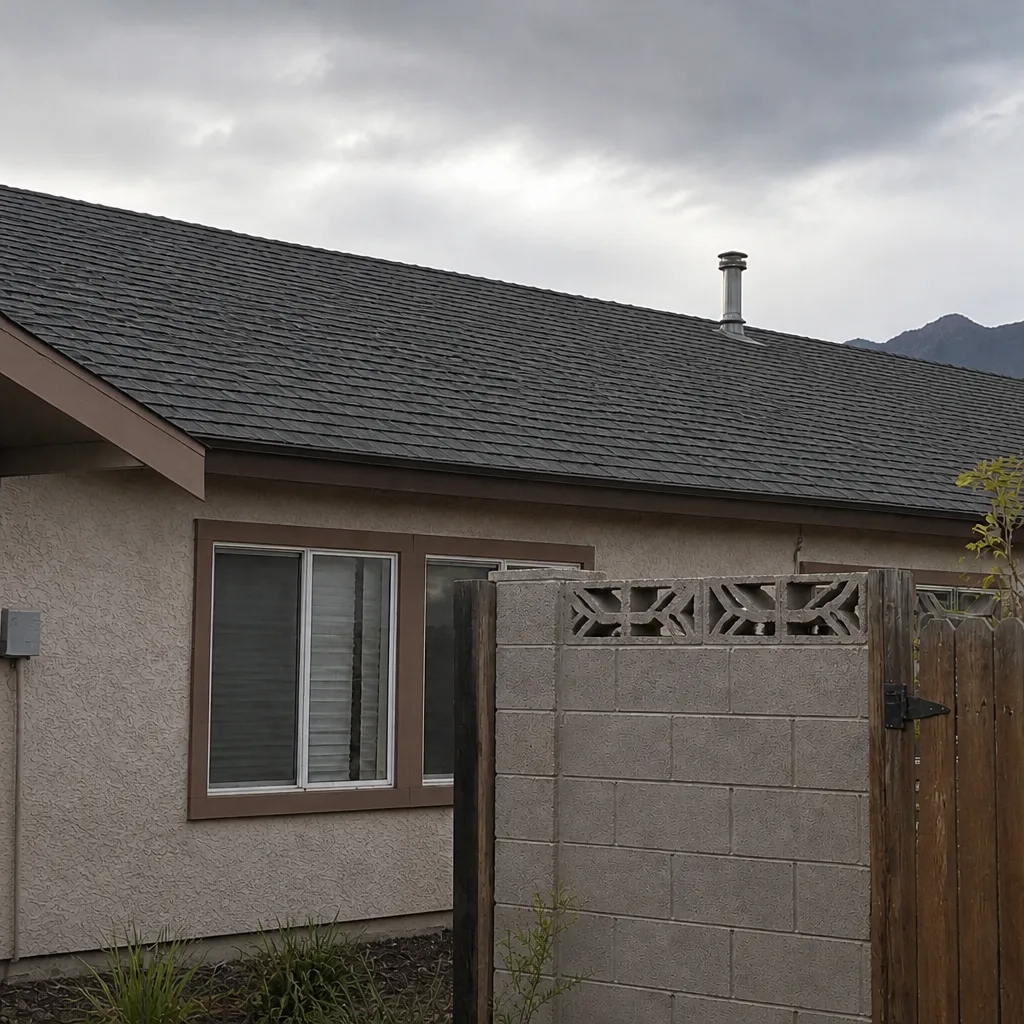
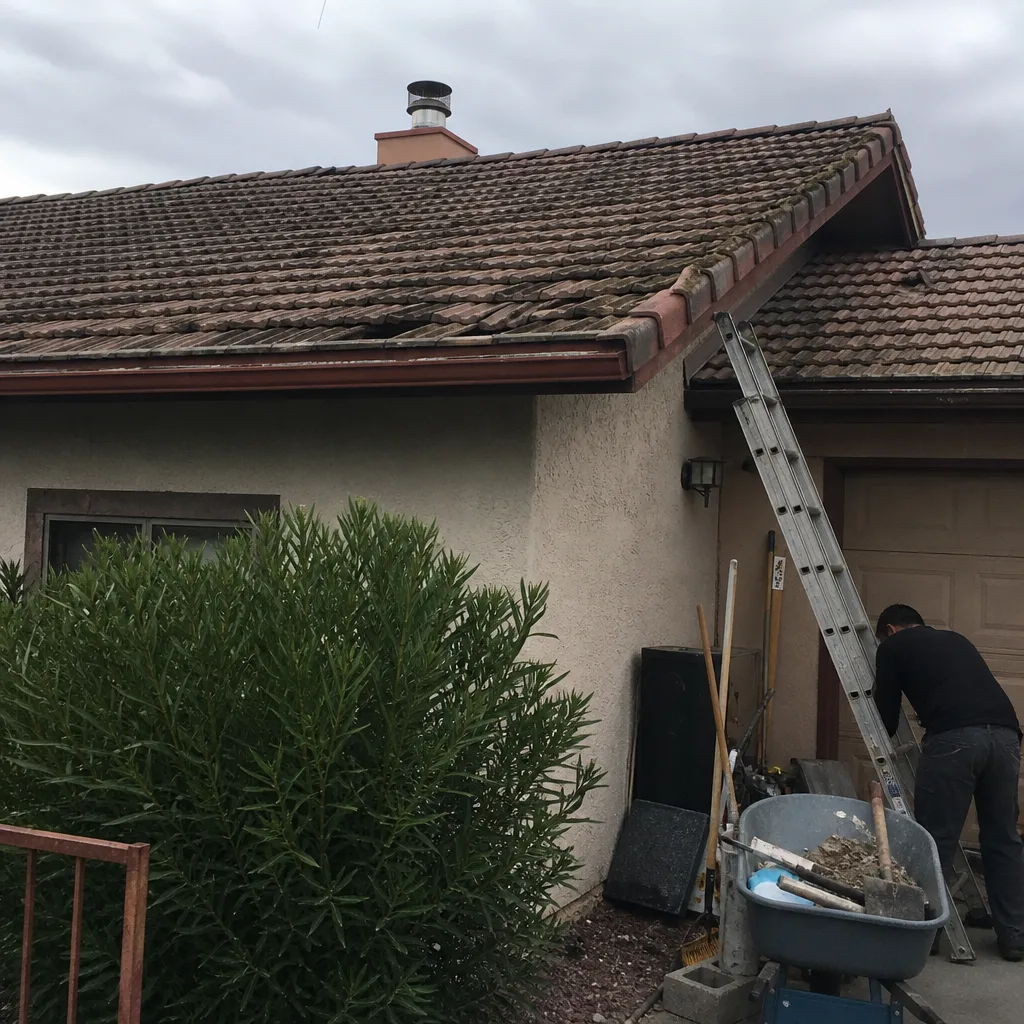
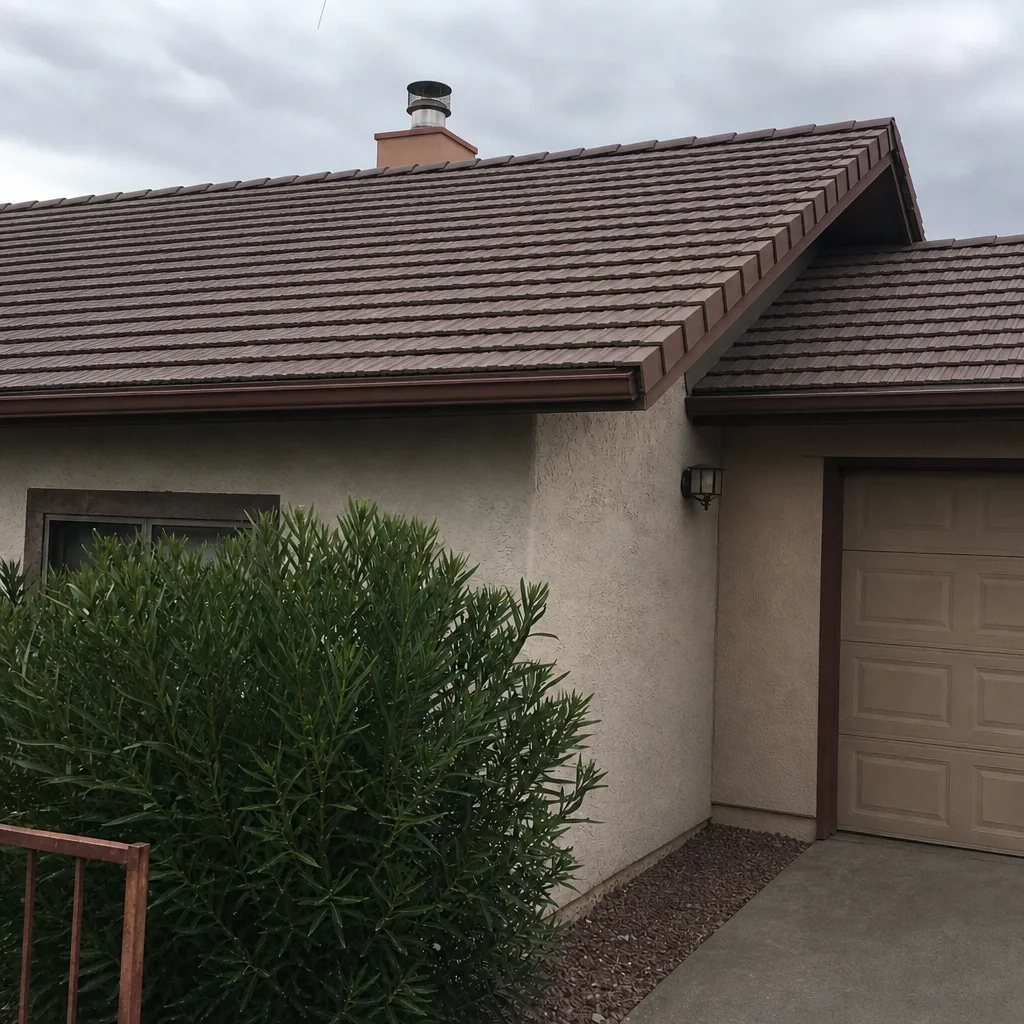
See the difference
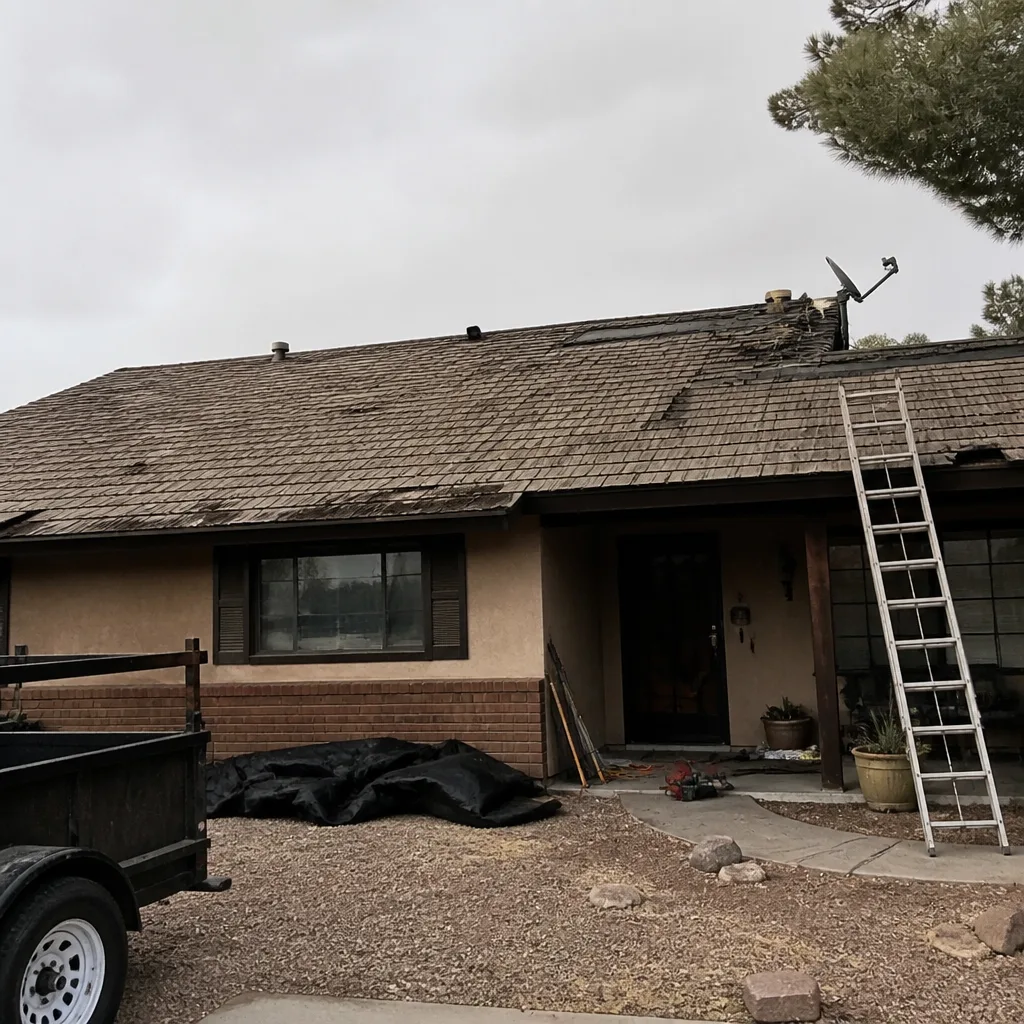 Before
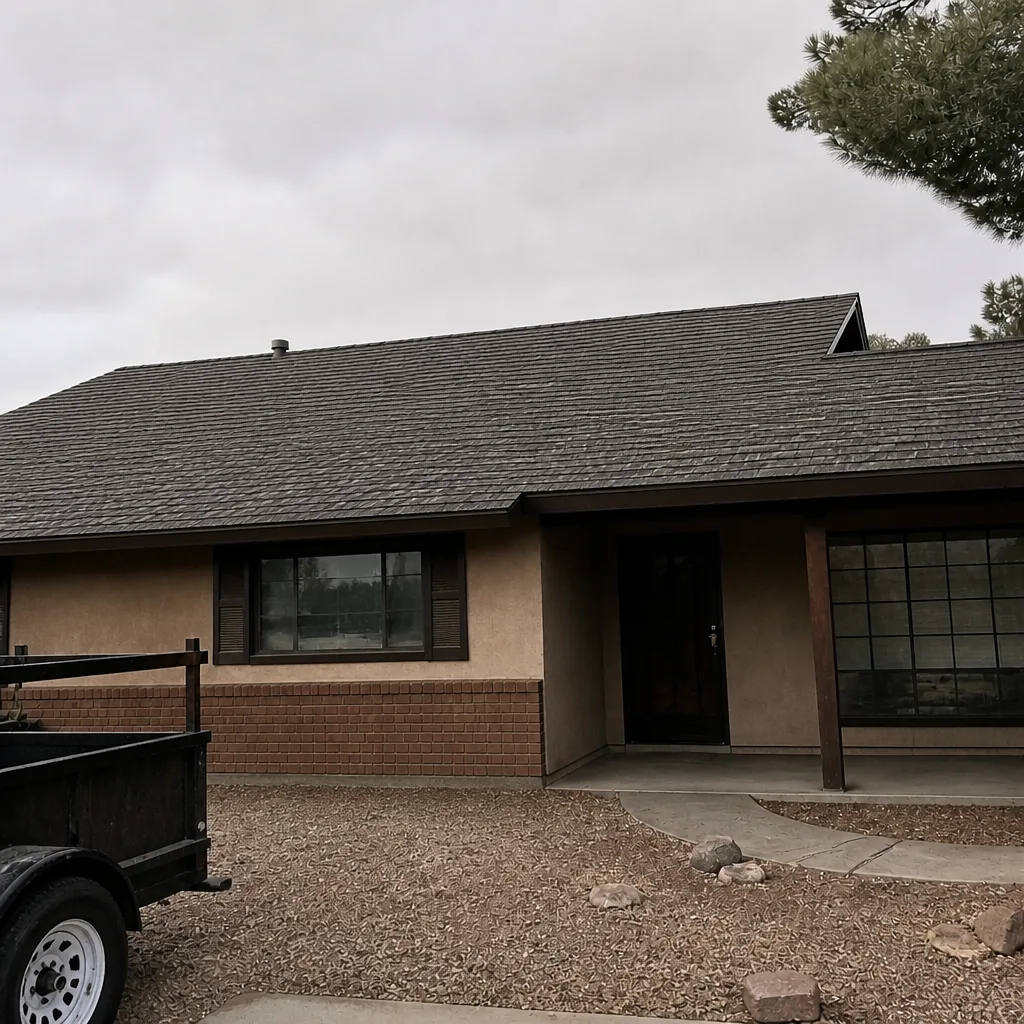 After
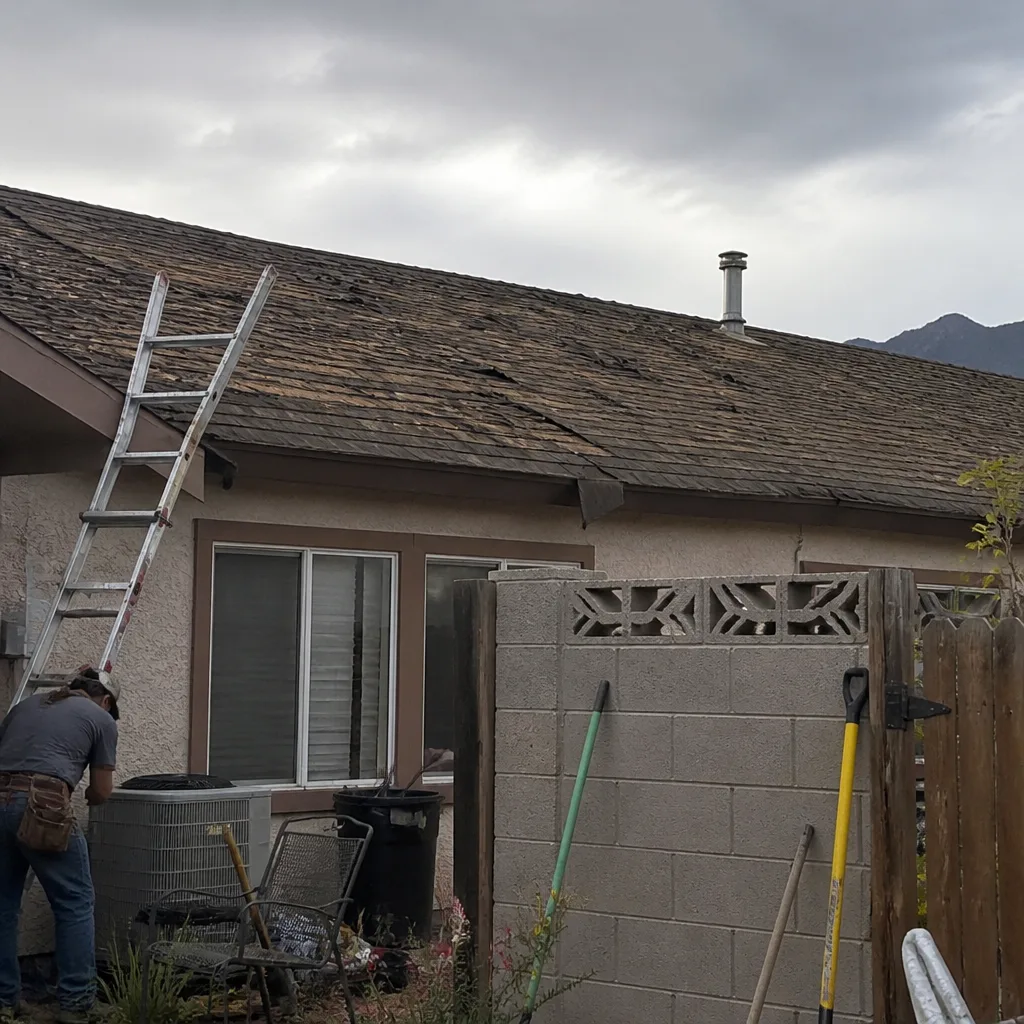 Before
 After
 Before
 After
When to Call a Professional
Tackle a cracked tile replacement yourself, and you may find it’s harder than it looks, or that stepping wrong on the slope makes one problem into three. Call a professional if you’re seeing any of the following: water stains on the ceiling or walls, staining in the attic on the rafters or deck, multiple cracked tiles in a line, visible daylight through the roof deck, loose ridge or hip caps, rust on valley metal, or a soft spot you can feel underfoot. Each of these is a signal to get someone who knows tile roofs on the roof before the problem grows. Shepherd & Sons Roofing Boulder City offers free estimates in Boulder City. Call (844) 761-8186 and Bill will come out, show you the deck photos, and give you a written line-item quote before anyone touches the roof. A live person answers the phone, day or night.
Frequently Asked Questions
Most single-tile or small-patch repairs run a few hundred dollars, while valley flashing work and re-pointing ridge caps run higher because of the labor involved. Full underlayment repair on a section of roof is a bigger job and priced accordingly. Every job is quoted as a written line-item estimate, so you see the parts and labor before anyone starts. Call (844) 761-8186 for an exact quote on your roof – estimates are free.
No. You can see cracked or slipped tiles from the ground with binoculars, but you can’t see whether the underlayment underneath is compromised. The attic is where a tile roof leak actually shows itself, which is why we always check the attic before quoting a repair. A crack you can see from the driveway is only the start of the conversation.
The tile itself is a 50-plus-year material, but the underlayment underneath it is not. In the Boulder City climate, the felt under the tile typically has a 20 to 25-year life before it needs to be replaced. That’s why a tile roof that looks fine can leak at 22 years old; the tiles are intact but the waterproofing beneath them is done.
Not on our jobs. The written line-item estimate you get before any work begins is the price you pay, unless you approve a change in writing. Sometimes we open up a valley and find rot in the deck that couldn’t be seen from the attic. When that happens, we show you the photos and quote the repair before touching it, so you have a full picture. No surprises at the end.
For repairs and replacements that require a permit under Boulder City code, yes. Permit requirements depend on scope; a single-tile patch doesn’t trigger the same process as a valley repair or a full re-underlayment. We pull the required permits and get the inspections passed so the work is documented on your property record and there’s no question later about what was done and when.
Any tile roof that had a full crew walking on it deserves a look. Cracks from foot traffic often don’t cause a visible leak for a year or more because the tile keeps water out even when broken, and it’s the underlayment underneath that suffers in the meantime. Do a binocular scan and check the attic. If anything is off, get an inspection before the next rainy season. Call (844) 761-8186 and we’ll take a look.
The Bottom Line
The single most important thing to know about troubleshooting a tile roof is that the tile is not the roof. The tile is the tile. The roof is the deck, the underlayment, the flashing, the valley metal, and the mortar – and any one of those can fail while the tile above still looks fine. Check the attic before you call anyone. Ask any roofer what they plan to do at the valley, and see whether the answer is new metal or a caulk gun. And do a binocular scan twice a year so the ridge cap, the cracked tile, and the rusting valley don’t sneak up on you. That’s the whole game with tile.
Call Shepherd & Sons Roofing Boulder City at (844) 761-8186 for a free estimate on your tile roof. Bill will show you the deck photos before he talks money, and every job is backed by the written 90-Day Done Right Promise. Same address since 1996. Ask the storm chasers where theirs is.
Written by the team at Shepherd & Sons Roofing Boulder City.