
Last updated November 17, 2026
 Tile roofing
 Architectural shingles
 Metal roofing
 GAF
 Owens Corning
 Flat & low-slope
Free roof inspection with deck photos before we talk money - GAF and Owens Corning certified installation
DIY vs Professional Tile Roofing: What’s Safe to Do Yourself
Concrete and clay tile look solid enough to walk on. They’re not. A single misplaced foot can crack a tile that sits there invisible for a year and a half, and the first sign of trouble is a brown ring spreading across your ceiling after the first hard monsoon. By then, what started as a two-hundred-dollar fix has turned into something three times that. We’ve watched it happen on tile roofs all over Boulder City, and it almost always traces back to one wrong step. This guide draws a clear line: what a careful homeowner can genuinely handle, and what turns a small repair into a big one.
Quick Answer
Safe DIY on a tile roof means gutter cleaning from a ladder, visual inspections from the ground with binoculars, and photographing cracked or slipped tiles so a roofer can quote the job by phone. Anything that puts you up on the tile surface, or that involves lifting and resetting tiles on the roof, belongs to a trained professional. The repair itself is cheap; the damage from walking the roof is what gets expensive.
Styles & brands we work with
- Architectural shingles
- Metal roofing
- Tile roofing
- GAF
- Owens Corning
- Flat & low-slope
Table of Contents
- The Tasks That Are Genuinely Safe for Homeowners
- Why Walking on Tile Almost Always Causes New Damage
- How to Document a Problem Tile for an Accurate Phone Quote
- The Three Repairs Where DIY Saves Money
- The Two Repairs Where DIY Multiplies Cost
- Questions That Confirm a Roofer Actually Knows Tile
- What Boulder City Tile Roofs Face
The Tasks That Are Genuinely Safe for Homeowners
Here’s the good news: a lot of the routine upkeep on a tile roof doesn’t require you to touch the tile at all. We tell homeowners in Boulder City that these jobs are theirs to own, and doing them well keeps small problems from growing.
- Gutter cleaning from a ladder. Set the ladder on solid footing, keep it below the roofline, and stay off the tile. Clear leaves and grit so water doesn’t back up under the eave. A clogged gutter on a tile roof pushes water where the underlayment isn’t ready for it.
- Visual inspections from the ground. A decent pair of binoculars tells you more than people expect. Look for slipped tiles, cracked tiles, or ridges of tile that have shifted out of line.
- Photographing what you find. A smartphone zoomed in on a problem area, shot from a safe angle, is exactly what a roofer needs to give you a real number.
- Checking the ceiling inside. Look for water stains, peeling paint, or daylight around penetrations after a storm. That’s information you can hand off.
- Keeping valleys and roof-edge drains clear of debris from where you can safely reach.
None of these require you to stand on the tile. That’s the point. The work that keeps a tile roof healthy starts at ground level and on a ladder, not up on the surface. If you own a tile roof in Boulder City, treating these five habits as a season-by-season checklist covers most of what a homeowner should reasonably do.
Why Walking on Tile Almost Always Causes New Damage
Tile is brittle by design. It’s meant to shed water and take sun, not body weight. When a person steps on a tile roof, the force concentrates on the few tiles under each foot, and those tiles flex against the ones beside them. Even a careful walker cracks or loosens tiles they can’t see, and a loosened tile lets water reach the underlayment below.
From up close, a fresh crack looks like nothing. The tile still sits in place, still overlaps its neighbor, still sheds the occasional rain. So it goes unnoticed. Months later, the underlayment underneath has soaked through enough times that the damage finally shows up inside the house. That delay is the trap.
A roofer works tile differently. Instead of walking the field of tile in boots, the crew moves along the ridge, along walk-boards laid flat, or along valleys with padding set down to spread weight. When a repair needs access to a specific spot, we lift the tile around it, do the work, and reset the pieces so the pattern and the overlaps stay correct. That’s slow, careful work, and it’s the difference between a repair and a cascade of new cracks.
This is also the single biggest reason tile repairs and replacements go wrong on Roof Replacement & Installation in Boulder City projects done by someone unfamiliar with tile. The materials aren’t fragile myths – they’re genuinely breakable under weight.
How to Document a Problem Tile for an Accurate Phone Quote
A good roofer can quote most tile repairs from photos before ever climbing up. That saves you a trip charge and saves everyone time. Here’s how to shoot the problem so the number you get back is real.
- Start wide, then zoom in. Take one photo showing the whole roof slope or the general area, then a close-up of the specific problem tile. The wide shot gives context; the close-up gives detail.
- Capture the location on the roof. Note which slope faces the street, the corner it’s nearest, and roughly how many courses up from the eave it sits. A marker in the photo helps.
- Show the damage type clearly. A crack, a slipped tile, and a missing tile are three different repairs with three different prices. Make sure the photo shows which one you have.
- Photograph the ceiling below if there’s a stain. Interior damage changes the estimate, so include it.
- Count the affected tiles. “About six cracked tiles on the front slope” gives a roofer a starting point for a real range.
Send those photos along with a note about the roof’s age if you know it. When a homeowner hands us a clear set of shots, we can often give a firm estimate by phone. That’s how a careful homeowner saves money without ever getting on the roof. For the smaller issues that come up between bigger jobs, our guide to Roof Repair in Boulder City covers what usually turns up first.
The Three Repairs Where DIY Saves Money
There are honest cases where handling it yourself is the right call. These are the ones we point homeowners toward when they ask.
1. Gutter and drainage clearing
Cleaning gutters and keeping debris off the roof edges costs nothing but a ladder and an afternoon. A blocked gutter on a tile roof sends water back up under the tiles, and that’s a big repair waiting on a small clog. This one is squarely a homeowner task.
2. Ground-level inspection and documentation
Binoculars, a phone, and a notepad cost you time and nothing else. If you catch a slipped tile from the ground and call it in early, you’re looking at a minor repair rather than a mystery leak six months down the road. The old saying holds: the cheapest repair is the one you catch first.
3. Interior moisture checks after storms
Walking your ceiling, attic access, and interior walls after a heavy rain is free and tells you a lot. Catching a stain the first time it appears rather than the third is the difference between a spot repair and replacing drywall. That’s the whole game with tile.
The Two Repairs Where DIY Multiplies Cost
Then there are the jobs that look small and aren’t. In our experience, these are exactly where the “cheap” repair turns into the expensive one.
1. Resetting or replacing a tile on the roof surface
This requires getting onto the tile, lifting the surrounding pieces without cracking them, reseating the broken one correctly, and matching the overlap so water still sheds. If you don’t lift the neighboring tiles the right way, you’ll crack two or three to fix one. The math on that turns a service call into a whole-slope repair.
2. Chasing a leak that’s already reached the underlayment
Once water is under the tile, the visible cracked tile is only the symptom. The real repair involves finding how far the moisture traveled and replacing the underlayment and decking that’s failed. What looks like one tile is often a section of roof. Without proper access and the right materials, a homeowner risks opening the problem up and leaving it worse.
There’s a reason we tell people in Boulder City that tile is not a “walk up and fix it” roof. The material rewards patience and punishes shortcuts.
Questions That Confirm a Roofer Actually Knows Tile
Tile work is a specialty. A roofer who’s good with asphalt shingles isn’t automatically good with tile, and a lot of storm-season outfits don’t know the difference. Ask these before you hire anyone.
- “What’s the underlayment spec you use under tile?” A roofer who knows tile will talk about the underlayment in detail. Vague answers are a red flag.
- “How do you protect the tile when you work on it?” The answer should involve walk-boards, padding, or working from the ridge. If they plan to just walk the roof, ask them to explain.
- “What’s your process for resetting tiles?” They should describe lifting surrounding tiles, matching the pattern, and checking the overlap.
- “Can you show me examples of tile work you’ve done?” Any roofer who does tile regularly has photos.
- “What’s your written warranty?” Get it before work starts. We put our 90-Day Done Right Promise in writing on every job, which means the work is documented and we come back if something’s not right.
Tile installations use products from CertainTeed, Owens Corning, IKO, and similar manufacturers, and a roofer who knows tile will name the specific product and explain why it fits your roof. Ask what they’re installing and why. For tile and specialty systems specifically, our Metal Roofing in Boulder City page also covers the comparisons homeowners often want before committing.
What Boulder City Tile Roofs Face
Tile roofs hold up well here because the sun and dry air are friendly to concrete and clay. What they don’t like is the freeze-thaw swing that comes with Boulder City winters and the wind that funnels through the valley in spring. Cracks tend to open across seasons, and a tile that was fine in October can be noticeably cracked by March. That’s why a binocular check twice a year, in fall and again in spring, catches most of what’s worth fixing.
The desert sun also bleaches and dries the underlayment under tile. Older Boulder City roofs that sit under a tile field often have weathered underlayment that’s been baking for decades, and that’s the layer doing the real waterproofing. A slipped tile over tired underlayment is where the surprise leaks come from. We’ve seen plenty of them on the older homes around town.
When a tile roof does need a full rebuild, matching the original tile profile matters for both appearance and performance. Not every installer carries the right pieces. Working with a Shepherd & Sons Roofing Boulder City home means the crew understands which tile products are available and how to set them correctly. And for the wider picture of how tile fits next to other roof types, the range of specialty options is worth understanding before you commit.
Common Mistakes to Avoid
- Walking on the tile “just to take a look.” That single walk can crack tiles you’ll never see. Inspect from the ground or from the ridge, not across the field.
- Trying to pry up a cracked tile without lifting its neighbors. Tile overlaps its neighbors, so pulling one out cracks the ones around it. The right approach lifts the surrounding pieces first.
- Sealing a crack with caulk and calling it fixed. Caulk on a tile won’t last a Boulder City summer and hides the real problem underneath. It buys you a season, not a repair.
- Hiring a storm chaser who knocks after a hailstorm. They quote a number at the door and are gone by the time it fails. Ask for a real address and a license number.
- Not photographing the damage before the crew arrives. Without good photos, you can’t tell if the estimate matches the job. Shots up front prevent disputes.
- Ignoring a ceiling stain because “it’s just a small spot.” By the time a stain shows inside, the underlayment above has usually been wet for months.
- Assuming all roofers work tile. Many don’t. Ask about underlayment and tile-handling before hiring anyone.
See the difference
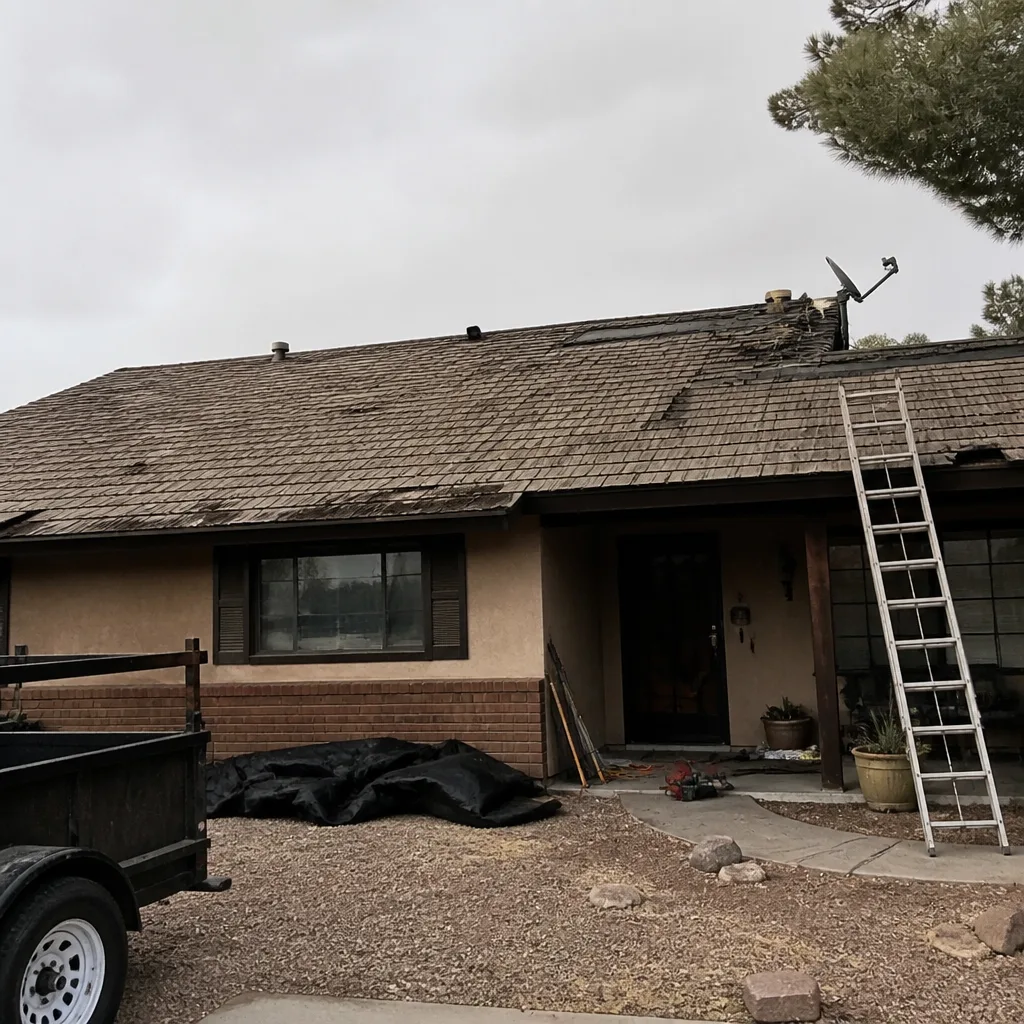 Before
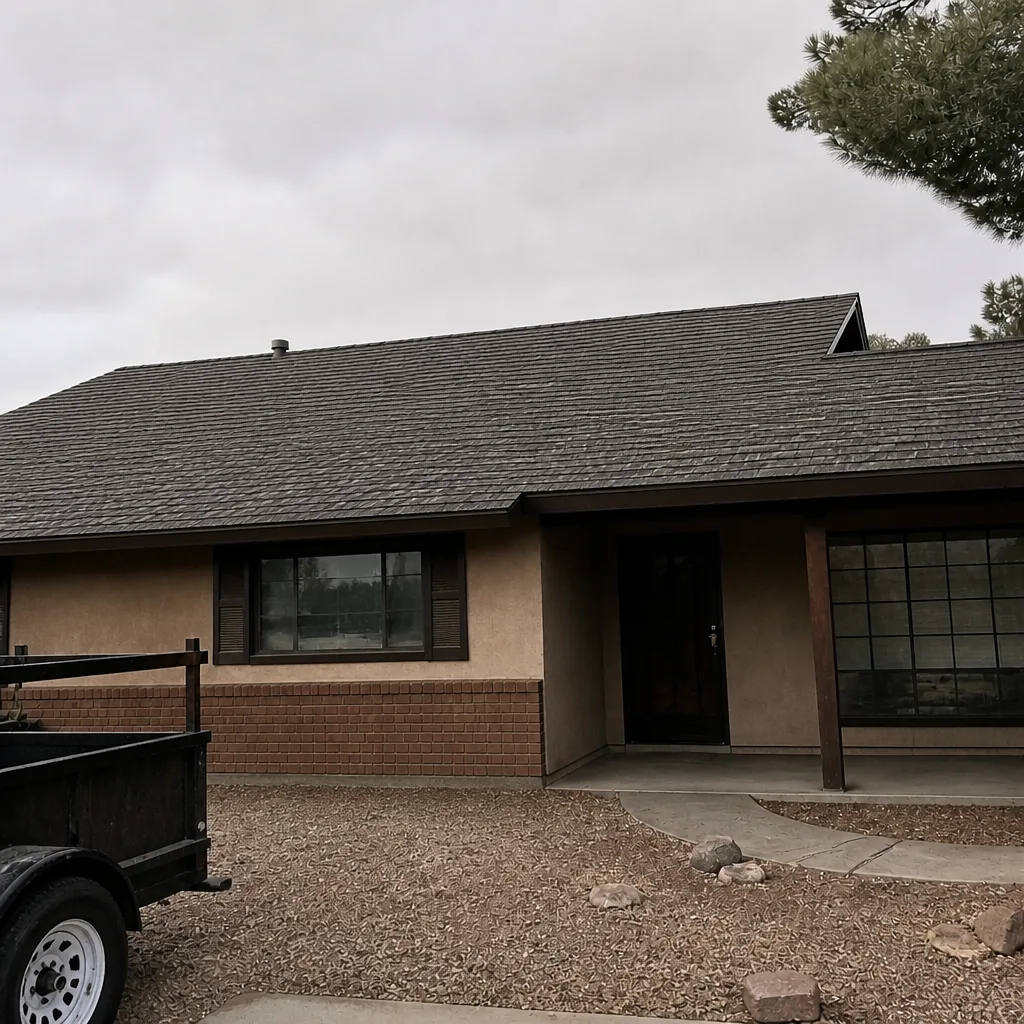 After
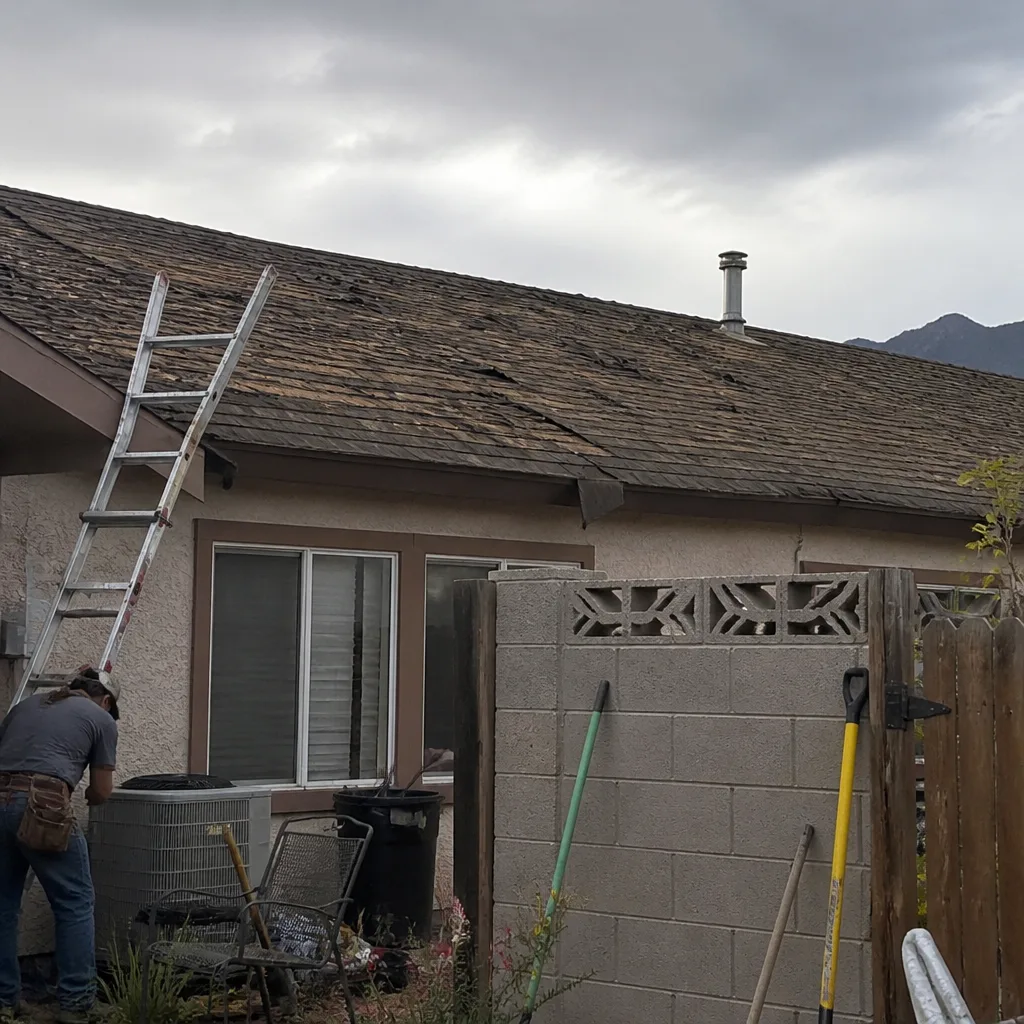 Before
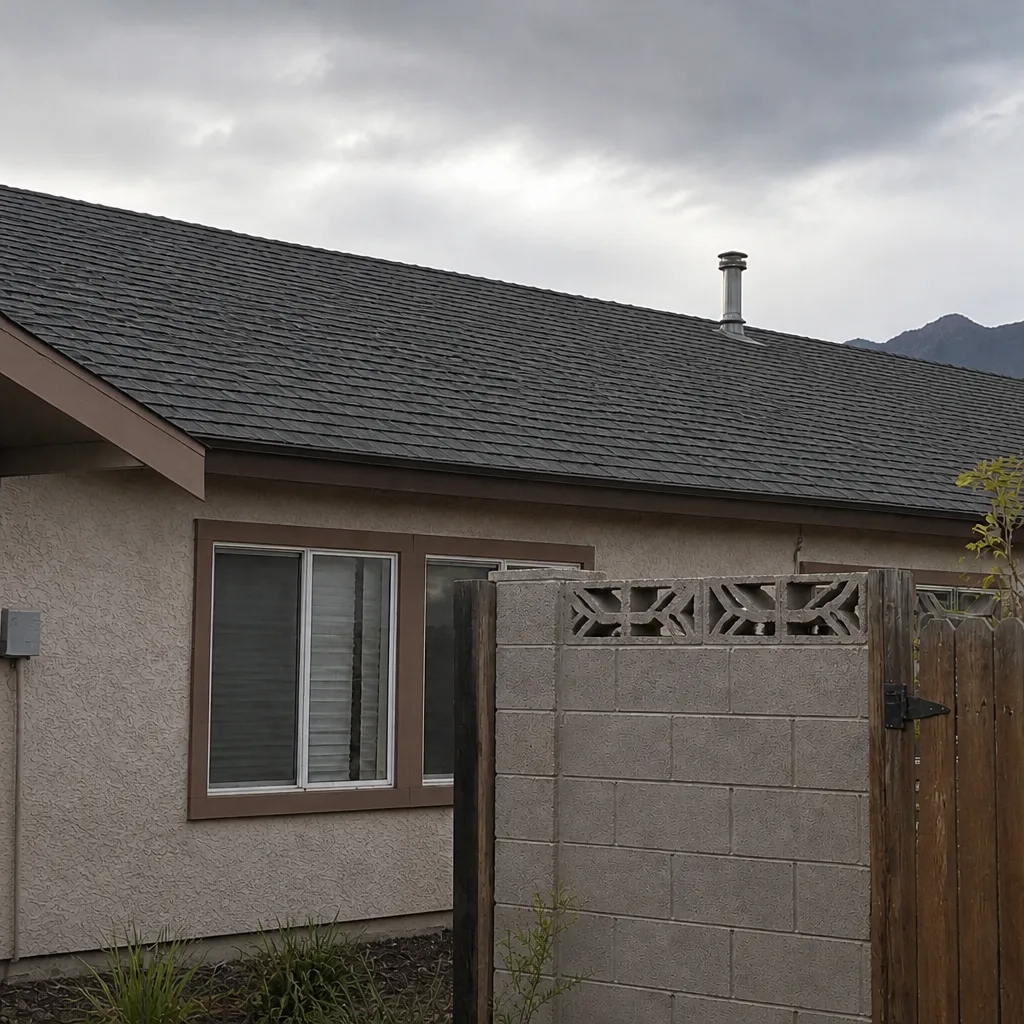 After
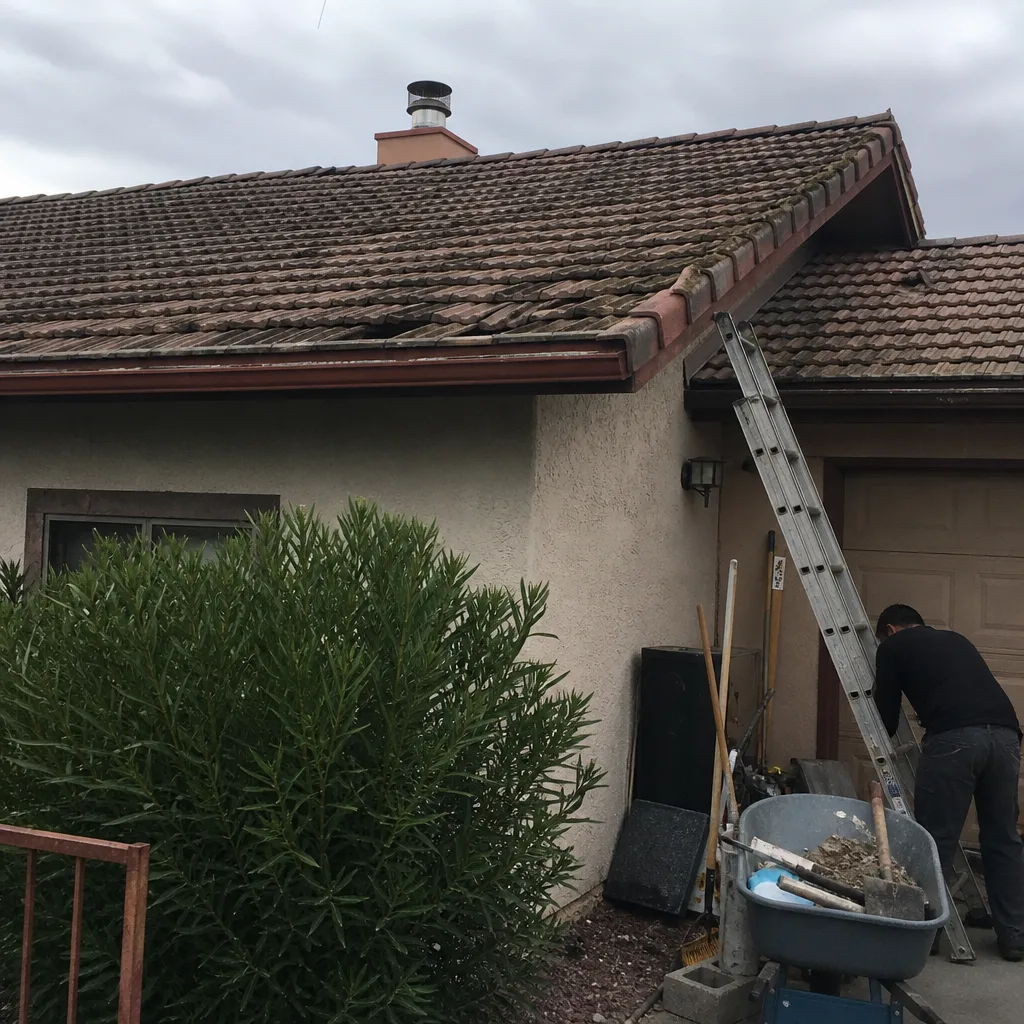 Before
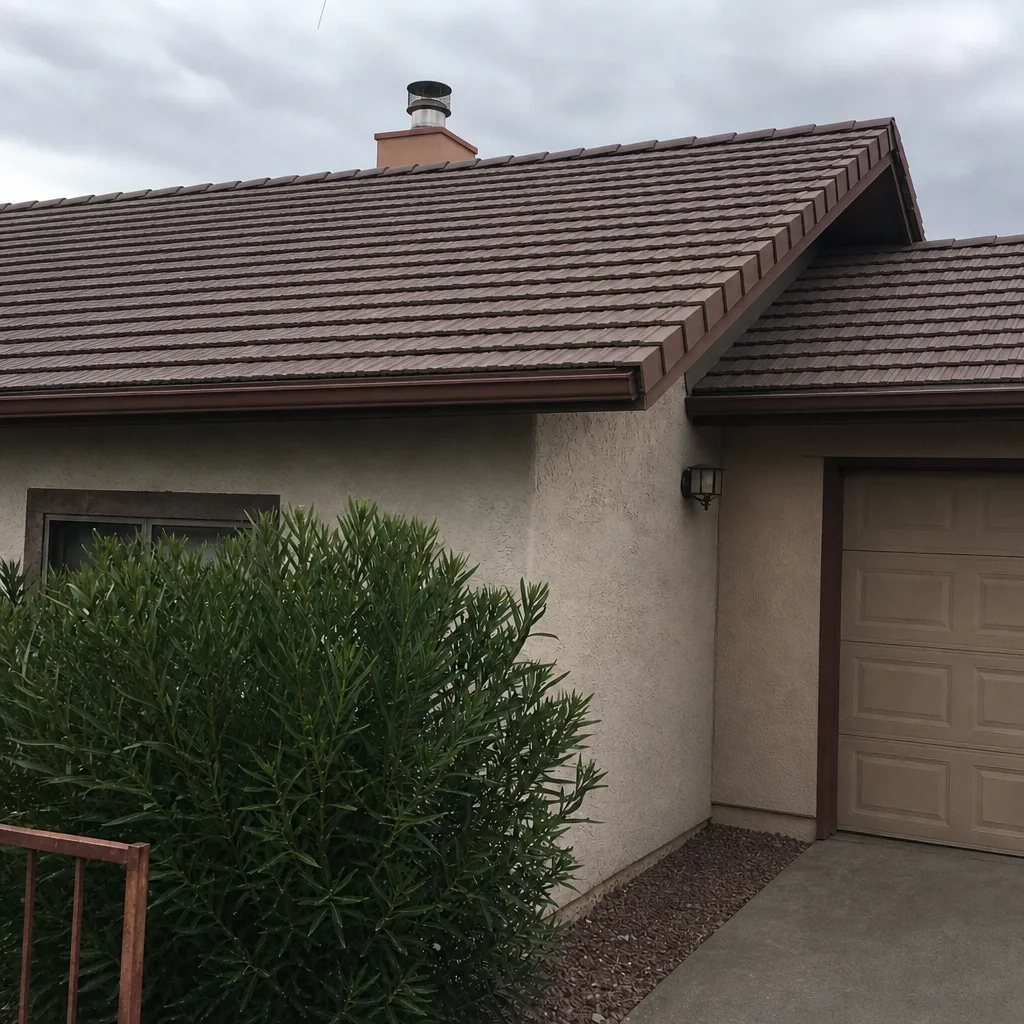 After
When to Call a Professional
Call us when a tile is cracked, slipped, or missing, when you see a ceiling stain, or when a repair involves getting up onto the tile at all. Those are the jobs where the wrong move costs more than the right one. We’re also the call when a roof is more than fifteen years old and you want a straight assessment before the next monsoon. Tile jobs go wrong quietly and surface late, and that’s exactly when a trained set of hands matters. Shepherd & Sons Roofing Boulder City offers free estimates in Boulder City – call (844) 761-8186. A live person answers, even after a storm, and our technicians have up to 30 years of experience with tile. We’ll show you the deck photos before we talk money.
Frequently Asked Questions
No. Walking on tile cracks and loosens pieces you can’t see, and the damage surfaces months later as a leak. The safe move is photographing the crack from the ground and having a tile-trained roofer handle the repair. Call (844) 761-8186 for a free estimate – we’ll tell you what the repair actually involves.
Most single-tile repairs fall in the low hundreds of dollars, while underlayment or decking repairs under the tile run higher. The repair price is small compared with what a missed leak costs once it reaches the ceiling. Call (844) 761-8186 for an exact quote – estimates are free and a trip charge doesn’t apply inside our county.
A cracked tile doesn’t always leak right away, which is what makes tile repairs tricky. Water gets under the tile and sits on the underlayment, and the leak shows inside the house later. If you see a ceiling stain or daylight in the attic, have it checked – call (844) 761-8186.
Not safely. Tile overlaps its neighbors, so replacing one means lifting and resetting the surrounding pieces without cracking them. That takes tile knowledge and the right handling. We recommend calling a roofer – the cost of one cracked neighbor tile is often more than the service call.
We tell Boulder City homeowners to do a binocular check from the ground twice a year, once in fall and once in spring. A full professional inspection makes sense every couple of years and after any significant storm. Regular checks catch small cracks before they become leaks.
Often yes, if the photos are clear enough to show the damage type and location. A wide shot and a close-up of the affected tiles usually do the job. Call (844) 761-8186 and we’ll walk you through what to shoot – many repairs can be priced on the spot.
The Bottom Line
The line on a tile roof is clear. Gutter cleaning from a ladder, ground-level inspections, and photographing damage are yours to handle, and doing them well saves you money. Anything that puts you up on the tile surface is not, because a cracked tile you leave behind can sit invisible for over a year before the leak shows up inside. Get a professional for the repairs, ask the right questions before hiring, and inspect twice a year. A little care now is worth a lot more than the repair bill later.
Call (844) 761-8186 today for a free estimate on your Boulder City tile roof. Same name, same address, same owner on every job – we’ll be straight with you about what needs fixing and what doesn’t.
Written by the team at Shepherd & Sons Roofing Boulder City.