
Last updated November 17, 2026
 Tile roofing
 Architectural shingles
 Metal roofing
 GAF
 Owens Corning
 Flat & low-slope
Free roof inspection with deck photos before we talk money - GAF and Owens Corning certified installation
Tile Roofing Warning Signs Every Homeowner Should Know
A single displaced tile isn’t a cosmetic issue. It’s an open door for water to reach your underlayment, and once that underlayment bakes out in Boulder City’s heat, it doesn’t recover. That’s the part that catches homeowners off guard: the tile on a desert roof is the armor, but the layer underneath does the actual waterproofing, and it has a shelf life measured in sun exposure. The damage rarely announces itself. By the time a stain shows up on your ceiling, water has usually been working through the assembly for a season or more. This guide teaches you to read your roof from the ground, with binoculars and a little patience, before it reads your wallet.
Quick Answer
The main warning signs of a failing tile roof are displaced or slipped tiles, cracked tiles from thermal cycling, white or brown staining on stucco below the roofline, rusted or lifted flashing at valleys and penetrations, and dark attic staining that looks like a map rather than a drip stain. On a Boulder City roof, sun and wind do most of the damage, and the earliest clues show up on the outside of the house long before anything leaks through the ceiling.
Styles & brands we work with
- Architectural shingles
- Metal roofing
- Tile roofing
- GAF
- Owens Corning
- Flat & low-slope
Table of Contents
- Five Things You Can Spot From Your Driveway
- Why Stucco Staining Below the Roofline Is Almost Never Plumbing
- Slipped Tile vs. Cracked Tile: Which One Can You Save?
- Interior Clues: What Attic Staining Looks Like on a Tile Roof
- Moss and Lichen on Desert Tile: Rarer, and More Serious
- The Underlayment Clock Nobody Warns You About
- Age, Wind, and the Boulder City Sun
- A Seasonal Inspection Checklist You Can Actually Do
Five Things You Can Spot From Your Driveway
You don’t need to get on the roof to get a real read on it. You need binoculars, a pair of shoes, and a walk around the house at different times of day when the sun rakes across the slope at an angle. Low sun reveals what flat sun hides: the ridgeline shadows, the flat spots, the tiles that don’t line up with their neighbors.
Here’s what to look for, in order:
- A broken roofline. Tiles should form a clean, repeating pattern. A single tile sitting proud of the row, or a gap where one dropped, breaks that pattern. On a Boulder City tile roof, one slipped tile at a hip or ridge is often the first thing wind loosens.
- Missing or shifted ridge caps. The caps along the very top of the roof take the most wind. A ridge cap that’s crept out of line leaves the joint under it exposed.
- Granule and debris piles in the gutters. Tile sheds grit over time. A sudden load of sand-colored grit in the gutter after a windy week tells you something above it is breaking down.
- Rust streaks or bright metal at valleys. Valley flashing is usually galvanized or painted metal. Orange streaks running downslope from a valley or chimney mean water is sitting where it shouldn’t.
- Sagging between rafters. Stand back and sight along the ridge. A dip or a wave in the roof plane can mean a broken or rotted underlayer, or a sheathing problem underneath.
Any one of these is worth a closer look from someone who climbs tile roofs for a living. Three or more together is a strong signal that the assembly, not just the surface, needs attention. If you’re already seeing several of these, it’s worth reading our page on Roof Repair in Boulder City before you call anyone.
Why Stucco Staining Below the Roofline Is Almost Never Plumbing
This is the one homeowners get wrong most often. You walk out back and see a rust-colored or chalky white streak running down the stucco under the eaves, and the first call is to a plumber. Nine times out of ten, it’s the roof. Water that gets behind a piece of flashing doesn’t leap off the wall. It runs down the back of the stucco, picks up mineral salts and rust from the lath and fasteners, and works its way out through the finish.
The location tells the story. Staining under a valley, beside a chimney, above a corner where two roof planes meet, or along a wall where an addition ties into the original house points straight at flashing. Flashing is the sheet metal that bridges the gap between roof surfaces and vertical walls, and it’s the single most common failure point on a tile roof. Tile sheds water beautifully. Flashing is what gets water around the tile and into the gutter. When flashing lifts, corrodes, or was installed too short to begin with, water goes sideways into the wall assembly instead of down the roof.
Two things to do before you call anybody:
- Check whether the stain is worse after a hard, wind-driven rain from a particular direction. That pattern points to wind-driven intrusion, which is flashing, not plumbing.
- Look at the top of the stain. If it starts at the roofline and fans out as it runs down, it’s coming from above the wall. Plumbing leaks usually start at a fixture, not at the roof edge.
In our experience in Boulder City, stucco staining above a window or beside a valley is one of the earliest, cheapest-to-fix signs on a tile roof. Caught early, it’s a flashing repair. Left alone through a couple of monsoon seasons, it turns into a stucco repair and a sheathing repair on top of the roofing bill.
Slipped Tile vs. Cracked Tile: Which One Can You Save?
Not every tile problem is the same problem. Knowing the difference tells you whether you’re looking at a small repair or a sign that the whole slope is due. Here’s the short version:
- A slipped tile has moved out of position but is still whole. It can usually be lifted, cleaned, and re-set with fresh fasteners and a proper bedding compound, and the surrounding tiles checked while the roofer is up there.
- A cracked tile has failed. Hairline cracks can sometimes be sealed as a stopgap, but a tile that’s cracked through from the heat-and-cool cycle needs to be replaced, because the crack will spread and the tile will no longer sit tight.
How to tell them apart from the ground
A slipped tile sits proud of its neighbors or has slipped down the slope, sometimes overlapping the tile below it at an odd angle. The line of the pattern breaks. A cracked tile is often still in position but shows a dark line across its face, especially at the bottom edge where water runs off. Those bottom-edge cracks are classic thermal cycling: the tile heats up under the desert sun, cools hard after sunset, and over years a small crack opens at the point of greatest stress.
Clay and concrete tiles both expand and contract with temperature. Boulder City’s swing between a hot afternoon and a cool desert night is a daily stress cycle, and tile that’s been up more than twenty or thirty years has been through thousands of them. One cracked tile is normal. A cluster of cracks across one slope, or cracks that all radiate from the same area, tells you the fasteners under that section have likely lost their grip or the substrate has moved. That’s when a repair becomes a re-tile. If you’re trying to sort out which one you’re looking at, the team can help you read it. That’s what Shepherd & Sons Roofing Boulder City home is here for, and our Roof Replacement & Installation in Boulder City page covers what a full re-tile actually involves.
Interior Clues: What Attic Staining Looks Like on a Tile Roof
People picture a leak as a drip from the ceiling. On a tile roof, the first interior clue usually shows up in the attic, not the living room, and it looks different than it does on a shingle roof. Shingles fail from the top down in patches and often produce a tight, localized drip. Tile holds up longer on the surface, so water that does get through tends to travel along the underlayment before it finds a way into the structure. The result is staining that looks like a map, not a spot.
Get into the attic with a good flashlight and check these:
- Look for dark, spreading stains on the sheathing and rafters rather than a single drip mark. Irregular brown edges spreading along the wood, especially near the eaves and valleys, are the classic tile-roof signature.
- Check for white, chalky streaks on the underside of the roof deck. Efflorescence is mineral salt left behind as water evaporates. It’s a reliable sign of past water contact even when the deck feels dry.
- Look for rusty nail points. Rust on the tips of the nails poking through the sheathing means the deck has been wet.
- Smell the air. A musty, earthy smell in an attic that isn’t otherwise damp points to moisture trapped above.
One thing about attics and desert homes: don’t judge by “is it wet right now.” A tile roof can leak only when the wind drives rain sideways into a valley or a flashing joint, then run dry for weeks. You’re looking for evidence of historical water, not a puddle. Find the stain, mark it with tape, and note which part of the roof is directly above it. That note is worth more to a roofer than anything you can tell them on the phone.
Moss and Lichen on Desert Tile: Rarer, and More Serious
In wet climates, moss on a roof is a maintenance chore. In Boulder City, it’s a warning. Moss needs sustained moisture to get a foothold on tile, so when it shows up on a desert roof, it’s telling you something is feeding it water. That something is almost always a drainage or flashing failure.
Where to look for it, and what it means:
- Lichen on north-facing slopes. The shaded slope stays damp longer after rain. A patch of gray-green lichen there is worth a look at the underlayment beneath it.
- Moss in valley lines and behind chimneys. These are the spots where debris collects and water lingers. Moss here is a sign of poor drainage, not just dampness.
- Algae streaks on the tile face. Dark streaking can be algae or airborne dust baked on. It’s usually cosmetic, but it’s worth confirming water isn’t running where it shouldn’t.
Lichen holds moisture against the tile surface, and over time, that moisture works into the joints between tile courses. In a climate with regular freeze cycles, that’s a much bigger deal. Boulder City doesn’t freeze hard often, but it does at elevation, and when it does the tile that’s been holding water has less margin. If moss is growing in a spot where the roof doesn’t drain well, you’ve likely got a drainage or flashing problem worth fixing before the next round of monsoon rain. If your tile has been up a long time and you’re seeing this pattern, take a look at the Metal Roofing in Boulder City option: metal sheds moss and debris cleanly, and it handles the sun without the underlayment clock that tile carries.
The Underlayment Clock Nobody Warns You About
Here’s the thing about tile roofs that almost nobody explains up front: the tile is not the waterproofing layer. It’s the wear layer. Underneath the tile is a waterproof underlayment, and that’s what actually keeps the house dry. The tile catches the sun, sheds most of the water, and protects the underlayment from UV and impact. The underlayment does the sealing.
The catch is that the underlayment ages much faster than the tile. Asphalt-based underlayments are designed to last a couple of decades on a sunny roof, often less under intense sun. When you install tile, the underlayment underneath is inaccessible without lifting tile. That means when the underlayment reaches the end of its life, the roof still looks fine from the street, but it’s no longer waterproof. That’s the “clock” no homeowner is told about at install: the visible roof outlives the invisible one.
What this means in practice:
- On an older Boulder City tile roof, appearance alone doesn’t tell you whether the roof is sound. The tile can look perfectly good while the underlayment is failing.
- A single leak that shows up years after a re-roof may not be a “new” problem. It may be the underlayment telling you it’s reached its limit.
- If your tile roof is 20-plus years old, ask a roofer to check the underlayment at the eaves and valleys where it’s most accessible, not just the tile surface.
That’s also why, when a roof is truly due, some homeowners choose a metal roof next time. Metal is a single continuous panel over the deck, so there’s no separate underlayment clock ticking behind it. Whether that’s right for your house depends on the budget and the look you want, but it’s worth knowing the difference before you decide.
Age, Wind, and the Boulder City Sun
Boulder City sits at the edge of a desert with intense sun, gusty wind coming off the open country, and a real swing between day and night temperatures. All three work on a tile roof every single day. The UV in particular is unforgiving: it degrades sealants, dries out bedding compounds, and shortens the life of the underlayment beneath the tile. Wind is the other half, and it’s the one that sneaks up. A wind event doesn’t need to be dramatic to work a few tiles loose over time; small movement repeated hundreds of times across a slab of adjacent tile can unseat fasteners and shift a tile out of line.
This is why a tile roof in Boulder City needs periodic inspection even when nothing is obviously wrong. We routinely see the same pattern: a roof that looks clean from the street, and once you get up there and lift a few tiles, you find slipping in the ridge line, lifted flashing at a valley, and grit from a failing underlayment caught in the courses. Tile doesn’t announce its age the way shingles do with obvious missing tabs. A homeowner who inspects from the ground, twice a year, catches most of this early.
Age matters but it’s not the whole story. A well-maintained tile roof that’s been checked and repaired along the way can serve far longer than one that was ignored because it “still looked fine.” The difference between the two is inspection, not luck.
A Seasonal Inspection Checklist You Can Actually Do
Twice a year is enough for a ground-level inspection, and Boulder City’s seasons give you two natural checkpoints: after the winter rains and before the summer monsoon season. Here’s a check you can do with binoculars, a notebook, and about twenty minutes. No ladders, no walking on tile. Tile cracks underfoot when a homeowner steps on it. That’s a repair that didn’t need to happen.
- Walk the perimeter of the house with binoculars. Check the roofline for pattern breaks, slipped tiles, and lifted ridge caps.
- Sight along the ridge and the eaves. Look for sags or waves. Straight lines are a good sign.
- Look at the valleys. Any rust streaks, debris piles, or dark staining running downslope from a valley.
- Check the stucco below the roofline. Any new staining, especially under valleys and beside chimneys.
- Look at the gutters and downspouts. Grit, sand, and broken tile pieces in the gutter. Check that water actually flows out.
- Look for moss or lichen in valleys and shaded slopes. Note where it is, and whether water pools nearby.
- Go back into the attic once a season with a flashlight. Look at the sheathing for the spreading-Stain pattern, white salt streaks, and rusty nails.
Write down anything you find, take a photo with your phone, and date it. The next time you look, you’ll know whether a stain is new or old. That log is worth more than a memory.
Common Mistakes to Avoid
- Climbing up to take a look yourself. Tile is slippery when it’s dusty and can break under a footstep, and roofs are more dangerous than they look. Read it from the ground with binoculars and let a trained roofer do the walking.
- Treating a stain as a plumbing problem. If the stain starts at the roofline and fans down, it’s coming from the roof. Calling a plumber first can cost you a diagnostic visit and weeks you don’t have.
- Replacing a single cracked tile without checking the ones around it. One crack is normal. Several in one area means the fasteners or substrate have moved, and patching the one tile won’t fix the section.
- Assuming the roof is fine because it looks fine. On a tile roof, appearance tells you about the tile, not the underlayment. A 20-plus-year-old roof that “looks good” can still be wet underneath.
- Letting moss or lichen sit. In Boulder City, it means there’s water where there shouldn’t be. Clean the drainage and check the flashing, don’t just spray it off.
- Ignoring windy-week grit in the gutters. A sudden load of underlayment grit after a wind event is an early warning from the layer that actually keeps you dry.
- Hiring a storm chaser with no local address. On tile especially, you want someone who will come back if a flashing repair doesn’t hold. Ask where they’re based, and ask around the neighborhood.
See the difference
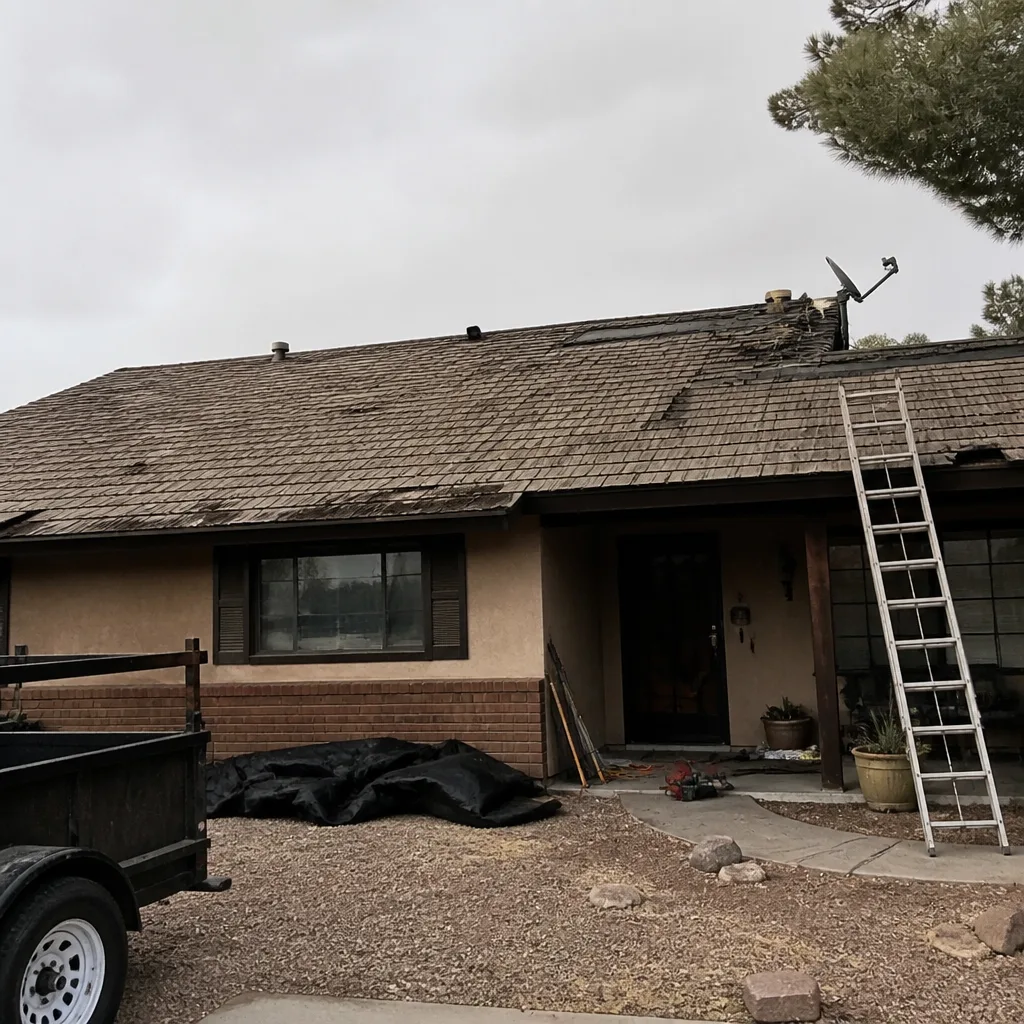 Before
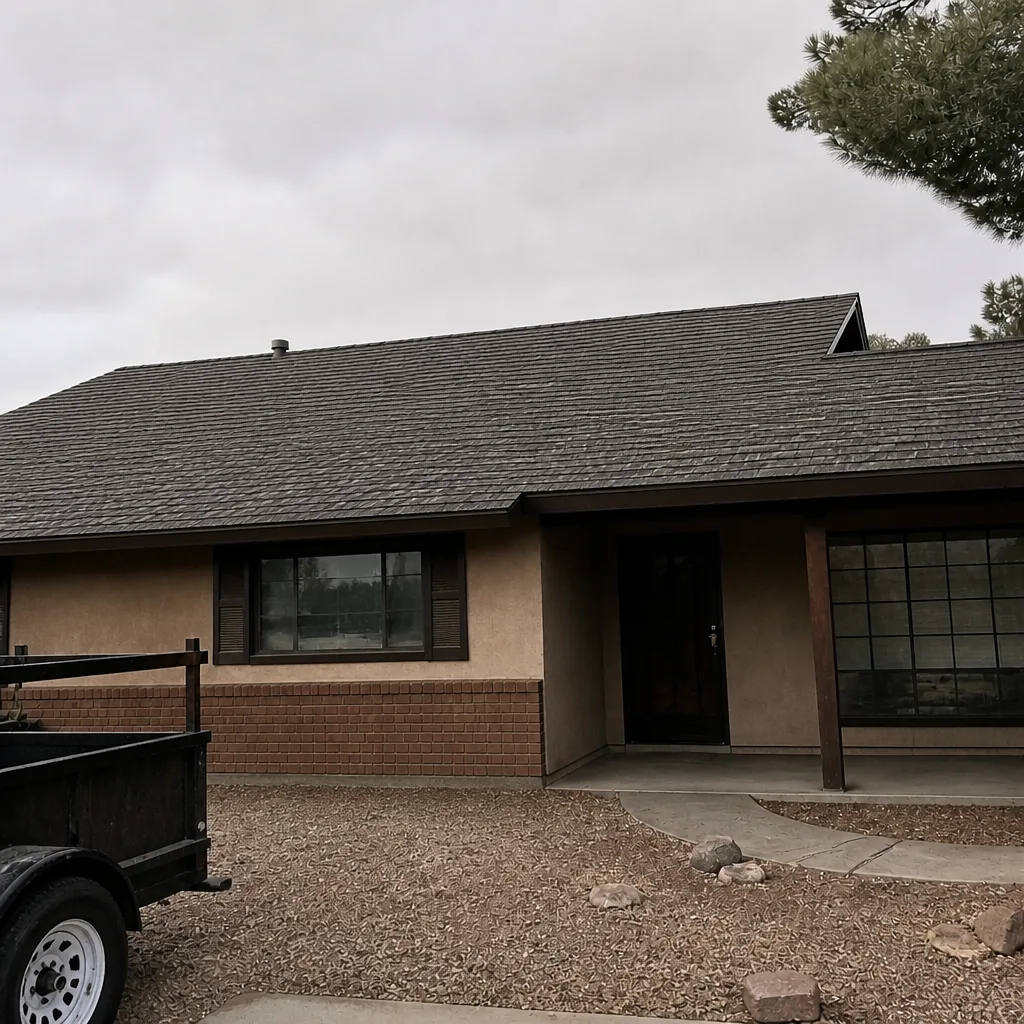 After
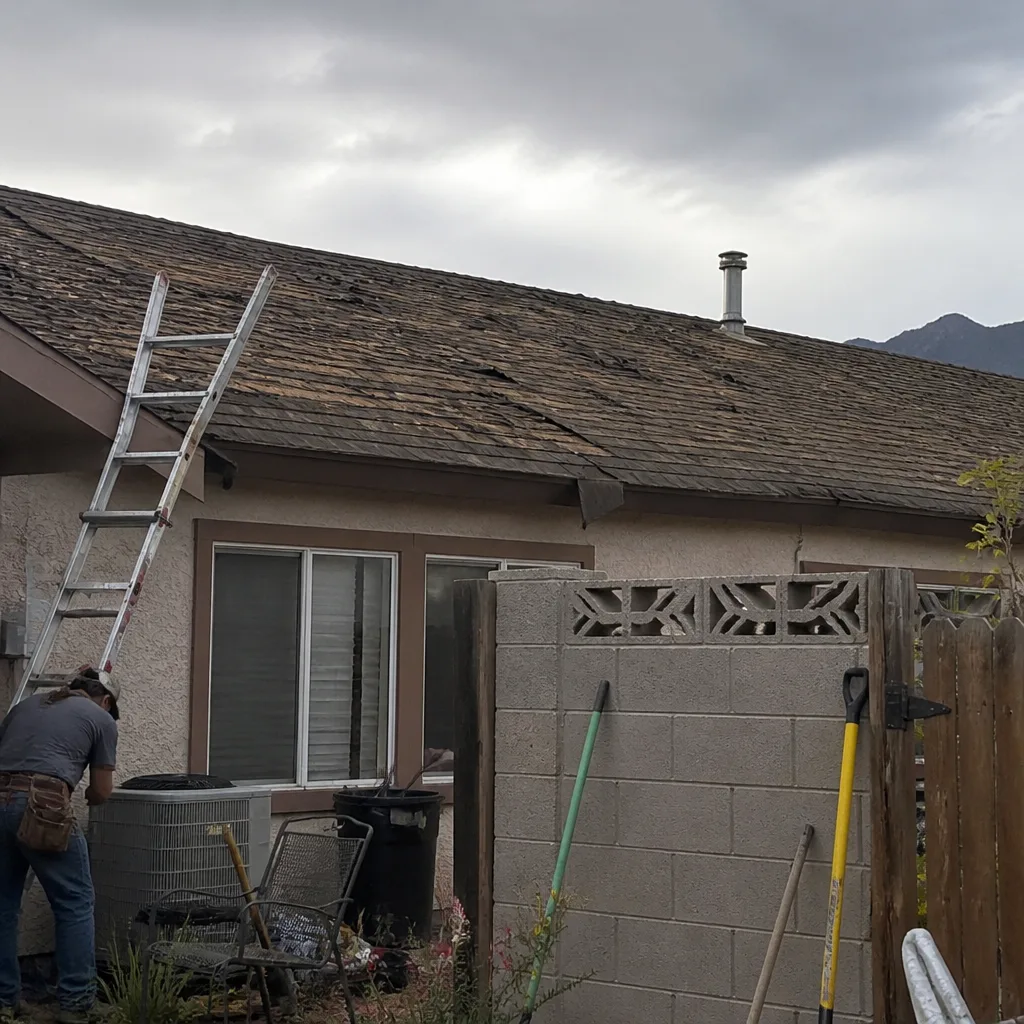 Before
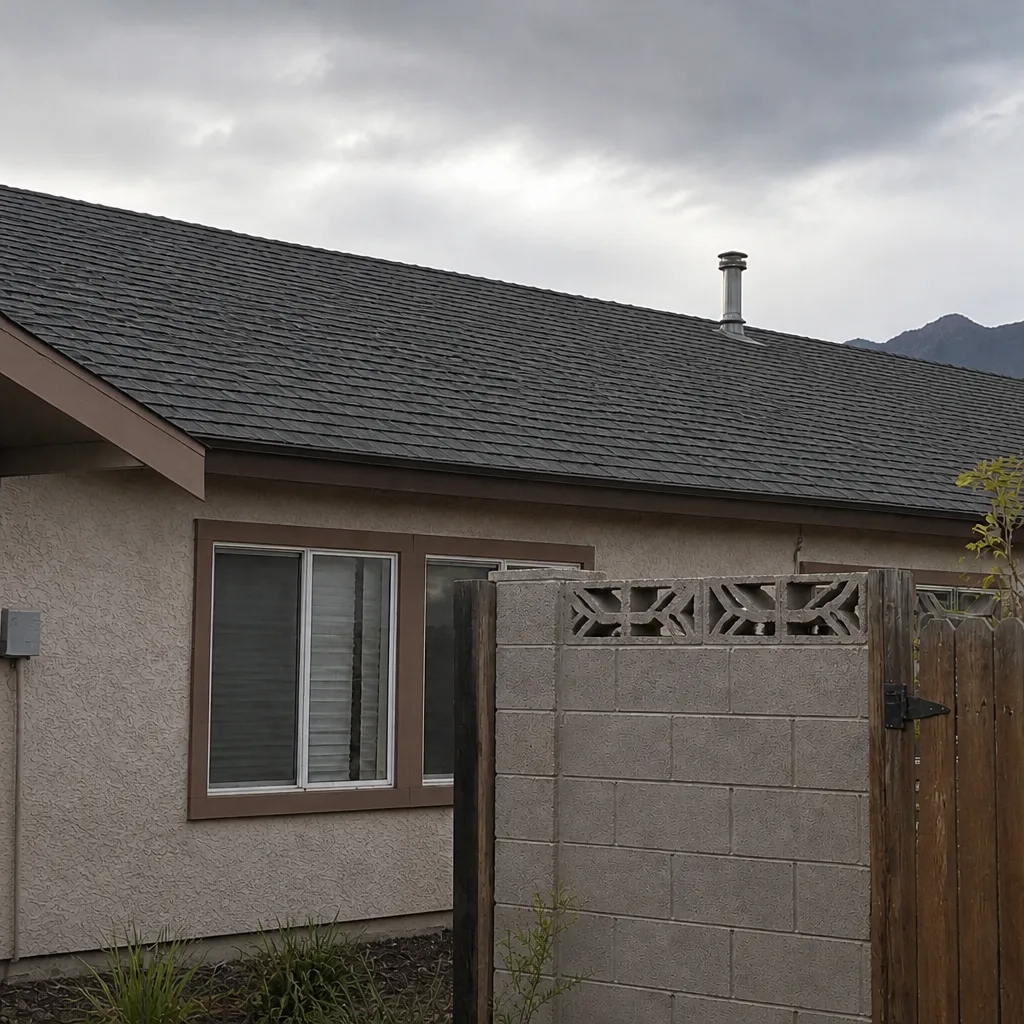 After
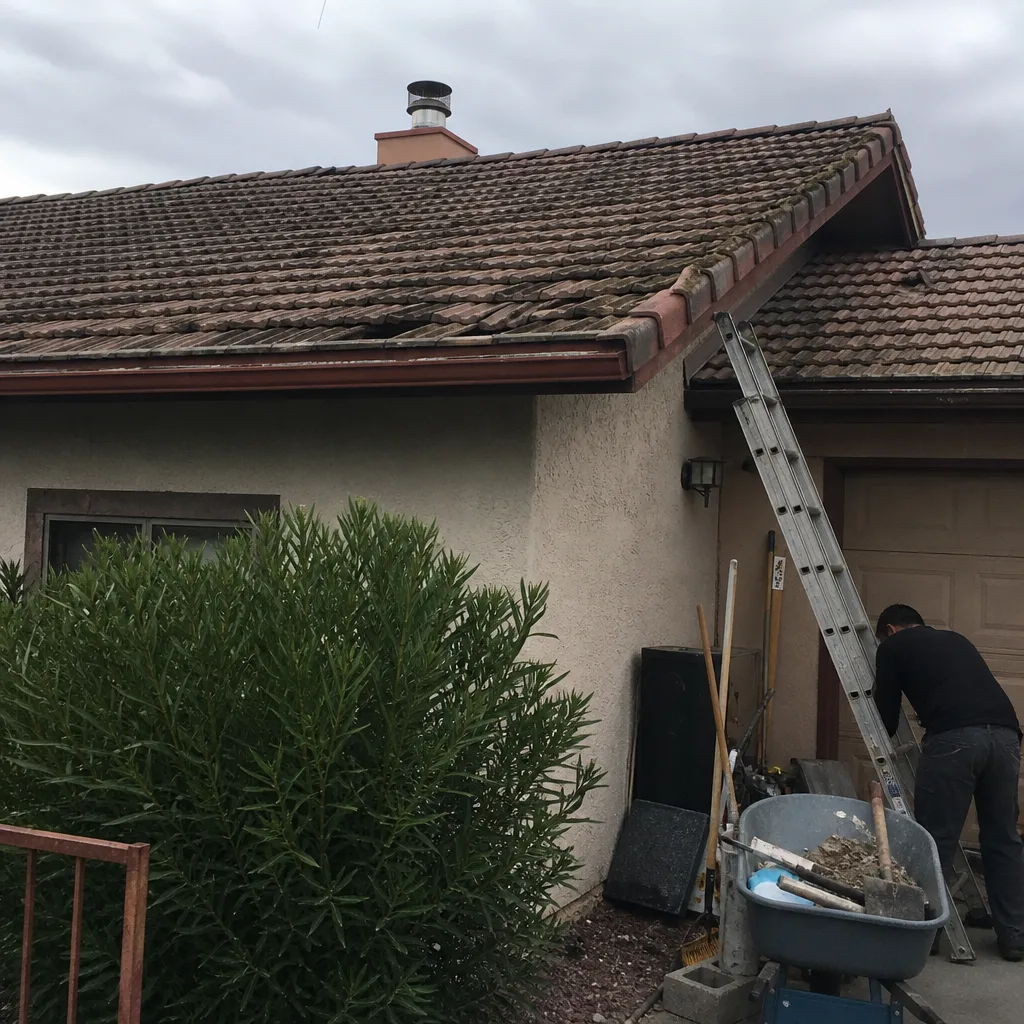 Before
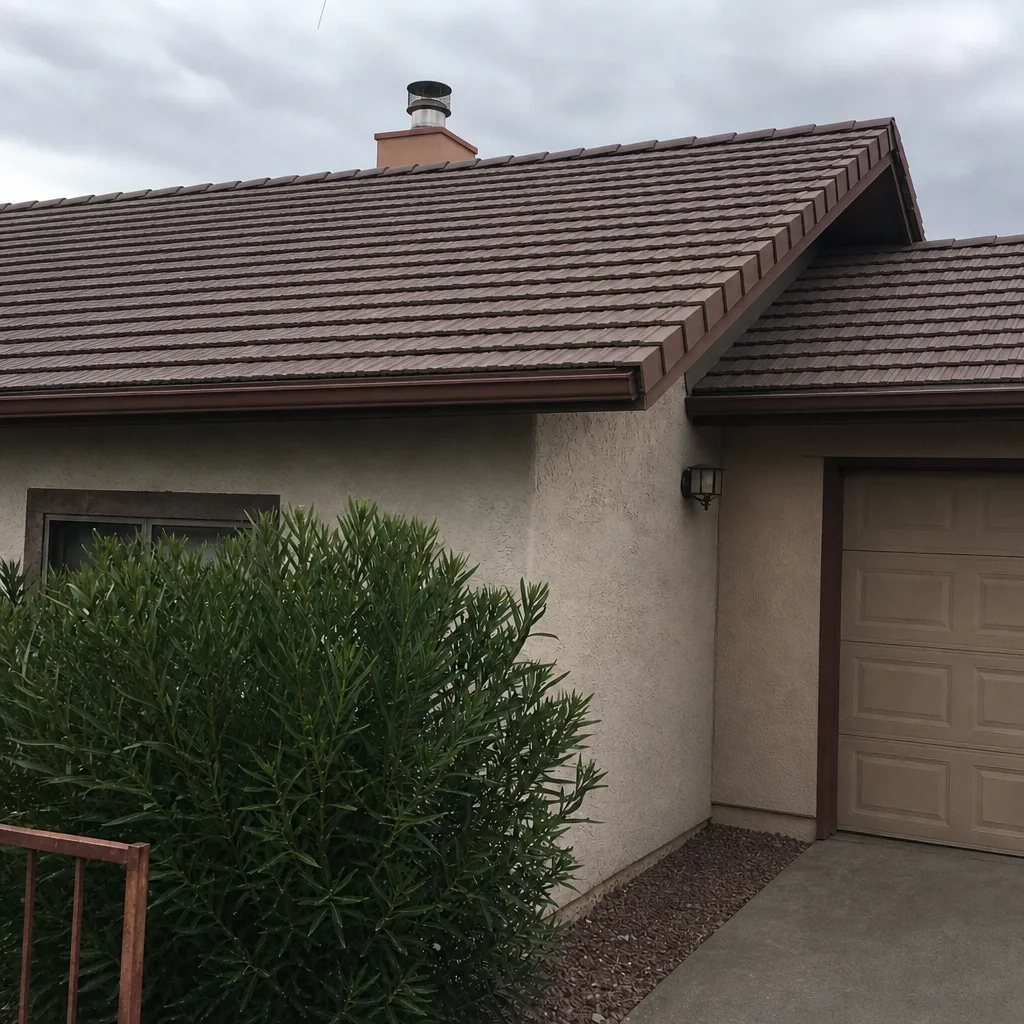 After
When to Call a Professional
Call a professional the moment you see any of the following: active water staining in the attic or ceiling, a section of cracked tiles clustered on one slope, stucco staining that starts at the roofline, lifted or rusted flashing at a valley or chimney, sagging in the roof plane, or moss growing where the roof doesn’t drain. Tile work needs specialized tools and hands that know how to walk a tile roof without breaking it. A roofer who’s done it for years will lift a few tiles, show you the deck and the underlayment, and tell you straight whether you’re looking at a repair or a full replacement. That’s the conversation worth having, and it’s free with us. Shepherd & Sons Roofing Boulder City offers free estimates in Boulder City and a free second opinion on any written estimate you’ve already got, so you can compare before you commit. Call (844) 761-8186. A live person answers, and there’s no trip charge inside our own county. Our technicians have up to 30 years of experience, and every roofing job is backed by our written 90-Day Done Right Promise.
Frequently Asked Questions
Most single-issue tile roof repairs in Boulder City fall somewhere in the low hundreds to around a thousand dollars, depending on whether you’re replacing a slipped tile, re-flashing a valley, or addressing a section of cracked tile. The key number is the scope, and the only way to know it is an inspection. Call (844) 761-8186 for a free estimate, and we’ll show you the deck photos before we talk money.
Yes. Most tile roof leaks come from flashing failures or underlayment that’s reached the end of its life, not from a broken tile. The tile can look perfect while water gets in around a valley, a chimney, or a penetration. That’s why ground inspection plus an attic check matters more than just counting broken tiles.
Repair makes sense when the problem is localized: one or two slipped tiles, a single flashing joint, or a valley that needs re-sealing. Replacement is the better call when cracks are clustered on one slope, the underlayment is at the end of its life across the roof, or the deck has repeated water damage. A roofer can lift a few tiles and tell you which situation you’re in.
It’s a warning sign. Moss needs sustained moisture, so in a desert climate it usually means drainage is failing somewhere nearby: a valley that doesn’t shed water, a flashing joint that’s leaking, or debris that’s holding moisture against the roof. Clean the drainage, check the flashing, and have the area inspected.
Often, if the damage is from a covered event like wind or hail and you’ve got photos and a documented inspection. A written estimate that documents the damage is what your adjuster needs. We’ll give you that in writing and answer any questions your insurer asks.
Walk the perimeter with binoculars and check the ridge lines, hips, and valleys first, since those take the most wind. Look for slipped tiles, lifted ridge caps, and rust or debris that wasn’t there before. Then check the gutters for new grit. If you find anything that looks shifted, call (844) 761-8186 and we’ll take a look.
The Bottom Line
A tile roof talks to you from the ground, and most of what it says is subtle: a slipped tile on a ridge, a rust streak below a valley, a fan of stucco staining, a patch of lichen where water lingers. Read those signs early and a tile roof can serve through many more years of Boulder City sun and wind. Ignore them, and the underlayment clock keeps running where you can’t see it. Walk the perimeter twice a year, check the attic once a season, write down what you find, and let a trained roofer do the climbing. If something looks off, get a second set of eyes on it. A free estimate today is cheaper than a sheathing repair next spring.
Shepherd & Sons Roofing Boulder City is locally owned and owner-operated, and we install tile and shingle products from manufacturers including GAF, Boral, and Atlas. Same address, every job backed by the written 90-Day Done Right Promise. Standing offers always include $40 Off Any Repair Over $200, a Free Second Opinion on any written estimate, No Trip Charge Inside Our Own County, and a Senior and Veteran 10% discount. Call (844) 761-8186 for your free estimate.
Written by the team at Shepherd & Sons Roofing Boulder City.