
 Metal roofing
 Architectural shingles
 Tile roofing
 GAF
 Owens Corning
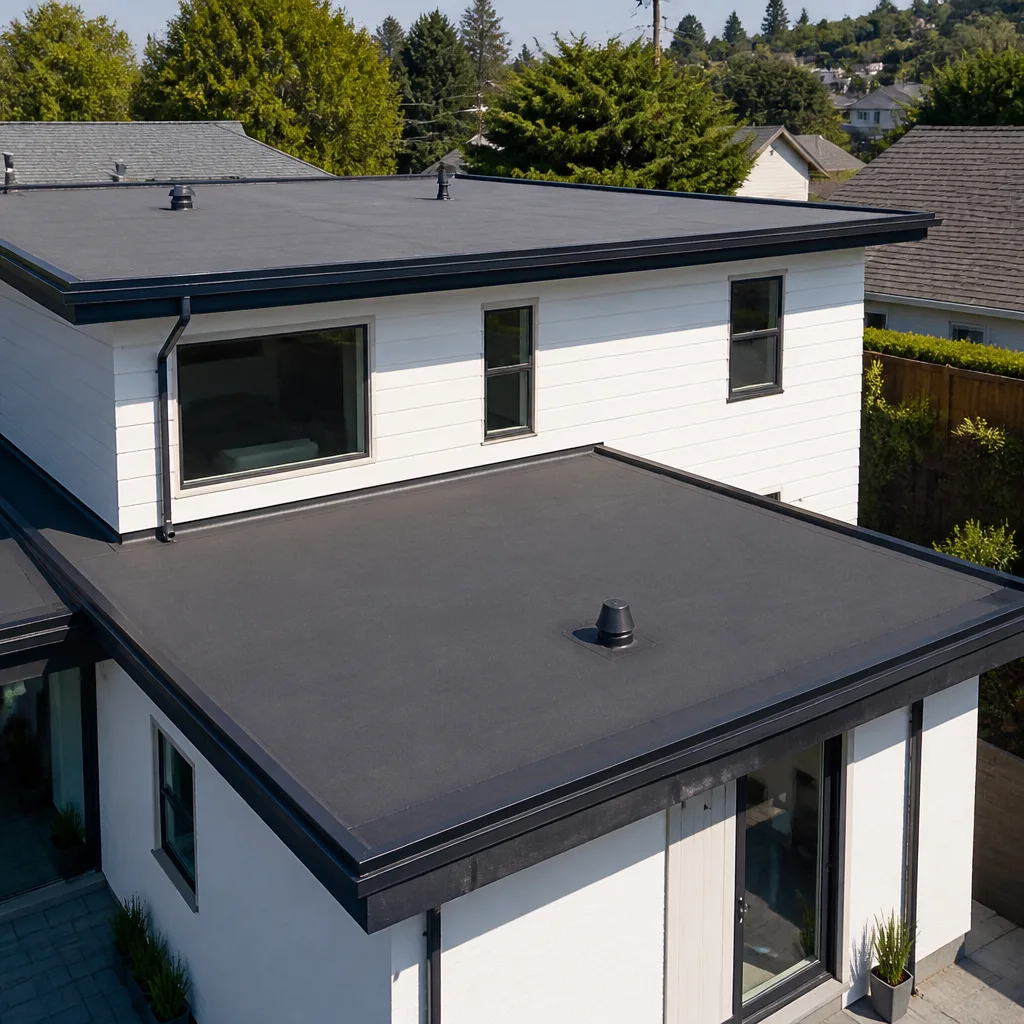 Flat & low-slope
Free roof inspection with deck photos before we talk money - GAF and Owens Corning certified installation
Styles & brands we work with
- Architectural shingles
- Metal roofing
- Tile roofing
- GAF
- Owens Corning
- Flat & low-slope
See the difference
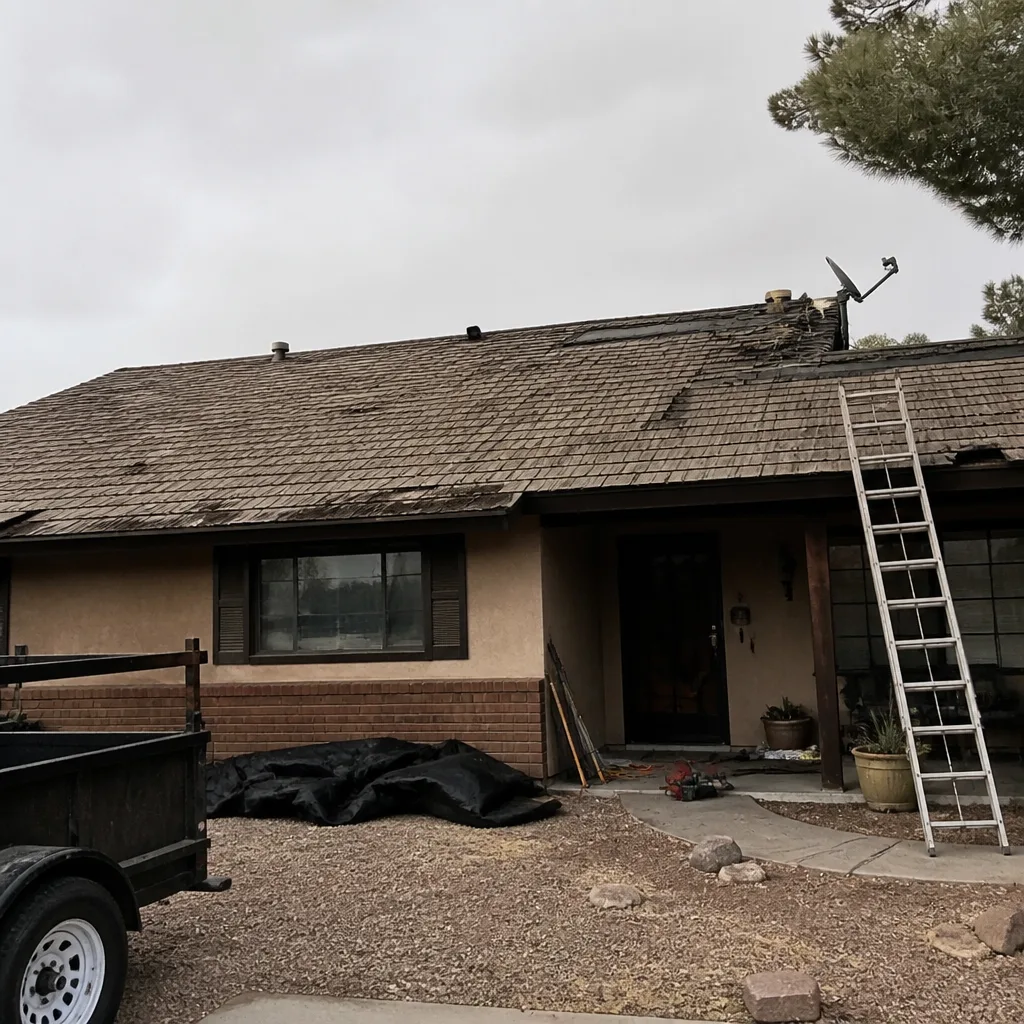 Before
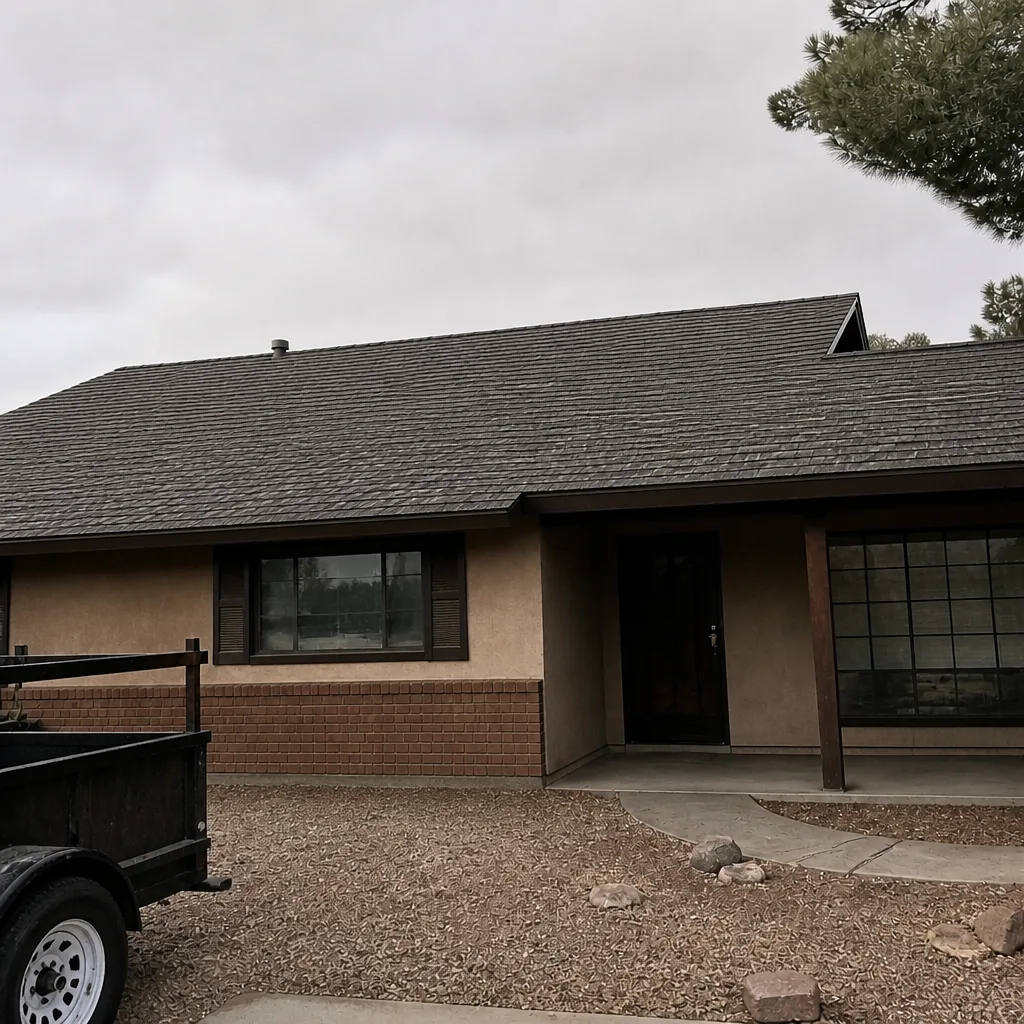 After
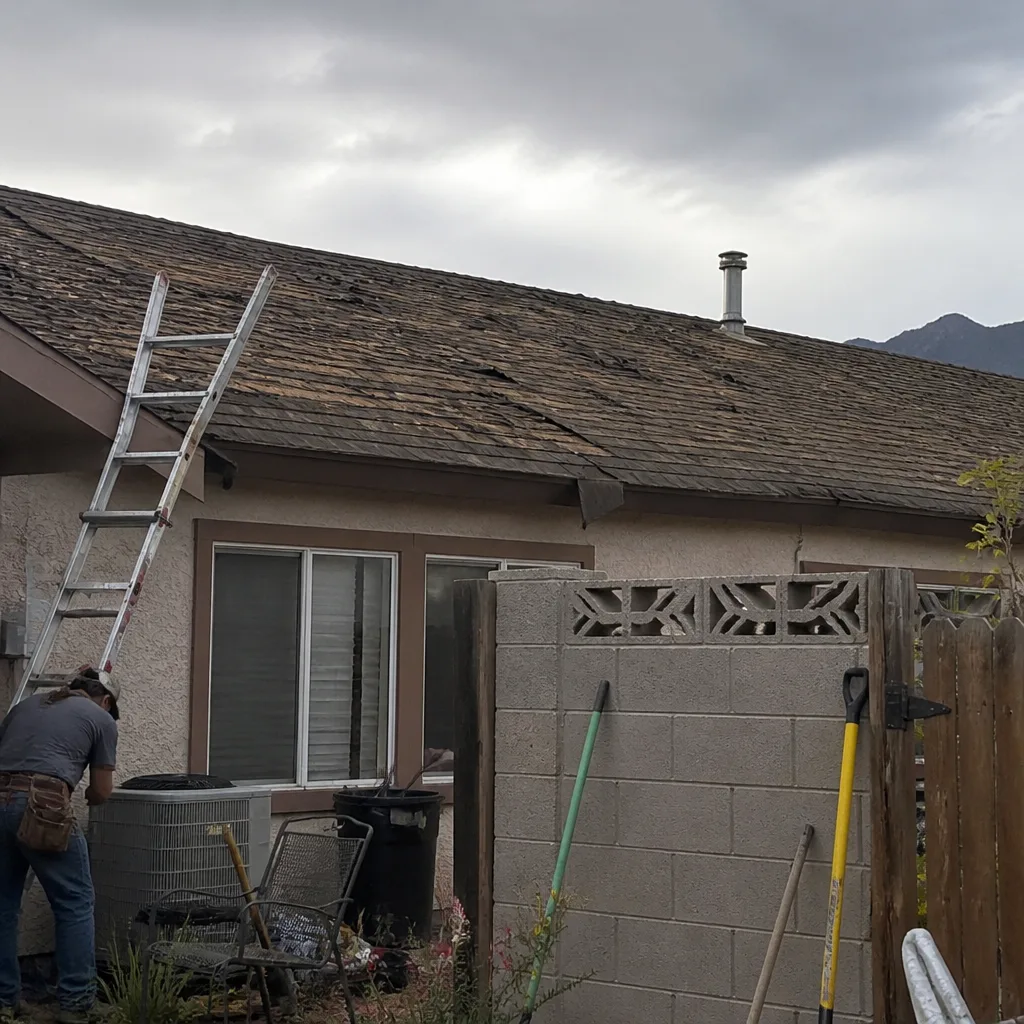 Before
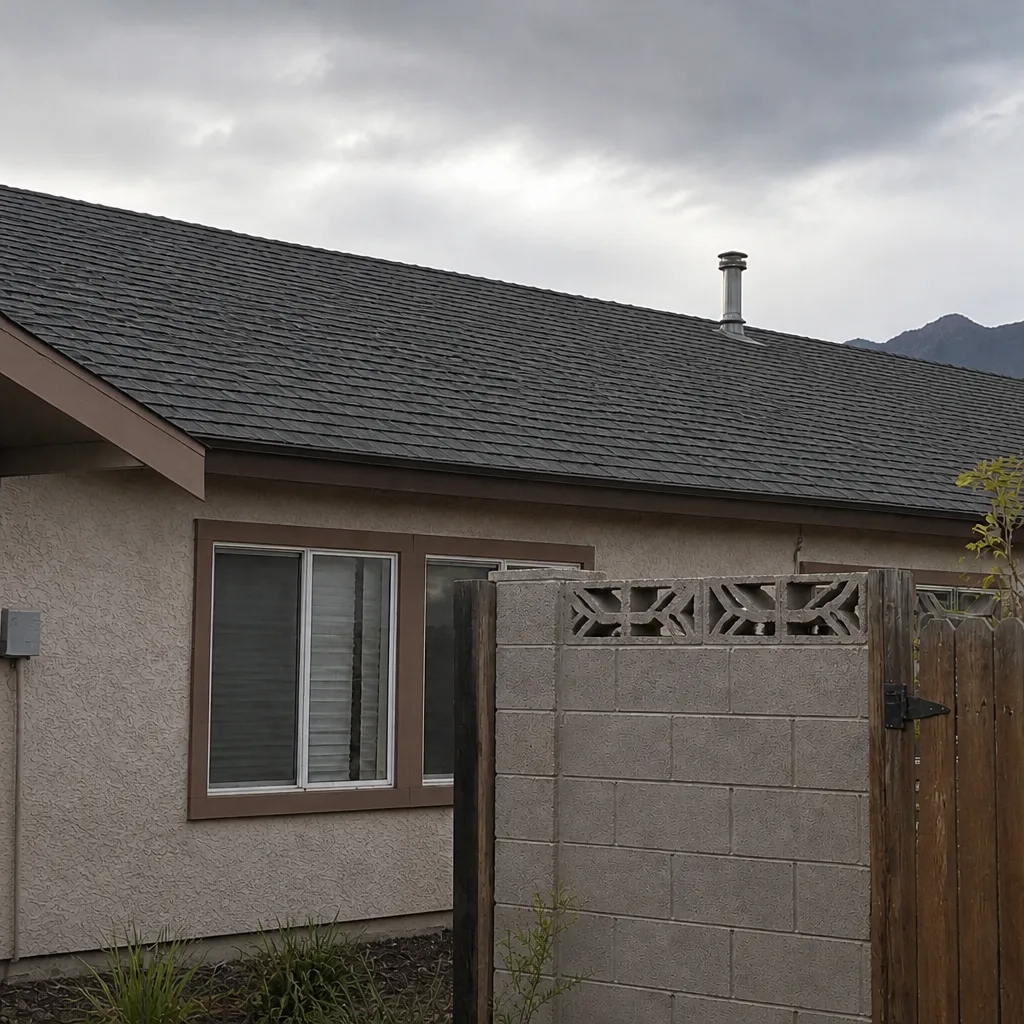 After
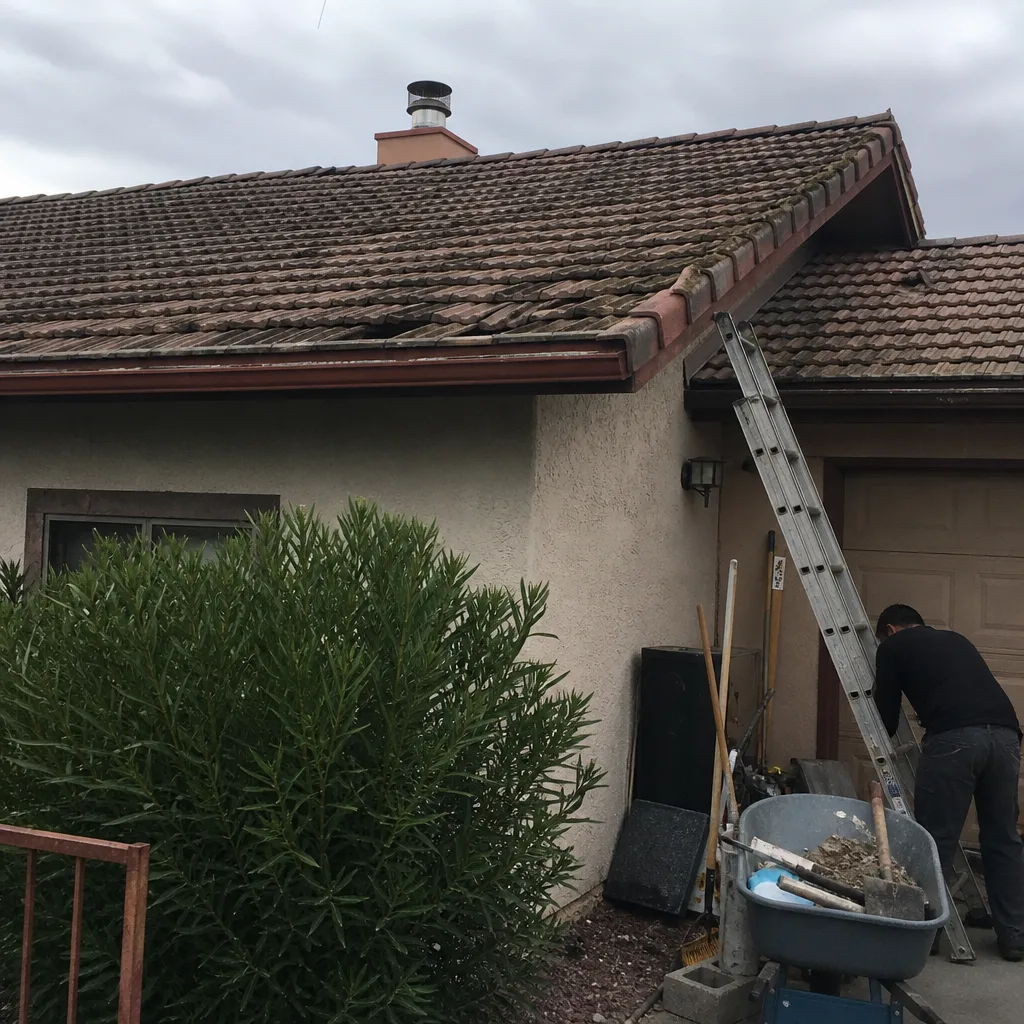 Before
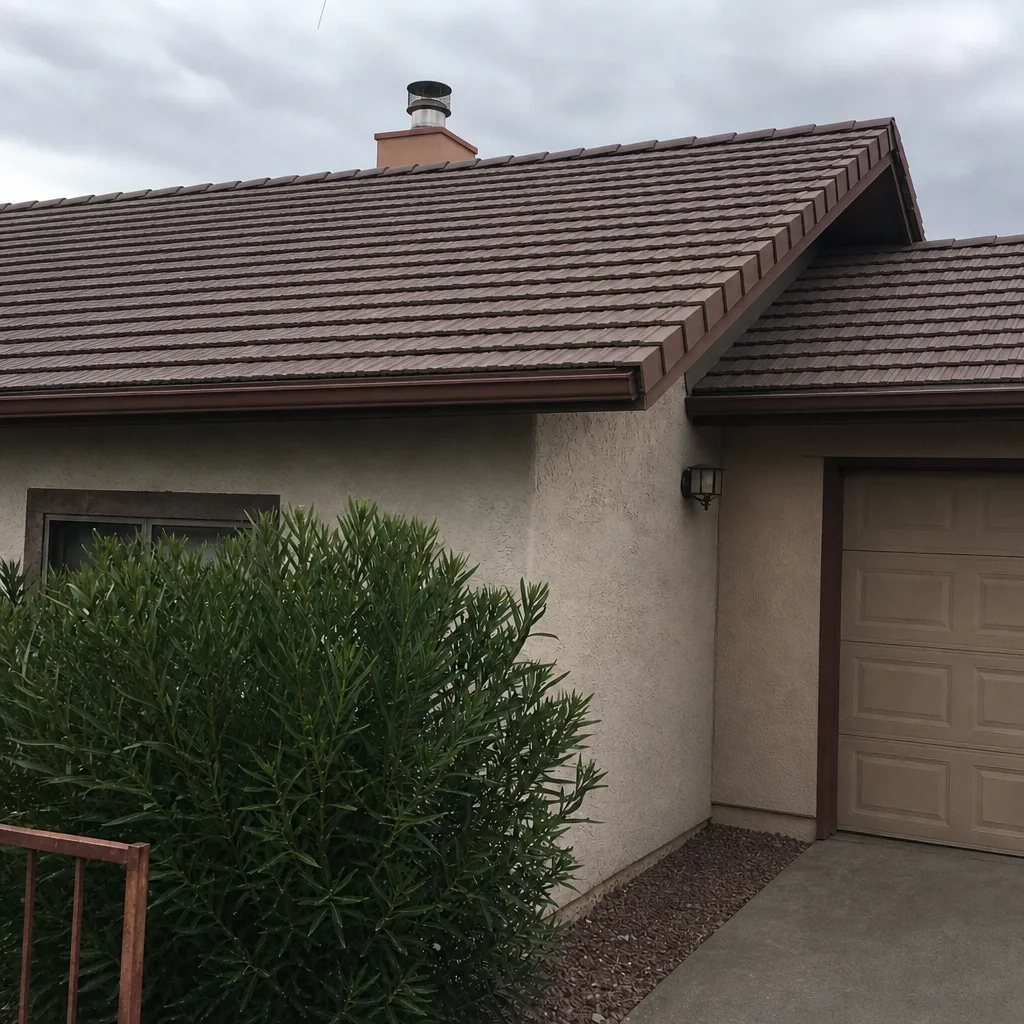 After
What Causes Roof Leaks in Boulder City, NV? Wind-Driven Rain, Not Rainfall
The most common cause of roof leaks in Boulder City is wind-driven rain forcing its way sideways into flashing and edge details during monsoon microbursts, not steady rainfall wearing shingles down. Boulder City averages under five inches of rain a year, so when homeowners call us about a leak, the water almost always got in because a 50-plus mph gust drove it up under a flashing that looked perfectly fine from the curb. If you’re seeing a stain on the ceiling and can’t find the source, call Shepherd & Sons Roofing Boulder City at (844) 761-8186 and we’ll come take a look.
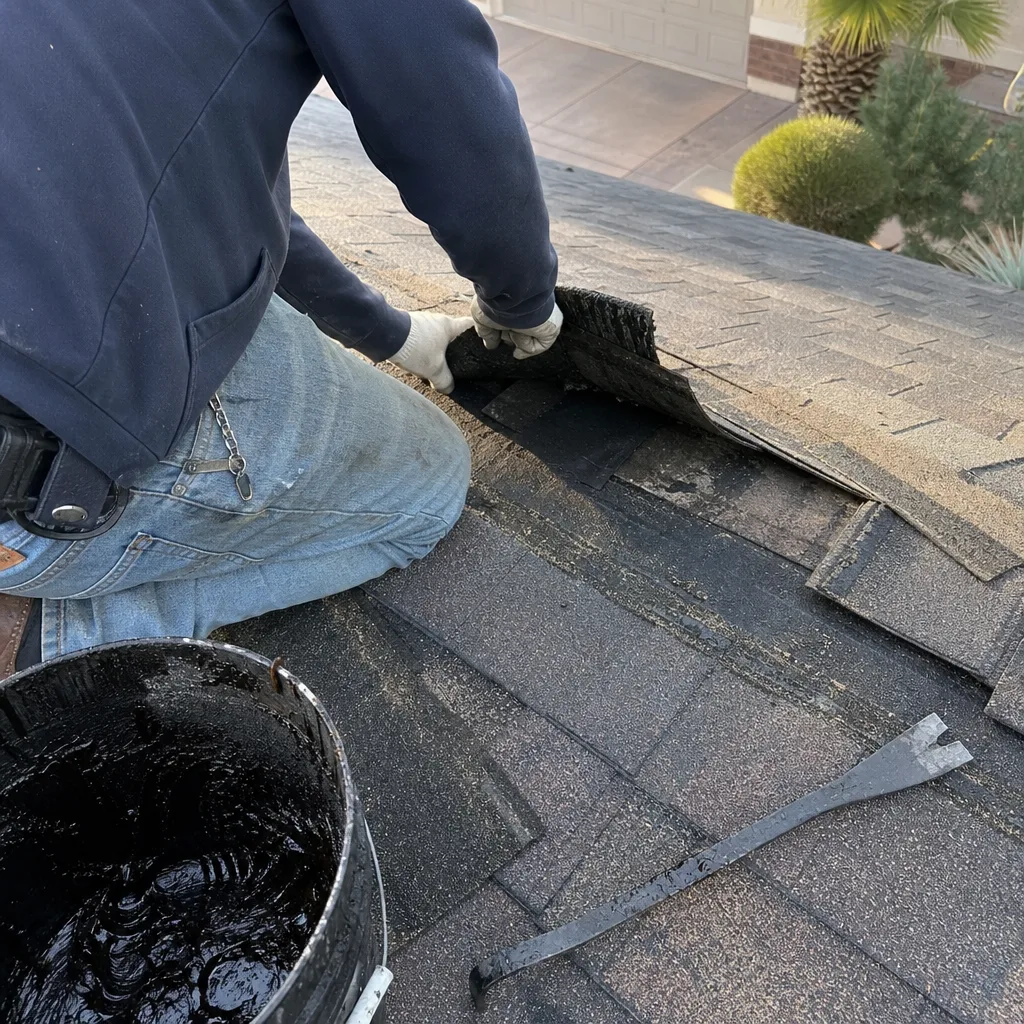
Why “Check Your Shingles” Is the Wrong Answer Here
Most articles about roof leaks tell you to look for missing or curled shingles. That advice is written for wet climates, and it misses the failure mode that actually shows up in Boulder City.
Here’s the mechanism. In calm weather, a flashing overlap sheds water just fine. The uphill piece laps over the downhill piece, gravity does the work, and a visual inspection passes with flying colors. Now put that same detail in a monsoon cell with 50 to 60 mph wind. Water is no longer falling down; it’s traveling horizontally, and it finds the tiniest gap: the top edge of a step flashing that’s pulled away from stucco, the seam where drip edge meets fascia, the transition where a low-slope section meets a steeper pitch. The roof can pass every calm-day inspection and still pour water into your attic during a single storm.
Boulder City sits a few hundred feet higher than Las Vegas, which means slightly cooler air and monsoon cells that build and dump fast in the late summer. Those are the afternoons we get the calls.
The three flashing failures we fix most in Boulder City
In order of how often we find them here:
- Step flashing separated from the stucco wall. The stucco-to-roof detail is the number one wind-driven entry point on the 1930s-50s Reclamation-era bungalows in the old core. Stucco is rigid. Roof framing moves with heat and wood moisture. Over decades the two pull apart, and once that gap opens, sideways rain goes straight in.
- Pipe boot collars hardened by UV. The rubber collar around plumbing vents cooks in the desert sun and turns brittle, then splits. That’s a slow leak that shows up when wind pushes water into the split rather than letting it run past.
- Valley metal cut short at the eave. We regularly pull open a valley and find the metal terminates a few inches short of the eave, so runoff has nowhere to land but the sheathing and eventually your ceiling.
Why Boulder City’s Older Roofs Fail Differently
The Historic District core was built in the 1930s by the Bureau of Reclamation for Hoover Dam workers, and a lot of those small bungalows have been patched, re-patched, and patched again over the decades. Low-slope sections often carry layered roofing materials from three or four different eras. Each patch seam is its own potential wind-driven entry point. A single seam might only leak when the wind comes from the southwest, which is why homeowners tell us “it only leaks in that one storm” and every calm-day bidder walks away scratching their head.
One thing that’s unique to roof work in Boulder City: the Historic District’s design review. If you’re re-roofing inside it, a change in shingle color or profile can require approval, and the guidelines lean toward the original desert-appropriate character rather than whatever’s cheapest at the supply yard. We check the historic guidelines before we order material. The wrong Boral or GAF color on a 1930s bungalow can mean a teardown and reorder.
Immediate vs. Delayed Leaks: Which Timeline Are You On?
This is the diagnostic question that tells you how urgent your repair really is.
| Timeline | What you’ll see | Likely cause | Typical urgency |
|---|---|---|---|
| Immediate (during the storm) | Water appears while it’s raining and stops when it stops | Open penetration or failed flashing/edge detail | Usually repair-worthy now, before next season |
| Delayed (days later) | Stain grows or drips hours or days after rain ends | Water traveling along rafters from a failed adhesive or cracked tile on a low-slope section | Find the source soon; the ceiling may be soaking unseen |
An immediate leak usually points straight at flashing or a penetration, so a roofer can often spot it in one visit. A delayed leak is trickier: the water is traveling, so the stain on your ceiling might be ten feet from the actual hole. That’s the case where a careful moisture trace beats throwing sealant at the ceiling.
If you want the repair itself explained in more depth, see our page on Roof Repair, or the local service page for Roof Repair in Boulder City.
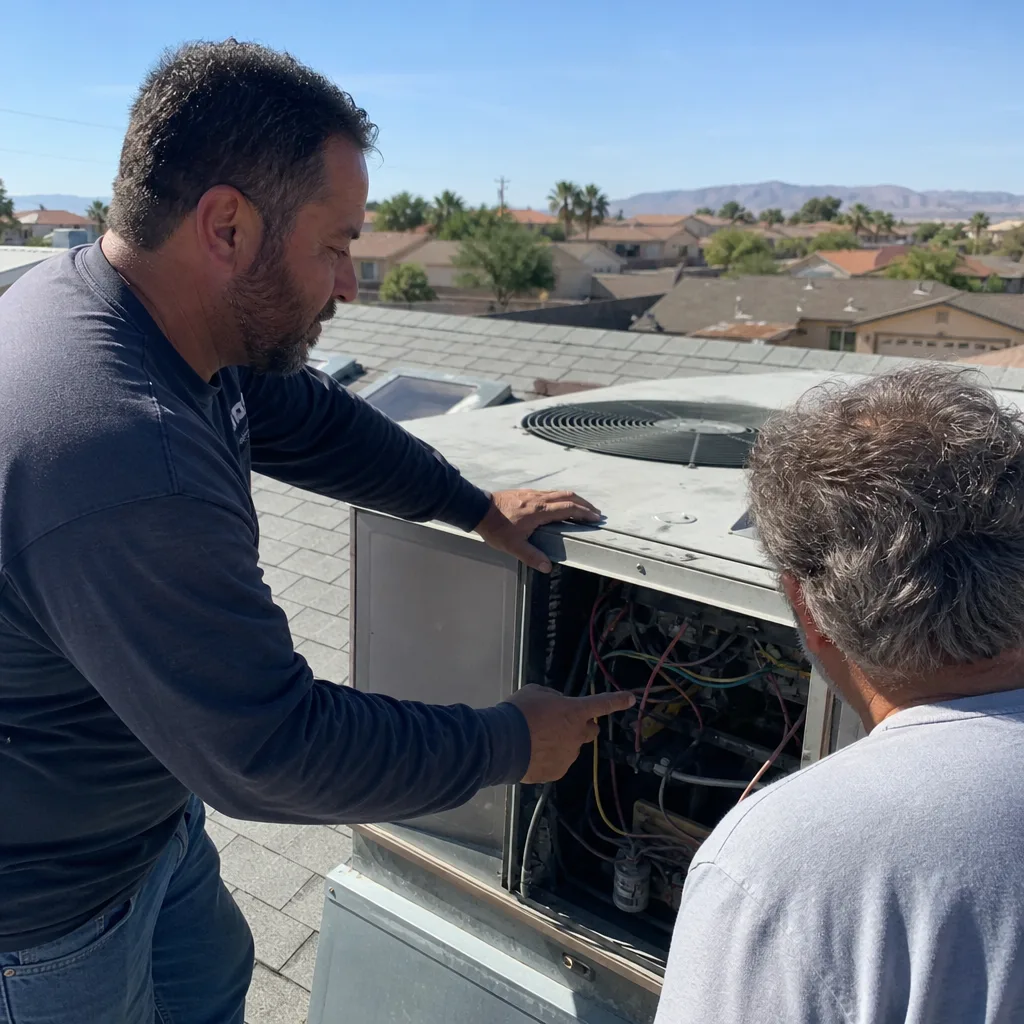
What a Roofer Actually Checks That You Can’t
We’re not going to tell you to climb up and probe flashing yourself. Roof edges, valleys, and ladder work are where people get hurt, and a leak you can only reproduce in a 50 mph gust isn’t something anyone should be diagnosing from a stepladder.
What we check, when we get up there:
- Windward-side flashing first. We look at step flashing, drip edge, and valley terminations on the side the prevailing monsoon wind hits, because that’s where the water’s coming from.
- Underlayment and sheathing near the stain. We follow the moisture back from where you’re seeing it, not just where the water drips.
- The deck and nail pattern. A roof is measured in squares, and a leak from below often traces to a short nailing pattern or a fastener pulling out, not the shingle itself.
Our technicians have up to 30 years of experience, and we’ve been locally owned and owner-operated with the same address since 1996. Bill’s own sons are on the roof with him. When we find a leak, we show you the photos before we talk money.
Why Flashing Repairs Are Backed by a Written Promise
Here’s the honest part. Flashing and edge work are statistically where roofers get call-backs, because those details only prove themselves in the next big wind. That’s exactly why our 90-Day Done Right Promise covers flashing and edge work specifically, in writing, on every job. If it blows back in, one call brings Bill back to make it right. It’s a straight answer to the one question every homeowner should ask a bidder: what happens if it leaks again after you leave?
We also answer the phone with a live person, 24/7, including nights and weekends after a storm. Standing offers include a free second opinion on any written estimate, no trip charge inside our own county, and $40 off any repair over $200.
Key Takeaways
- In Boulder City, leaks are usually caused by wind-driven rain entering flashing and edge details during monsoon gusts, not by rain volume.
- The three most frequent local failures are separated step flashing at stucco walls, UV-cracked pipe boots, and short valley metal at the eave.
- When water appears tells you a lot: immediate usually means flashing or an open penetration; delayed usually means travel from a low-slope adhesive or tile failure.
- Older Reclamation-era bungalows often have layered, patched low-slope sections, and each patch seam is a potential entry point.
FAQs
A wind-only leak almost always means flashing or an edge detail rather than a shingle. In calm weather the overlap sheds water fine, but a 50-plus mph monsoon gust drives water sideways into a gap that a visual inspection won’t catch. Call (844) 761-8186 for a free estimate.
Most flashing and pipe boot repairs in Boulder City fall in a modest repair range, while larger valley or low-slope fixes cost more; exact pricing depends on access and the extent of the damage. We give no-hassle upfront pricing and a free second opinion on any written estimate, so call (844) 761-8186 for an exact quote.
Yes. A delayed leak means the water is traveling along a rafter from a failed adhesive or a cracked tile on a low-slope section, so the stain appears long after the storm. That timeline is worth finding the source of quickly, since the ceiling can soak unseen. Call (844) 761-8186.
Flashing and edge repairs are almost always cheaper than replacement when the rest of the roof is sound, and that’s the case in most Boulder City leaks we see. We diagnose first and tell you plainly if replacement is the better call. Call (844) 761-8186 for a no-pressure assessment.
Contact Shepherd & Sons Roofing Boulder City
If you’d rather have it looked at than crawl up there yourself, Shepherd & Sons Roofing Boulder City offers a no-pressure assessment in Boulder City. We show you the photos, quote the number, and leave the climbing to the crew. Call (844) 761-8186 for a free estimate, or start at our home page.
Written by the team at Shepherd & Sons Roofing Boulder City, serving Boulder City, NV.