
Last updated November 17, 2026
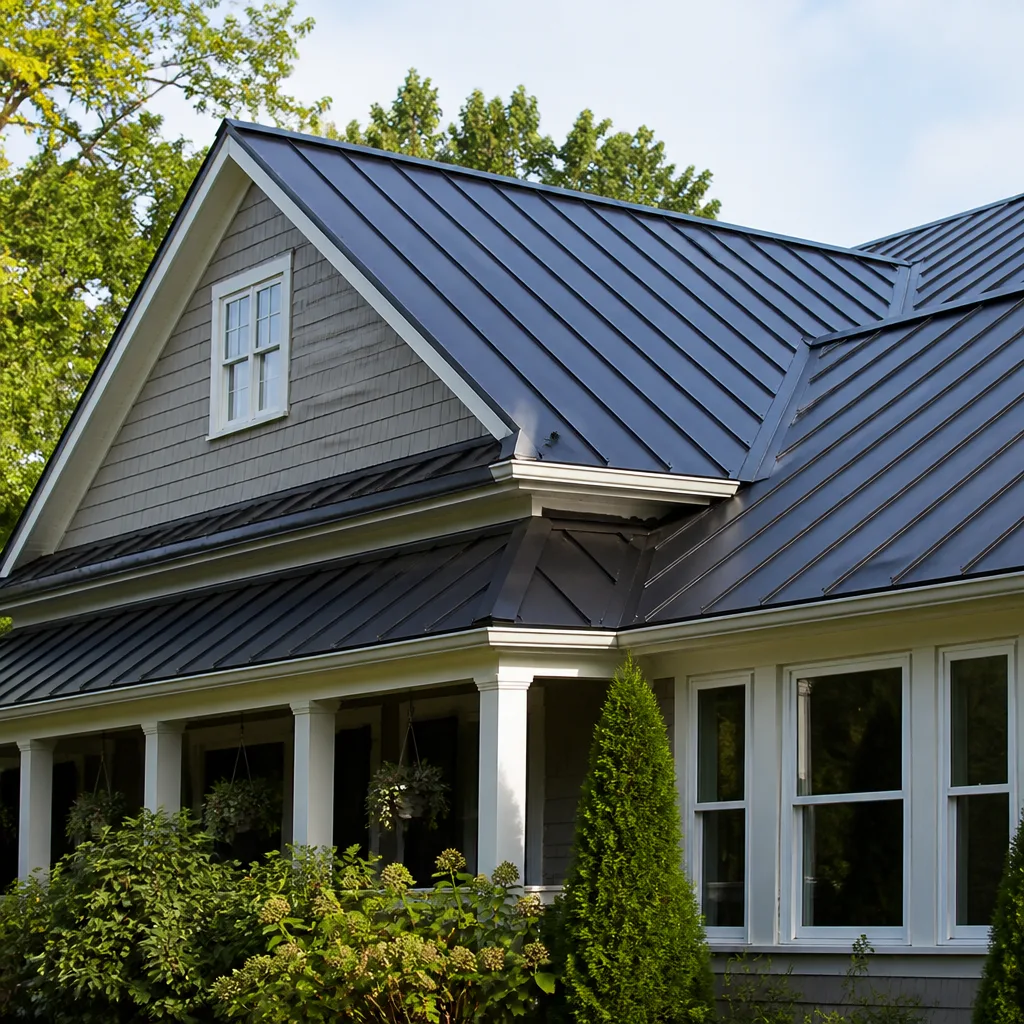 Metal roofing
 Architectural shingles
 Tile roofing
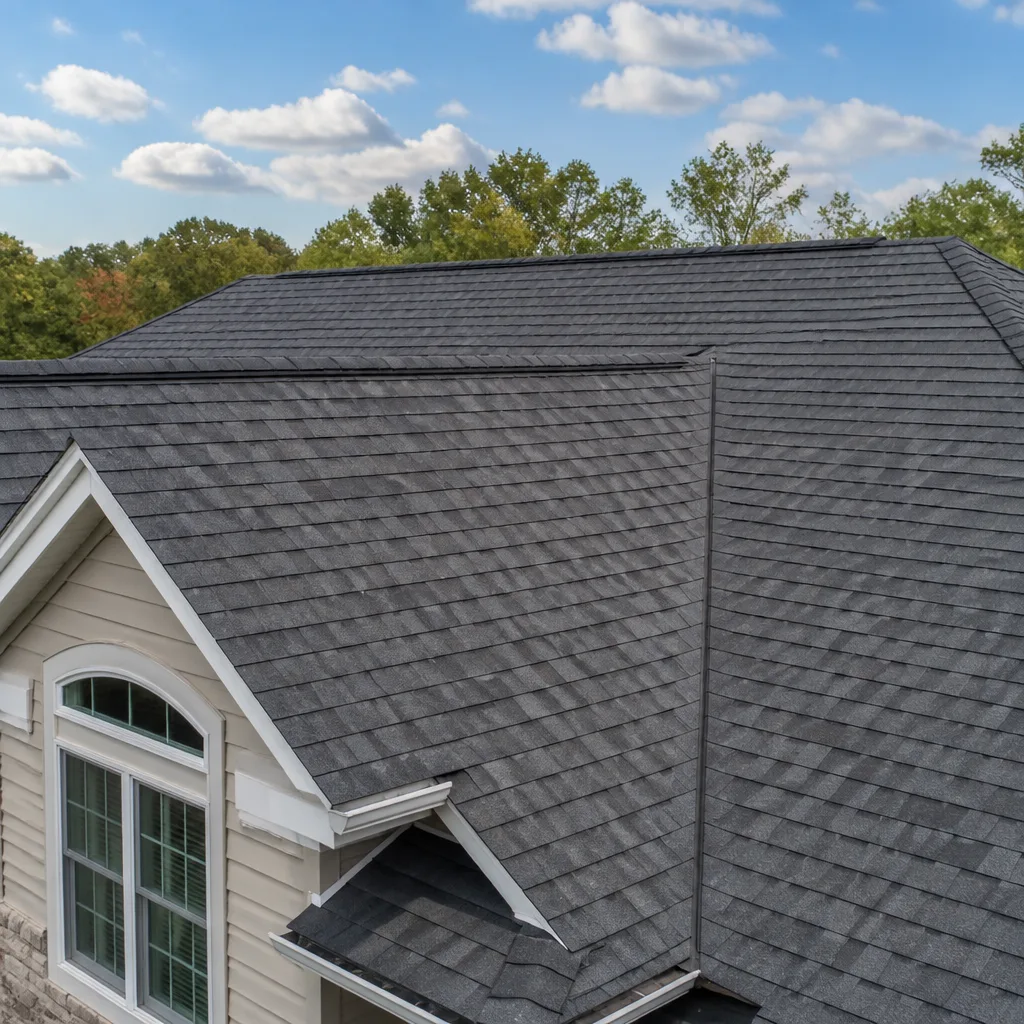 GAF
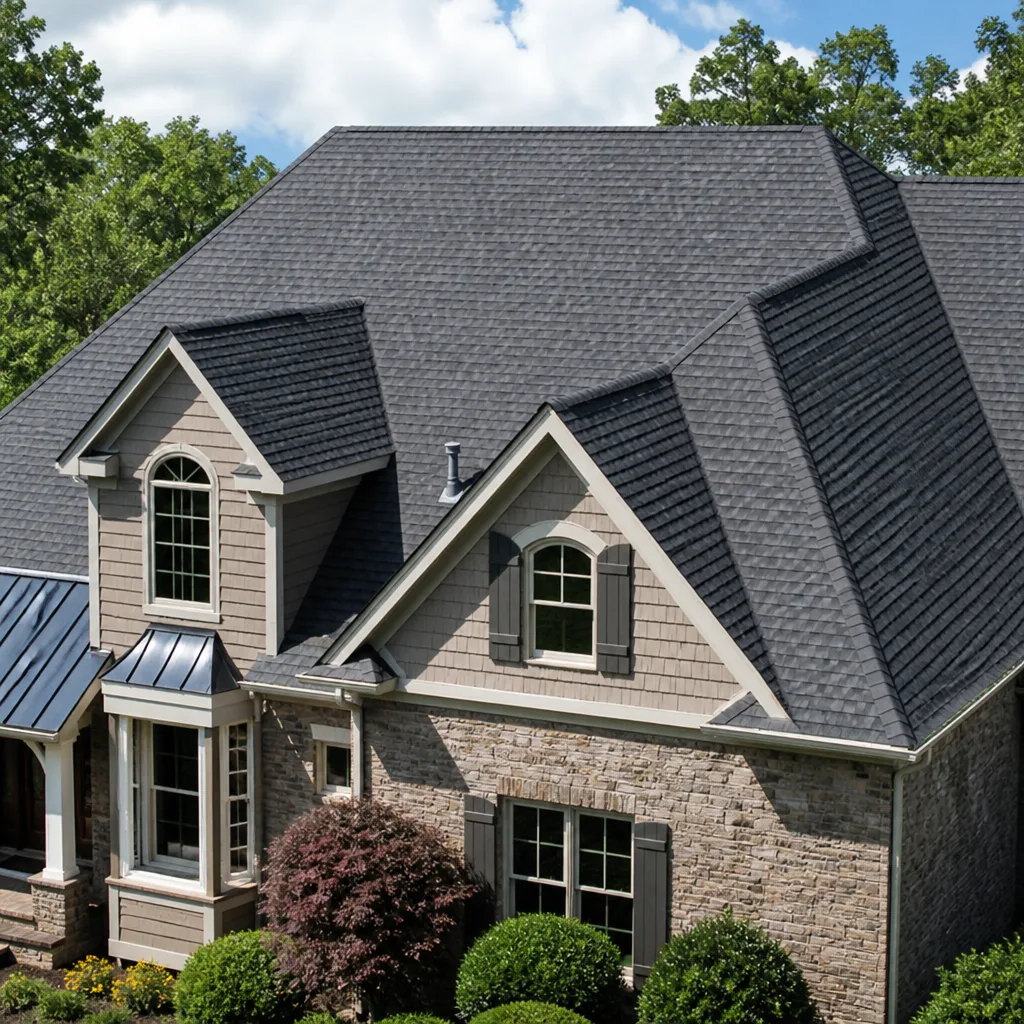 Owens Corning
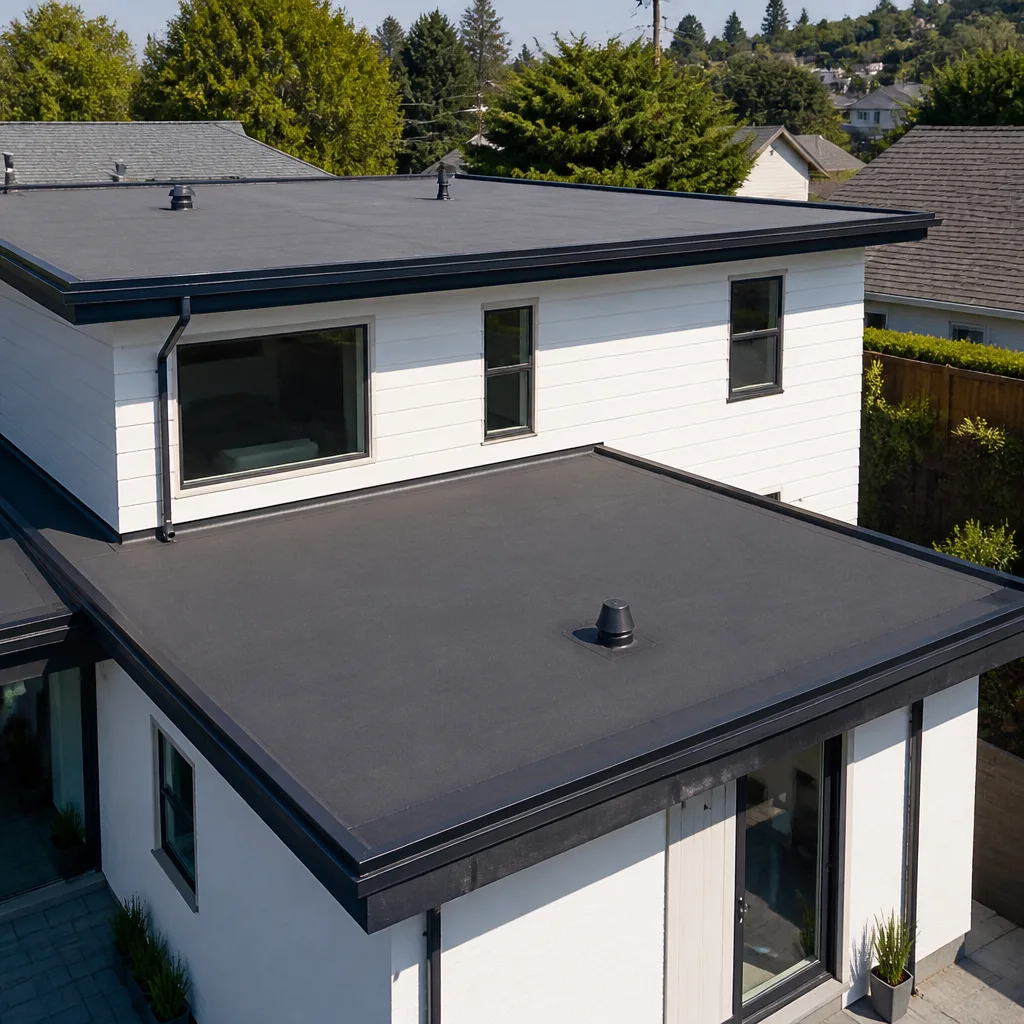 Flat & low-slope
Free roof inspection with deck photos before we talk money - GAF and Owens Corning certified installation
DIY vs Professional Specialty Roofing: What’s Safe to Do Yourself
A homeowner in Boulder City once caulked the seam on his metal roof. He used the tube the guy at the hardware store handed him, laid down a thick bead, and figured he’d saved himself a few hundred dollars. Two years later the ceiling in his back bedroom had a brown ring on it. The caulk hadn’t let water out – it had sealed water in. Moisture that got behind that seam stayed behind it, and the decking under the panels rotted quietly the whole time. By the time anything showed inside, the repair had grown from a $300 seam fix to a tear-off and deck replacement. That story is why this guide exists. It’s about what you can safely do yourself on a specialty roof, what you can’t, and how to tell the difference before you make a small problem bigger.
We’re Shepherd & Sons Roofing, and we’ve been on roofs around Boulder City since 1996. We’ve pulled more DIY caulk out of seams than we care to count. Here’s the honest breakdown.
Quick Answer
On a specialty roof – metal, foam (SPF), tile, or any system where the panels, membrane, or coating are chemically or mechanically interdependent – the safe DIY list is short: clear your drains, look things over, take photos, and call a professional. Patching a seam, resealing a panel, or coating a spot of foam yourself almost always creates a new failure point right next to the one you set out to fix. Standard shingle repairs are a different story and often fine to handle yourself. Specialty systems are not.
Styles & brands we work with
- Architectural shingles
- Metal roofing
- Tile roofing
- GAF
- Owens Corning
- Flat & low-slope
Table of Contents
- What Counts as a Specialty Roof, Anyway?
- The Honest List of What You Can Safely Do Yourself
- Why Specialty Roof DIY Failures Are So Hard to Find
- Material-by-Material: Where DIY Goes Wrong
- How to Describe Your Problem So You Get a Real Quote
- The Licensing and Insurance Questions That Matter More on Specialty Work
- Common Mistakes to Avoid
- When to Call a Professional
What Counts as a Specialty Roof, Anyway?
“Specialty” gets used loosely. In practice, it means any roof that isn’t plain asphalt shingle or a basic three-tab. That covers metal (standing seam and exposed fastener), spray polyurethane foam, tile (clay, concrete, and Boral’s synthetic lines), flat and low-slope membrane systems, and the synthetic slate and shake products. What these all share is that they fail as a system, not as individual pieces.
That distinction matters in Boulder City more than most folks realize. We sit in the Mojave, so roofs here cycle through brutal UV and heat that softens sealants and cooks coatings, then get the occasional hard monsoon dump that pushes water sideways. Expand and contract, expand and contract. A specialty roof on a Boulder City home is doing real work to stay watertight, and every joint is a place where that work can come apart.
When you’re weighing a repair against a larger job, it helps to know which conversation you’re actually in. If your shingles or panels are worn overall rather than failing at one point, that’s a roof replacement and installation in Boulder City question, not a repair question. We cover the repair side too on our roof repair in Boulder City page. And if you’re thinking about a metal system specifically, the metal roofing in Boulder City page walks through how those panels actually lock together.
The main point: on a shingle roof, one shingle failing is mostly one shingle’s problem. On a specialty roof, one joint failing can pull the whole nearby system out of balance. That’s why the DIY math is so different.
The Honest List of What You Can Safely Do Yourself
We’re not going to tell you that you can’t touch your own roof. You can do plenty, and doing it well will save you money and catch problems early. Here’s the short honest list of what’s genuinely safe.
- Clear your drains and gutters. On flat and low-slope specialties, keeping scuppers, drains, and gutters clear is the single highest-value thing a homeowner can do. In Boulder City, a plugged drain during a monsoon dump can back water up under the membrane in a hurry.
- Do a visual inspection from the ground and from a ladder at the edge. Binoculars from the driveway work fine for the field of the roof. Look for lifted panels, cracked sealant, rust trails, or discolored patches.
- Photograph everything. Seams, penetrations (vents, pipes, skylights), and any spot that looks off. Phone photos taken from a safe position are worth more at quote time than a paragraph of description.
- Note when and where water shows up inside. A stain that grows during a storm but not in dry weather tells a professional a lot.
- Keep vegetation and debris off the roof surface. Palms and mesquite drop a lot; leaf litter traps moisture against the surface and shortens life.
- Check and tighten interior-side things you can reach safely. Attic-side moisture stains and loose flashing at the wall you can see from inside are fair game to document.
That’s a real list. None of it involves the roof surface itself, and all of it feeds a good diagnosis. What’s not on the list is patching, sealing, coating, or fastening – because that’s where the physics turns against you.
Why Specialty Roof DIY Failures Are So Hard to Find
Here’s the counterintuitive part, and it’s the reason this guide leans hard one direction. On a shingle roof, a bad DIY patch usually shows itself fast. The shingle lifts, the nail backs out, water runs to the exact spot you patched, and you see it. The roof argues with you right away.
Specialty systems don’t argue. They hide it.
Under a metal panel or a foam coating, water that gets behind the surface doesn’t go straight down. It travels. It follows the slope of the deck, finds a low spot, wicks sideways along the underlayment, and emerges feet away from where it entered. The ceiling stain ends up in a hall closet, not under the seam. That’s the physics failure works against the person who patched it: the visible symptom and the actual cause are in different rooms.
Add Boulder City’s climate and it gets worse. High heat dries out the surface fast, so a leak that starts in July may not show inside until the fall, when a cool morning finally pushes moisture through the drywall. The delay is weeks or months. By then, the deck has been damp the whole time. We’ve opened up more than one Boulder City roof where the homeowner had “fixed” a leak a season earlier and the real damage was six or eight feet from the patch – rot in the sheathing, rusted fasteners, the works.
On a specialty roof, then, the DIY failure is systematically harder to find than a shingle failure. That’s not a scare tactic. It’s the reason patching a specialty joint yourself is a gamble even when you’re careful and do it “right.”
Material-by-Material: Where DIY Goes Wrong
Each specialty system fails in its own way, and each one punishes the wrong repair differently. Here’s what we see in Boulder City and why.
Spray Polyurethane Foam (SPF)
Foam is a coating over a monolithic surface, and coatings are chemistry. A tube of hardware-store sealant won’t bond correctly to a foam coating, and the wrong coating over the right one can create a soft spot that traps water instead of shedding it. Foam repair is really re-coating: the entire surface needs to be clean, dry, compatible, and applied at the right thickness to keep its UV protection. Spot-coating one area is exactly the patch that fails next to the next failure. If you have foam, your safe work is inspection and documentation, full stop.
Metal Roofing
The trap here is fasteners. A standing seam or exposed-fastener panel is engineered around a specific fastener with a specific washer, and the metal expands and contracts several times what wood does through a Boulder City temperature swing. Swap in a mismatched screw and you’ve put a fastener with the wrong grip and the wrong seal into a hole that’s now oversized. It walks its way out by next summer. And caulk over a seam, as that homeowner learned, can seal water in. A proper metal repair often means a new panel or a matched closeout, not a bead of anything.
Tile and Synthetic Systems
Clay, concrete, and synthetic tile from lines like Boral are laid as overlapping courses with a specific underlayment doing the actual waterproofing. The tile is the rain screen; the underlayment is the roof. Lift or break a course trying to find a leak and you can crack tile, void a warranty, and expose the very underlayment you were trying to protect. Underlayment repairs on tile roofs genuinely need the courses handled correctly to go back watertight.
Membrane and Low-Slope
Flat and low-slope systems fail at seams and penetrations, and a seam has a specific heat-weld or adhesive spec. A cold patch over a seam may hold for one season. It also creates a lap that water can find edge-first during a hard storm. Drains and scuppers are the homeowner’s territory; membrane seams are not.
How to Describe Your Problem So You Get a Real Quote
Here’s where a lot of homeowners get burned before anyone shows up. They call a roofer, describe a “leak on the metal roof,” get a ballpark number, and then get a bigger number at the door. The gap between the two usually isn’t dishonesty – it’s that the ballpark was for a problem nobody could see yet. The fix is to hand the roofer enough information that the first number is close. Do this and you’ll get a real quote, not a guess that changes when the truck pulls in.
- Say what the roof is. “Standing seam metal,” “exposed-fastener metal,” “spray foam,” “concrete tile” – name the system, not just “the roof.”
- Say where water shows up inside, and when. Room, ceiling, and whether it grows during storms or all the time. A dry season and a growing stain are two very different calls.
- Share the photos. Seams, penetrations, the inside stain, the attic view. Clear photos of the symptom and the suspect area cut the guesswork.
- Say what’s already been done. If you or anyone else caulked, patched, or coated anything, say so. Nobody can diagnose a leak through an unknown repair, and hiding it wastes your time and theirs.
- Ask for the deck square count. A roof is measured in squares. Ask anyone bidding how many squares they counted – it tells you whether they measured your roof or eyeballed it from the street.
- Ask what’s included and what isn’t. Flashing, underlayment, fasteners, deck repair if they find rot. A written line-item quote beats a single number every time.
On a standard shingle job, a ballpark can survive a little fuzz. On a specialty roof, the extra steps – opening seams, matching fasteners, pulling a course of tile – are where the cost lives, so a number given before those steps are understood is a number that will change.
The Licensing and Insurance Questions That Matter More on Specialty Work
Licensing and insurance questions matter on any roofing job. On specialty work they matter more, because the work is fiddlier, the fall risk is real, and the repairs are the kind of thing that’s easy to get wrong quietly.
- Ask for the license number and look it up. A local roofer should hand it over without a fuss. We publish ours, because the name on the truck should match the name on the license.
- Ask whether they carry workers’ comp and general liability. On a specialty roof, the crew may need to open seams, cut tile, or work a hot foam surface. If someone gets hurt and there’s no coverage, the homeowner can end up holding the bag.
- Ask who actually does the work. Not who sells it – who’s on the roof. On specialty systems, a subcontractor with a different standard can leave you with a system the manufacturer won’t warranty.
- Ask about the warranty, in writing, and where the company is. Storm chasers come through after every hailstorm in Boulder City and vanish. Ask where the shop actually is. Ask if they’ll be here in spring.
- Ask how to reach someone after the job. A written promise you can’t collect on is wallpaper. We put our 90-Day Done Right Promise in writing on every roofing job – if it’s not done right, one call brings us back to make it right.
None of this is exotic. It’s the kind of thing you’d ask a mechanic doing a specialty job on a car you loved, or a handyman wiring a panel. On a specialty roof, where a wrong repair can be invisible for a year, it’s the difference between a quote you can trust and one you’ll be re-litigating at the door.
Common Mistakes to Avoid
- Caulking a seam and calling it fixed. Caulk on metal or foam can seal water in instead of out, and trapped moisture rots the deck from underneath. In Boulder City, a caulked seam in June may show its damage a full season later, inside, feet from the patch.
- Coating a spot of foam with whatever tube is close. Foam coatings are chemistry. The wrong product over the right one can fail to bond, trap water, or lift the original coating around it. Whole-surface re-coating is a job, not a dab.
- Using mismatched fasteners. On metal panels, a screw with the wrong washer or grip length sits in an oversized hole and walks out by the next summer. The panels are fine; the fastener choice silently ruins it.
- Pulling tile to find a leak. If it’s synthetic or clay, lifting a course to hunt for the leak often cracks tile, voids a warranty, and exposes the underlayment doing the actual waterproofing. Diagnose from photos and let a pro actually open it.
- Assuming water inside means the leak is above it. Under specialty systems, water migrates sideways along the deck before it shows. The ceiling stain is a symptom, not a map.
- Calling the first number that answers. If a roofer quotes a specialty repair without seeing your roof and the photos, you’re getting a guess that will change at the door. Ask for a written line-item.
- Skipping the “what’s already been done” conversation. Hiding your own patch makes diagnosis harder and wastes everyone’s time. Speak plainly and so will your roofer.
When to Call a Professional
Call a professional the moment the problem lives anywhere other than drains and inspection. If there’s water inside, a lifted or punctured panel, a cracked sealant line you don’t recognize, a foam surface that’s chalky or failing, a tile course that looks displaced, or a seam that’s already been patched once – that’s specialty territory. Also call if the roof is above a living space and you can’t safely see the whole surface from a safe position, and any time the work involves walking the roof. Fall risk is real and we take it seriously.
Shepherd & Sons Roofing Boulder City offers free estimates in Boulder City. A live person answers the phone, nights and weekends included, and there’s no trip charge inside our own county. If you’ve got a written estimate from someone else, we’ll give you a free second opinion on it. Call (844) 761-8186 and we’ll come out, show you photos of what we see, and give you a line-item number you can count on.
See the difference
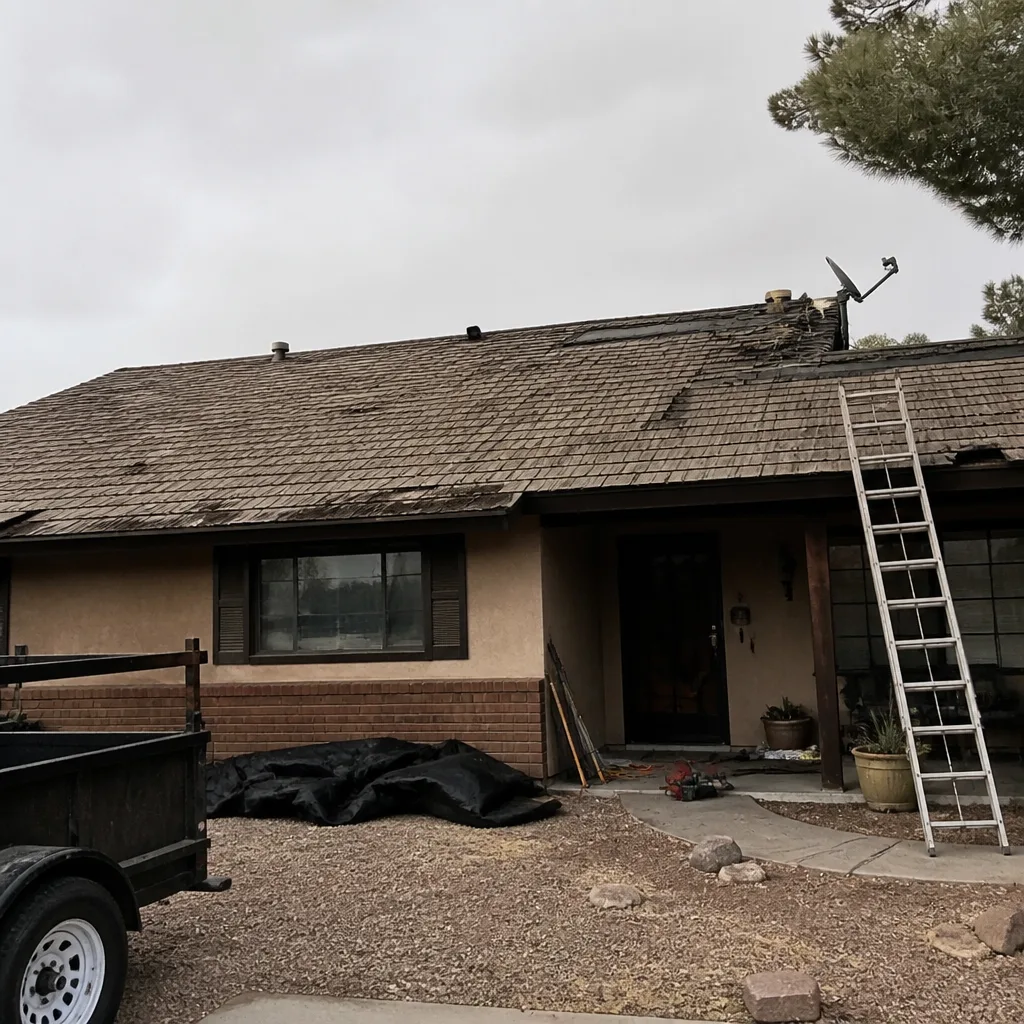 Before
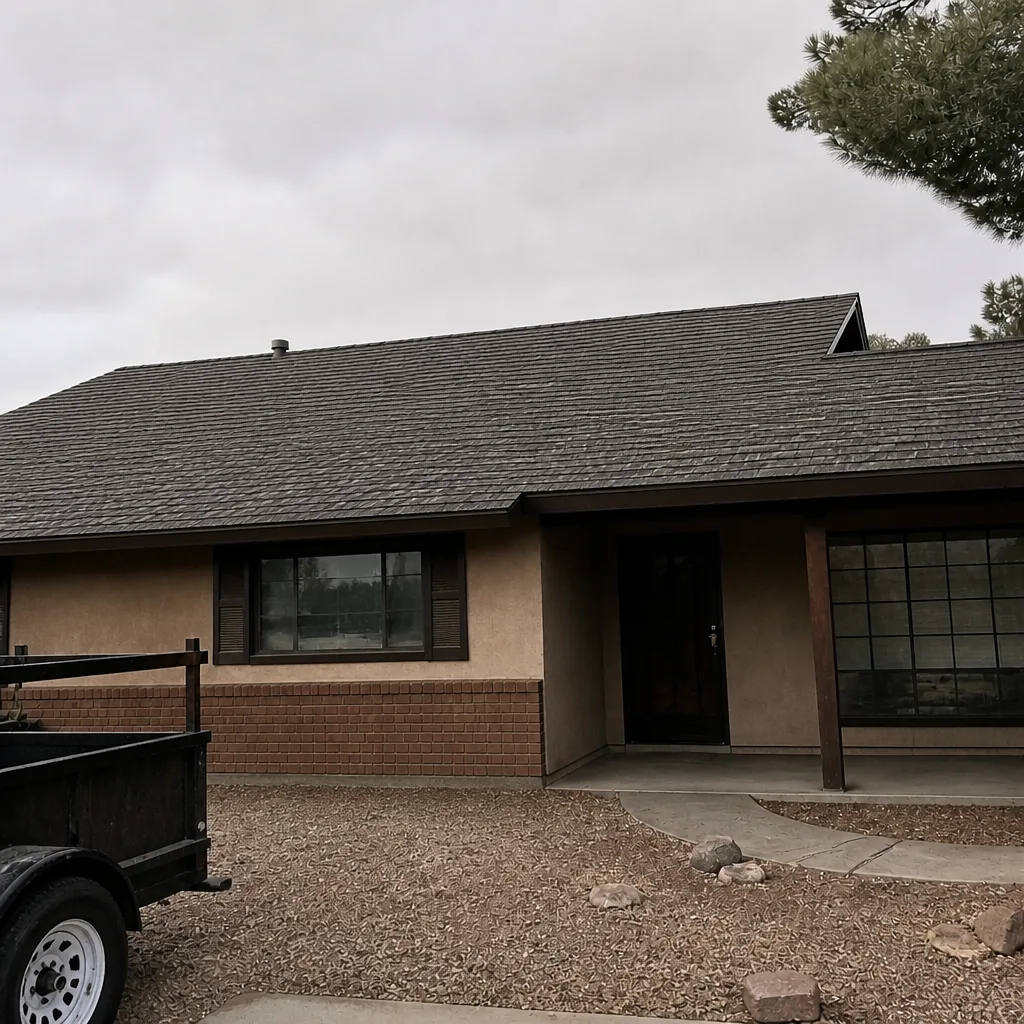 After
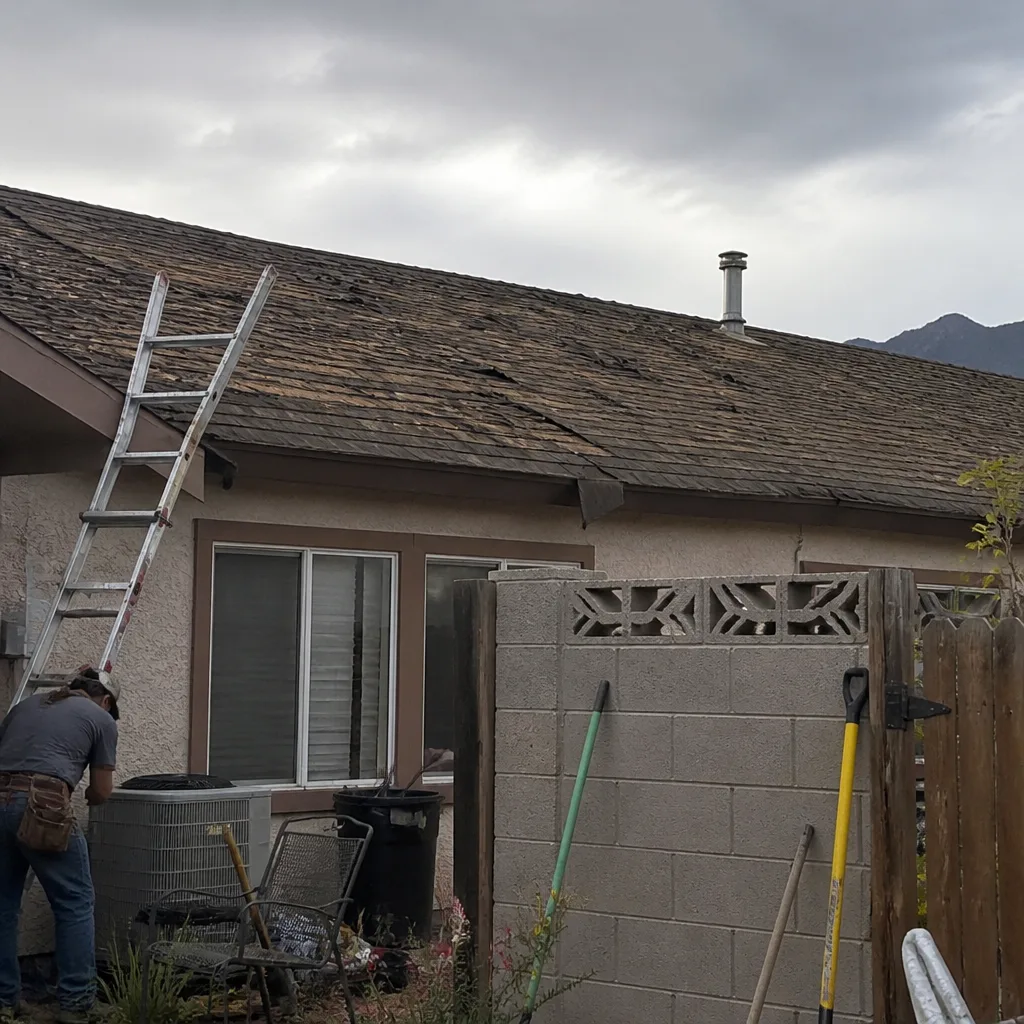 Before
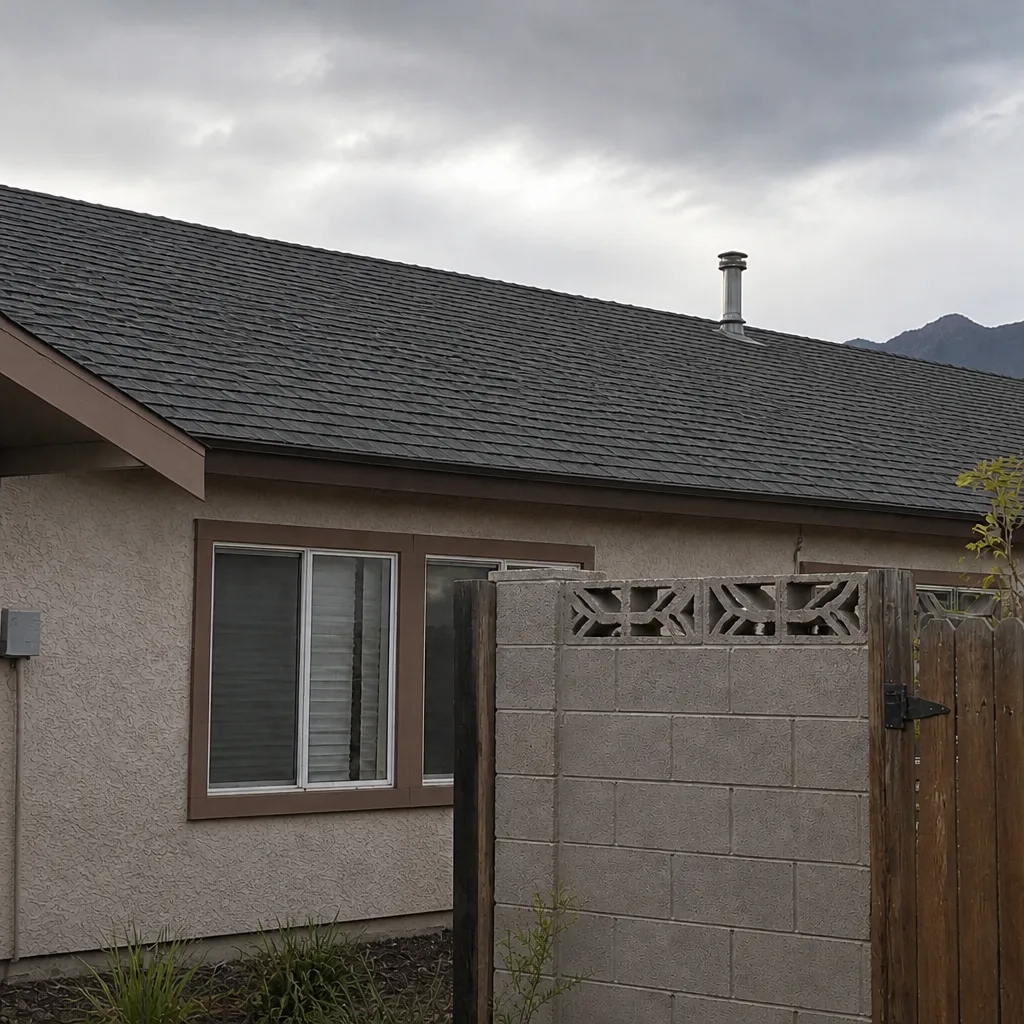 After
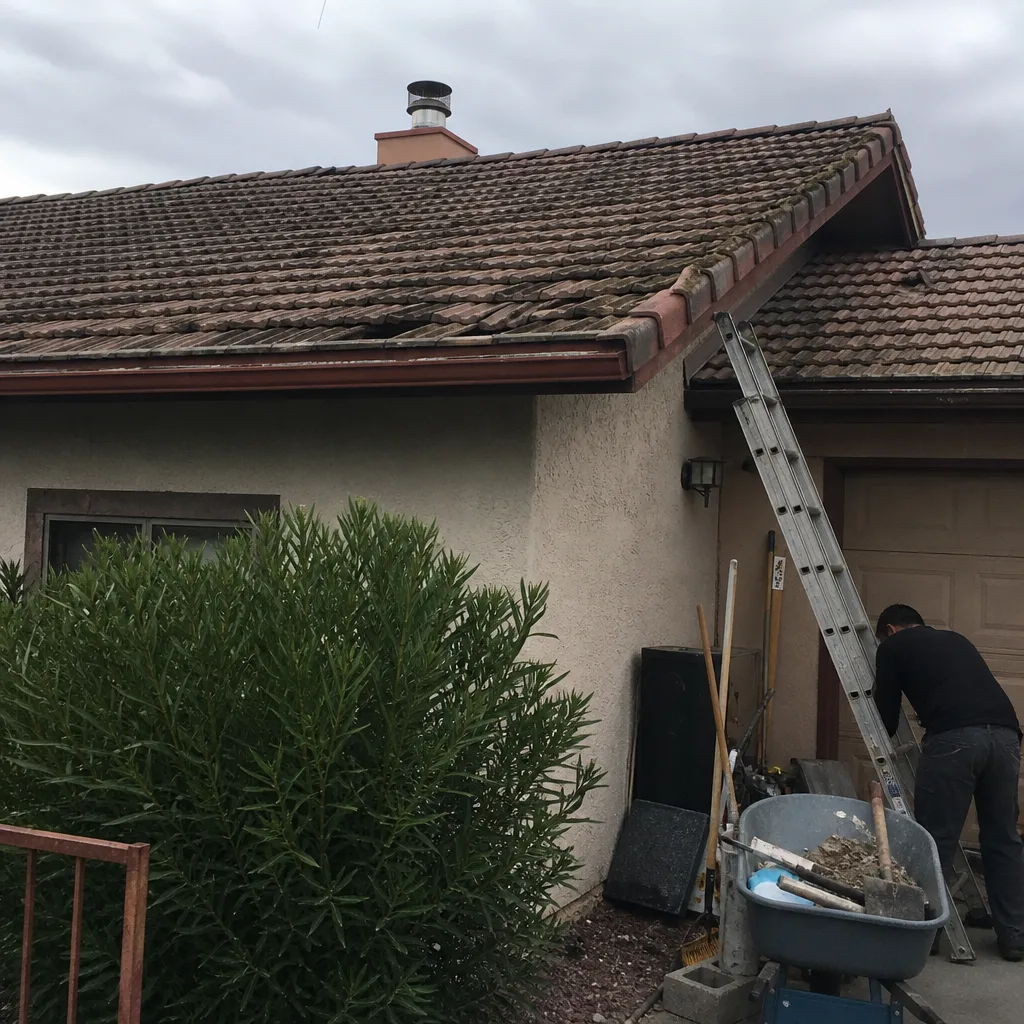 Before
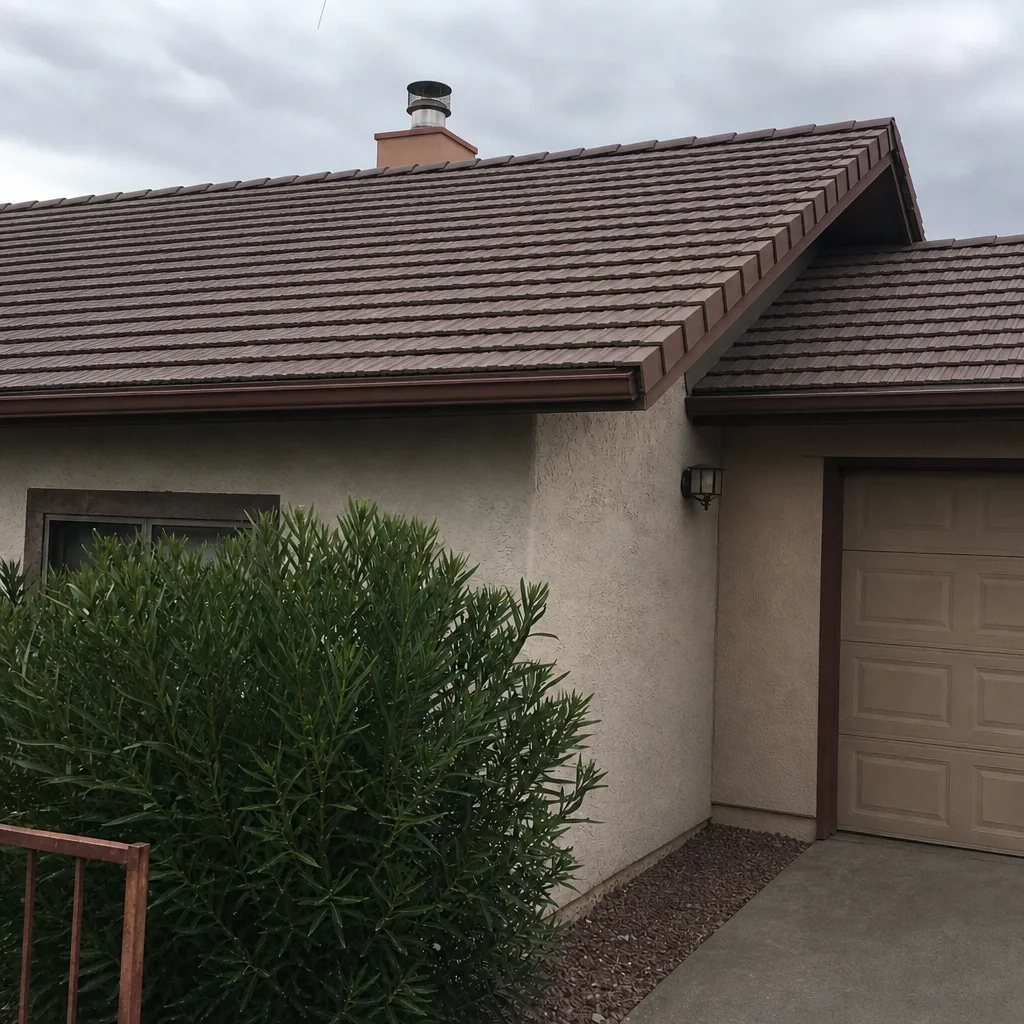 After
Frequently Asked Questions
Mostly no. Clearing drains, doing a visual inspection, and photographing seams and penetrations are safe and useful. Patching a seam, resealing a panel, or spot-coating foam is not, because specialty systems are chemically or mechanically interdependent and a DIY patch usually creates a new failure point next to the one you fixed. A standard shingle repair is a different, often safer DIY job. Call (844) 761-8186 for an exact quote on the specialty side – estimates are free.
Because caulk on a metal seam can trap moisture behind the seam instead of shedding it, and the trapped water corrodes and rots the deck from underneath. That’s the wall you can’t see. The ceiling stain often shows up a season or two later, well away from the caulk. Call us and we’ll open it up, find the actual entry point, and quote the right repair – free estimate, no trip charge inside our county.
It depends entirely on the system and what’s behind the symptom, which is why we quote in line items instead of a phone ballpark. A metal seam repair and a foam re-coat are different jobs with different material specs, and the opening steps are where the cost lives. Call (844) 761-8186 to schedule a free estimate – we’ll show you the deck photos before we talk money.
Not on our written numbers. A written line-item quote spells out what’s included – flashing, fasteners, underlayment, any deck repair – so you know the number before anyone touches your roof. If we find rot behind a specialty panel, we stop and show you before we add a line. Ask any bidder to put it in writing. That’s the whole point of a second opinion.
Yes. We work on metal, tile, foam, and flat systems across Boulder City and the surrounding counties, and we install products from GAF, CertainTeed, Tamko, and Boral, among others – name the shingle or panel and we’ve likely set it. Same address since 1996, license number published, and a written 90-Day Done Right Promise on every roofing job. Call (844) 761-8186 for a free estimate.
Photos of the seams, penetrations, and any interior stain, plus a note on when water shows up – during storms or all the time – and an honest list of anything you’ve already patched. That’s what turns a guess into a real quote. No trip charge inside our own county, so it costs you nothing to get the answer. Call (844) 761-8186 to schedule.
The Bottom Line
On a specialty roof, the DIY list is real but short: clear the drains, look it over, take photos, and call a pro for anything that touches the surface. The physics of metal, foam, and tile work against hope-and-caulk repairs – water travels farther than it looks, failures hide longer than you’d expect, and a patch usually creates a fresh problem right next to the old one. On shingles you can often help yourself. On specialties, you’re better off spending the call, not the caulk. Shepherd & Sons Roofing has been on roofs around Boulder City since 1996, and we answer the phone nights and weekends. Call (844) 761-8186 for a free estimate. We’ll show you what we see before we talk numbers, and there’s no trip charge inside our own county.
If you want the broader picture of how we work, start at the Shepherd & Sons Roofing Boulder City home page.
Written by the team at Shepherd & Sons Roofing Boulder City.