
Last updated November 17, 2026
 Tile roofing
 Architectural shingles
 Metal roofing
 GAF
 Owens Corning
 Flat & low-slope
Free roof inspection with deck photos before we talk money - GAF and Owens Corning certified installation
Tile Roofing Maintenance Schedule: What to Do and When
Tile roofs in Boulder City don’t fail from age. They fail from skipped inspections after monsoon season drops palm fronds and gravel into valleys that nobody checked for two years. I’ve pulled tiles off roofs that looked perfect from the curb and found the underlayment underneath baked to a cracker, all because the homeowner followed a national maintenance calendar written for Denver or Portland. Boulder City’s 110°F summers, brutal UV index, and rare-but-violent monsoon debris make our maintenance calendar look nothing like the generic one you’ll find on most roofing sites. What follows is the exact schedule Bill and his crew follow for their own customers, month by month, built around what actually happens to a tile roof in Boulder City.
Quick Answer
The single most important inspection window for a tile roof in Boulder City is September, right after monsoon season, not spring. Beyond that post-monsoon check, tile roofs need a light spring inspection in March, an underlayment check every five to seven years, and a full professional inspection every year to keep warranty coverage intact. Most of the work is checking and documenting, not repairing.
Styles & brands we work with
- Architectural shingles
- Metal roofing
- Tile roofing
- GAF
- Owens Corning
- Flat & low-slope
Table of Contents
- Why September Is the Critical Inspection Window in Boulder City
- The Boulder City Seasonal Maintenance Calendar
- Maintenance You Can Log Yourself vs. What Needs a Licensed Roofer
- What Voids a Tile Warranty (and How to Document It)
- How UV Destroys the Underlayment Under Intact Tiles
- The One-Page Seasonal Checklist
- Common Mistakes to Avoid
- When to Call a Professional
Why September Is the Critical Inspection Window in Boulder City
Walk down almost any street in Boulder City in late August and you’ll see the same thing: palm fronds on the ground, gravel scattered across driveways, and fine desert dust washed into every low spot on the roof. That’s the debris that a monsoon storm pushes into your roof valleys and behind your tiles. If it sits there until spring, you’ve given wind-driven rain and grit six months to work its way under the field tiles and into the underlayment. By the time you see a water stain on the ceiling, the damage is two seasons old.
Most tile maintenance guides tell you to inspect in spring. That advice makes sense in places where winter ice is the main threat to a roof. Here in Boulder City, our weather calendar is upside down by comparison. Our wet, violent weather happens in July, August, and early September, and the months that follow are the dry, hot ones where a small problem quietly spreads.
A September inspection catches three specific things that spring inspections miss:
- Debris packed into valleys and behind tile edges from monsoon runoff, which traps moisture when the next rain comes.
- Cracked or slipped field tiles shaken loose by wind gusts that routinely top 50 mph during a monsoon cell.
- Flashing that pulled loose at walls, skylights, and chimneys where the expansion and contraction of a 110°F summer finally caught up with old sealant.
Get that inspection done in September and you have the entire dry fall to fix anything small before it becomes a winter leak. Wait until March and you’ve given the problem a full wet season to grow. If you’re not comfortable on the roof yourself, this is the one appointment on the calendar worth paying for. Our Roof Repair in Boulder City service exists mostly because of September.
The Boulder City Seasonal Maintenance Calendar
Here’s the schedule we hand to customers. It’s built around Boulder City’s actual weather, not a national template. Print it, tape it inside a cabinet door, and mark off the dates.
March: The Spring Look-Over
Winter in Boulder City is mild, but wind and the occasional freeze can work tiles loose. A spring check is quick. Walk the perimeter of the house with binoculars and look for slipped tiles, exposed underlayment, or anything sitting cockeyed. Clear any debris from the ground-level gutters and downspout openings. If you’re comfortable on a ladder, check that the downspouts aren’t clogged with grit and palm seed. This is the lightest task on the calendar.
July through September: Monsoon Watch
During the monsoon months you’re not climbing the roof, you’re watching. After every significant storm cell passes, walk the yard and look up. Check for freshly cracked tiles, missing pieces, or new debris piled in the valleys. If a storm drops more than an inch of rain in an hour, plan on a proper post-storm inspection as soon as the roof is dry. This is where most Boulder City attention should go.
September: The Critical Post-Monsoon Inspection
This is the centerpiece. Get a full roof inspection done in September, either yourself if you’re steady on a roof and know what to look for, or by a licensed roofer. Check every valley for debris, every flashing point for loose sealant, and the underside of the underlayment at any visible edge. Document what you find with photos and dates. We’ll go deeper on this below.
October: Repair Window
Whatever the September inspection turned up gets fixed in October, before the cool season settles in. Tile replacements, flashing repairs, valley clearing. Doing repairs in October means the work cures properly and you’re not fighting heat while you do it.
December through February: Winter Monitoring
Boulder City does get freezing nights. That freeze-thaw cycle, even mild, works on any loose tile or failing sealant. From inside the house, watch the ceilings and attic for any new water stains after a winter rain. A damp spot that shows up in January was probably caused by something you missed in September.
If you’re replacing a roof rather than just maintaining it, the calendar changes: replacement happens in the cooler shoulder months of October, November, or March when the crew isn’t baking on the deck. Our Roof Replacement & Installation in Boulder City work follows that pattern for a reason.
Maintenance You Can Log Yourself vs. What Needs a Licensed Roofer
Not every maintenance task needs a professional. Some of it is the kind of thing any careful homeowner can do with a notebook and a phone camera. The split matters because some of what you can log yourself is exactly what keeps your warranty valid, and some of it, done wrong, could hurt you or void the warranty.
Tasks you can log yourself:
- Visual inspection from the ground with binoculars after storms. Note dates and locations of anything that looks wrong.
- Clearing ground-level gutters and downspout openings.
- Photographing the roof from a safe ladder at the eaves, where accessible, after any weather event.
- Checking the attic and ceilings inside the house for stains after rain.
- Keeping a dated record of every observation, photo, and small repair.
Tasks that need a licensed roofer:
- Walking the field of the roof, lifting tiles, and inspecting the underlayment.
- Replacing cracked or slipped tiles, which requires careful lifting of neighboring tiles to avoid breaking more.
- Any flashing work at walls, skylights, or chimneys.
- Any inspection you want to count toward a warranty claim or a real estate transaction.
- Anything involving heights near two stories or on a steep pitch.
One thing you should never do yourself, no matter how handy you are: climb onto a two-story tile roof, or any tile roof with a steep pitch, to inspect or repair. Tile is slick underfoot even when dry, the surface is unforgiving when you fall onto it, and one misstep can crack tiles you didn’t mean to touch. If the roof is above a single story, call a licensed roofer. That’s not a sales line; it’s an honest one. Our own crew works in harnesses and you should never step onto a tile roof without one.
What Voids a Tile Warranty (and How to Document It)
Most tile warranties are lost not because the tile itself fails, but because nobody proved the roof was maintained. Tile manufacturers like Boral and the shingle and underlayment makers behind them write their warranties around a simple idea: the roof should have been inspected and cared for by a qualified professional on a reasonable schedule. If you can’t produce evidence, a claim gets denied. This is the part of tile maintenance most homeowners never hear about.
Here’s what typically voids or weakens a tile warranty:
- No documented professional inspections. Most warranties expect annual or periodic inspection records.
- Improper repairs. Tiles replaced with the wrong material, or broken during a repair by an untrained hand, aren’t covered.
- Debris left in valleys and behind tile edges long enough to back up water into the underlayment.
- Pressure-washing the roof. High-pressure water strips the finish and forces water past the tile edges. Never let anyone pressure-wash a tile roof, and never do it yourself.
- Foot traffic in the wrong places. Walking on the field without knowing where the structural support sits cracks tiles.
Documenting a roof for warranty purposes is straightforward. Keep a folder, physical or digital, with:
- Dated photos of the roof after every professional inspection.
- Invoices and reports from every licensed roofer who touched the roof.
- A written, dated record of the small things you cleared or checked yourself.
- The original installation paperwork, including the tile manufacturer and underlayment product.
That folder is what saves you when a claim is on the line. And this is worth saying plainly: an inspection report from a licensed roofer carries weight that your own notebook doesn’t. If you want the warranty intact, get a signed inspection from a licensed roofer on the schedule the manufacturer specifies, usually once a year. Your tile roof is a real investment and the paperwork is part of protecting it.
How UV Destroys the Underlayment Under Intact Tiles
This is the part of tile roofing that surprises people most. The tiles themselves are tough. A Boral or CertainTeed tile can shrug off decades of sun. But the underlayment beneath those tiles, the waterproof membrane that’s the actual barrier holding water out of your house, is a completely different story. Under Boulder City’s UV index, which regularly sits at 10 or 11 on the summer scale, that underlayment bakes. It dries, cracks, and loses its ability to shed water. The tiles above it can look brand-new while the underlayment is finished.
In our experience, typical asphalt-based underlayment under tile in Boulder City’s climate has a realistic service life in the range of 15 to 25 years, depending on the product and how much direct sun it sees at the tile edges. Get to year 20 without ever lifting a tile to check and you’re gambling. Replacing underlayment means lifting the tiles, laying new membrane, and setting the tiles back, which is why catching it early matters. Replacing it late means you may be looking at a full roof replacement instead of an underlayment job.
How do you know when to check? A few signs:
- The roof is 15 years old or older and you’ve never had the underlayment looked at.
- You’ve had a leak or damp spot in the attic during a heavy rain, even with no visible cracked tiles.
- The tiles have shifted enough to expose the underlayment at the valleys or eaves.
- A professional inspection, looking under a few lifted field tiles, shows membrane that’s brittle or cracked.
This is one of the reasons we do an underlayment check every five to seven years as part of the schedule, not just a surface look. The only way to know the condition of the underlayment is to lift a few tiles and look, and that’s a job for a trained roofer. If you’re curious about underlayment options more broadly, or you’re weighing tile against standing-seam metal, our Metal Roofing in Boulder City page touches on the differences in how each handles sun.
The One-Page Seasonal Checklist
Print this. It’s the whole schedule on one page, formatted for Boulder City’s actual weather calendar. Mark each box with the date you did it and keep it with your roof paperwork.
Annual Boulder City Tile Roof Checklist
- March: Ground-level walk-around with binoculars. Note any slipped, cracked, or missing tiles. Clear downspouts of grit and palm seed. Photograph the roof. Date it.
- After every monsoon storm (July-September): Walk the yard and look up. Note new cracks, missing tiles, or debris in valleys. Photograph anything that changed. Date it.
- September: Full post-monsoon inspection. Either your own careful ground-and-eave check or a licensed roofer’s full inspection. Clear valleys, check flashing at walls and skylights, note any membrane visible at the edges. Photograph everything. Date it.
- October: Complete any repairs the September inspection turned up. Replace cracked tiles, fix flashing, clear valleys. Keep the invoice.
- December-February: Check ceilings and attic after any winter rain for new stains. Note dates. Investigate anything new.
- Every 5 to 7 years: Have a licensed roofer lift a few field tiles and inspect the underlayment directly. Document the membrane condition with photos and a signed report.
- Every year, at the same time: File the year’s photos, invoices, and reports in one folder, either paper or digital. Keep the original installation paperwork with it.
That last item is the one people skip, and it’s the one that saves you if a warranty claim or a home sale ever comes up. The roof itself doesn’t care whether you kept the folder. The manufacturer and the buyer do.
Common Mistakes to Avoid
- Treating spring as the main inspection window. In Boulder City, September after monsoon season is what counts. A spring-only schedule leaves six months of debris sitting in your valleys every year.
- Pressure-washing a tile roof. This is the fastest way to strip the finish and force water past the tiles into the underlayment. If a “roof cleaning” outfit offers to pressure-wash your tile, say no.
- Never lifting a tile to check underlayment. The tiles can look perfect while the membrane beneath them is done. If your roof is 15 years old or older and nobody has looked under the tiles, that’s a gap.
- Walking on a two-story tile roof to “just look.” Tile is slick, the surface is unforgiving, and a single misstep cracks tiles and can send you off the roof. Call a licensed roofer.
- Not keeping a folder. No photos, no invoices, no documentation means a warranty claim or a home sale can stall on a roof you know is fine but can’t prove you maintained.
- Letting palm fronds and gravel sit in valleys. Every storm pushes debris into the low spots. Left alone, it traps moisture and backs water up under the tiles. Clear it after every monsoon.
- Hiring a storm chaser who shows up after a monsoon. Out-of-town crews follow the hail and the monsoon. Ask any bidder for a local address and a license number you can look up. If they can’t produce both, thank them and call someone who can.
When to Call a Professional
Some of tile maintenance is yours to log. Some of it needs a licensed roofer’s hands and signature. Call a professional when any of the following is true: you’ve had water in the attic or a ceiling stain after rain; your roof is 15 years old or older and the underlayment has never been checked; you see cracked or slipped tiles you can’t safely reach; you’re within a year of selling a home and need a documented roof condition report; or any inspection requires walking a tile roof above a single story or with a steep pitch. A licensed roofer can inspect, lift tiles, replace them without cracking their neighbors, and give you a written report you can file for warranty purposes.
Shepherd & Sons Roofing Boulder City offers free estimates in Boulder City. Call (844) 761-8186 and a live person will pick up, not a call center. We’ll come out, show you the deck photos and the lifted-tile condition before we talk money, and give you a free second opinion on any written estimate you already have. Every job is backed by the written 90-Day Done Right Promise, and there’s no trip charge inside our own county.
See the difference
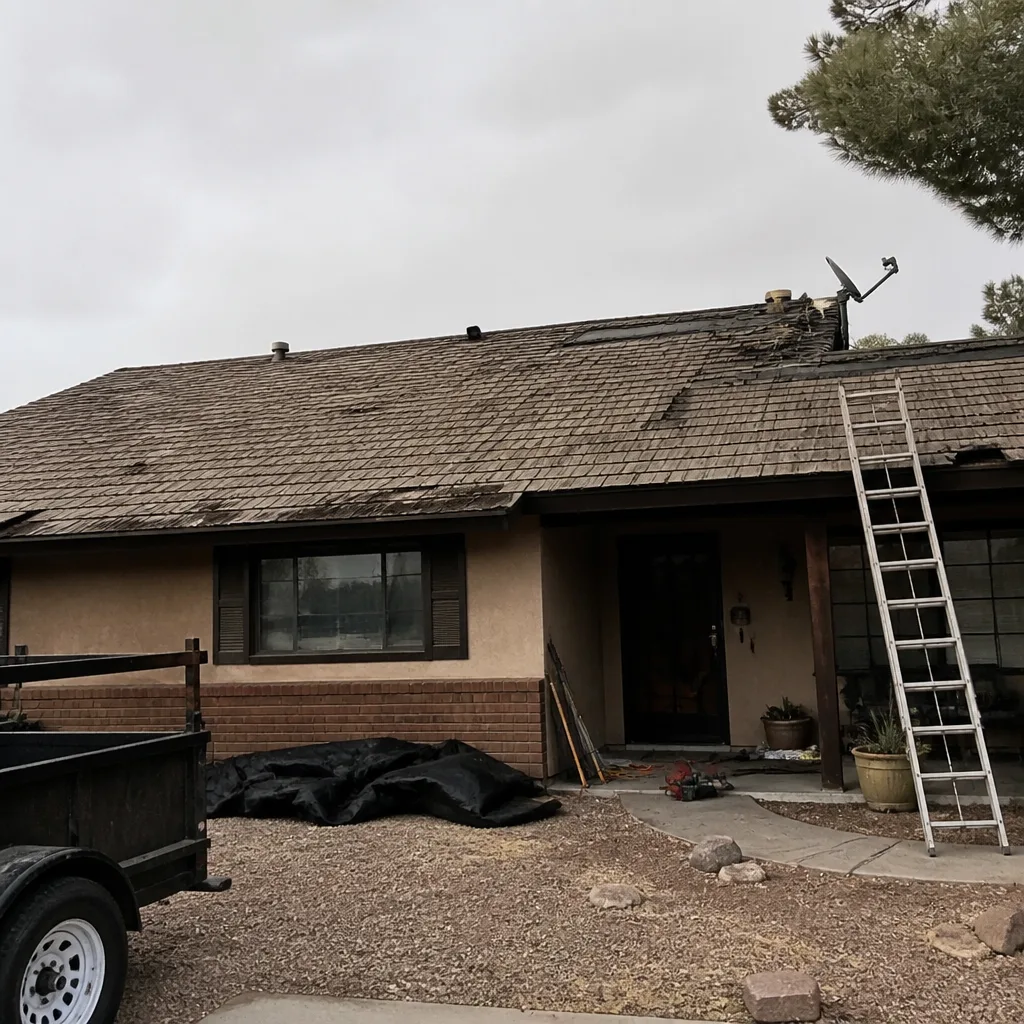 Before
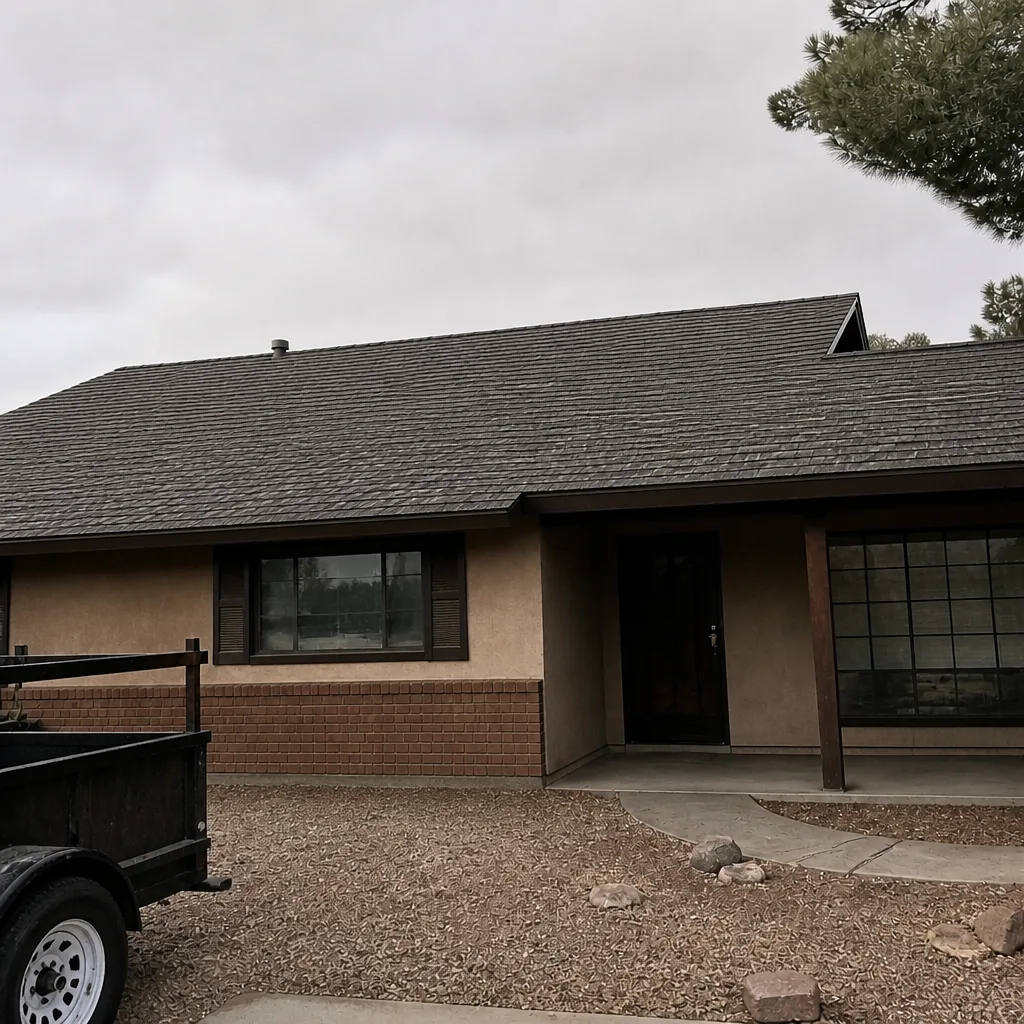 After
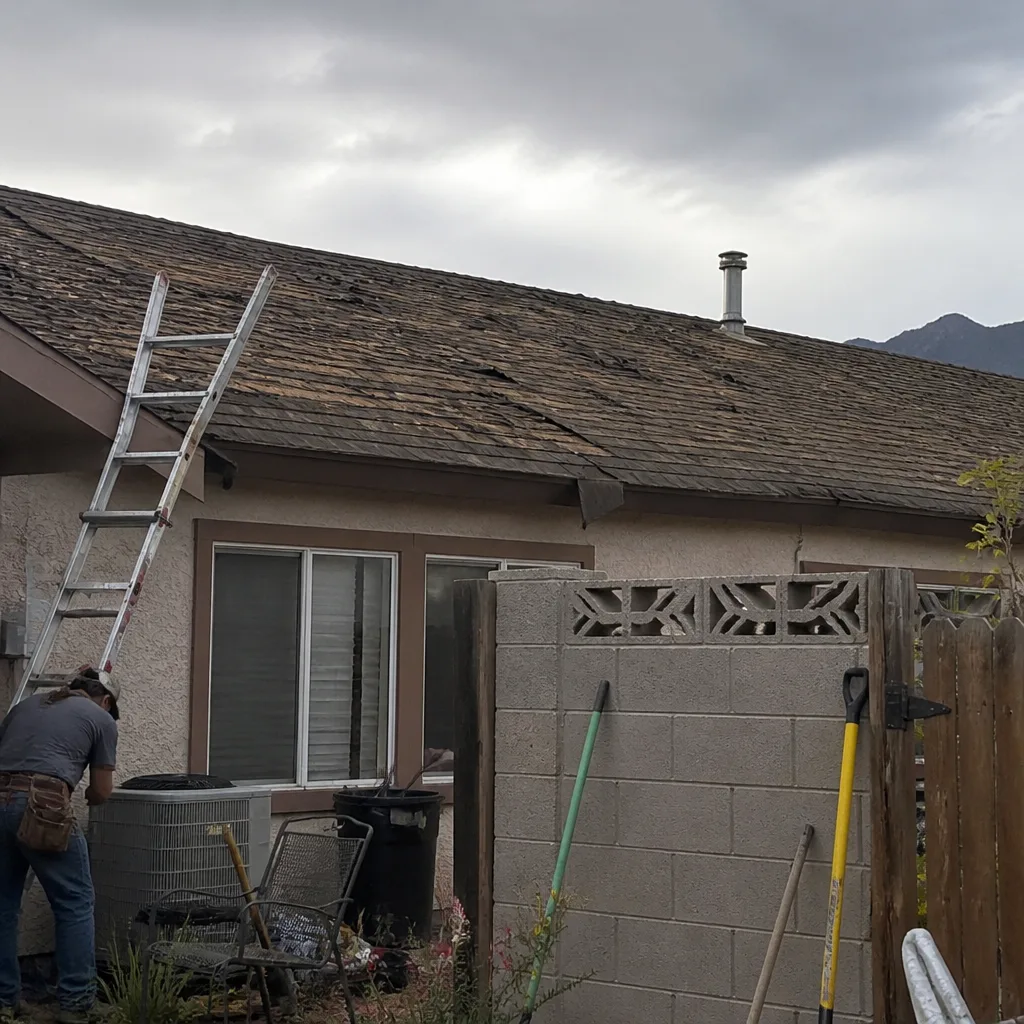 Before
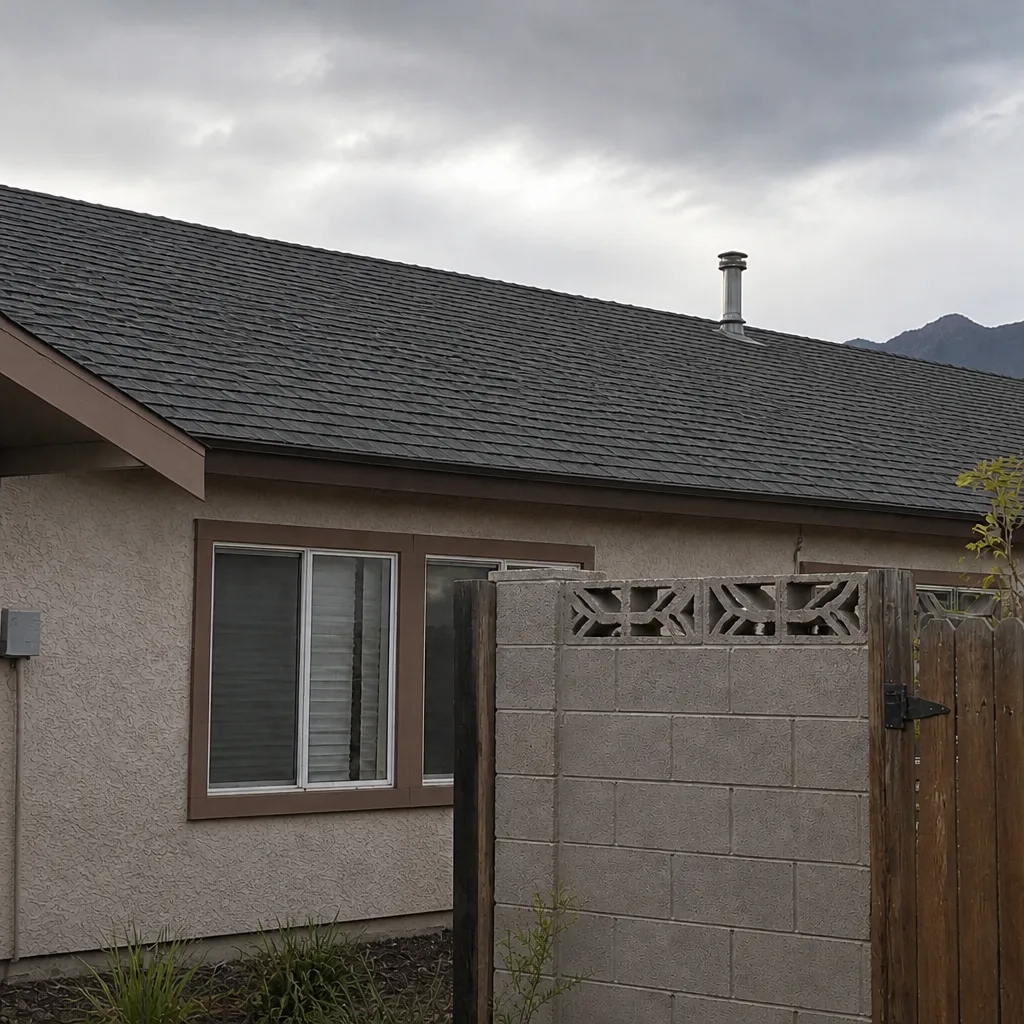 After
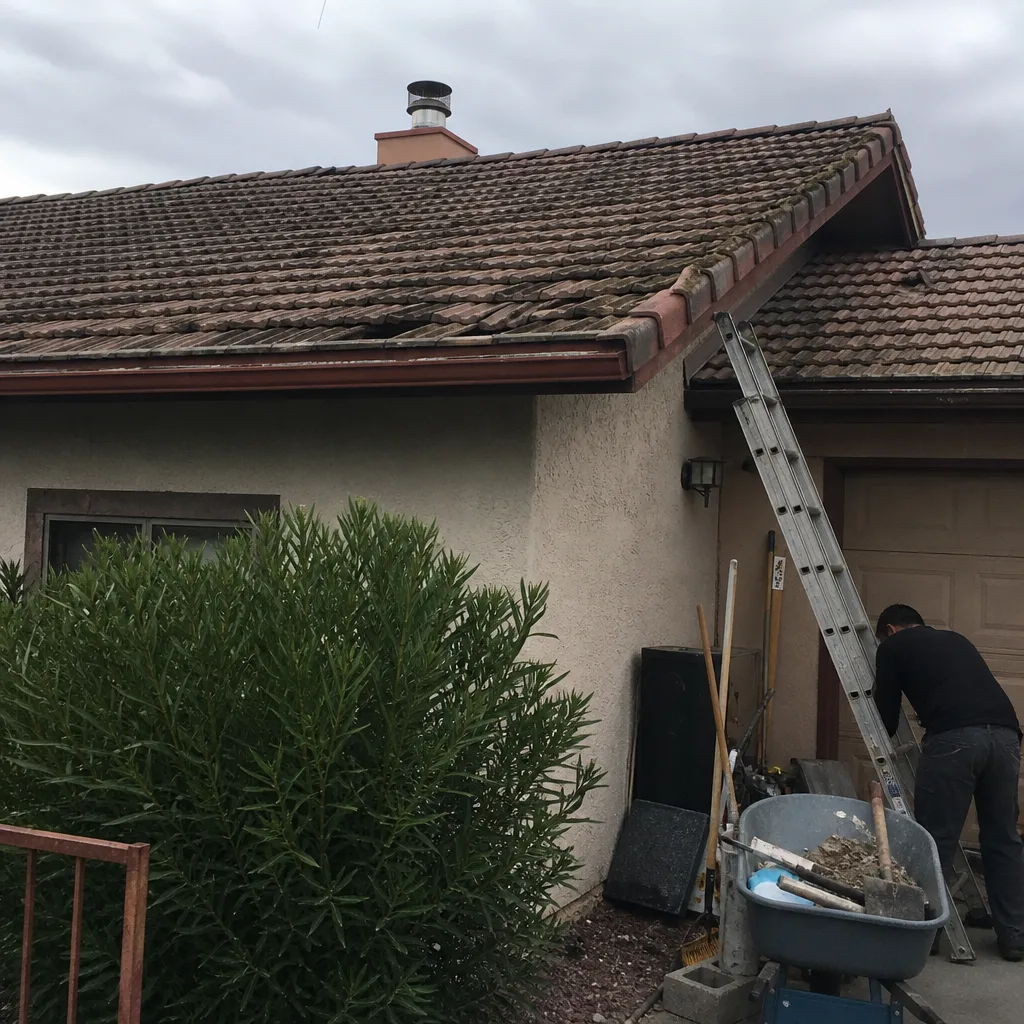 Before
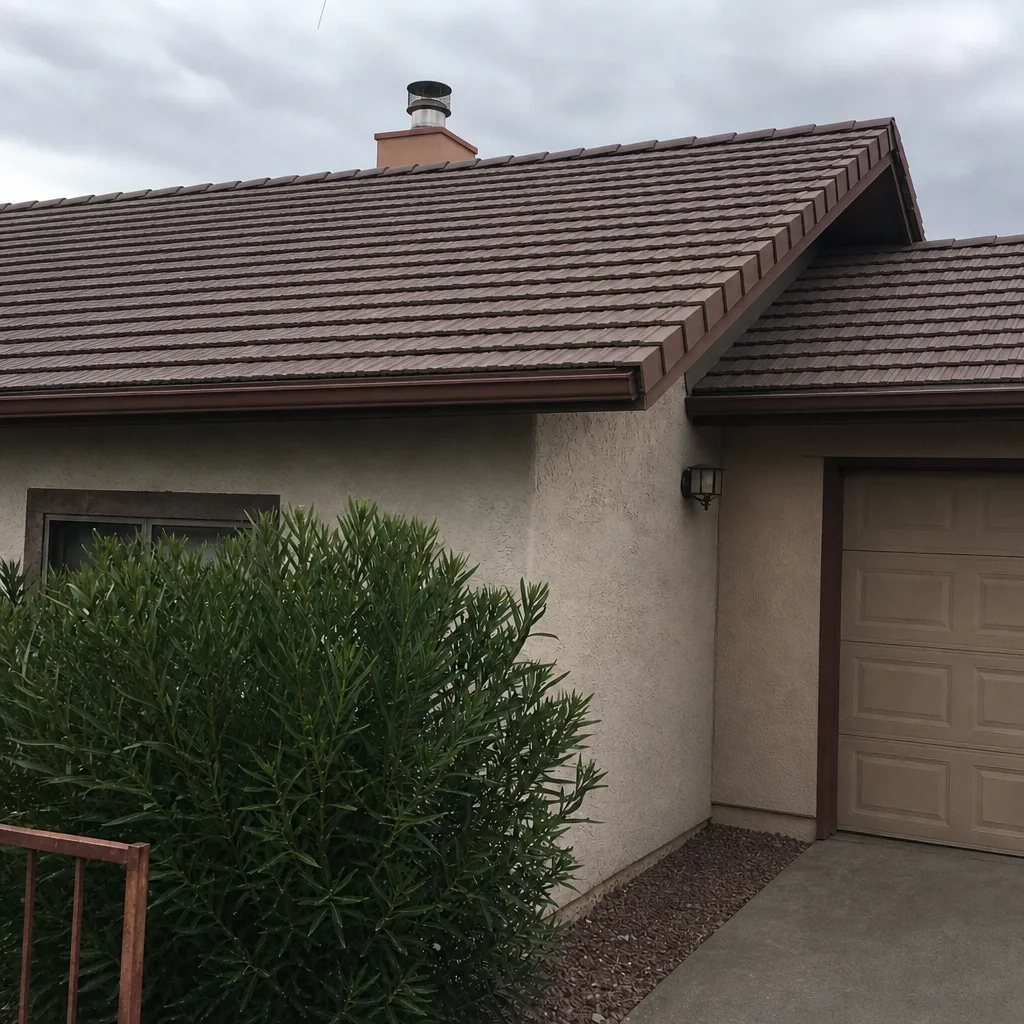 After
Frequently Asked Questions
A tile roof in Boulder City should get a full inspection once a year, timed to September after monsoon season, plus a light look-over in March and a quick check after every significant monsoon storm. The September inspection is the one that matters most because it catches debris and damage before the dry fall sets it in.
Yes. The tiles can look perfect while the underlayment beneath them has baked and cracked under UV exposure you can’t see from the ground. An annual inspection that includes lifting a few field tiles every five to seven years is how you find out what the surface is hiding. Call (844) 761-8186 for a free estimate if your roof is 15 years or older and has never been checked under the tiles.
No. Pressure-washing a tile roof strips the finish and forces water past the tile edges into the underlayment, and it’s one of the fastest ways to void a tile manufacturer’s warranty. If someone offers to pressure-wash your tile, say no and hire someone who will clean it by hand. Call us if you’re not sure what a legitimate tile cleaning looks like.
The only reliable way to know is to lift a few field tiles and look at the membrane directly, which is a job for a licensed roofer. Signs it’s time to check include a roof that’s 15 years old or older, a leak or attic damp spot with no visible cracked tiles, or tiles shifted enough to expose the underlayment at the edges. Call (844) 761-8186 to schedule a free estimate and we’ll show you what we find.
We install Boral, GAF, CertainTeed, Owens Corning, IKO, Atlas, Tamko, and other major tile and roofing products. If you know the name of the tile on your roof, we’ve likely set it before. Name the shingle or tile and we’ll tell you straight whether it’s a repair or a replacement.
Yes, it often does. Most tile and underlayment warranties expect documented professional inspections on a reasonable schedule. An inspection report signed by a licensed roofer carries weight that a homeowner’s own notes don’t, and it’s what you produce if a claim is ever on the line. Keep the report, the photos, and the original installation paperwork in one folder. Call (844) 761-8186 for a documented inspection.
The Bottom Line
Tile roofing maintenance in Boulder City comes down to one rule: September is the month that matters, and the underlayment under the tiles is the thing that’s actually at risk. Keep a light spring look-over in March, inspect hard after every monsoon storm, get repairs done in October, and have a licensed roofer lift a few tiles every five to seven years to check the membrane. Document everything in one folder. Most of the work is checking and recording, not repairing, and the schedule above is the exact one we follow for our own customers. Skip it and a roof that looks perfect from the curb becomes a leak you find out about from the ceiling. Keep it and you’ll get every year the roof was built to give you.
If you’d like a second set of eyes on your roof’s schedule and its condition, we’re glad to help. Visit our Shepherd & Sons Roofing Boulder City home page for the full picture of what we do, or call (844) 761-8186 for a free estimate. A live person answers, day or night. Ask anyone on your street: the name on the truck is the name on the license, and we’ve been at the same address for over 29 years. We’ll show you the deck photos before we talk money.
Written by the team at Shepherd & Sons Roofing Boulder City.