
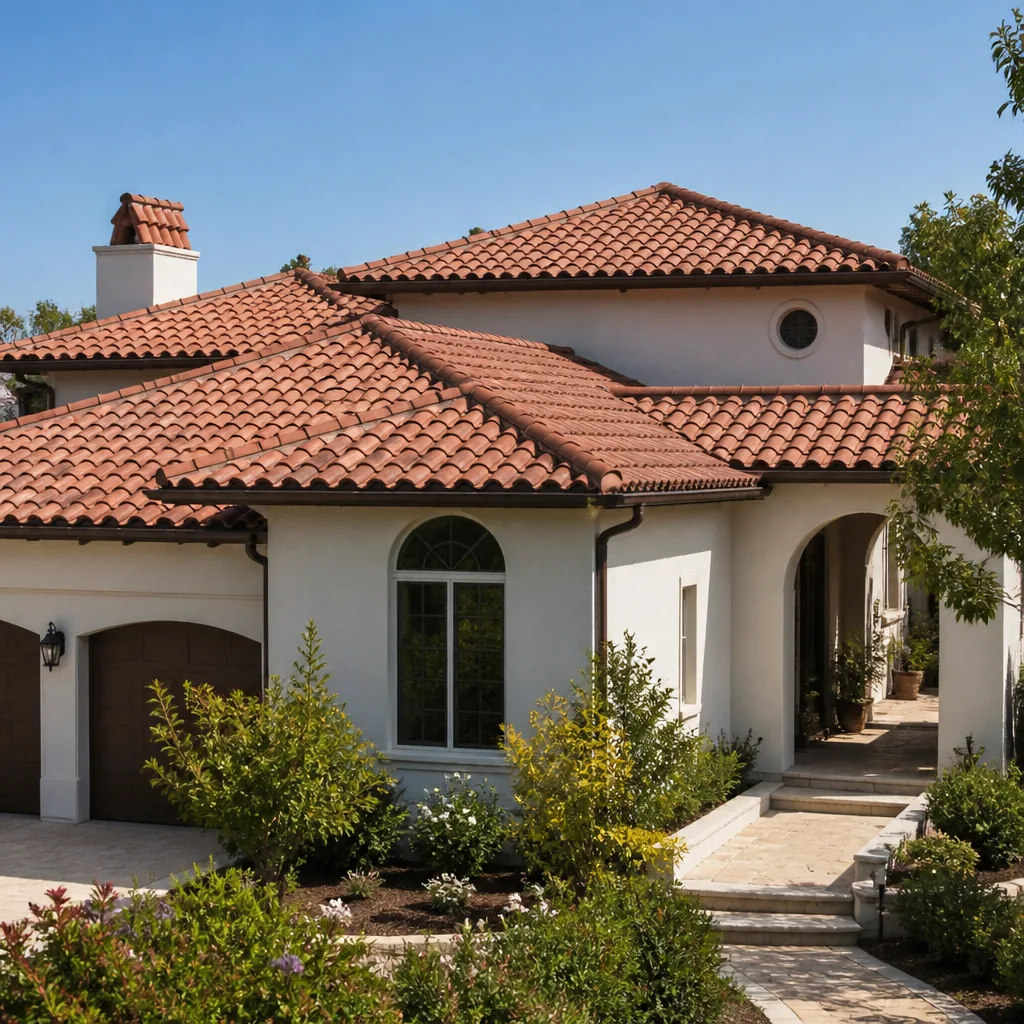
 Tile roofing
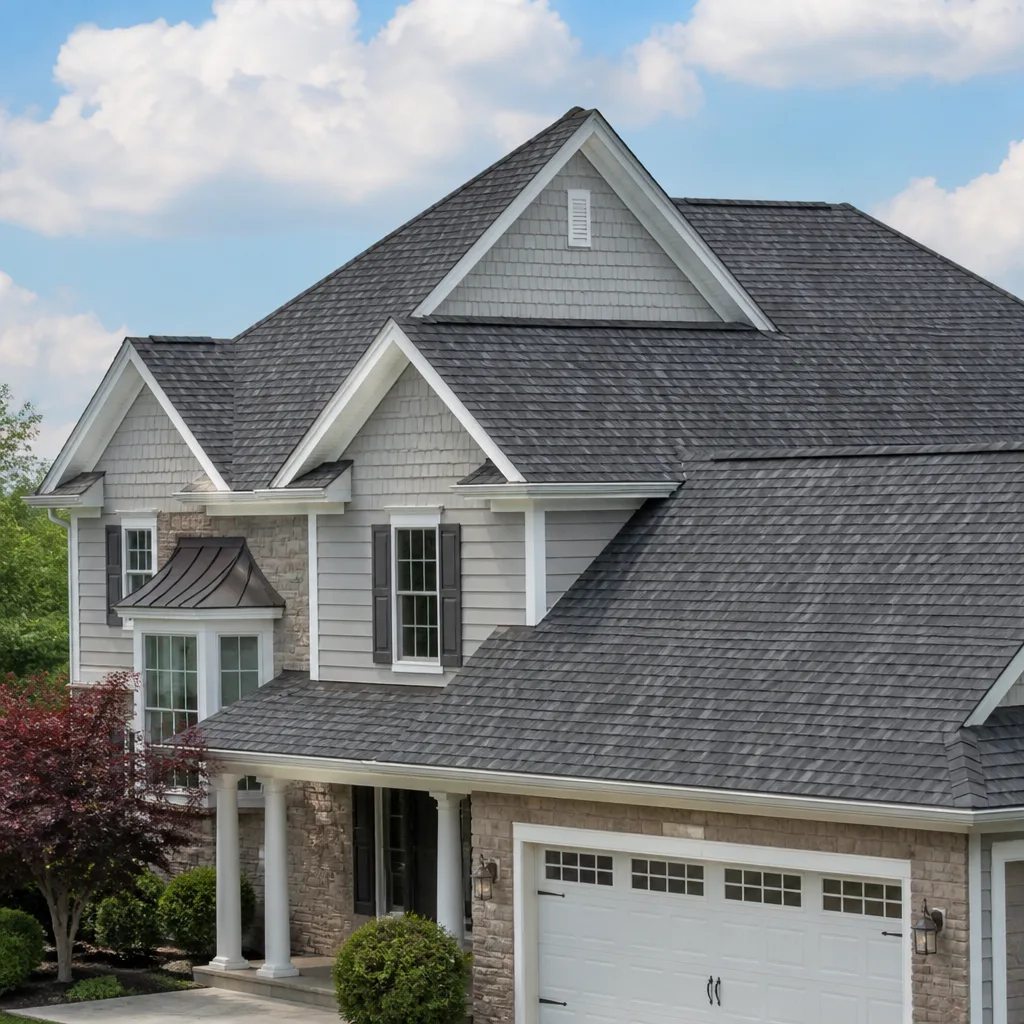 Architectural shingles
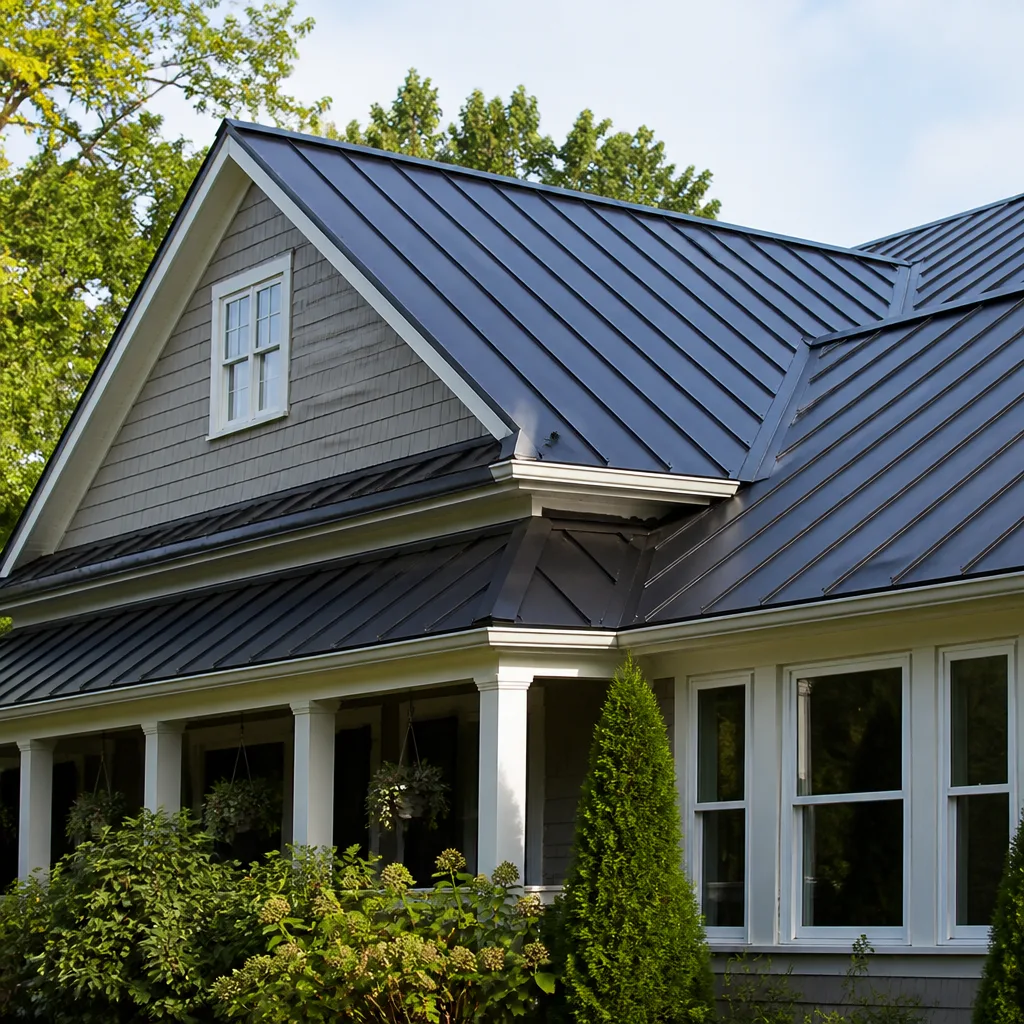 Metal roofing
 GAF
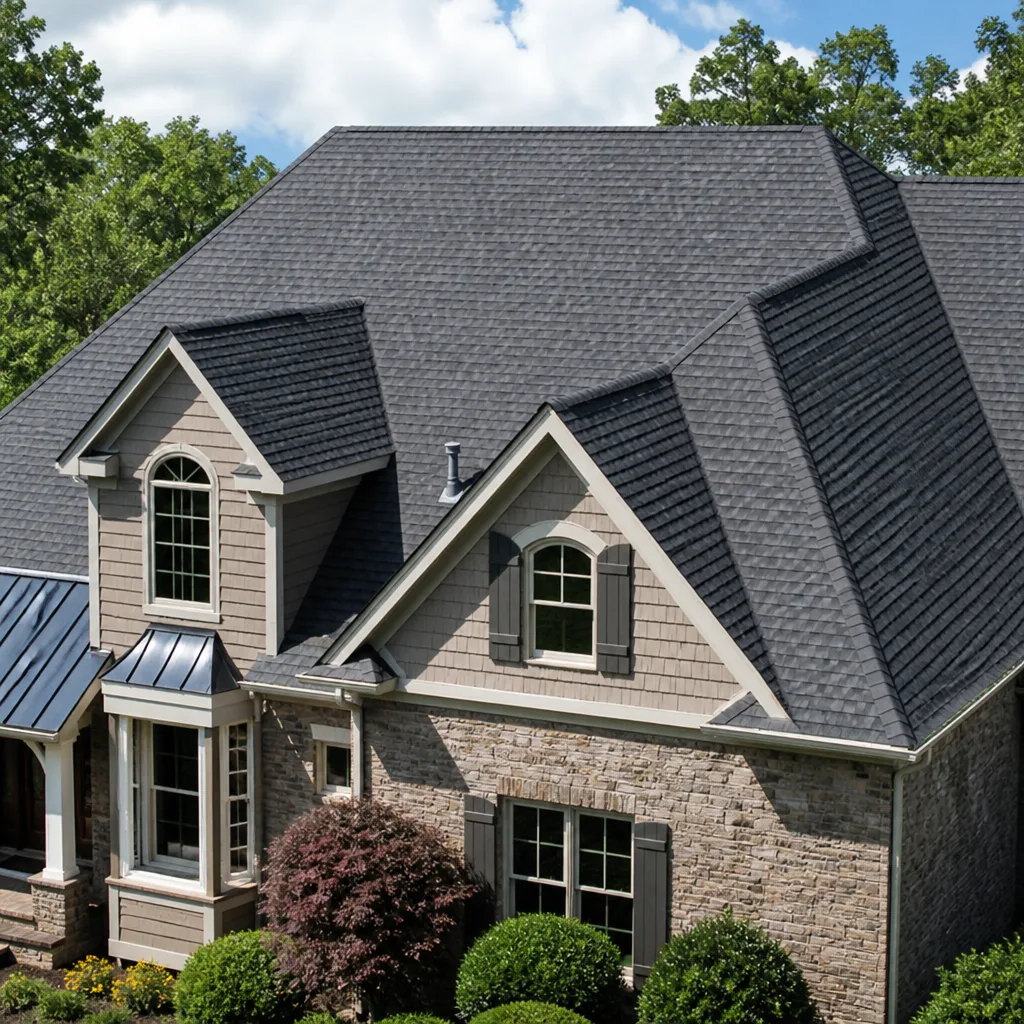 Owens Corning
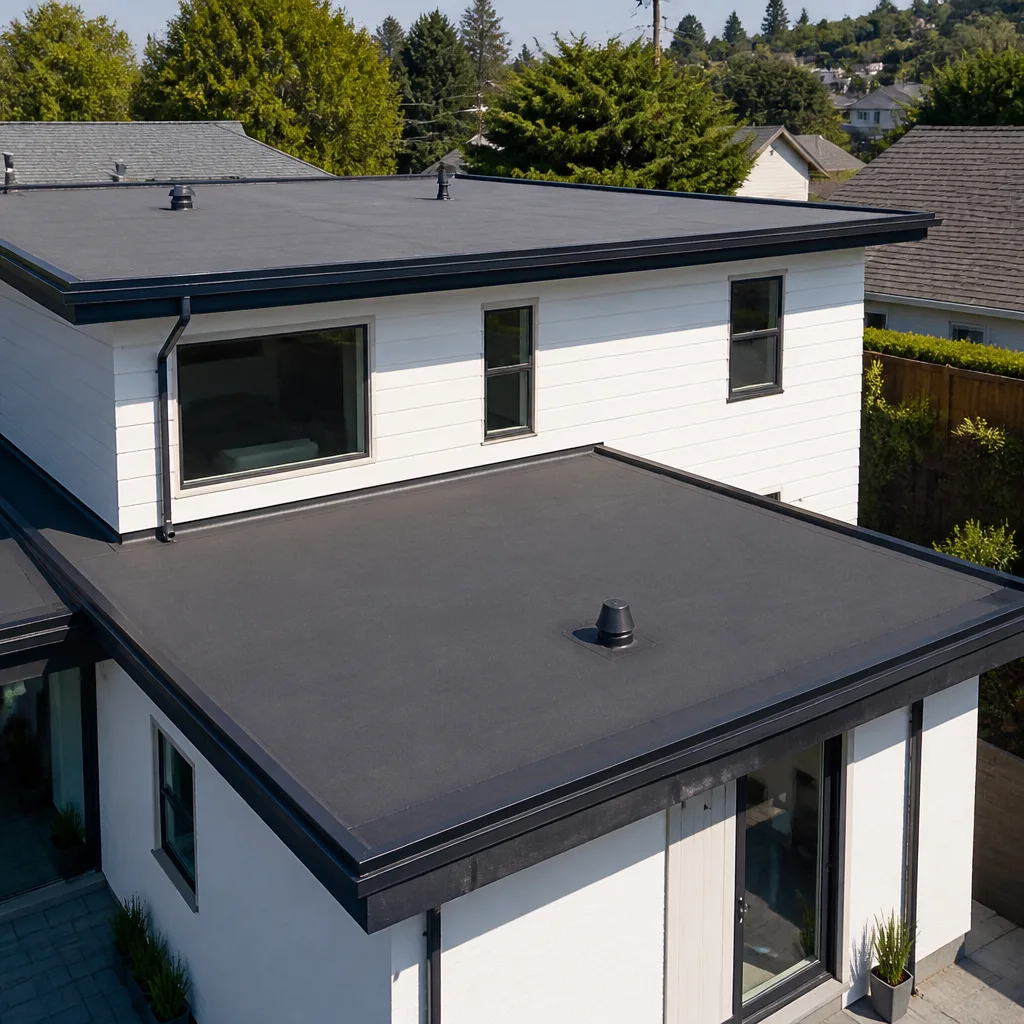 Flat & low-slope
Free roof inspection with deck photos before we talk money - GAF and Owens Corning certified installation
Styles & brands we work with
- Architectural shingles
- Metal roofing
- Tile roofing
- GAF
- Owens Corning
- Flat & low-slope
See the difference
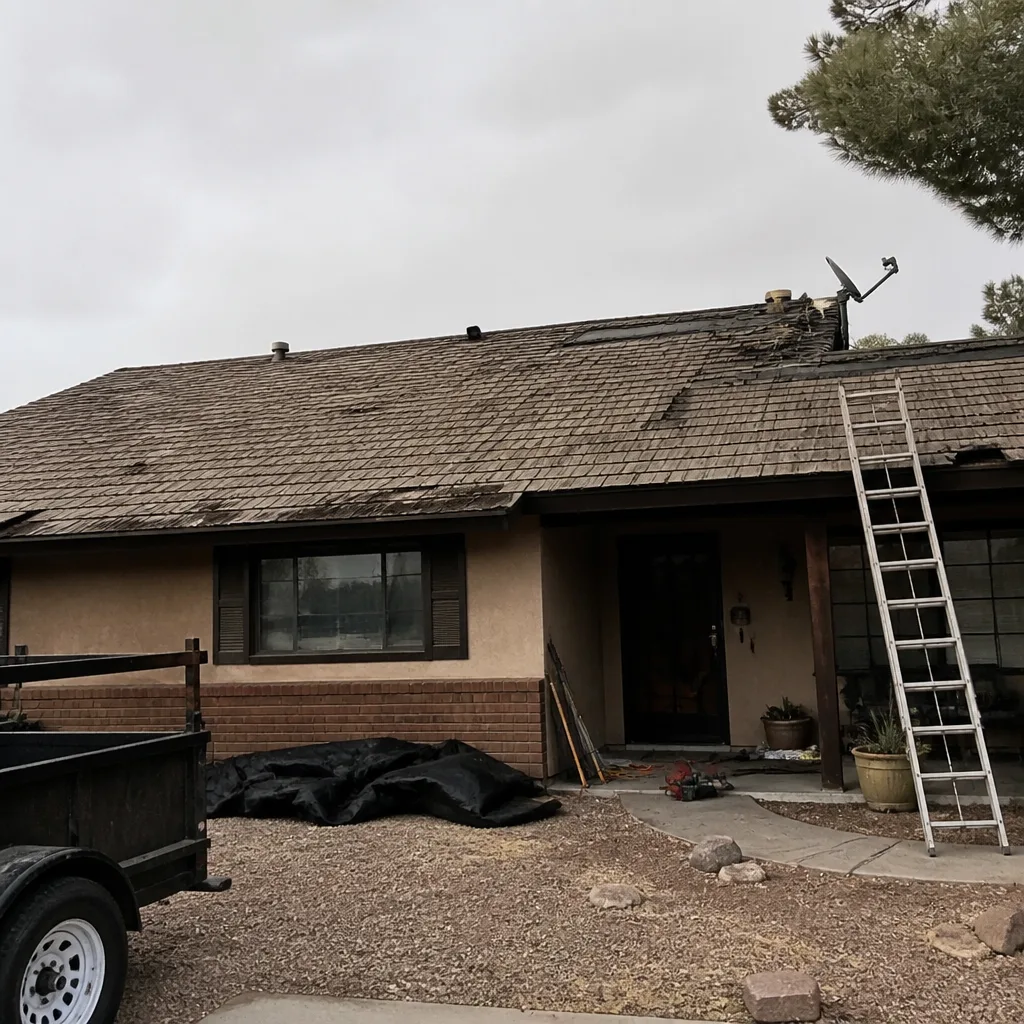 Before
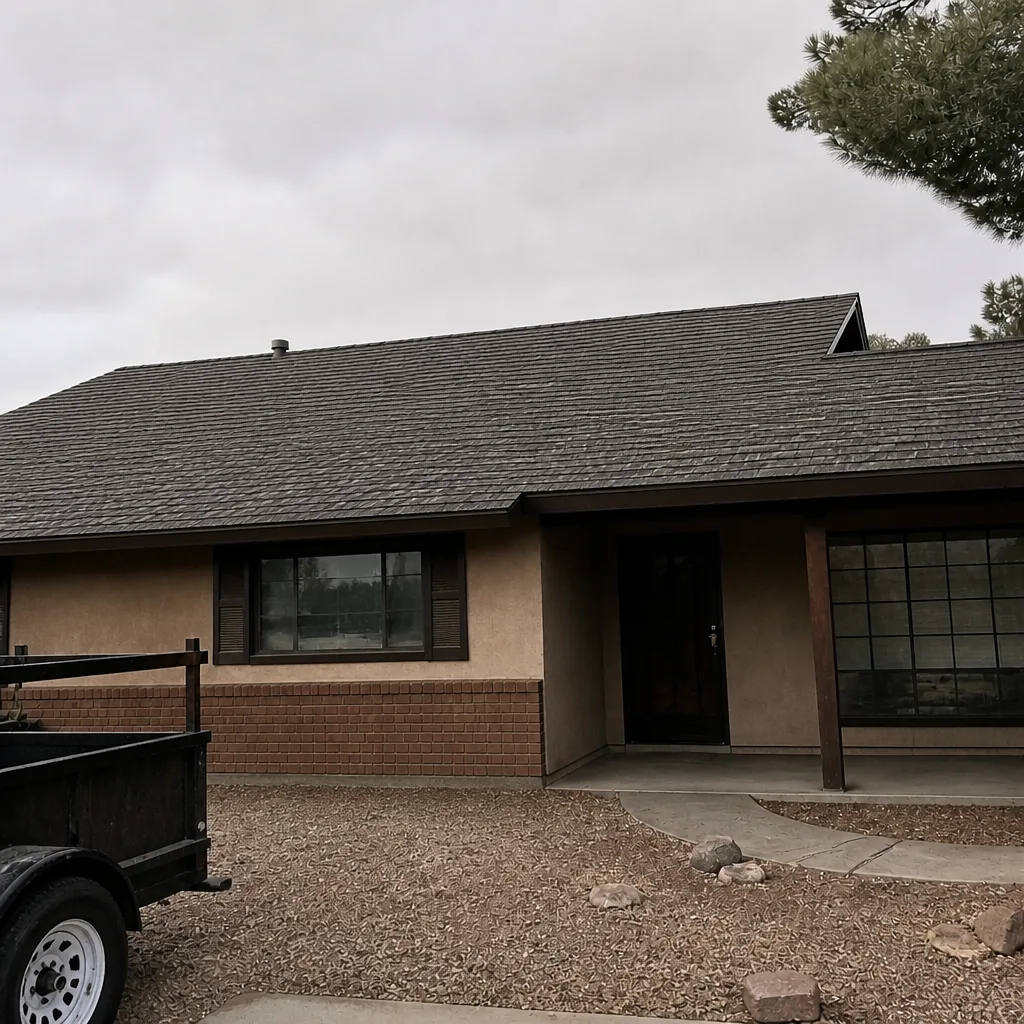 After
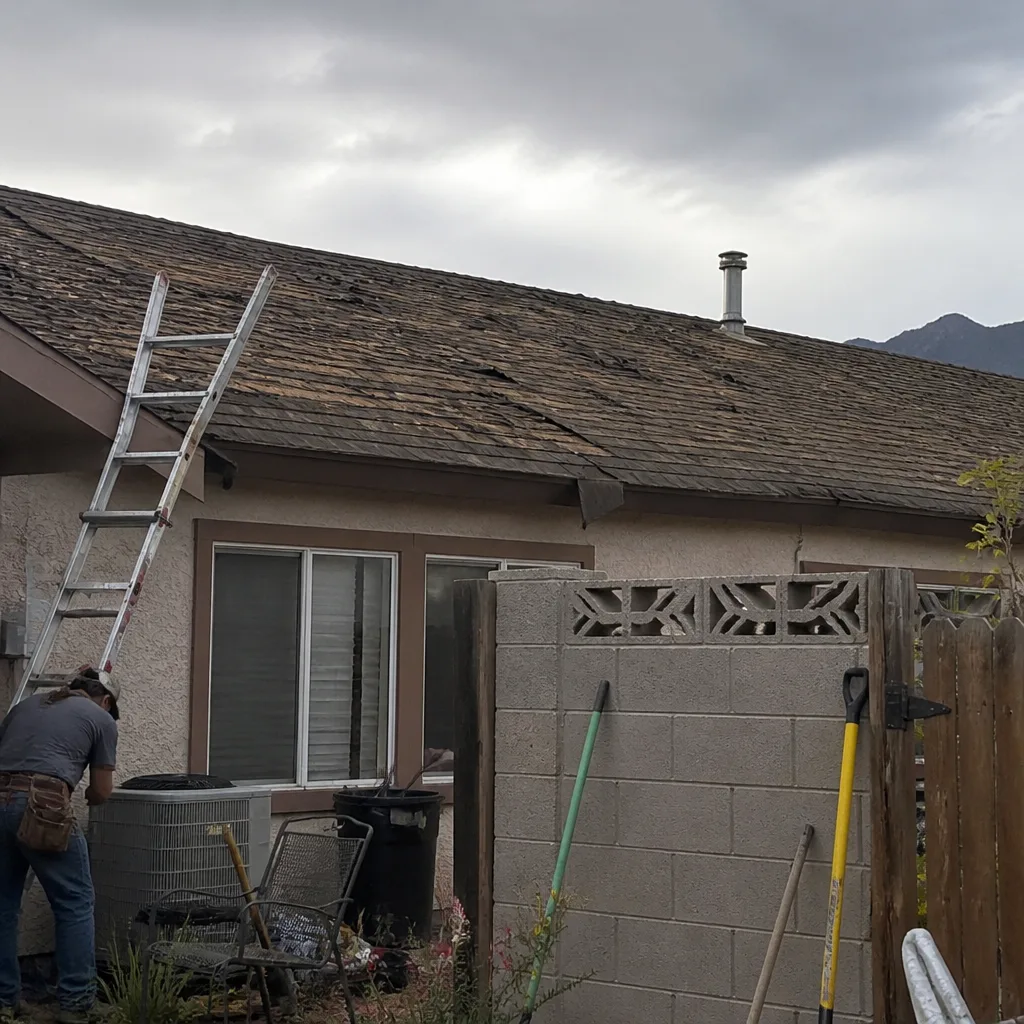 Before
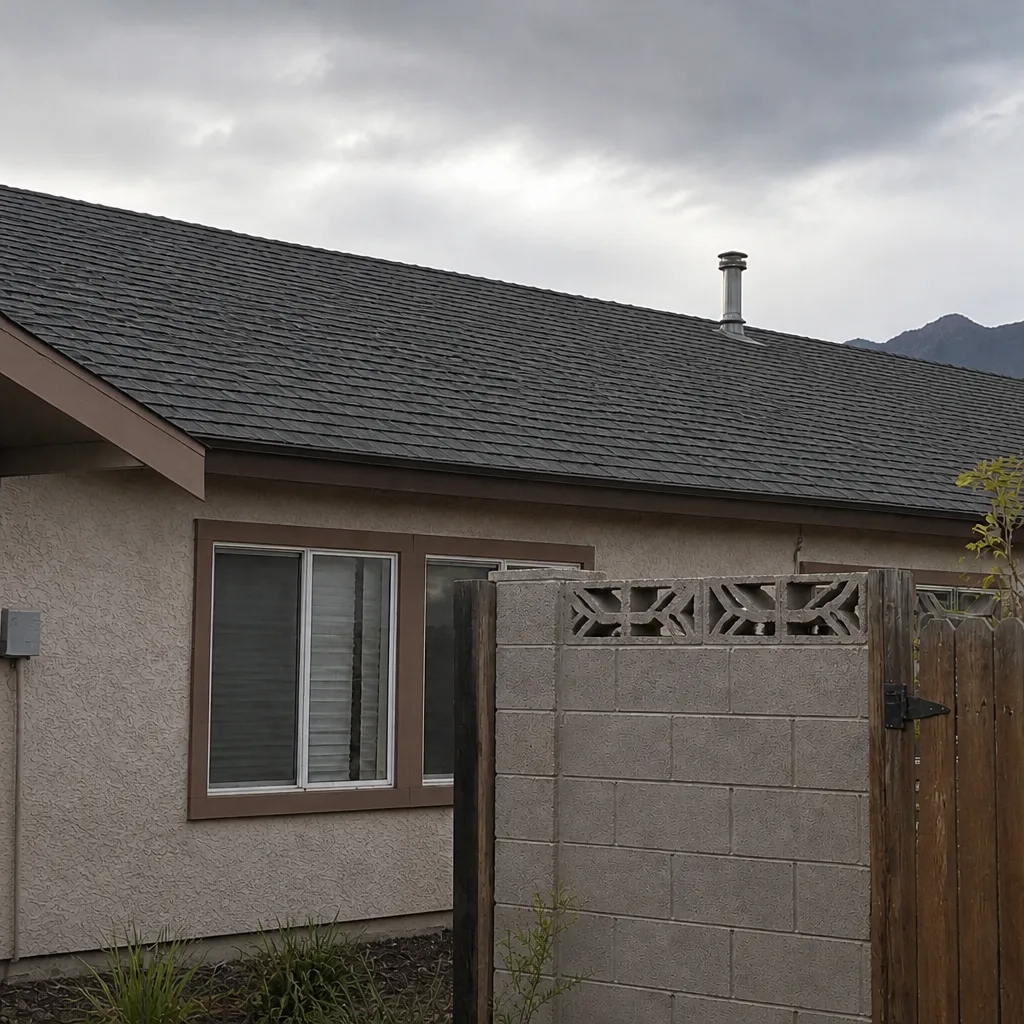 After
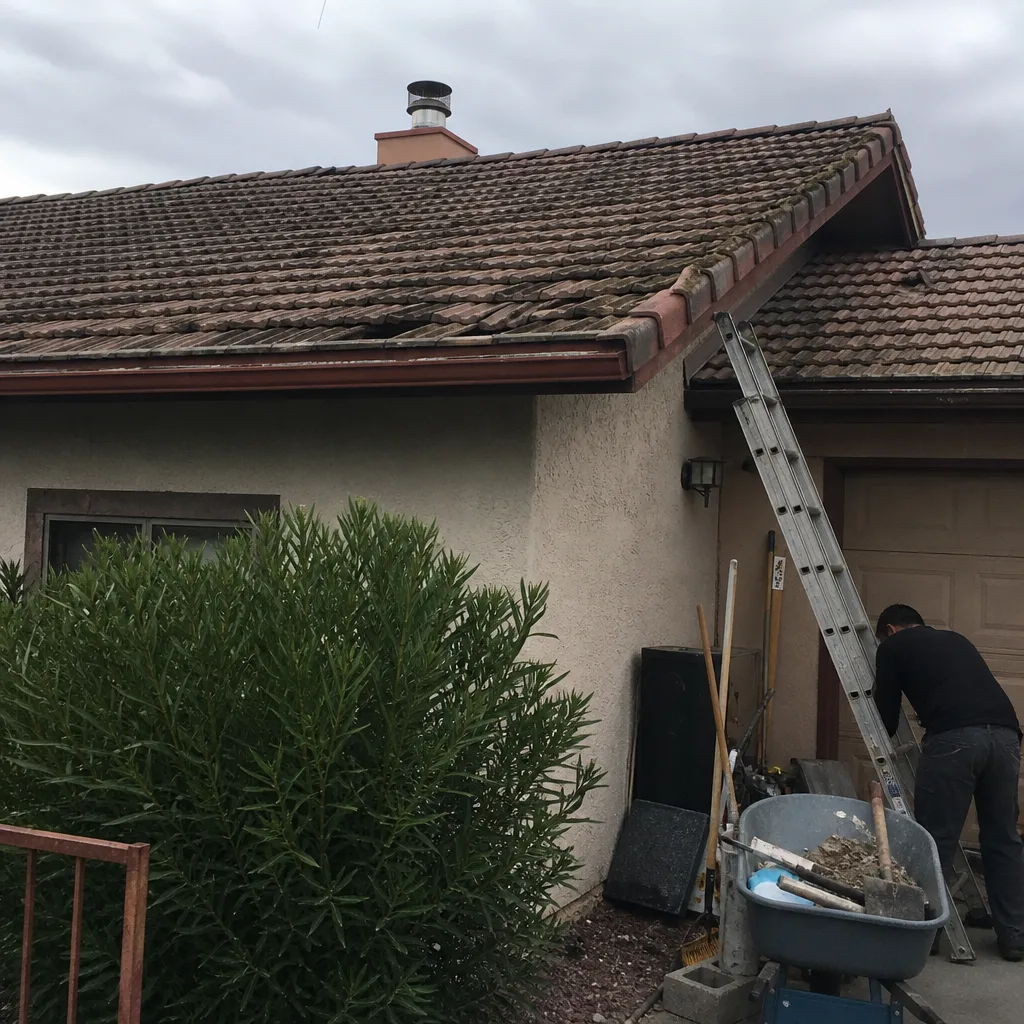 Before
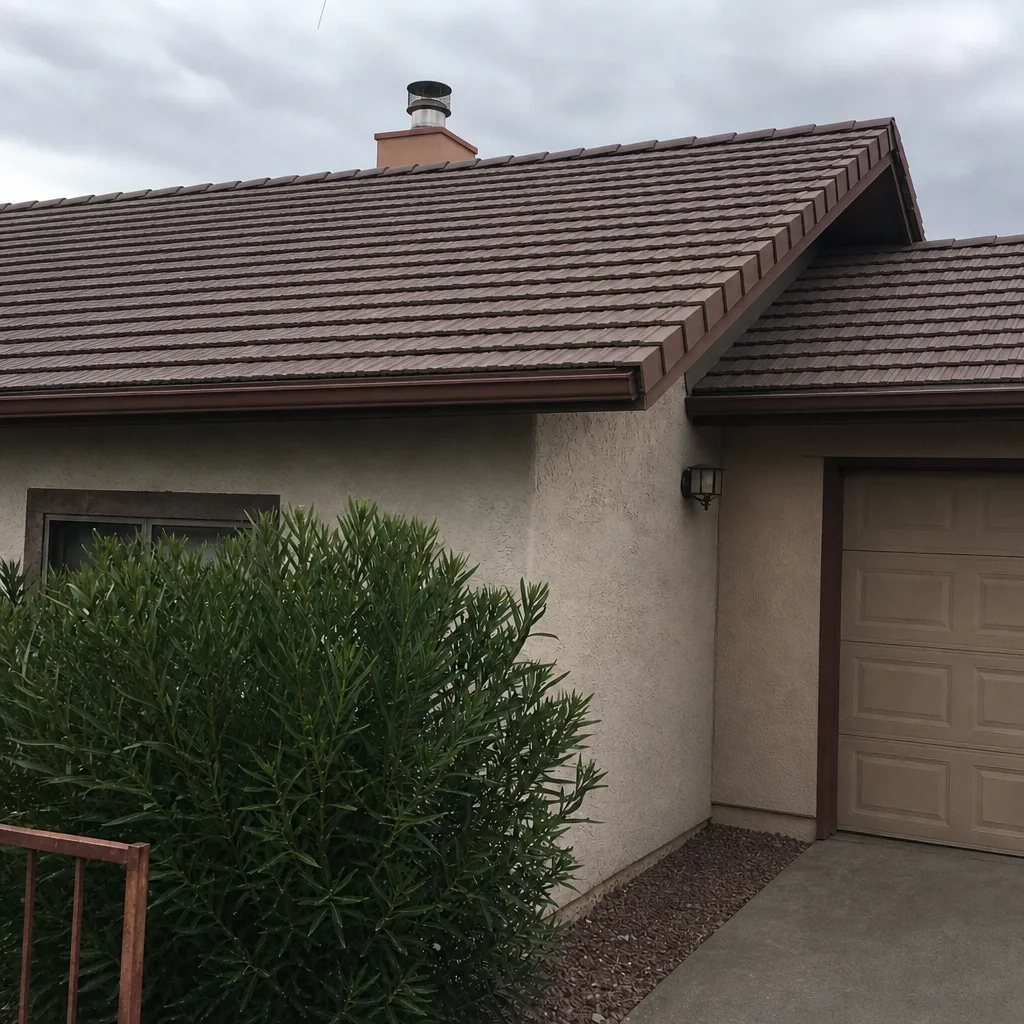 After
How Long Does a Tile Roof Last in Boulder City, NV? The Tile Isn’t the Clock - the Underlayment Is
In Boulder City’s dry desert climate, concrete and clay tile can physically hold up for 50 to 100 years with minimal cracking. But the roof system around that tile rarely lasts that long. The underlayment beneath the tile is what sets the real re-roof clock: the organic-mat felt installed before the mid-1990s has a real-world desert service life of 15 to 25 years, and synthetic underlayments installed after that run 25 to 40 years. If you’re staring at a tile roof and wondering whether it needs replacing, the honest answer is that the tile on top tells you almost nothing. Call (844) 761-8186 and we’ll get eyes on the part you can’t see.
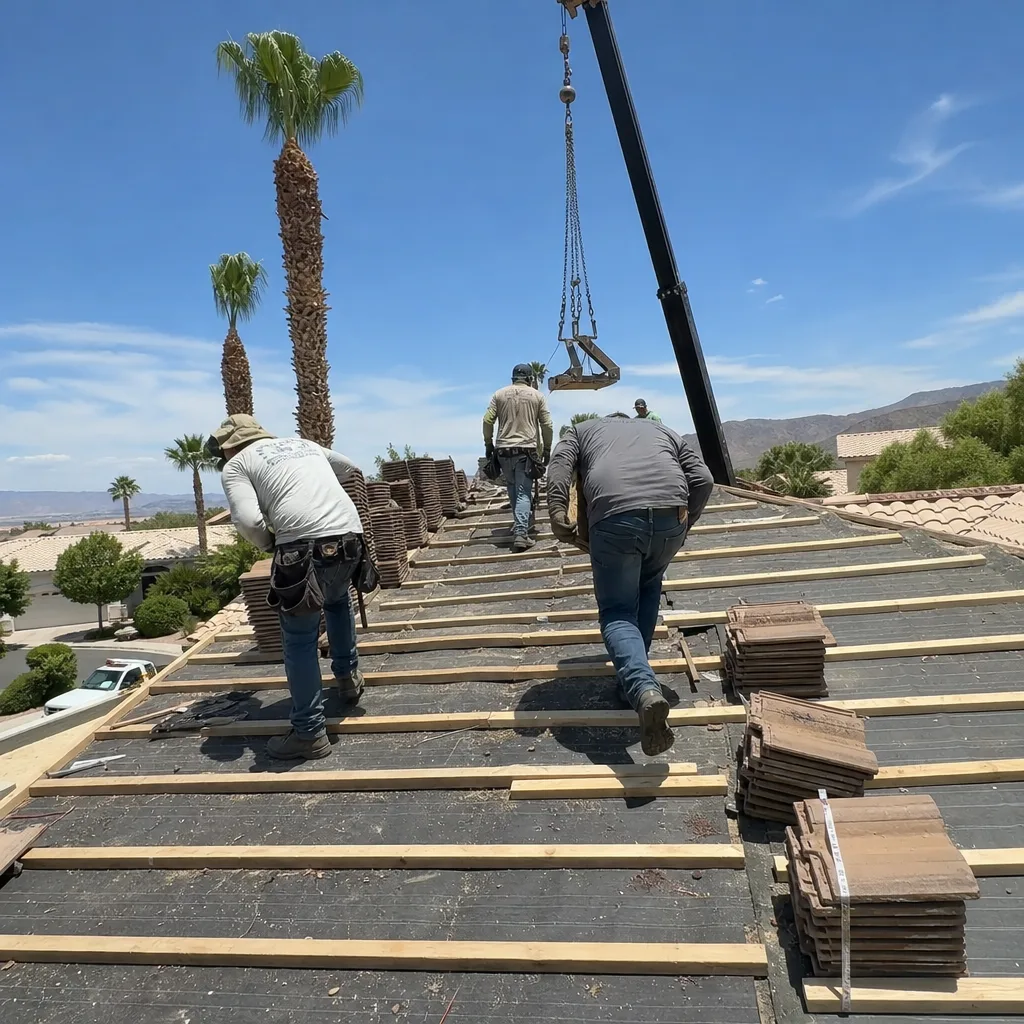
I’ve walked tile roofs in Boulder City where the clay tiles were original to the 1960s and still structurally sound, but the 15-lb felt under them had turned to powder. The roof looked perfect from the street and was one monsoon away from a living-room flood. That’s the gap most homeowners fall into, and it’s why this page exists.
Key Takeaways
- Tile lifespan: 50 to 100 years in Boulder City’s climate. Underlayment lifespan: 15 to 40 years depending on the era it was installed.
- A “30-year tile roof” is a marketing phrase. The system is only as old as the felt beneath it.
- Low-slope sections on older homes in the Historic District degrade fastest because there’s nowhere for moisture to drain.
- Hip and ridge mortar fails before the tile does, and that’s where wind-driven monsoon rain gets in first.
Tile vs. System: Why the Two Numbers Don’t Match in Boulder City
Generic articles will tell you a tile roof lasts 50 years and leave it there. That answer gets people in trouble here, because the tile you see and the roof that actually keeps water out are two different things on two very different clocks.
Here’s how the numbers break down for a typical Boulder City home:
| Component | Expected Service Life (Boulder City climate) |
|---|---|
| Concrete or clay tile (the visible surface) | 50 to 100 years with minimal cracking |
| Organic-mat underlayment (pre-mid-1990s installs) | 15 to 25 years |
| Synthetic underlayment (post-mid-1990s installs) | 25 to 40 years |
| Hip and ridge mortar | Varies with thermal cycling; often the first to open up |
| Flashing at penetrations and edges | Inspect every few years; wind-driven rain finds every gap |
If your home was built in the 1930s worker housing or the mid-century infill that followed, and it still carries the original underlayment, the felt is likely at or past the end of its service life whether the tile looks fine or not. We don’t tell people that to sell a re-roof. We tell them because a failed underlayment is the single most common reason water ends up on a ceiling in this town, and it happens quietly.
When we’re asked how long a Tile Roofing system lasts, this is the honest version: the tile is a durable skin, not the whole roof. The layers below it decide when the work needs to happen.
Where Tile Roofs Actually Fail in Boulder City
The failure modes here aren’t snow load or freeze-thaw. They’re intense UV, monsoon-driven wind, flash-flood rain, and the thermal cycling that comes with desert temperature swings. Three specific things show up again and again when we inspect tile roofs around town.
Low-slope sections that hold water instead of shedding it
On the low-pitch sections common on 1930s and mid-century homes in the historic core, moisture that gets past a cracked tile or a failed hip has nowhere to drain. It pools on the underlayment, dries out, pools again. That repeated wet-and-dry cycle accelerates degradation in a way steeper residential slopes just don’t see. A roof that would last 40 years on a steep pitch might give you 20 on a shallow one, and the tile on top will look the same the whole time.
Carbonated mortar at the hips and ridges
Hip and ridge mortar on older tile roofs carbonates and shrinks over decades, and Boulder City’s thermal cycling speeds that up. The result is open gaps at the highest wind-exposure points on the roof. That’s exactly where monsoon-driven debris and rain get in first. Most homeowners never notice it from the ground because the gaps are up high and the tile still looks intact.
Original felt that’s gone to powder
Under the tile, pre-mid-1990s organic-mat felt in a desert environment breaks down into a granular, non-waterproofing layer years before the tile shows any trouble. Once that happens, every cracked tile, every open ridge, and every failed flashing becomes a direct path for water. The tile is doing its job. The layer that mattered has quit.
That’s why our first stop on any tile inspection is the underside picture, not the curb view. On any bid, we’ll show you the deck and underlayment photos before we talk money. And if a competitor hands you a written estimate, we’ll give you a free second opinion on it. No trip charge inside Clark County, no hassle.
The Historic District Complication: Matching Tile and Design Review
Boulder City is a federally-chartered, historic planned community, and the Historic District’s design review means re-roofing often requires material and profile choices that match the original desert-appropriate character rather than whatever’s cheapest. That constraint doesn’t hit anywhere else in the Vegas Valley quite the same way, and it shapes how we approach tile work here.
On original clay tile, the economics shift in your favor if you plan ahead. Careful tear-off and tile salvage can preserve the original profile for re-set. That matters for two reasons: if design review requires matching the existing material, salvage solves it without a sourcing hunt, and it lowers total material cost on a job where finding a matching profile is otherwise hard. When we quote a tile re-roof near the historic core, salvage is on the table from the first conversation, not an afterthought.
The same logic applies to color and profile changes. In the Historic District, a swap to a different tile color or profile can trip design review, so we check the guidelines before any material gets ordered. That saves a homeowner from ordering a truckload of tile they can’t legally set. For homes newer than the historic core, we install Boral, GAF, CertainTeed, and Owens Corning tile products, so if you know the profile you want, we’ve likely set it.
Common Local Scenarios We Walk Into
These aren’t hypotheticals. They’re the shapes of call we get most often from Boulder City homeowners, and each one has a different right answer.
- The 1960s tile roof with original felt. Tile is sound. Underlayment is at end of life. The honest answer is usually a re-roof with salvage of the tile, not a spot repair.
- The mid-century home with a low-slope section and a water stain inside. The stain is a symptom. The cause is a pooled-moisture failure on the underlayment, and it needs eyes on the deck before anyone quotes a fix.
- The historic-core home facing design review. Color or profile changes may need approval. We check guidelines first, bid salvage second, order material last.
- The newer subdivision home on the outskirts. Synthetic underlayment with decades of life left. Regular inspection of flashing and hip mortar is usually the whole job.
- The “it looks fine from the street” house. Our photos of the deck and felt answer this in minutes. Tile appearance doesn’t, so we don’t rely on it.
Bill’s pre-job deck photos document the underlayment condition before any material is ordered, because telling a homeowner their tile is fine when the felt beneath it has failed is the kind of half-truth that gets somebody a water-damaged ceiling six months later. That’s not how Shepherd & Sons has stayed at the same address since 1996.
Every roofing job we do is backed by the written 90-Day Done Right Promise. If it’s not done right, we make it right, in writing. And a live person answers the phone around the clock, including nights and weekends after a storm, so you don’t get a call center. Our technicians have up to 30 years of experience, and the crew on your roof is background-checked. If you’d rather see the longer write-up on the service itself, the Tile Roofing in Boulder City page walks through materials and process; if you’re comparing options, our home page covers the full range of what we do and where we work.
FAQs About Tile Roof Lifespan in Boulder City
The tile itself can last 50 to 100 years in this climate, but the roof system usually needs attention sooner because the underlayment beneath it gives out first. Organic-mat felt from before the mid-1990s has a real-world desert life of 15 to 25 years, and synthetic underlayments run 25 to 40 years, so a roof from the 1970s with original felt is likely overdue even if the tile is intact. Call (844) 761-8186 and we’ll tell you what we see, free.
Only partly, and that’s the point. From the ground you can spot broken tiles and missing mortar, but the underlayment condition is what decides whether a re-roof is due, and it’s not visible from the curb. The most reliable sign is the home’s age and the era of the original install: a 1960s or 1970s Boulder City roof almost certainly has aging felt. A free second opinion on any written estimate is the cheapest way to get a straight answer, so call (844) 761-8186.
No, it usually lasts less. On the low-pitch sections common on historic-core homes, water that gets past a tile pools on the underlayment and dries repeatedly instead of shedding, which speeds up degradation. If your home has any flat or shallow sections, expect the underlayment there to age faster than on the steeper pitches, and inspect it first.
Re-roofing over existing tile varies with square count, pitch, salvage decisions, and whether the historic core’s design review adds material-matching steps, so we don’t publish a single number that would mislead you. What we will do is show you the deck and underlayment photos before we talk money, offer a free second opinion on any written estimate, and skip the trip charge inside our own county. If you’re a senior or a veteran, a 10% discount applies. Call (844) 761-8186 for an exact quote.
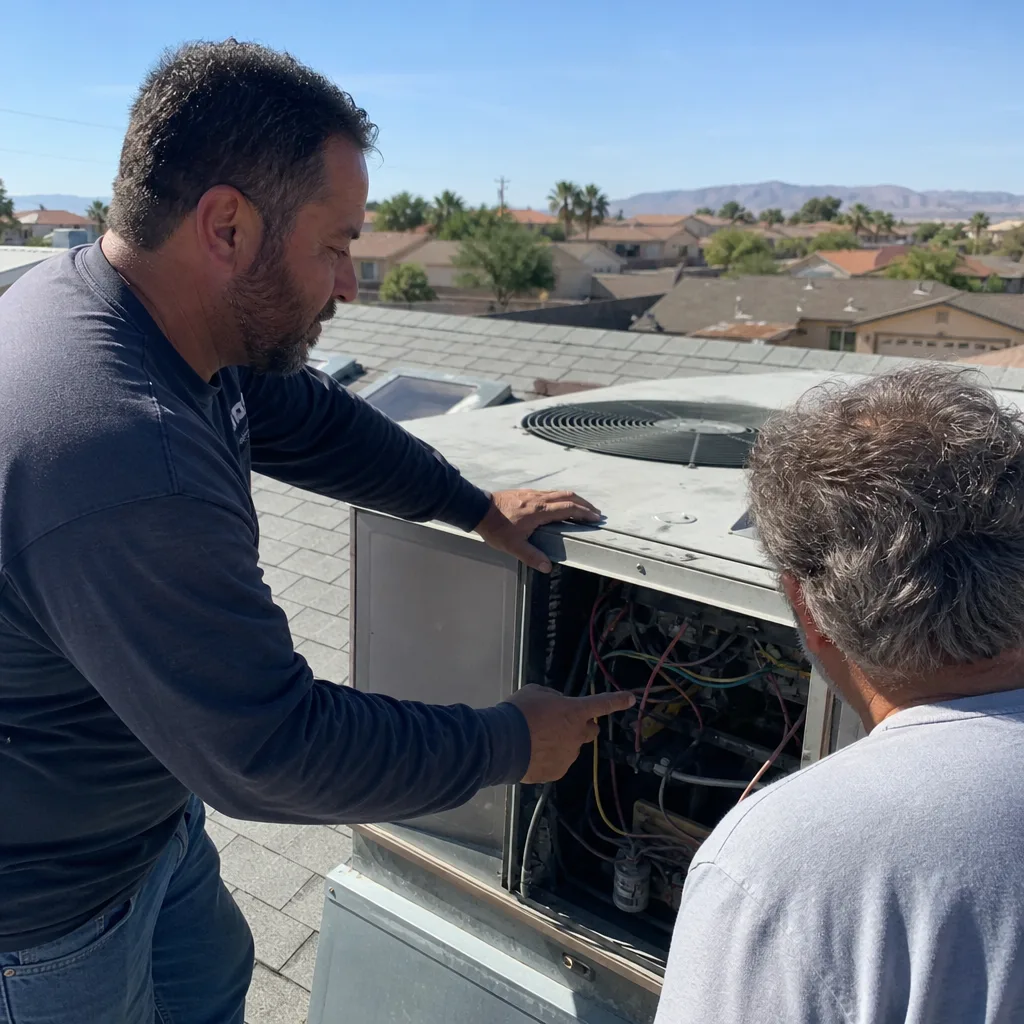
If you’d rather have it looked at, Shepherd & Sons Roofing Boulder City offers a no-pressure assessment in Boulder City. We’ll photograph the deck and felt, explain what it means in plain language, and answer any question you ask. No hard sell, no number games. Call (844) 761-8186 for a free estimate, or ask around the street. The name on the truck is the name on the license.
Written by the team at Shepherd & Sons Roofing Boulder City, serving Boulder City, NV.