
Last updated November 17, 2026
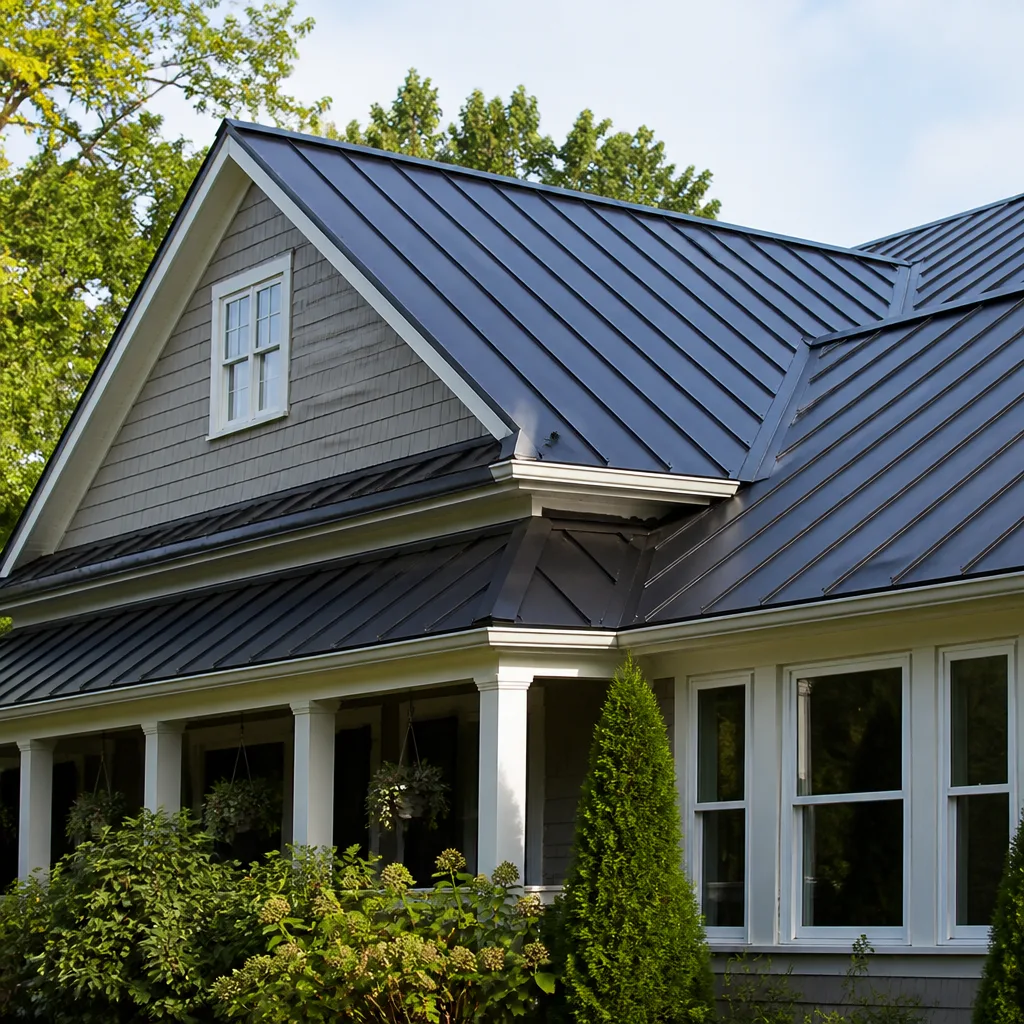 Metal roofing
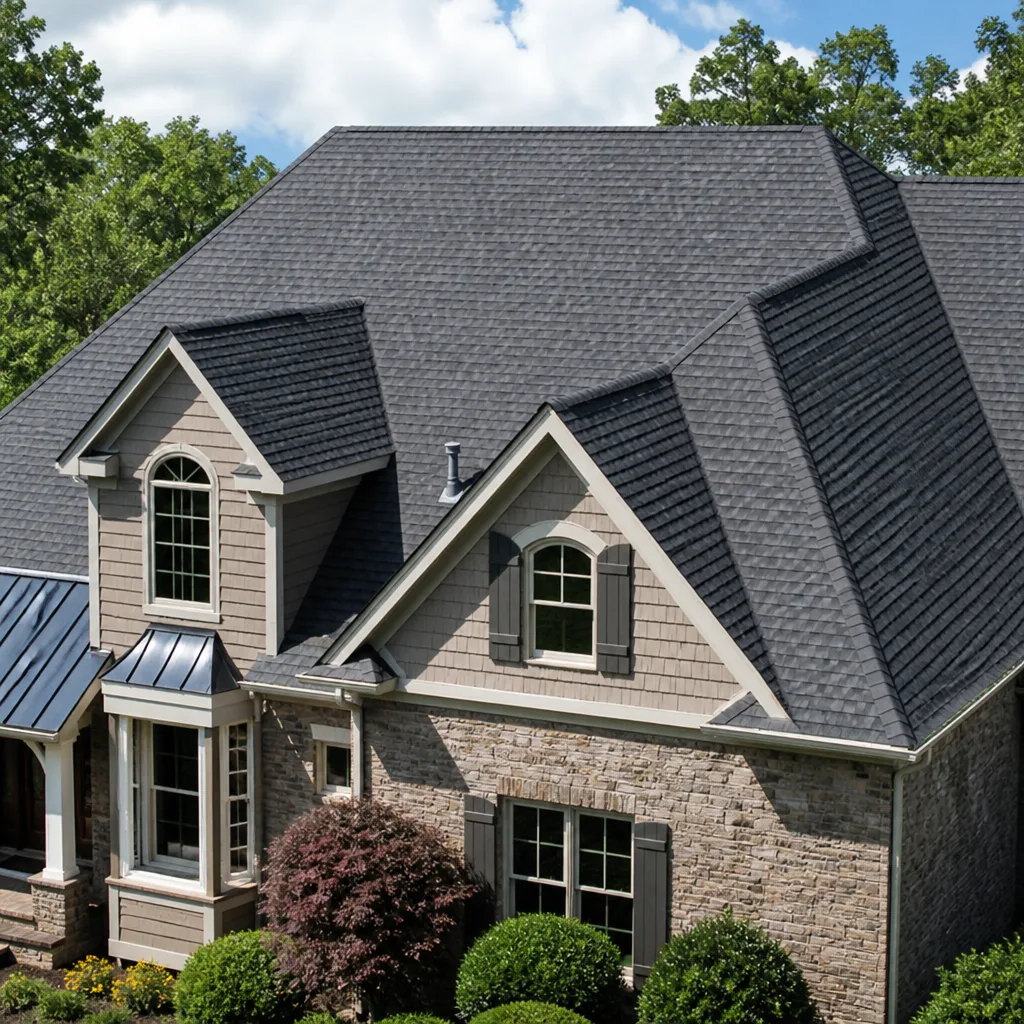
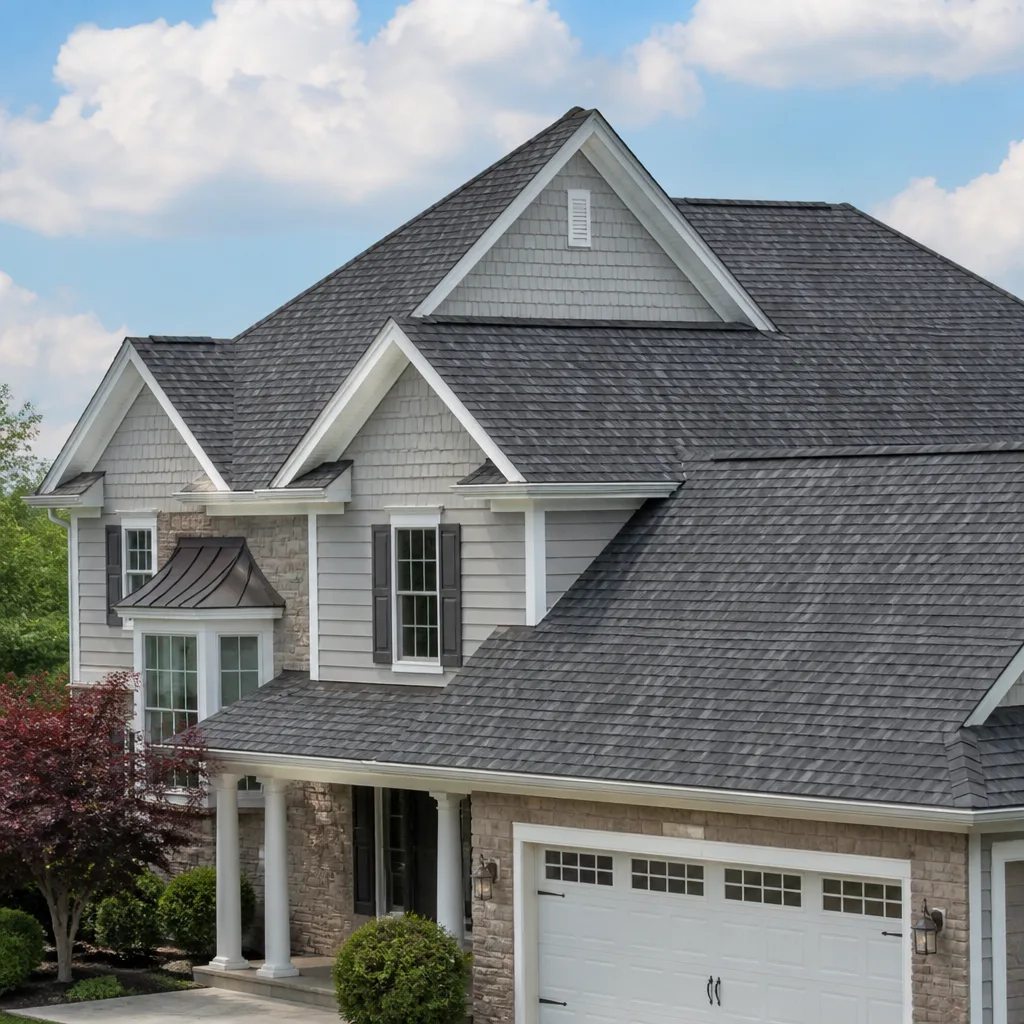 Architectural shingles
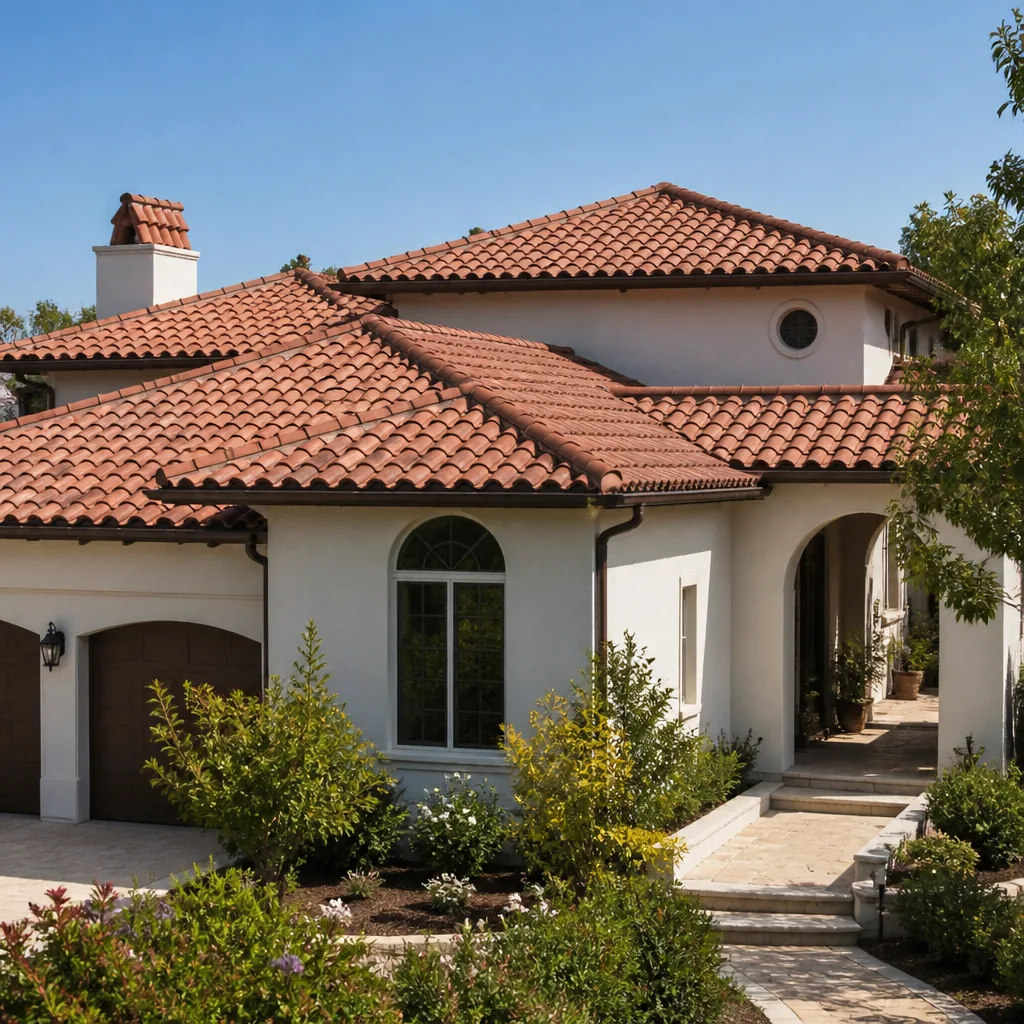 Tile roofing
 GAF
 Owens Corning
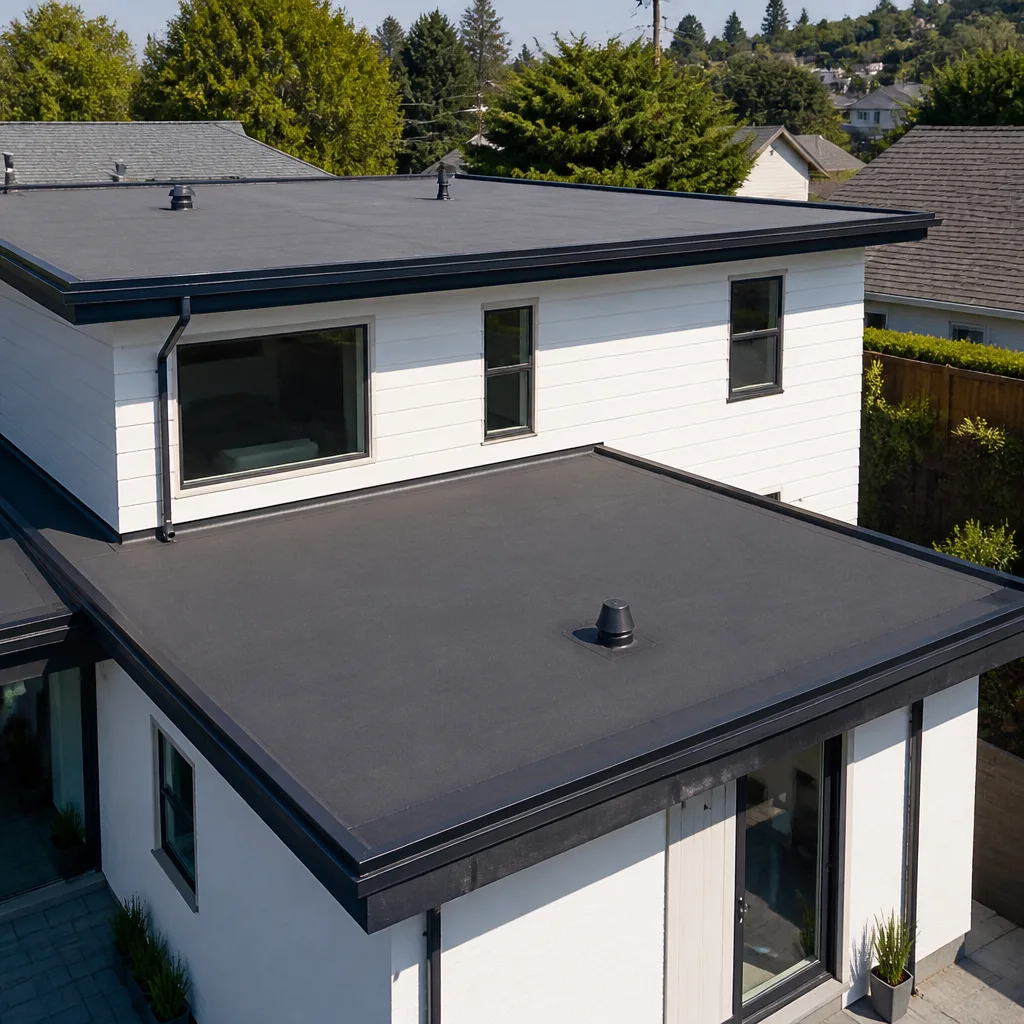 Flat & low-slope
Free roof inspection with deck photos before we talk money - GAF and Owens Corning certified installation
The Complete Guide to Roofing in Boulder City
Boulder City is the only city in Nevada that still owns its own utilities and writes its own development rules. That single fact changes almost everything about putting a roof on a house here. What gets approved in Henderson or swept through in Laughlin may need a separate variance in Boulder City before a single shingle goes on your roof. Add in the moisture corridor that rolls off Lake Mead most mornings and the architectural review overlays in the newer planned neighborhoods, and you have a roofing market that generic Nevada guides simply don’t describe. This guide treats Boulder City as its own category. You’ll learn how permits really work here, why the lake changes material choices, how the HOA review process runs, and how to read an estimate line by line before you sign anything.
Quick Answer
Roofing in Boulder City means planning around a municipal permitting system that operates separately from Clark County, a lake-driven moisture cycle that stresses roofs differently than the rest of the desert, and HOA architectural review in many planned neighborhoods. Asphalt shingle replacement on a typical single-story home runs roughly $9,500 to $18,000 depending on square count, material grade, and the pitch of the roof. Tile and metal run higher. The two decisions that protect you most are hiring a locally licensed roofer who knows Boulder City’s code office and getting every line of the bid in writing before work starts.
Styles & brands we work with
- Architectural shingles
- Metal roofing
- Tile roofing
- GAF
- Owens Corning
- Flat & low-slope
Table of Contents
- Why Boulder City Roofing Is Its Own Category
- How Permits Work in Boulder City vs. Clark County
- The Lake Mead Microclimate and What It Does to Your Roof
- The HOA Architectural Review Process
- Material Lifespans Calibrated to Boulder City Conditions
- How to Read a Boulder City Roofing Estimate Line by Line
- Common Mistakes to Avoid
- Frequently Asked Questions
Why Boulder City Roofing Is Its Own Category
Most roofing content online lumps Boulder City in with Las Vegas and calls it a day. That’s a mistake, and it costs homeowners real money. Boulder City was incorporated as a federal company town in 1931 to house Hoover Dam workers, and it held onto a level of municipal independence that the rest of Southern Nevada never had. The city runs its own electric and water utilities. It writes and enforces its own development ordinances. Historic preservation rules apply to a large chunk of the older neighborhoods. All of that affects how a roof gets permitted and what materials you can legally install.
In our experience, this is why out-of-state crews who work fine in Henderson stumble in Boulder City. They show up with a Clark County permit application, and the city asks them for documents they’ve never heard of. Then the job stalls, or worse, the homeowner gets a stop-work notice.
Practical implications for you as a homeowner:
- Permit office: The city issues its own building permits. A roofer who says “we’ll pull the county permit” hasn’t done their homework.
- Historic district: Roofing changes on certain homes trigger additional review. If your house sits in the older core near Nevada Way or the historic district, ask about this before scheduling.
- Inspection timing: The city runs its own inspection schedule, and roofing inspections aren’t automated like some county systems. Your contractor needs to know the local process, not just the state code.
- Contractor licensing: Nevada requires a state contractor’s license for roofing, but local knowledge of Boulder City’s fee schedule, submittal format, and inspection flow is what actually keeps a job moving.
If you’re comparing bids, this is the single fastest test. Ask “Have you pulled a roofing permit in Boulder City this year, and can you tell me what the submittal asks for?” The bidder who can answer without hesitating is the one who’s been working here.
How Permits Work in Boulder City vs. Clark County
A roofing permit in Boulder City is not the same animal as a Clark County permit, and the differences matter if you’re managing the process yourself or checking on a contractor’s paperwork. The city operates its own building department, its own fee structure, and its own inspection cadence. A roofer who pulls one permit in Las Vegas and assumes the next one is handled identically is asking for trouble.
Here’s the sequence for a standard residential roofing permit in Boulder City:
- Pre-application check. Confirm the property is zoned for the roofing scope and that any HOA review is already complete (see the HOA section below). The city won’t accept a permit if the association’s paperwork is missing on a covered property.
- Contractor submits the application. The licensed contractor signs the permit application. Homeowners should never pull their own roofing permit; if something goes wrong, the liability lands on you, not the roofer.
- Plans and product specs. For a straight replacement, the city generally wants a roof plan showing square counts, slope, and the ice-and-water underlayment approach, plus the product spec sheets for the shingles or panels you’re installing.
- Fee payment. Permit fees in Boulder City are typically calculated by roof square footage and valuation. Budget a few hundred dollars on a typical replacement; the contractor should show this as a line item in the bid, not bury it.
- Inspection scheduling. Dry-in and final inspections are required. The dry-in inspection happens after underlayment is installed but before roof covering goes on; miss it and the city can require removal. A contractor who doesn’t schedule inspections upfront is one who plans to skip them.
- Final inspection and permit close-out. The city signs off, and you get documentation. Keep that paperwork. It’s the first thing a buyer’s inspector asks for when you sell.
One practical note we mention often: the surrounding Clark County offices and Boulder City’s office don’t always share the same forms or fee schedules. If your contractor’s paperwork looks like it came from a county template, ask why. And if you’re also looking at work in the wider region, our guide on Shepherd & Sons Roofing Boulder City home lays out the local service picture, and the Roof Repair in Boulder City page covers what a repair permit looks like vs. a full replacement permit.
The Lake Mead Microclimate and What It Does to Your Roof
Most desert roofing guides act as if every Nevada roof lives in a dry, 5%-humidity envelope. That’s not Boulder City. Lake Mead sits a few miles east, and the water body creates a genuine humidity corridor that rolls over the town in the early mornings, especially in spring and fall. That doesn’t mean rainforest conditions. It means something subtler and harder on roofs: daily moisture cycling.
What moisture cycling actually does to a roof:
- Thermal shock on asphalt shingles. Early-morning dew raises surface moisture, then the sun hits and the shingle dries fast. That repeated expand-contract cycle over 15 to 20 years accelerates granule loss at the sun-facing slope more than pure dry heat does.
- Faster sealant failure at penetrations. Pipe boots, vent flanges, and skylight frames rely on sealants that don’t love alternating moisture and UV. In our experience, we see pipe boot failures here at year 8 or 9 that a Henderson roof might not show until year 12.
- Attic condensation in certain homes. If a Boulder City house has poor attic ventilation, the morning moisture can condense on the underside of the roof deck during shoulder seasons, which is a slow recipe for deck rot. Older homes with minimal soffit venting are the ones we watch.
- Wind events off the lake. The lake also generates occasional high-wind events, particularly in the spring when cold fronts push through. Those wind gusts test the nailing pattern and edge metal more than the shingle brand itself.
The nailing pattern earns the wind rating, not the shingle wrapper. That’s a phrase we use a lot because it’s true. A CertainTeed or Owens Corning product rated to a high wind speed is only as good as the installer’s nailing schedule and the local wind exposure. Ask any bidder whether they nail to the manufacturer’s spec or the local wind uplift requirement, because they aren’t always the same number.
On material selection, the lake moisture cycle nudges Boulder City roofs toward either tile or metal on the higher end, or a well-ventilated premium architectural asphalt system on the pragmatic end. The Metal Roofing in Boulder City page goes deeper on panel choices for lake-adjacent properties if you’re considering that route.
The HOA Architectural Review Process
Boulder City’s newer planned neighborhoods are governed by HOA architectural review, and roofing changes are covered. This is the step most out-of-state contractors skip, and it’s the step that stalls the most jobs. If you live in one of the newer developments, your roofing project almost certainly needs approval before the city permit goes anywhere.
The review process is generally the same across associations, with minor variations:
- Get the association’s architectural submittal form. Download it from your HOA portal or request it from the management company. The form will tell you what the association actually wants to see.
- Collect the product documentation. At minimum you’ll need the manufacturer’s spec sheet, color samples or a close-up photo of the shingle, and the warranty document. CertainTeed and Atlas both publish these packets; your contractor should pull them for you without being asked twice.
- Submit a written scope. Square counts, removal method, underlayment spec, and any changes to venting or flashing. Associations are usually sticklers about color, so include the exact color code, not “similar gray.”
- Wait for written approval. Never start work on a verbal “you’re good to go” from a board member. Get the signed approval letter. In our experience, associations take 2 to 4 weeks, sometimes longer if the board meets monthly.
- Attach the approval to the city permit application. The Boulder City building department will want to see it on covered properties.
The single biggest HOA mistake is choosing a color the board later rejects, forcing a re-submittal and delaying the job by weeks. If your contractor is local and has done work in your association before, they’ll already know the approved palette.
Material Lifespans Calibrated to Boulder City Conditions
Manufacturer lifespans are printed as if every roof lives in an average climate. Boulder City isn’t average. The UV index here runs high year-round, the temperature swing between a July afternoon and a July night can approach 30 degrees, and the lake adds morning moisture that the rest of the desert doesn’t have. Here’s how the major categories actually perform here, based on what we’ve seen on roofs around town.
Asphalt Shingles
Three-tab shingles: 15 to 18 years in Boulder City in our experience, sometimes shorter on hard west-facing slopes. Architectural and premium architectural shingles: 20 to 25 years, up to 28 with excellent attic ventilation. The granule loss is the tell; if you can see the fiberglass mat showing between granules, the shingle is done regardless of the warranty card. We reach for CertainTeed and Owens Corning architectural product lines most often here, but the install matters more than the brand.
Clay and Concrete Tile
Tile is the strongest performer for Boulder City’s UV load. Clay tile can last 40 to 50 years in these conditions; the underlayment beneath it is the weak link. The underlayment typically needs replacement at year 20 to 25 even though the tile survives. If you’re buying a tile-roofed house, ask when the underlayment was last replaced. A tile roof that looks fine from the street can be leaking onto the deck by year 22.
Metal Roofing
Standing seam metal with proper coatings handles the UV and the moisture cycle well; expect 40 to 50 years on a good install. Exposed-fastener metal panels have a shorter life because the screw gaskets fail at the lake-driven moisture cycle, usually around year 12 to 15. If you’re considering metal, ask about fastener type and whether the panel is standing seam. The difference isn’t cosmetic.
Flat and Low-Slope Systems
For low-slope sections (garages, patios, additions), a modified bitumen or single-ply membrane typically holds 15 to 20 years in Boulder City. Ponding water on flat sections is the failure driver here, and it’s worth checking drainage before blaming the membrane.
Wind Rating Reality Check
Every manufacturer stamps a wind rating on the wrapper. The number that matters is the one the local building department and your installer deliver. Ask any bidder what nailing schedule they’ll use and whether they’ll inspect the deck after tear-off. If the deck has soft spots, the wind rating means nothing until those are addressed. Our Roof Replacement & Installation in Boulder City page walks through the deck inspection step in more detail.
How to Read a Boulder City Roofing Estimate Line by Line
Most Boulder City homeowners who’ve been burned by a contractor were burned because the estimate was a single lump number rather than a line-item bid. A proper estimate should be readable by anyone, not decoded by a pro. Here’s what to look for, and what to ask when a line is missing.
Required line items on a Boulder City roofing estimate:
- Square count. A roof is measured in squares, and 100 square feet is one square. A bid that doesn’t state the square count isn’t a bid; it’s a guess. Ask any bidder how many squares they counted and compare across bids.
- Material brand and product line. “30-year shingle” is not a specification. The bid should name the brand and product (“CertainTeed Landmark,” “Owens Corning Duration”), the color, and the warranty tier.
- Underlayment and ice-and-water shield. The spec on the underlayment matters more than most homeowners realize in the lake moisture corridor. Ask what’s being installed at the eaves and in the valleys.
- Deck repair allowance. A good bid carves out a per-square-foot price for deck replacement if soft spots are found, so you know the number before anyone starts tearing off. A bid that says “deck repair as needed” without a number is the beginning of a change order.
- Flashing and penetration replacements. Pipe boots, vent flanges, drip edge, and valley metal should all appear as line items. “Reuse existing” is a legitimate choice for some items and a corner-cut on others, and the bid should say which.
- Ventilation. Ridge vent, soffit vent, or a solar-powered attic fan. If the bid doesn’t address ventilation, ask why. In our experience, poor attic venting shortens roof life in Boulder City by several years.
- Permit fees. Shown as a pass-through line item, with the city’s actual fee visible.
- Cleanup and dumpster. Tear-off debris removal, magnet sweep for nails, and dumpster placement. These should be explicit.
- Warranty terms in writing. Manufacturer warranty and workmanship warranty are separate documents. Get both.
- Payment schedule. Never pay more than a materials deposit up front. Progress payments tied to milestones (tear-off, dry-in, final) are normal. Full payment before final inspection is not.
Compare like to like. The cheapest bid is usually the one with the fewest line items, not the best deal. The most useful comparison service we offer is a free second opinion on any written estimate you already have, which lets you see exactly what’s missing from the low bid before you sign it.
Common Mistakes to Avoid
- Hiring a storm chaser who “happens to be in the neighborhood.” After every hail event in Southern Nevada, out-of-state crews sweep through Boulder City offering fast quotes. They leave a few weeks later, and the warranty leaves with them. Ask where the contractor’s physical office is and whether you can drive to it.
- Skipping the HOA approval on a planned-neighborhood home. The board can require you to re-roof at your own expense if the color or product doesn’t match the approved palette. Get the written approval letter before the first shingle comes off.
- Pulling your own permit to save money. It shifts liability onto you if the inspection fails or the roof leaks later, and it can void the workmanship warranty. A licensed contractor should always pull the permit; that’s part of what their license is for.
- Choosing the shingle by warranty length instead of install quality. A 30-year shingle installed with a cheap nailing pattern and no underlayment spec is a 15-year roof. The install matters more than the wrapper.
- Ignoring attic ventilation. Boulder City roofs bake. Poorly vented attics shorten shingle life by years and cause the moisture-cycling condensation problems we mentioned earlier. If a bid doesn’t mention ventilation, ask why not.
- Paying the full job up front. Deposits larger than the materials cost, or full payment before the final inspection, are red flags. The final payment should come after the city signs off and you’ve walked the roof.
- Skipping the deck inspection. Underlayment and shingles are only as good as the deck beneath them. If your contractor isn’t going to inspect the deck after tear-off, hire someone who will.
See the difference
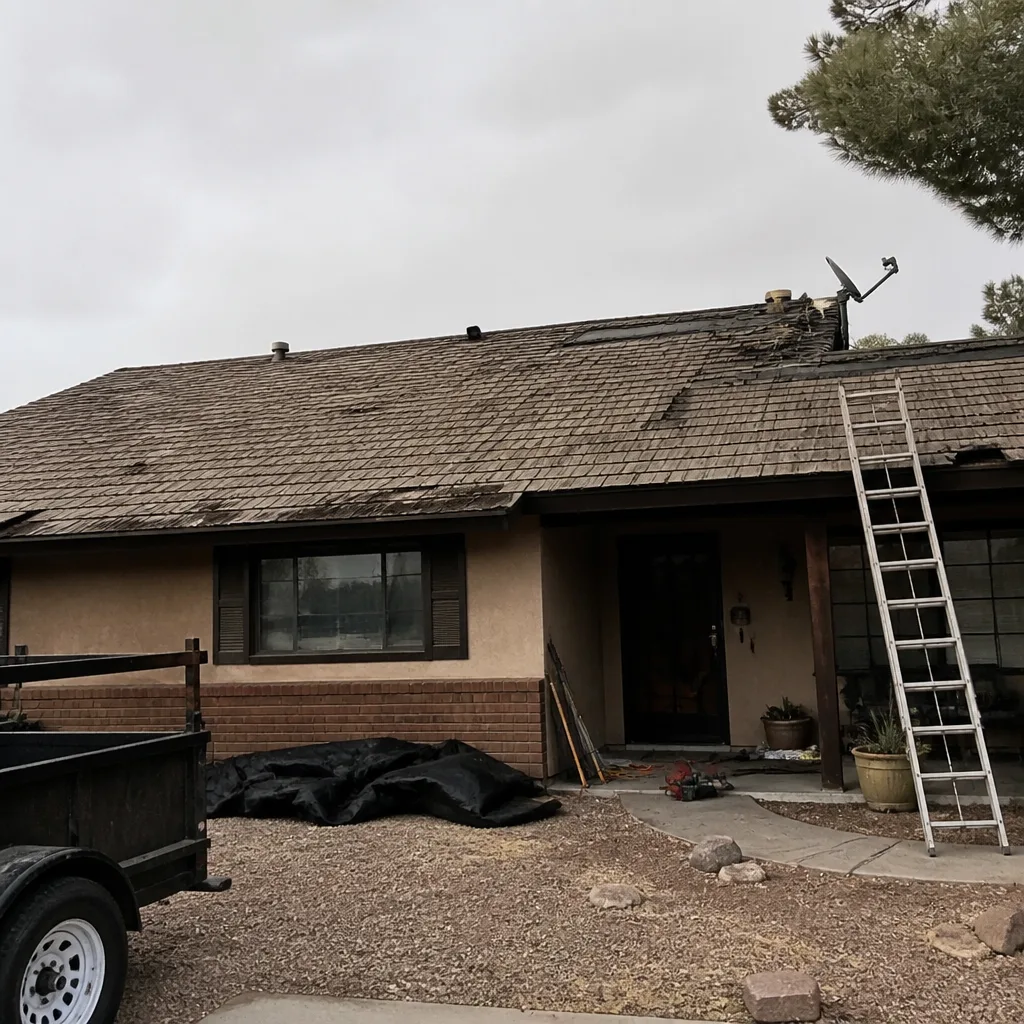 Before
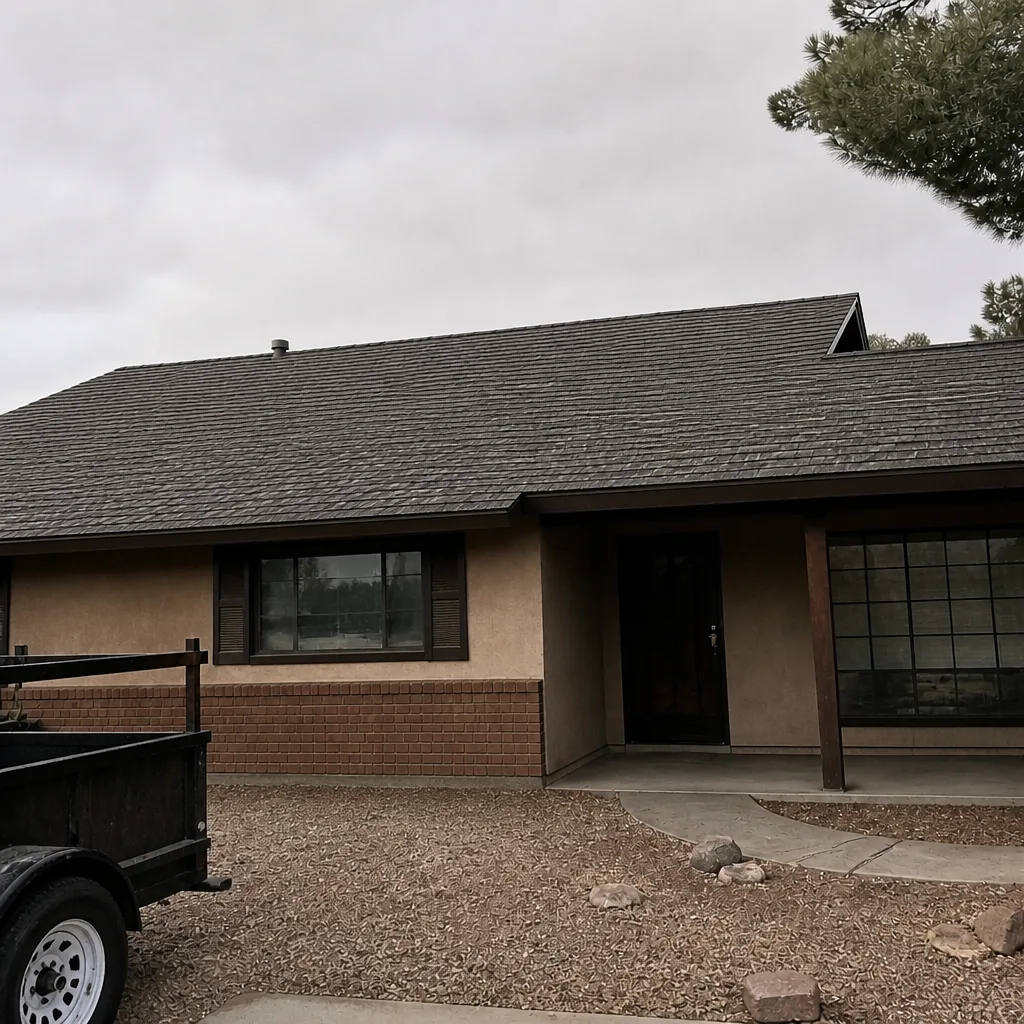 After
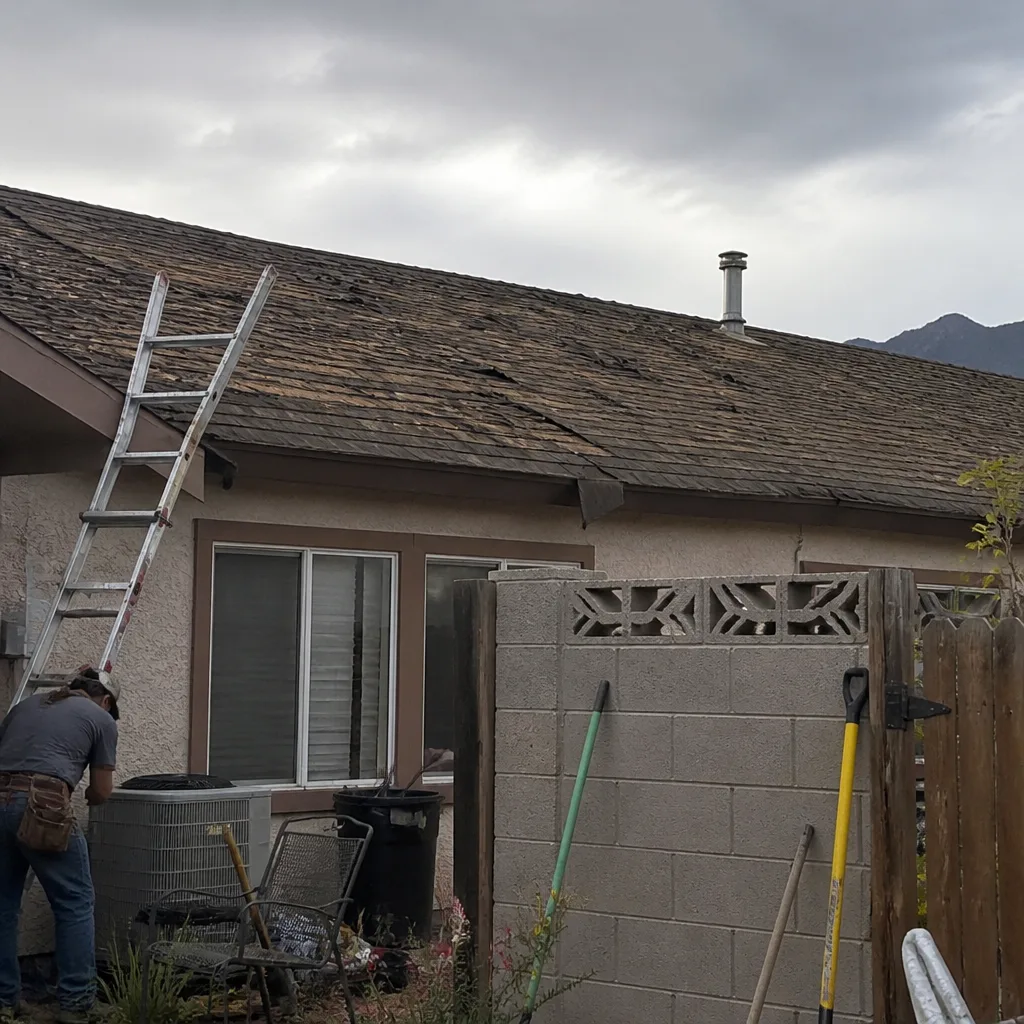 Before
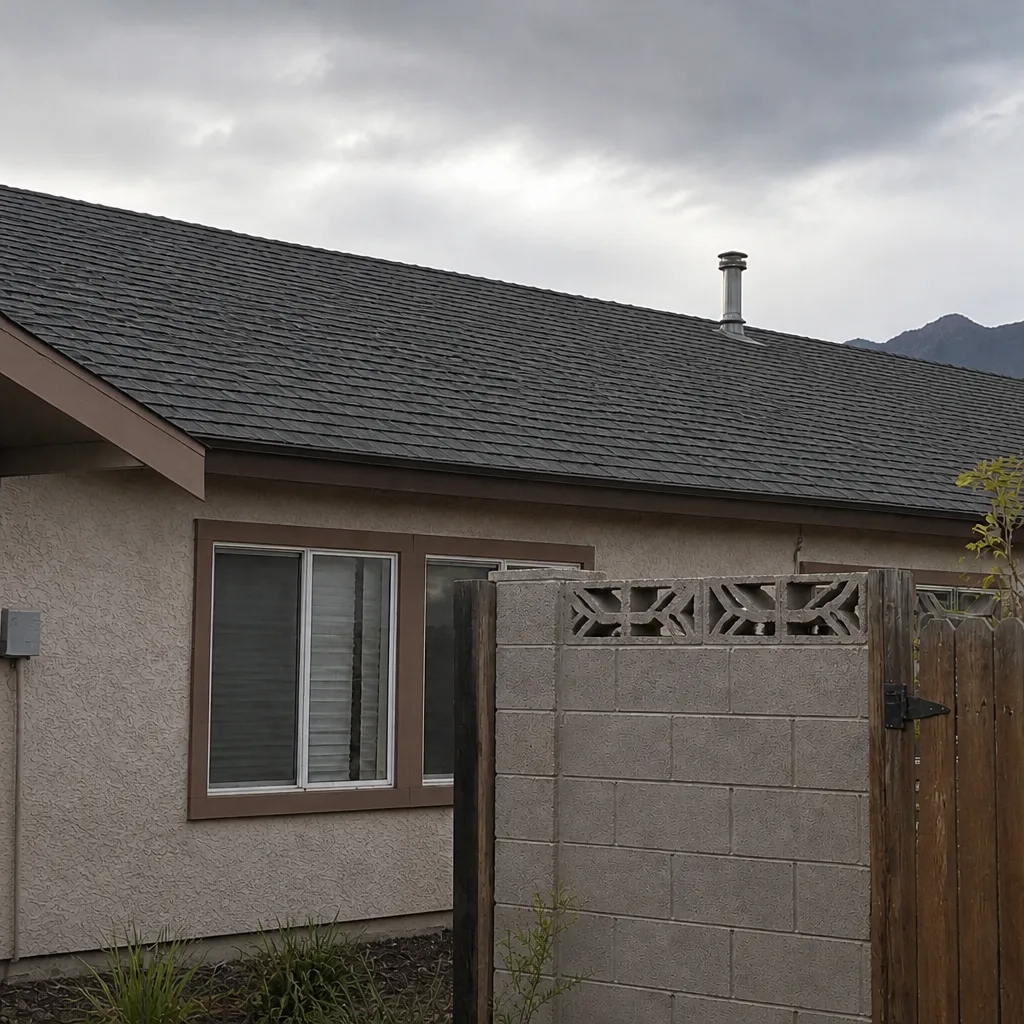 After
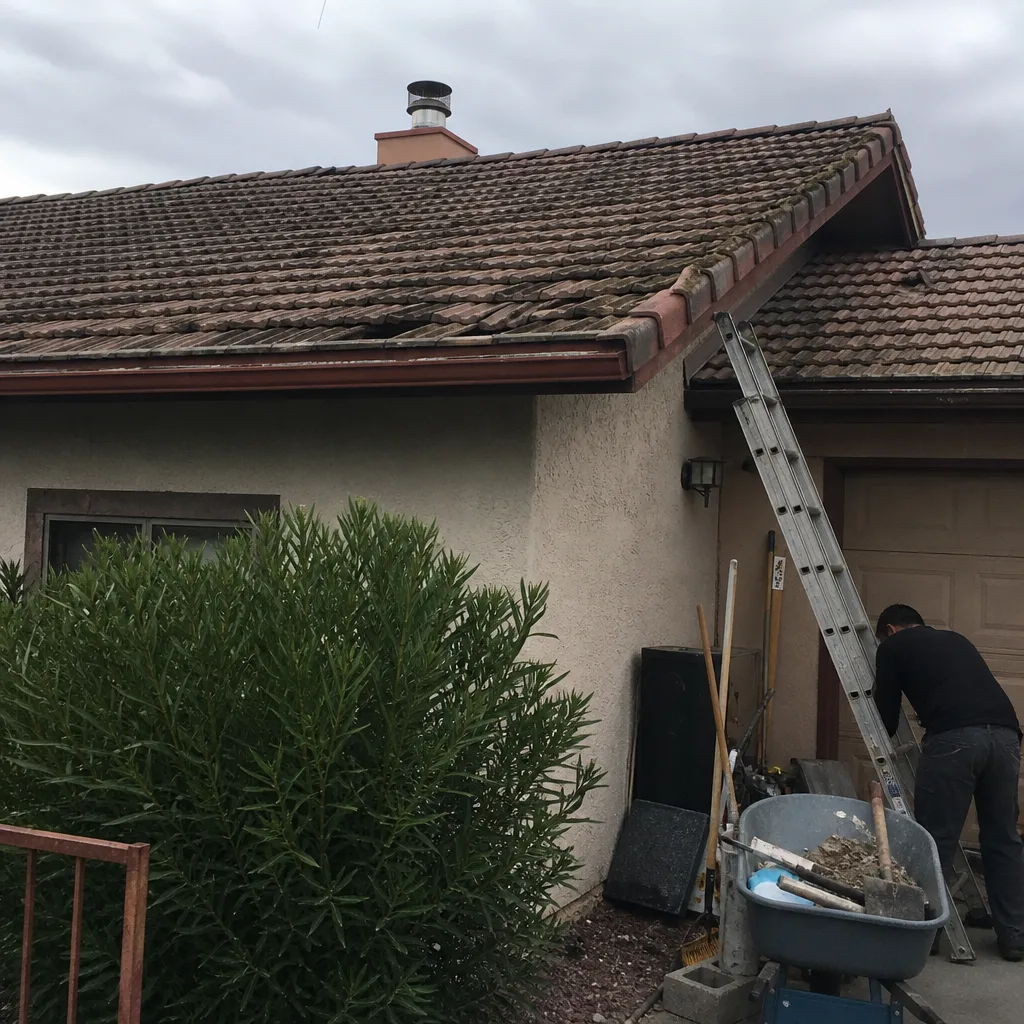 Before
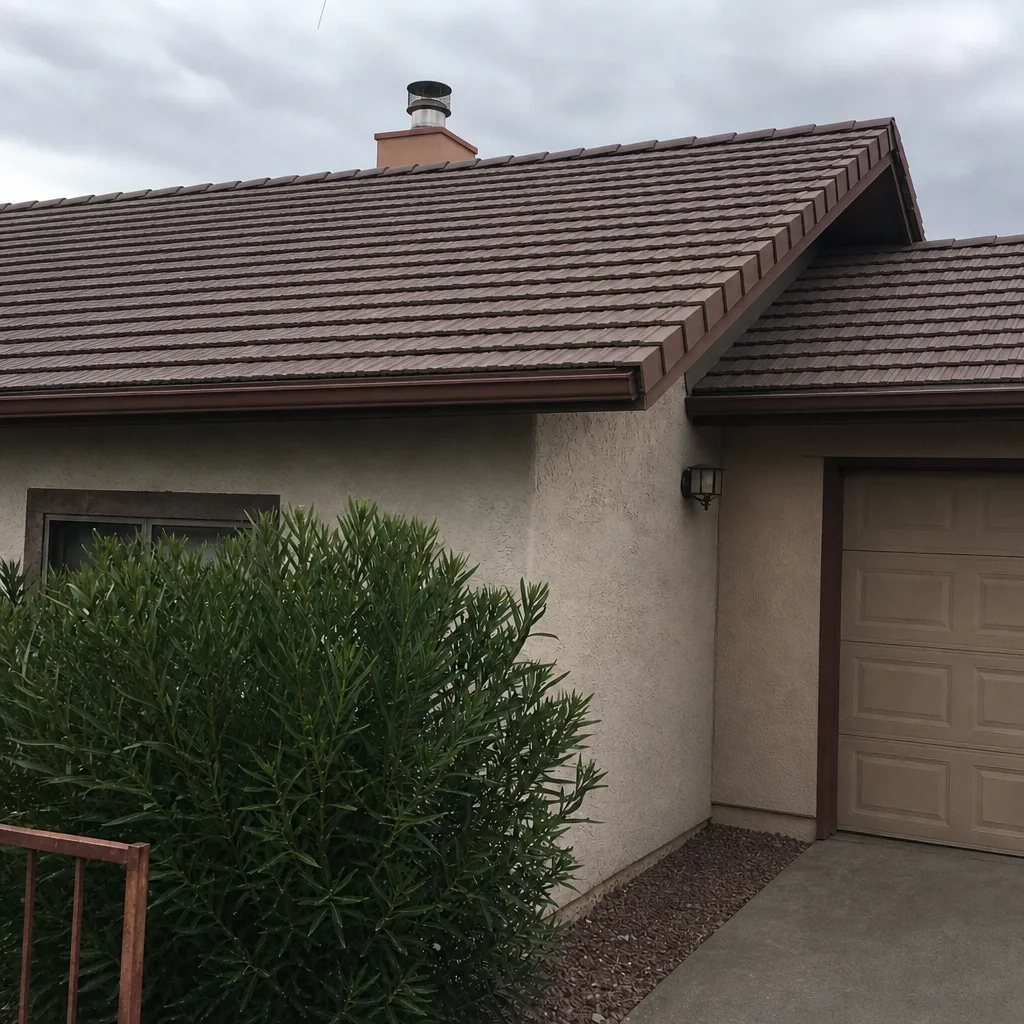 After
When to Call a Professional
Some roofing issues are cosmetic. Others are dangerous or structurally significant, and no homeowner should be on the roof for them. Call a licensed roofing contractor when you see: sagging in the roofline or visible deck deflection; granules collecting at downspouts in volume; interior ceiling stains after a rain; a tile roof older than 20 years where the underlayment hasn’t been documented; any leak near a chimney or skylight; soft spots you can feel walking on the roof; or visible damage after a wind or hail event. Any of these warrant a professional inspection, and for a roof over roughly 20 years old, a full evaluation is a good idea regardless of visible condition. Our technicians have up to 30 years of experience in these conditions, and Shepherd & Sons Roofing Boulder City offers free estimates in Boulder City; call (844) 761-8186 to schedule a professional look before a small issue becomes a deck replacement.
Frequently Asked Questions
Asphalt shingle replacement on a typical single-story Boulder City home runs roughly $9,500 to $18,000 depending on square count, material grade, and roof pitch. Tile and metal run higher, typically $15,000 to $30,000 or more. HOA review, permit fees, and any needed deck repair are separate line items and should appear on the bid. Call (844) 761-8186 for an exact quote on your roof; estimates are free.
Yes. Boulder City issues its own building permits, separate from Clark County, and a full roof replacement requires one. Your licensed contractor pulls the permit on your behalf, and both dry-in and final inspections are required. If your home is in an HOA-governed neighborhood, the architectural approval should be completed before the permit is submitted.
Lake Mead creates a daily moisture cycle that most Nevada roofing guides ignore. Morning dew raises surface moisture, then the sun dries it fast, and the repeated expand-contract cycle stresses sealants, pipe boots, and attic ventilation earlier than in dry desert conditions. Roofs here can show penetration failures at year 8 or 9 rather than year 12.
You’ll need the association’s architectural submittal form, the manufacturer’s product spec sheet, color samples or a close-up photo, the warranty document, and a written scope of work including square counts and underlayment specification. Submit all of it together and wait for a signed written approval before any work begins. Verbal sign-off from a board member isn’t enough.
Architectural asphalt shingles typically last 20 to 25 years here; three-tab shingles 15 to 18. Clay tile can reach 40 to 50 years, though the underlayment beneath needs replacement around year 20 to 25. Standing seam metal holds 40 to 50 years; exposed-fastener panel roofs usually fail at the screw gaskets around year 12 to 15. Proper attic ventilation extends all of these.
A properly written estimate won’t change unless the scope changes, and the most common scope change is deck damage discovered after tear-off. A good bid carves out a per-square-foot deck repair allowance so you know that number before work starts. Ask any bidder how they handle deck repair pricing before you sign.
The Bottom Line
Roofing in Boulder City isn’t a footnote under Las Vegas. The municipal permitting system, the Lake Mead moisture cycle, the HOA architectural overlays, and the calibrated material lifespans all mean a Boulder City roof needs a roofer who knows the local landscape, not a county template. The three rules that protect you: hire someone with a local license and a local address you can verify; get every line item in writing before signing; and never skip the HOA approval or the deck inspection. Compare square counts, compare product lines, and compare what’s missing from the low bid. Then call (844) 761-8186 for a free estimate on your Boulder City roof.
Written by the team at Shepherd & Sons Roofing Boulder City.