
Last updated November 17, 2026
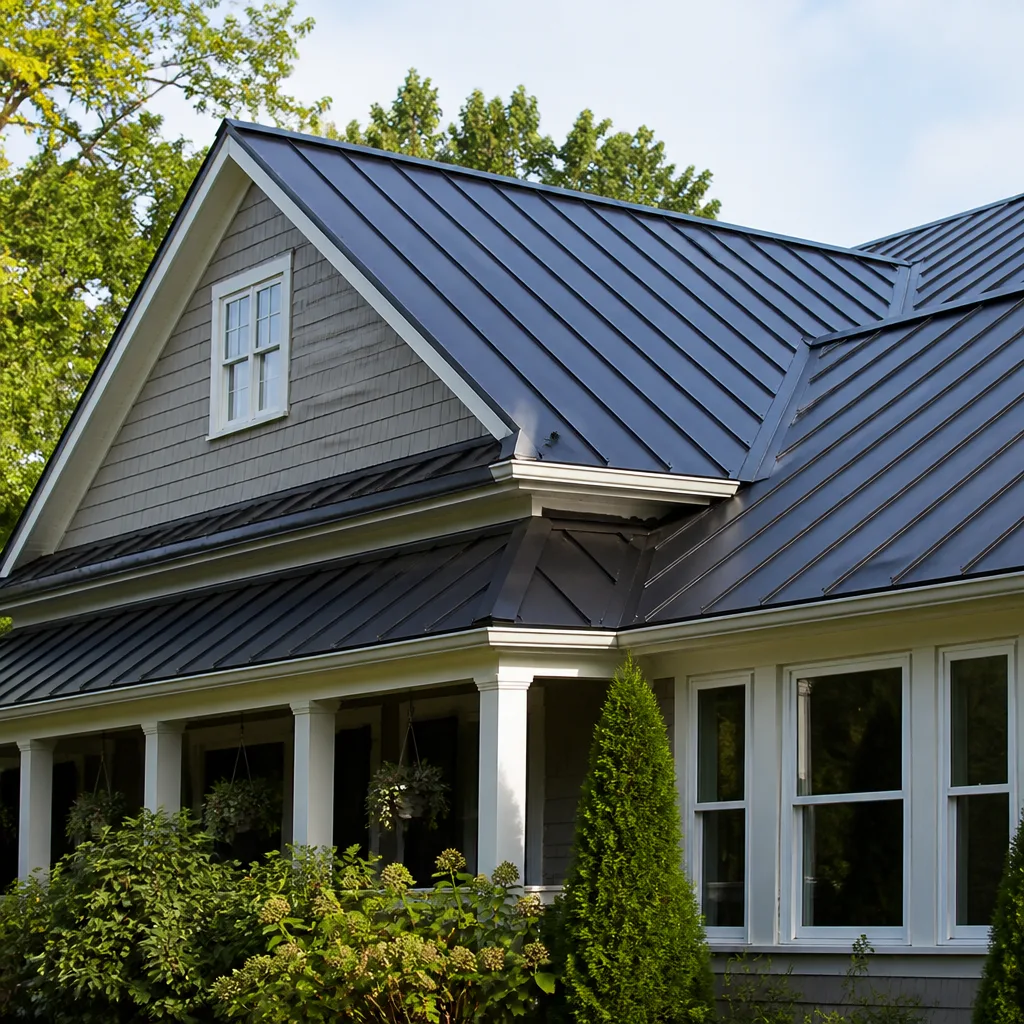 Metal roofing
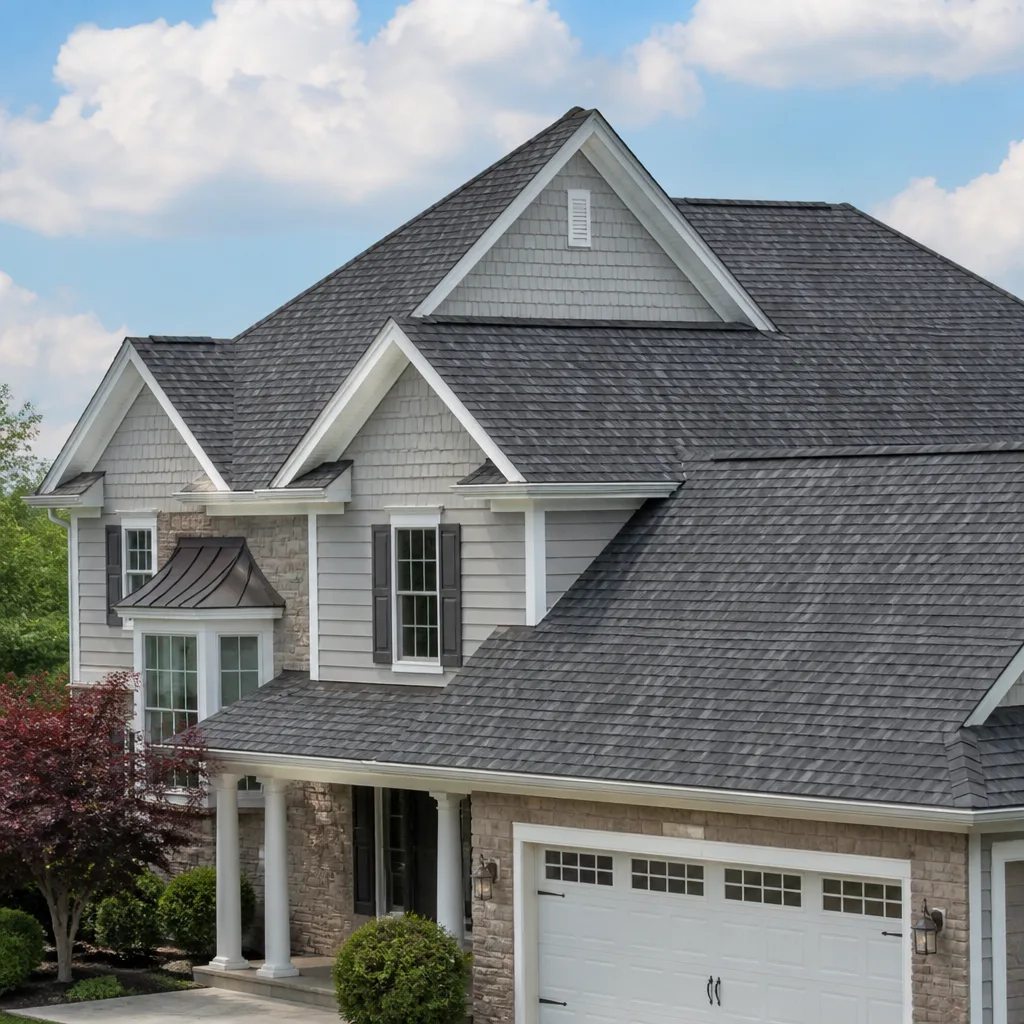 Architectural shingles
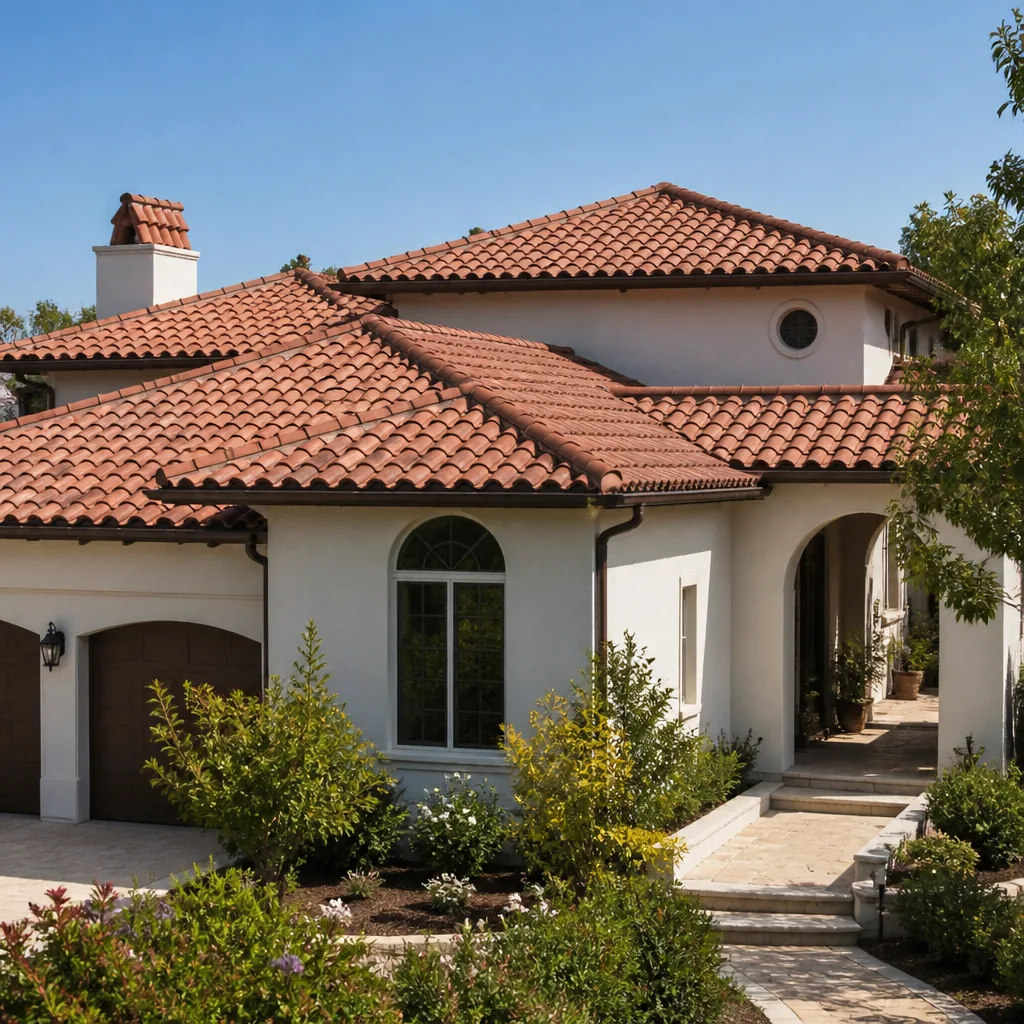 Tile roofing
 GAF
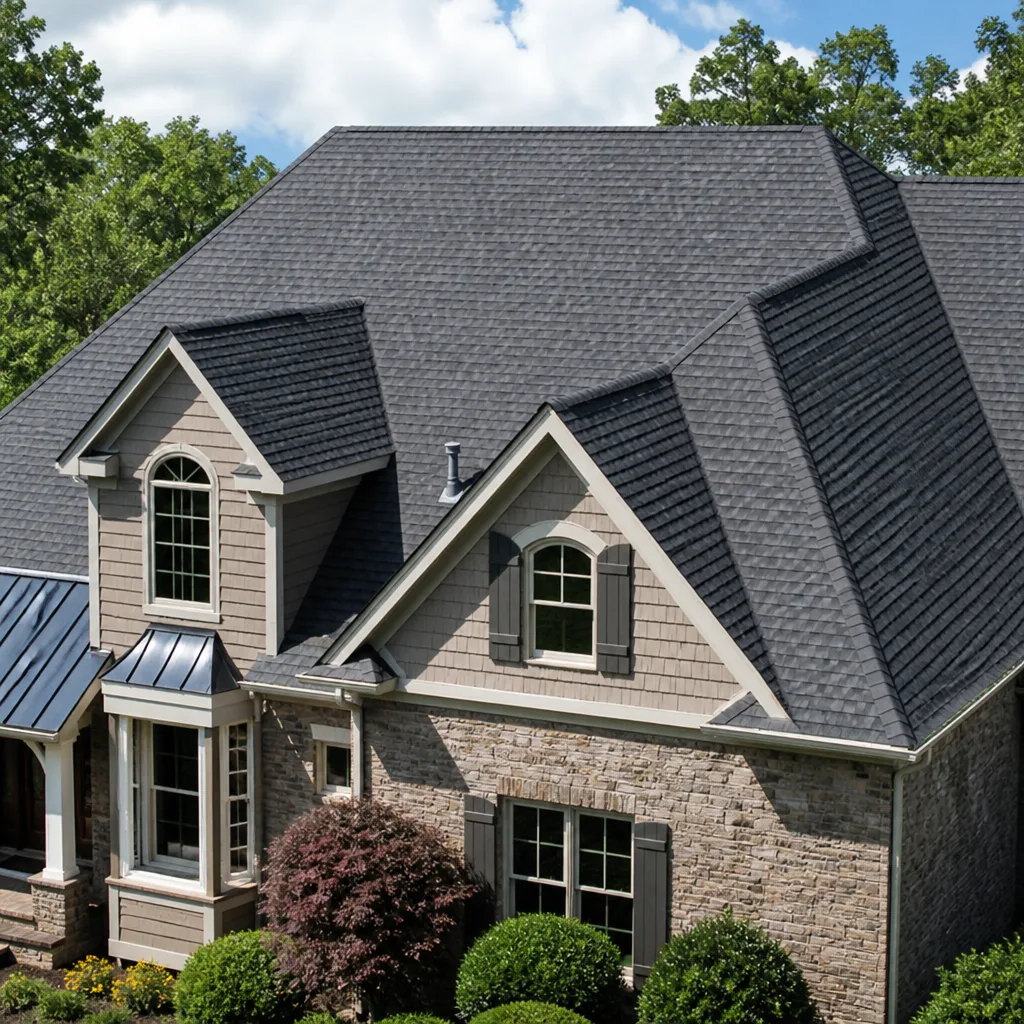 Owens Corning
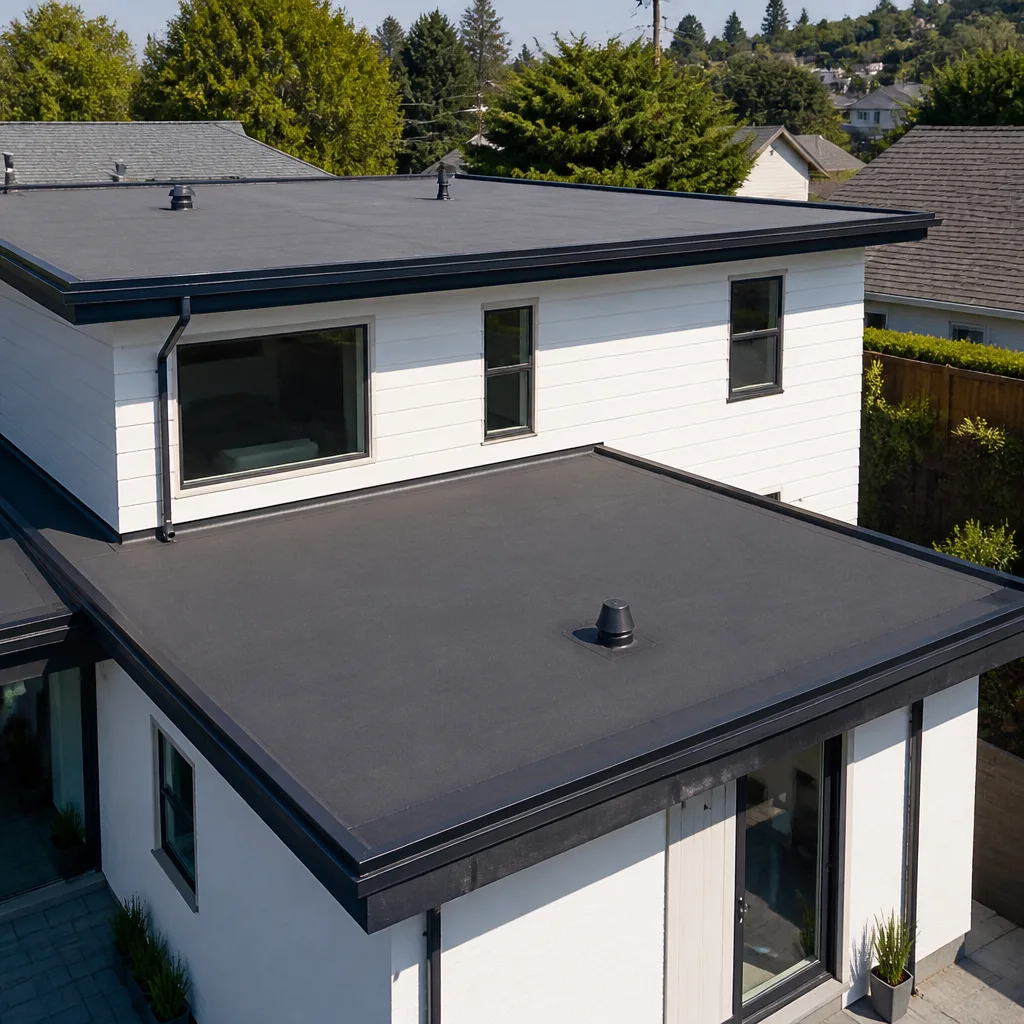 Flat & low-slope
Free roof inspection with deck photos before we talk money - GAF and Owens Corning certified installation
Roofing Cost Breakdown: The Boulder City Homeowner’s Reference for 2026
The gap between the cheapest and most expensive roofing quote in Boulder City is rarely explained by material quality. It’s usually explained by what the cheap quote left out of the line items, which you’ll pay for anyway, just later and without warning. A $9,400 bid and a $21,000 bid on the same 2,100-square-foot ranch house can describe the same roof. The difference is whether the tear-off, the dumpster, the drip edge, the permit fee, and the valley metal are inside the number or hiding behind it. This guide shows you what a real Boulder City roofing invoice looks like line by line, so you can judge a quote on what it actually covers instead of picking the smallest number and hoping.
Quick Answer
In 2026, most Boulder City homeowners pay roughly $550 to $750 per square (a square is 100 square feet of roof) for architectural composition shingle, $900 to $1,250 per square for concrete tile, and $700 to $1,000 per square for a modified bitumen flat roof with a proper base sheet and cap. Those ranges include tear-off, underlayment, flashing, and disposal. They do not include decking replacement, and they assume a standard-pitch roof that a crew can walk. Your exact number depends on the line items below, not on a national average pulled from a website that’s never seen a Boulder City summer.
Styles & brands we work with
- Architectural shingles
- Metal roofing
- Tile roofing
- GAF
- Owens Corning
- Flat & low-slope
Table of Contents
- What does roofing cost per square in Boulder City in 2026?
- The line items every legitimate Boulder City estimate should show
- Line items whose absence is a red flag
- Why material delivery costs more in Boulder City
- Manufacturer warranty vs. workmanship warranty in dollar terms
- How to use competing quotes as a vetting tool
- The local factors that move your number up or down
- Common mistakes to avoid
- Frequently asked questions
What does roofing cost per square in Boulder City in 2026?
Here’s the range we see on real estimates in Boulder City, broken out by the three roof types that dominate the town. A “square” is 100 square feet of finished roof surface, not house footprint, so a 2,000-square-foot single-story home with a simple gable roof typically measures 22 to 24 squares once you account for the pitch and overhangs.
- Architectural composition shingle: $550 to $750 per square installed. Standard on most 1970s through 2000s homes. GAF and CertainTeed are the two we set most often here.
- Concrete tile: $900 to $1,250 per square installed. Higher material weight and a slower install drive the number up, but the tile handles sun and monsoon hail better than asphalt.
- Modified bitumen flat (low-slope): $700 to $1,000 per square installed. Common on carports, additions, and mid-century flat-roof sections. The range swings on how many base sheets and how much taper the roof requires.
What pushes a Boulder City quote toward the top of its range: steep pitch that needs staging, a two-story elevation, tile that has to be hand-lifted because a truck can’t reach the side yard, and any rotted sheathing once the old material comes off. What pulls it down: a single-story ranch with wide access, a straightforward gable, and full tear-off that exposes clean decking.
For a deeper look at how these numbers apply to a full tear-off and rebuild, our Roof Replacement & Installation in Boulder City page walks through the process step by step.
The line items every legitimate Boulder City estimate should show
A real estimate is a list, not a lump sum. If you can’t see the parts, you can’t compare two bids on equal footing. Here are the line items we expect to see on any Boulder City quote worth taking seriously, and what each one actually represents in dollars and in risk.
- Tear-off and haul-off. Removing the existing layers, not roofing over them. In Boulder City, code and best practice both point hard at full tear-off, and a “layover” quote that skips this is the single biggest reason a cheap bid turns into a callback.
- Disposal and dumpster. A roof tear-off on a typical Boulder City house produces two to four tons of debris. Dumpster rental and Clark County disposal tipping fees run roughly $600 to $1,100 on a standard job and should be its own line.
- Underlayment. Synthetic underlayment has largely replaced felt, and it costs more. The line should name the product and the number of squares covered.
- Drip edge and valley metal. Galvanized or aluminum edging along the eaves and rakes, plus W-valley metal in the roof valleys. Cheap bids omit this; it’s a $400 to $900 line on a typical house and it’s what stops water from rotting your fascia.
- Flashing at penetrations. Vents, chimneys, skylights, and any pipe boots. Reused flashing is a leak waiting to happen, and new flashing should be spelled out.
- Permit fee. Pulled in the city’s name, paid by the contractor, shown as a line. A quote without a permit line is a quote that plans to skip the inspection.
- Ice and water shield. A peel-and-stick membrane at the eaves and in valleys. Less critical than in snow country, but standard on a good Boulder City install.
- Ridge vent or other ventilation. Roof ventilation matters more here than most homeowners realize, given the heat load. The line should say what’s being installed and how many linear feet.
When we write an estimate, every one of those gets its own line, and we show you the deck photos before we talk money. For repair-scale work, the same principle applies in miniature; our Roof Repair in Boulder City page covers what a repair ticket should show.
Line items whose absence is a red flag
You don’t need to know roofing to spot a thin bid. You just need to check for what isn’t there. When a quote arrives without these items, ask about them before you sign anything. The answer will tell you more about the contractor than the price did.
- No disposal line. Either the debris is going in your neighbor’s dumpster or you’re paying for it on the back end. There’s no third option.
- No permit fee. A contractor who skips the Boulder City permit is passing the risk to you. Unpermitted work can complicate a sale, an insurance claim, or a future inspection.
- No drip edge or valley metal. This is the most common omission in bargain bids. It saves the contractor a few hundred dollars and costs you a fascia repair within a few years.
- No underlayment specification. “Standard underlayment” is not a spec. You want a product name and a number of squares.
- No decking allowance. If the bid doesn’t say what happens when rotted sheathing is found, assume you’ll be surprised with a change order. A legitimate quote either states a per-sheet price for replacement or a fixed allowance.
- No workmanship warranty in writing. “We stand behind our work” is not a warranty. A written document with a term and a process is.
Any one of these is worth a question. Two or three together is a signal to get a second bid, and a free second opinion on a written estimate is always available from us.
Why material delivery costs more in Boulder City
Boulder City isn’t on a primary roofing distributor route. Most material yards that serve the Las Vegas valley sit 25 to 40 minutes away, and a delivery to Boulder City usually carries a mileage surcharge and a minimum order. That’s a real cost, and it’s a cost that has to live somewhere on the invoice.
What that means for you as a homeowner: a quote that shows a delivery line is honest, and a quote that doesn’t probably folded delivery into the per-square price without telling you. Either is acceptable. What isn’t acceptable is discovering the surcharge after the material lands in your driveway. Ask any bidder how they’re handling delivery to your address specifically, and whether the per-square number already includes it.
There’s a second Boulder City wrinkle: haul distance also affects removal. A dumpster dropped here and hauled back to a valley landfill carries the same mileage math. That’s part of why the disposal line on a Boulder City job runs a bit higher than a comparable job in Henderson. It’s not padding. It’s the drive.
Material choice factors in too. Concrete tile weighs considerably more per square than shingle, and a heavier load means either more delivery trips or a larger truck, both of which show up in the price. If you’re weighing tile against shingle on a Boulder City home, our Metal Roofing in Boulder City page is a useful comparison point for how a lighter, longer-lived alternative prices out.
Manufacturer warranty vs. workmanship warranty in dollar terms
These are two different documents, and they cover two different failures. Confusing them is one of the most expensive mistakes a homeowner can make, because the moment you need one, the paperwork has to actually name the right party.
The manufacturer warranty covers the shingle or tile itself. If the material fails, the manufacturer replaces the material. What it typically does not cover is the labor to tear off the failed roof and install the replacement. On a $14,000 roof where the shingles fail in year 12, the material might be worth $3,000 to $4,000 and the labor to replace it might be $9,000 to $10,000. Those dollars come out of your pocket if labor isn’t covered.
The workmanship warranty covers the installation. If the leak is caused by a nail driven in the wrong spot, a valley built wrong, or a flashing detail that was rushed, the workmanship warranty is what compels the contractor to come back and fix it. It is worth exactly as much as the company standing behind it is worth. A 30-year workmanship warranty from a contractor who’ll be gone next spring is wallpaper.
Here’s the paperwork gap that costs people real money: manufacturer warranties almost always require installation by a contractor following the manufacturer’s spec, and proof of that spec. If the contractor skipped the underlayment or the ventilation, the material warranty may be void on a technicality. Before you sign, ask three questions: who honors the workmanship warranty, for how many years, and in what written form. Our own answer is the 90-Day Done Right Promise, in writing on every roofing job: if it’s not done right, one call brings Bill back.
How to use competing quotes as a vetting tool
Two quotes on the same roof that differ by more than 15% are not a pricing problem. They’re a scope problem, and the gap tells you exactly where to look. Rather than treating the lower number as the winner and the higher one as the loser, use the difference as a starting point for a short set of questions.
- Ask each bidder to mark which line items they included. A written comparison against the list above will usually explain the gap in one pass.
- Ask what happens if rot is found. Get the per-sheet price or the allowance in writing, from both.
- Ask who pulls the permit. Confirm the permit will be in the city’s name and inspected.
- Ask for the workmanship warranty, in writing. Term and process, not a promise.
- Ask for two local references from the last twelve months. Not from ten years ago. Recent ones you can call.
- Ask the address question. Where is the shop, and is it the same address it was five years ago? Storm chasers don’t have an answer. Same address since 1996. Ask the storm chasers where theirs is.
If a bidder can’t answer all six questions in writing, that’s your answer. The lowest bid and the highest bid both improve dramatically once you’ve walked them through this list, because the honest ones will happily update their paperwork.
The local factors that move your number up or down
A roofing quote in Boulder City is not the same as a quote in a cooler, wetter climate, and it’s not the same as a quote in the flat, treeless parts of the valley. A handful of local factors do most of the moving.
- Sun and heat load. Boulder City roofs take serious UV. That’s why we see asphalt shingles chalk and crack faster here than the manufacturer’s rating suggests, and why underlayment and ventilation are not optional line items. A roof that runs hot from poor ventilation shortens its own life.
- Monsoon wind and hail. Late-summer storms track through the Eldorado Valley and can push wind-driven rain sideways under flashing. The nailing pattern earns the wind rating, not the shingle wrapper, so the installation spec matters more than the brand name.
- Older housing stock. A meaningful share of Boulder City homes predate 1980, and many have one or two layers of roofing already on them. A roof with three layers is a heavier tear-off, a bigger dumpster, and more disposal fees than a roof with one.
- Historic district considerations. If your home sits within the historic district, material choices may be constrained by appearance guidelines, which can nudge you toward tile or a specific profile. Worth checking before you commit to a shingle.
- Decking condition. Desert heat and dry rot under old flashing mean sheathing replacement is more common here than the national average suggests. A bid with a fair per-sheet decking price is a bid from someone who’s worked on Boulder City roofs.
Trusted brands like GAF, CertainTeed, Owens Corning, and Boral all make products that perform well here when installed correctly. The brand matters less than the spec, the ventilation, and the flashing detail. For an overview of everything we do, see our Shepherd & Sons Roofing Boulder City home page.
See the difference
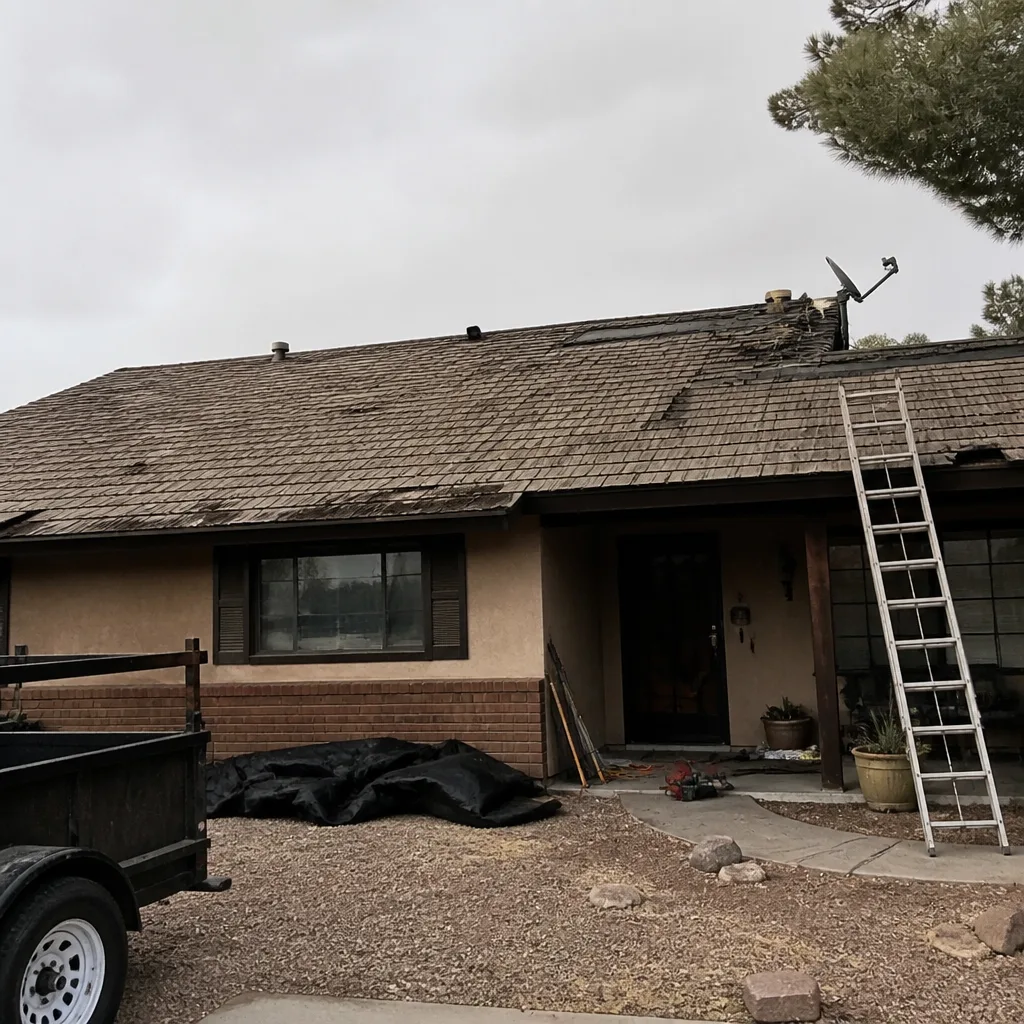 Before
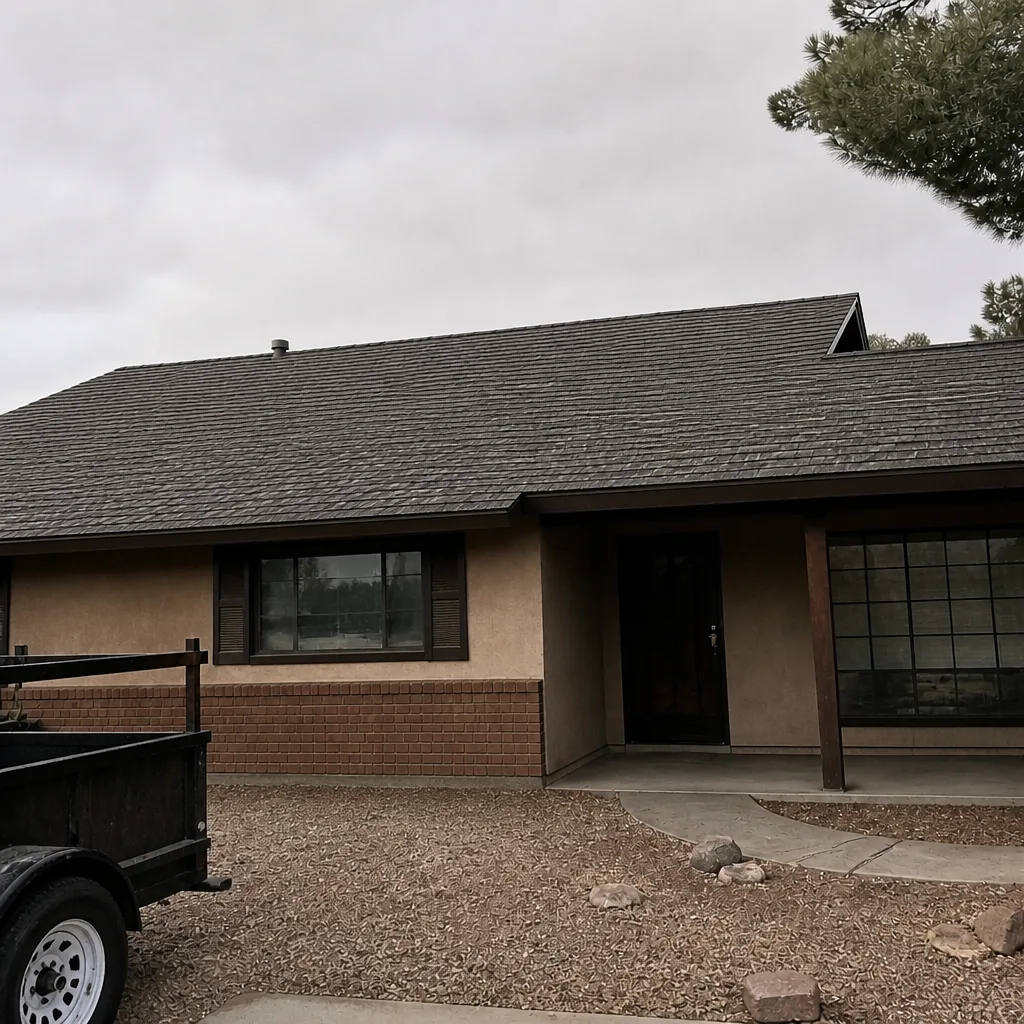 After
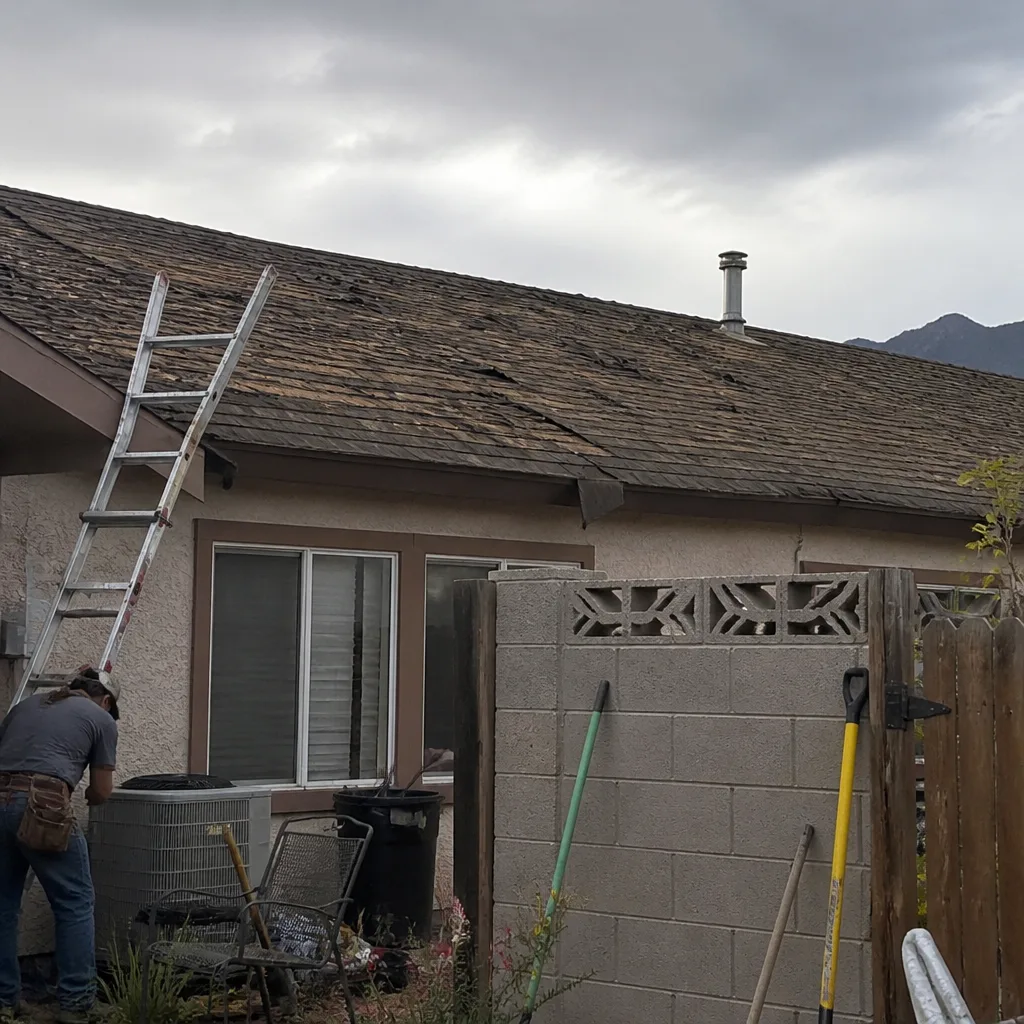 Before
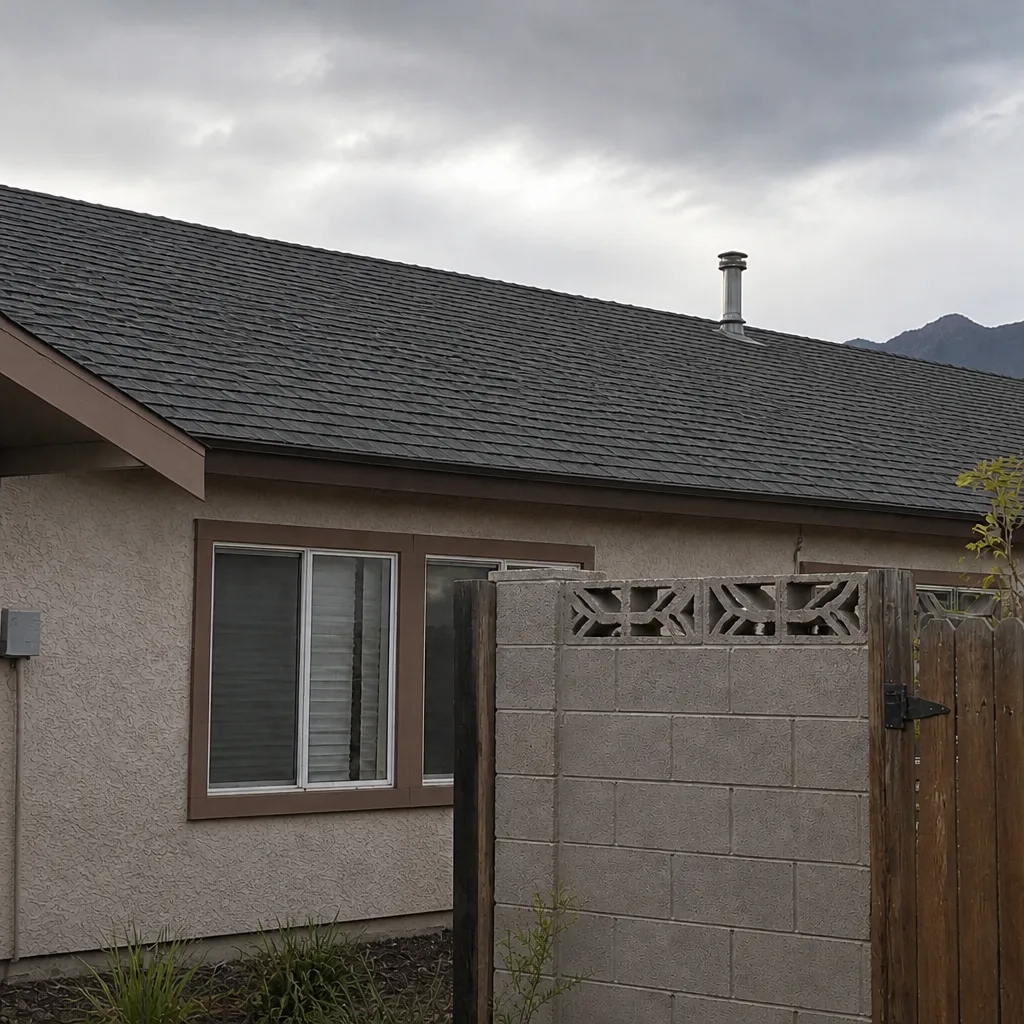 After
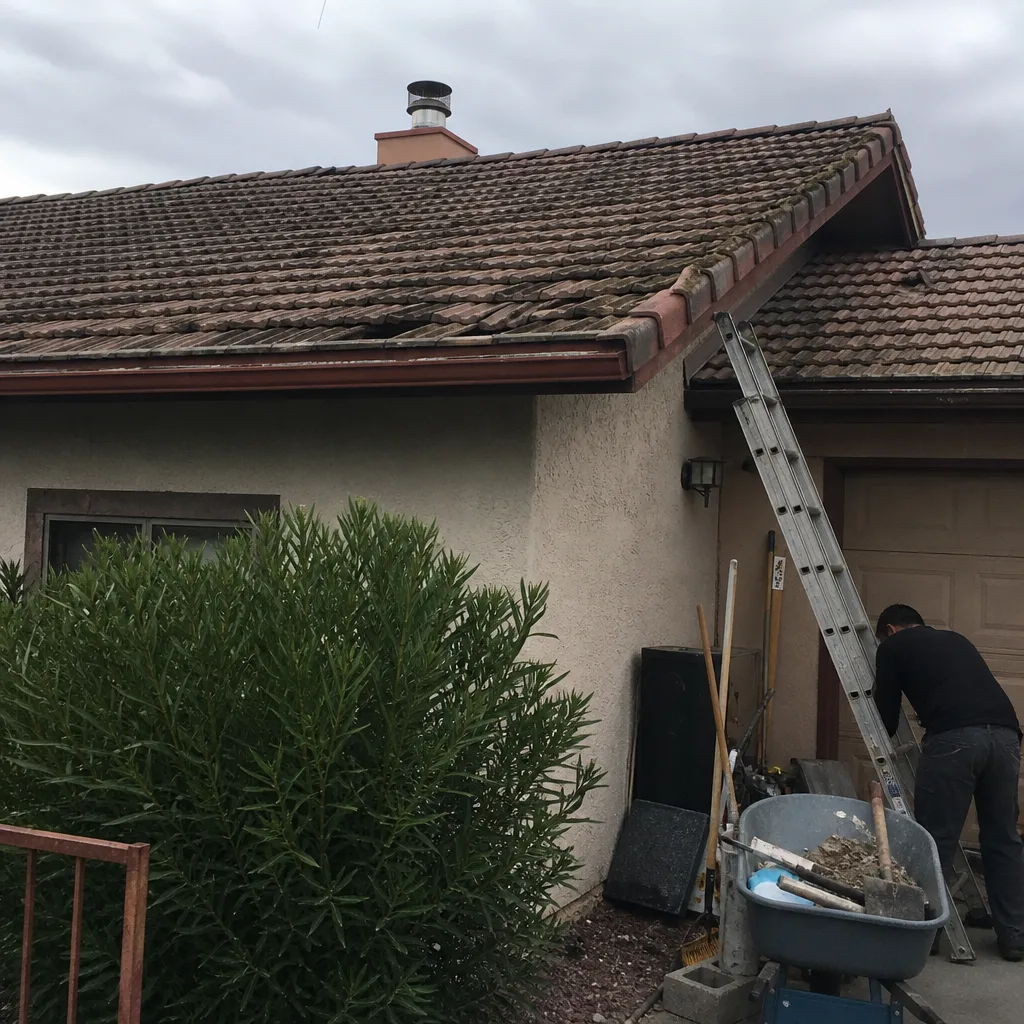 Before
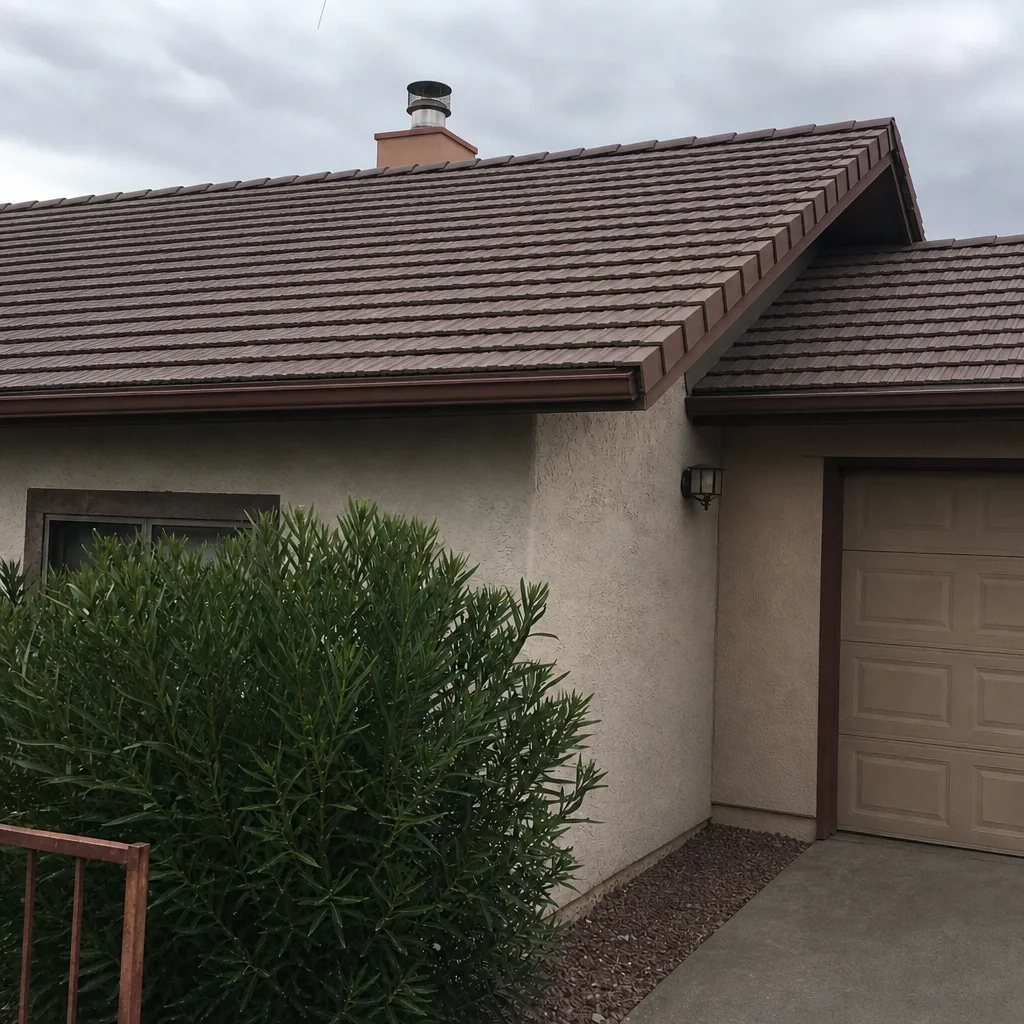 After
Common Mistakes to Avoid
- Choosing on price alone. The lowest bid on a Boulder City roof is almost always the one missing disposal, drip edge, and the permit. You’ll pay those costs eventually, plus the labor to redo someone else’s work. Compare line items, not totals.
- Skipping the permit to save the fee. A few hundred dollars in permit fees protects you at resale and during an insurance claim. Unpermitted roofing is a problem you inherit, not the contractor.
- Accepting “standard underlayment” as a spec. Ask for the product name and the number of squares. A real contractor will name it in thirty seconds.
- Not asking about decking rot up front. Our desert heat is hard on sheathing, and old flashings are the usual culprit. Get the per-sheet replacement price in writing before the tear-off starts.
- Confusing the manufacturer warranty with the workmanship warranty. They cover different failures. If you can’t name both in writing, you don’t have either.
- Letting the crew roof over the old layer to save money. A layover looks like a bargain and rarely is. It traps heat, hides rot, and shortens the life of the new roof.
- Hiring a storm chaser with a Las Vegas P.O. box and no address in town. Ask where the shop is, whether it was there last year, and who answers the phone after the storm passes. A roofer you’ll see at the hardware store on Saturday is a roofer who answers for the work.
When to Call a Professional
Some roofing questions are worth a phone call before you climb a ladder. If you see granules collecting at the bottom of your downspouts, curling shingles on the south-facing slope, or a water stain on a ceiling after a monsoon, get someone out to look. The same goes for any bubbling or cracked caulk around a vent or chimney flashing, sagging decking visible from the street, or a roof that’s older than the material’s rated life. Torn or missing shingles after a wind event are worth a same-week call, especially before the next storm. High-tension springs and cables, and any work near a steep roof or a live electrical mast, should always be handled by a trained roofer, never attempted from a ladder with a tube of caulk. Shepherd & Sons Roofing Boulder City offers free estimates in Boulder City. Call (844) 761-8186 and a live person will answer, day or night.
Frequently Asked Questions
Most Boulder City roof replacements run roughly $12,000 to $20,000 for a standard single-story home on composition shingle, with tile and heavier material pushing higher and simple ranch roofs landing lower. The range is wide because the line items vary: tear-off layers, decking condition, disposal, and access all move the number. Call (844) 761-8186 for an exact quote on your address. Estimates are free.
Not if the estimate is written correctly. A legitimate Boulder City quote states what happens when rot is found, either as a fixed per-sheet decking price or a stated allowance, and it lists every line item up front. A quote that doesn’t do this will change when the tear-off exposes something. Call (844) 761-8186 and we’ll walk you through the estimate line by line before a single shingle comes off.
Yes. A real Boulder City roofing job requires a permit, and it should be pulled in the city’s name and inspected. If a bidder offers to skip the permit to save the fee, that’s a bid worth declining. Call (844) 761-8186 with any questions about permits and inspections.
A typical single-story composition shingle roof on a Boulder City home takes two to four days for tear-off and install, weather permitting. Tile and steeper roofs run longer, often five to seven working days, because material is heavier and slower to set. Schedule the walkthrough before the job starts so you know what to expect on day one. Call (844) 761-8186 to get on the calendar.
The most common reason a Boulder City quote comes in far cheaper is that it’s missing disposal, drip edge, valley metal, and the permit fee, or it plans a layover instead of a full tear-off. The second most common reason is a different decking assumption. Ask both bidders to itemize against the same list and the gap usually explains itself. Call (844) 761-8186 for a free second opinion on any written estimate.
You need both, and they cover different things. The manufacturer warranty covers the material; the workmanship warranty covers the installation, which is where most leaks actually start. Ask for the workmanship warranty in writing, with a term and a process. Every job we do is backed by the written 90-Day Done Right Promise: if it’s not done right, one call brings Bill back. Call (844) 761-8186 to talk through the warranty on your specific roof.
The Bottom Line
A Boulder City roofing quote isn’t a number, it’s a list. The line items above – tear-off, disposal, drip edge, valley metal, permit, underlayment, flashing, ventilation, and a written workmanship warranty – are what separate an honest estimate from a cheap one that costs more in the end. Expect roughly $550 to $750 per square for composition shingle, $900 to $1,250 for concrete tile, and $700 to $1,000 for modified bitumen in 2026. Compare bids on scope, not on totals. Ask the address question. And when two quotes differ by more than 15%, ask the six questions before you sign.
If you want a real line-item estimate on your Boulder City roof, call (844) 761-8186. A live person answers 24/7, and estimates are free. Same address since 1996, published license number, and the name on the truck is the name on the license.
Written by the team at Shepherd & Sons Roofing Boulder City.