
Last updated November 17, 2026
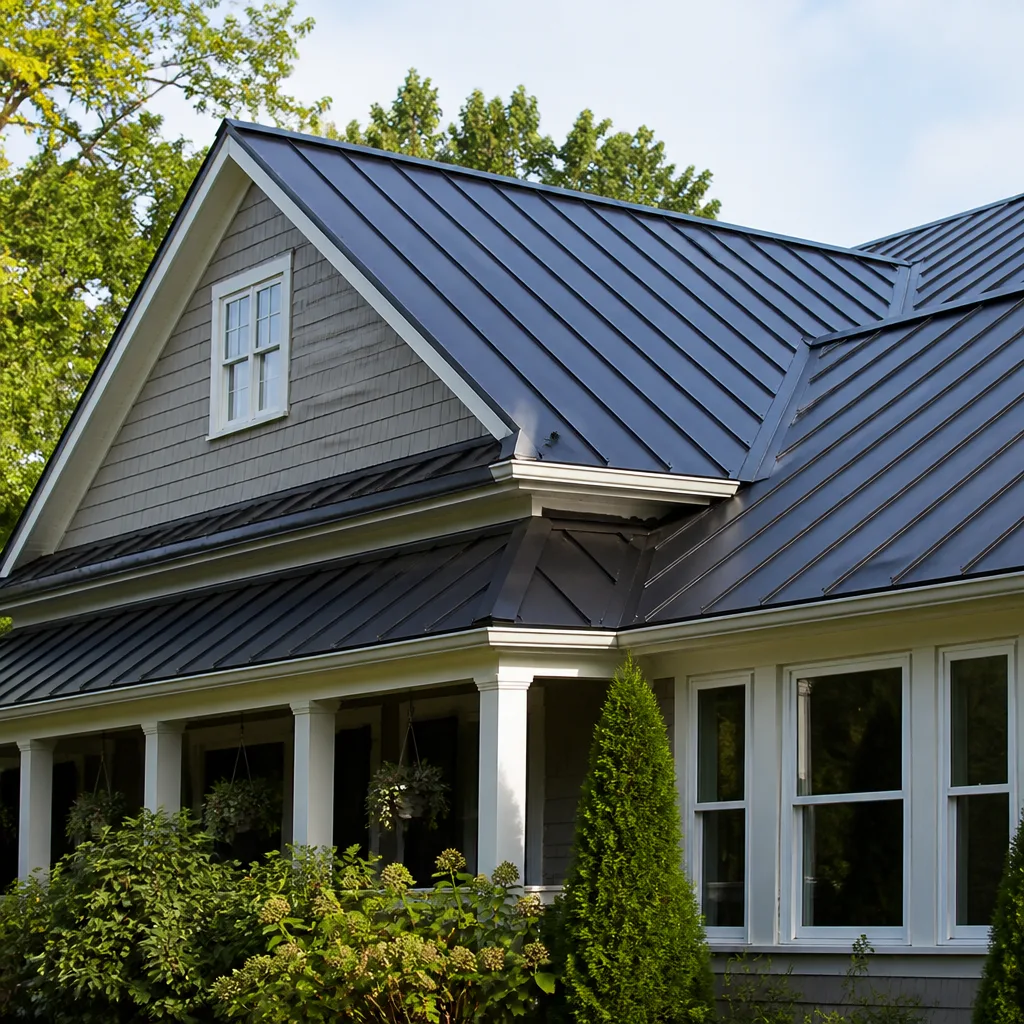 Metal roofing
 Architectural shingles
 Tile roofing
 GAF
 Owens Corning
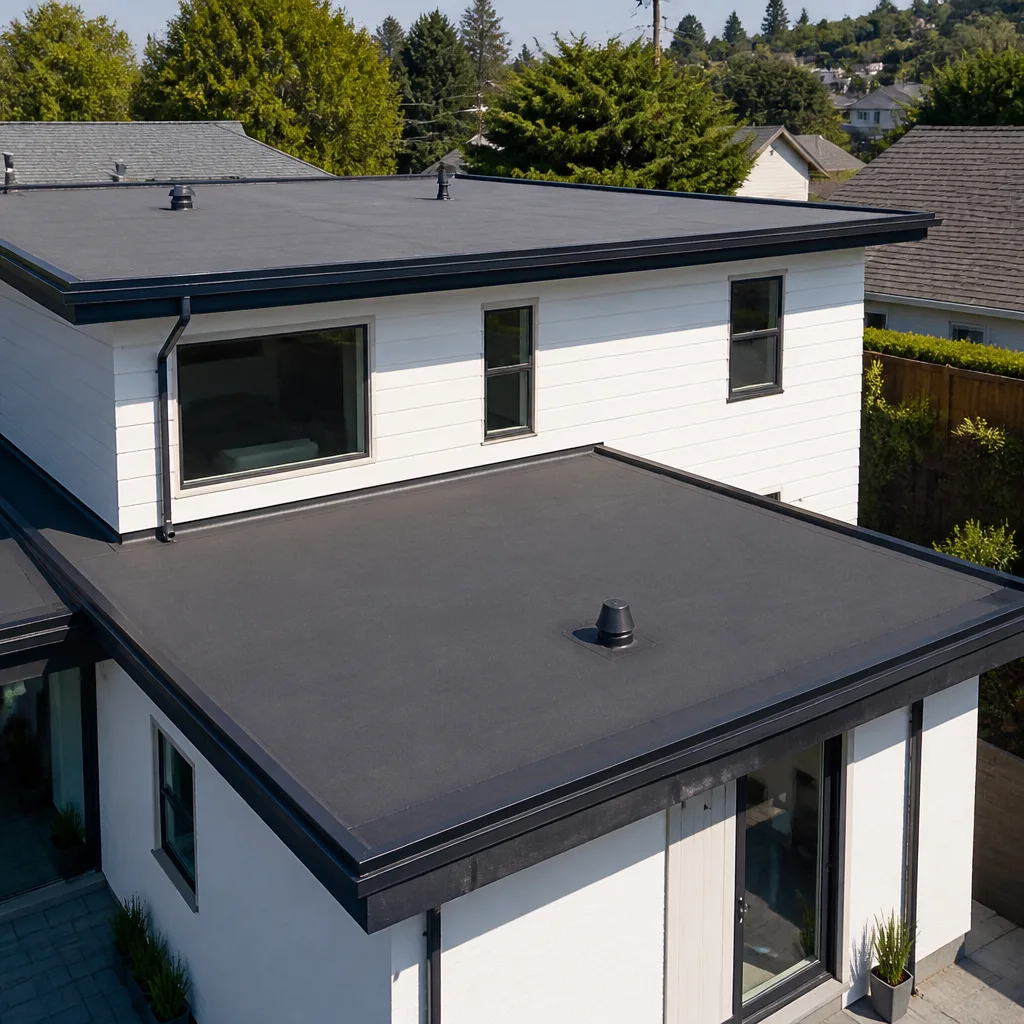 Flat & low-slope
Free roof inspection with deck photos before we talk money - GAF and Owens Corning certified installation
Specialty Roofing Maintenance Schedule: What to Do and When
A foam roof in Boulder City without its reflective coating is like sunscreen that wore off at 10 AM. The roof looks fine. It’s not. UV damage is already working under the surface, and by the time you see it, usually right before monsoon season rolls in, you’re looking at a restoration bill instead of a maintenance bill. That’s the part most homeowners don’t hear until it’s too late: specialty roofs – foam, metal, flat membrane – each run on their own maintenance clock, and that clock is set by material chemistry, not by the calendar the manufacturer printed for Minnesota. This guide lays out what each system needs, how often, and how Boulder City’s sun and dust push those intervals shorter than the spec sheet says.
Quick Answer
Specialty roofs in Boulder City need maintenance on a shorter cycle than most manufacturer specs recommend because our UV index and dust load run well above national averages. Spray polyurethane foam (SPF) roofs need coating inspection twice a year and recoating every 5 to 7 years; metal roofs need fastener and seam checks annually plus paint touch-ups every 8 to 12 years; flat membrane roofs (TPO, EPDM, modified bitumen) need seam and drain inspections twice a year. The single most important habit is a written maintenance log tied to each inspection.
Styles & brands we work with
- Architectural shingles
- Metal roofing
- Tile roofing
- GAF
- Owens Corning
- Flat & low-slope
Table of Contents
- Why a Desert Maintenance Schedule Looks Different
- Spray Foam (SPF) Roofs: The Coating Is the Roof
- Metal Roofs: Fasteners, Seams, and Paint
- Flat Membrane Roofs: TPO, EPDM, and Modified Bitumen
- The Post-Monsoon Inspection Checklist for Each System
- What Preserves a Warranty (and What Quietly Voids It)
- Building a Maintenance Log That Protects You
- The Full-Year Calendar at a Glance
Why a Desert Maintenance Schedule Looks Different
Most specialty roofing products come with maintenance intervals written for a climate with four seasons, moderate UV, and regular rain. Boulder City gives you none of that. Our UV index regularly climbs into the extreme range through late spring and summer, and desert sun breaks down elastomeric coatings and paints faster than the generic spec sheet accounts for. Add the wind-driven dust off the McCullough Range and the occasional haboob that sands the whole valley, and your roof is being abraded a little every week.
Then there’s the monsoon. When moisture does arrive, it arrives sideways and hard. A flat or low-slope roof in Boulder City that handles December drizzle easily can pond water against a failed seam in August. That’s why we shorten intervals rather than stretch them. In our experience, a specialty roof that sees a proper inspection schedule in Boulder City routinely outlasts one that’s maintained by the book for a northern climate.
Here’s the practical translation:
- UV exposure: Coating and paint life runs 15 to 25 percent shorter than manufacturer tables suggest.
- Dust abrasion: Surface wear on foam coating and metal paint accelerates, so visual checks need to be more frequent.
- Monsoon loading: Water intrusion risk spikes in July and August, so the inspection that matters most happens in June, not spring.
- Thermal swing: Boulder City summer days swing 30 degrees or more between afternoon high and overnight low, which works fasteners and seams loose over time.
Spray Foam (SPF) Roofs: The Coating Is the Roof
On a spray polyurethane foam roof, the foam provides insulation and the coating provides protection. The foam itself will degrade under UV within a couple of seasons if the coating fails. That’s the whole story. A foam roof isn’t maintained by patching foam; it’s maintained by keeping the coating intact. Once UV gets through, the foam beneath starts to chalk and pit, and repairs go from recoating to re-foaming, which costs meaningfully more.
What a foam roof needs and how often
- Twice-yearly inspection – spring (before monsoon) and fall (after summer). Look for coating wear, blisters, and any spot where the surface has gone chalky or dull.
- Recoating every 5 to 7 years in Boulder City, shorter if the roof is on the south or west exposure where UV hits hardest.
- Drain and scupper cleaning twice a year, more if you have trees or you’ve had a dust event.
- Spot repairs as soon as you find a nick, a seam lift, or a screw backing out of a penetration. Small now, cheap now.
One thing to know about Boulder City: the reflective coating does double duty. It protects the foam, and it reflects heat, which keeps your attic and cooling bills in check. When the coating dulls, you feel it inside before you see it outside.
Metal Roofs: Fasteners, Seams, and Paint
Metal roofing is the low-maintenance option, but low isn’t none. Standing seam and exposed-fastener metal both live in a high-thermal-cycle environment here, and the movement works the details – fasteners, sealant, and paint – long before the panels themselves give you trouble. Metal can last decades, and a schedule keeps it that way.
What a metal roof needs and how often
- Annual inspection of every fastener and seam. On exposed-fastener systems, look for backed-out screws and perished washers.
- Seam and sealant check annually, and resealing of any laps, valleys, or penetrations every 3 to 5 years.
- Paint touch-up every 8 to 12 years on painted systems, sooner on south-facing panels that chalk first.
- Gutter and debris clearing at least twice a year, more before monsoon.
Brand matters here. If your roof is a Boral or CertainTeed metal system, the panel finish has a specific recoat window, and matching the original coating protects the finish warranty. Panels from GAF and Tamko show up on plenty of Boulder City homes too, and each wants its fasteners and sealants checked on slightly different intervals. We install and inspect all of them.
Flat Membrane Roofs: TPO, EPDM, and Modified Bitumen
Flat and low-slope membrane roofs – TPO, EPDM, and modified bitumen – are common on additions, porches, and commercial-leaning structures around Boulder City. They fail at the details: seams, penetrations, and drains. The membrane itself usually holds up; it’s the edges that let water in, and in a climate with occasional hard rain, one failed seam is all it takes.
What a flat membrane roof needs and how often
- Twice-yearly inspection, with the pre-monsoon check in June being the critical one.
- Seam check on every lap and heat-welded joint, looking for lifting or separation.
- Drain and scupper clearing twice a year, and again after any haboob or heavy dust event.
- Penetration and boot check around vents, HVAC curbs, and pipes, where leaks start.
- Ponding assessment after rain. Standing water older than 48 hours is a problem to fix, not ignore.
TPO and EPDM both respond well to prompt seam repair. Modified bitumen wants its flashing and granule surface checked a little more often because the sun wears the surface and the seams together.
The Post-Monsoon Inspection Checklist for Each System
The inspection after monsoon season matters as much as the one before. A haboob sands your roof and pushes grit into every seam and drain. Then the rain tests everything the dust loosened. Here’s what to look for on each system in Boulder City.
Foam (SPF)
- Chalking, dulling, or color fade on the coating – the first sign UV is winning.
- Blisters or bubbles where water got under the coating.
- Ponding in low spots that didn’t drain after the storm.
- Debris trapped against parapets and penetrations.
Metal
- Fasteners backed out or washers compressed and perished.
- Granule or grit trapped in seams, holding moisture.
- Paint scuffed or chipped by wind-driven sand.
- Panels lifted or oil-canned from uplift.
Flat Membrane
- Seams lifted or separated, especially on the windward edge.
- Drains and scuppers clogged with dust and debris.
- Ponding water that hasn’t drained within 48 hours.
- Flashing pulled loose at curbs and penetrations.
What Preserves a Warranty (and What Quietly Voids It)
Manufacturer warranties on specialty roofing systems are conditional. They don’t just cover the product; they cover it under a set of maintenance obligations. Miss those, and the warranty is still on paper but won’t pay when you need it. For Boulder City homeowners, this is the part the fine print is really about.
What typically preserves the warranty
- Documented annual or twice-yearly inspections with dates, findings, and who performed them.
- Using approved coatings and sealants matched to the system – not a generic tube from the hardware store.
- Drain and debris maintenance done on schedule, since clogged drains that lead to failure are usually excluded.
- Prompt repair of small issues before they become structural.
What commonly voids it
- Foot traffic or storage on the roof that damages the surface.
- Unauthorized repairs, patches, or coatings that don’t match the system.
- Adding penetrations or equipment without proper flashing.
- No maintenance record at all, even if the roof looks fine.
If your roof was installed with a foam or membrane system under a GAF or CertainTeed warranty, keep every inspection slip. It’s the difference between a covered repair and a bill.
Building a Maintenance Log That Protects You
A maintenance log is a simple, unglamorous document that pays for itself twice: once at insurance-claim time and once at resale. It doesn’t need software. A three-ring binder works.
- Record the basics for each entry: date, system type, inspector, what was found, what was done, and materials used.
- Keep receipts for every coating, sealant, and repair. Attach photos – before and after.
- Note weather events. After a haboob or a hard monsoon, write down the date and what you checked. That record is gold during a storm-damage claim.
- File warranty documents in the same binder, with the install date and product names.
- Carry it to resale. A documented specialty roof with a clean maintenance history is a selling point, not a question mark, when a buyer’s inspector looks at a foam or flat roof.
We’ve seen Boulder City insurance claims get approved quickly because the homeowner had dates and photos, and we’ve seen them stall for weeks without them. Build the log. It’s the cheapest roof protection you’ll ever buy.
The Full-Year Calendar at a Glance
Here’s how the schedule lands across a Boulder City year. Use this as the starting point and adjust for roof age and exposure.
- March: Spring inspection. Foam coating check, metal fastener check, flat seam check. Clean drains.
- May: Any recoating or resealing needed before summer UV peaks. This is the last good window before the heat.
- June: The pre-monsoon inspection. This is the one that matters most.
- July-August: Watch for storm damage. Clear drains after any haboob. Note dates in your log.
- September: Post-monsoon inspection. Full checklist for your system.
- October-November: Fall maintenance. Touch up metal paint, recoat foam if due, reseal flat penetrations.
- December-February: Quiet season. Review your log, plan for anything found in the fall.
Common Mistakes to Avoid
- Treating a foam roof like a shingle roof. You can’t just patch it and forget it. The coating is the roof, and if you let it degrade, you’re re-foaming, not recoating.
- Following the manufacturer’s northern-climate interval. Bumping from annual to every-other-year because the spec sheet says so is how Boulder City foam roofs fail early.
- Skipping the pre-monsoon inspection. The June check is the one that catches the problems before the rain finds them.
- Letting a “handyman” patch a specialty system. The wrong sealant on a TPO or a foam coating can void the warranty and make the eventual repair bigger.
- Keeping no maintenance record. No dates, no photos, no receipts means no warranty protection and a harder insurance claim.
- Ignoring small ponding. Water standing more than 48 hours after a Boulder City storm is a symptom, not a coincidence.
- Letting the storm chasers talk you into a full tear-off. A run-down specialty roof often just needs maintenance – not replacement sold at the door.
See the difference
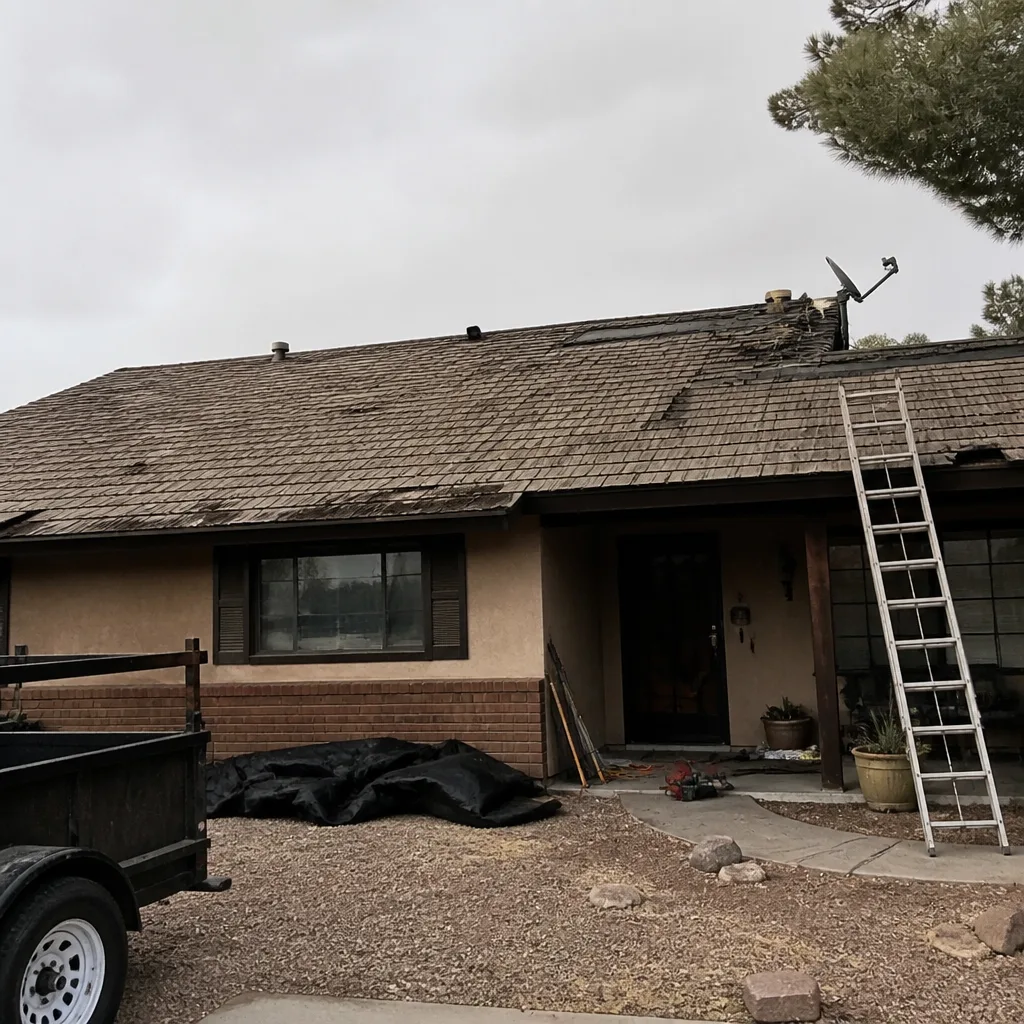 Before
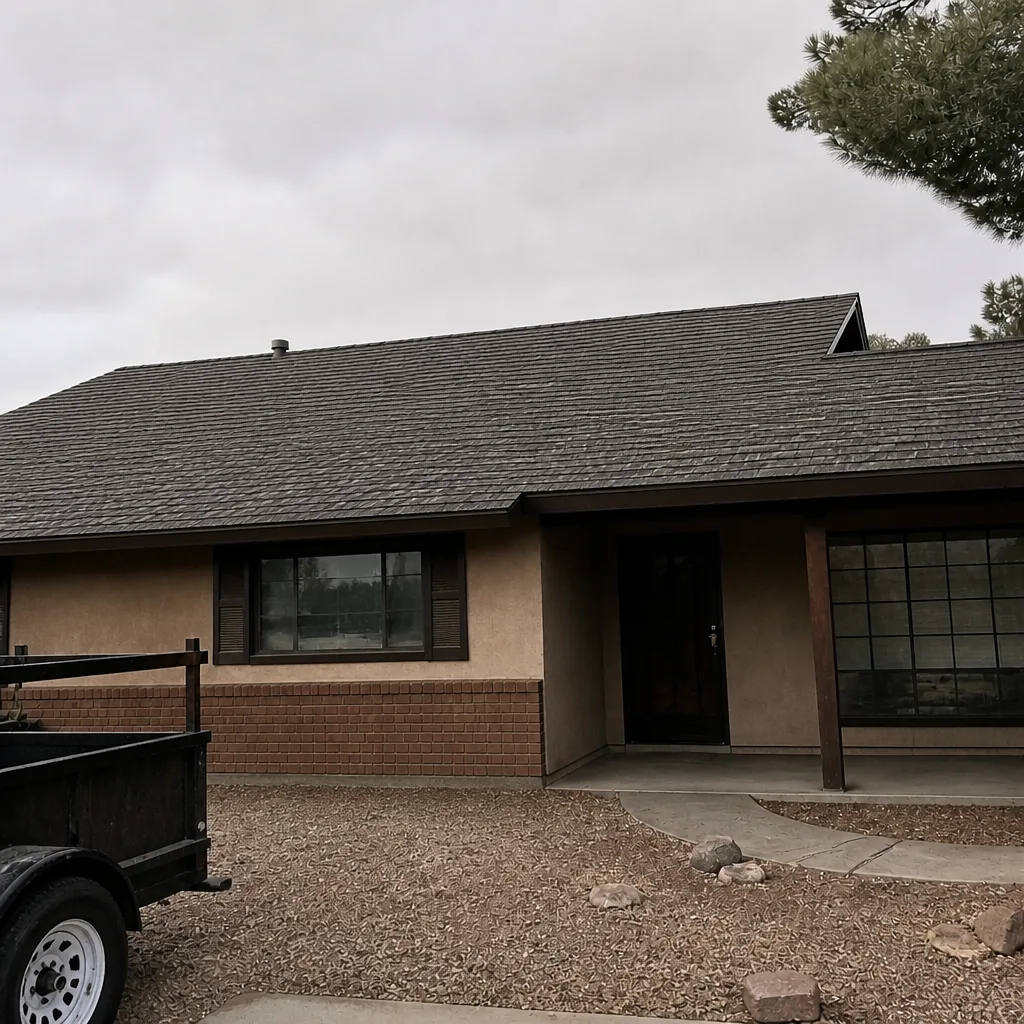 After
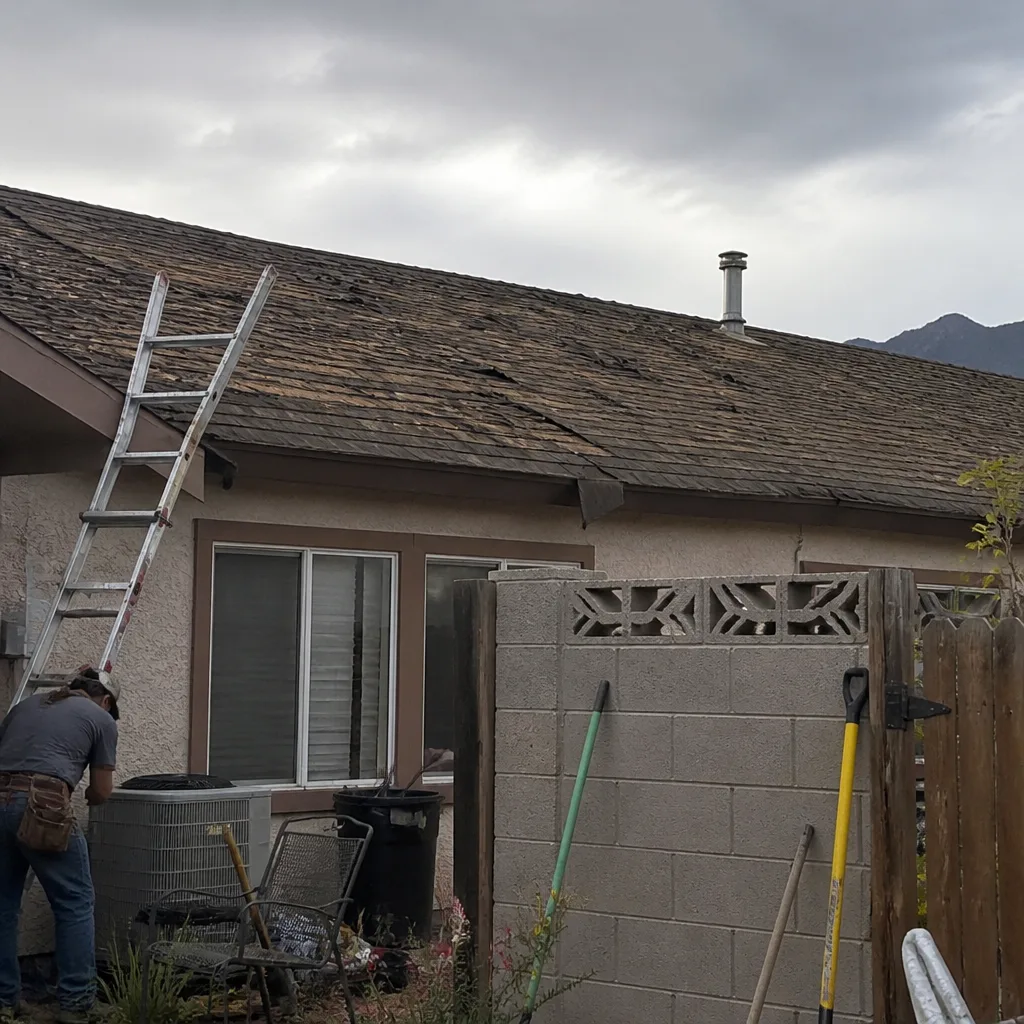 Before
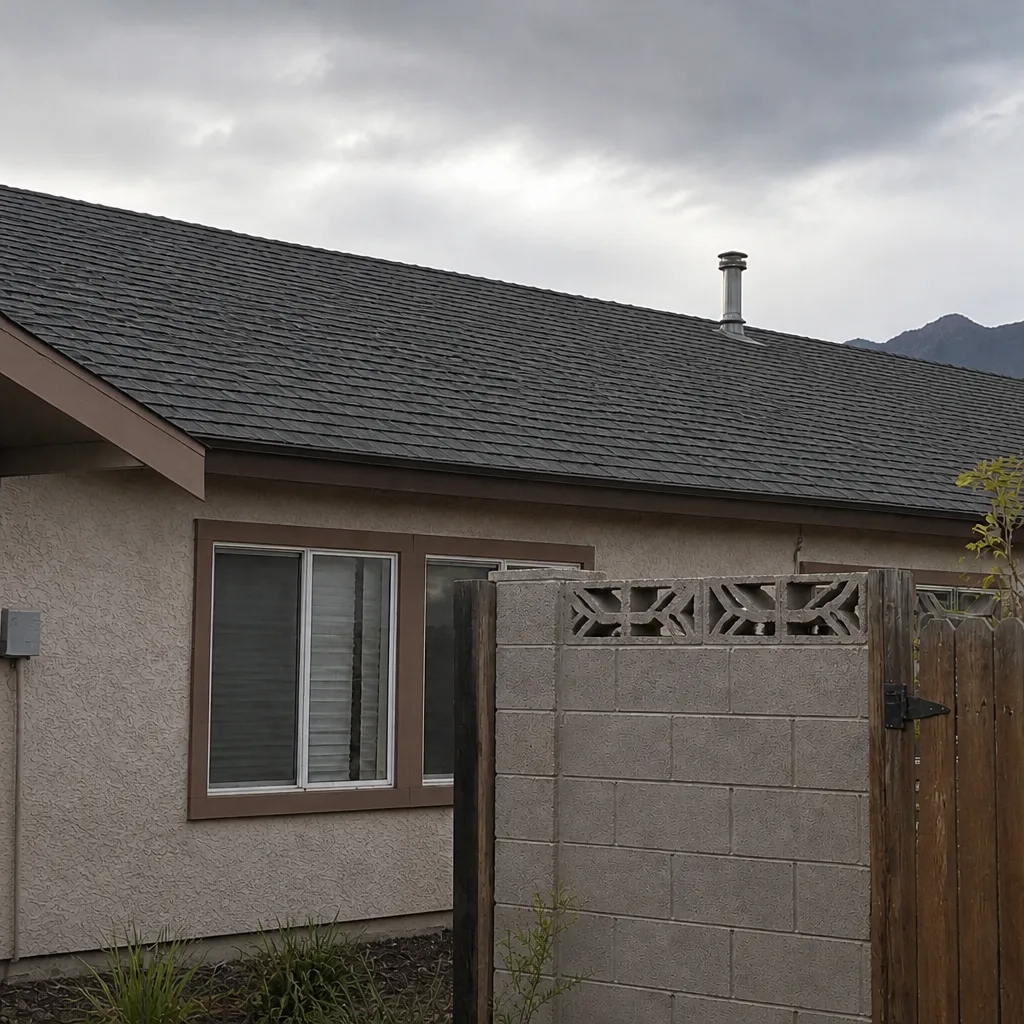 After
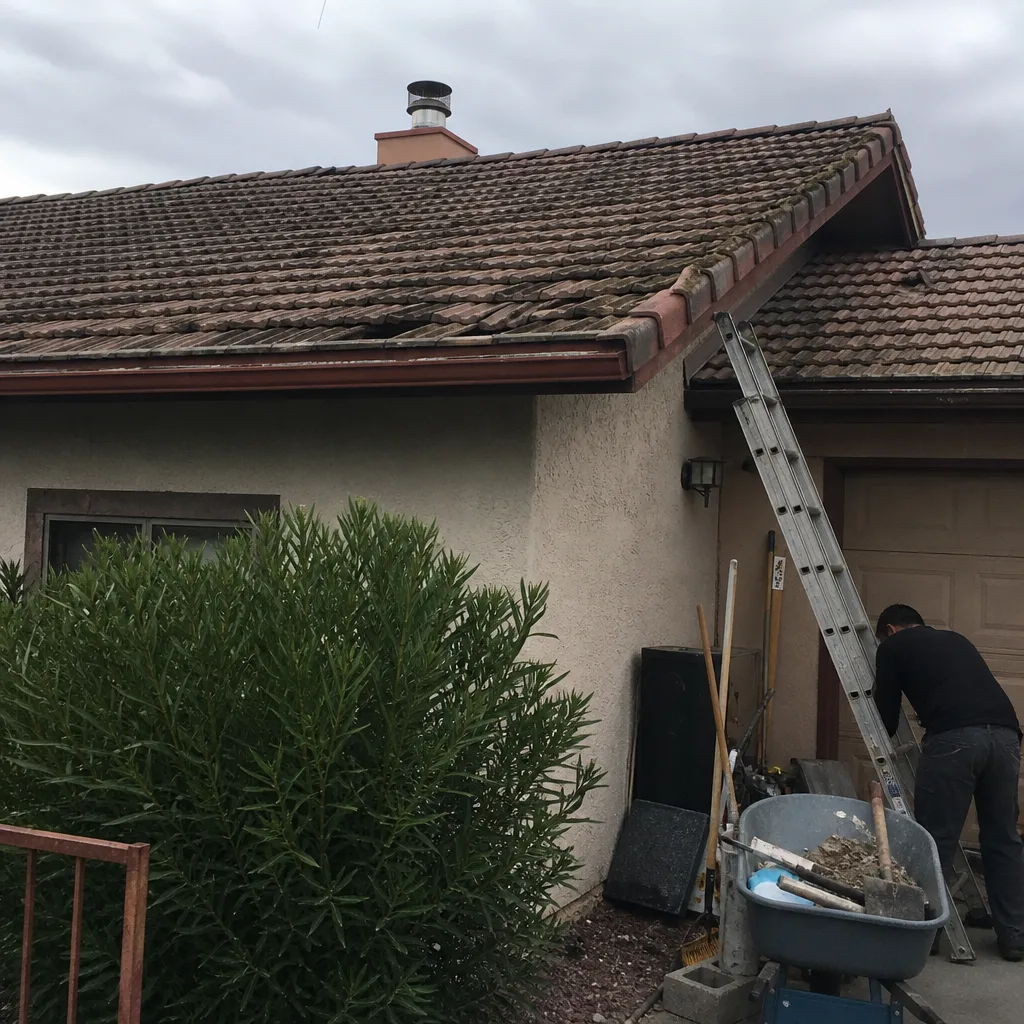 Before
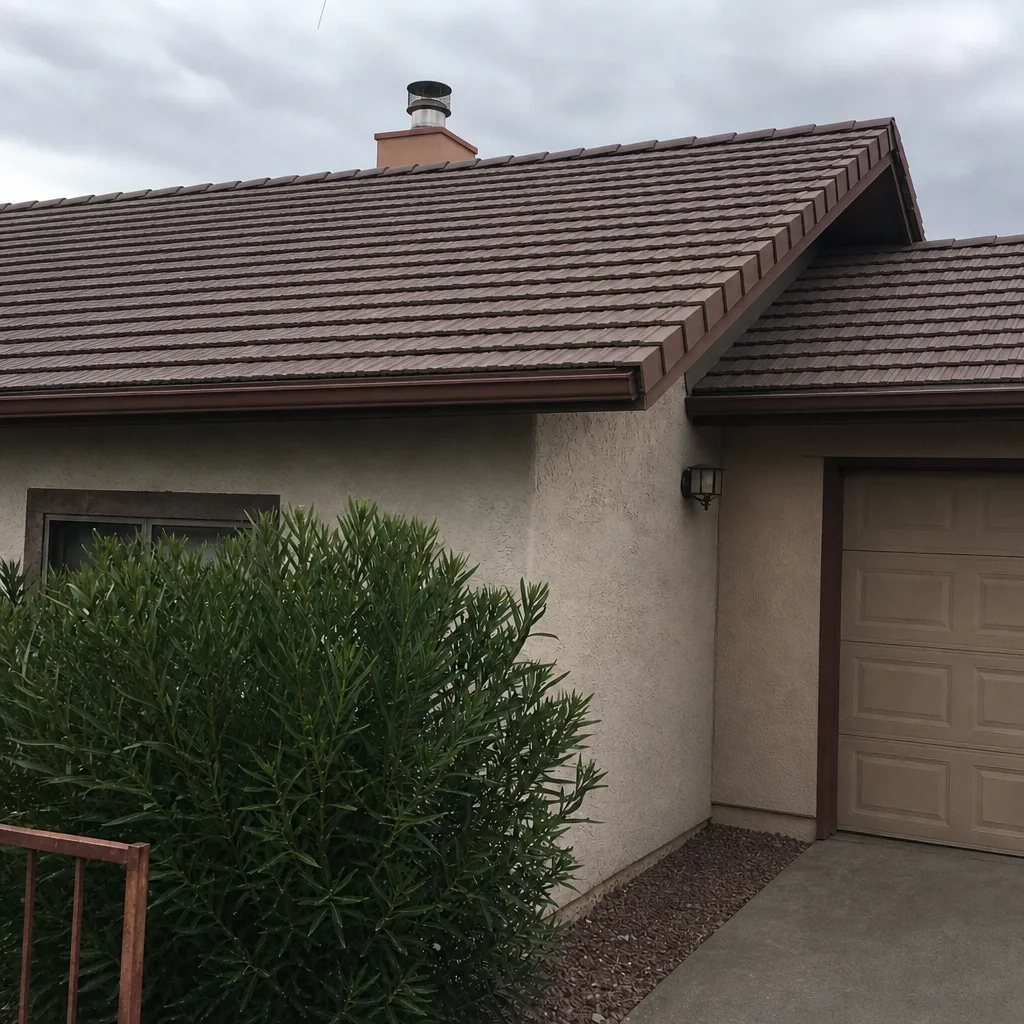 After
When to Call a Professional
Some checks you can do from the ground with binoculars: coating color, panel condition, drain debris. Get off the roof for anything else. Specialty systems involved high-tension details, penetrations, and coatings that go wrong fast in untrained hands. Call a professional when you see coating that’s gone chalky, fasteners backing out, seams lifting, or water ponding more than 48 hours after a storm. Call sooner if a haboob just rolled through and you can see grit piled against your parapets or clogging the drains. Shepherd & Sons Roofing Boulder City offers free estimates in Boulder City – call (844) 761-8186. A live person answers the phone, day or night, and we’ll walk the roof with you and show you the photos before anyone talks money. Every roofing job comes with our written 90-Day Done Right Promise.
Frequently Asked Questions
Every 5 to 7 years, and on the shorter end of that for south- or west-facing slopes. Boulder City’s UV index runs higher than the manufacturer’s national average assumes, so the coating breaks down faster. If the surface looks chalky or dull, that’s your signal the window is closing.
Yes. Metal roofing needs an annual check of fasteners and seams and periodic paint touch-up, even when it isn’t leaking. Backed-out screws and perished washers are the usual start of a leak, and catching them yearly is what keeps metal a decades-long roof. Call (844) 761-8186 for a free estimate if you’re not sure of your roof’s condition.
The pre-monsoon inspection in June. That’s the check that finds the seams, drains, and coating wear before the hard summer rain tests them. A post-monsoon check in September is the close second.
You can keep drains clear and do a ground-level visual check. Coating application, seam repair, and fastener work should be done by a trained crew. The wrong product or a missed detail can void the warranty, and specialty systems aren’t forgiving in a desert climate.
Documented, on-schedule maintenance is what keeps most specialty roofing warranties enforceable. Missing maintenance, unauthorized patches, or unapproved coatings are common reasons a warranty claim gets denied. Keep every inspection record and receipt.
Most specialty roof issues are repairs, not replacements. Worn foam coating, lifted seams, backed-out fasteners, and clogged drains are all fixable. A second opinion on any written estimate is free – call (844) 761-8186 and we’ll tell you honestly what the roof needs.
The Bottom Line
Specialty roofs are worth maintaining because the alternative costs significantly more. Foam needs coating attention twice a year and recoating every 5 to 7 years. Metal needs annual fastener and seam checks with paint touch-ups every 8 to 12 years. Flat membrane roofs need seam and drain checks twice a year, and all three want that June inspection before monsoon. Boulder City’s UV and dust push every interval shorter than the manufacturer’s national spec. Keep a written log, follow the calendar, and call a professional when the details look off. For a free estimate in Boulder City, call Shepherd & Sons Roofing Boulder City at (844) 761-8186. Explore our Shepherd & Sons Roofing Boulder City home page for everything we do, or go straight to Roof Repair in Boulder City and Metal Roofing in Boulder City for the specifics. If your specialty system is at the end of its life, Roof Replacement & Installation in Boulder City covers the next step.
Written by the team at Shepherd & Sons Roofing Boulder City.