
Last updated November 17, 2026
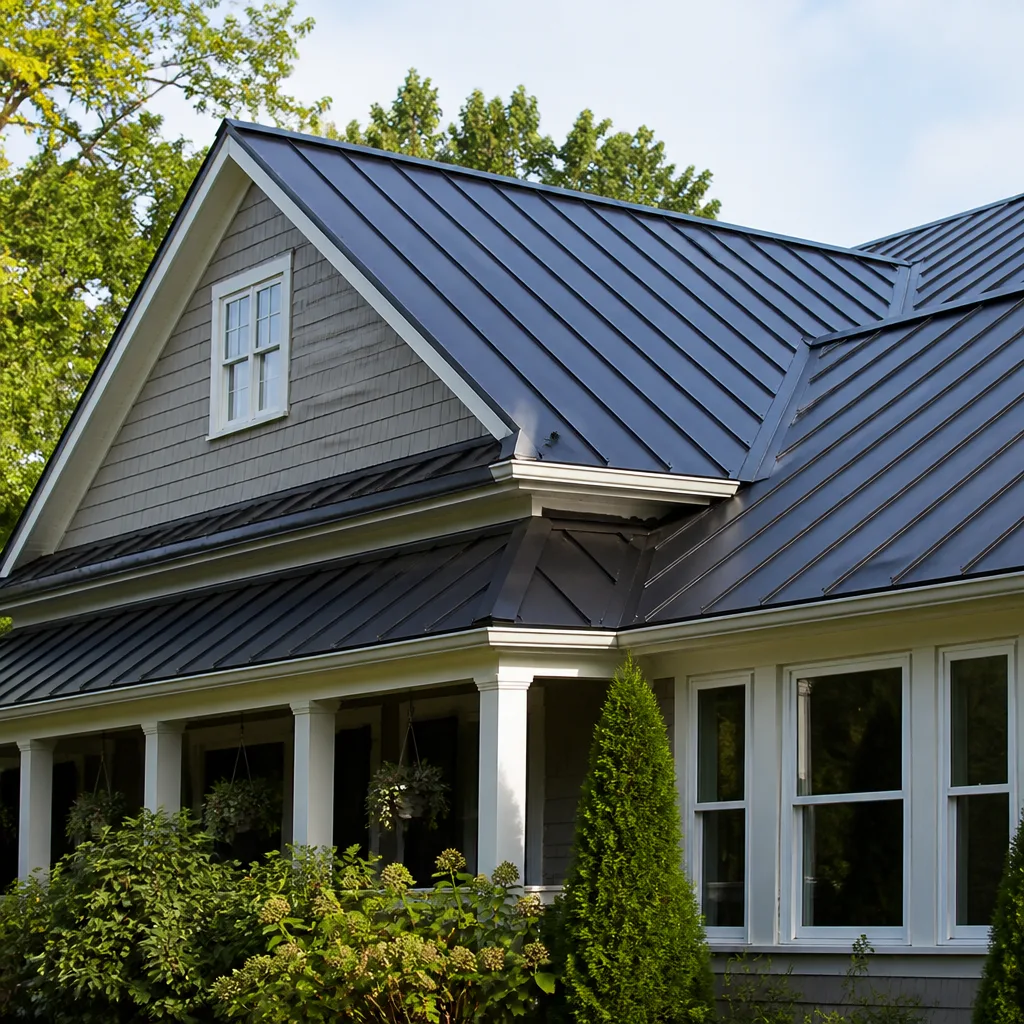 Metal roofing
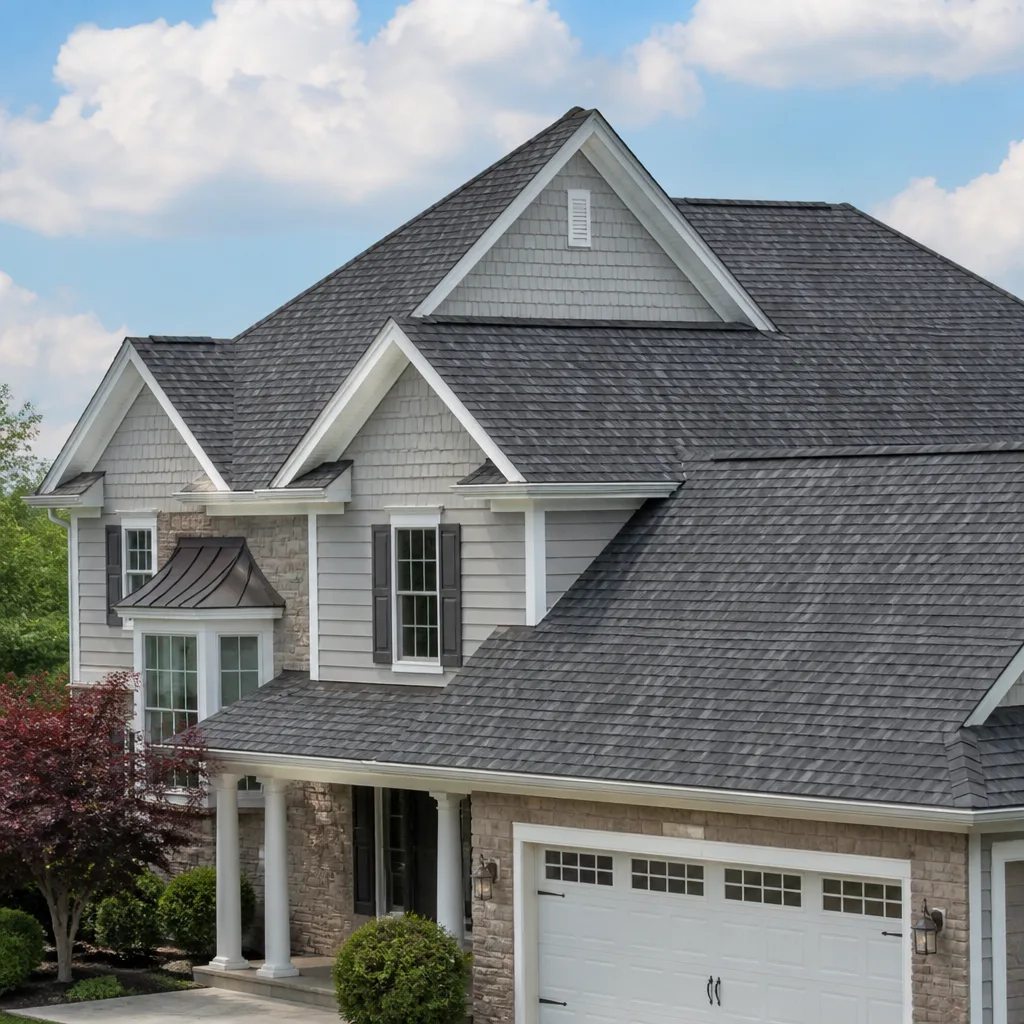 Architectural shingles
 Tile roofing
 GAF
 Owens Corning
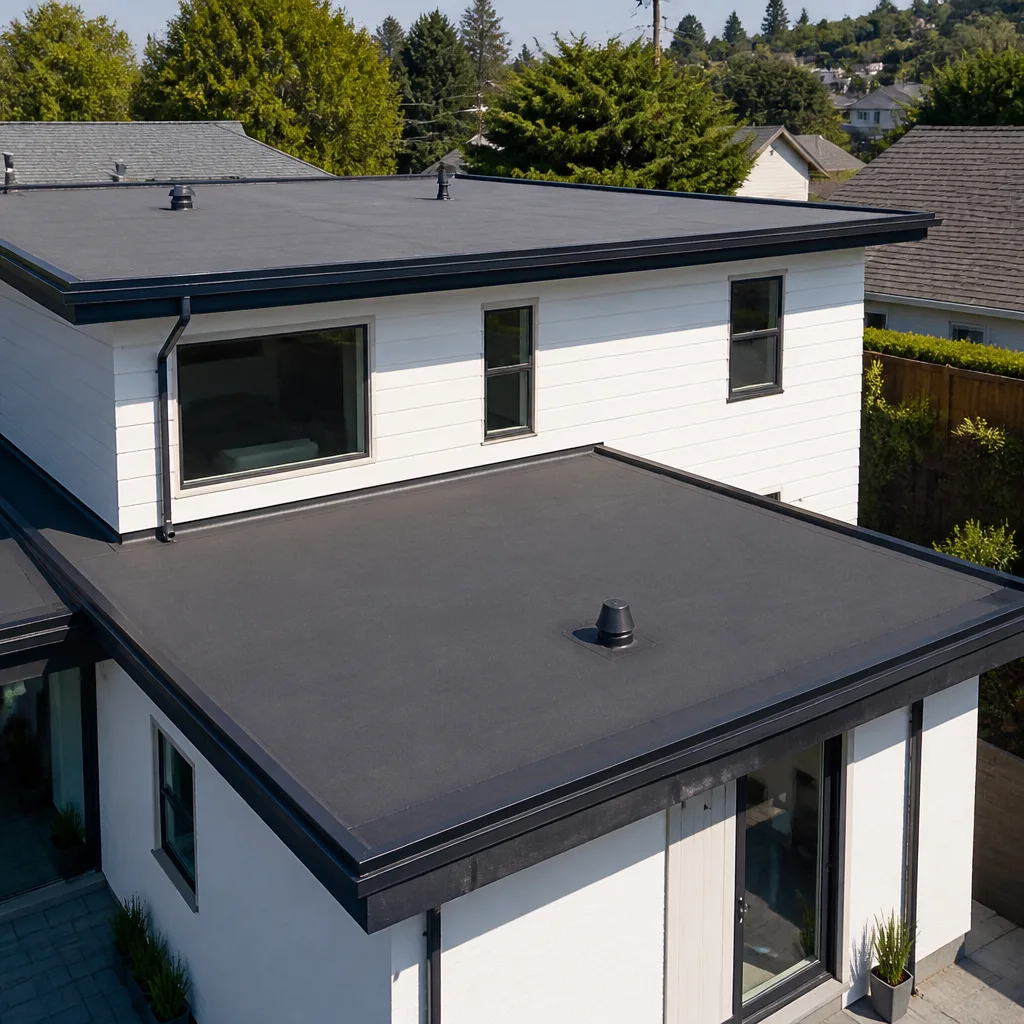 Flat & low-slope
Free roof inspection with deck photos before we talk money - GAF and Owens Corning certified installation
How Long Does Specialty Roofing Take? Timelines and What to Expect
Here’s the part most homeowners never hear until it happens: an SPF foam roof sprayed in high wind or above a certain humidity threshold has to be torn off and redone. That means a roofer who promises a one-day turnaround on a specialty system without glancing at the forecast is telling you something about how the job will go. Specialty roofing moves at the speed of the material – cure times, weather windows, and inspection holds that nobody sees from the driveway. In Boulder City, where the desert swings from calm mornings to gusty afternoons fast, those windows matter more than most. This guide walks through what’s actually happening during each phase and why some waits you can’t argue with.
Quick Answer
Most specialty roofing installations take between three days and three weeks, depending on the system. A sprayed foam roof on a typical single-story home usually runs two to five days plus a cure window; standing seam metal runs five to fourteen days; flat membrane work runs three to ten days. The schedule is set less by crew speed than by material cure times, mid-job inspections, and weather holds.
Styles & brands we work with
- Architectural shingles
- Metal roofing
- Tile roofing
- GAF
- Owens Corning
- Flat & low-slope
Table of Contents
- Why specialty roofing timelines differ from shingle jobs
- Foam roofing: application and cure windows
- Standing seam metal: sequencing the panels
- Flat membrane: the phase-by-phase install
- Boulder City weather that legitimately pauses the work
- Mid-job inspections and why skipping one voids your warranty
- How to structure a contract with milestone payments
- What daily life looks like during the project
- Common mistakes to avoid
Why Specialty Roofing Timelines Differ From Shingle Jobs
A shingle roof is forgiving. You can lay it in a broad range of temperatures, stop and start around weather, and the material doesn’t care much. Specialty systems are not forgiving in the same way. Foam has to go down inside a temperature and humidity band. Metal panels expand and contract, so the attachment spacings and the sequence of setting them matter to the finished result. Flat membranes have seams that need a clean, dry deck and the right ambient temperature to bond.
That’s why the calendar on a specialty job means something different. The crew isn’t slow. The material is setting, curing, or waiting on an inspection. Here’s what sets the pace:
- Cure windows. Foam needs time to skin over and harden before a coating goes on top. You can’t rush it by spraying heavier.
- Temperature and humidity bands. Below or above the range a manufacturer specifies (GAF, CertainTeed, Owens Corning, Boral, among others) and the material won’t perform as rated.
- Mid-job inspection holds. Some systems require the deck or the substrate be inspected before the next layer goes down.
- Wind. Panels and foam both get flagged when gusts climb past the safe threshold, and Boulder City afternoons can climb.
If your roofer hands you a date and won’t explain what has to happen between today and that date, you’re not getting a timeline. You’re getting a guess.
Foam Roofing: Application and Cure Windows
Sprayed polyurethane foam is the system most sensitive to conditions. The foam goes down as two liquids that react and expand on contact, forming a seamless blanket over the roof. It works fast – but it only works inside the manufacturer’s window. Spray it in high wind, above the humidity threshold, or onto a deck that isn’t clean and dry, and you can end up tearing it back off. We’ve seen exactly that on Boulder City roofs when a crew pushed through a windy afternoon to save a day.
The typical sequence on a foam job runs like this:
- Prep and deck inspection. Half a day to a full day, depending on condition. Any soft spots get addressed before a spray gun comes near the roof.
- Foam application. One to three days on a typical single-family home, done in passes. Too thick in one pass and the foam traps heat and cures wrong.
- Cure hold. The foam needs time to fully cure before the protective coating. This is usually under 24 hours, but humidity can stretch it.
- Coating application. One to two days, typically two coats, with a re-coat window between them.
- Final walkthrough and inspection. Half a day.
All told, a foam roof on a standard Boulder City home runs two to five working days plus the cure hold. Add a weather day or two and you’re looking at a week to ten days. If a bidder tells you one day, ask them how they get around the cure time. There isn’t a shortcut.
Standing Seam Metal: Sequencing the Panels
Standing seam metal looks simple from the ground – long panels, hidden fasteners, clean lines. The install isn’t simple. Each panel is formed or ordered to length, and the order they go down matters. Get the sequence wrong and the panels don’t align at the hips and valleys properly, or the expansion gaps end up on the wrong side.
The pacing works like this:
- Measuring and fabrication lead time. Panels are often formed to your roof’s measurements. That’s typically one to three weeks before install even begins. This is the biggest hidden wait in metal roofing and the one most quotes don’t mention.
- Tear-off and deck work. One to two days.
- Underlayment and attachment. One to two days. High-temp underlayment is standard; don’t skip it.
- Panel setting. Two to five days, working from one edge across to the other, in order.
- Trim, ridge, and flashing. One to two days.
Total install, once panels are on site: five to fourteen days. Panels from Boral or a comparable manufacturer hold their finish for decades, but only if the trim and flashing details are done right – which is where the time goes. If you want to compare that service to a broader picture, our Metal Roofing in Boulder City page covers the material side.
Flat Membrane: The Phase-by-Phase Install
Flat roofs are common on additions, garages, and low-slope sections around Boulder City – and they need a membrane system, not shingles. Whether it’s TPO, EPDM, or modified bitumen, the install runs in phases and the seams are the whole ballgame.
The standard sequence:
- Deck inspection and prep. Half a day to a full day. The membrane only bonds as well as the deck underneath allows.
- Insulation or cover board. Half a day to a full day if specified.
- Membrane lay-down. One to two days for a typical residential flat section.
- Seam welding or bonding. Half a day. On TPO, hot-air welded seams get probed or air-tested.
- Edge metal, drains, and penetrations. Half a day to a full day. This is where leaks start if it’s rushed.
- Inspection. Half a day.
A residential flat membrane job typically finishes in three to ten days depending on size and how many penetrations need detailing. The seams and the flashings get the most attention because they’re where the failures happen – not the field of the membrane itself.
Boulder City Weather That Legitimately Pauses the Work
Boulder City sits in the Mojave, and that changes the calendar. Summer afternoons routinely push past 100°F, which can push surface temperatures on a dark roof well past what’s safe for crews and outside the range where some coatings and sealants cure properly. Spring and fall bring the wind, and desert wind is not gentle. A gusty afternoon stops panel setting and foam spraying cold.
Here’s how to tell a real weather hold from an excuse:
- The hold lines up with the material. A foam hold on a windy day makes sense. A metal hold on a calm, mild day with no panels on site does not.
- You get a new date, not a shrug. A real hold comes with a revised schedule, usually within 24 hours.
- Photos exist. A crew that stopped for weather usually has photos of the site showing why.
- The pattern repeats predictably. Summer mid-afternoon holds and spring wind holds are consistent. Endless holds are something else.
Winter is rarely a problem for roofing in Boulder City – that’s one advantage of the climate – but it’s worth confirming your installer isn’t scheduling a job that requires a material rated for a warmer range. GAF and Owens Corning both publish temperature limits that matter here.
Mid-Job Inspections and Why Skipping One Voids Your Warranty
Specialty systems often require an inspection at a specific point – before coating goes on foam, after the substrate is set on metal, at the seam stage on a membrane. Skip it and the manufacturer can decline a warranty claim later, no matter how good the finished roof looks. That’s a lot of money left on the table for a half-day wait.
The inspections you’ll typically see on a specialty job:
- Deck or substrate inspection. Confirms the base is sound before the system goes down.
- System-stage inspection. On foam, before coating. On metal, after panels and trim. On membrane, at the seams.
- Final inspection and sign-off. The recorded completion that supports the manufacturer warranty.
Ask your contractor for the inspection records when the job closes. If they can’t produce them, the warranty may not be worth the paper it’s printed on. Every specialty job we run gets backed by our written 90-Day Done Right Promise on top of the manufacturer warranty, but that’s the local layer – the manufacturer’s inspection record is separate and has to be there.
How to Structure a Contract With Milestone Payments
Calendar dates are guesses in specialty roofing. Milestones are facts. Tie your payments to what actually got done, not to what day of the month it is. That protects both sides and gives you a paper trail if a dispute ever comes up.
A fair milestone structure looks like this:
- Deposit at contract signing. Covers material order and fabrication. Typically the largest single payment on a specialty job because panels or coatings are made to order.
- Payment at tear-off and deck approved. Tied to a completed stage, not a date. Deck condition is the moment where surprises show up, and you want to be on the same page before more material goes down.
- Payment at system-stage inspection passed. Your money stays with you until the material is verified in place.
- Final payment at completion and final inspection. Held until the manufacturer’s sign-off is recorded and you’ve walked the roof.
The 90-Day Done Right Promise from us means if something isn’t right, one call brings us back. Ask every bidder what happens if a milestone slips. The answer tells you who you’re dealing with. If you’re already comparing bids, a free second opinion on any written estimate costs you nothing.
What Daily Life Looks Like During the Project
Specialty work is more disruptive than shingle work because crews spend longer on the roof and often need the yard. Plan for it.
Foam jobs: A spray gun is loud and the overspray can drift, so crews mask windows and landscaping. Expect to keep the dog and kids inside on spray days. Park in the street. After the spray, the roof is off-limits for the cure hold, so don’t plan to have a technician up there for a satellite dish or solar hookup during that window.
Metal jobs: Panels arrive long and get staged in the yard or on the driveway. That takes space for the length of the install. Expect noise from cutting and setting panels, and expect the crew’s own vehicle traffic on the street during the panel-setting phase.
Flat membrane jobs: Quieter than the other two, but the seam welding stage creates fumes. Ventilation through adjacent windows needs to be managed, especially if the flat roof butts up against a living space.
None of these are dealbreakers. They’re just the reality that a good roofer will explain up front rather than spring on you the morning the crew shows up.
Common Mistakes to Avoid
- Accepting a one-day promise. No specialty system installs in one day honestly. Foam has cure time, metal has sequencing, membrane has seam testing. A one-day quote is a red flag.
- Comparing bids without line items. A lump-sum number tells you nothing about whether the inspection or the cure hold is included. Demand a written line-item quote.
- Paying the full amount up front. Milestone payments protect you. Full payment before work finishes removes your leverage.
- Skipping the mid-job inspection. It looks like an inconvenience. It’s actually the entire warranty foundation for a metal or foam system.
- Ignoring the manufacturer’s temperature range. Pushing a crew to install outside the material’s stated range in the heat of a Boulder City summer can void a warranty and degrade the roof in a season.
- Hiring a storm chaser with a PO box. After a big wind or rain event, out-of-town crews show up with great prices and no address. Ask where the shop is. Ask for the license number. Then look it up.
- Never asking for deck photos. Bill’s rule: deck photos before we talk money. If a bidder won’t show you the deck, you don’t know what you’re paying for.
See the difference
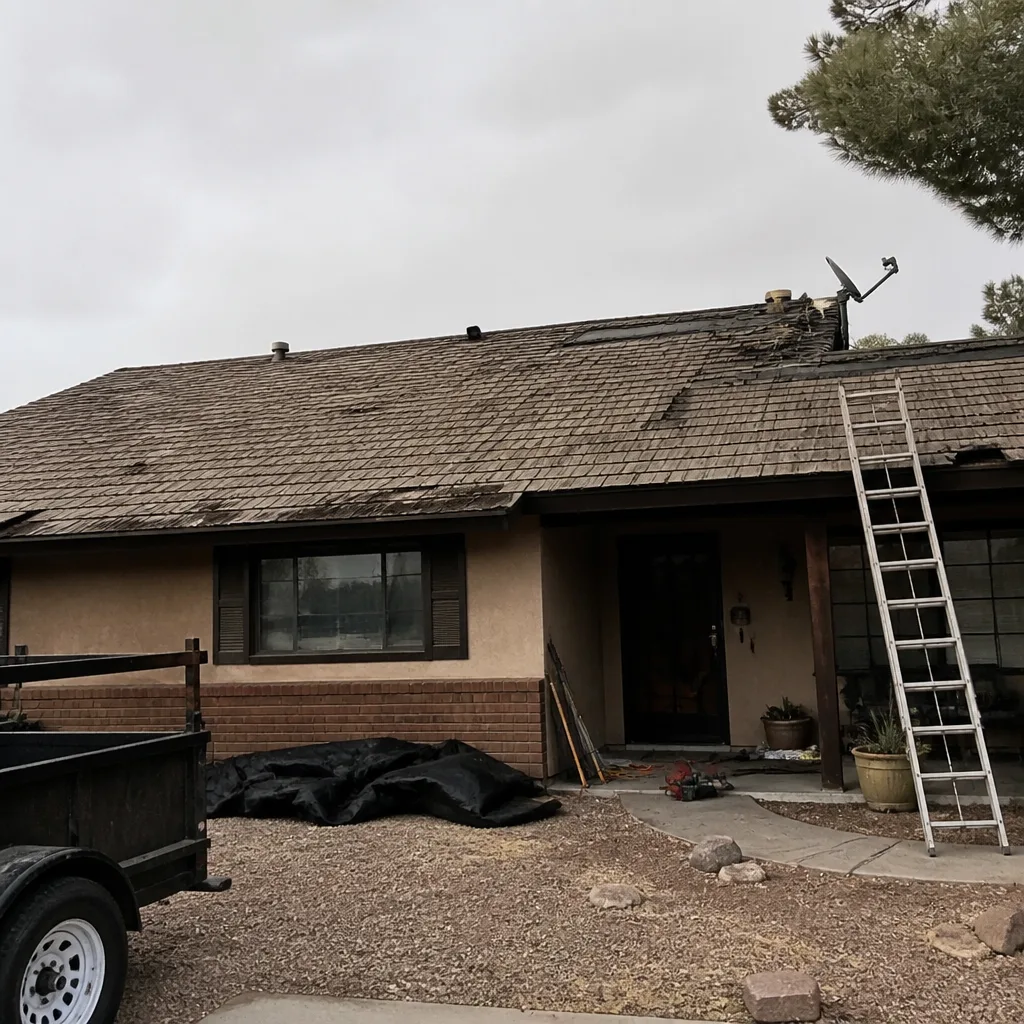 Before
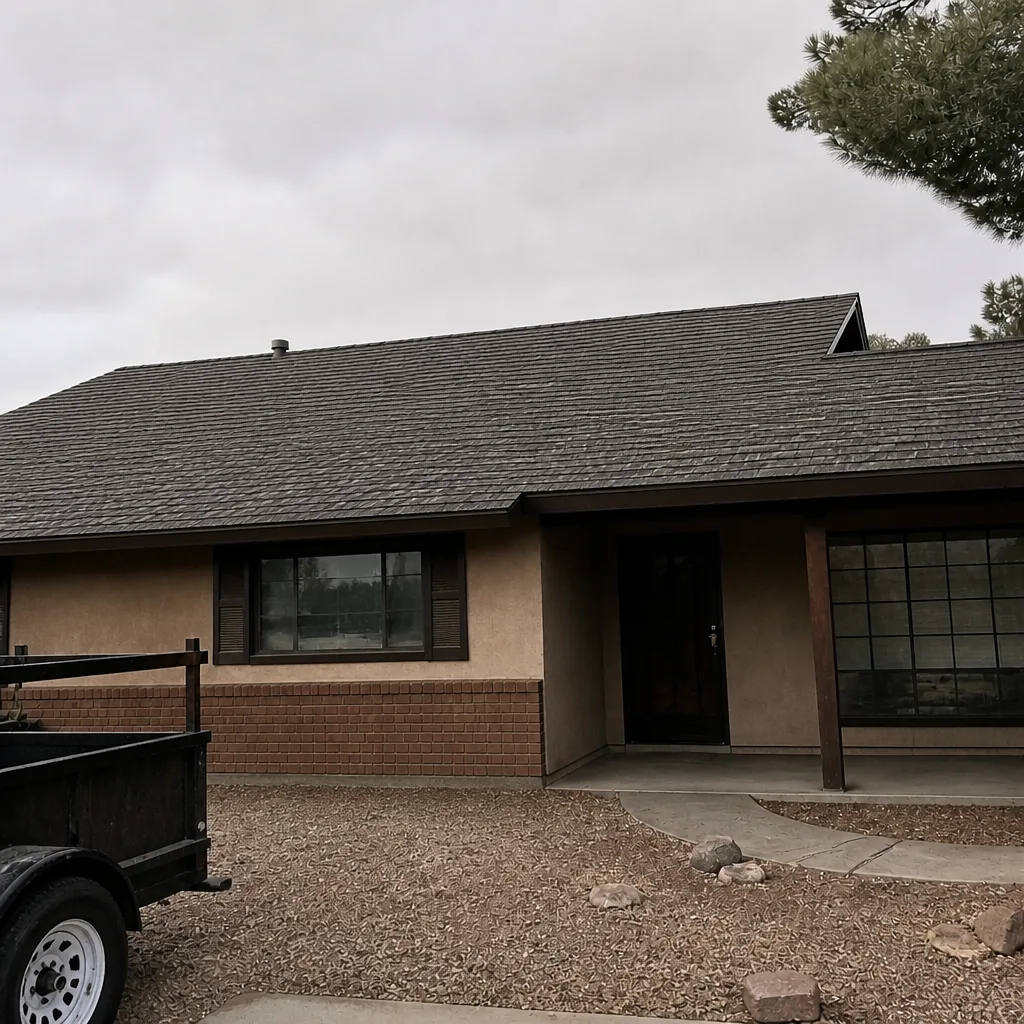 After
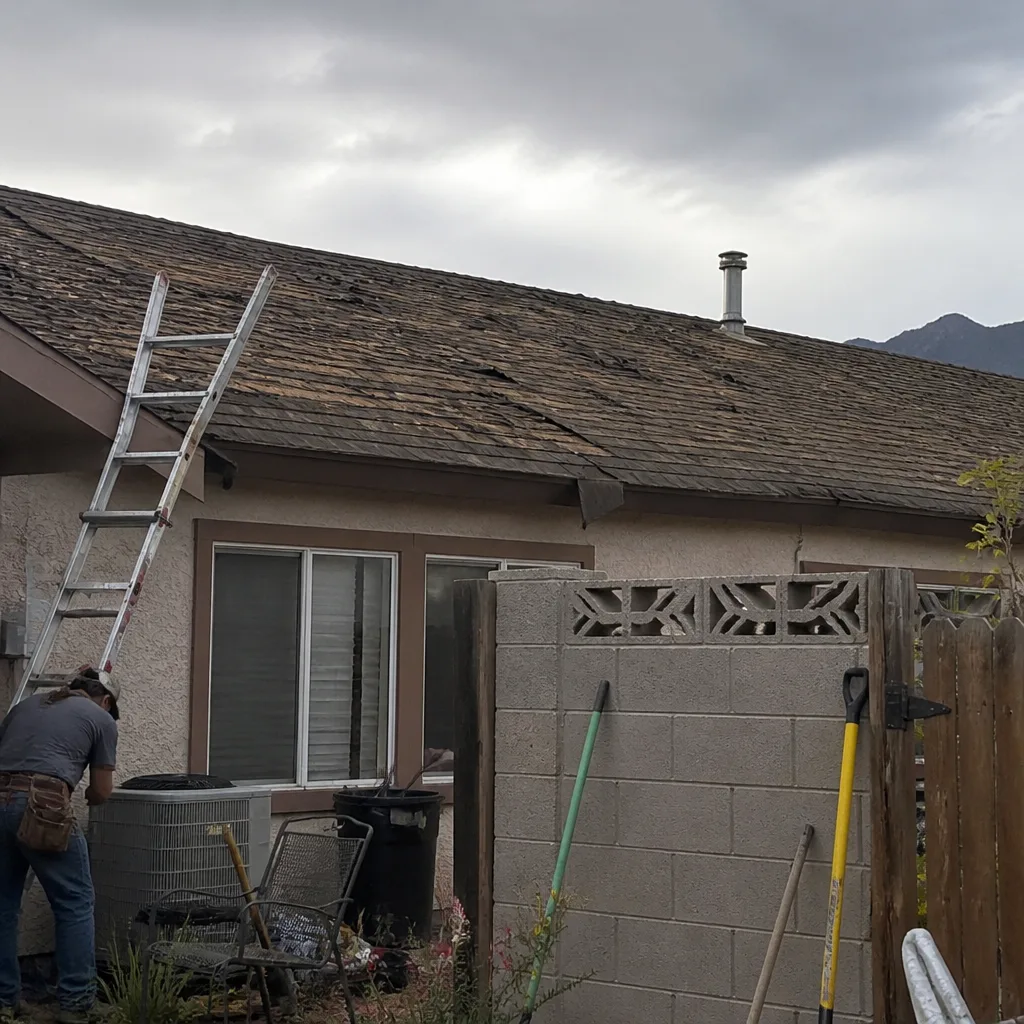 Before
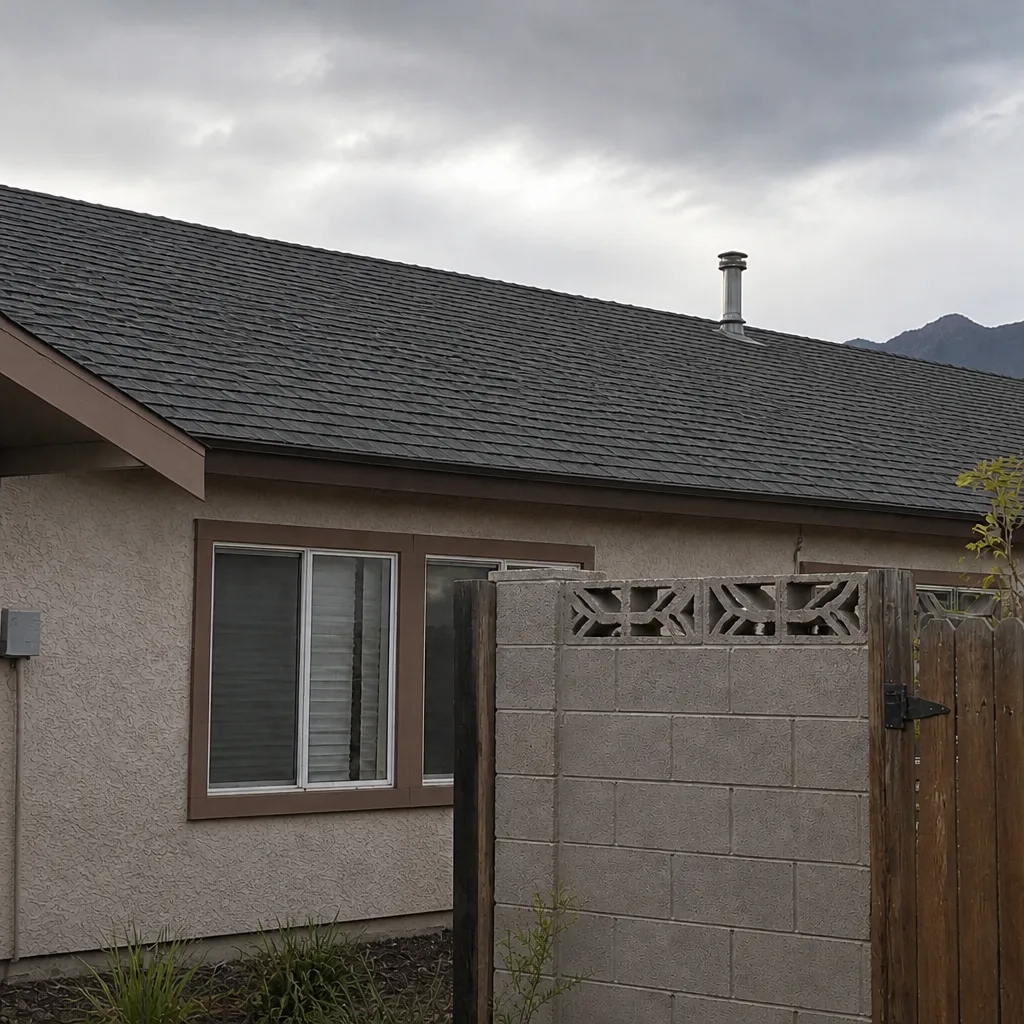 After
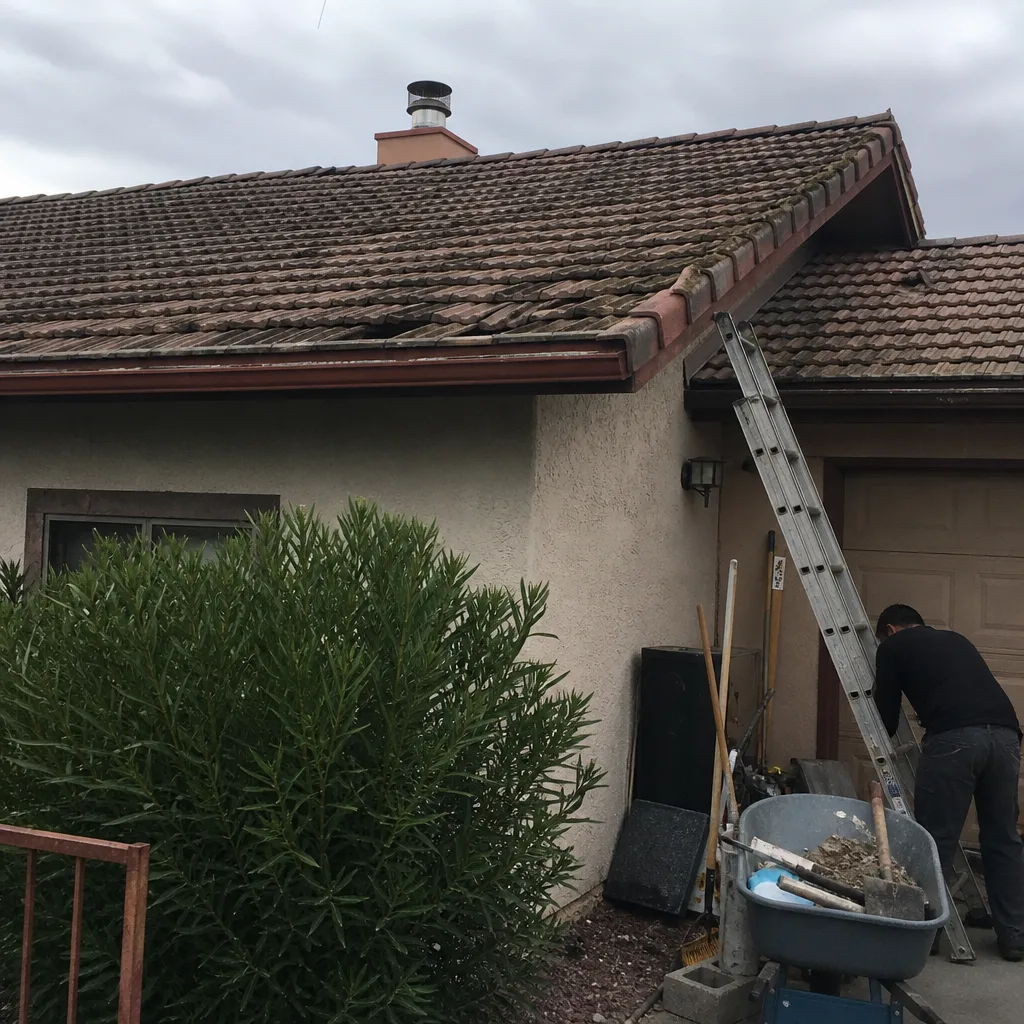 Before
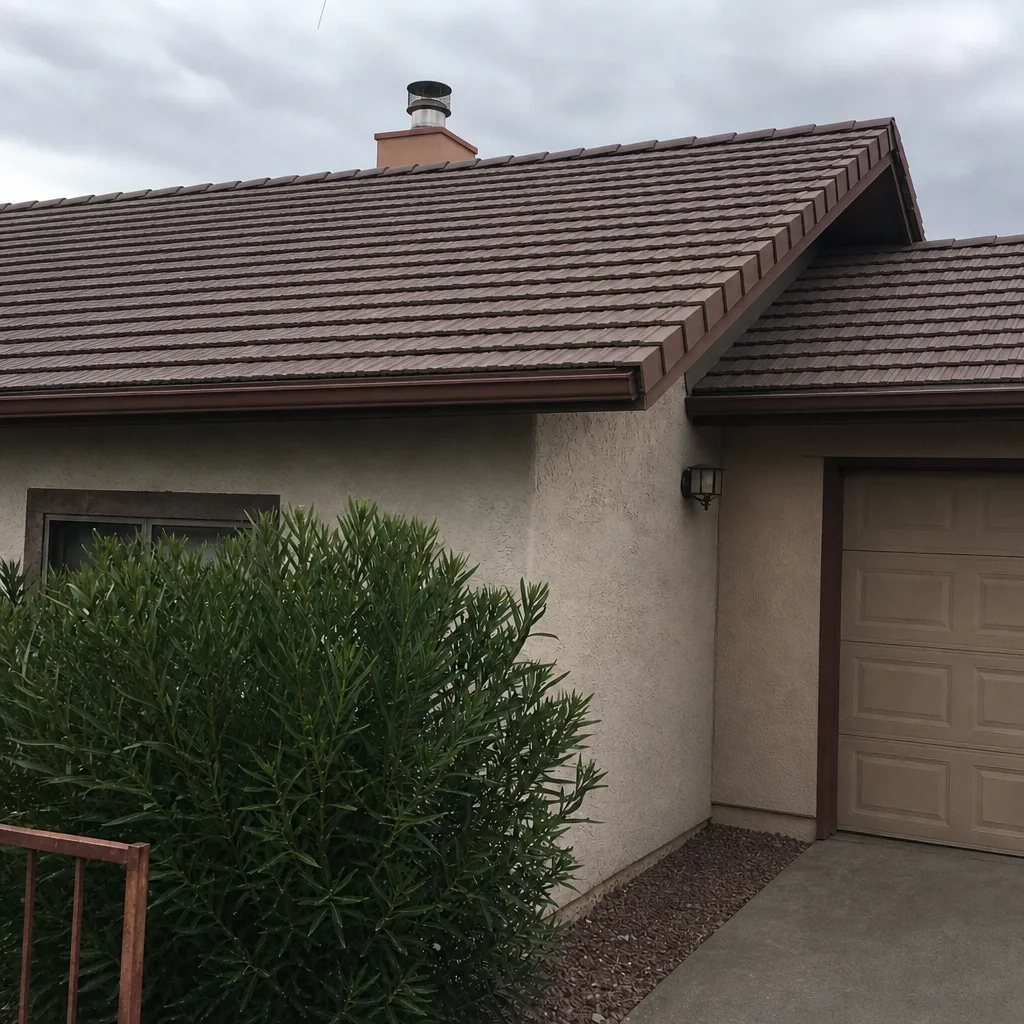 After
When to Call a Professional
Specialty systems aren’t DIY territory, and honestly none of them should be. Foam requires spray equipment and cure judgment. Metal panels need correct attachment and expansion planning. Flat membranes need heat-welded seams or adhesive bonds that fail silently if done wrong. Call a professional if you’re seeing repeated leaks around flat-roof penetrations, if metal panels are lifting or the trim is pulling away after a wind event, if foam is cracking or blistering, or if you’re simply getting a specialty bid you don’t understand. This is also a good moment to ask for a second opinion – Shepherd & Sons Roofing Boulder City offers free estimates in Boulder City, and you can reach us at (844) 761-8186. A live person answers, day or night. Our technicians have up to 30 years of experience with these systems, and the crew is background-checked. Call to schedule your free estimate.
Frequently Asked Questions
Most specialty roofing installations take three days to three weeks. Foam runs two to five working days plus a cure hold; standing seam metal runs five to fourteen days after panels arrive on site; flat membrane runs three to ten days. Weather holds and mid-job inspections stretch the calendar more than crew slow-downs do. Call (844) 761-8186 for a specific timeline on your roof – estimates are free.
No, not honestly. A real specialty install on a typical home requires multiple stages – foam needs a cure window, metal needs proper panel sequence and flashing, membrane needs seam testing. A one-day promise on a specialty system in Boulder City should make you look for a different roofer. If a bidder won’t explain the phases, call us at (844) 761-8186 for a second opinion.
Delays come from three things: weather conditions outside the material’s safe range, a mid-job inspection that flagged something, and material lead times on panels or coatings. In Boulder City, wind holds in spring and heat holds in summer are the most common weather causes. Ask for a written revised schedule and photos if you’re unsure. Call (844) 761-8186 to have us look at a stalled job.
Yes, and skipping it can void your warranty. Manufacturer inspections on specialty systems confirm the substrate or seams before the next layer goes down – that documented stage is what the warranty is written against. A roof can look fine from the ground and still fail a warranty claim later without the record. Call (844) 761-8186 if you need to verify an inspection on your job.
Yes, when it’s installed right. Standing seam metal and foam systems are both well-suited to desert conditions, and Boulder City’s sun is hard on asphalt but kind to properly coated foam and metal. The performance comes from correct installation – the right product range, attachment pattern, and inspection record. For a materials comparison, see our Roof Replacement & Installation in Boulder City page.
Specialty roofing in Boulder City generally runs higher than a standard shingle job because materials, fabrication, and inspection steps cost more. Foam, metal, and membrane systems each price differently. We give line-item written quotes and there’s no trip charge inside our own county, so the number you see is the number you pay. Call (844) 761-8186 for a free estimate on your specific roof.
The Bottom Line
Specialty roofing timelines are set by the material, not the crew. Cure windows on foam, fabrication lead times on metal panels, and seam-stage inspections on flat membrane all add days that nobody sees from the driveway – and the temptation to rush them is exactly where roofs go wrong. When a roofer explains the phases, gives you a milestone-based contract, and won’t promise what the weather can’t deliver, that’s a schedule you can trust. Same address since 1996, name on the truck, license on the paperwork. If you’re ready to price the job, start with a free second opinion. We’re happy to look at any written estimate and tell you what we’d change.
If you’d like a straight answer on your roof in Boulder City, or you’re comparing bids and want a second set of eyes, call (844) 761-8186 for a free estimate. A live person picks up, and the crew is ready to look. Our Shepherd & Sons Roofing Boulder City home page has the full list of what we do, and our Roof Repair in Boulder City team handles the smaller jobs too. If you’ve got a written estimate already in hand, we’ll give you a free second opinion on it – no hassle, no charge. For current offers, ask about $40 off any repair over $200, no trip charge inside our own county, and a 10% discount for seniors and veterans.
Written by the team at Shepherd & Sons Roofing Boulder City.