
Last updated November 17, 2026
 Metal roofing
 Architectural shingles
 Tile roofing
 GAF
 Owens Corning
 Flat & low-slope
Free roof inspection with deck photos before we talk money - GAF and Owens Corning certified installation
Specialty Roofing Warning Signs Every Homeowner Should Know
Ponding water on a flat roof isn’t a drainage nuisance. After about 48 hours it’s a load on the structure, and it’s eating the membrane from underneath. In Boulder City, that standing water bakes at summer temperatures that soften asphalt and cook the chemistry of any coating faster than most homeowners realize. The failures we see on specialty systems rarely announce themselves the way a missing shingle does. A blister on foam, a pulled fastener on standing seam, a drain holding an inch of water: these are the quiet warnings people walk right past. This guide walks through what each one looks like, what it means, and which ones can wait a season versus which ones you call about today.
Quick Answer
The most serious specialty roofing warning signs are ponding water that lingers past 48 hours, blisters or soft spots on foam and membrane roofs, oil-canning or lifted fasteners on metal panels, and any rust streak or daylight coming through at a penetration like an HVAC curb, skylight, or vent. Those four point to active water intrusion or structural loading and should be looked at now. Faded coatings, minor granule loss, and small surface chalk are usually watch-and-monitor items you can track through the season.
Styles & brands we work with
- Architectural shingles
- Metal roofing
- Tile roofing
- GAF
- Owens Corning
- Flat & low-slope
Table of Contents
- Why Specialty Roofs Fail Differently Than Shingle Roofs
- Foam Roof Warning Signs: Blisters, Soft Spots, and Fading
- Flat Membrane Roof Warning Signs: Bubbling and Ponding
- Metal Roof Warning Signs: Oil-Canning and Pulled Fasteners
- Flashing Failures at Penetrations: The #1 Leak Point
- Interior and Attic Clues Unique to Specialty Roofs
- Two Signs to Call Today vs. Signs You Can Monitor
- How to Photograph Warning Signs for an Accurate Remote Read
Why Specialty Roofs Fail Differently Than Shingle Roofs
A shingle roof fails loud. Granules wash into the gutter, tabs curl, and you see it from the driveway. Specialty systems fail quiet. Foam, single-ply membrane, modified bitumen, and metal all start failing in ways that keep the roof looking intact from the ground while water is already getting in or the structure is already under stress.
Part of that is how they’re built. Specialty roofs rely on continuous surfaces and mechanical seams rather than overlapping layers that shed water downward. That means the failure points move. Instead of looking for a torn tab, you’re looking at penetrations, seams, fasteners, and coating integrity. A single failed fastener on a metal panel or a hairline split at a seam can let in more water than a whole field of worn shingles.
Boulder City makes this sharper. The desert swing between 100-plus degree afternoons and cool nights works the seams and coatings hard. UV exposure here is brutal on anything elastomeric. And the occasional monsoon push in late summer sends water sideways against flashing that’s been baked dry for months. Roofs in Boulder City that look fine in April can show real trouble by September.
If you’re not sure what system you’re looking at, that’s the first thing to sort out. Our Shepherd & Sons Roofing Boulder City home page covers the systems we work on, and a free second opinion on any written estimate will tell you what you’ve got and what shape it’s in.
Foam Roof Warning Signs: Blisters, Soft Spots, and Fading
Spray polyurethane foam roofs are common on flat and low-slope structures, and they’re a good fit for desert heat when the coating on top is maintained. The foam itself is the insulation and the waterproofing in one. The coating is the armor. When the armor goes, the foam starts soaking up sun and moisture.
Here’s what to look for:
- Blisters or bubbles in the coating. A blister means moisture or trapped gas is pushing the coating off the foam. Left alone, it pops and opens the foam to the weather.
- Soft or spongy spots underfoot. If the surface gives when you walk it, the foam has absorbed water or broken down. That’s a repair, not a recoat.
- Chalking and color fade. When a white coating turns chalky gray and rubs off on your hand, the UV protection is used up. This is the earliest, cheapest warning to act on.
- Ponding at low spots. Foam is shaped to drain. Water sitting in a depression means the foam has settled or the drain path has changed.
Faded coating is the one sign you can catch early and fix cheaply with a recoat before the foam is exposed. Blisters and soft spots are past that point. In our experience, foam roofs around Boulder City that go more than a handful of summers without a recoat start showing chalk and hairline cracks in the coating, and that’s the window to get ahead of it.
Flat Membrane Roof Warning Signs: Bubbling and Ponding
Single-ply membrane and modified bitumen roofs bubble for a different reason than foam blisters. A bubble on membrane usually means trapped moisture or air between the membrane and the deck, or a seam that’s let go and is ballooning in the heat. It’s a seam-integrity warning, not a coating one.
Ponding is the bigger story. Standing water on a flat roof does two things at once: it loads the structure, and it works at the seams and around the drain. Water weighing down a low-slope roof is a real structural concern, not just a maintenance annoyance. A membrane that holds water past 48 hours is telling you the slope, the drain, or both are compromised.
What to check on a membrane roof:
- Look for water still standing 48 hours after rain or sprinkler runoff.
- Run your eye along the seams for lifting edges or a wrinkled, wavy look.
- Check the drain and scuppers for debris, leaf dams, or a drain that’s sitting higher than the surrounding surface.
- Feel for soft, spongy areas near the perimeter and around penetrations.
If you’re weighing a repair against a full replacement, our Roof Repair in Boulder City page lays out how we think about that call. A membrane with one failed seam is a repair. A membrane that’s ponding across half the roof usually isn’t.
Metal Roof Warning Signs: Oil-Canning and Pulled Fasteners
Metal roofs, especially standing seam and exposed-fastener panels, fail at the fasteners and the seams long before the panels themselves wear out. Oil-canning is the wavy, dimpled look you sometimes see across a panel face. It’s not always a defect: a little of it is normal as panels expand and contract in heat. But oil-canning that shows up suddenly, or that’s concentrated near fasteners and seams, can mean the panel is under stress or has pulled loose from its clip.
The signs that matter more:
- Lifted or backed-out fasteners. On exposed-fastener systems, a screw that’s riding up or has a washer pulled away is an open door for water.
- Rust streaks running down from a fastener or seam. That’s the fastener or the cut edge telling you the coating or galvanizing has failed at that point.
- Popped or gapped standing seams. The seam should be closed and tight. A gap is a leak waiting for the first hard rain.
- Panel movement or noise. Rattling or creaking that’s new can mean clips or fasteners have loosened.
The nailing and fastening pattern earns the wind rating, not the panel label. A metal roof installed with the fasteners spaced wrong will fail at the fasteners under wind load no matter whose panel it is, whether that’s a Boral or a Metal Roofing in Boulder City system. That’s why the fastener check is the first thing a good inspector does on a metal roof.
Flashing Failures at Penetrations: The #1 Leak Point
Ask any roofer where leaks start and you’ll hear the same answer: at the penetrations. HVAC curbs, skylights, plumbing vents, chimney walls, and any place something pokes through the roof is where water finds its way in. This is true on every specialty system, and it’s where most of the calls we get about mystery ceiling stains start.
Flashing failures show up in a few recognizable ways:
- Rusted or pulled-fastener flashing. On metal roofs, a lifted fastener or a rusted curb is a red flag.
- Ponding around the base of a curb or skylight. Water sitting against flashing attacks the sealant and the membrane or metal around it.
- Staining or algae streaks below a penetration. A dark trail running down from an HVAC curb or vent means water has been traveling there.
- Cracked or peeling sealant. Caulk and sealant at penetrations age out faster than the roof itself in Boulder City’s sun. A cracked bead at a skylight is a leak with a countdown on it.
If you’re going up to look, stay off the roof unless it’s safe and you know your footing. Check the penetrations from the ground with binoculars, or from a ladder you’re confident on. When something looks off at a curb or a skylight, that’s the call to make.
Interior and Attic Clues Unique to Specialty Roofs
With shingle and tile roofs, interior signs usually show up as a ceiling stain after a heavy rain. Specialty roofs can leak for a long stretch before water reaches the living space. Foam and membrane systems can trap water in the assembly for a while, and metal can send water along a fastener or seam to a spot far from where it entered.
So the interior signs to watch look a little different:
- Damp or discolored wood at the decking near penetrations. Look in the attic at the underside of the roof deck around skylights and vents first.
- Musty smell in the attic or a top-floor room. That’s often moisture trapped in the assembly before a drip appears.
- Sagging or a soft spot in the deck. A spongy feel under the roof deck means water has been sitting.
- Wet insulation, especially in the corners. Water finds the low points and the edges first.
- Daylight or a draft at a penetration. Any light coming through at a vent or curb is an open path.
Attic checks are free and quick. Go up after a rain or in the morning, look at the deck around every penetration, and take a photo of anything damp. Those photos are worth a lot when you get someone out to look.
Two Signs to Call Today vs. Signs You Can Monitor
Here’s the plain version. Two things mean stop waiting and call someone now:
- Ponding water that’s still standing 48 hours after rain. It’s loading the structure and degrading the membrane or coating underneath.
- Anything that’s actively letting water in: a visible drip, a wet deck in the attic, soft spots you can feel, or daylight at a penetration. Active intrusion means damage is happening right now.
These can usually be monitored and scheduled:
- Faded or chalky coating on a foam roof with no blistering yet.
- A little oil-canning on metal with fasteners and seams still tight.
- Granule loss or surface chalking on an older membrane.
- A small rust spot at a fastener that hasn’t spread.
The point isn’t to ignore the “monitor” list. It’s to put your money and attention where the damage is active. A faded coating that gets recoated this season is cheap. A blister that pops and lets moisture into the foam is a repair. If you’re in Boulder City and not sure which list you’re on, call us and we’ll tell you straight.
How to Photograph Warning Signs for an Accurate Remote Read
You can save yourself a wasted trip and get a much better answer from any roofer, including us, by documenting what you see before anyone drives out. A few good photos and a couple of notes will get you a more accurate read over the phone. Here’s how to do it:
- Shoot from a safe spot. Stay on the ground or a sturdy ladder. Use the zoom on your phone instead of walking the roof.
- Get a wide shot first, then a close-up. One photo that shows where the problem is on the whole roof, one tight shot that shows the detail.
- Put something for scale in the close-up. A coin or a tape measure against a blister or a rust streak tells the reader the size.
- Photograph every penetration. HVAC curb, skylight, vents, chimney wall. One photo each, straight on.
- Take the attic shot too. Any damp decking, staining, or daylight at a penetration, with the location noted.
- Write a quick note. When it started, where the stain is, whether it’s worse after rain. Text or email the photos and the note together.
We’ve made more accurate assessments from a homeowner’s phone photos than from a vague description any day. It’s the fastest way to know whether you’re looking at a quick repair or a bigger job, and whether it’s worth a trip out at all. A free second opinion on a written estimate works the same way: send us what you have and we’ll look at it honestly.
Common Mistakes to Avoid
- Caulking over a penetration leak without finding the source. A bead of sealant over a cracked skylight base hides the problem for a season and lets the deck rot underneath. The water is coming from somewhere; find it first.
- Ignoring ponding because it dries out by afternoon. In Boulder City the sun dries the surface fast, but the water was still loading the structure and working at the seams while it sat. Forty-eight hours is the line.
- Walking a specialty roof to “take a look.” Foam and membrane surfaces get slick and hot, and metal panels are slippery and can be sharp. Use a ladder and binoculars, or call someone. A fall is worse than any leak.
- Assuming a new-looking metal roof can’t be leaking. Fasteners and seams fail before the panels do, and a shiny panel face says nothing about what’s underneath it.
- Letting a faded foam coating ride another summer. Chalky coating means the UV armor is gone. Every extra summer of sun on bare foam costs more than a recoat would have.
- Hiring the first bidder who shows up after a storm. Specialty systems need the right materials and the right install details. Ask how many squares they measured and get the fastener and flashing plan in writing before anyone touches the roof.
- Skipping the attic check. The first signs of a specialty roof leak often show up inside, not on top. A five-minute attic look around the penetrations catches a lot.
See the difference
 Before
 After
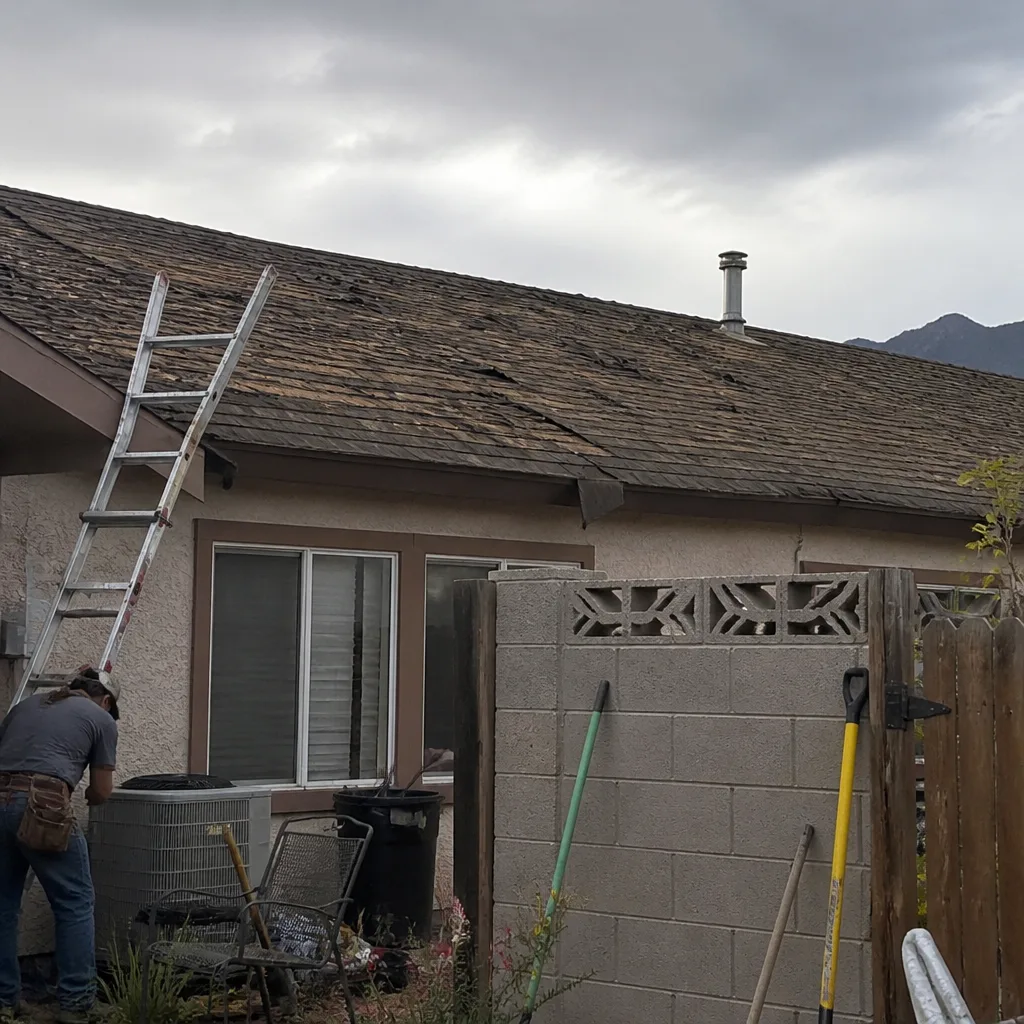 Before
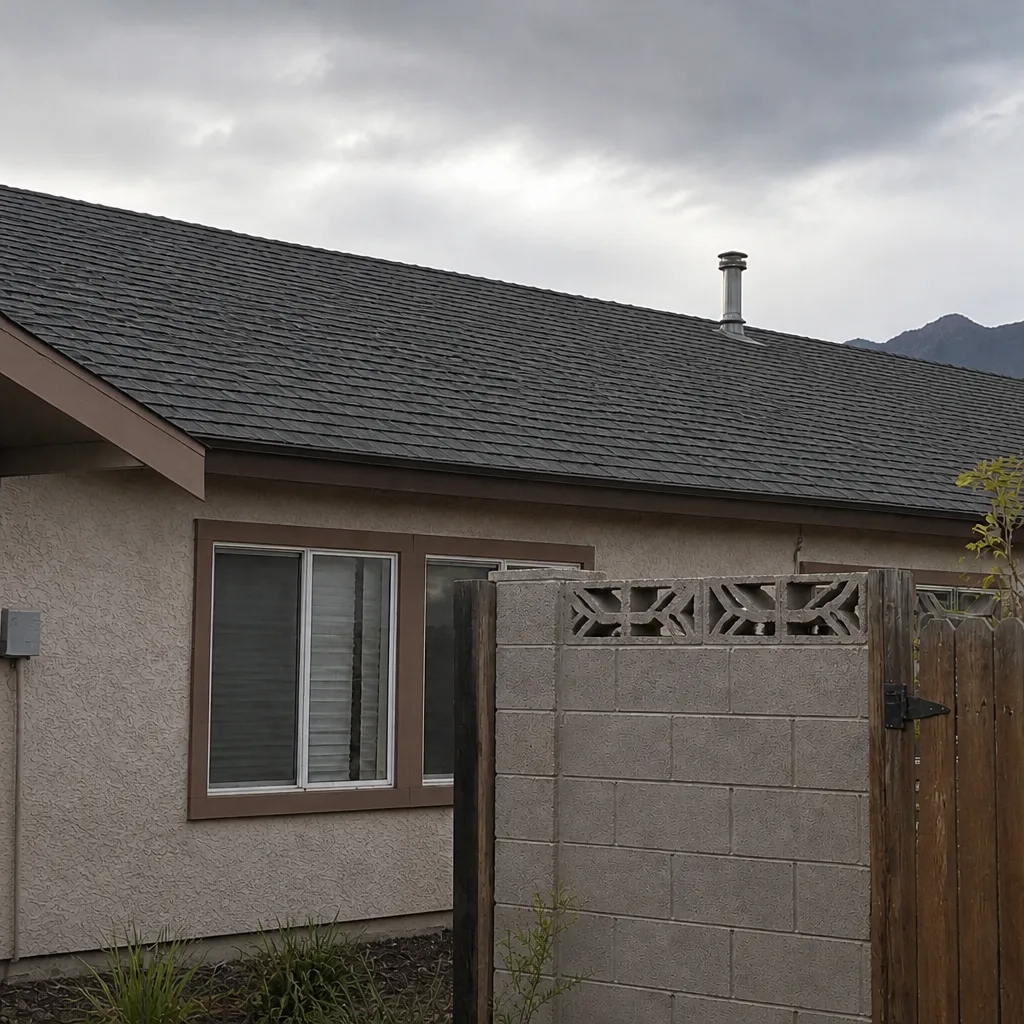 After
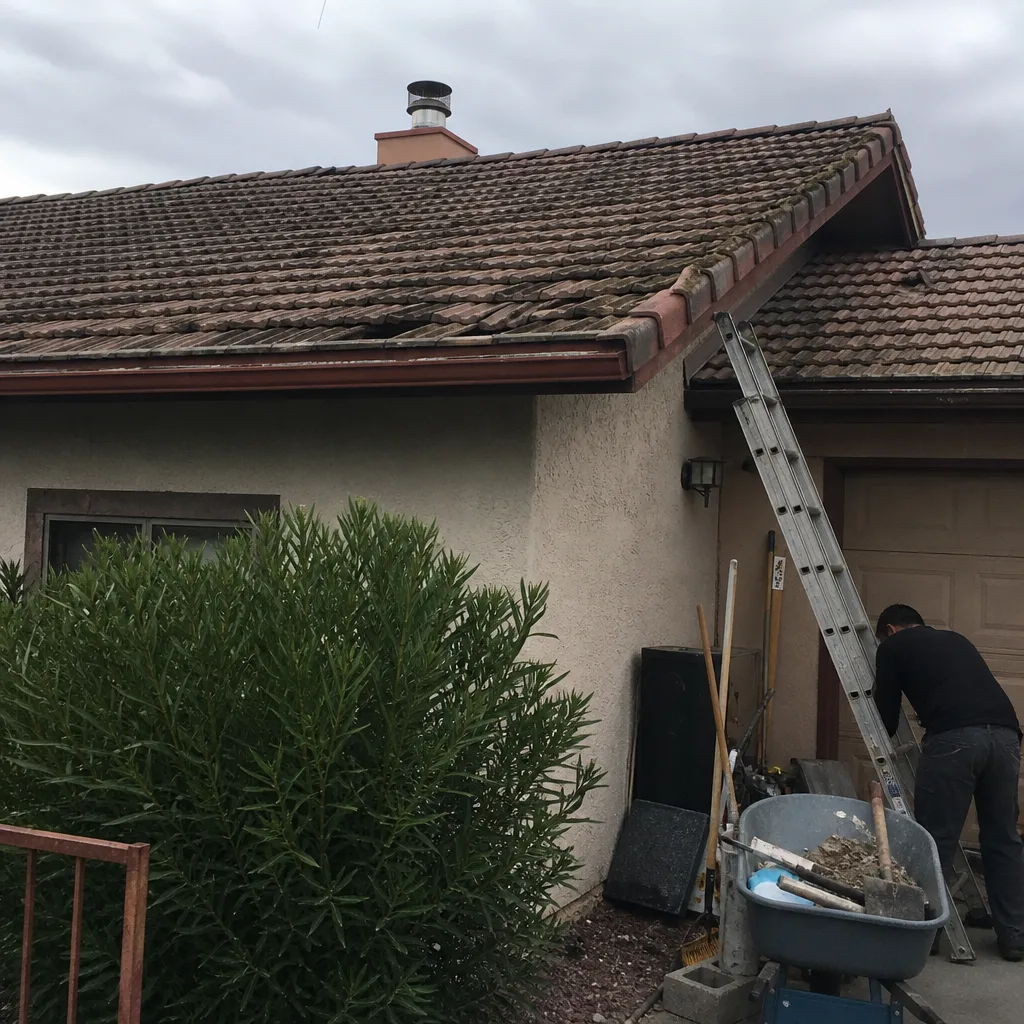 Before
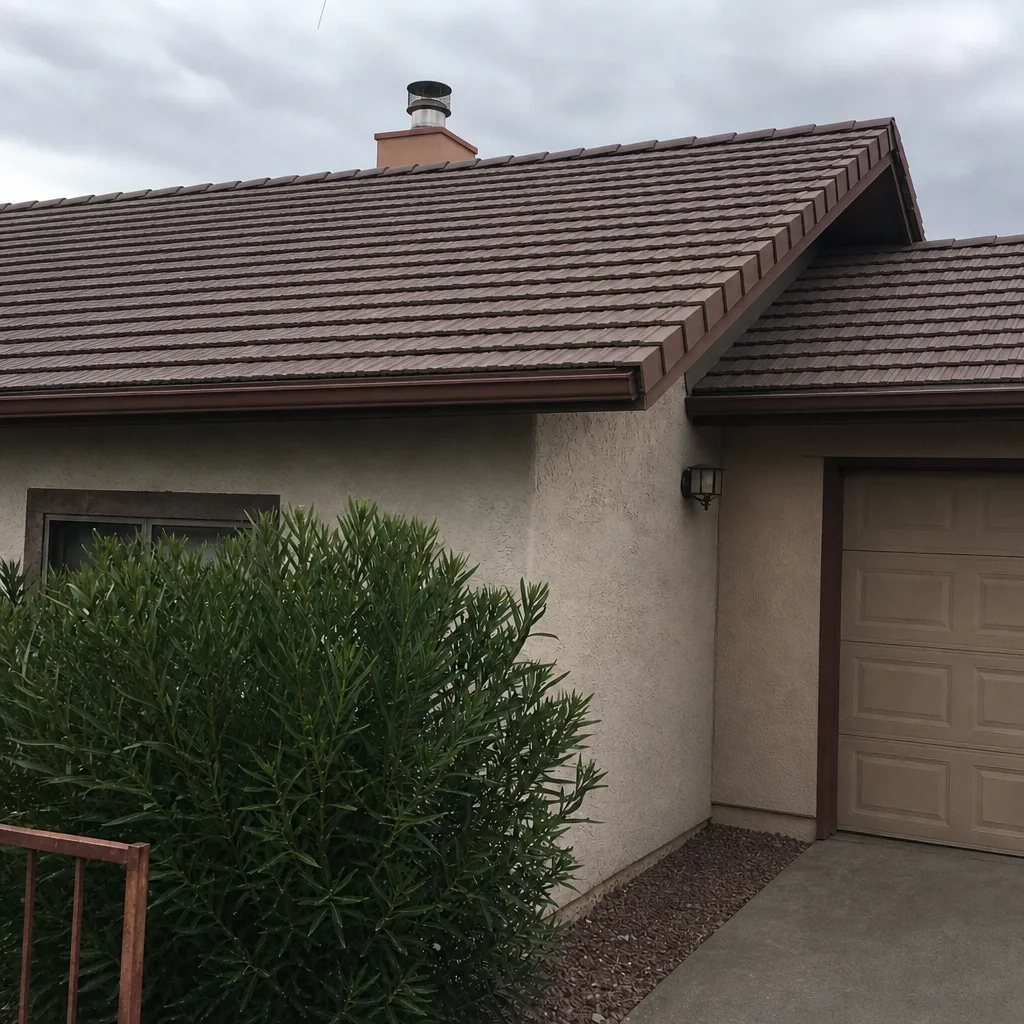 After
When to Call a Professional
Call when you see ponding past 48 hours, blisters that have opened, soft spots you can feel, a visible drip, damp decking in the attic, daylight at a penetration, or lifted fasteners and popped seams on metal. Those point to active water intrusion or structural loading, and they don’t fix themselves. Call sooner if a storm just came through and something changed overnight. For planned work like a recoat or a full replacement, there’s no rush to panic, but it’s worth getting an honest read before the next monsoon season.
Shepherd & Sons Roofing Boulder City offers free estimates in Boulder City. Today’s crew has up to 30 years of experience across foam, membrane, and metal systems, and installs products from GAF, CertainTeed, and Tamko, among others. If you’ve got photos and a written estimate from anyone else, ask for a free second opinion. Same address since 1996, licensed and insured, and a live person answers the phone any hour. Call (844) 761-8186.
Frequently Asked Questions
Ponding water that’s still standing two days after rain is the one to take seriously from the ground, along with any rust streak running down from a fastener or a seam. Both point to active water trouble. If you see either in Boulder City, call (844) 761-8186 for a free estimate and we’ll tell you what it means.
No. A little oil-canning, the wavy look across a panel, is normal as metal expands and contracts in heat and it’s usually cosmetic. It becomes a warning when it shows up suddenly or sits right at fasteners and seams, which can mean a panel has pulled loose. When in doubt, get it looked at.
A foam blister is the coating lifting off the foam because moisture or gas is trapped underneath, and it exposes the foam when it opens. A membrane bubble is usually trapped moisture or a failed seam ballooning in the heat. Both need a look, but they’re different problems with different fixes.
Look at the underside of the deck around every penetration first: skylights, HVAC curbs, and vents. Damp or stained wood, a musty smell, wet insulation in the corners, or daylight coming through any of those spots are the things to photograph and report.
Yes, and it’s usually the fastest way to get an honest read. Take a wide shot, a close-up with something for scale, one photo of each penetration, and an attic shot if you can. Text or email them with a short note and you’ll get a much more accurate answer than from a description alone.
No trip charge inside our own county. Estimates are free, and we’ll show you what we see before we talk money. Call (844) 761-8186 to set one up.
The Bottom Line
Specialty systems fail quietly, so the homeowner’s job is to know what the quiet signs look like. On foam, watch for chalky fade and blisters. On membrane, ponding past 48 hours and lifted seams. On metal, lifted fasteners and rust streaks. On every specialty system, put your eyes on the penetrations first, since that’s where most leaks begin, and do a quick attic check after a rain. Act now on ponding and active water intrusion; monitor the cosmetic stuff through the season. Photograph what you see and get an honest read before you spend a dime. That’s how you protect a roof in Boulder City’s sun.
If you want a straight answer on what your specialty roof is telling you, call Shepherd & Sons Roofing Boulder City at (844) 761-8186 for a free estimate. A live person answers any hour, we’ll show you the photos before we talk price, and every roofing job comes with the written 90-Day Done Right Promise. Senior and veteran discounts, free second opinions on any written estimate, and no trip charge inside our own county. And if you’re further along than a repair, our Roof Replacement & Installation in Boulder City page lays out what that looks like.
Written by the team at Shepherd & Sons Roofing Boulder City.