
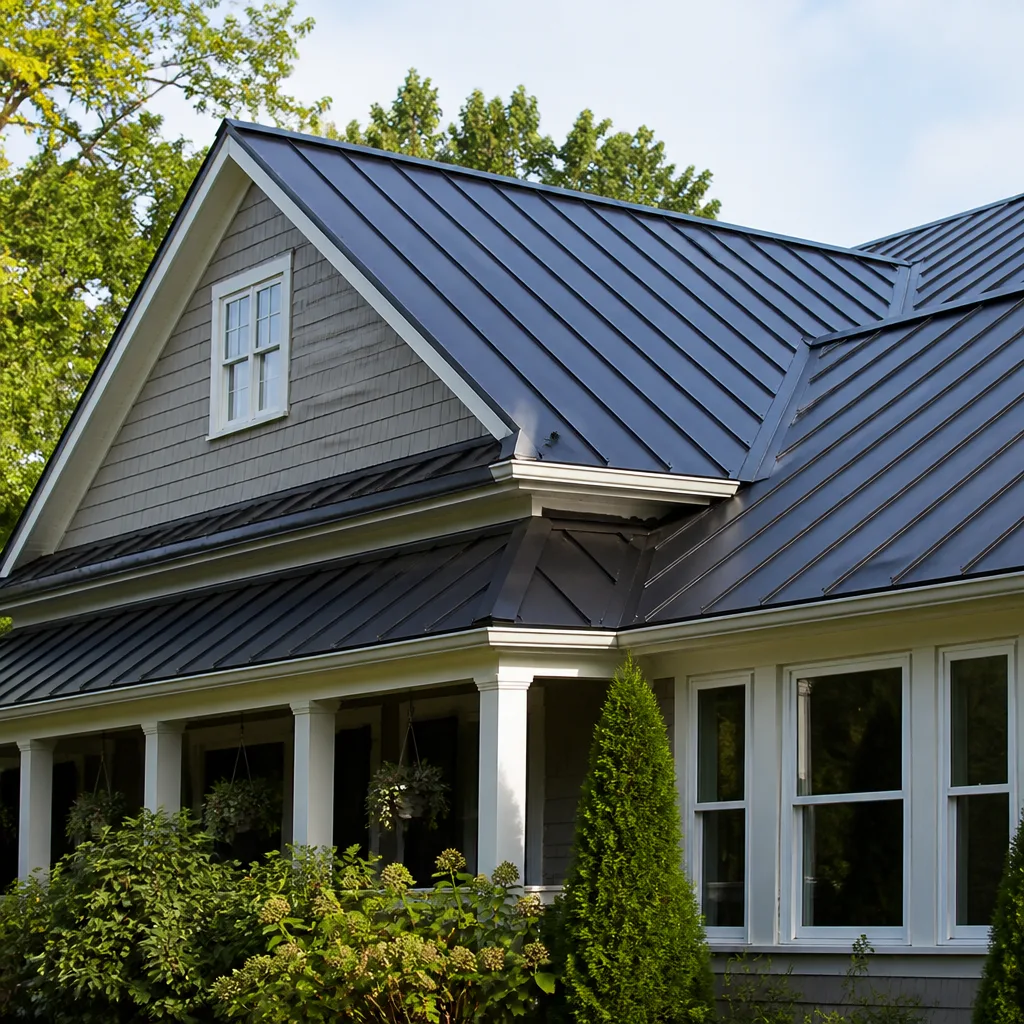
 Metal roofing
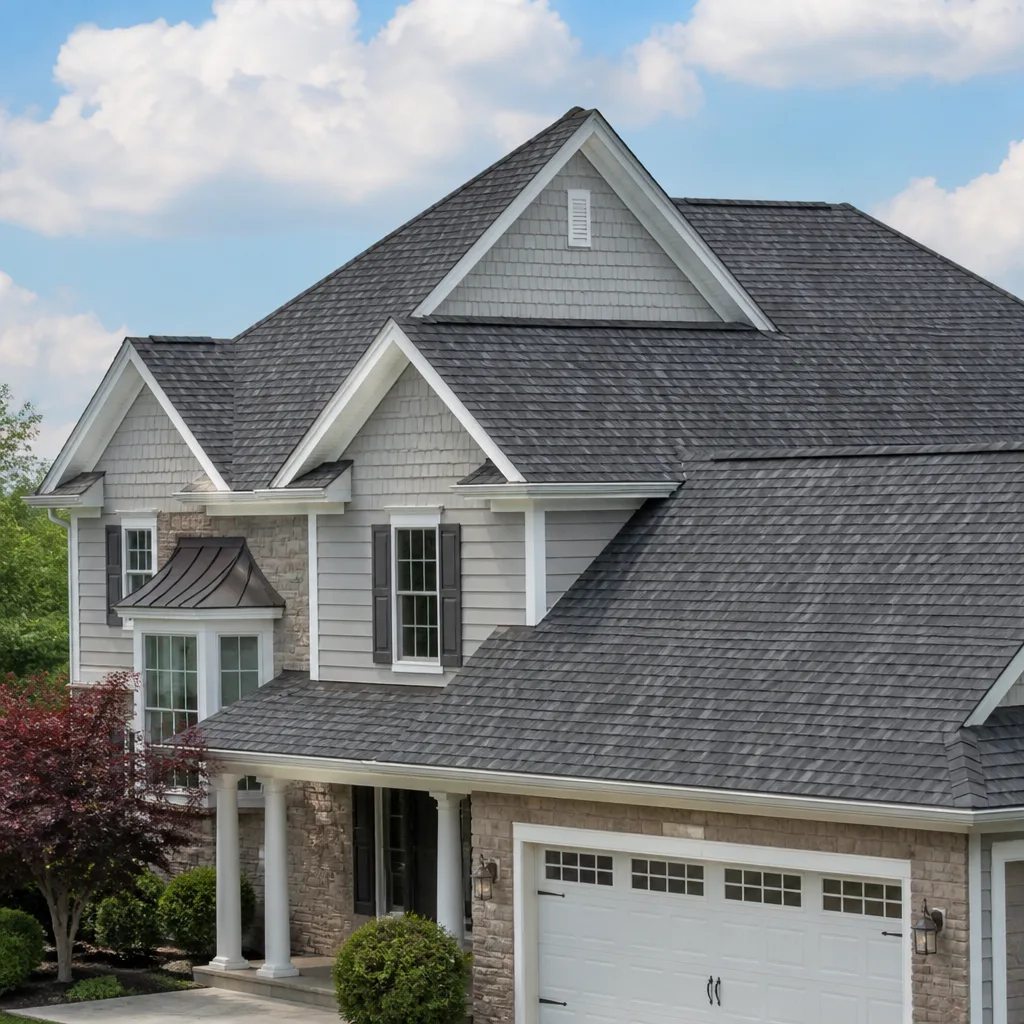 Architectural shingles
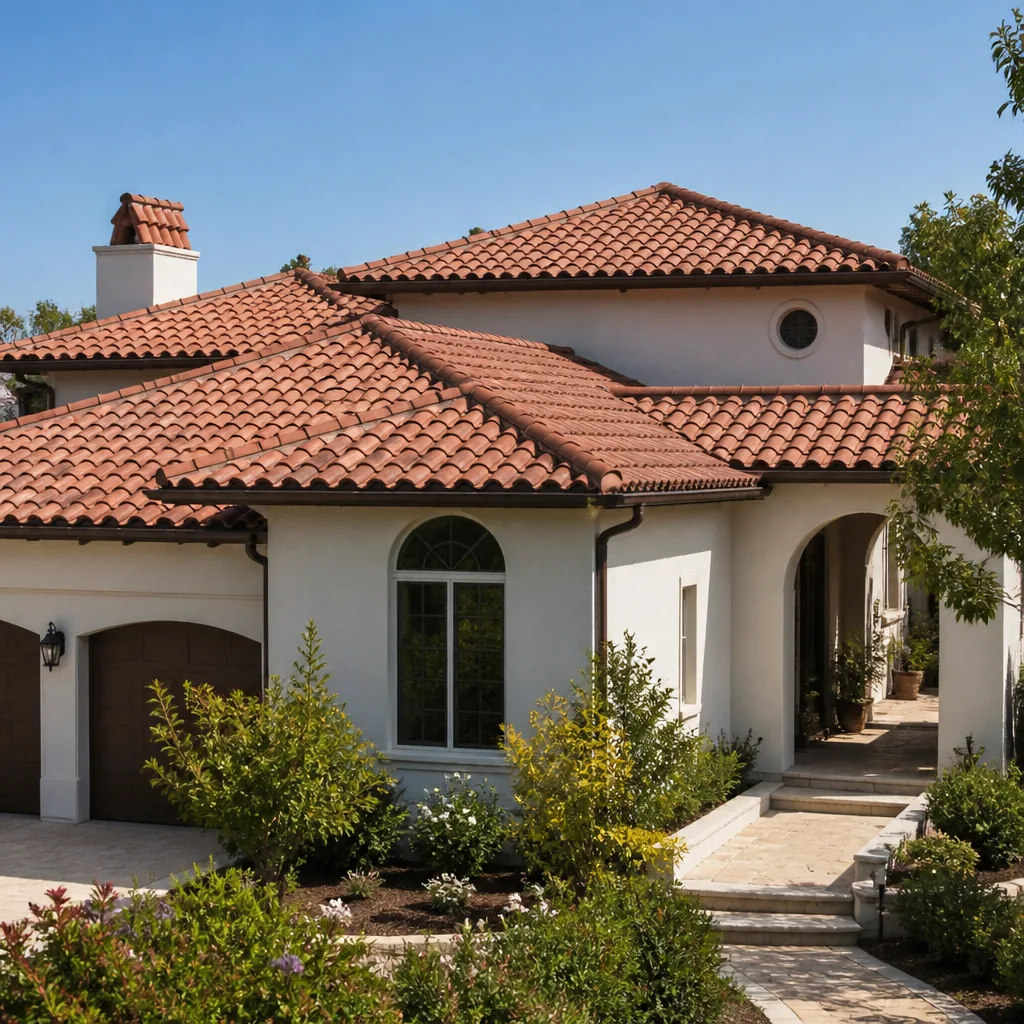 Tile roofing
 GAF
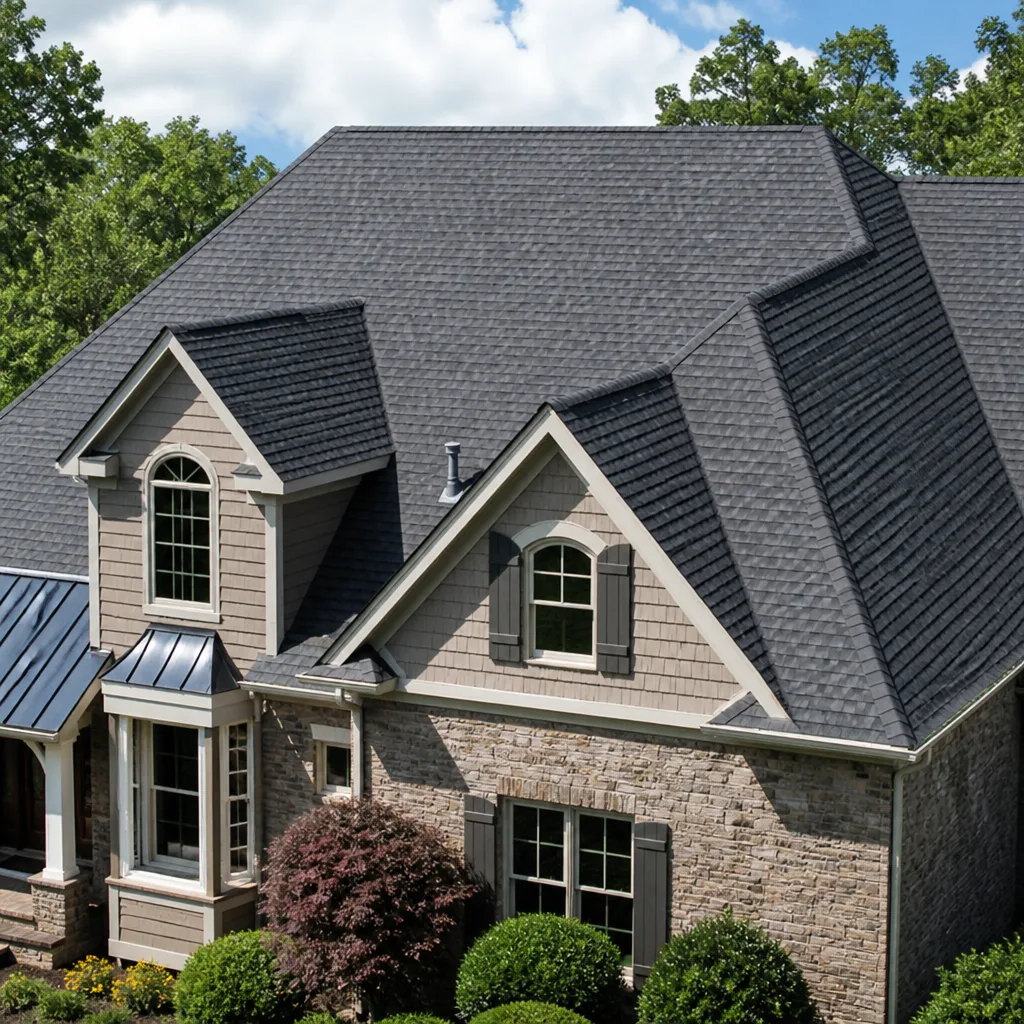 Owens Corning
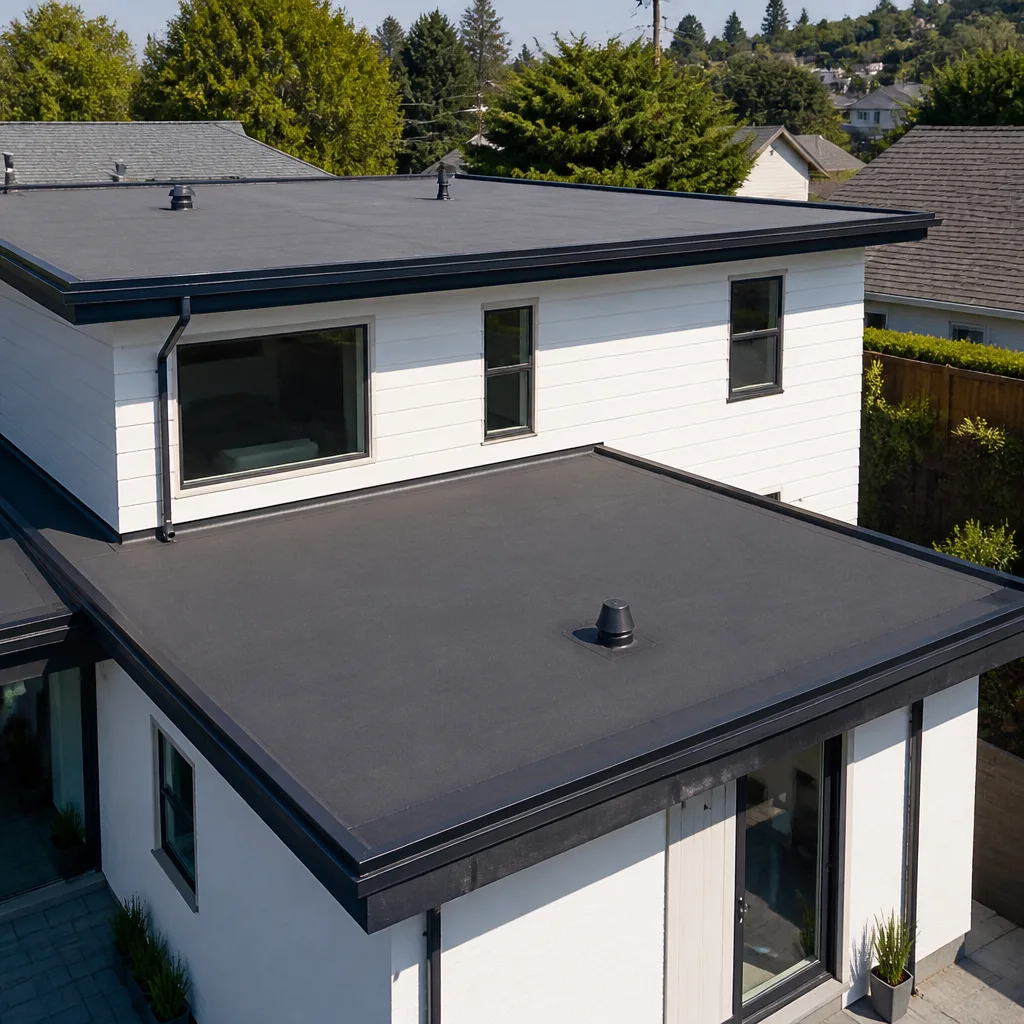 Flat & low-slope
Free roof inspection with deck photos before we talk money - GAF and Owens Corning certified installation
Styles & brands we work with
- Architectural shingles
- Metal roofing
- Tile roofing
- GAF
- Owens Corning
- Flat & low-slope
See the difference
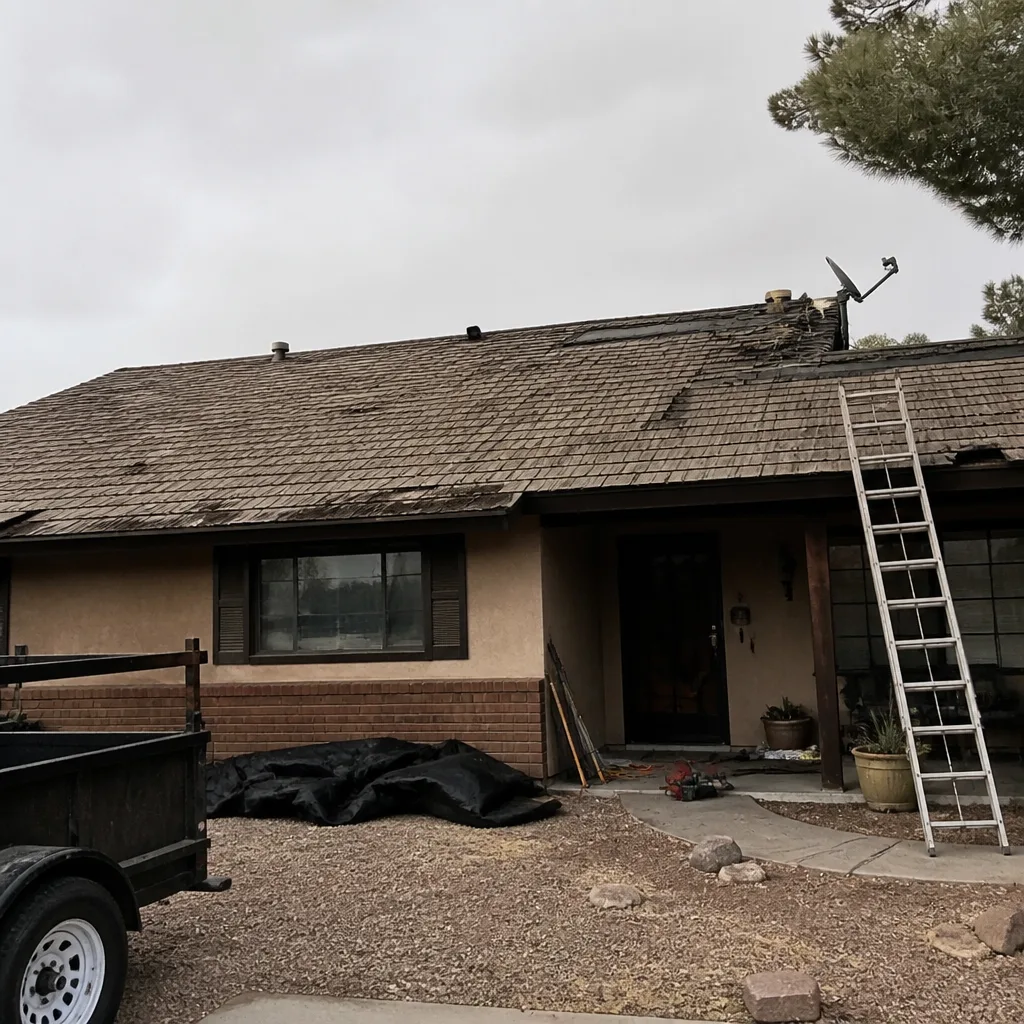 Before
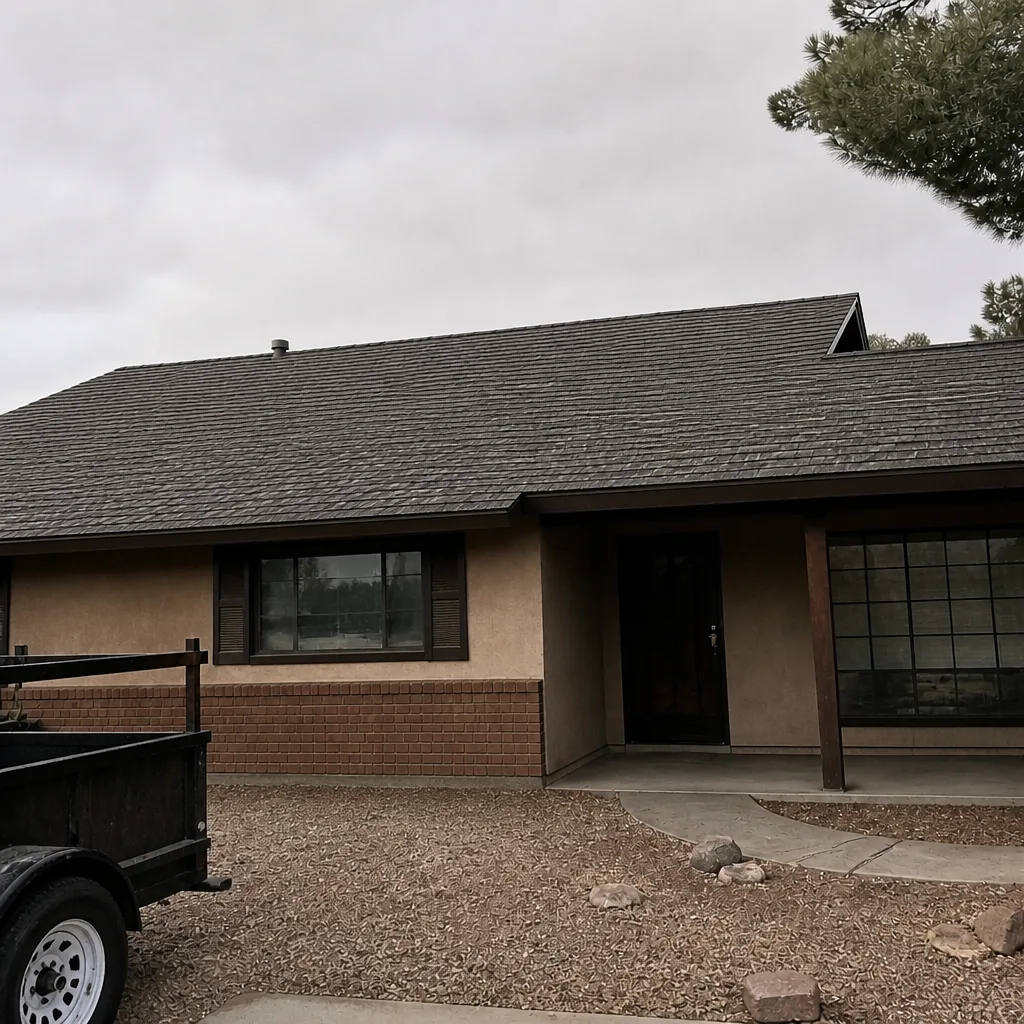 After
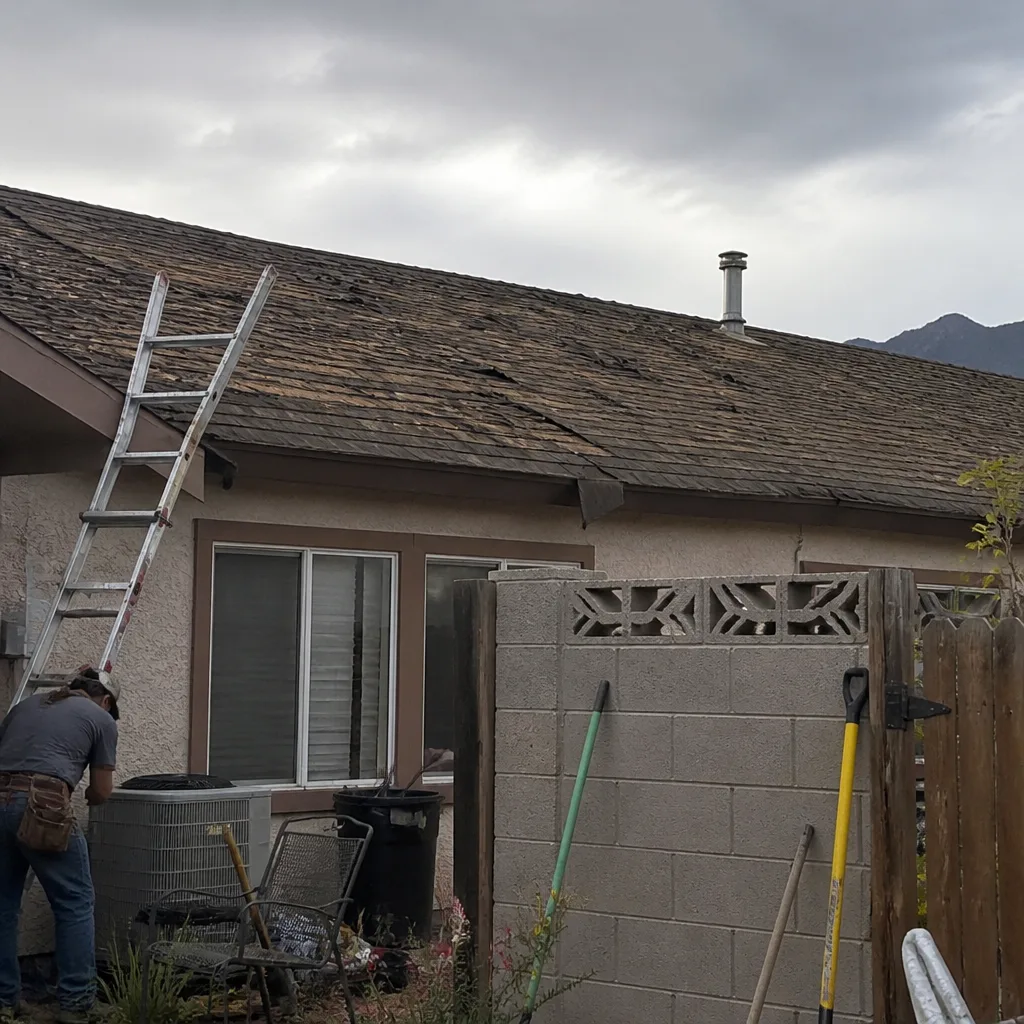 Before
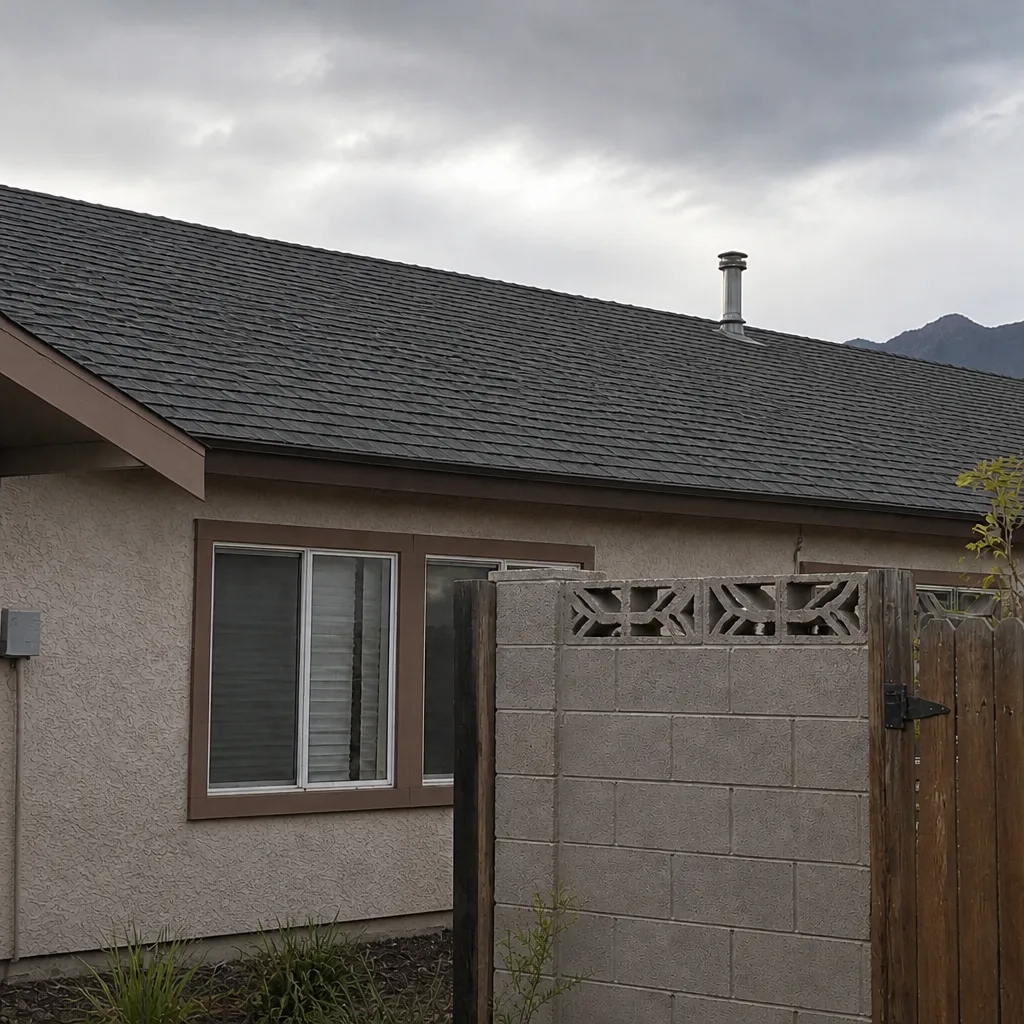 After
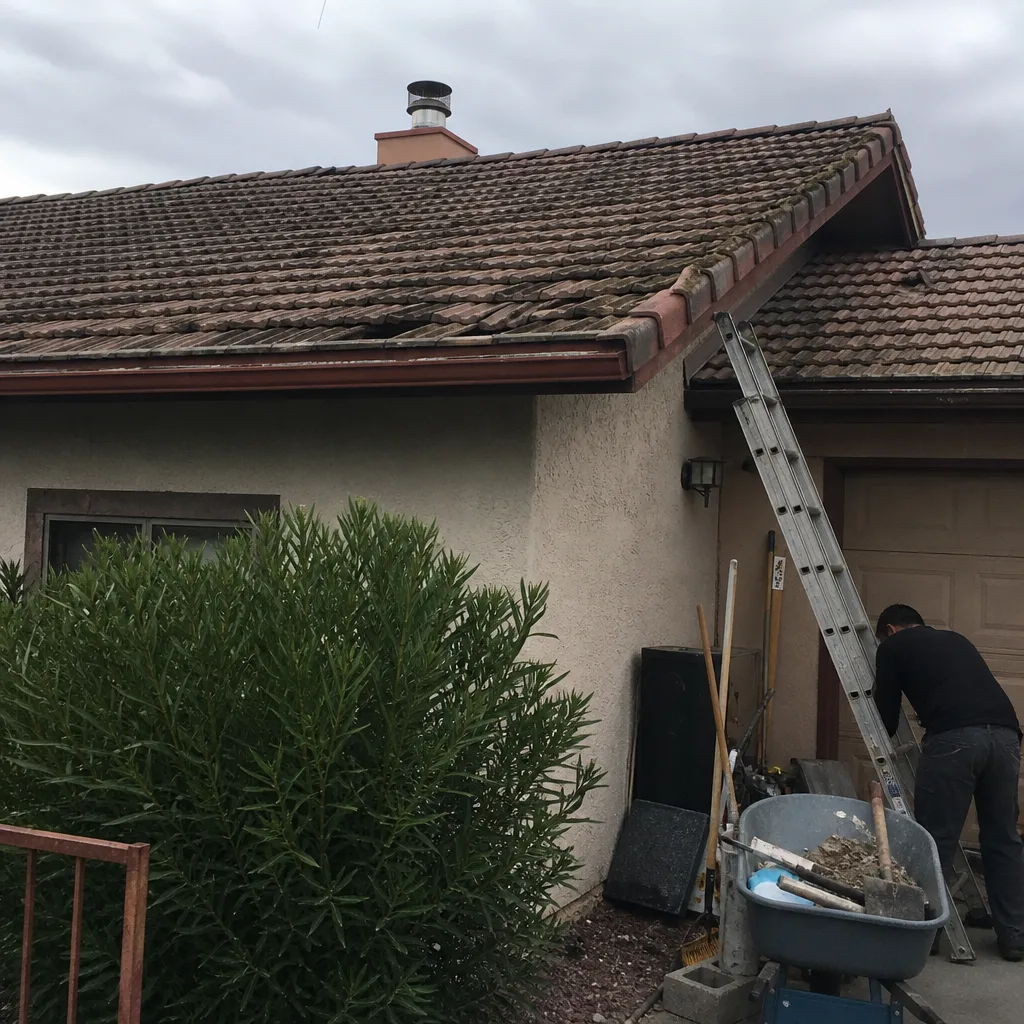 Before
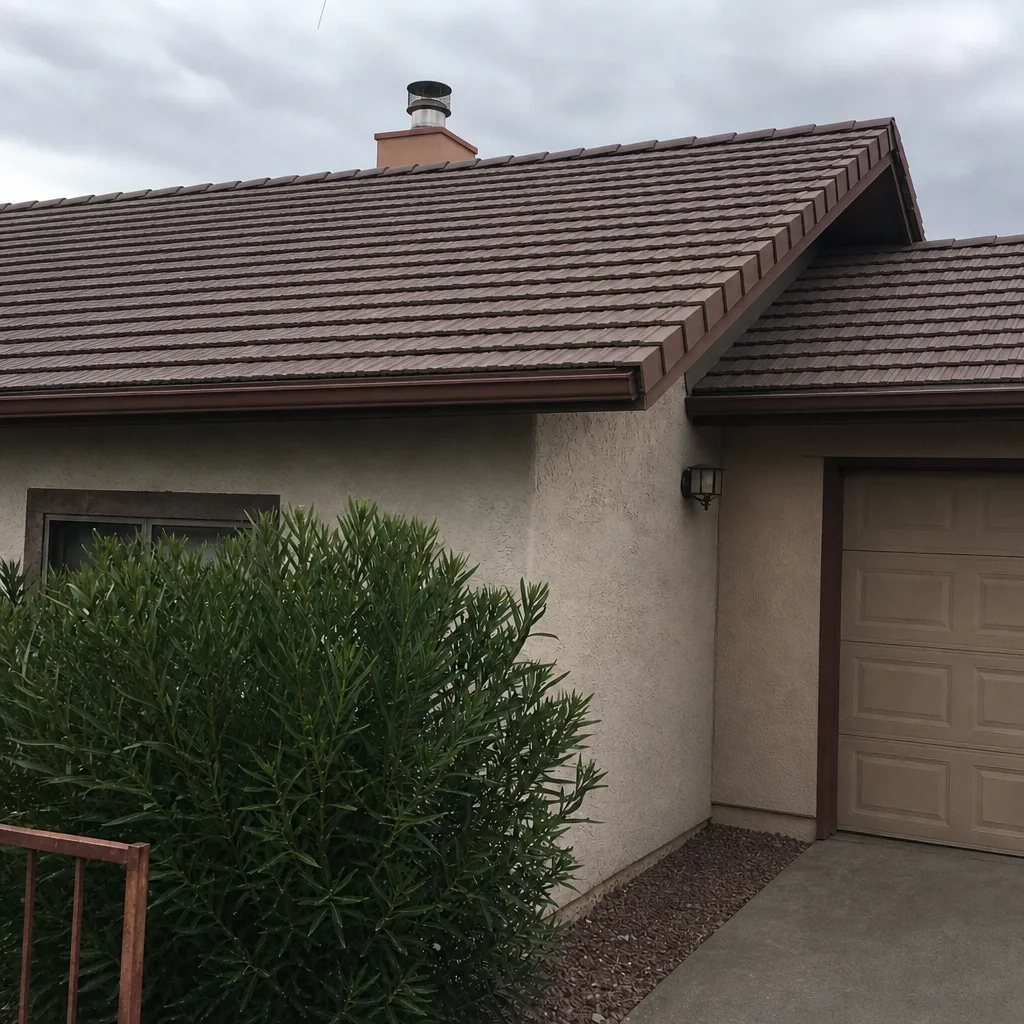 After
How Long Does a Metal Roof Last in Boulder City, NV?
A metal roof in Boulder City typically delivers 40 to 70 years of panel life, with most homeowners planning on the 50-year mark for standing seam. But the honest answer separates two clocks: the panels themselves, and the seals and fasteners holding them down. Rust almost never kills a desert metal roof. UV-baked butyl tape at the ridge, cracked sealant around pipe boots and flashings, and worked fastener holes do. A steel standing seam roof rated for 50 years in a Missouri climate will outlast that rating in Boulder City’s dry air, and the first failure you’ll see won’t be corrosion. It’ll be the sealant that cooked off in year 12 or 13. The panel is fine. The details aren’t. Call (844) 761-8186 for a free look at either clock.
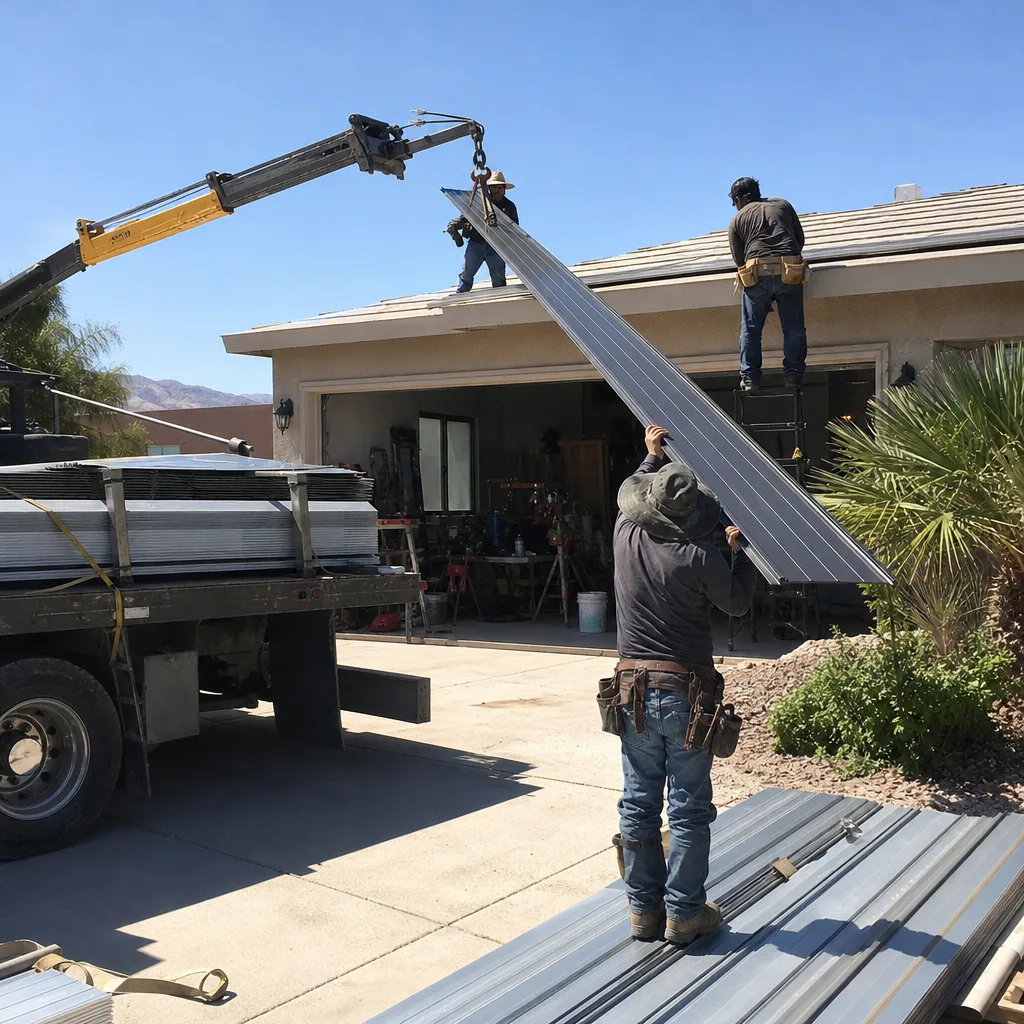
Boulder City sits a few hundred feet higher than Las Vegas, which sounds like a small thing until you’ve stood on a roof here in July. Intense desert sun, monsoon-season wind and flash-flood rain, and the occasional winter cold snap grind against a metal roof in a pattern you won’t find on a manufacturer’s spec sheet written in Ohio.
Why Panel Life and System Life Are Two Different Numbers
The 50-year figure on a Galvalume or aluminum panel is real, and in Boulder City’s low-humidity air those panels genuinely approach or exceed it. What the brochure never separates is the panel from the system: the rubber gaskets, butyl tape, and sealant at penetrations, ridge caps, and valleys live on a completely different schedule.
That schedule runs on a 10-to-15-year cycle here, and it’s driven by UV and thermal cycling, not moisture. Think about what a metal roof in Boulder City actually goes through. A winter night can drop to roughly 20°F. A July afternoon panel surface can hit 160°F or higher. That’s a 140°F daily swing in extreme cases, and the metal moves every degree of it. Exposed-fastener panels take that movement straight into the screw holes. Concealed-clip standing seam systems float over it, which is the main reason they perform so much better in this climate.
Our technicians have up to 30 years of experience, and the pattern they see most on Boulder City metal roofs is simple: perfect panels, tired details.
What Actually Ages a Metal Roof Here (and What Doesn’t)
In our experience, homeowners worry about the wrong failure. Here’s the split, based on what we actually find on roofs in Boulder City.
- Panel corrosion: Rare. Galvalume and aluminum handle desert air well. A scratched or neglected finish can show edge rust, but the field of the panel is usually sound.
- Ridge cap butyl tape: The most common first failure. UV cooks the tape, it dries, it cracks, and wind-driven monsoon rain finds the gap.
- Penetration sealant: Pipe boots, vents, and flashing laps. The sealant shrinks and pulls away on that 10-to-15-year cycle.
- Exposed fastener gaskets: On screw-down panels, the neoprene washer hardens and the screw backs out slightly. Each monsoon, the hole walls off a little more.
- Chalked paint finish: Chalking itself isn’t failure, but a chalked finish holds windblown alkaline caliche dust in the seams. A rinsed finish sheds it; a neglected one holds it against the metal.
That caliche dust is the piece almost nobody plans for. It settles into the seams and pans, and when a monsoon pushes moisture in behind it, that dust turns into a mild alkaline slurry sitting on the finish. An annual low-pressure rinse – not a pressure wash, which can drive water past seals – does more for service life here than any coating product on the market.
The Age Pattern We See on Boulder City Roofs
Boulder City’s housing stock shapes this as much as the weather does. The 1930s Bureau of Reclamation worker housing and small bungalows in the core often carry original or heavily patched low-slope and tile roofs, while newer subdivisions on the outskirts are where most of the metal went up. On the older homes, the metal is usually a retrofit, and retrofits are where detailing shortcuts hide. On the newer ones, we see that 12-to-15-year sealant clock hitting right about now.
The Historic District adds a wrinkle roofers elsewhere in the Vegas Valley never deal with: strict design review. Material and profile changes need to match the town’s original desert-appropriate character, so if you’re re-roofing or replacing in the historic core, check the guidelines before any material gets ordered. A different panel profile can trip approval.
If you want the full picture on systems, finishes, and what fits a historic or desert home, start with our Metal Roofing overview, or the closer look at Metal Roofing in Boulder City.
What a Metal Roof Really Costs Over Its Life in Boulder City
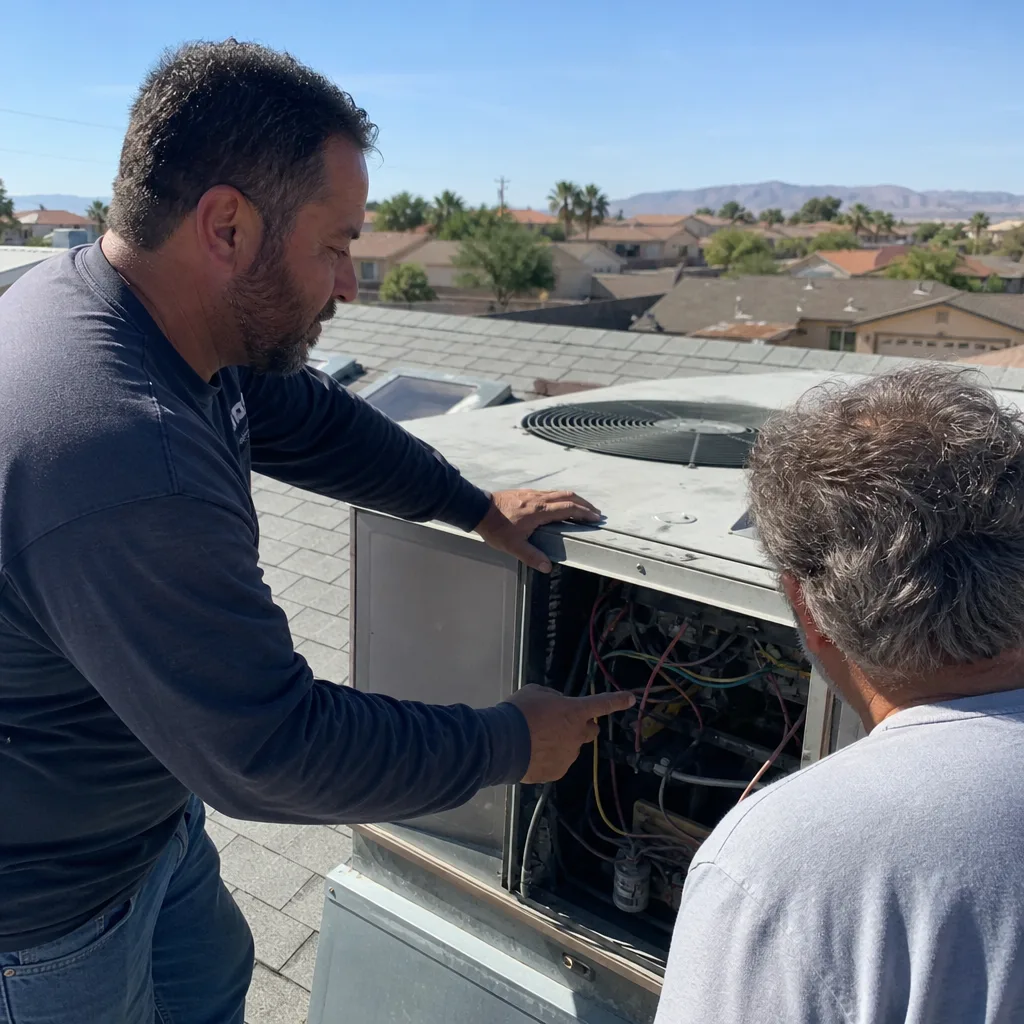
The panels are a one-time cost. The details are a maintenance line item, and homeowners deserve to see it before they sign.
| Line item | Typical range | Frequency |
|---|---|---|
| Standing seam metal roof, installed | $12 – $22 per sq ft | Once |
| Screw-down metal panel, installed | $8 – $14 per sq ft | Once |
| Ridge, valley, and penetration reseal | $400 – $1,200 | Every 10 – 15 yrs |
| Replacing hardened exposed-fastener screws and gaskets | $300 – $900 | Every 10 – 15 yrs |
| Annual low-pressure rinse and inspection | $150 – $350 | Yearly |
| Full panel replacement, if it ever comes | Rare before year 40 | Once |
Numbers vary with roof size, pitch, and access, but that’s the shape of it. Spend the maintenance money on the 10-to-15-year clock and you protect a 50-year panel. Skip it and you’re paying for water damage inside instead. We publish our pricing upfront, so you know the number before anyone touches your roof. Current standing offer: $40 off any repair over $200, and a free second opinion on any written estimate you already have.
The Warranty Read-Through Most Homeowners Skip
Most manufacturer warranties exclude damage from “improper installation” and “sealant failure.” Those are precisely the components most likely to fail first in this climate. The panel warranty covers the part that rarely fails; the parts that do fail sit outside it. And the labor to reseal a ridge or repenetrate a flashing after year 15 is never covered by anyone.
So the out-of-pocket cost to plan for is resealing and re-fastening, not the panel. That’s what we build into every estimate conversation. It’s also why every new metal install here is backed by the written 90-Day Done Right Promise – if the details aren’t right, one call brings us back, no argument.
What to Look For in a Boulder City Metal Roof
When you’re evaluating a metal roof, new or existing, here’s what separates a 50-year system from a 25-year one:
- Concealed-clip standing seam over screw-down wherever the budget allows. The movement goes to the clips, not the fastener holes.
- Proper ridge and valley detailing with quality butyl tape, not a caulk tube smeared on top.
- Correct nailing or clip pattern for the wind rating you need – the pattern earns the wind rating, not the shingle wrapper.
- A finish rated for UV, and a plan to rinse it. We install GAF, Tamko, and Boral systems – name the product and we have likely set it.
- Design review clearance if you’re in the Historic District, before material is ordered.
We’ve been roofing in the area since 1996 from the same address, and Bill and the crew show you the deck photos before anyone talks money. Since our crews work on roofs across the region, you can also read more about home roofing and how we approach a full inspection.
FAQs About Metal Roof Longevity in Boulder City
Expect 40 to 70 years of panel life, with 50 years a fair planning number for standing seam. The panels are the durable part; the seals and fasteners around the ridge, valleys, and penetrations need service every 10 to 15 years because of UV and thermal cycling, not moisture. Call (844) 761-8186 if you want your roof’s actual sealant clock assessed – the inspection is free.
Rarely. Boulder City’s low humidity is kind to Galvalume and aluminum panels, and corrosion is not the usual failure mode. If you see rust, it’s typically at a cut edge or an untreated scratch, not the face of the panel. The bigger threats are dried butyl tape and hardened gaskets, which a yearly rinse and reseal schedule keeps ahead of.
Every 10 to 15 years, thanks to the 140°F daily swings between winter nights and July panel surfaces. That thermal cycling wears sealant faster here than snow load ever could. Between reseals, an annual low-pressure rinse clears the alkaline caliche dust that collects in the seams and holds moisture during monsoon rain. Call us for a free reseal assessment – you’ll get a straight number.
Yes, if you plan to stay. Concealed-clip standing seam floats over thermal movement, so fastener holes don’t get worked loose by that daily expansion and contraction the way they do on screw-down panels. Over 40-plus years that’s fewer re-fastenings and less worry. Ask any bidder how the clip holds movement – and ask how many squares they counted before quoting.
Usually no. Most warranties exclude “improper installation” and “sealant failure,” which are the exact details that age first in this climate. The panel warranty covers the part that rarely fails, and the labor to reseal is on you. That’s the line item to plan for – not the panel.
Get Your Metal Roof Looked At
If you’d rather have it looked at than guess, Shepherd & Sons Roofing Boulder City offers a no-pressure assessment in Boulder City. We’ll check the tape, the seals, and the fasteners before we quote anything, and show you photos. Free second opinion on any written estimate. Call (844) 761-8186 for a free estimate today.
Written by the team at Shepherd & Sons Roofing Boulder City, serving Boulder City, NV.