
Last updated November 17, 2026
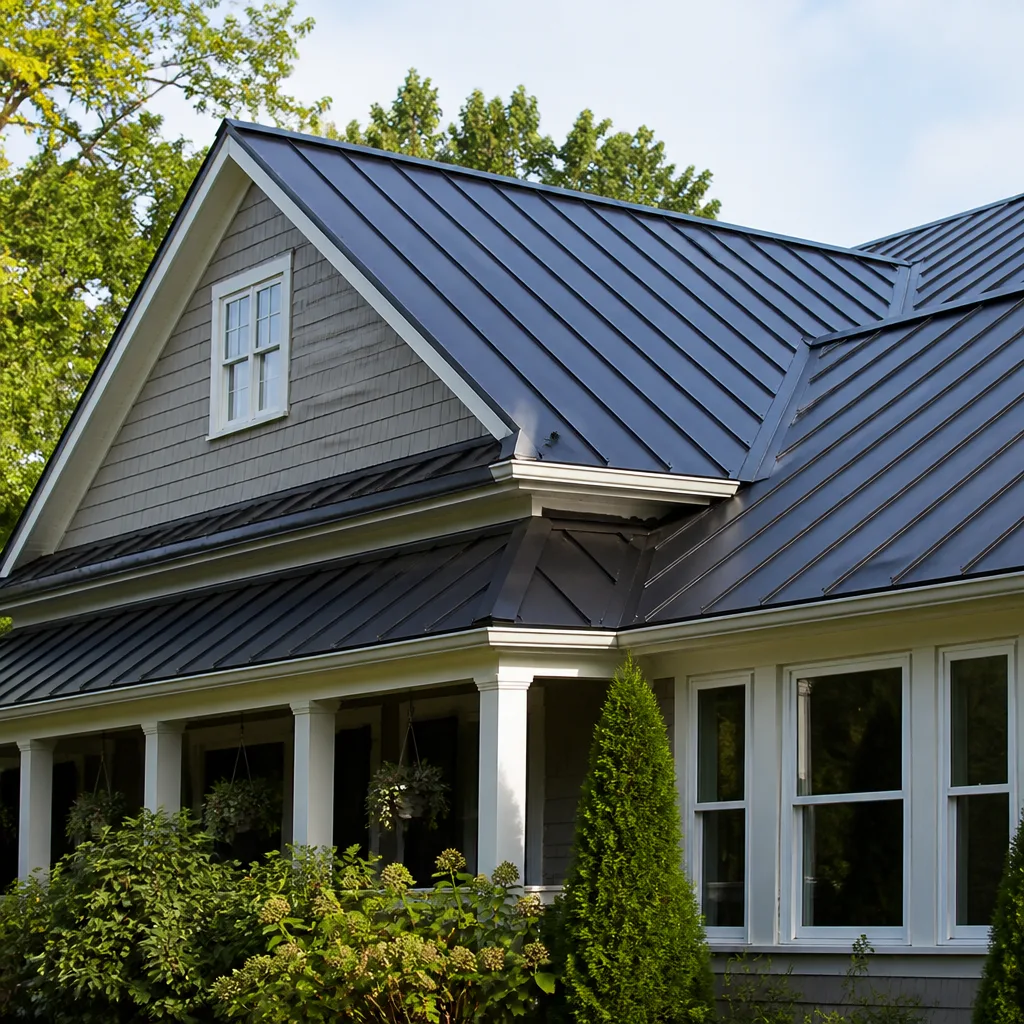 Metal roofing
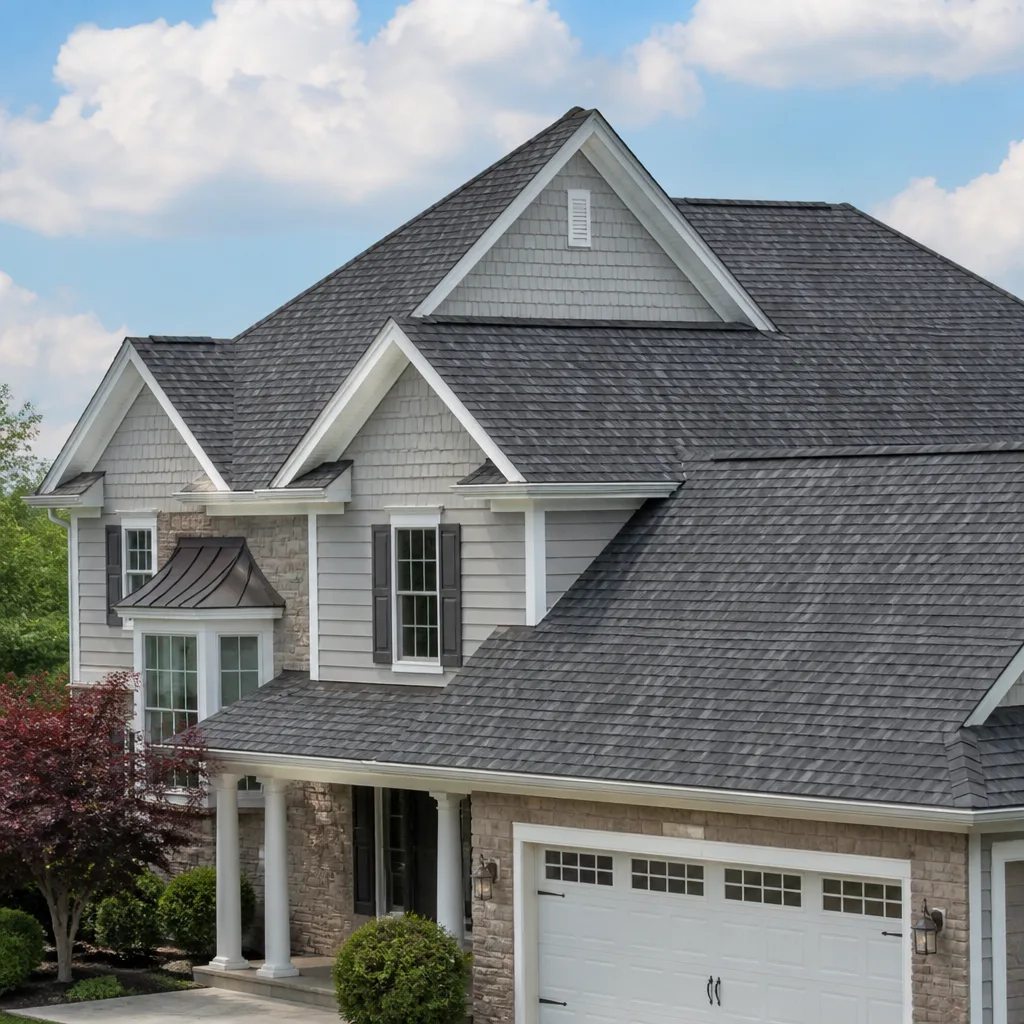 Architectural shingles
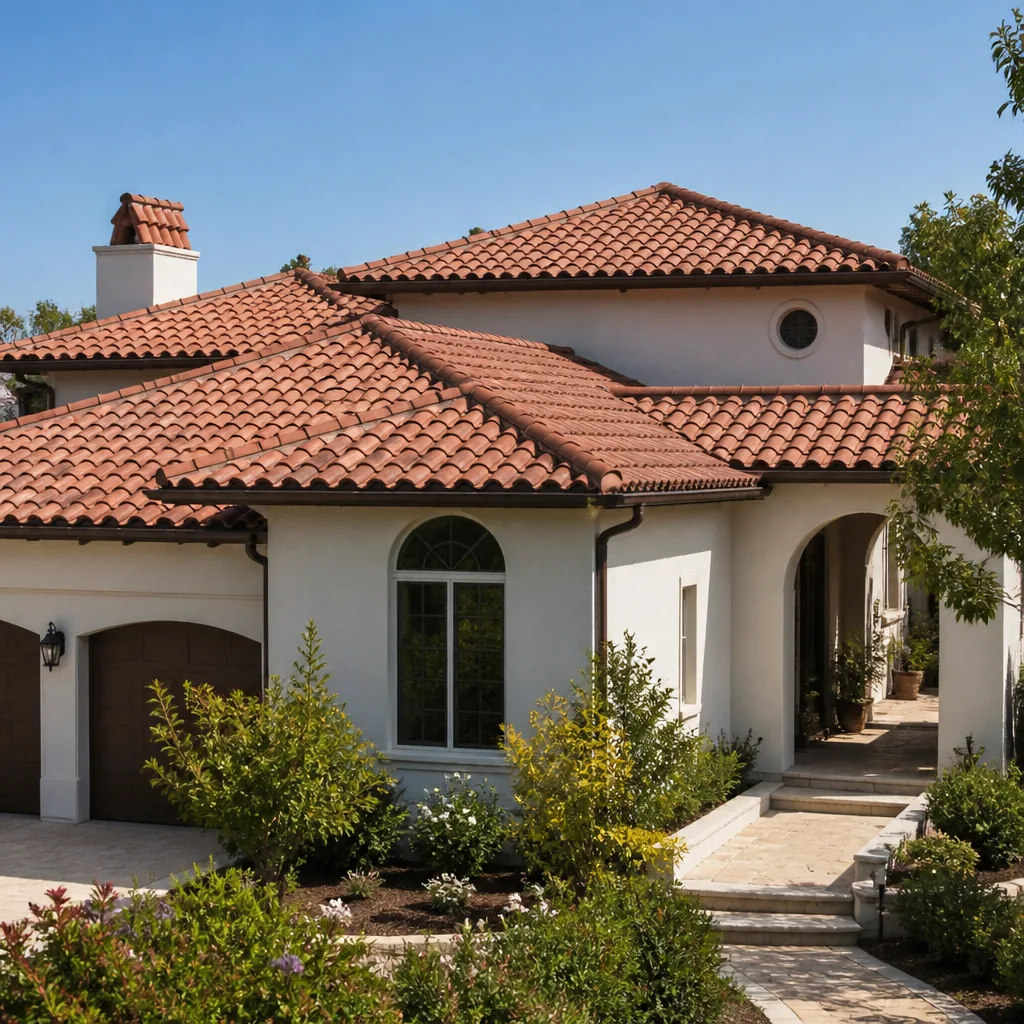 Tile roofing
 GAF
 Owens Corning
 Flat & low-slope
Free roof inspection with deck photos before we talk money - GAF and Owens Corning certified installation
DIY vs Professional Metal Roofing: What’s Safe to Do Yourself
We’re not going to sit here and tell you every roofing task needs a licensed contractor. That’s what every contractor says, and you’ve heard it enough that it stopped meaning anything. Here’s the honest version: most of what happens on a metal roof really does need a pro, but a short list of jobs is safe, cheap, and worth doing yourself. The trouble is that the two DIY metal roof repairs we see go wrong most often are also the two that look simplest from the ground. This guide draws the line where it actually belongs, Boulder City heat and all.
Quick Answer
Safe DIY metal roofing work is limited to things you can do without walking the panels: cleaning gutters from a ladder at the eave, inspecting from the ground with binoculars, and clearing leaves and grit out of valley channels after a storm. Everything that involves walking on the panels, sealing a penetration, or re-fastening a ridge cap is professional work, because a wrong product or a stripped fastener in Boulder City’s heat and wind costs more to fix than to hire out. Panel and underlayment installation is never DIY if you want your manufacturer warranty to survive.
Styles & brands we work with
- Architectural shingles
- Metal roofing
- Tile roofing
- GAF
- Owens Corning
- Flat & low-slope
Table of Contents
- The Short List of Metal Roofing Tasks That Are Safe to Do Yourself
- The “Looks Easy, Isn’t” List: Three Jobs That Punish Mistakes
- Why Panel and Underlayment Installation Isn’t DIY in Nevada
- Tool Reality: What Renting a Seamer and Brake Actually Costs
- What a Ground-Level Inspection Can Tell You (and What It Can’t)
- The One Question We Ask Every Homeowner Who Wants to DIY
- Common Mistakes to Avoid
- When to Call a Professional
The Short List of Metal Roofing Tasks That Are Safe to Do Yourself
Start with what you can genuinely handle. None of these require you to set foot on a metal panel, and none of them put your warranty or your back at risk.
- Gutter cleaning at eave level. Stand on a stable ladder, scoop the debris out by hand or with a gutter scoop, and flush the downspouts with a hose. In Boulder City, the spring winds pile up fine desert grit and creosote leaves in the gutters fast, so this is a twice-a-year job at minimum.
- Visual inspection from the ground with binoculars. A decent pair of 10x binoculars will show you lifted ridge caps, popped fasteners, streaked panels, and dented valleys from your own driveway. It won’t show you what’s happening under the panels, but it catches most visible trouble early.
- Clearing debris from valley channels after a storm. After a monsoon dump or a wind event, leaves and grit collect in the valleys and hold moisture against the metal. Sweep them out with a soft-bristle broom on a long handle. Soft bristles matter; a stiff brush will scratch the finish.
- Washing the panels from the ground. A garden hose and a mild dish soap solution knocked off the panels from a ladder at the eave is fine. Skip the pressure washer, which can drive water past the fasteners and strip the coating.
That’s the list. It’s short, but it’s honest, and everything on it saves you money without inviting a bigger repair. If you want a proper look at what’s happening up top, our Roof Repair in Boulder City page explains what a real inspection covers.
The “Looks Easy, Isn’t” List: Three Jobs That Punish Mistakes
These three look like fifteen-minute fixes on a video. In our experience, they’re the two or three repairs that turn into the most expensive calls after a homeowner tries them.
1. Re-caulking pipe boots
The wrong sealant in desert heat is worse than no sealant at all. Standard silicone or cheap roof cement will cook, crack, and peel off a vent boot within one Boulder City summer, and now you’ve got a half-sealed gap that traps water against the pipe instead of shedding it. The right product is a urethane or polyurethane roof sealant rated for high UV and thermal movement, applied to a surface that has been cleaned and primed properly. If the boot itself is cracked, caulk won’t save it; the boot needs replacing.
2. Re-fastening lifted ridge caps
Torque matters more than most people realize. Overdrive a fastener and you crush the neoprene washer flat, which kills the seal. Underdrive it and the washer never seats, so wind gets under the cap. In Boulder City’s spring gusts, a ridge cap that isn’t fastened to the manufacturer’s torque spec can be gone by June. This one is easy to do badly and hard to inspect afterward.
3. Walking a standing seam roof without protection boards
Standing seam panels are slick when they’re new and slicker when there’s a little dust on them. More than that, every step you take on the flat pan between the seams can oil-can the metal or scuff the finish, and a scratch in a Kynar finish doesn’t buff out. Pros lay down foam protection boards and walk the seams, not the flats. That’s not a trick you pick up from a video, it’s a habit that keeps you from buying a panel.
Why Panel and Underlayment Installation Isn’t DIY in Nevada
This is where we’re firm, and it isn’t because we want the work. Panel and underlayment installation is non-negotiable professional work in Nevada for two specific reasons.
The first is liability. An exposed fastener or standing seam metal roof is a system. The panels, the underlayment, the fasteners, the trim, and the attachment to the deck all have to work together to meet the manufacturer’s installation spec. Miss the spec, and you void the warranty. When we install metal, we’re following the spec for the panel we’re setting, whether that’s a Boral or a GAF product, because that spec is what keeps the warranty intact for the homeowner. A DIY install, however careful, usually doesn’t hit it.
The second is permits. Nevada and local Boulder City building codes require permits for roof replacement and structural roof work, and that work has to pass inspection. If your roof was installed without a permit, you can end up with a problem at resale, and the inspector can’t sign off on work they didn’t see go in. The permit process is a professional’s responsibility, and it’s part of what you’re paying for. Our Metal Roofing in Boulder City page walks through the material and installation side in detail.
Underlayment is the layer most people skip. It’s the actual waterproofing. A metal panel sheds most of the water, but the underlayment catches what gets past the fasteners, at penetrations, and at the valleys. Get it wrong and the leak happens under the panels where you can’t see it until the ceiling stains.
Tool Reality: What Renting a Seamer and Brake Actually Costs
Here’s where the math on a DIY metal roof gets uncomfortable. The tools aren’t cheap, and for a standing seam job specifically, the equipment list is longer than you think. Compare the rental or purchase cost against what installation runs per square, and the gap closes fast.
- Standing seam seamer: the single most expensive rental. A powered seamer runs in the neighborhood of $250 to $400 per day at tool rental yards, when you can find one that keeps it in stock.
- Sheet metal brake: for bending trim, valleys, and flashings. Rental in the $75 to $150 per day range, and this is one tool where the cheap version on a job site shows up in every bent line.
- Panel lift or hoist: metal panels are long and floppy, and getting them on a roof without creasing them takes a lift or at least a couple of helpers. That’s another rental line.
- Fasteners and sealant: the right self-drilling screws with the right neoprene washers, and the right urethane sealant, priced per piece. A DIY order that comes up short means a second shipment and lost days.
- Wasted material: the panels you cut wrong. Metal panels aren’t cheap, and offcuts at a 40 to 50 percent waste rate on a first-time install can eat the entire savings.
Add a weekend of rental days over the whole job, and the number starts to look like a paid installation, except you’re the one on the roof. For a repair job, the seamers don’t even come out; only the small tools do. That’s why we tell most homeowners considering DIY metal roofing in Boulder City to price the tools first. If the tool cost is more than half the labor quote, you’re not saving money, you’re renting a project.
What a Ground-Level Inspection Can Tell You (and What It Can’t)
A good ground-level inspection with binoculars is genuinely useful, and we recommend every homeowner do it twice a year: once in the spring after the wind season and once in the fall. Here’s what you can see and what you can’t.
What you can see from the ground:
- Lifted or missing ridge cap sections
- Popped or missing fasteners (the small dark spots along the panel seams)
- Rust streaks or finish failures at the panel edges and valleys
- Debris accumulation in valleys and against the chimney
- Dents or oil-canning on the panel faces
- Water staining on the fascia or the soffit telling you where a leak is running
What you can’t see: the condition of the underlayment, the integrity of the decking, the state of any flashings hidden behind a ridge or under a panel overlap, and whether a fastener you can’t see has already lost its seal. Those are the problems that matter most, and they don’t show up from the driveway.
Boulder City conditions make the twice-a-year check worth keeping up. The UV load here is brutal on sealants and washers, and the spring wind season loosens everything that wasn’t torqued to spec. If the binoculars turn up anything you can’t explain in plain language, that’s your cue to have a roofer out.
The One Question We Ask Every Homeowner Who Wants to DIY
When a homeowner tells us they want to handle a repair themselves, we ask one question: “What’s your plan if you crack a panel or strip a fastener thread?”
The answer matters more than the repair. A cracked panel on a standing seam roof means replacing that whole panel section, which can mean a specialty order and a multi-day wait. A stripped fastener thread, or a fastener overdriven into the panel, can walk, ruin the seal around it, and start a slow leak that shows up three months later. If a homeowner has a real answer to that question, meaning they know the plan, they know the material, and they know what they’ll do when the plan fails, that’s a person who can probably handle their own repair.
If the answer is a shrug, the repair wasn’t ready to DIY. Not because we want the work; because the shrug is the warning. Any roofer who’s been on the roof a while can tell you about the jobs that came in as a fifteen-minute fix and went out as a panel replacement. The homeowner’s time and money are both better spent knowing the answer before the screwdriver comes out.
If you want a straight read on whether the repair you’re considering is one of those, our team will look at it honestly, even when the answer costs us the job. That’s what makes a second opinion worth having, and we offer one on any written estimate, no charge.
Common Mistakes to Avoid
- Using silicone or standard roof cement on a metal roof in Boulder City. It cooks and peels in one summer. The right sealant is a UV-rated urethane, and the surface has to be cleaned and primed before it holds.
- Overdriving or underdriving fasteners. A crushed washer or a loose screw both fail. Follow the manufacturer’s torque spec, or let someone who knows the spec set them.
- Walking the flat pans on a standing seam instead of the seams. Every step can oil-can the metal or scuff the finish, and that damage doesn’t come out.
- Skipping the permit because it seemed like extra paperwork. An unpermitted roof can hold up a resale, and the inspector can’t sign off on work they never saw. On any replacement or structural work, pull the permit.
- Buying a “universal” fastener to save a trip. Self-drilling roofing screws come in specific lengths for specific material thicknesses. A too-long screw pokes through the deck, a too-short one doesn’t bite.
- Pressure-washing the panels to get the dust off. A pressure washer drives water past seams and washers and strips the coating. A garden hose and mild soap are all a metal roof needs.
- Waiting to call after a wind event because the damage looks small. Lifted ridge caps and popped fasteners are cheap to fix now and expensive once water gets under the panels.
See the difference
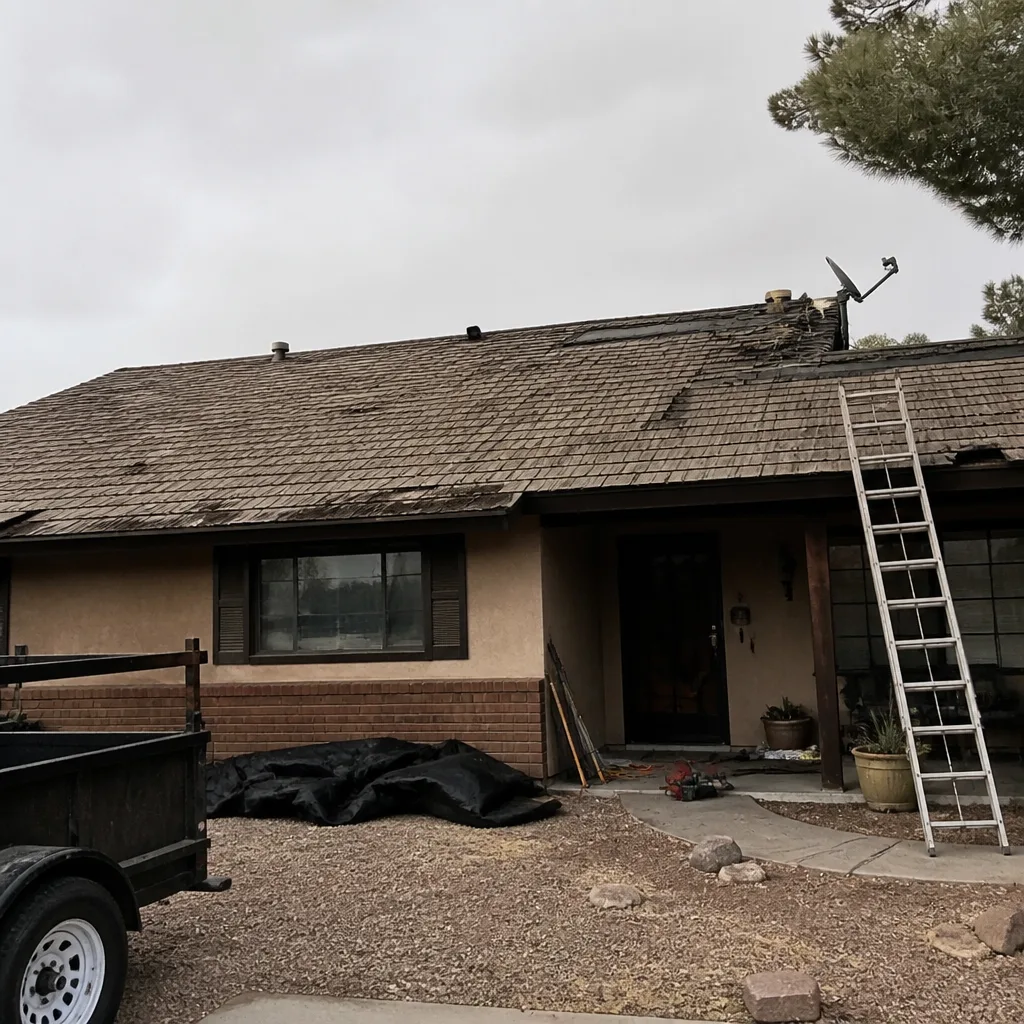 Before
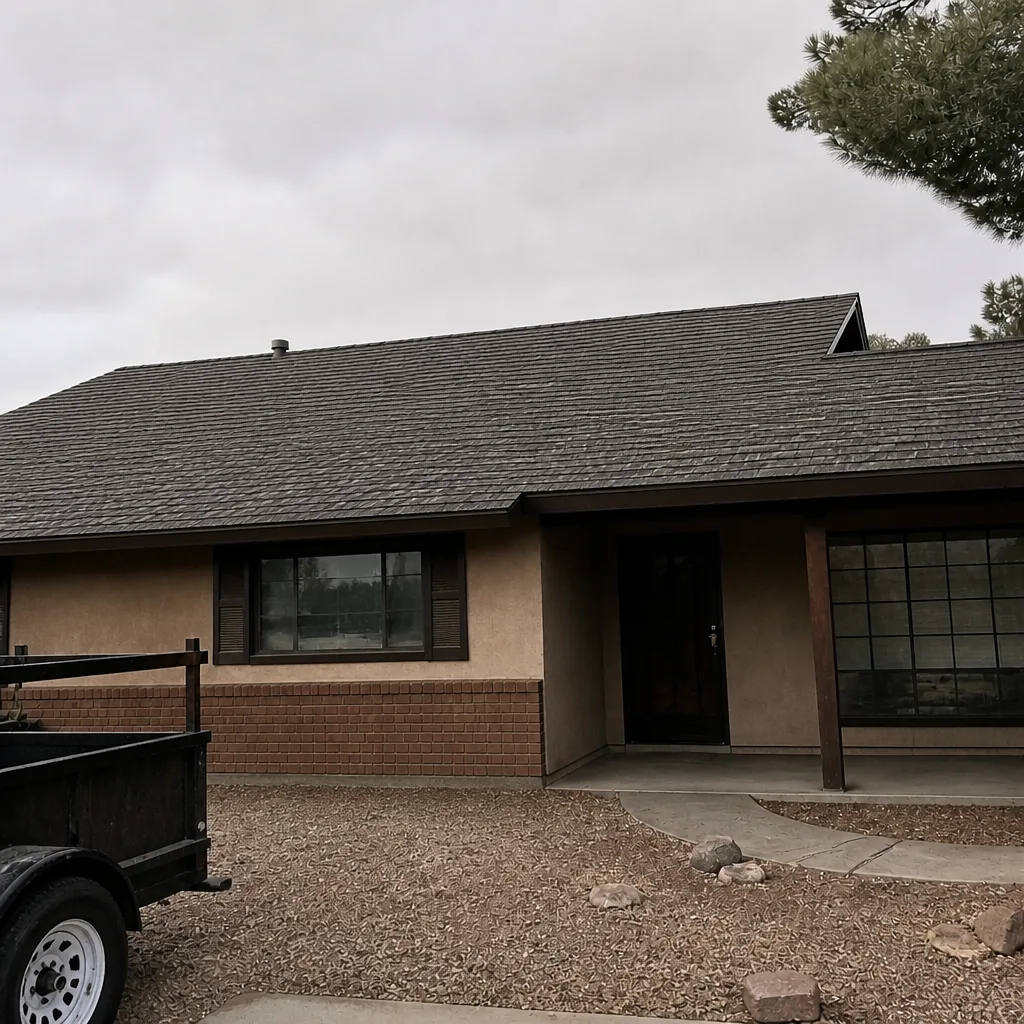 After
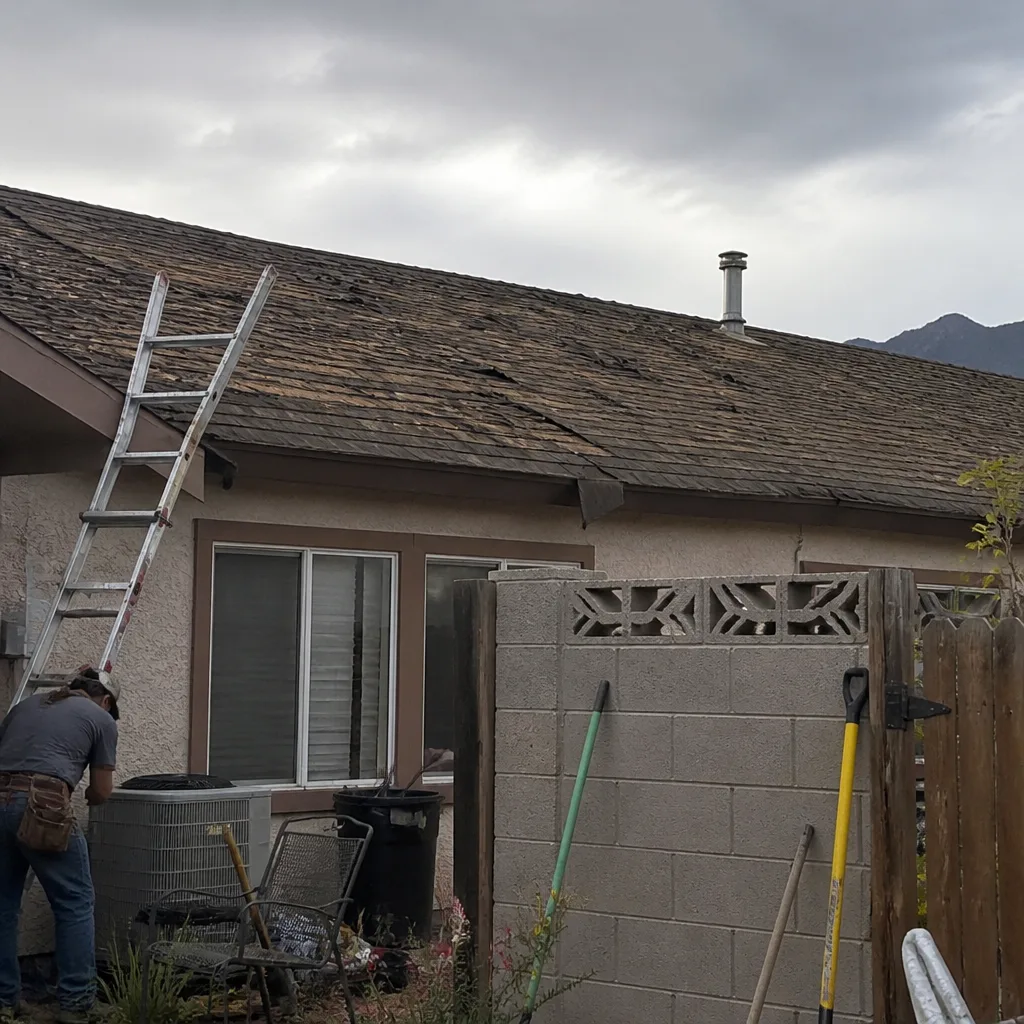 Before
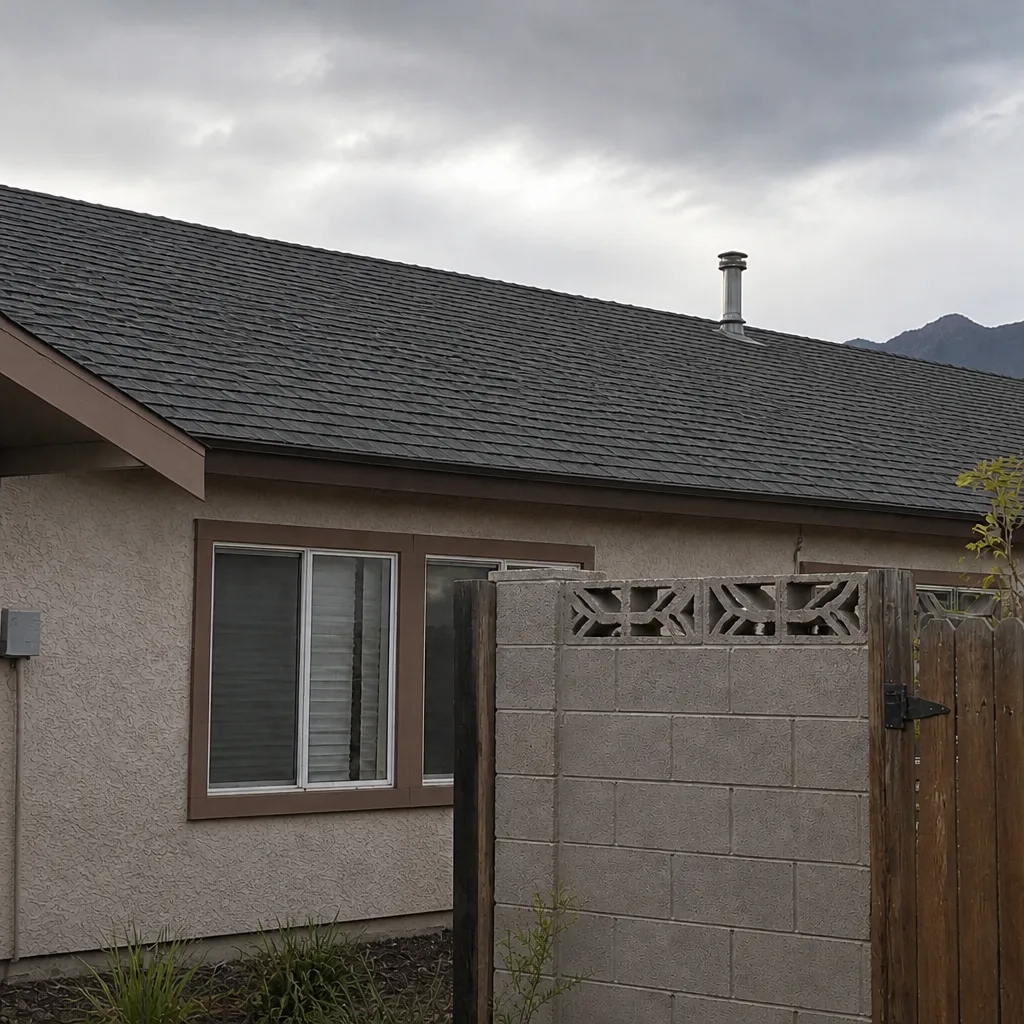 After
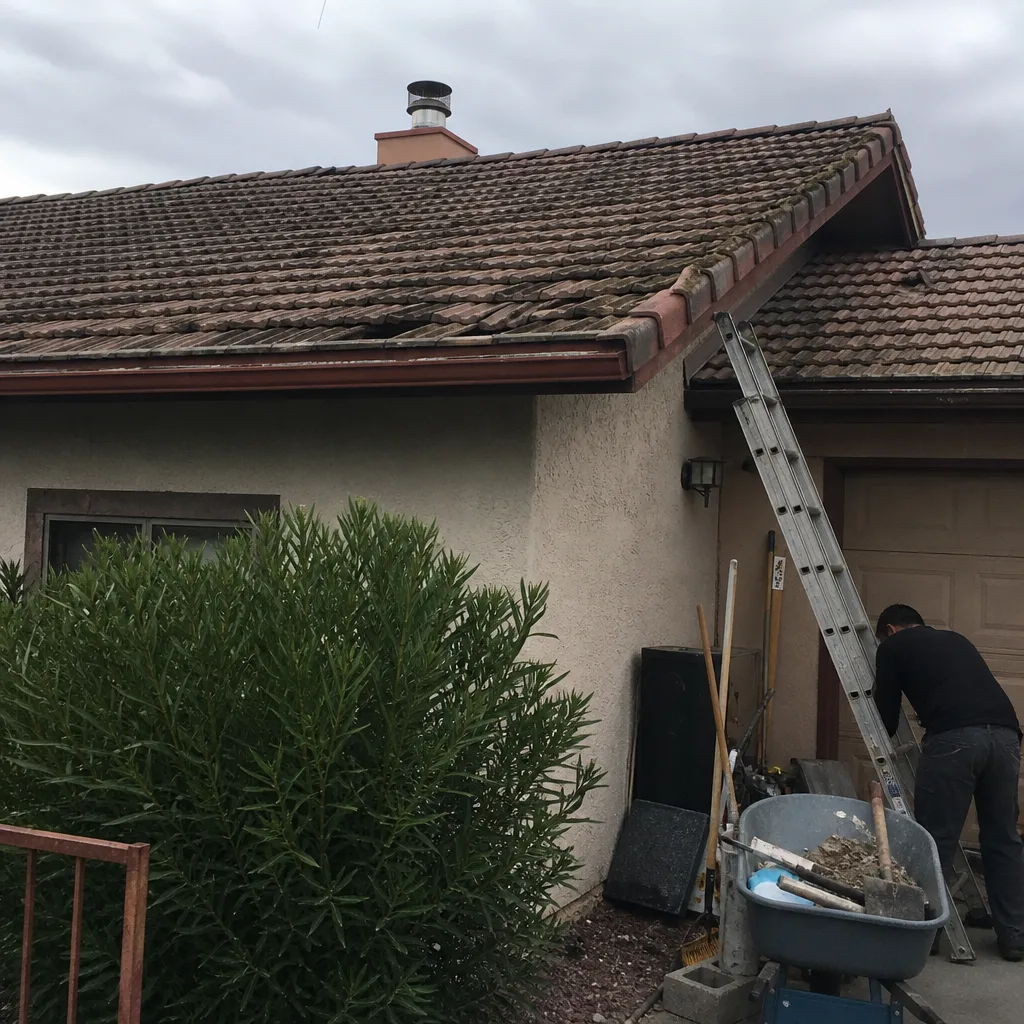 Before
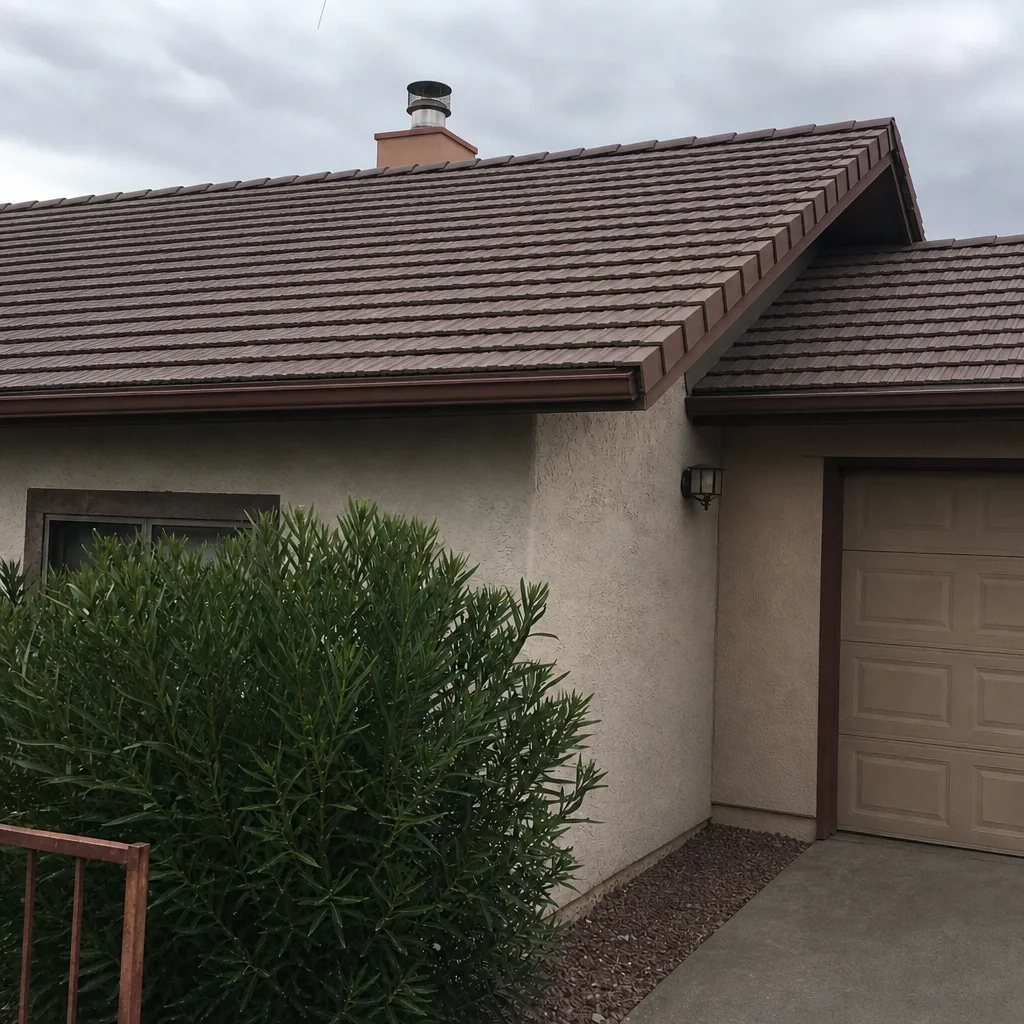 After
When to Call a Professional
Call us for any of the following, without hesitation:
- Any repair that requires walking on the panels, especially standing seam
- Lifted or missing ridge caps and fasteners you can’t safely reach
- Pipe boots that are cracked, not just dulled
- Any leak you can’t trace to a single visible penetration
- Panel or underlayment installation of any kind
- Any repair you can’t confidently answer the “what’s my plan if this goes wrong” question for
Shepherd & Sons Roofing Boulder City offers free estimates in Boulder City. We’ll show you the deck photos before we talk money, and if the repair you want to DIY is genuinely safe to do yourself, we’ll tell you that too. Call (844) 761-8186 to set it up.
Frequently Asked Questions
No. Panel and underlayment installation is professional work in Boulder City because it requires a permit, an inspection sign-off, and an install that follows the manufacturer’s spec to keep the warranty intact. A DIY panel install usually voids the warranty for the homeowner, and that’s a loss you can’t get back.
It’s not something we’d do without protection. Standing seam panels are slick and every step can dent or scuff the finish, so professionals lay down foam protection boards and walk the seams. Cleaning from a ladder at the eave, or with a long-handled broom, gets you the same result without the risk. If you need a Boulder City roof inspected up top, call us for a free estimate at (844) 761-8186.
Because the wrong product was used. Standard silicone and cheap roof cement crack and peel in Boulder City heat within a single summer. A UV-rated urethane sealant, applied to a clean, primed surface, is the product that holds. If the caulk keeps coming back off, the surface prep probably wasn’t done right either.
Ask your local building department to pull the permit history for the address. If there’s no record of a roof permit for the year the metal went on, the install was likely unpermitted. That’s worth knowing before a resale, because the buyer’s inspector will ask. If you’re not sure how to check, call us at (844) 761-8186 and we’ll walk you through it.
Yes, if you can’t reach it safely from a ladder and you don’t know the fastener torque spec for your particular panel. Ridge cap fastening has to hit the spec or the cap can lift again in the next Boulder City wind season. A small repair now beats a panel or cap replacement after the next storm.
Repair pricing depends on the specific job: how many fasteners, how much access, and whether a panel needs replacing. We give free estimates in Boulder City, and we’ll show you deck photos and a written line-item quote before any work starts, so there are no surprises. Call (844) 761-8186 to schedule yours. For replacement pricing and what a full install involves, our Roof Replacement & Installation in Boulder City page covers it in detail.
The Bottom Line
The DIY metal roofing line is shorter than the YouTube videos suggest. You can clean your gutters, inspect with binoculars from the ground, clear debris from valleys, and wash the panels with a hose. Those are real, useful jobs, and doing them well saves you money. What you shouldn’t touch: walking the panels, sealing a pipe boot with the wrong product, re-fastening a ridge cap by feel, and any panel or underlayment installation, because that’s where the warranty and permit consequences come in. The one question that sorts it out is what you’ll do if the repair goes wrong. If you don’t have a real answer, it’s a pro’s job. Shepherd & Sons Roofing Boulder City is here when it is. Call (844) 761-8186 for a free estimate, or start at our Shepherd & Sons Roofing Boulder City home page to see what else we handle.
Written by the team at Shepherd & Sons Roofing Boulder City.