
Last updated November 17, 2026
 Architectural shingles
 Metal roofing
 Tile roofing
 GAF
 Owens Corning
 Flat & low-slope
Free roof inspection with deck photos before we talk money - GAF and Owens Corning certified installation
Roof Repair Maintenance Checklist for Boulder City Homeowners
A Boulder City roof takes more UV punishment in one July than a Chicago roof takes in three summers – but most homeowners are handed a generic checklist that spends half its words on moss and ice they’ll never see. The real threats here are ultraviolet degradation and thermal shock: a roof surface that hits 160°F at 3 p.m. and drops toward 50°F by morning, day after day, for months. That cycle works on fasteners, sealant, and underlayment in ways a Midwest guide never mentions. What follows is a maintenance checklist built around Boulder City’s actual climate calendar, organized by what you can safely handle at ground level and what needs eyes on the deck before anyone talks money.
Quick Answer
A roof maintenance checklist for Boulder City should focus on UV degradation and thermal shock, not ice dams. Inspect your roof in spring and fall, clean debris and check fasteners, photograph any granule loss or flashing cracks, and have a licensed roofer look at anything beyond single-story eave level. Most repairs caught early cost a fraction of what full deck replacement does after a monsoon leak.
Styles & brands we work with
- Architectural shingles
- Metal roofing
- Tile roofing
- GAF
- Owens Corning
- Flat & low-slope
Table of Contents
- Why Standard Checklists Fail in Boulder City
- The Season-by-Season Checklist for Boulder City
- Thermal Expansion: The Fastener Problem You Can Spot From the Ground
- Reading Granule Loss in Your Gutters
- What You Can Safely Do Yourself (and What You Can’t)
- How to Photograph Your Roof for Insurance and Estimates
- Which Maintenance Tasks Actually Extend Roof Life
- When to Call a Professional
Why Standard Checklists Fail in Boulder City
Search “roof maintenance checklist” and you’ll get pages warning you about ice dams, moss growth, snow load, and gutter ice. None of that applies to Boulder City. Our problems are different, and they’re shaped by a climate that punishes roofing materials in ways most checklists ignore entirely.
The average high in July runs around 105°F, with roof surface temperatures easily another 50 degrees above air temperature. Meanwhile, overnight lows in the winter can dip into the 30s. That daily swing – roughly 60 to 70 degrees between afternoon peak and pre-dawn low – causes every roofing material to expand and contract on a schedule that wears down fasteners, opens flashing seams, and stresses sealant long before a similar roof in a milder climate would show the same age.
Homes in the older parts of Boulder City – the historic district, the streets around Nevada Way, the neighborhoods near Boulder City High School – were mostly built with materials that have shouldered this for decades. Newer construction on the edges of town uses lighter underlayments and different fastening patterns. Both need attention, but the failure points are different, and a checklist that doesn’t account for it wastes your time on the wrong tasks. You can see what our region actually needs on our Roof Repair in Boulder City page, but the checklist below is the starting point.
The Season-by-Season Checklist for Boulder City
Boulder City has two real seasons for roof care: the hot stretch from May through September, and the cool window from October through April. The wind and monsoon rain that arrive in July and August shape the summer work. The freeze-thaw risk on north-facing slopes and the debris that piles up after winter winds shape the cooler months. Here’s how we’d break it down.
Spring (March through May)
- Clear all debris from gutters, valleys, and roof corners. Spring wind in Boulder City carries dust and seeds that collect fast.
- Walk the perimeter at ground level and look for lifted shingle tabs or pulled fasteners on the sunny south- and west-facing slopes, which take the worst UV load.
- Check the flashing around any skylight or vent pipe for cracks in the sealant. Winter cold can open a seam you never saw in fall.
- Photograph everything. More on that method later.
Summer (June through September)
- Before monsoon season (roughly July through September), check that downspouts are clear and roof drains are unobstructed, since a sudden heavy rain can overwhelm a clogged system fast.
- After any heavy rain, look for water stains on ceilings and along wall tops that touch the roof plane. Those show up in the first 24 hours if there’s a leak.
- Watch for blistering or bubbling on any low-slope sections – heat drives this, and it’s often a sign of trapped moisture.
- Don’t walk the roof in peak heat. Traction is poor, shingles soften, and it’s genuinely dangerous.
Fall (October and November)
- This is the best window for inspection. Cooler temps let you walk safely.
- Clear every valley and roof-to-wall junction of debris. Winds push leaves and dust into the tight spots.
- Check gutters again before the first cold snap. Cold nights turn any standing water into ice that can pry at seams.
- Have any flashing issue you spotted in spring addressed now, while the weather’s cooperative.
Winter (December through February)
- Boulder City gets cold clear nights that can crack aging sealant. After any overnight freeze, look for missing shingles or lifted edges on north-facing planes.
- Check the underside of the deck in the attic or crawl space for frost or moisture, which points to warm air leaking into the attic from below.
- Look at gutters from the ground for ice buildup on the shaded side of the house.
Thermal Expansion: The Fastener Problem You Can Spot From the Ground
This is the checklist item most Boulder City homeowners never hear about, and it’s the cause of more roof failures here than any single weather event. When a roof heats to 150°F or more and cools back to 50°F overnight, every shingle, panel, and fastener moves. Nails that were driven tight in 70-degree weather are moving a fraction of an inch every day, and over years those fractions add up.
The classic sign is a shingle that’s backed off its nail, leaving a visible bump or lift. On three-tab shingles, that lift looks like a tab that isn’t lying flat. On architectural shingles, it’s a raised spot or a shingle edge that’s riding over its neighbor. From the ground, look for lines or ridges that appear on a roof plane – a “tented” row of shingles usually means one or more nails have backed out and the whole row is lifting.
How to Check From Ground Level
- Stand back far enough to see the whole slope. Get a straight-on view of the south- and west-facing planes, since those take the most heat.
- Look for shadow lines that run across a row of shingles – that’s the lifted row catching low-angle sunlight.
- Check the ridge line. If the cap shingles are curling or standing up, you’ve likely got fasteners backing out underneath.
- Look along the eave. Shingles that have slipped past the drip edge, or that look staggered rather than straight, can be a fastener problem from the row above.
If you see one of these signs, that’s your cue to get eyes on the deck itself. A backed-out nail that’s driven back in now is a $40 repair. A backed-out nail that’s let water in for two years is a deck replacement. Our Roof Replacement & Installation in Boulder City page covers how we gauge whether repair is still viable, but the phone call is the cheaper option – we’ll look at it and tell you straight.
Reading Granule Loss in Your Gutters
Every asphalt shingle sheds some granules, and some shedding is completely normal. The question is how much is too much, and Boulder City homeowners get a fast course in this because our UV exposure accelerates the process. The sun bakes the asphalt binder that holds granules to the shingle surface. Once the binder oxidizes, granules wash off in the first rain.
Here’s how to read what you find in the gutter.
- A light dusting at the bottom after a rain: normal wear. Every shingle sheds.
- A visible drift of granules along the gutter floor, several inches deep at the end of summer: this is the UV saying it’s been working for a while. Time to have the roof looked at.
- Granules so dense you can scoop them with your hand, and the shingle surface already looks grainy and dark: the shingle is nearing the end of its life on the sun-exposed slope. It may still be watertight, but it won’t stay that way many more summers.
- Bare patches visible on the roof plane itself, with the underlying mat showing through: this is the structural concern. Water is likely getting in at those spots and the deck underneath needs checking.
A good test is to look at how dark your gutters are compared to your neighbor’s. If yours are darker after a summer, your shingle is losing granules faster. GAF and CertainTeed shingles installed in this climate typically hold up well, but even the best shingle has a finite life under Boulder City’s sun, and granule loss is the most honest gauge of how far along it is.
What You Can Safely Do Yourself (and What You Can’t)
We’re honest about this because we’d rather you stay off a ladder than save $80 doing something that puts you in the hospital. Here’s the split.
Safe at ground level or from a stable ladder
- Clearing gutters and downspouts from a ladder that’s set on solid ground with someone holding it.
- Photographing your roof – from the ground, using a zoom lens or a shot from a second-story window.
- Checking the attic for moisture, stains, or daylight showing through the deck.
- Looking at the eaves and gable edges for obvious gaps, lifted shingles, or debris.
- Clearing leaves and dust from flat or low-slope sections you can safely reach from a window or roof-level door.
- Running a hose on a suspected leak area to see if water shows up inside, if you can do it without getting on the roof.
Not safe – hire a trained roofer
- Walking any roof pitch above 4/12. Falls are the leading cause of home injury deaths and Boulder City roofs can be a long way down.
- Anything on a tile or metal roof where the surface is slippery or the material will crack underfoot.
- Replacing a missing shingle, even on a low roof – the fasteners and underlayment need proper install or the repair fails in a year.
- Resealing flashing around a chimney, skylight, or vent. The wrong sealant in this climate fails in a single summer.
- Tightening down a backed-out fastener on a shingle roof. If you drive it wrong you’ll crack the shingle or punch through, and you’ll do more harm than good.
- Any electrical work near a roof penetration, or anything involving the deck structure itself.
For anything on that second list, our Roof Repair in Boulder City page has the details on how we handle it – and a call to (844) 761-8186 gets a live person, not a form.
How to Photograph Your Roof for Insurance and Estimates
A good set of photos saves you real money when you file a claim or get a second bid. It’s also the single most useful maintenance habit we can suggest for Boulder City homeowners. Here’s the method that actually helps.
- Get a wide shot of each roof plane. Stand on the ground, back up to get the whole slope in frame, and shoot from a consistent spot each time (e.g., the same corner of the driveway). Compare time to time.
- Photograph every penetration. Chimney, vent pipe, skylight, satellite mount – get a close-up of the flashing at each. Add a wide shot showing where it sits on the roof so someone can locate it.
- Shoot your gutters after a rain. Granule accumulation in the trough is the most useful single indicator of shingle condition.
- Get close-ups of any damage. Curling, lifted shingles, cracks, staining – shoot them straight on and, if you can, with something for scale next to them.
- Label the shots with date and location. Phone photos already have dates. Add a note in the filename or a note on your phone so you know what you’re looking at in six months.
- Photograph any interior stains on ceilings and walls. Take a second shot with a tape measure or a coin next to the stain for scale, and note the date you first saw it.
Insurance adjusters and roofers both respond faster to a clean folder of dated photos than a phone call saying “I think I might have a problem.” We’ll ask for the same shots when we come out, and if you already have them, the second-opinion visit is faster and more useful. Our Shepherd & Sons Roofing Boulder City home page has our contact details, but this is a habit worth starting now.
Which Maintenance Tasks Actually Extend Roof Life
Plenty of roof maintenance is real; some of it is upsell. Here’s where we land on the honest distinction.
Worth doing
- Gutter cleaning twice a year. Cheap, safe, and it prevents backups that send water under the roof edge.
- Flashing inspection and resealing where needed. A $200 flashing repair now prevents a $3,000 deck repair later.
- Attic ventilation check. In Boulder City, attic temps under a poorly vented roof can hit 170°F, which cooks the shingle from underneath. This is genuinely one of the most valuable tasks and most checklists skip it.
- Fixing backed-out fasteners early. The single highest-return item on this list.
- Trimming tree branches that touch the roof. Contact and debris cause damage, and shade blocks the UV drying that helps shingles last.
Only worth it in some cases
- Roof coating or “rejuvenation” products. Some do extend a shingle’s life a year or two in desert climates, but they’re not a substitute for replacement when the mat is exposed. Ask what the product is rated for and whether it voids any warranty.
- Pressure washing. Almost never a good idea on asphalt or tile. It strips granules and drives water where it doesn’t belong.
- Annual “tune-up” packages. We don’t sell those, and most roofs don’t need one. A thorough inspection once a year (or after any major storm) covers what a tune-up package would.
For a metal roof, the maintenance list changes – fasteners and sealant on standing seams are the key items, and they behave differently under UV. Our Metal Roofing in Boulder City page covers that separately. For tile or specialty roofs, ask for the deck photos before you commit to anything.
Common Mistakes to Avoid
Wait, that’s an artifact. Let me correct it in final output.
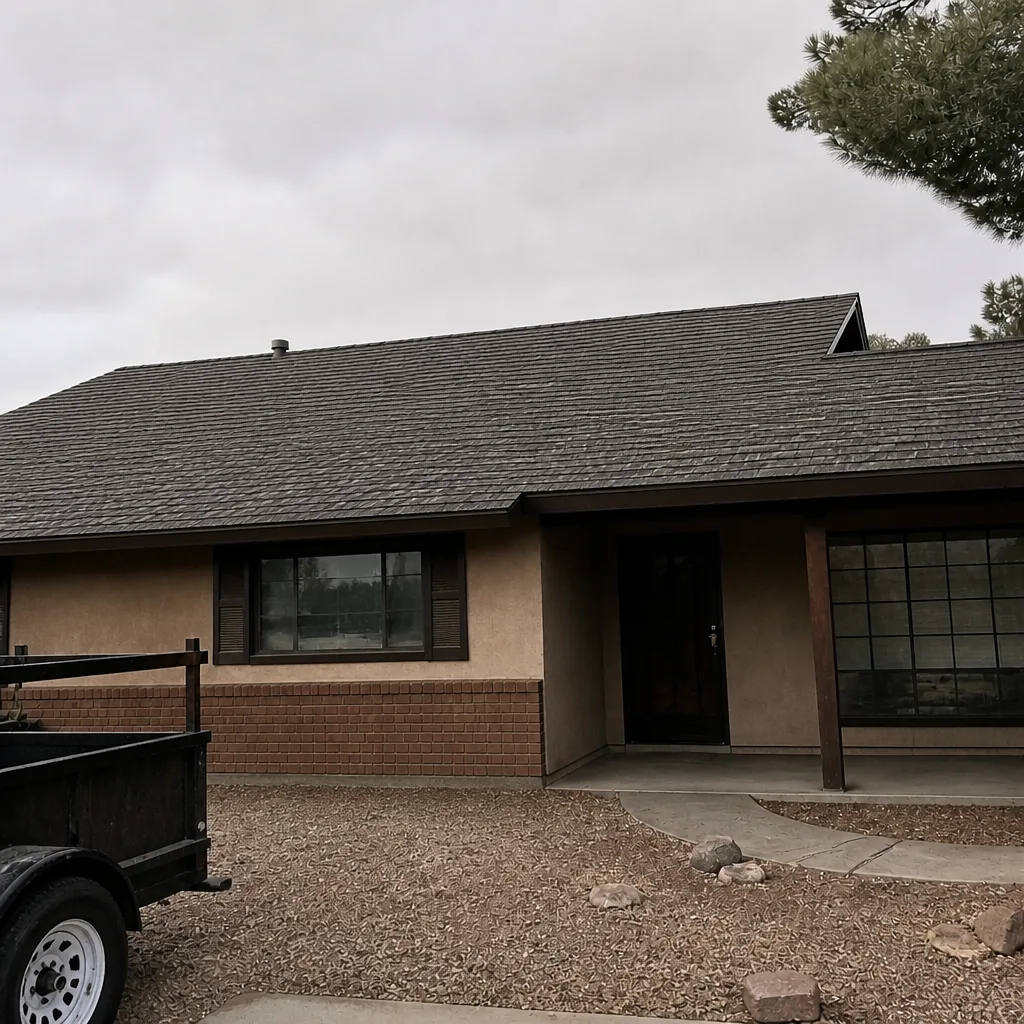
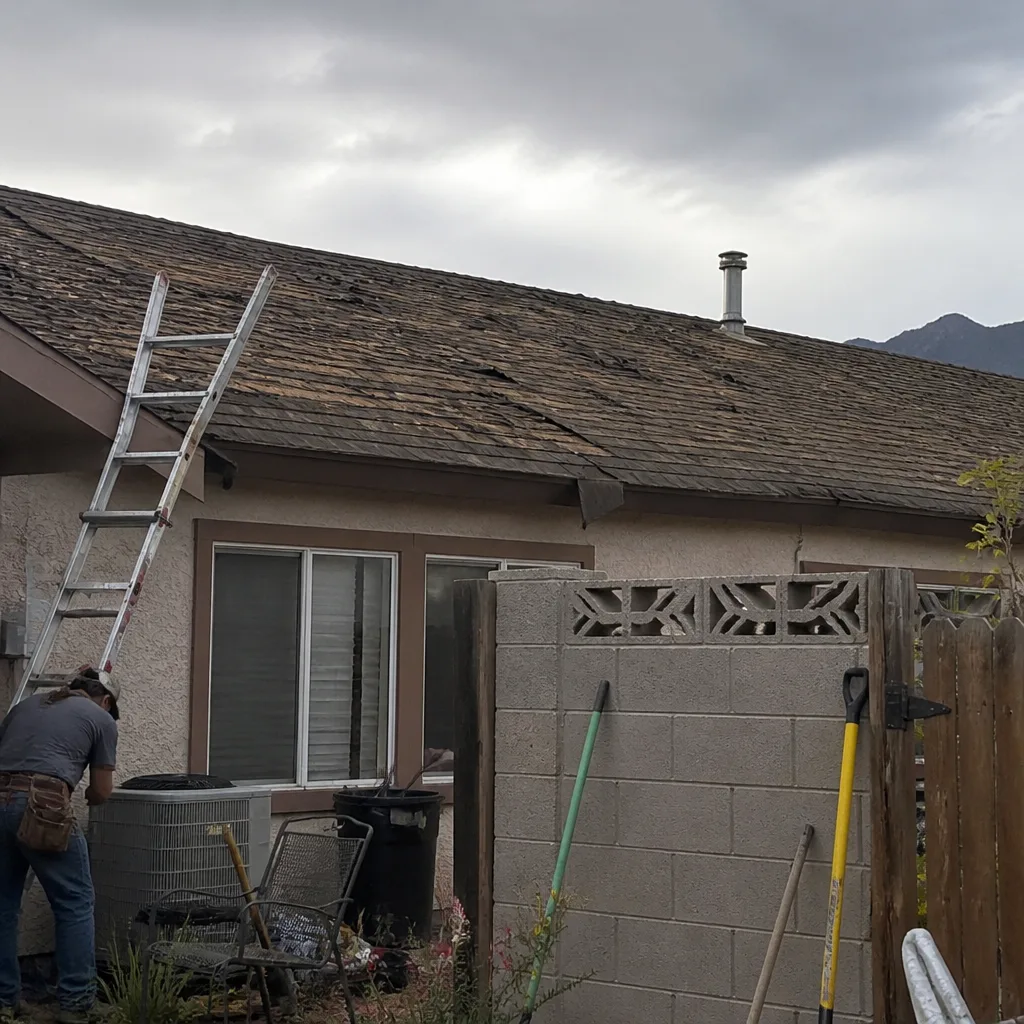
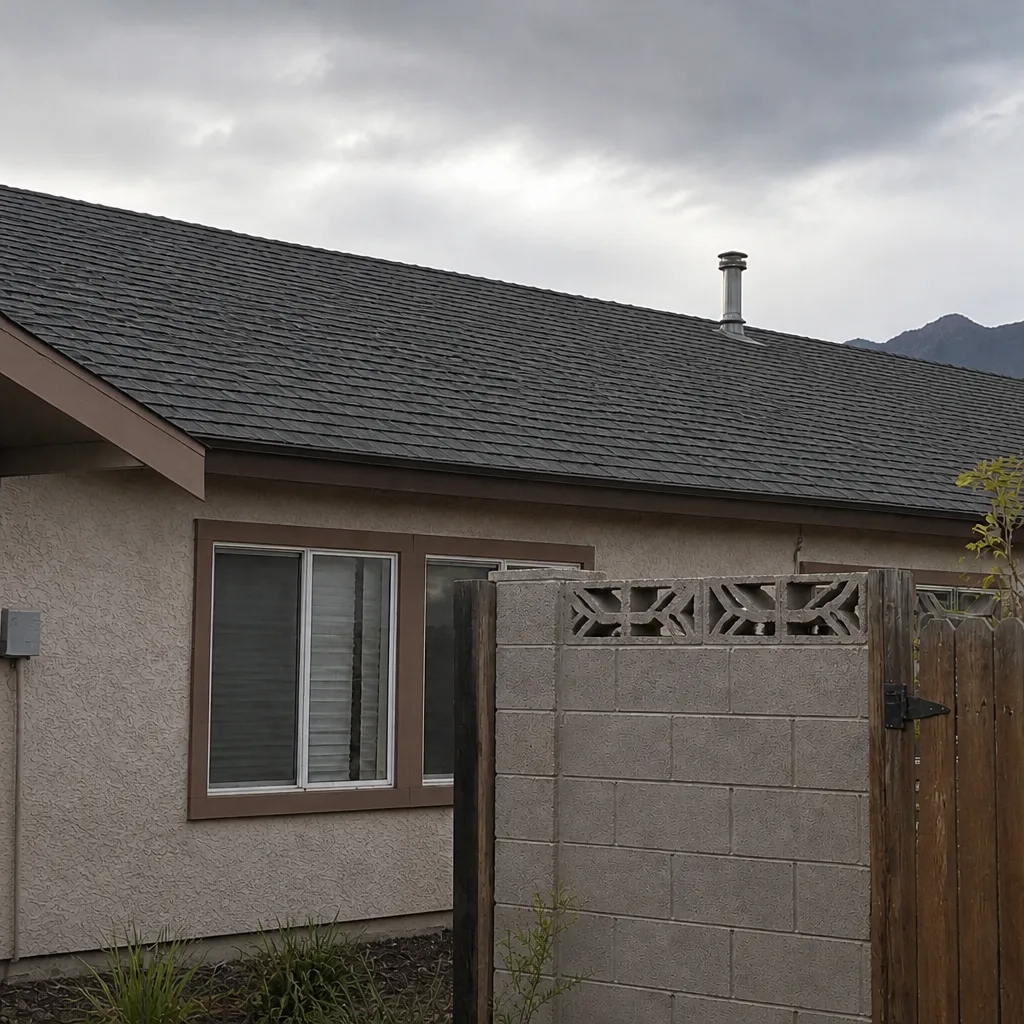
See the difference
 Before
 After
 Before
 After
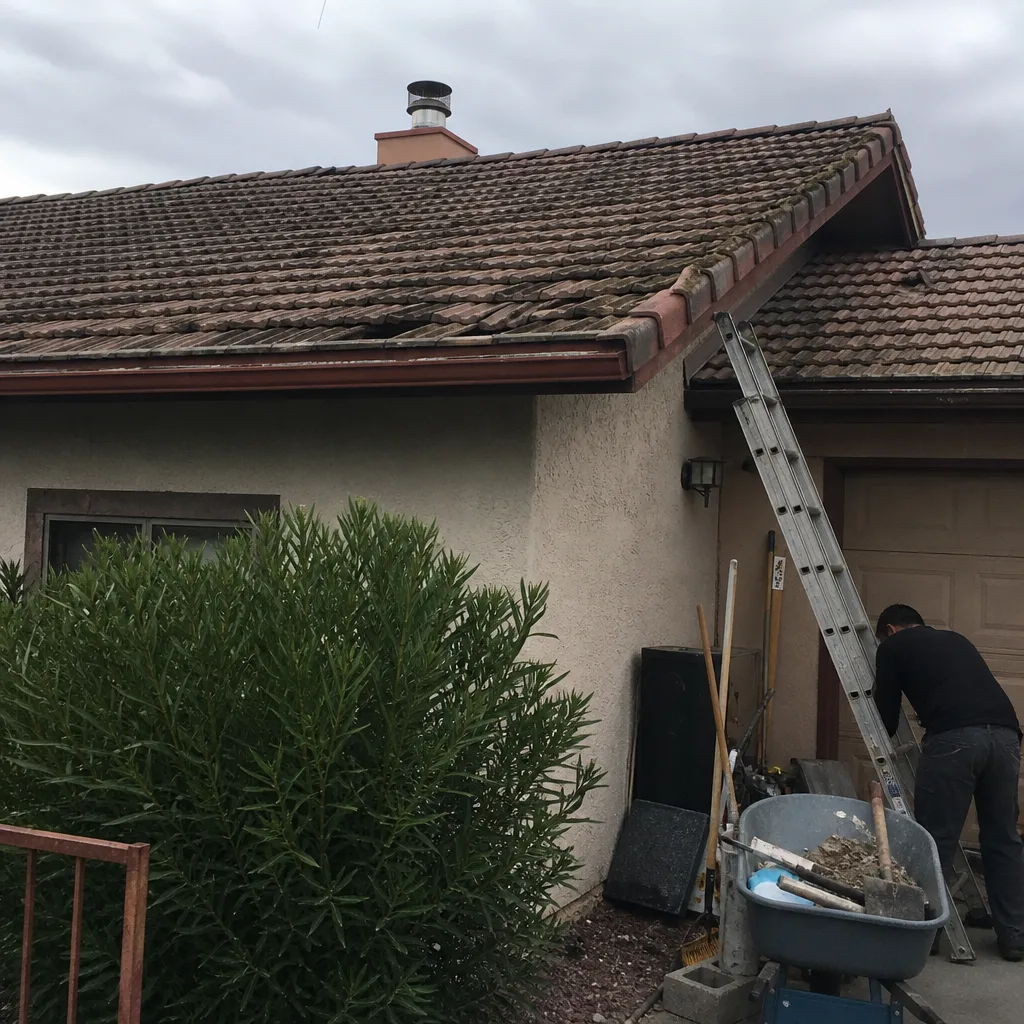 Before
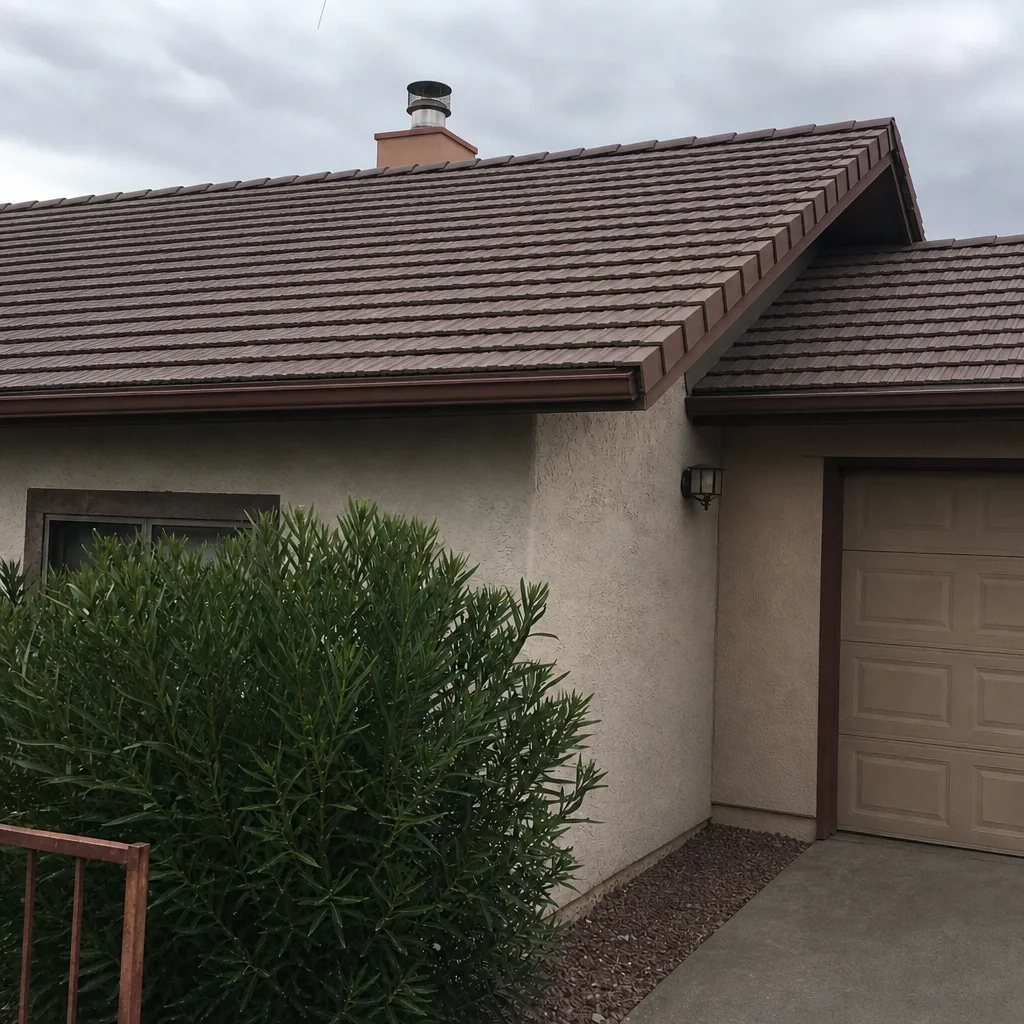 After
Common Mistakes to Avoid
- Painting sealant over cracked flashing without cleaning it first. A sealant that goes over dirt peels in a season, and you’ve lost a year you needed. Clean, prime, then seal.
- Assuming your roof is fine because you don’t see a leak. Most Boulder City roofs fail slowly, at the flashing and fasteners, long before they let water into the living space.
- Letting an out-of-state crew walk your roof after a hail event. Ask for the address on the truck and the license number on the card. If they can’t give you both, don’t sign.
- Pressure washing to “clean” the roof. It strips granules and usually makes the aging worse.
- Walking a roof in July to “take a look.” Soft shingles, sun exposure, and a ladder on hot pavement are a bad combination.
- Ignoring the attic. Half of the roof failures we look at were visible in the attic three years before they became a roof leak. Ventilation and moisture are the two things to check there.
- Using caulk to fix a fastener problem. Caulk over a backed-out nail is a temporary patch that lasts one season. The fastener needs to be driven correctly or replaced.
When to Call a Professional
You should call a roofer if any of these are true: you’ve got moisture in the attic, visible ceiling staining, a backed-off shingle row you can see from the ground, flashing cracks at any penetration, granule loss so heavy you can scoop it out of the gutter, or you’re within two years of the manufactured lifespan of your shingles. You should also call if you’re planning a claim, because a written estimate with photos is what an adjuster wants to see.
Shepherd & Sons Roofing, Boulder City, provides free estimates throughout Boulder City – call (844) 761-8186 and a live person picks up. We’ll bring the deck photos before we talk money, and our written 90-Day Done Right Promise applies to every roofing job. If you’ve had a roof repair or install done before and want a second opinion on the estimate, we do that free too, and there’s no trip charge inside our own county.
Frequently Asked Questions
Once a year, ideally in October or November when temperatures are comfortable for a proper inspection, plus a look after any major monsoon or wind event. Boulder City’s UV load is unusually heavy, so annual inspection catches problems early enough to stay cheap.
Backed-out fasteners from thermal expansion are the most common structural issue, followed closely by UV-related granule loss on sun-exposed slopes. Both are visible from the ground if you know what to look for, and both are cheap to fix early.
Not the roof itself – only debris removal, gutter cleaning, and inspection from the ground. Anything on the deck (shingles, flashing, fasteners) should be handled by a trained roofer. Falls are a real risk, and a failed DIY repair can void a manufacturer warranty.
No. Metal roofs don’t shed granules, but the fasteners and sealant on standing seams behave differently under UV and thermal cycling. Metal roofs need an annual check of fastener torque and seam sealant, and that’s it. Everything else on this list applies to shingle roofs.
Maintenance, no. Damage from a covered event (hail, windstorm, fire, falling object), yes. That’s why the photo documentation habit matters – a dated photo of a failed shingle before a storm and after is what turns a claim from disputed to paid.
If the deck is sound and the failure is isolated to flashing, fasteners, or a few shingles, repair is the right call. If the mat is exposed over large areas, granules are gone across an entire plane, or the deck underneath is soft, replacement is usually cheaper over five years than repeated repairs. Call (844) 761-8186 and we’ll give it to you straight, photos and all.
The Bottom Line
Boulder City roofs age faster than roofs almost anywhere else in the country because of two things: relentless UV and daily thermal cycling. The best maintenance checklist for this climate skips ice dams entirely and focuses on fastener stability, flashing integrity, granule loss, and attic ventilation. Handle the safe items yourself – gutter cleaning, ground-level inspection, and photo documentation. Call a licensed roofer for anything on the deck. Small catches now cost a fraction of deck replacement later, and the photos you take today will pay off if you ever need to prove damage for an insurance claim. For a free second opinion on your roof’s condition, or to schedule a proper inspection, Shepherd & Sons Roofing Boulder City is one call away at (844) 761-8186.
Written by the team at Shepherd & Sons Roofing Boulder City.