
Last updated November 17, 2026
 Architectural shingles
 Metal roofing
 Tile roofing
 GAF
 Owens Corning
 Flat & low-slope
Free roof inspection with deck photos before we talk money - GAF and Owens Corning certified installation
Roof Repair Maintenance Schedule: What to Do and When
Boulder City’s monsoon window runs July through September. But the damage that causes indoor leaks usually happens in May, when nobody is paying attention to their roof. In our experience, a homeowner who spends about $200 a year on a maintenance schedule tied to the local seasonal calendar avoids the $8,000 to $14,000 emergency replacement that follows a neglected monsoon season. This guide lays out a month-by-month schedule built for Boulder City’s actual weather, not a national template. You’ll learn what a homeowner can safely check from a ladder, what needs a trained eye, and how to log it all so an insurance claim goes smoothly.
Quick Answer
Roof maintenance in Boulder City follows two anchor dates: pre-monsoon prep in May and post-monsoon inspection in October, with a thermal expansion check in February. Spend about $200 a year on upkeep to catch small problems before July through September turns them into interior leaks. You can safely check gutters, pipe boot collars, and visible flashing from a ladder. Everything else needs roof boots and a trained eye.
Styles & brands we work with
- Architectural shingles
- Metal roofing
- Tile roofing
- GAF
- Owens Corning
- Flat & low-slope
Table of Contents
- The Boulder City Seasonal Calendar
- Three Checks You Can Do Safely From a Ladder
- Five Checks That Require Roof Boots
- Why February Matters: Thermal Expansion
- Ponding Water on Cool Roof Coatings: When It’s a Problem
- How to Log Maintenance for an Insurance Claim
- Which Maintenance Tasks Void Your Warranty
- Common Mistakes to Avoid
The Boulder City Seasonal Calendar
Boulder City sits in the Mojave, but its altitude and proximity to the river give it a weather pattern that a Phoenix or Las Vegas roof schedule simply doesn’t match. Desert sun is brutal for eight months, then monsoon moisture slams the valley in a concentrated three-month window. Your roof has to survive both. Here’s how we think about the calendar in our city.
February: Thermal expansion check. The cold nights and warm days of winter create the widest temperature swings of the year, and that’s when sealant joints and flashing edges start to crack.
May: Pre-monsoon prep. This is the single most important month. Clear gutters, check that downspouts drain away from the foundation, and have the roof inspected for loose material before the first storm.
July through September: The monsoon window. Watch for leaks during storms. Don’t get on the roof yourself during any active weather. Save every photograph of water intrusion for your log.
October: Post-monsoon inspection. The critical follow-up. The storm season weakens flashing, loosens shingles, and drives water into places you can’t see. A trained inspection in October catches what July and August started.
December: Year-end review. Log everything you did, note what’s left, and set next year’s budget.
This calendar costs most homeowners $150 to $250 a year if they do the two inspections. The alternative, an emergency replacement after a monsoon-driven interior leak, runs between $8,000 and $14,000 in Boulder City.
Three Checks You Can Do Safely From a Ladder
We want you doing checks that don’t put you in danger. Here’s what a homeowner can do from a stable ladder, on a dry day, without walking the roof.
- Gutters and downspouts. From the ladder, look inside the gutter for debris, granules, and standing water. Verify each downspout elbow is connected and directs water at least six feet away from the foundation. In Boulder City, monsoon rain can dump an inch in an hour, and a clogged gutter sends it into the stucco.
- Pipe boot collars. Those rubber boots around plumbing vents are the number one source of small leaks after year five. Look at the top collar from your ladder. If the rubber is cracked, missing, or clearly sun-baked, it needs replacement.
- Visible flashing edges. From the ladder, inspect the flashing where the roofline meets a wall, chimney, or skylight. You’re looking for lifted edges, missing fasteners, and sealant that’s cracked or pulled away. If it’s loose from the ladder distance, it’s loose enough to invite water.
If any of those checks turn up a problem, stop there. Do not crawl on the roof to investigate. Call us for a free estimate. We can look, diagnose, and tell you what’s actually needed before the monsoon.
Five Checks That Require Roof Boots and a Trained Eye
Some things a homeowner shouldn’t do. Not because the roof is dangerous, but because a misdiagnosis here causes a leak that didn’t exist before you touched it.
- Underlayment condition. Under the shingle layer. Visible only by lifting shingles, which damages the seal. Trained eyes only.
- Nailing pattern and deck attachment. The wind rating on a shingle wrapper doesn’t determine how well your roof stays on. The nailing pattern does. A trained eye checks the actual attachment, especially on a 10- to 20-year-old Boulder City roof.
- Flashing behind walls and around valleys. Where two roof planes meet, the valley flashing carries a huge water load during monsoon. The edge of the flash is not the critical part; the seal underneath is.
- Roof-to-wall intersections and parapet joints. These are the joints that fail silently and leak inward. On flat or low-slope sections, this is where the water travels.
- Attic-side evidence. Staining, daylight, moisture on framing, and h-clip rust. Getting in the attic is safe enough, but interpreting the evidence is not.
If the trained eye spots a problem, you get a written line-item estimate for the repair. No surprises once work starts. That’s the difference between a bid and a quote. A bid leaves gaps; a written quote doesn’t.
Why February Matters: Thermal Expansion
Boulder City’s winter days often swing 40 degrees between dawn and mid-afternoon. Metal roofing and tile both expand in the afternoon heat and contract again at night, thousands of times over a decade. Every fastener hole grows slightly, and every sealant joint gets worked harder. In February, we can inspect those joints before the swings get worse, reseal the ones that are opening, and replace the fasteners that have backed out. A roof repair in February is far cheaper than a roof replacement in August. Catch it now.
Ponding Water on Cool Roof Coatings: When It’s a Problem
Cool roof coatings are popular on flat sections of Boulder City homes, and ponding water is the most common question. Standing water that drains within 24 hours after a monsoon storm is usually normal drainage lag. Water that’s still there after 24 hours, or that leaves a dark ring, is a problem. Continuous ponding breaks down the coating, and once that layer fails, water finds the substrate and enters the home. If you see water on the roof 24 hours after a rain, get it inspected before the next storm.
How to Log Maintenance for an Insurance Claim
If your roof is damaged by monsoon weather, hail, or wind, a maintenance log is the difference between a smooth claim and a fight. Insurance adjusters are looking for evidence of a maintained roof. A missing log makes the claim harder to process. Here’s how to keep a record that actually holds up.
- Date every entry. Day, month, year. Write down what you did or what you observed.
- Photograph everything. Wide shot, mid-range, close-up. Label the photos with the date and location. Save them separately from your phone so they survive a lost device.
- Save service receipts. Any paid repair, inspection, or cleaning goes in the same file. Keep your own copies, not just photos.
- Note names and dates of any inspections. Including the date you had the roof looked at and the findings.
- Record storm events. If you noticed interior water damage after a specific storm, log the storm and the damage together.
When you call us for an inspection, we’ll give you a written record of what we found. That written record is what makes a claim work. A homeowner who has two inspections and a small repair on paper is in a far better position than one who has no record at all.
Which Maintenance Tasks Void Your Warranty
Not all maintenance is good maintenance. Several common tasks will void the manufacturer’s warranty, and in some cases damage the roof further.
- Pressure washing. This is the biggest one. Pressure washing a shingle roof dislodges granules, drives water into the seams, and in most cases makes the roof worse. It also voids most manufacturer warranties. Never do this.
- Do-it-yourself repairs on flashing. A homeowner with a tube of sealant often covers the leak from the wrong side. The sealant fills the exit path for water, water backs up, and the deck rots under the now-hidden leak. Voided and the repair harder.
- Walking the roof in heat. Shingles soften in direct summer sun. Walking on them, even for a quick check, can break the seal and drive debris into the surface. Walk in the morning, or don’t walk.
- Improper cleaning product use. Bleach, harsh detergents, and some “roof cleaning” products make the shingles brittle. Use only what the manufacturer specifies.
- Removing or tapping flashing to inspect for leaks. The most common cause of “a leak that wasn’t there before.” If you tamper with the flashing to check it, it’s now a leak that will need repair.
Any repair you have us do is documented, and we’ll use the correct materials – Owens Corning, IKO, Atlas, Tamko, GAF, CertainTeed, and Boral are the brands we install. You name the shingle and we have likely set it.
Common Mistakes to Avoid
- Skipping the October inspection. The monsoon window is when damage happens; October is when a trained eye catches it. Homeowners who skip October typically end up calling us in January with water stains.
- Pressure washing before a big sale or event. It’s the single most common way we see a Boulder City homeowner turn a $200 maintenance visit into a full roof replacement.
- Trusting a bid instead of a written quote. A bid tells you a number. A written quote tells you exactly what’s covered. If someone quotes one price on the phone and another at the door, that’s your sign to call us.
- Covering a leak with sealant from the top. Sealing the top of a leak without knowing where the water is entering traps the moisture in the deck. We’ve seen a two-square repair become a two-day job from this mistake.
- Letting a small flashing repair sit until next season. In Boulder City, one more monsoon week can turn a $900 flashing repair into a $9,000 renovation.
- Ignoring the pipe boot collars. We cannot stress enough: these fail silently and are visible from a ladder.
- Not logging maintenance before a claim. Homeowners who have no records are the ones whose claims get adjusted down or denied.
See the difference
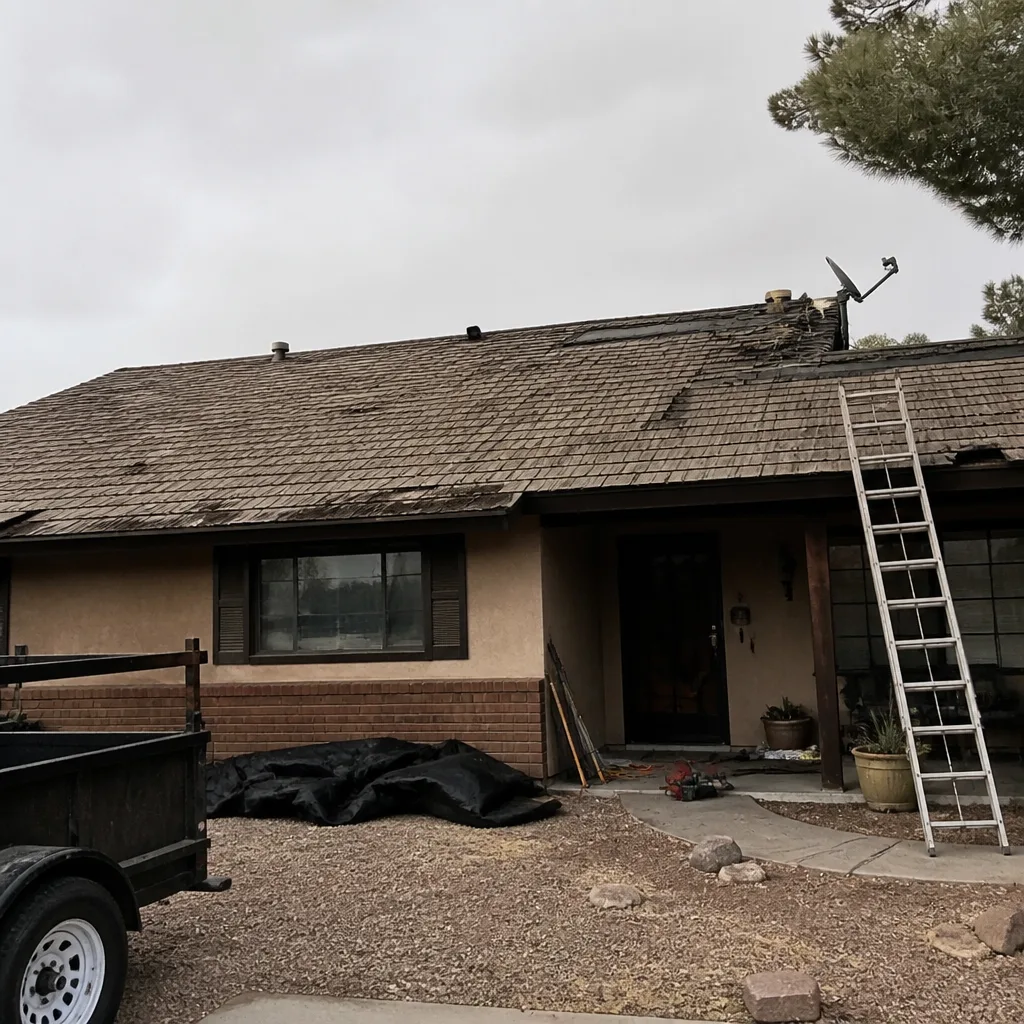 Before
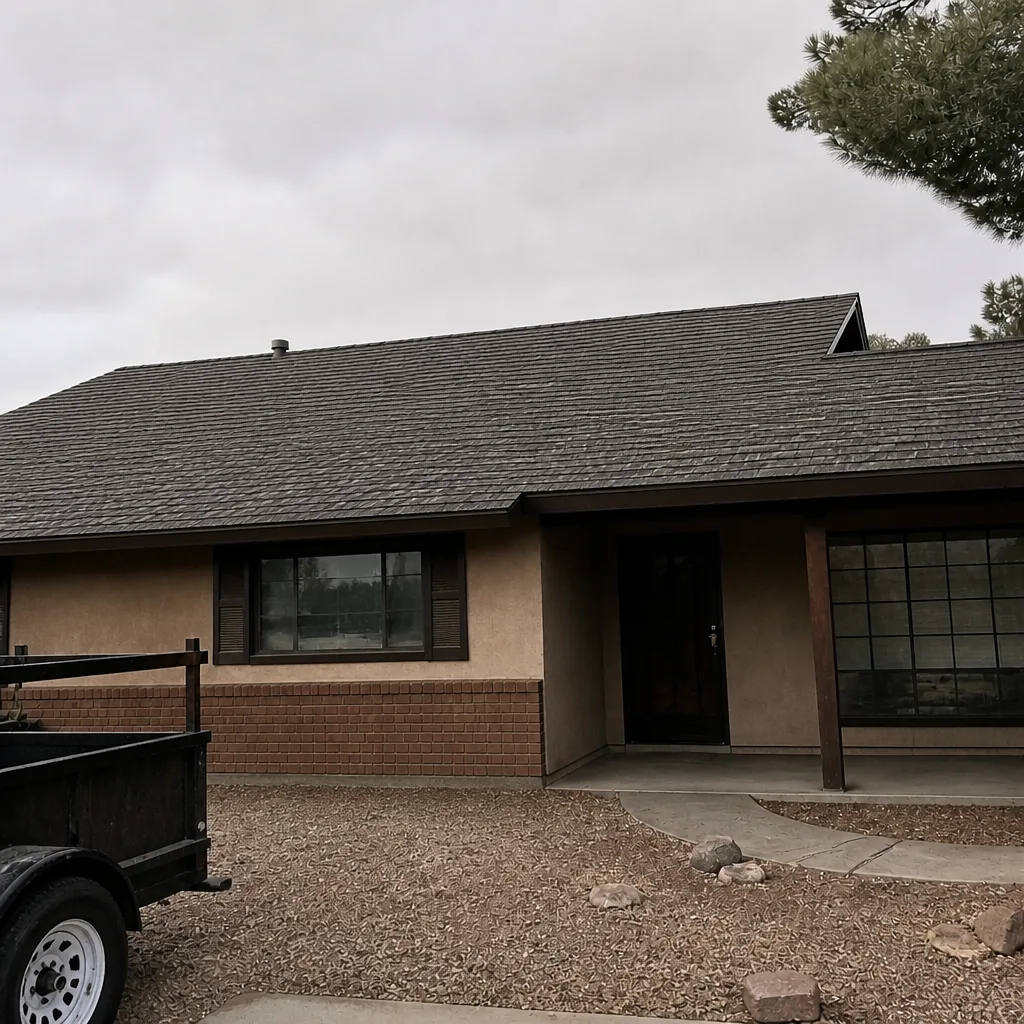 After
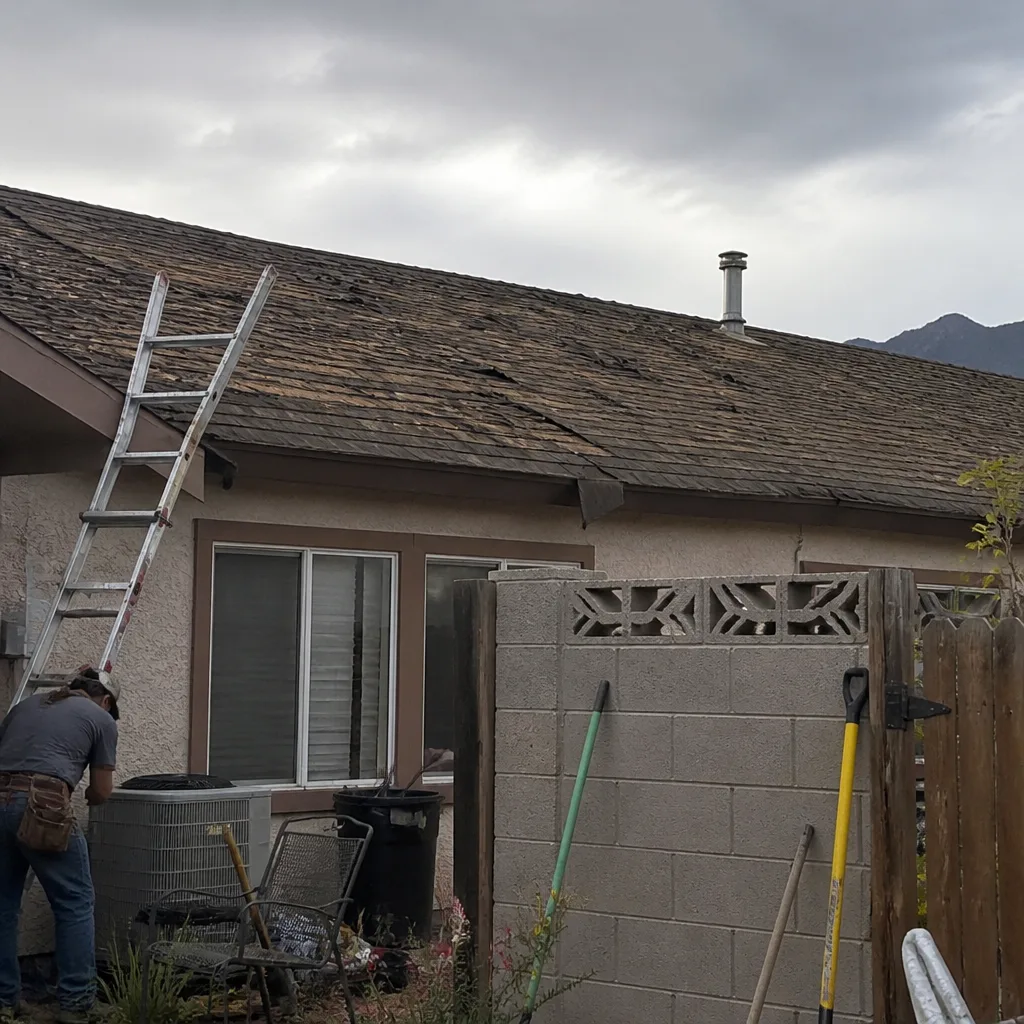 Before
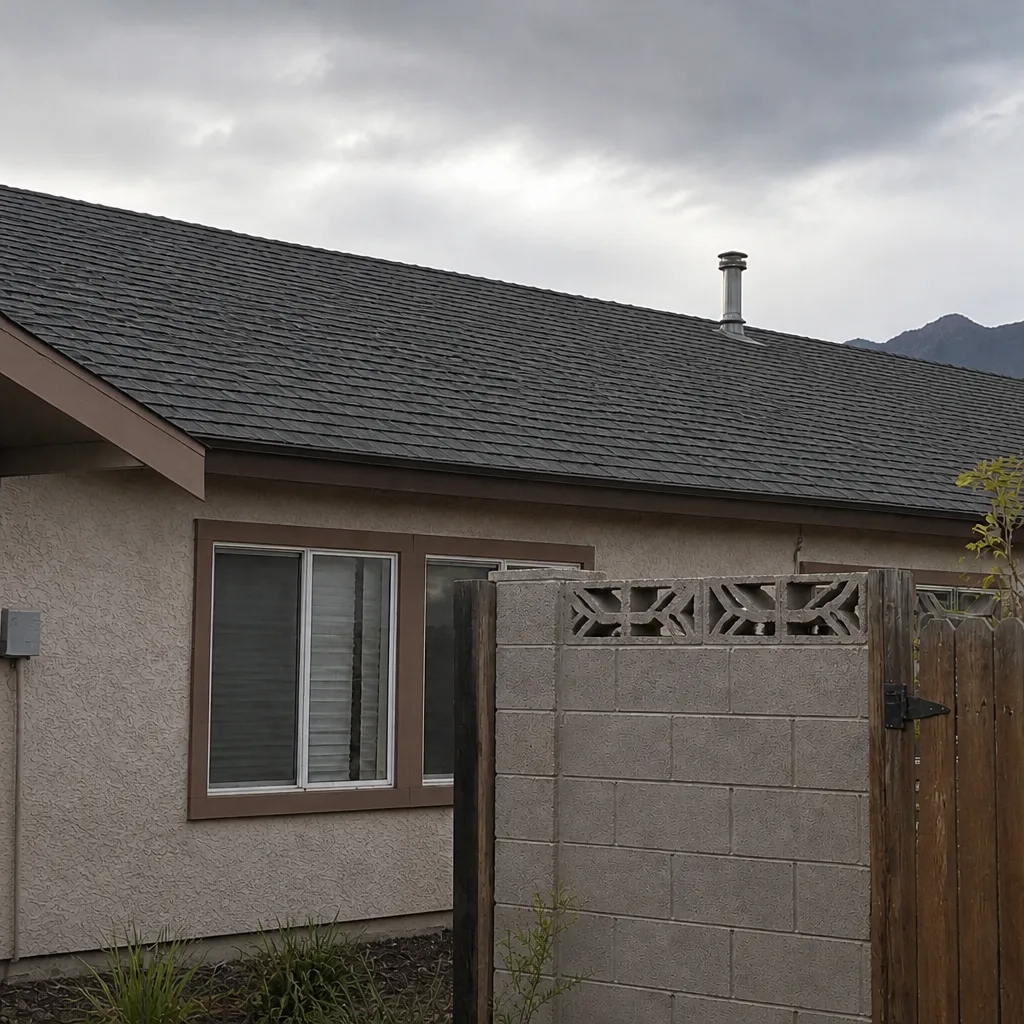 After
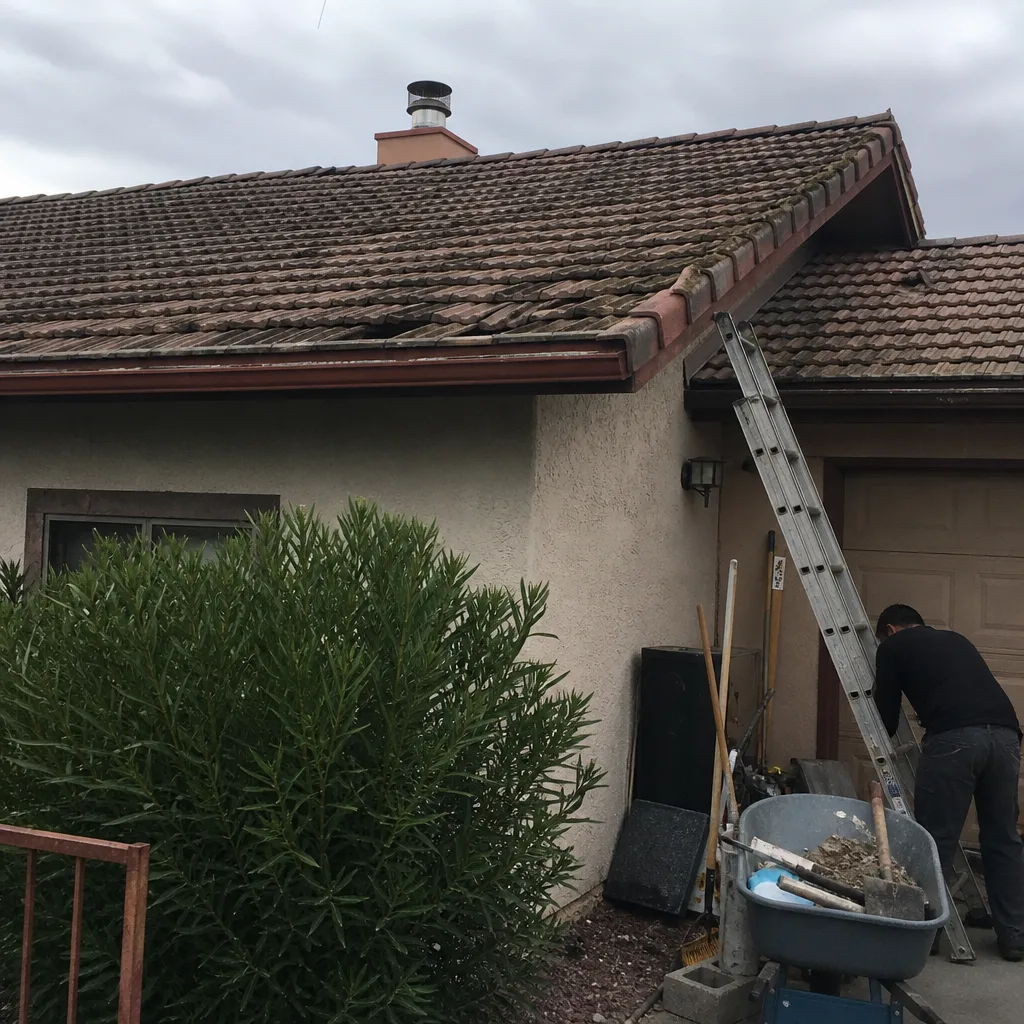 Before
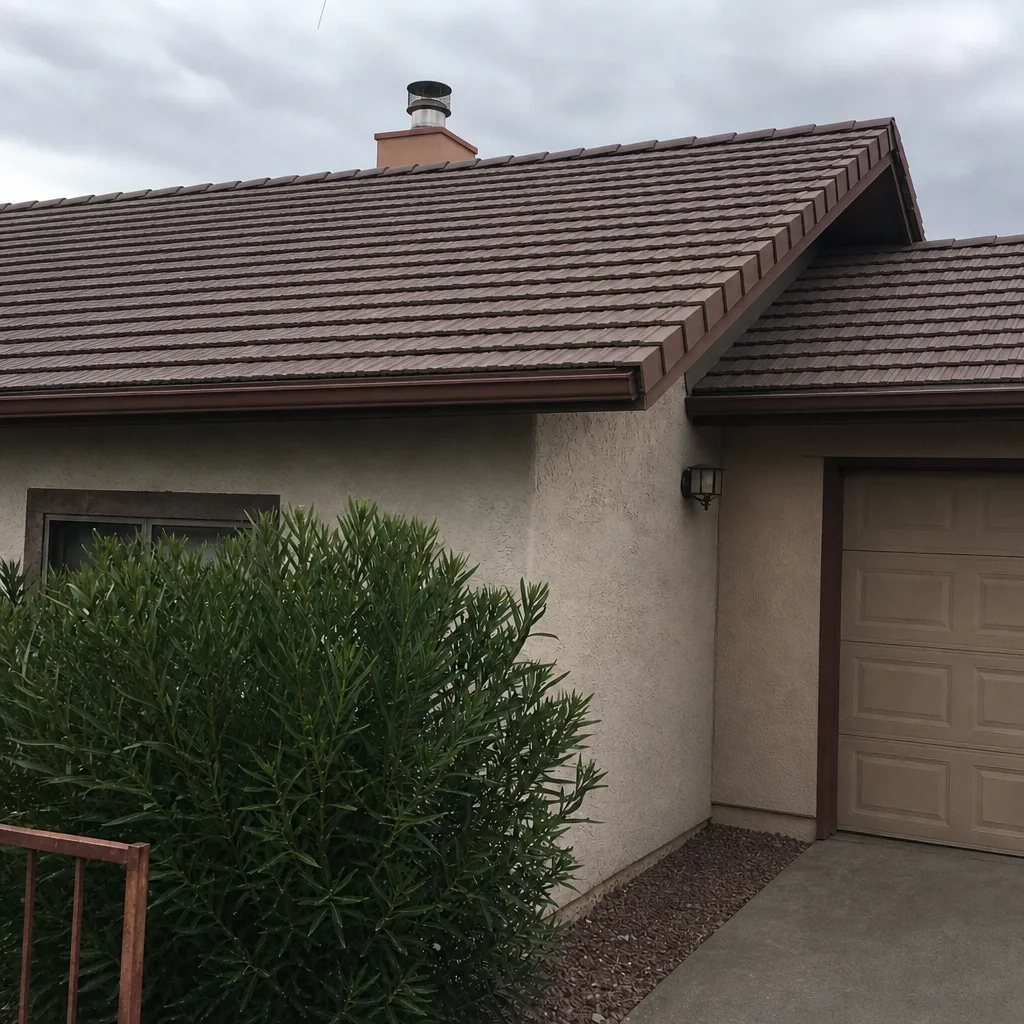 After
When to Call a Professional
Some findings are not a matter of “later.” Call us when you see any of the following:
- Interior water staining, bubbling paint, or sagging drywall after a storm.
- Missing, lifted, or unsealed flashing anywhere along a wall, chimney, or skylight.
- Shingles that are granule-bare, missing, or brittle.
- Cracked or missing pipe boot collars that you notice from the ladder.
- Water standing on a flat section more than 24 hours after a storm.
- Any indication of moisture in the attic: staining, a rusty h-clip, or daylight.
Our technicians have up to 30 years of experience. We’ll show you the deck photos before we talk money and give you a written line-item estimate. There’s no trip charge inside our own county. Shepherd & Sons Roofing Boulder City offers free estimates in Boulder City. Call (844) 761-8186 to schedule yours.
Frequently Asked Questions
Most homeowners in Boulder City spend between $150 and $250 a year on a maintenance schedule that includes two inspections and minor upkeep. That’s against an $8,000 to $14,000 emergency replacement if a monsoon leak is missed. Call (844) 761-8186 for an exact quote. Estimates are free.
The two anchor dates are May, before monsoon season, and October, after it. February’s thermal expansion check is a third date worth adding. The May and October inspections catch the most common Boulder City problems: clogged gutters, failed pipe boots, and flashing pulled loose by monsoon wind.
No. Pressure washing a shingle roof dislodges granules, drives water under the shingles, and voids most manufacturer warranties. It’s the most common way we see a homeowner turn a small repair into a full replacement. If your roof needs cleaning, ask about the soft-wash methods that are appropriate to the material.
Ponding water is standing water on a low-slope or flat-coated roof. If it drains within 24 hours after a storm, it’s usually normal drainage lag. If it’s still there after 24 hours or leaves a dark ring, it’s a problem that needs inspection within the month.
Yes. Insurance adjusters look for evidence of a maintained roof, and a log of your inspections, repairs, and photos makes a claim far easier to process. Keep dated photos, receipts, and any written inspection records together, and you’ll have proof that the roof was maintained before the storm that caused the damage.
Boulder City’s monsoon season turns small problems into interior leaks, and a homeowner who never inspects typically finds the damage after a season or two. That’s when a $200 annual routine becomes an $8,000 roof replacement. Call (844) 761-8186 to schedule an inspection. Estimates are free.
The Bottom Line
A maintenance schedule is the cheapest insurance against a roof emergency. The two anchor months in Boulder City are May and October, with a February thermal expansion check. Homeowners can safely check gutters, pipe boot collars, and visible flashing from a ladder. The five things that require roof boots and a trained eye are underlayment, nailing pattern, valley flashing, roof-to-wall joints, and attic evidence. Log every inspection and repair in writing, and never pressure wash the roof. Spend about $200 a year to avoid the $8,000 to $14,000 emergency replacement that follows a neglected monsoon season. We’re proud to serve homeowners across Boulder City with schedule-based upkeep, written estimates, and no surprises.
Ready to get your maintenance schedule on the calendar? Call (844) 761-8186 for a free estimate. Our technicians have up to 30 years of experience, and every roofing job is backed by our written 90-Day Done Right Promise. Tour our Shepherd & Sons Roofing Boulder City home page for more on how we work. Visit our Roof Repair in Boulder City service page if your inspection turns up a repair, or see Roof Replacement & Installation in Boulder City if the roof is at the end of its life. If you’re considering a longer-life roof, look at Metal Roofing in Boulder City. Same address since 1996. Ask the storm chasers where theirs is.
Written by the team at Shepherd & Sons Roofing Boulder City.