
Last updated November 17, 2026
 Architectural shingles
 Metal roofing
 Tile roofing
 GAF
 Owens Corning
 Flat & low-slope
Free roof inspection with deck photos before we talk money - GAF and Owens Corning certified installation
Roof Repair Warning Signs Every Homeowner Should Know
Nine out of ten roof failures we see around Boulder City announced themselves at least six months before a ceiling got wet. The problem isn’t that homeowners ignore their roofs. It’s that most people don’t know what they’re looking at. That dark streak running down your fascia board isn’t a stain – it’s a tannin trail showing exactly where water has been escaping for the past two rainy seasons. A granule in your gutter isn’t grit. A hairline crack in tile isn’t cosmetic. This guide walks you through the signs you can spot from the driveway, the ones hiding in the attic, and the ones specific to Boulder City’s dry desert climate – so you know when a small fix is still a small fix, and when you’re already behind.
Quick Answer
The most reliable warning signs your roof needs repair are: dark water trails down fascia and siding, granule buildup in gutters after rain, rust streaks on attic truss plates, daylight at ridge vents, cracked or slipped tiles, and a musty smell in upper rooms that shows up on hot afternoons. Most of these are visible with no ladder. Catching them early turns a $200 to $500 repair into a $12,000 tear-off – and in Boulder City’s dry heat, the window between “small problem” and “water inside the house” is shorter than in wetter climates.
Styles & brands we work with
- Architectural shingles
- Metal roofing
- Tile roofing
- GAF
- Owens Corning
- Flat & low-slope
Table of Contents
- The Five Signs You Can See From the Driveway
- Granule Loss and What Your Gutters Tell You
- Attic Warning Signs That Show Up Months Before Ceiling Damage
- Tile Roof Warning Signs in Boulder City’s Older Neighborhoods
- The Musty Smell Most Homeowners Blame on the AC
- A Simple Roof Inspection Schedule That Works
- When It’s a Repair and When It’s a Replacement
- When to Call a Professional
The Five Signs You Can See From the Driveway
You don’t need to climb a ladder to get a read on your roof. Stand back where the street meets your driveway and look up. These five things show up clearly from ground level, and each one points to a specific problem underneath.
- Dark streaks running down the fascia board. Those brown-black trails are tannins being pulled out of the wood by water that’s been finding a path for months. They’re telling you where the leak started, not where it shows up inside.
- Curling or lifted shingle edges. Look at the shingle tabs along the rake and eave. When edges curl up like a dried leaf, the shingle is past its ability to shed water. In Boulder City’s summer heat, this happens faster on south- and west-facing slopes.
- Dipping valleys. The V-shaped channels where two roof planes meet should run straight. A sag or dip means the underlayment or decking beneath has taken on water and softened.
- Rust or corrosion at flashings and vents. Mailbox-brown rust around chimney and vent flashings means the sealant has dried out and pulled away. Those are your most common leak entry points on a house.
- Moss, algae, or lichen patches. Rare in the desert, but when you see it in Boulder City, it means that slope stays wet longer than it should – usually a sign of poor ventilation or a blocked drainage path.
Any one of these is worth a look. Two or more together means it’s time to get someone on the roof who knows what they’re looking at. If you want to see how a real inspection works, take a look at what Roof Repair in Boulder City covers – and notice how much of it starts at the driveway before anyone pulls out a ladder.
Granule Loss and What Your Gutters Tell You
Shingles are made of a fiberglass mat, an asphalt coating, and a top layer of granules that protects the asphalt from the sun. When you find a few granules in your gutter after a rain, that’s normal wear. When the bottom of the downspout looks like someone dumped a bag of sand there, the shingle has lost its armor and the sun is eating the asphalt underneath.
Boulder City’s climate changes how this presents. In humid parts of the country, granules stay clumped and heavy in the gutter, and you can see the buildup easily. Here, they dry out fast and blow away with the next wind. Granules that in a coastal climate would sit in the gutter for weeks will scatter across your patio by morning. So look at the downspout splash pad, the low spots on your patio slab, and the base of your landscape plants. A gray-black sand residue collected after any rain is a warning sign you shouldn’t dismiss.
What we look for after a rain in Boulder City:
- Granule piles at the downspout outlet, more than a scattered sprinkle
- Worn or bald patches on the shingle field where you can see the mat texture
- Shingle granules in the gutter mixed with asphalt grit
- Shingle tabs that have lost their granular layer along the ridge and hips
- Gutter channels that show dark asphalt streaks rather than clear waterlines
If your shingles are nearing the end of their service life and the granule loss is across the whole field, patching won’t help. That’s a replacement conversation, and our write-up on Roof Replacement & Installation in Boulder City explains how to tell when a roof is a candidate – and when it isn’t. The brands we install, including GAF and CertainTeed, are all rated for our desert heat and intense UV exposure.
Attic Warning Signs That Show Up Months Before Ceiling Damage
Attic signs are the ones most homeowners never see, and they’re the ones that buy you the most time. A ceiling stain shows up months after the leak started. The attic shows the leak while it’s still a small, cheap problem.
These are the signs worth a flashlight and an afternoon:
- Rust streaks on truss plates. The metal connector plates at your truss joints should be shiny. Orange-brown rust lines mean moisture has been condensing or dripping there. That’s water where water should never be.
- Daylight at ridge vents. Look up at the ridge vent from inside. If you see daylight – a bright line, not a dim glow – the vent has separated from the ridge, and the opening is letting in rain, insects, and dust.
- Compression patterns in insulation. Batts should be fluffy and level. If you see matted, compressed areas under a vent or light fixture, moisture has been weighing the insulation down and killing its R-value.
- White or black staining on the decking. From inside, look at the underside of the roof deck. White bloom (efflorescence) or dark streaks point to moisture migration. Either one means water is finding its way past the shingles.
- Water stains on the sheathing at the ridge line. If the top three feet of roof sheathing is stained, the ridge is the culprit – usually flashing, not the shingles.
We regularly see attic moisture in Boulder City homes that were built in the 1980s and 1990s, where the original ventilation hasn’t been upgraded with the rest of the house. When the attic can’t breathe, condensation does more damage in dry country than people realize, because the temperature swings between day and night are so wide. For a deeper look at the full service list and what a roof check covers, see our Shepherd & Sons Roofing Boulder City home page – it lays out the systems we handle, from attic to gutter.
Tile Roof Warning Signs in Boulder City’s Older Neighborhoods
Tile roofs are all over the older parts of Boulder City, and they look bulletproof from the street. They aren’t. Tile is a wear layer – the waterproofing is the underlayment beneath it. When the tile lets water past and the underlayment has aged out, the ceiling is the only thing between you and the rain.
These are the signs we see most on tile roofs that are 25 years and older:
- Hairline cracks on the tile face. Fine cracks you can see but not feel with a fingernail. One crack is a curiosity. Ten across the same slope is a pattern, and the pattern usually traces back to the underlayment failing underneath.
- Mortar separation at the ridge cap. The mortar that holds ridge caps and hip caps should be intact. When it cracks, pulls loose, or falls out in chunks, those caps become water scoops in a wind-driven rain.
- Slipped and shifted tiles. Tiles that have slid slightly out of line look fine from the driveway when the sun is straight overhead. They show up at an angle, in morning or late-afternoon light, as a slight ripple in the field.
- Broken tiles at valley and hip intersections. Those inside corners are where foot traffic, wildlife, and thermal movement do the most damage over time.
We’re careful about tile work because a rushed tile repair becomes a big problem fast. Boral tile products are one of the lines we install when a section needs replacing, and matching the existing tile profile is part of the job – not something you can hand-wave. If your tile roof is past 20 years and you’ve started seeing any of the above, it’s worth a proper look. For metal roof systems on homes across the area, our Metal Roofing in Boulder City page covers what to expect when the roof material itself needs to be reconsidered.
The Musty Smell Most Homeowners Blame on the AC
Here’s the one that gets missed most often. A musty smell in an upstairs bedroom or hallway that shows up on hot afternoons and fades by evening is not an air conditioning problem. It’s an attic moisture problem.
What happens is this: moisture is getting into the attic through a gap in the roof or a failing vent seal. In cooler parts of the day, it stays mostly harmless. But when the sun hits the roof at midday and the attic heats up, that trapped moisture vaporizes and gets drawn down through the ceiling penetrations and into the living space. By evening, when the attic cools, the smell fades. Homeowners call an HVAC tech first, then a mold specialist, then a roofer – and by that point, the roof has been leaking for months.
If the musty smell only appears on hot afternoons, and it’s stronger in an upper-floor room closest to the south or west roof slope, that’s a roof warning sign. If it’s stronger in a bathroom with no window and gets worse on cool mornings, it’s more likely a ventilation issue. The test is where and when the smell appears, not just that it exists. We’ve seen this pattern repeated in Boulder City homes where the ridge vent has separated – the same clue as the daylight gap above.
A Simple Roof Inspection Schedule That Works
You don’t need a roofing background to stay ahead of problems. You need a routine and the will to look. Here’s the schedule we recommend for most Boulder City homes:
- First weekend of each month. Walk the perimeter of your house and look up at the roof from ground level. Check the fascia, the valleys, the flashings, and the gutter lines. Fifteen minutes.
- After every rain. Look at your downspout splash pads and low spots for granule buildup. Note any new dark streaks on siding or fascia that weren’t there before.
- Twice a year – spring and fall. Get into the attic with a flashlight. Check truss plates for rust, sheathing for stains, insulation for compression, and vents for daylight.
- Once a year, after the summer heat. Call for a professional look. The heat of June, July, and August is what triggers the failures that show up in September and October.
Add one exception: after any wind-driven storm with gusts over 50 mph, do a quick ground-level walk even if a regular inspection is weeks away. In our experience, hail dents and lifted shingle tabs are the two things that turn into leaks fastest on this side of the valley, and they’re both visible from the driveway.
When It’s a Repair and When It’s a Replacement
Not every warning sign means replacement. Some do. Here’s how we sort it out on a real roof.
- Repair: isolated damage on less than 20% of the roof, one slope with a problem, intact shingles elsewhere, and a deck that’s sound when you press on it from the attic.
- Repair: flashing failures at chimney, vent, or skylight. Those are localized issues even when they’ve been leaking for a while.
- Replacement: granule loss across the full shingle field, active leaks in more than one area, shingles curling on multiple slopes, or a roof past 20 years with patch repairs stacking up.
- Replacement: soft deck spots large enough to walk into, which usually means the sheathing has taken on enough water that patching over it won’t hold.
A good roofer measures a roof in squares before talking price. Ask any bidder how many they counted. If the number is vague, or the estimate isn’t a written line-item with the count, be cautious. For a detailed walk-through of what a fair quote looks like, our team at Shepherd & Sons Roofing publishes the standards we hold ourselves to – and we always offer a free second opinion on any written estimate, so you can put one bid next to another and see the difference plainly.
Common Mistakes to Avoid
- Painting over water stains instead of finding them. A fresh coat of paint on the ceiling hides the evidence for a few months, then the stain returns and the decking has softened. Track the source first.
- Caulking a flashing and calling it done. Silicone sealant is not a permanent fix on a roofing flashing. It dries out in the desert sun and usually fails within two summers.
- Waiting for a ceiling stain. By the time water reaches the ceiling, the roof leak is usually six months old and has spread into the decking. Caught at the fascia-streak stage, the repair is often under $500.
- Hiring the door-knocker after a storm. Storm-chasing outfits sometimes follow hail across the West and are gone before the next rain. In Boulder City, ask for a local address and a license number you can look up before you sign anything.
- Confusing HVAC problems with roof moisture. If a musty smell only comes back on hot afternoons, it’s a roof or attic warning sign, not an air handler issue. Check both.
- Assuming a tile roof is safe because it looks perfect from the street. Tile is a wear layer. The underlayment fails underneath and doesn’t show from the driveway until it’s already wet in the attic.
- Skipping the attic inspection. The five most useful warning signs – rust, daylight, compressed insulation, deck stains, and vent gaps – are all visible from up there with a flashlight. It’s the cheapest 20 minutes you’ll spend on the house.
See the difference
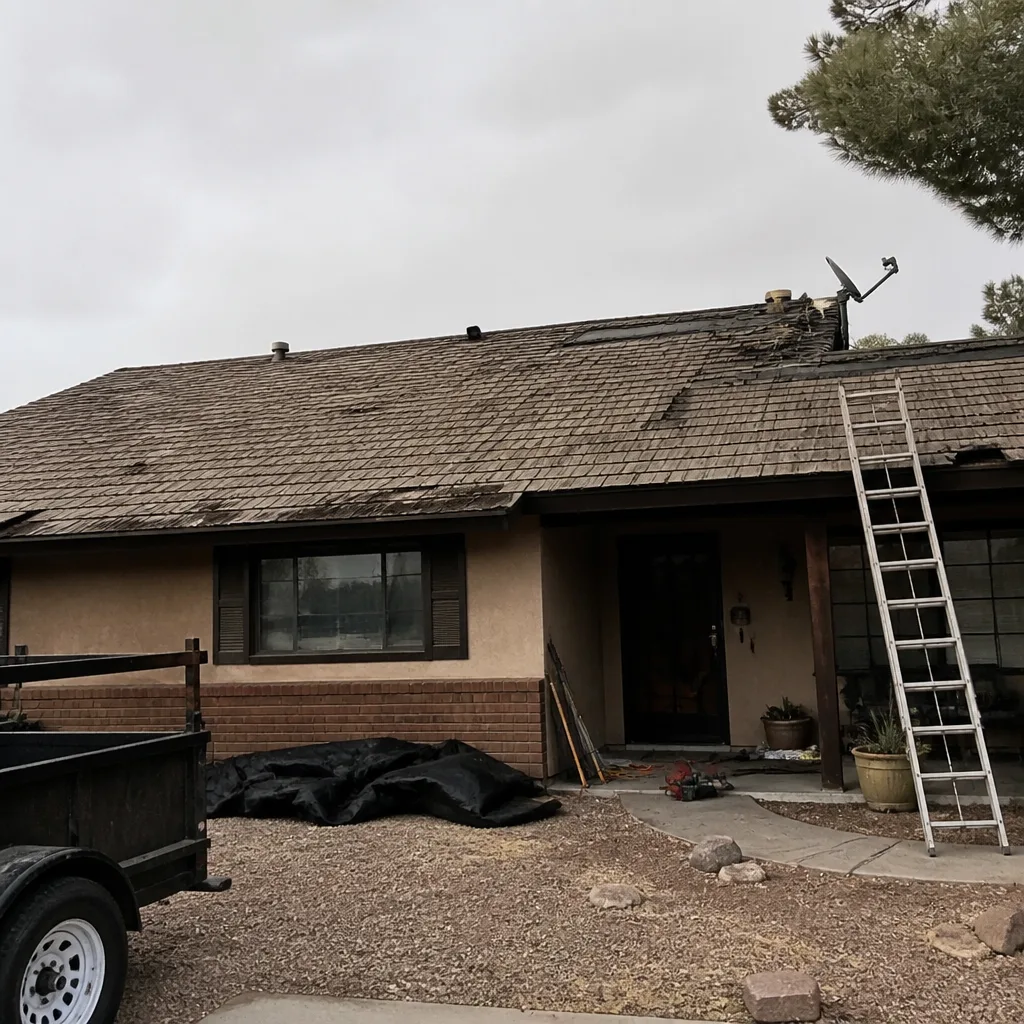 Before
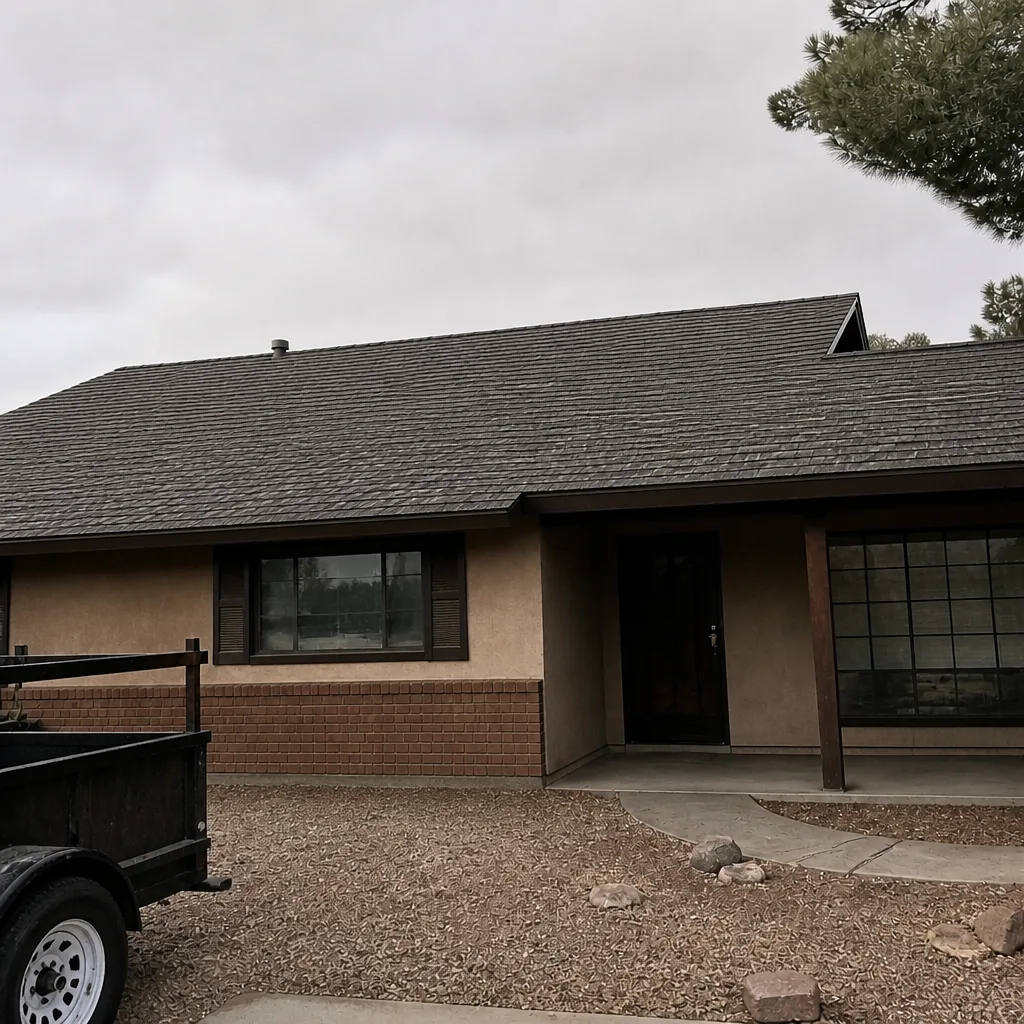 After
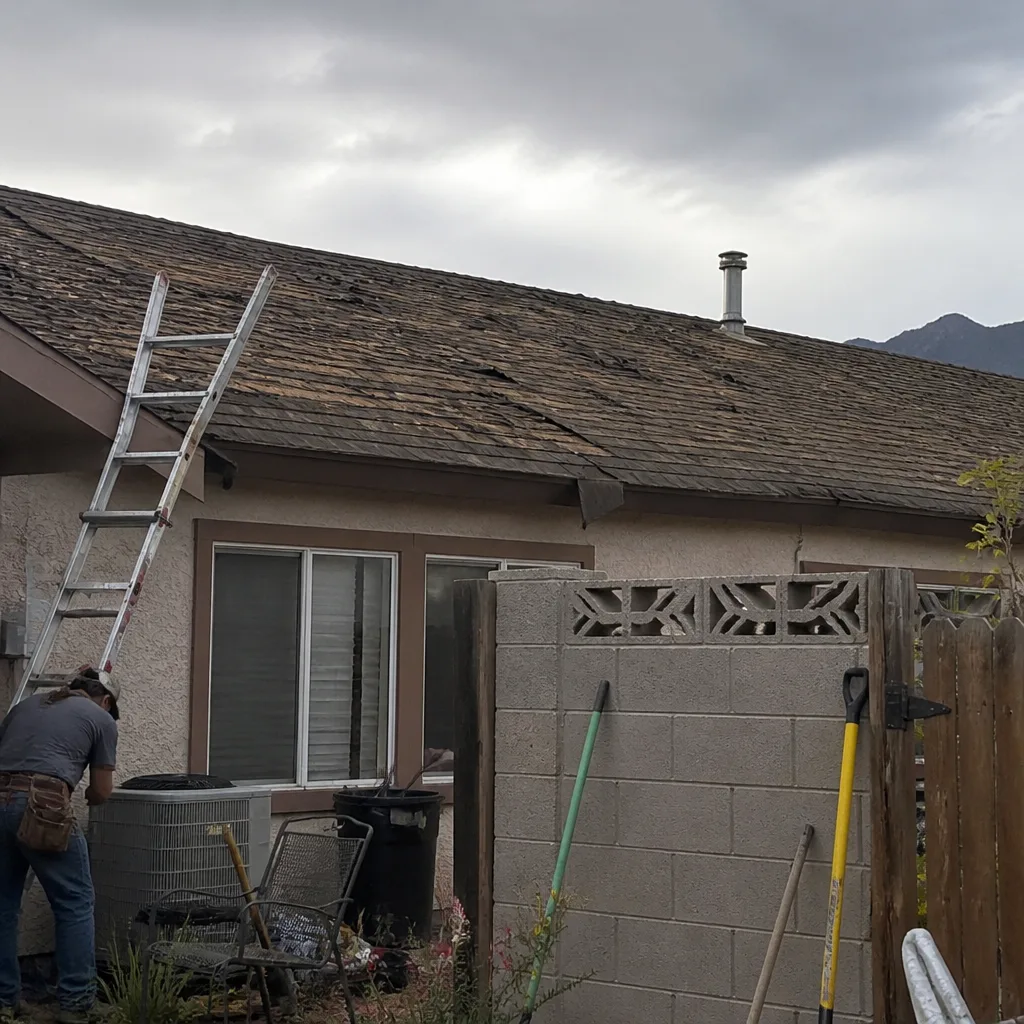 Before
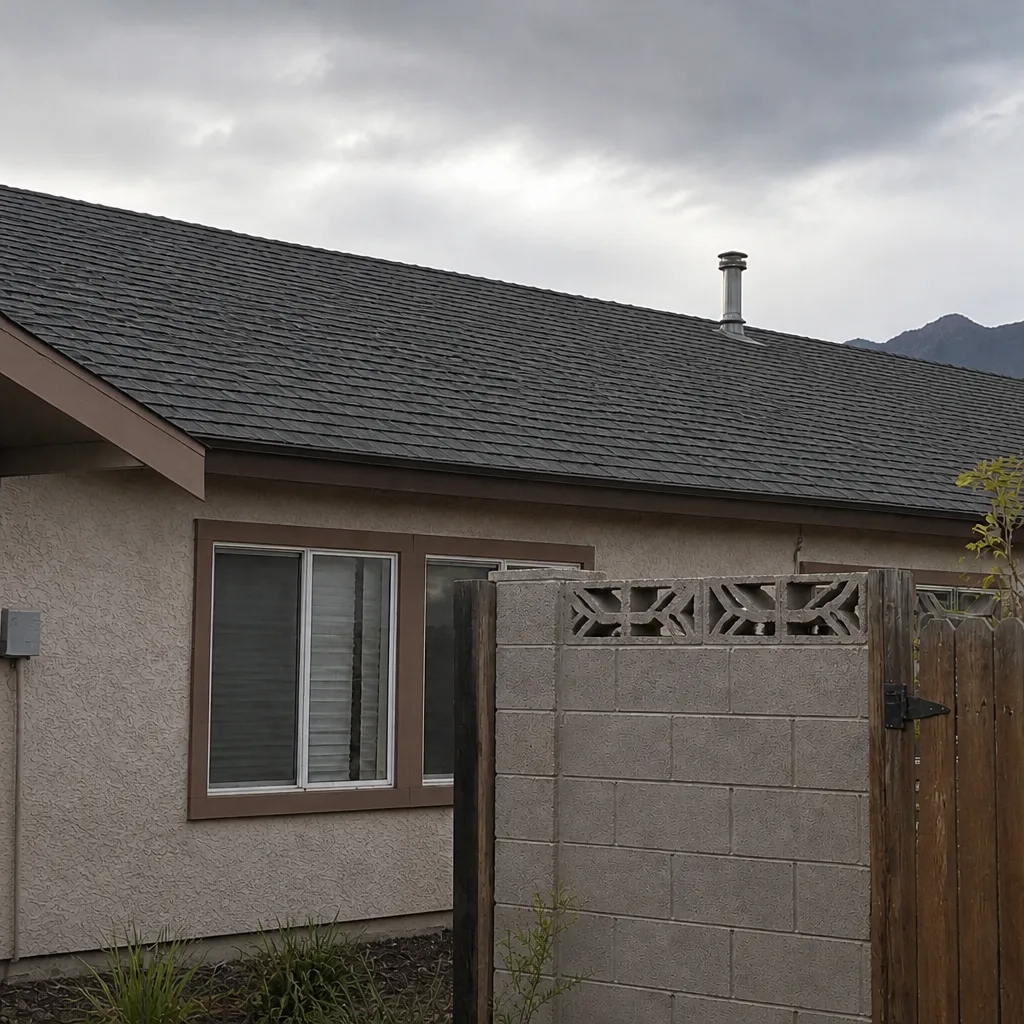 After
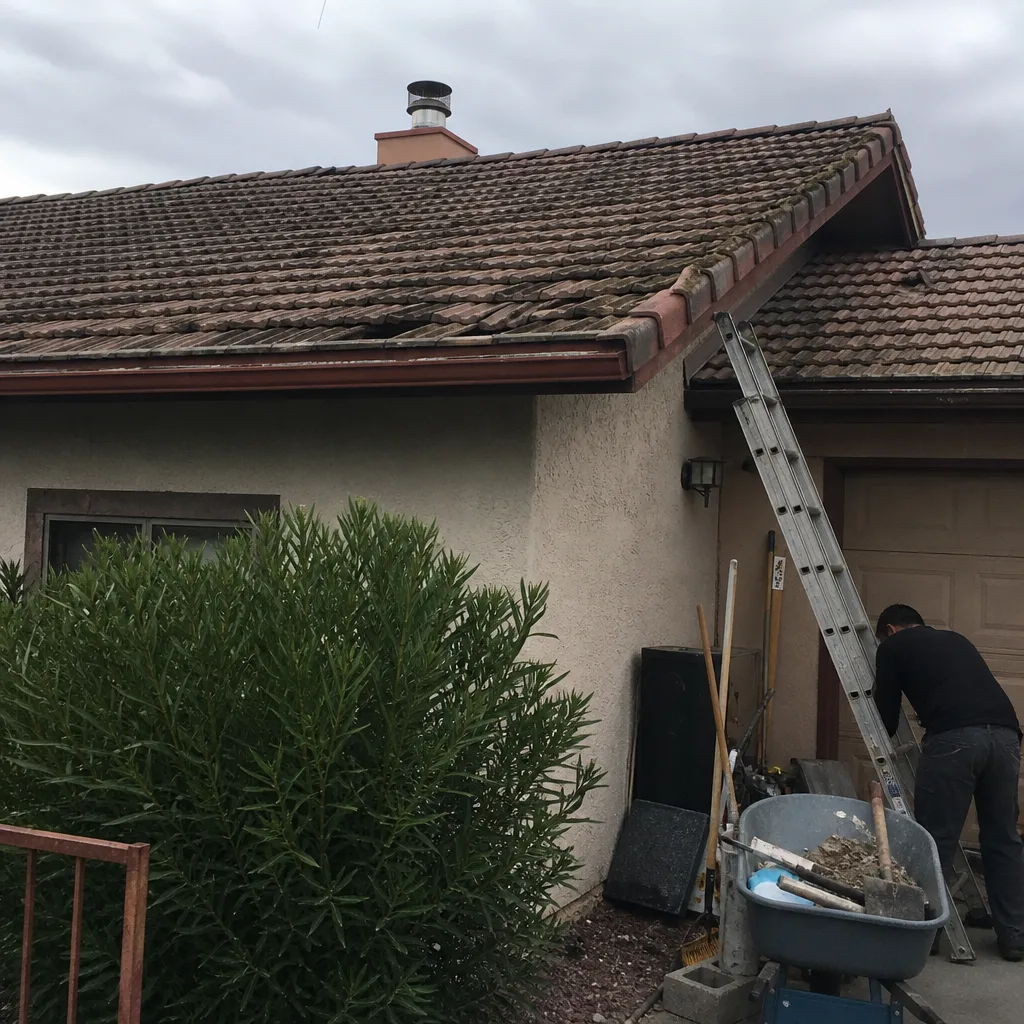 Before
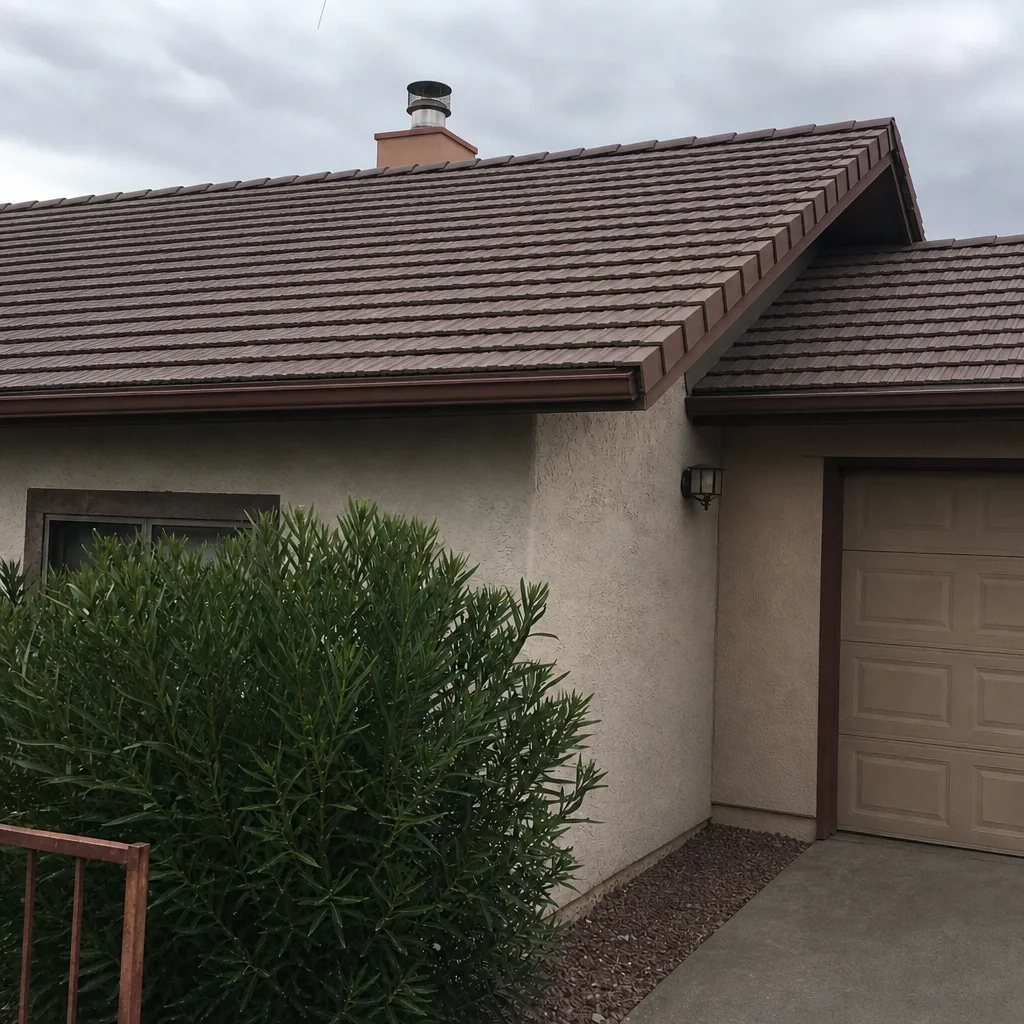 After
When to Call a Professional
Some warning signs need a roofer. Call us for any of the following: active ceiling stains, musty smells that only appear on hot afternoons, water stains on attic sheathing or truss plates, daylight at ridge vents, granule loss across a full roof field, tile cracks and slipped tiles, or any concern about wind or hail damage after a storm. These are the ones where a short inspection saves you real money. Our team at Shepherd & Sons Roofing Boulder City offers free estimates in Boulder City – call (844) 761-8186. A live person answers, day or night, and there’s no trip charge inside our own county. We’ll show you photos of what we see on the roof before we talk about pricing.
Frequently Asked Questions
Most single-area roof repairs in Boulder City run $200 to $900 depending on the issue – flashing repairs at the low end, shingle or tile field replacement at the higher end. Full replacement runs several thousand dollars and up, based on roof size and material. We don’t quote from a phone number alone – the roof has to be walked and counted. Call (844) 761-8186 for a free estimate, and we’ll put a written line-item in front of you.
Not if the quote was done properly. A fair written estimate includes the shingle count, the cost of any decking replacement, and the cost of pulling permits. If a contractor quoted without inspecting the roof, surprise costs are likely. Ask for the count in squares and the scope in writing – that’s how you avoid the “phone price vs. door price” problem. Call (844) 761-8186 for a free second opinion on any estimate you’ve already received.
Yes. Roof installations and replacements in Boulder City require permits in most cases, and we handle that as part of the job. Ask any bidder whether permits are included – if they’re not, you’ll end up paying for them yourself, and the inspection record won’t be there when you sell. We’re licensed, insured, and bonded, and we carry the workmanship warranty in writing on every roofing job.
Most warning signs give you a few weeks to act without making the problem worse. Rust on truss plates and daylight at ridge vents are the two that don’t wait – those need attention within days, because water is already getting past the roof. Fascia streaks, granule loss in gutters, and musty smells in upper rooms are warning signs that buy you more time but shouldn’t sit for a season. When in doubt, call (844) 761-8186 and describe what you’re seeing – we can usually tell you over the phone whether it’s urgent.
Small things like a loose gutter fastener or a missing downspout section are fine to handle on the ground. Anything that requires stepping onto the roof – shingle repair, flashing resealing, tile work – is where we recommend a trained professional. A roof has real fall danger, and a poorly seated repair will leak again after the next rain, often into a different spot. A proper repair costs less than the water damage it prevents.
The brand matters less than the product line and the ventilation. In our experience, a mid-to-premium line from GAF, CertainTeed, or Owens Corning performs well in this heat when the attic is properly vented – no shingle holds up over an attic that can’t breathe. If you’re replacing, ask about the wind rating, the warranty class, and whether the ventilation is being brought up to spec. Call (844) 761-8186 to talk through the options in plain terms on your own roof.
The Bottom Line
Most roof failures give you six months of warnings before the ceiling gets wet. The trick is knowing what you’re looking at: fascia streaks, granule trails after rain, rust on truss plates, daylight at ridge vents, tile cracks under morning light, and a musty smell that only shows up on hot afternoons. None of these require a ladder to start. The driveway walk and the attic flashlight do most of the work. If you catch any of them, get a trained roofer on the roof for a free estimate – that’s how a $200 repair keeps its price. Call (844) 761-8186 to schedule yours, and we’ll show you the photos before we talk money.
Written by the team at Shepherd & Sons Roofing Boulder City.