
Last updated November 17, 2026
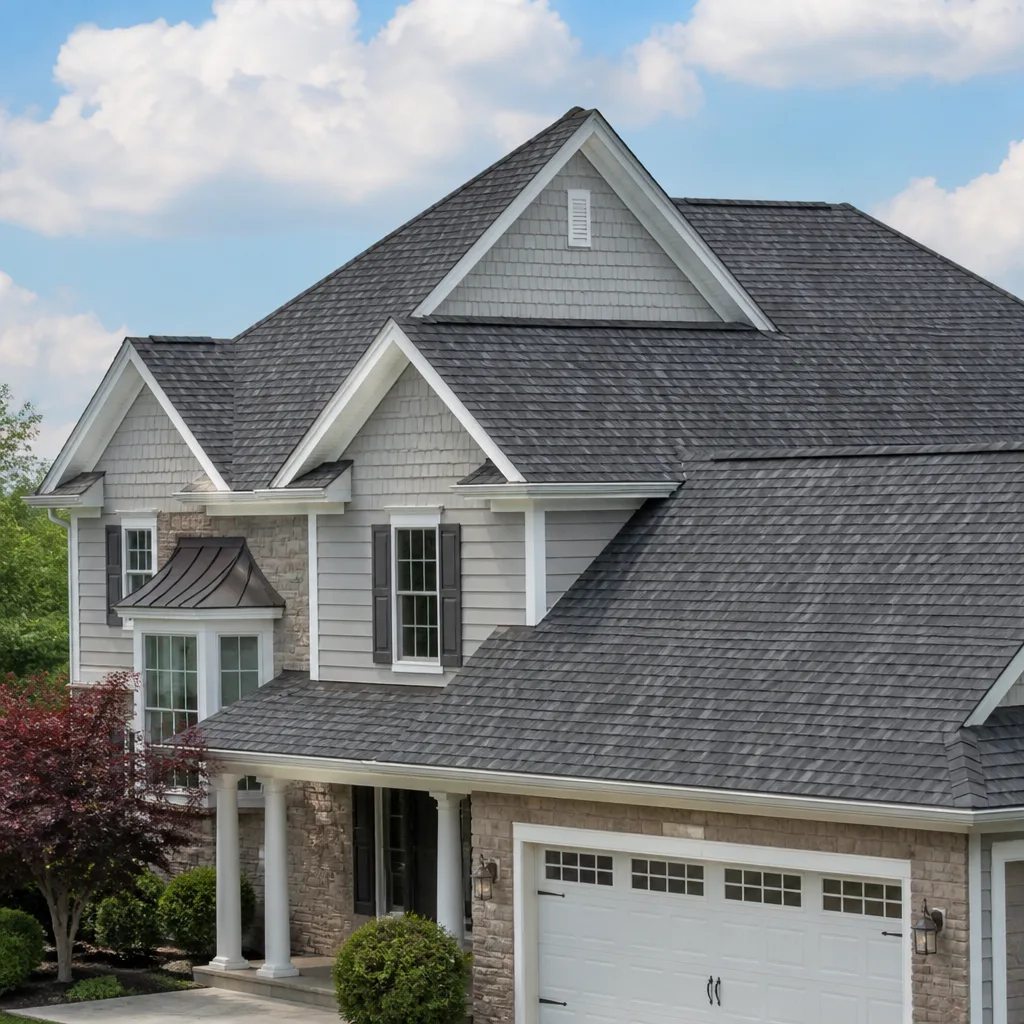 Architectural shingles
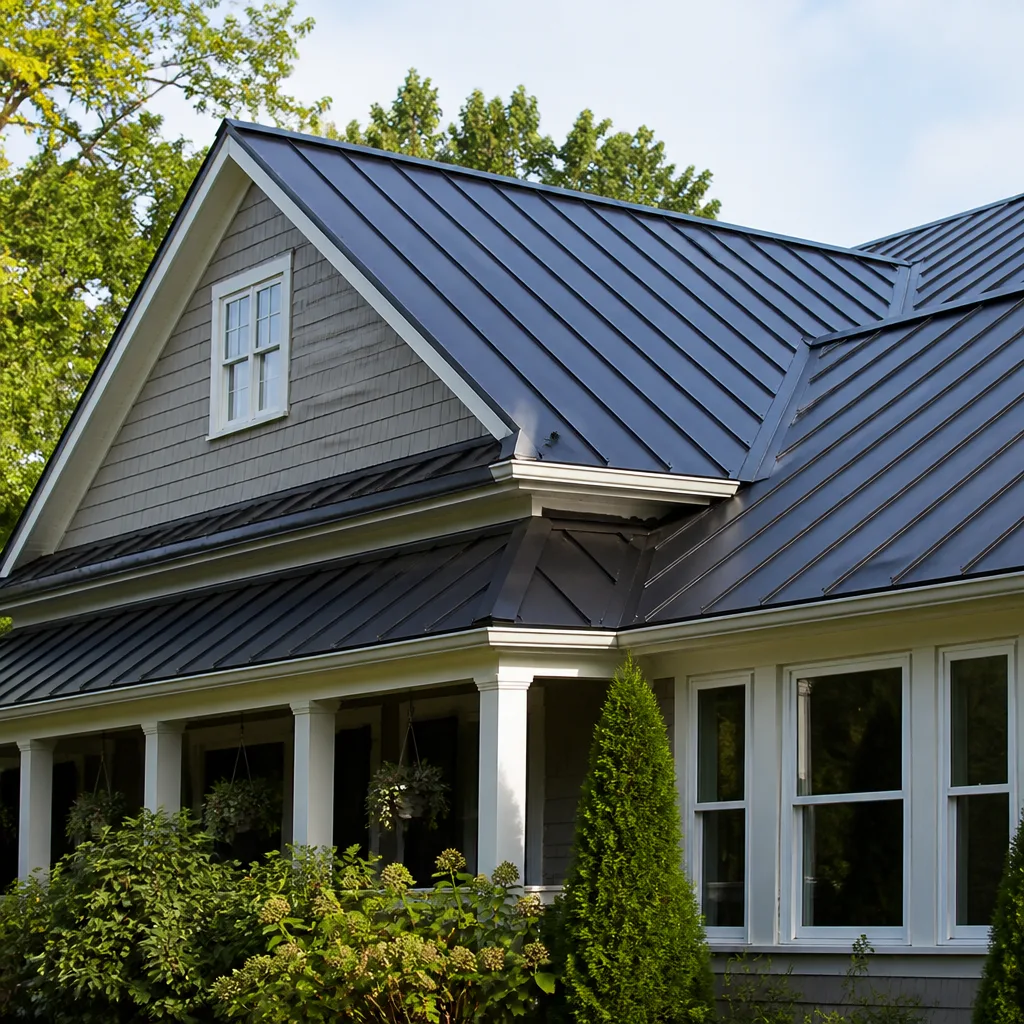 Metal roofing
 Tile roofing
 GAF
 Owens Corning
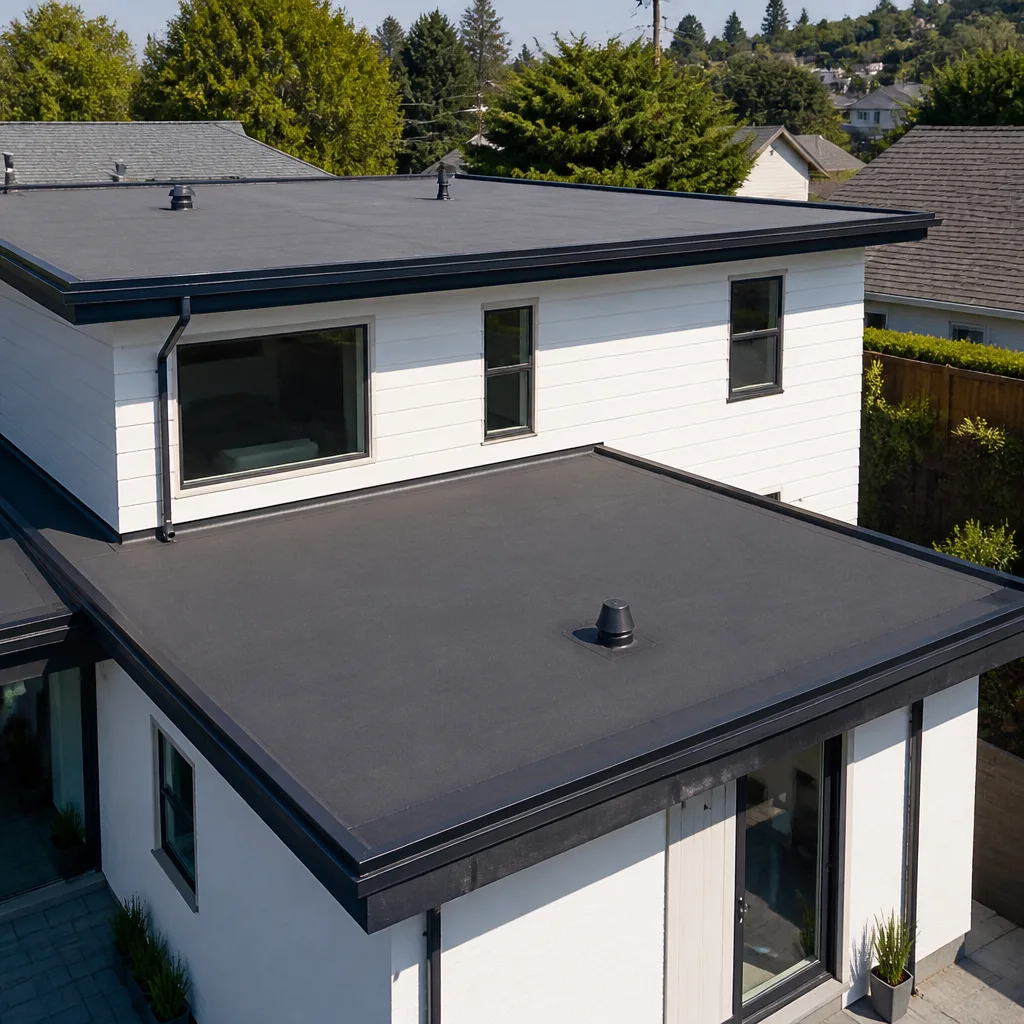 Flat & low-slope
Free roof inspection with deck photos before we talk money - GAF and Owens Corning certified installation
DIY vs Professional Roof Replacement & Installation: What’s Safe to Do Yourself
A homeowner in Boulder City called us last spring after trying to do his own replacement. He’d spent $4,200 on materials, rented a dumpster for $600, and still needed a licensed roofer to finish the job and pull the permit. The professional bid had been $6,800 total. He paid almost all of it anyway, plus the dumpster, plus three weekends of his own labor. That story isn’t unusual. Full roof replacement is the one home project where doing it yourself almost always costs more than hiring someone. This guide breaks down why, what the law actually allows in Nevada, and the narrow cases where rolling up your sleeves makes sense.
Quick Answer
Replacing an entire roof yourself is almost never worth it. Between material markup, dumpster rental, equipment, permit fees, and the risk of a failed inspection, a Boulder City homeowner typically saves nothing or ends up spending more than a professional bid. Small jobs are different. A detached garage, a shed under 200 square feet, or a minor repair under the licensing threshold can be reasonable DIY territory if you’re comfortable on a ladder and know what you’re looking at.
Styles & brands we work with
- Architectural shingles
- Metal roofing
- Tile roofing
- GAF
- Owens Corning
- Flat & low-slope
Table of Contents
- The Real Cost Breakdown: DIY vs Professional in Boulder City
- Nevada’s C-15 Licensing Law and the Owner-Builder Permit
- Three Scenarios Where DIY Makes Partial Sense
- What Happens to Your Insurance If Something Goes Wrong
- Questions That Separate a Licensed Roofer From a Guy With a Truck
- Common Mistakes to Avoid
- When to Call a Professional
- Frequently Asked Questions
The Real Cost Breakdown: DIY vs Professional in Boulder City
Most homeowners assume the labor is where they’ll save. It isn’t. The savings evaporate before the first shingle comes off because the costs that actually add up on a DIY job are the ones people don’t think about until they’re already committed. Here’s how a typical Boulder City asphalt shingle replacement pencils out on a 2,000-square-foot roof.
| Line Item | DIY | Professional |
|---|---|---|
| Shingles and underlayment (20 squares) | $3,800 – $5,200 | $3,200 – $4,400 |
| Dumpster rental (10-yard, one week) | $550 – $750 | Included |
| Nail gun rental, ladder, safety harness | $200 – $350 | Included |
| City of Boulder City building permit | $150 – $400 | $150 – $400 |
| Labor | Your weekends | $2,000 – $3,500 |
| Disposal fees beyond dumpster | $100 – $250 | Included |
| Total | $4,800 – $6,950 | $5,350 – $8,300 |
Notice the narrow spread. In a good scenario the DIY path saves maybe $500. In a bad scenario it costs more, and that’s before you account for a failed inspection, a leak you didn’t catch, or the fact that most homeowners can’t finish a roof in a single dry week. Boulder City gets about 130 days a year above 90 degrees, and roof work in July at midday is a heat-illness risk that no shingle savings justifies.
One more thing the spreadsheet misses: contractor material pricing. Roofers buy shingles by the truckload and get pricing you cannot match at a box store. A Boulder City homeowner buying 20 squares from a retail supplier pays roughly 15 to 20 percent more than a licensed roofer who buys from the same distributor. That markup difference alone often eats the labor gap.
If you’re comparing bids and want a second set of eyes before you sign anything, we offer a free second opinion on any written roof repair estimate with no trip charge inside our county. Ask any bidder how many squares they counted and how they arrived at that number. The good ones will show you.
Nevada’s C-15 Licensing Law and the Owner-Builder Permit
Nevada licenses roofing contractors under the state contractor licensing board. A C-15 classification covers roofing and waterproofing work. Anyone you hire to replace or install a roof on a home they don’t own needs that license, an active bond, and liability insurance on file with the state. It’s public information. You can look it up in about five minutes.
Here’s where it gets interesting for homeowners. Nevada law allows an owner-builder exemption. If you own the property and plan to live in it, you can pull a permit in your own name and do the work yourself without holding a contractor’s license. That’s a real, legal path. It has limits, and they matter.
- You can’t sell the home within one year of the owner-builder permit without disclosure obligations that complicate the sale.
- You can’t hire unlicensed helpers to do the bulk of the work under your permit. That’s a contracting violation, and it exposes you.
- You assume all liability. Every defect, every leak, every injury on the property is yours.
- You still owe the inspection. Boulder City building officials inspect the deck, the underlayment, and the final. A failed inspection stops the project until corrected.
The exemption exists for a homeowner doing their own work. It was never meant to let someone hire a crew off Craigslist and call themselves a contractor. We’ve seen homeowners get talked into that arrangement by a handyman looking to avoid his own licensing requirement, and it almost always ends badly. If you’re ever unsure whether a bidder is properly licensed, ask for the license number and call the state board. If they hesitate, that’s your answer.
For a full replacement on an occupied home, the honest advice is to hire licensed. It’s the fastest way to pass inspection and the only way to have a warranty that means anything. Our roof replacement and installation services in Boulder City pull the permit and walk the inspection with the city official.
Three Scenarios Where DIY Makes Partial Sense
We’re not going to tell you to hire a pro for every single thing. There are real cases where a homeowner with a decent head for tools should do the work themselves, and cases where calling us would be a waste of everyone’s money.
- A detached garage with a simple gable roof. If it’s a single-slope or basic gable under 400 square feet, standing seam or three-tab shingle can be a reasonable weekend project. The pitch is usually walkable, the consequences of a mistake are contained, and the permit requirement is smaller.
- An outbuilding under 200 square feet. A shed or standalone workshop under the local threshold often doesn’t require a permit for re-roofing. Match the existing material, take your time on the flashing, and you’ll be fine. Watch the roofline when you’re done. A wavy edge means the decking wasn’t nailed right.
- A minor repair well under the licensing threshold. Replacing a couple of cracked shingles, re-caulking a vent boot, or patching a small tear in the underlayment visible from a ladder is safe and cheap. This is the one category where DIY genuinely wins on cost.
Notice what’s not on this list: the main roof over your living room. That’s where the math flips and where the safety stakes climb. A two-story roof with a 7:12 pitch, a valley, and three penetrations is not a weekend job. We’ve seen homeowners spend two months chasing leaks they created on day one.
If you’re debating whether your job falls in DIY territory, pick up the phone and ask. We answer the phone live 24/7 – no voicemail, no call center – and we’ll tell you straight whether it’s worth your time or ours. We’d rather lose a small job than see someone hurt themselves.
What Happens to Your Insurance If Something Goes Wrong
This is the part almost nobody thinks about until it’s too late. Say you install a new roof without a permit or hold a license. A year later, a valley flashing fails during a monsoon. Water gets into your ceiling and then into your neighbor’s garage wall. What happens next depends on three things: your policy language, your permit record, and who can be held responsible.
Most homeowner policies include exclusions for faulty workmanship and for damage caused by unpermitted construction. If the adjuster finds the installation was never permitted, the claim can be denied outright. If liability extends to your neighbor’s property, your personal liability coverage may still respond, but your insurer can then seek recovery from whoever did the work. If that’s you, you’re on both sides of the claim.
- Permitted work is defended. A licensed roofer’s bond and liability policy stand behind the installation if a failure causes damage.
- Unpermitted work is questioned. Even when coverage exists, the adjuster’s job is to find reasons it might not apply.
- Neighbor damage escalates fast. Water intrusion into a neighboring structure can turn a $2,000 roof flaw into a $40,000 claim.
A roof doesn’t fail all at once. It fails slowly, over months, in places you can’t see. That’s why the permit and the license matter more on a roof than on most projects. They’re the paper trail that says someone with a bond stood behind the work.
Questions That Separate a Licensed Roofer From Someone Working Without a Bond
Good roofers expect these questions. Poor ones deflect. The whole conversation takes ten minutes and it’s the single best defense against getting burned.
- “What’s your license number?” Write it down. Look it up on the state contractor board before you sign. A legitimate roofer gives it without blinking.
- “Are you bonded, and for how much?” A bond is what protects you if the roofer walks off the job or fails to pay a supplier. It’s separate from insurance.
- “Can I see your certificate of insurance?” Ask for the liability and workers’ comp certificates. If a worker gets hurt on your roof and the roofer doesn’t carry workers’ comp, your homeowner policy can be drawn into the claim.
- “How many squares did you measure, and can I see the deck photos?” Any bidder who won’t show you the deck before quoting is guessing. We show photos before we talk money.
- “Will you pull the permit, and will you walk the inspection?” The answer should be yes, and it should be in the written scope.
- “What’s the warranty, in writing?” Manufacturer warranties on GAF, CertainTeed, and Owens Corning systems run decades, but only when the installation meets the manufacturer’s spec. Ask who backs the labor.
- “Where’s your shop?” A real local address is a real answer. Storm chasers come through after every hail event. They don’t have an address here, and they won’t be here next spring.
We publish our address and license number, and our own crew – with Bill’s own sons on the roof – is on every job. Every roofing job we do is backed by our written 90-Day Done Right Promise. One call brings us back. The name on the truck is the name on the license. Ask anyone on your street.
If you’re also thinking about upgrading to a longer-lived system, our guide to metal roofing in Boulder City walks through what Boral and standing-seam options actually cost here and how they hold up against the summer sun.
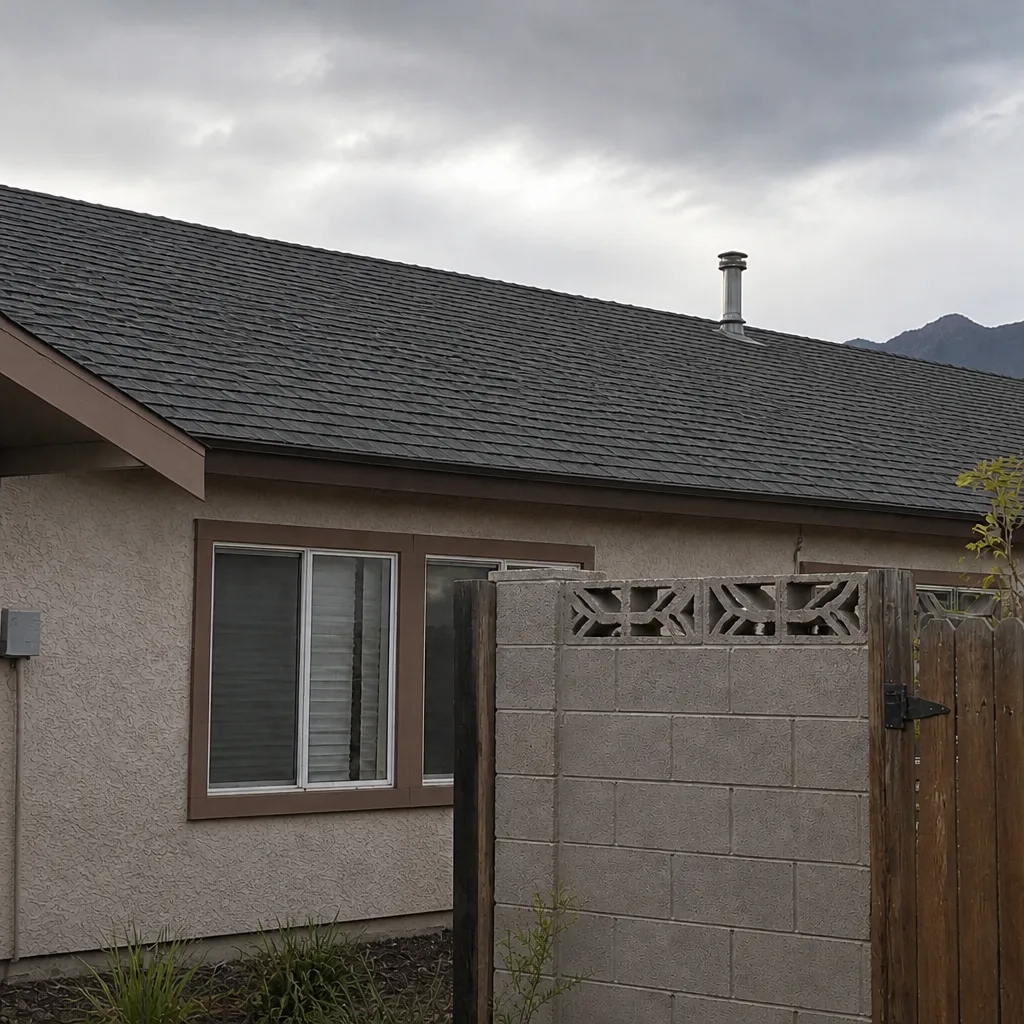
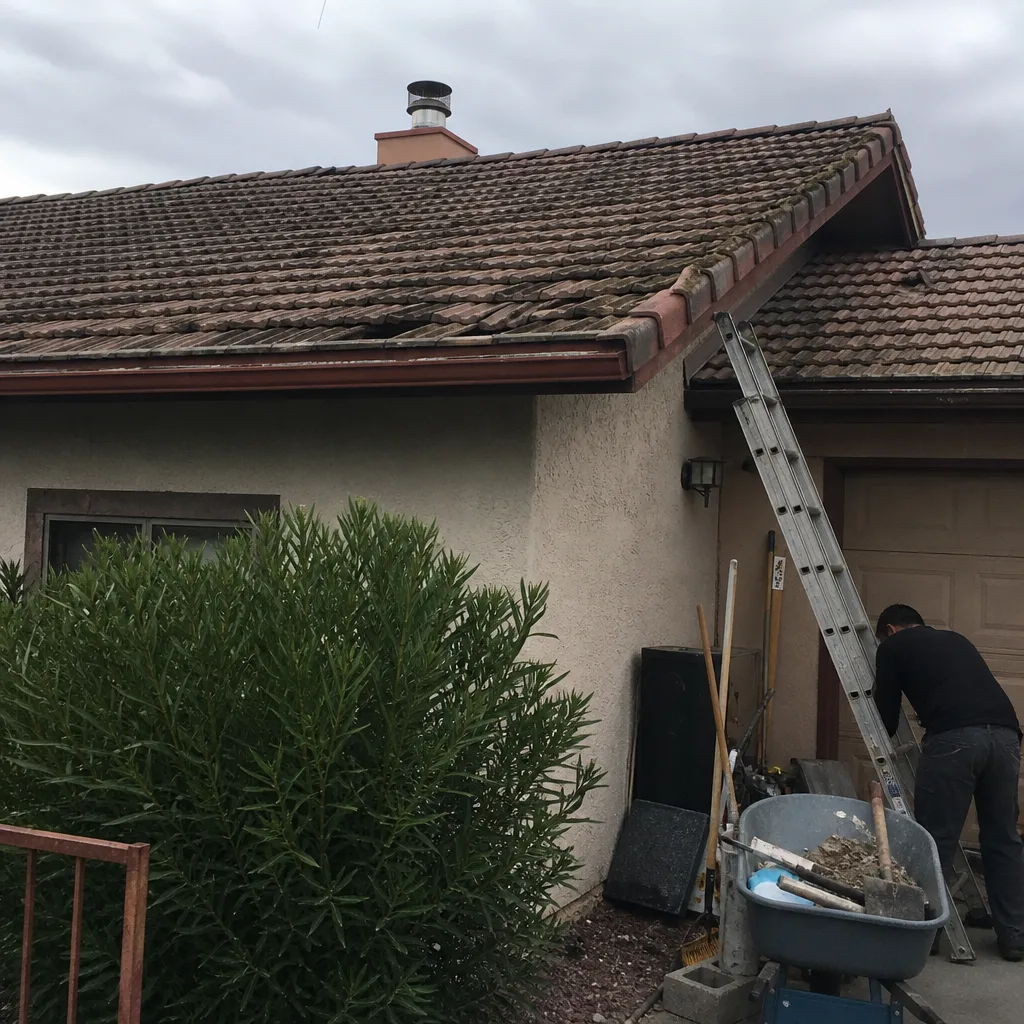
See the difference
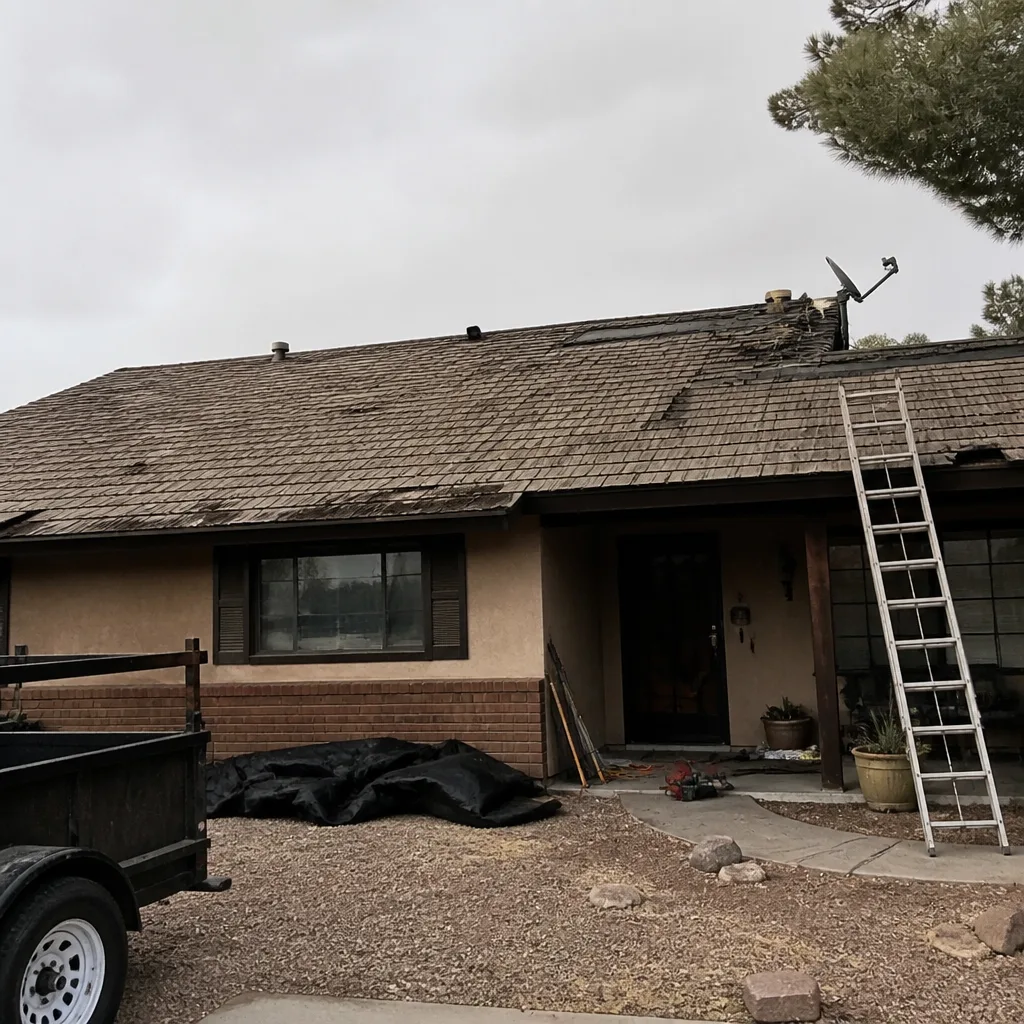 Before
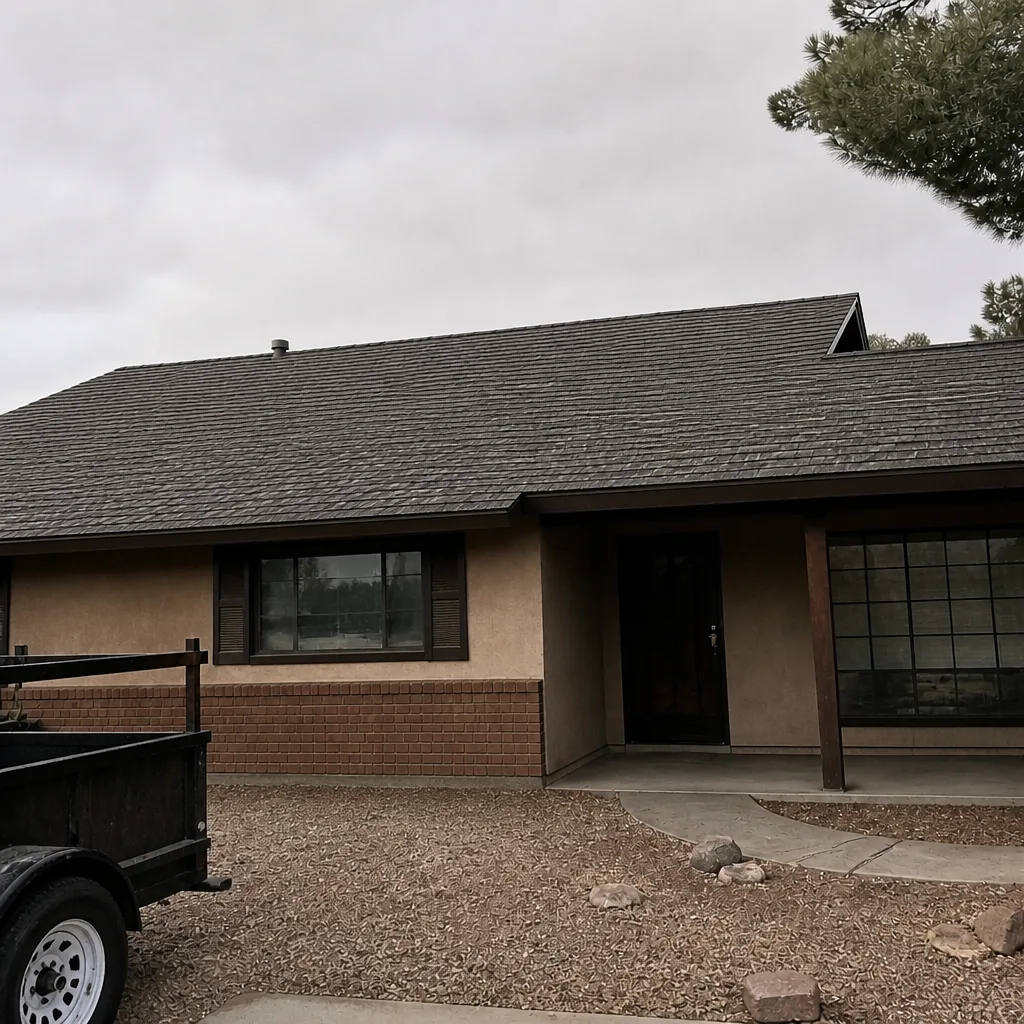 After
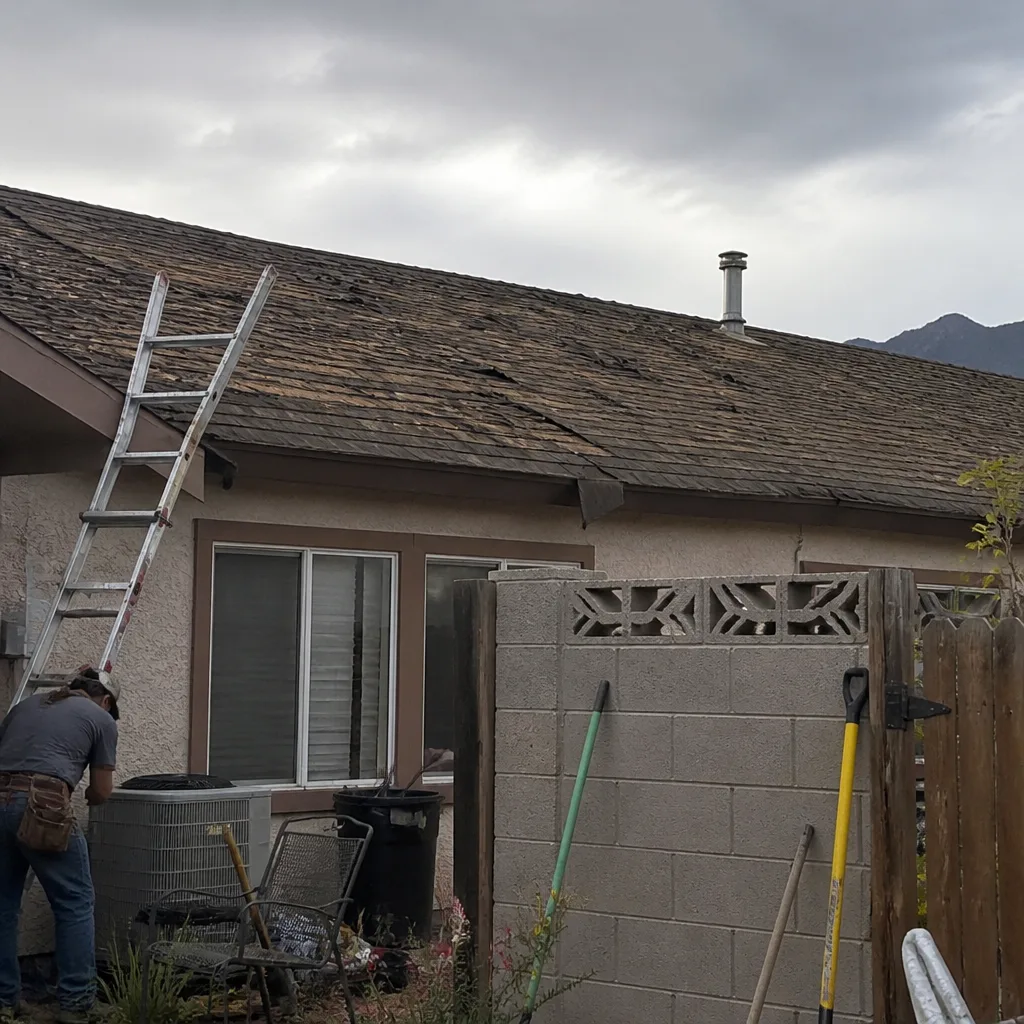 Before
 After
 Before
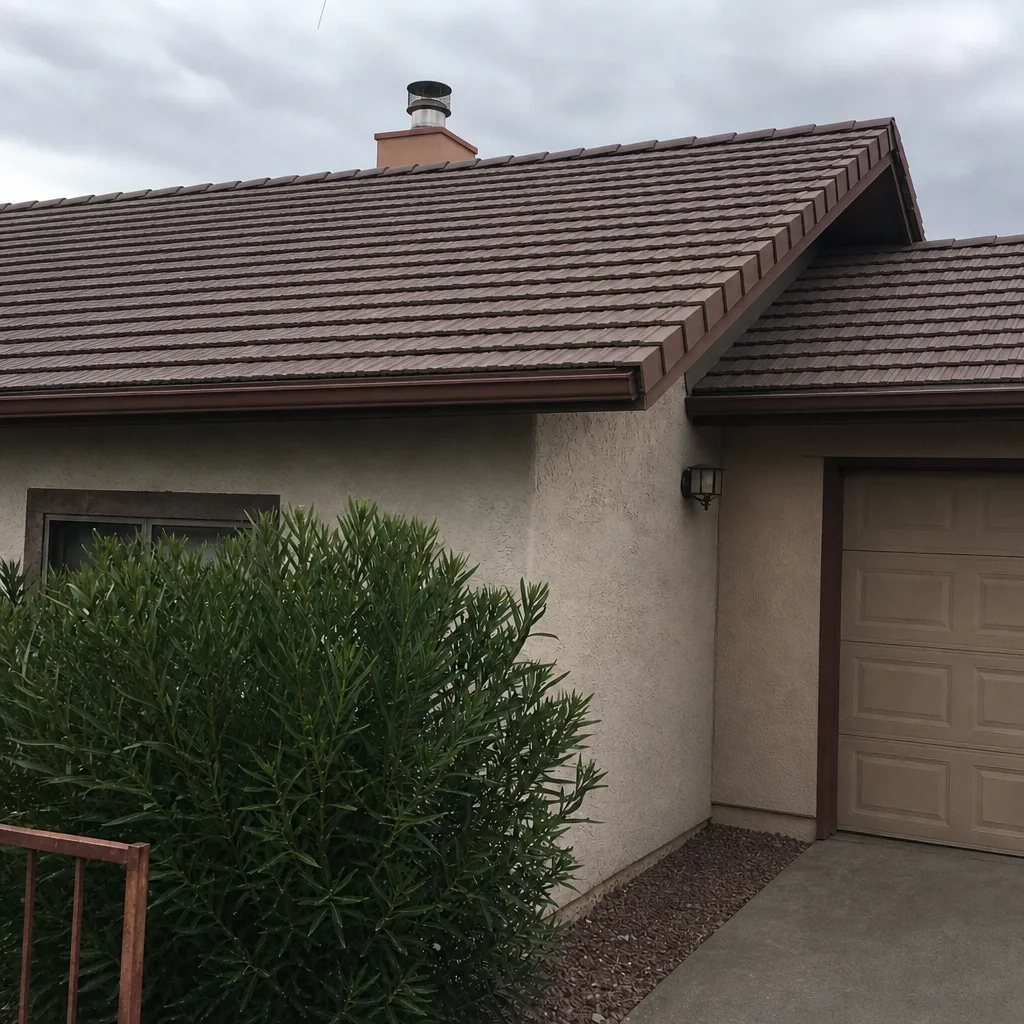 After
Common Mistakes to Avoid
- Skipping the permit to save $150. The permit fee is the cheapest line item in the entire project and the one most likely to sink an insurance claim later. Never skip it.
- Renting a dumpster that’s too small. A 20-square tear-off generates roughly 6,000 to 8,000 pounds of debris. A 10-yard dumpster is the minimum. Ordering a 20-yard is cheaper than ordering a second 10-yard mid-week.
- Laying new shingles over the old layer. It looks like a shortcut. It traps heat, voids most manufacturer warranties, and adds weight the deck wasn’t engineered for. Strip to the deck every time.
- Trusting a phone quote. A real bid comes after someone measures the roof and looks at the deck. The roofer who quotes one price on the phone and another at the door is a story you don’t want to live through.
- Working the roof alone in July. Boulder City regularly hits 105 degrees in midsummer. Surface temperature on dark shingles is 50 to 70 degrees higher than air temp. Heat exhaustion on a roof is a real, documented risk and it happens fast.
- Reusing old flashing. Flashing is where most leaks originate. It’s the cheapest component to replace and the most expensive to get wrong. Replace it.
- Hiring the first crew that knocks after a storm. Storm chasers follow hail. The roofer who shows up uninvited doesn’t have to live with the result. The one with the address down the road does.
When to Call a Professional
Call when the roof is over living space, when the pitch is steeper than 5:12, when there’s more than one story, when you don’t know how to read a flashing detail, or when anything on the roof feels unsafe from the ladder. Call if the deck is soft underfoot, if you see daylight from the attic, or if a previous repair used the wrong material. Call after any hail event larger than a quarter, because the damage hidden under granules is the damage that matters. And call if you’re over 60 and thinking about it. The fall risk on a residential roof is not theoretical, and no amount of savings covers a broken hip. Shepherd & Sons Roofing Boulder City offers free estimates in Boulder City – call (844) 761-8186 and we’ll come out, look at the deck, and give you a straight answer.
Frequently Asked Questions
In almost every case, no. After materials, dumpster rental, equipment, and permit fees, the spread between DIY and a licensed professional bid is usually under $1,000, and any single mistake erases it. The exception is a small detached structure under 200 square feet where the pitch is walkable and the permit requirement is minimal. Call (844) 761-8186 for a free estimate and we’ll tell you honestly whether your project is worth doing yourself.
Yes, for any full replacement on a residential home. Boulder City requires a building permit for re-roofing, and the work is inspected at the deck and at final. Small repairs, like replacing a few shingles or re-caulking a vent boot, generally don’t require a permit. If you’re not sure where your project lands, call the city building department or call us – we pull permits on every replacement.
For a typical 2,000-square-foot asphalt shingle replacement, expect $8,000 to $14,000 depending on pitch, layers being torn off, and material grade. Metal and Boral tile run higher. The permit alone is $150 to $400. Call (844) 761-8186 for a free written estimate – we measure the roof and show you the deck before we quote.
Your homeowner’s insurance can deny a claim if the installation was never permitted. If the failure causes damage to a neighbor’s property, your personal liability may respond, but the insurer can then seek recovery from the party responsible – and if that’s you, you’re exposed. The permit fee is $150 to $400. Skipping it is the worst trade in the project.
No. Nevada requires a C-15 roofing license, an active bond, and liability insurance for anyone performing roofing work on a home they don’t own. A handyman doing a full replacement is either working unlicensed, or using your owner-builder permit to avoid his own, and both expose you. Ask for the license number and verify it with the state board.
It shouldn’t. A proper bid comes after a measurement and a look at the deck, so the number you sign is the number you pay. If a roofer tells you the price is “provisional” or holds off on measuring, walk away. We give free second opinions on any written estimate in Boulder City – call (844) 761-8186 if you’d like a second set of eyes before you sign.
The Bottom Line
DIY roof replacement rarely saves money in Boulder City. The material markup, the dumpster, the equipment, and the permit close the gap before labor enters the picture, and the risk – a failed inspection, a leak, an insurance claim – sits entirely on your side of the ledger. The owner-builder permit is real and legal, but it’s meant for a homeowner doing their own work, not for hiring around a license. Small structures, minor repairs, and simple outbuildings are the sensible DIY zone. Everything over living space goes to a licensed roofer, in writing, with a permit and a warranty. Have questions? Start with our Boulder City roofing home page or call (844) 761-8186 for a free estimate. A live person answers, any hour.
Written by the team at Shepherd & Sons Roofing Boulder City.