
Last updated November 17, 2026
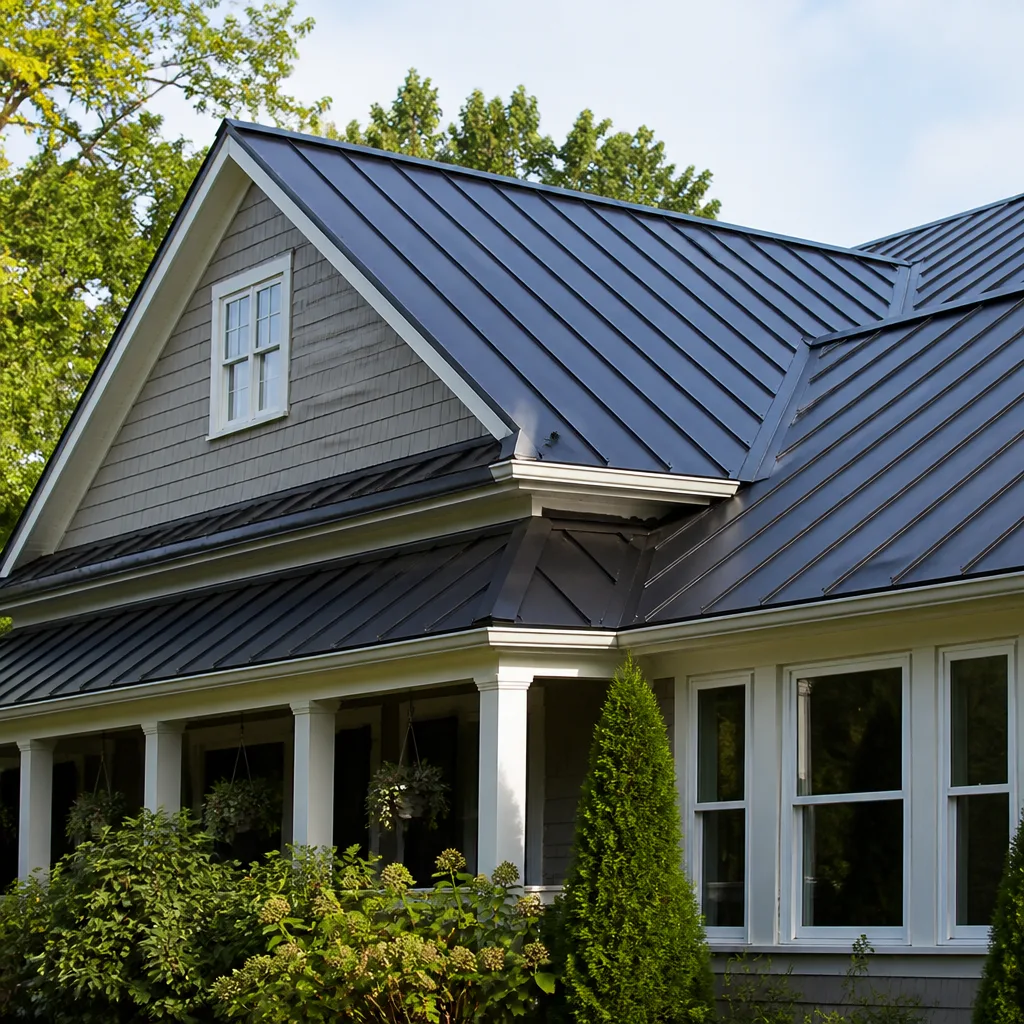 Metal roofing
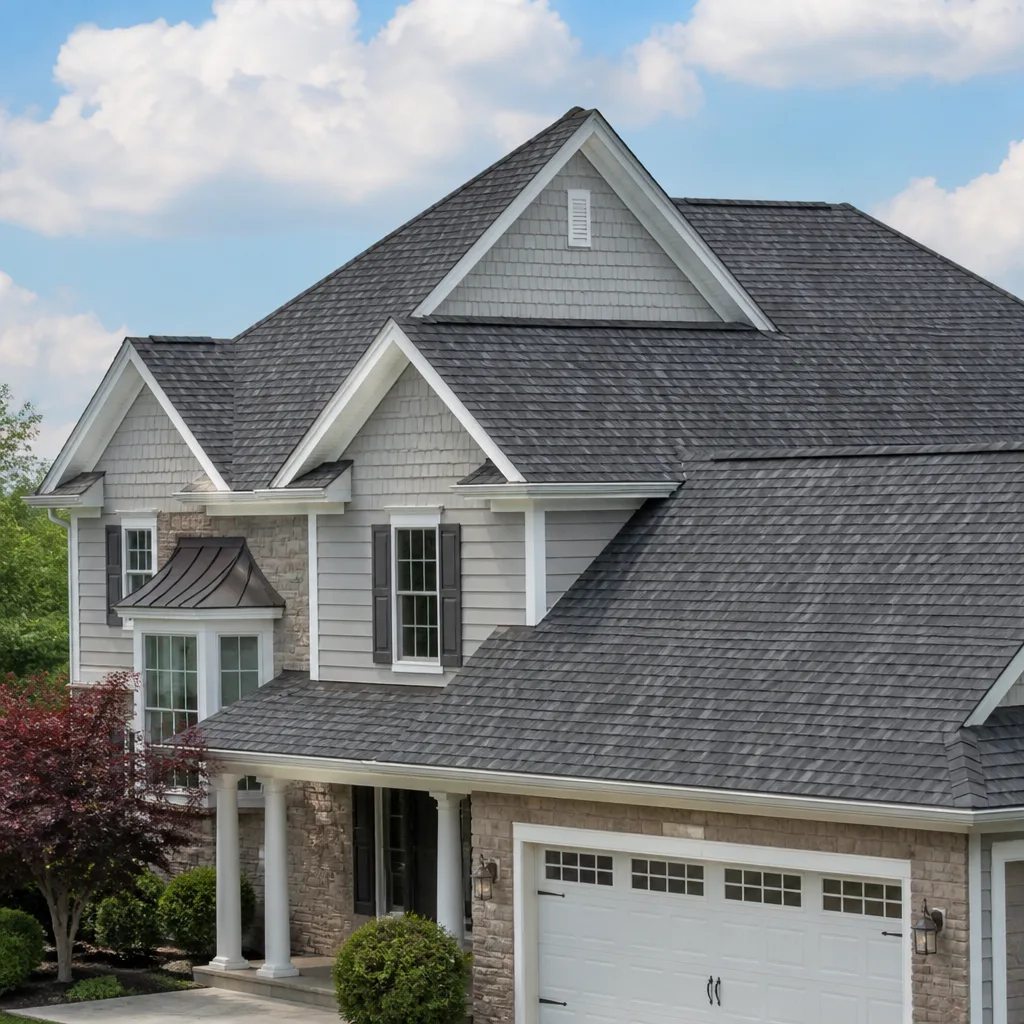 Architectural shingles
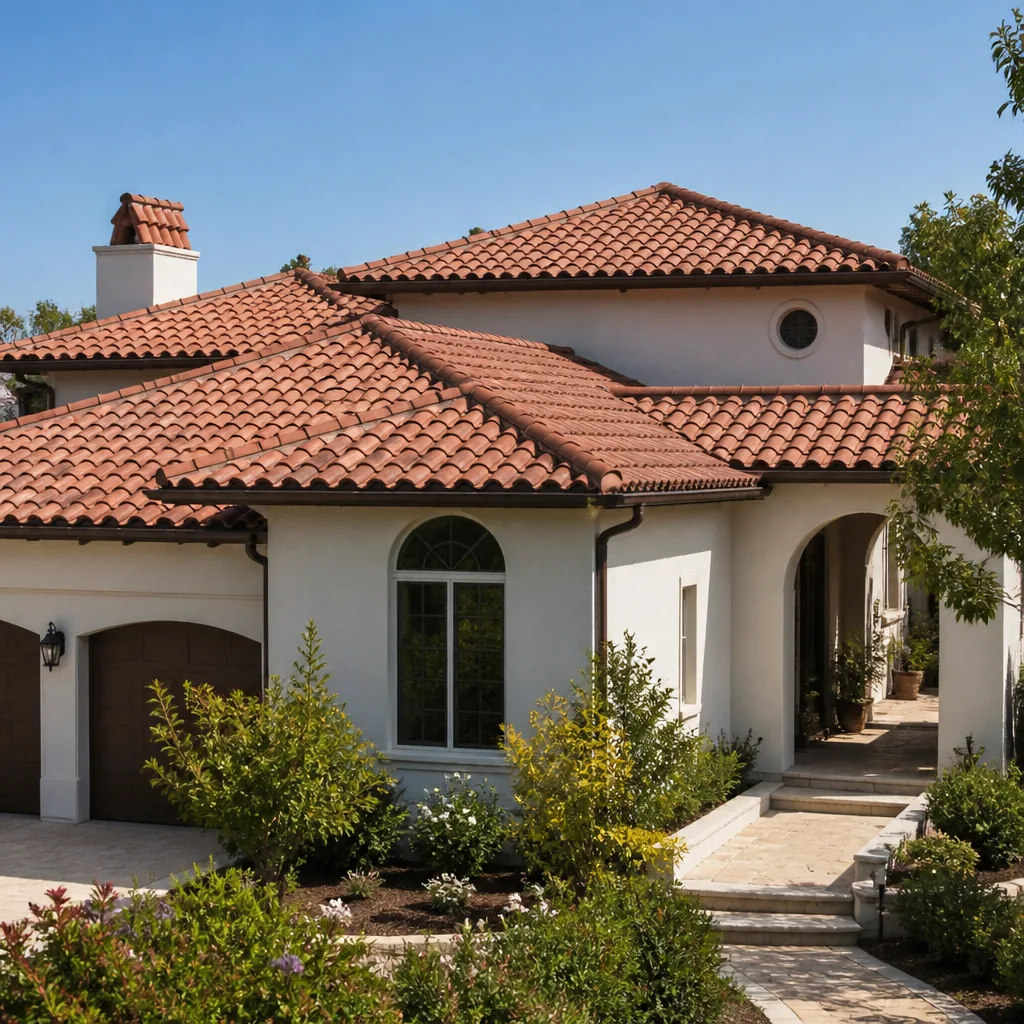 Tile roofing
 GAF
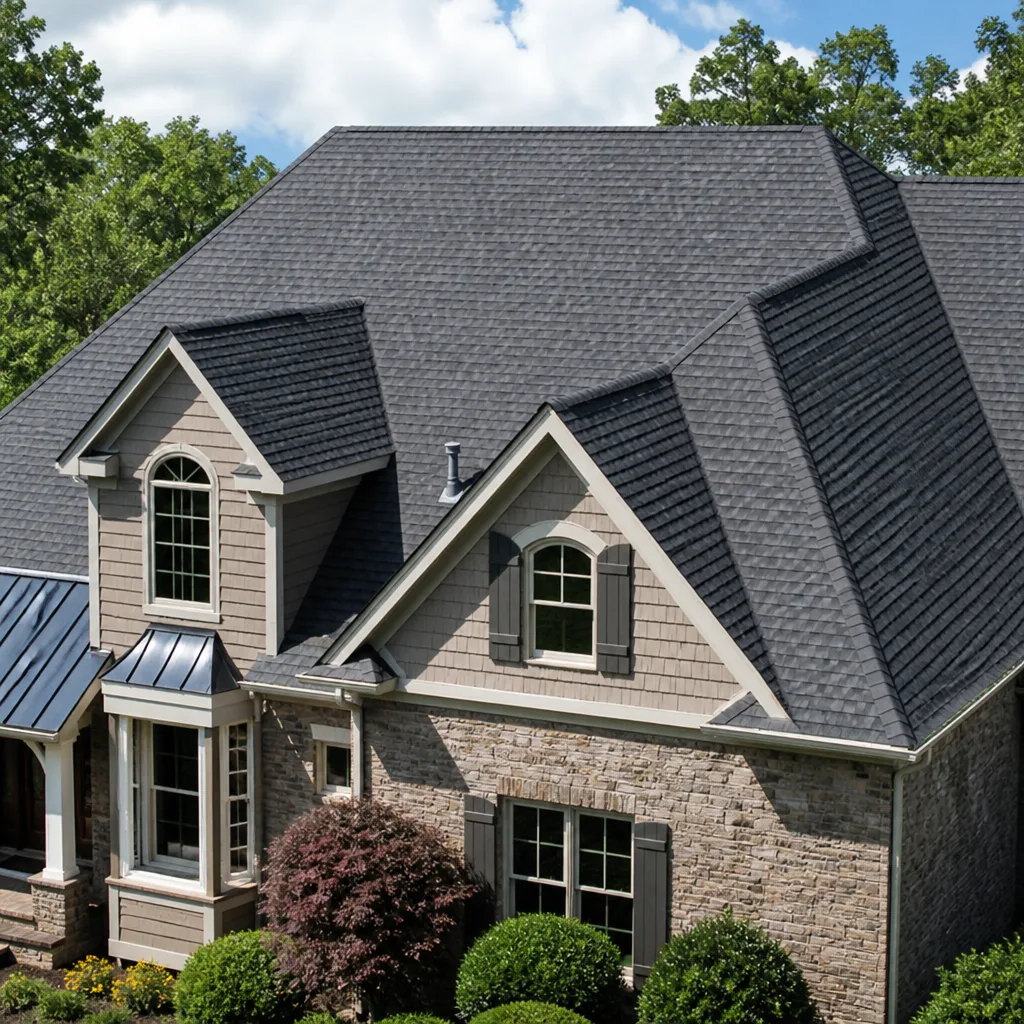 Owens Corning
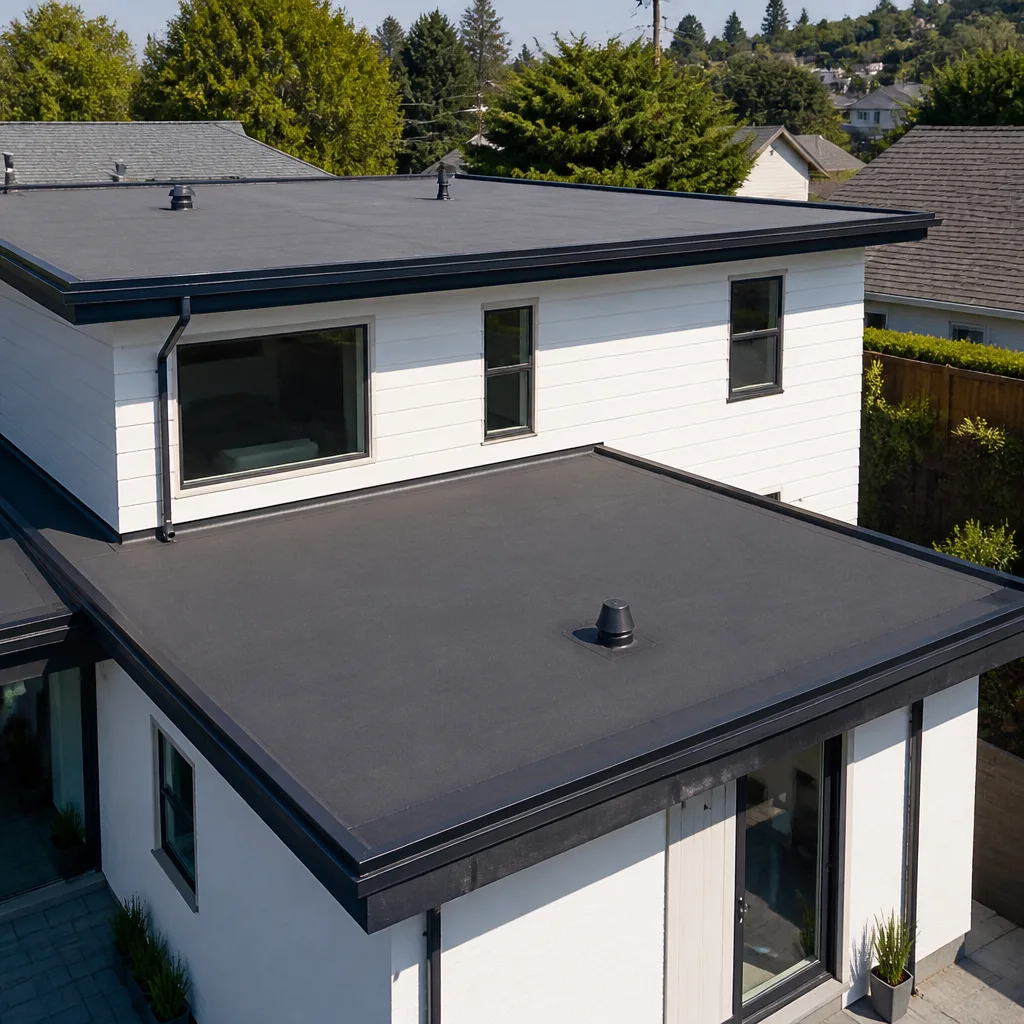 Flat & low-slope
Free roof inspection with deck photos before we talk money - GAF and Owens Corning certified installation
The Complete Metal Roofing Guide for Boulder City Homeowners
Boulder City sits at the edge of the Mojave with more than 300 sunny days a year, and on a July afternoon your attic can climb past 180°F. A standing seam panel engineered for Minnesota winters isn’t automatically the right roof for a house on Wyoming Street. Metal roofing is the right call for a lot of Boulder City homes, but the details that decide whether yours lasts 40 years or starts popping at the seams in 18 months are almost never in the brochure. This guide walks through the panel types, the coatings, the gapping, the permits, and the noise question, in plain terms.
Quick Answer
For most Boulder City homes, a standing seam metal roof with a Kynar 500 (PVDF) finish is the best long-term choice because it handles the UV load, the daily temperature swing, and the occasional golf-ball hail without the fastener and coating failures that plague cheaper systems. Exposed-fastener panels cost less upfront but usually need a full re-roof sooner here. Metal shingles sit in the middle. The right answer for your house depends on your roof pitch, your HOA, and how the panels are gapped and attached for thermal movement.
Styles & brands we work with
- Architectural shingles
- Metal roofing
- Tile roofing
- GAF
- Owens Corning
- Flat & low-slope
Table of Contents
- The Three Metal Roofing Systems That Hold Up Here
- Why Kynar 500 Coating Is Non-Negotiable
- Sizing for Thermal Expansion (and Why Panels Pop)
- HOA and City Permit Landscape in Boulder City
- Does Metal Roofing Sound Like a Drum in the Rain?
- What Metal Roofing Costs in Boulder City
- Common Mistakes to Avoid
- Frequently Asked Questions
The Three Metal Roofing Systems That Hold Up Here
There are three systems you’ll actually be quoted on a Boulder City house, and each one fails for a different reason in this climate. Knowing which failure mode you’re buying into is the whole conversation.
- Standing seam. Panels run vertically with raised seams and hidden fasteners, so nothing penetrates the metal face. No screws to back out, no rubber washers cooking in the sun. This is the system we recommend for most homes here. The trade-off is cost: it’s the priciest of the three, and the installation requires real skill with the seaming and clipping.
- Exposed fastener. The classic corrugated or ribbed panel screwed straight through the metal into the deck. Cheap, fast, and fine on a barn or shed. On a Boulder City home, every screw sits in direct UV and expands and contracts against the panel around it. The rubber washer under the screw head hardens and splits in our heat, and that’s where the leaks start. These usually need attention well before a standing seam roof does.
- Metal shingle. Stamped panels that mimic shakes or tiles, interlocking with hidden fasteners. You get the look of a shingle roof with the longevity of metal. Boral makes a strong stamped product line here. The trade-off is more seams and joints than a standing seam panel, so the install quality matters a lot.
For a Boulder City home you plan to keep, standing seam is the honest recommendation. If budget pushes you toward exposed fastener, go in knowing you’re trading upfront savings for a shorter service life in this sun. For a deeper look at how these systems perform on local roofs, see our Metal Roofing in Boulder City page.
Why Kynar 500 Coating Is Non-Negotiable
The paint on a metal roof is not cosmetic here. It’s the layer that stands between the steel and a UV index that runs high most of the year. Get the coating wrong and the finish chalks, fades, and eventually lets moisture work at the metal underneath.
Kynar 500 and the family of PVDF (polyvinylidene fluoride) coatings are the standard for a reason. They hold color and resist chalking far better than the polyester and acrylic finishes on budget panels. In Boulder City’s sun, a cheap finish can look tired within a handful of years.
Here’s the part most homeowners miss: a lot of panels are sold as “Kynar-like” or “PVDF-equivalent” without actually being the real thing. So verify it, on paper, before you sign anything.
- Ask for the coating’s written specification from the panel manufacturer, not just the installer’s word.
- Confirm the finish is named as Kynar 500 or a licensed PVDF product with a manufacturer’s warranty that covers fade and chalk.
- Check the color you picked is actually available in that coating line, because some colors only come in cheaper finishes.
- Ask for the warranty document itself and read what it covers before you commit.
The difference in cost between a real PVDF finish and a budget coating is small next to the cost of redoing a roof. This is one place in Boulder City where you don’t want to save money.
Sizing for Thermal Expansion (and Why Panels Pop)
This is the section generic metal roofing guides skip, and it’s the one that decides whether a Boulder City roof stays quiet for decades or starts oil-canning within 18 months.
Metal expands in the heat and contracts at night. In the Mojave, the swing between a cool midnight and a 2pm summer afternoon is dramatic, and a long panel moves. It has to go somewhere. A panel that’s pinned too tight, or gapped wrong, has nowhere to move, so it buckles up between the seams, which is what “oil-canning” means, or the fasteners work loose and the panel pops.
Getting it right comes down to a few things:
- Panel length and spacing. Long panels moving more than short ones. The layout has to account for how much a given panel will move across the temperature range this region actually sees.
- Proper clips and floating fasteners. Standing seam panels should be held by clips that let the panel slide, with fixed and floating attachment points planned deliberately.
- Correct gaps at penetrations. Every vent, pipe boot, and ridge detail needs room to move or it becomes the point where the panel tears or the seal fails.
- Attention to the deck and underlayment. Movement is unforgiving to a sloppy substrate. A flat, well-fastened deck underneath matters.
When we look at a Boulder City roof that’s oil-canning early, it’s almost always an install that treated the panels like rigid shingles. Metal is not rigid here. It moves, and the roof has to be designed to let it.
HOA and City Permit Landscape in Boulder City
Metal roofing usually needs two approvals in Boulder City: the city’s building permit and, if you’re in a neighborhood with one, your HOA’s architectural review. Skipping either one can mean tearing off work you already paid for, so it’s worth understanding what’s involved before the panels show up.
On the city side, a re-roof typically means a building permit, and the work has to pass inspection. The code details that trip people up are usually about attachment and wind rating, and about fire-rated underlayment requirements. We confirm the specifics with the city on each project because the requirements can shift, and the last thing anyone wants is a failed inspection after the roof is on.
On the HOA side, many Boulder City communities require architectural committee approval before a metal roof goes on. Common sticking points:
- Color and finish. Some HOAs restrict the palette or ban certain reflective finishes that change the look from the street.
- Panel profile. A standing seam may be approved where a corrugated or exposed-fastener look is not.
- Submission timing. Architectural review can take weeks, so we start that paperwork early, before install scheduling.
- Neighbor sight lines. Some committees want to see how the roof reads from the street and the adjacent lots.
We handle the permit side and help you get the HOA packet in order. Plan on that review adding time to the schedule in Boulder City, and don’t let anyone rush you past it.
Does Metal Roofing Sound Like a Drum in the Rain?
No, a properly installed metal roof on a house with a solid deck and good attic insulation does not sound like a drum. The rain-on-tin-can reputation comes from bare metal over open framing, like a shed or a barn, not from a residential install done right.
What actually controls the noise:
- The solid deck. When panels sit over a continuous deck and underlayment, the sound is absorbed and transmitted very differently than over open purlins.
- The attic insulation. The same insulation that keeps your attic from hitting 180°F in July also deadens sound. Well-insulated attic space makes rain on metal a soft, even sound, not a clatter.
- The panel attachment and clips. Firm, correct fastening keeps panels from vibrating. Loose attachment is what lets metal rattle.
Boulder City doesn’t get a lot of rain, but the summer monsoon storms do arrive, and homeowners ask about this every time. Our honest answer: at the kitchen table with the windows shut, most people can’t tell a metal roof from a shingle one during rain. For those considering a full replacement in a storm-prone corner of town, our Roof Replacement & Installation in Boulder City page covers how insulation choices factor in.
What Metal Roofing Costs in Boulder City
Metal roofing in Boulder City generally runs higher than asphalt shingle because the material and the installation labor are both more involved. Exact pricing depends on your square footage, roof pitch and complexity, panel type, coating, and how many penetrations and valleys need detailing. Here’s the rough shape of it, so you can compare bids on an even footing:
- Standing seam, Kynar 500 finish: the highest cost of the three systems, but the longest service life and the least maintenance in this climate.
- Metal shingle (stamped panels): middle of the range, close to standing seam on some homes, less on others depending on complexity.
- Exposed fastener panels: the lowest upfront cost, with a shorter service life and likely earlier attention to fasteners.
- Extras that move the number: tear-off of the old roof, underlayment upgrades, attic insulation, HOA paperwork help, and any structural or decking repair.
Ask every bidder for a written, line-item quote and a square count. A roof is measured in squares, and the number of squares tells you whether the bids are actually pricing the same roof. Watch for anyone quoting one price on the phone and a higher one at the door; that’s the pattern that burns homeowners. We give a free second opinion on any written estimate you’ve received, so you can see the comparison side by side. Our Shepherd & Sons Roofing Boulder City home page has the full rundown of what we do.
Common Mistakes to Avoid
- Buying on price alone. The cheapest metal bid in Boulder City often means a budget coating and exposed fasteners that fail fast. The savings on the bid get spent again when the roof needs work.
- Not verifying the coating. “Kynar-like” is not Kynar 500. Ask for the written spec and the actual warranty before you commit.
- Ignoring thermal movement. An installer who talks about the panels like rigid shingles doesn’t understand how metal behaves through a Mojave temperature swing, and the popping will show it.
- Skipping the HOA step. Starting install before architectural approval is in hand can mean a roof you have to modify or remove. Get the paperwork done first.
- Believing the “drum in the rain” rumor without asking about insulation. The noise issue is almost always an attic insulation and deck question, not the metal itself.
- Hiring an out-of-state storm chaser. They show up after hail and they’re gone before the warranty matters. Same address since 1996, and you can look it up. Ask the storm chasers where theirs is.
- Not asking about fastener and seam detail. The nailing and fastening pattern is what earns the wind rating, not the shingle or panel wrapper. Get it in the scope.
See the difference
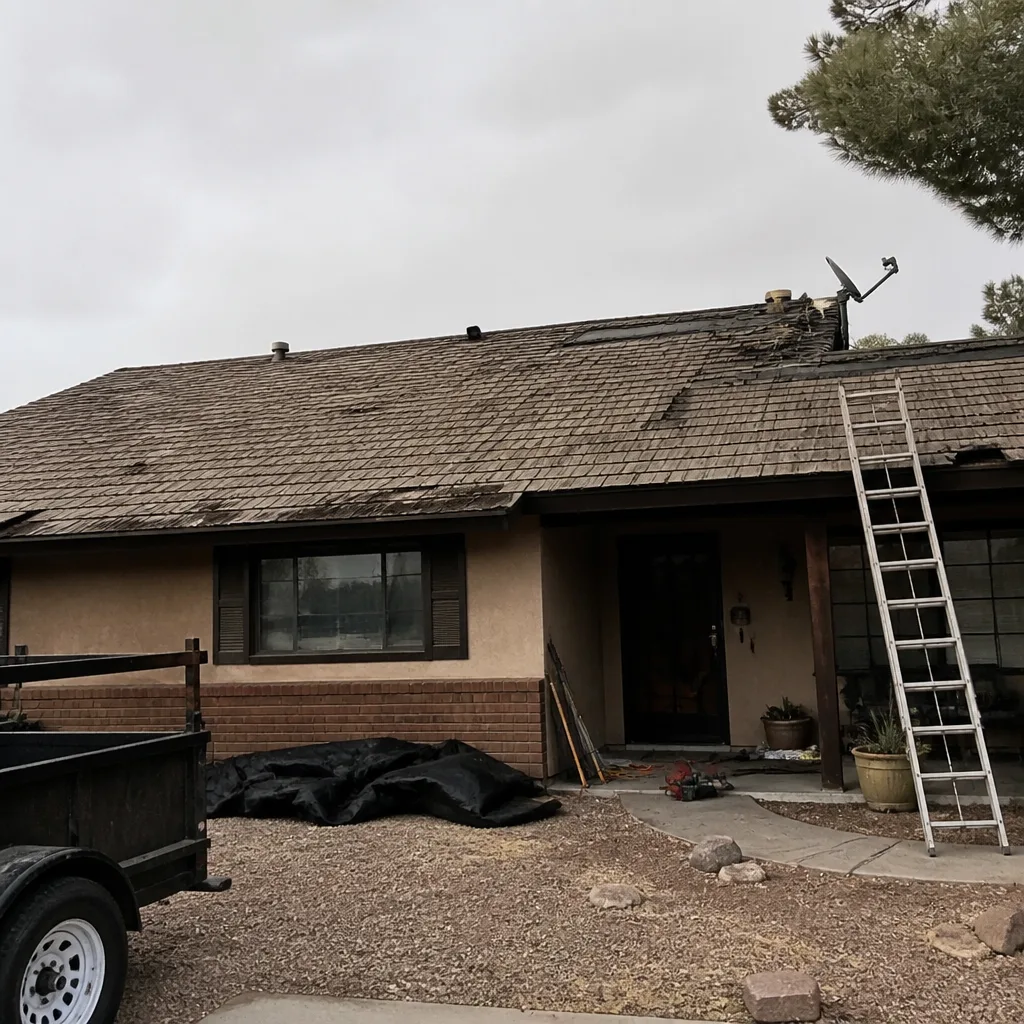 Before
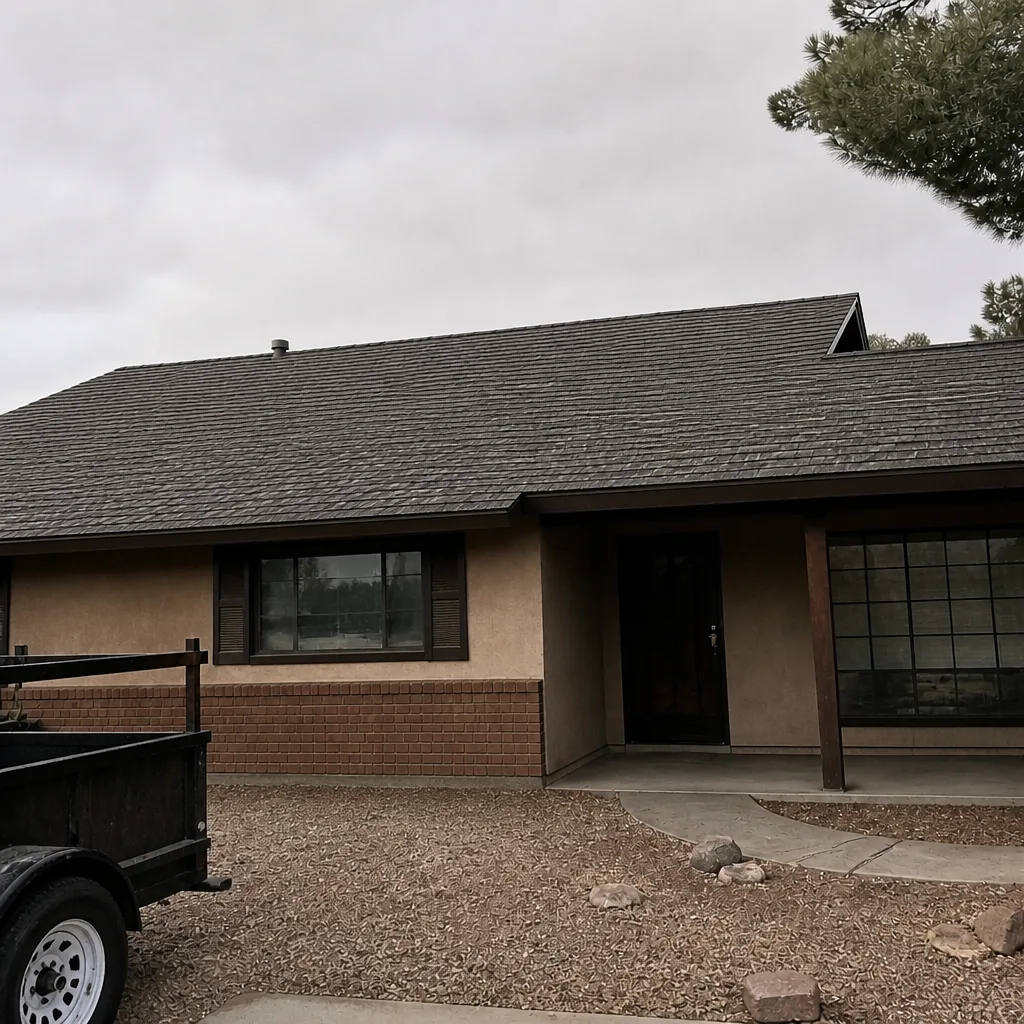 After
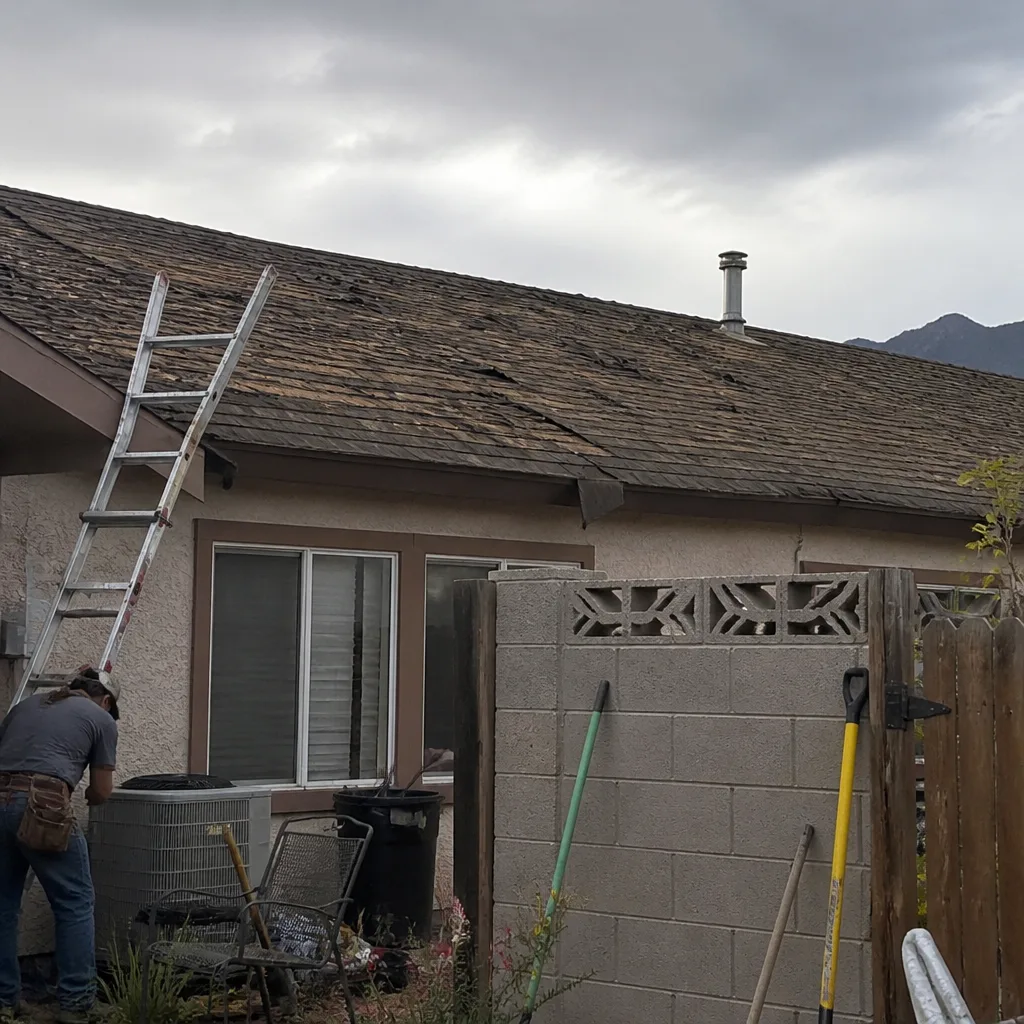 Before
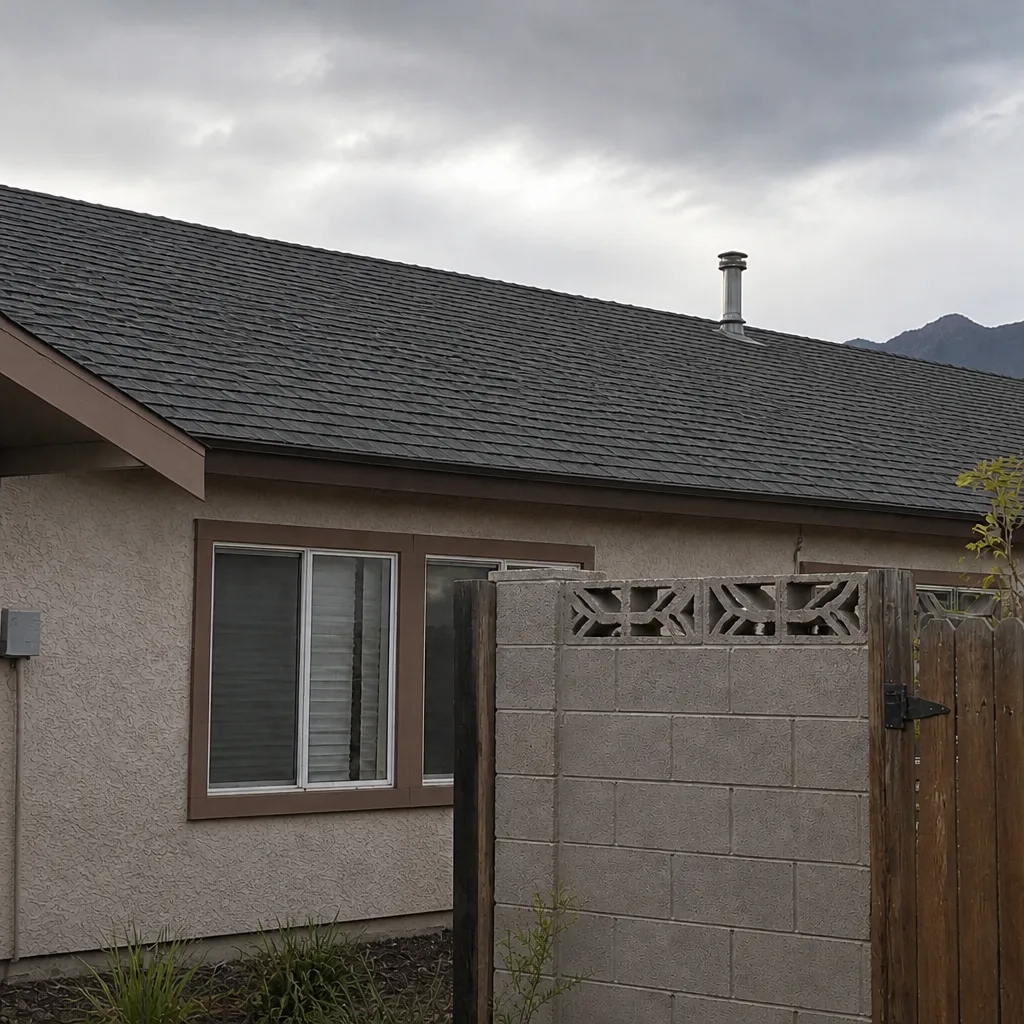 After
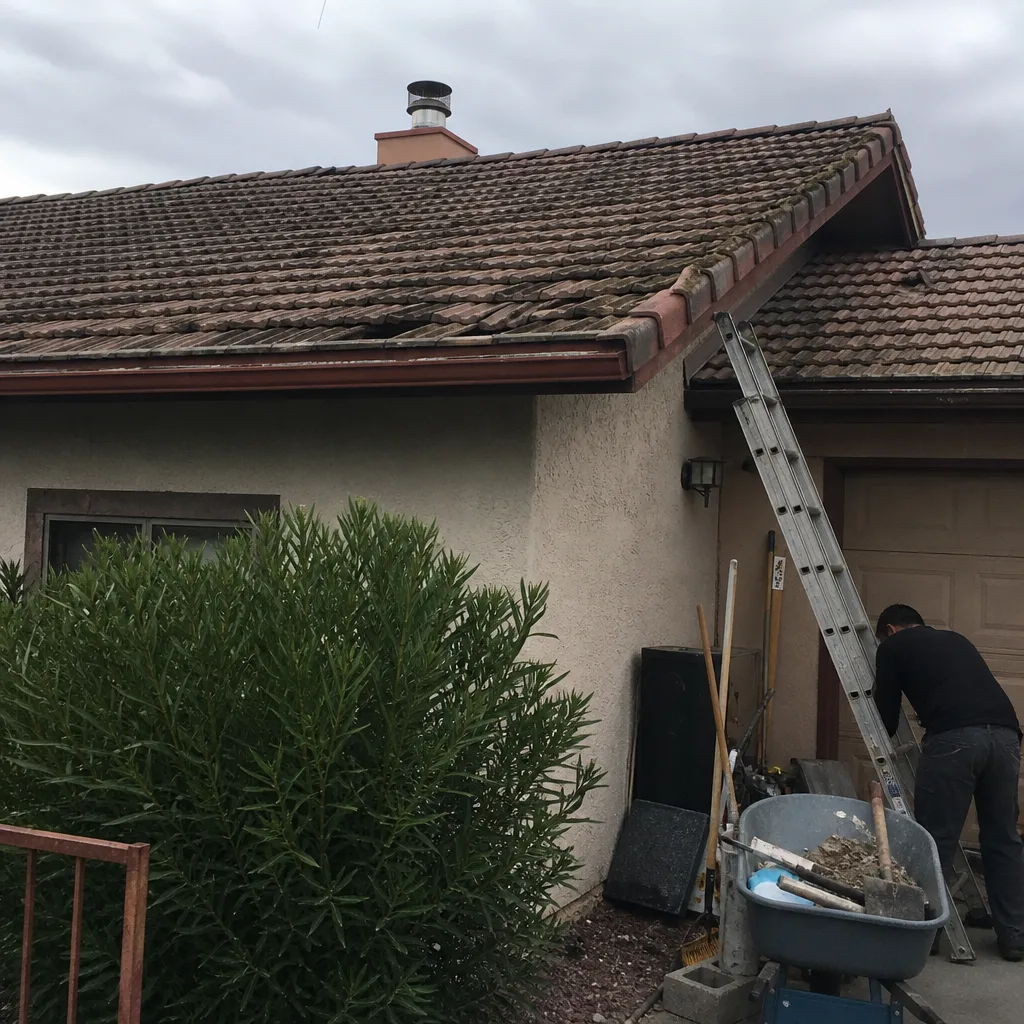 Before
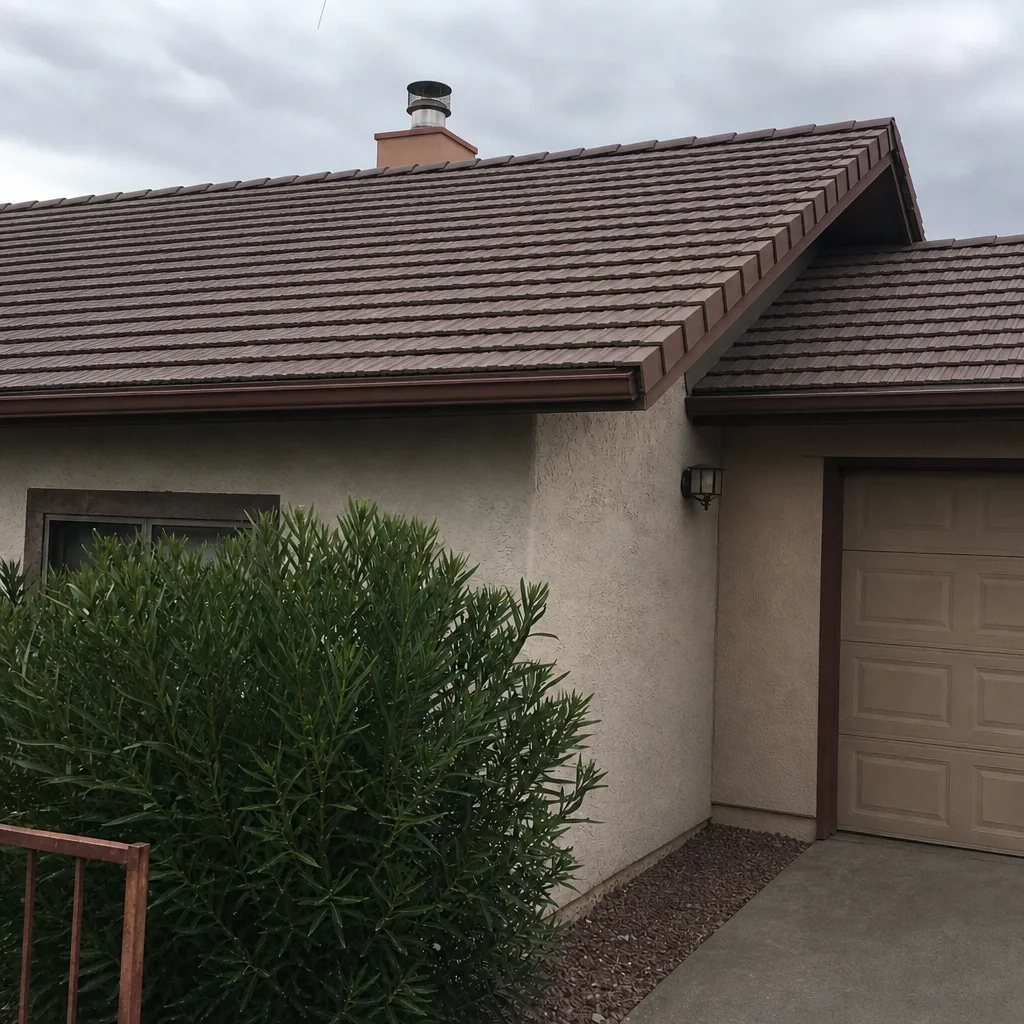 After
When to Call a Professional
Call us when you’re weighing a metal roof against a shingle replacement and want a straight comparison, when you’ve gotten a bid you don’t fully trust and want a free second opinion, or when you spot oil-canning, popped fasteners, or curling at the edges of an existing metal roof. Those early symptoms usually mean the panel was never designed to move properly, and catching them early saves the cost of a full redo. We also get called when an HOA rejection or a permit question is holding things up, and when a home is nearing the end of its current roof and the owner wants to plan the timing right.
Our technicians have up to 30 years of experience, we install from GAF, CertainTeed, Owens Corning, IKO, Atlas, Tamko, and Boral, and every job carries our written 90-Day Done Right Promise. If it’s not done right, one call brings us back. Shepherd & Sons Roofing Boulder City offers free estimates in Boulder City. Call (844) 761-8186 to schedule yours.
Frequently Asked Questions
Yes, for many homes it’s among the best roofing choices here because metal reflects heat and handles the UV and temperature swings. The catch is that success depends on the panel type, the coating, and the thermal detailing, not just that it’s metal. A standing seam panel with a real Kynar 500 finish, installed with proper movement allowance, is the combination that performs well in Boulder City’s sun.
A well-installed standing seam metal roof with a quality PVDF coating can last decades here, while exposed-fastener panels usually need attention sooner. The difference comes down to coating durability and the hidden fasteners versus screws that sit in the sun. Heat and UV are what wear a roof out in this region, so the installed details decide the service life more than the panel alone.
A properly installed metal roof with correct underlayment and insulation usually helps keep the attic cooler in summer because the surface reflects solar heat and the design handles airflow. The 180°F attic summers here are the real reason people ask. Insulation and ventilation decisions, made as part of the roof install, matter as much as the metal itself for keeping that heat out of your living space.
Usually yes, a re-roof requires a city building permit and an inspection, and many neighborhoods also require HOA architectural approval. We confirm the current requirements with the city on each project and help you prepare the HOA submission, because the attachment, wind rating, and underlayment details have to line up with the plan. Starting that paperwork early keeps the schedule realistic in Boulder City.
Panels pop and oil-can when they’re fastened too tightly or installed without room to expand and contract with the temperature swing. Metal has to move, and a roof that pins it down traps the stress until it buckles at the seams. In Boulder City, where the afternoon highs and midnight lows are a wide spread, this is the most common install mistake we correct.
Rust is less about the dryness and more about the steel and the coating; low humidity helps, but a cheap finish that chalks and wears away exposes the metal. A quality PVDF coating protects the surface and the warranty covers it. That’s why verifying you’re getting a real Kynar 500 finish matters for a roof that has to last out here.
The Bottom Line
Metal roofing is one of the best investments a Boulder City homeowner can make, but only if the details are right. Choose standing seam for the longest life, insist on a verified Kynar 500 or PVDF finish, and make sure the installer designs the panels to move with thermal expansion rather than fighting it. Handle the HOA and city permit early, and don’t be spooked by the rain-on-metal noise myth, which comes down to insulation and decking. Compare bids on the same square count, verify the coating in writing, and hire someone you can find again at the hardware store on Saturday. Call (844) 761-8186 for a free estimate.
Written by the team at Shepherd & Sons Roofing Boulder City.