
Last updated November 17, 2026
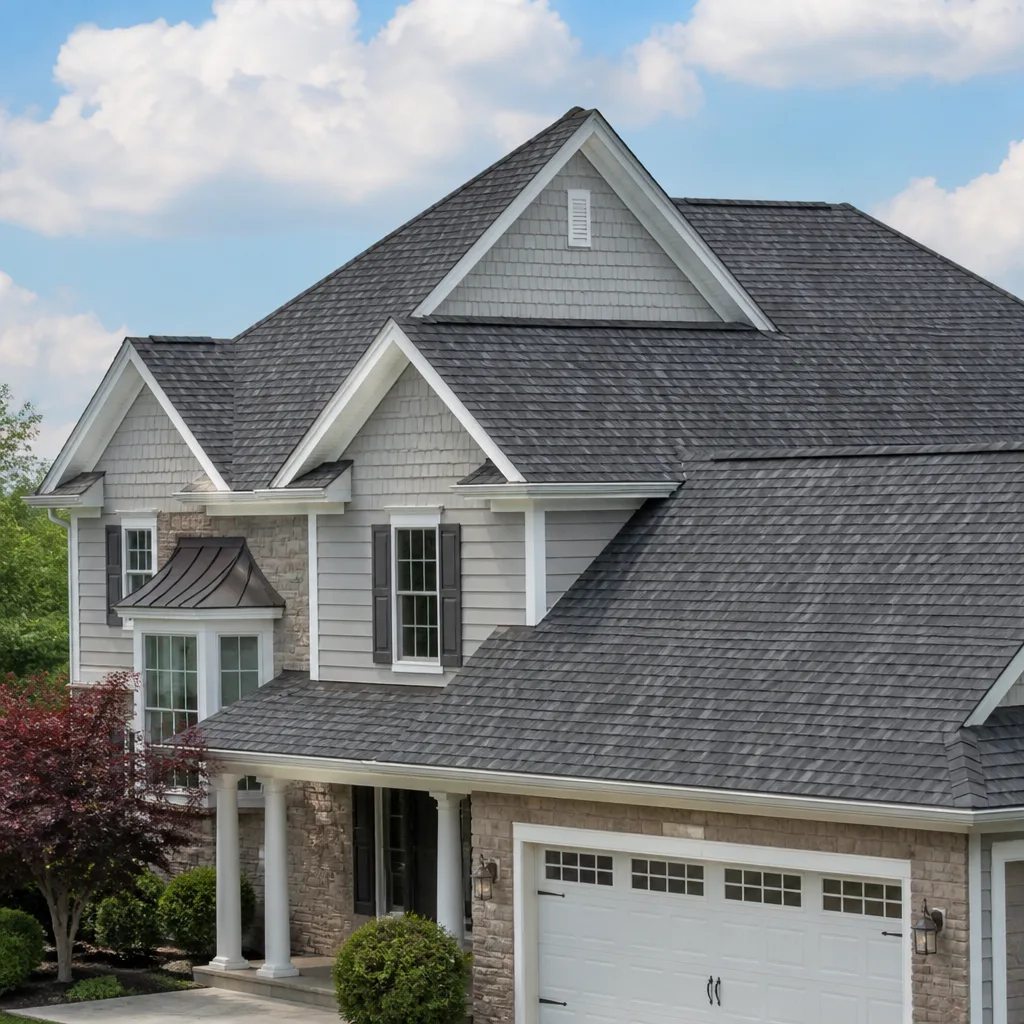 Architectural shingles
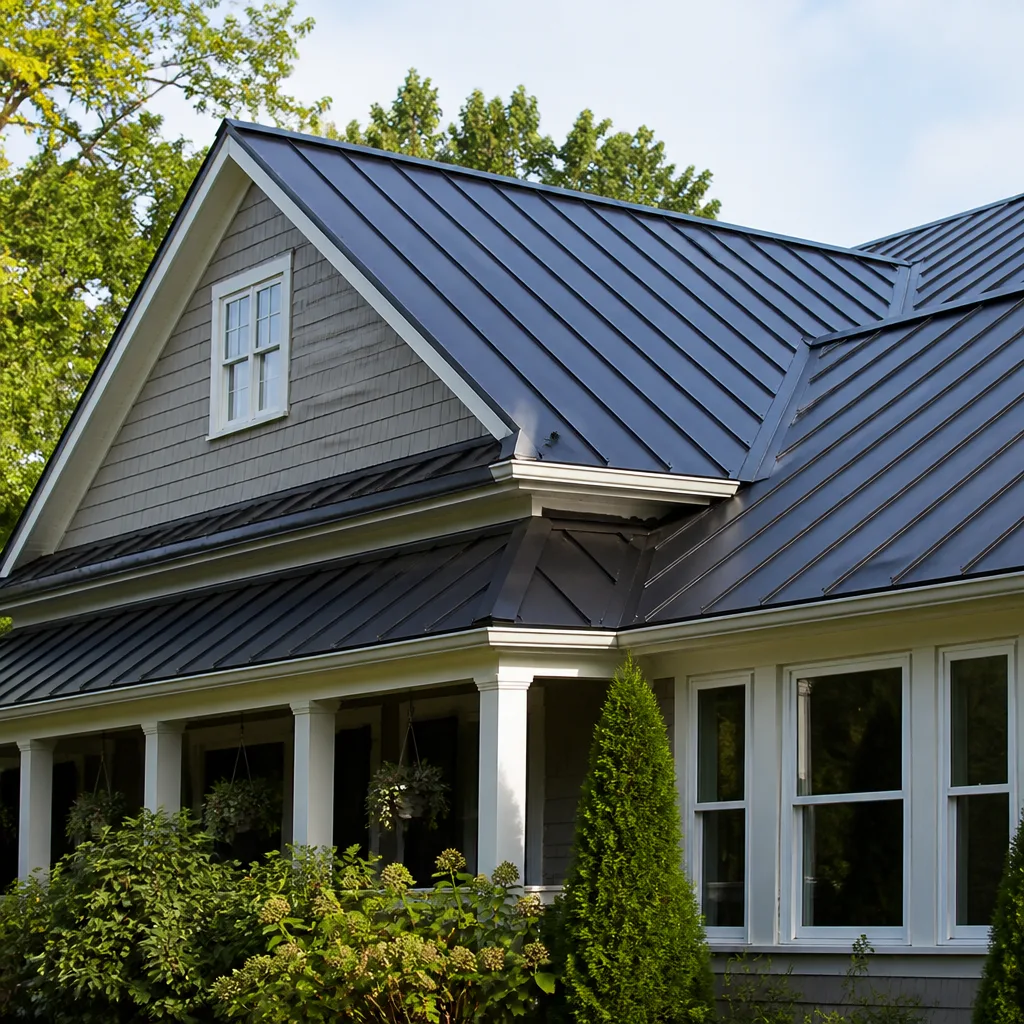 Metal roofing
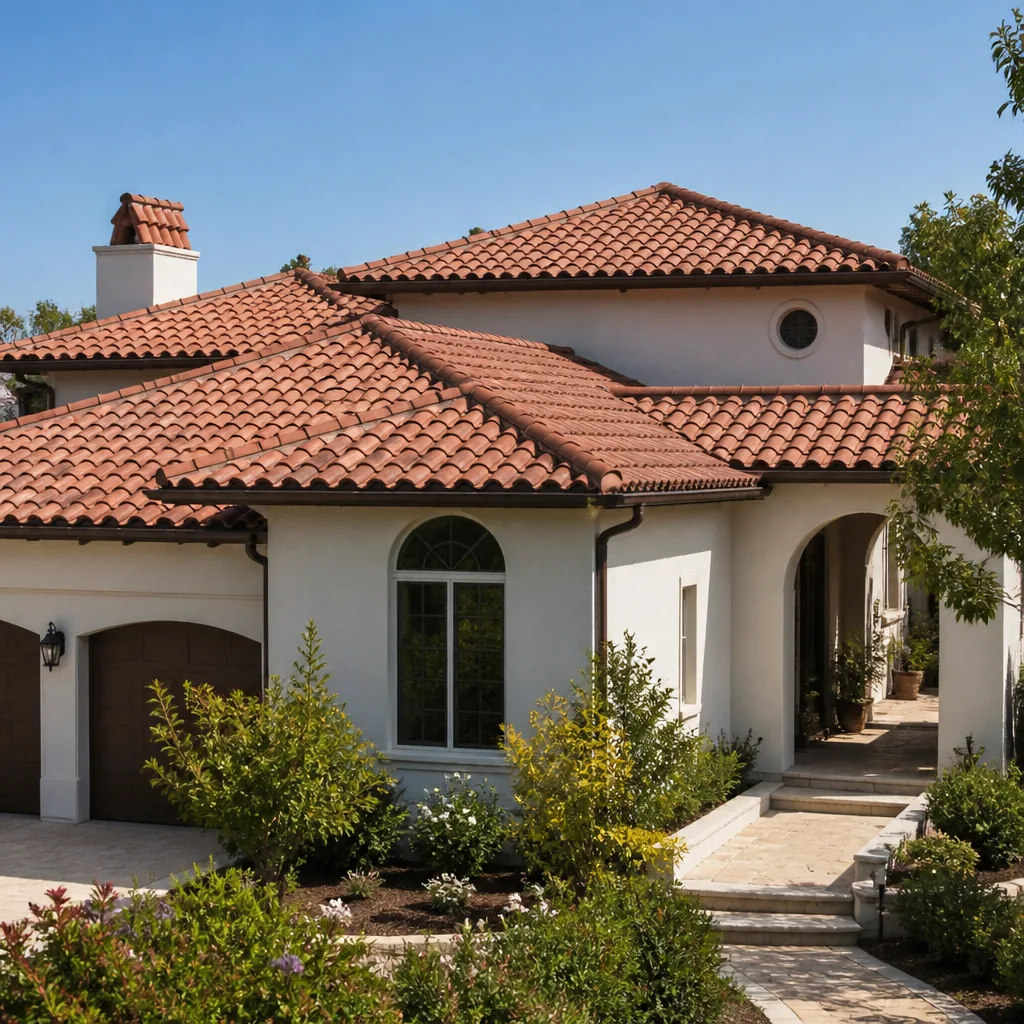 Tile roofing
 GAF
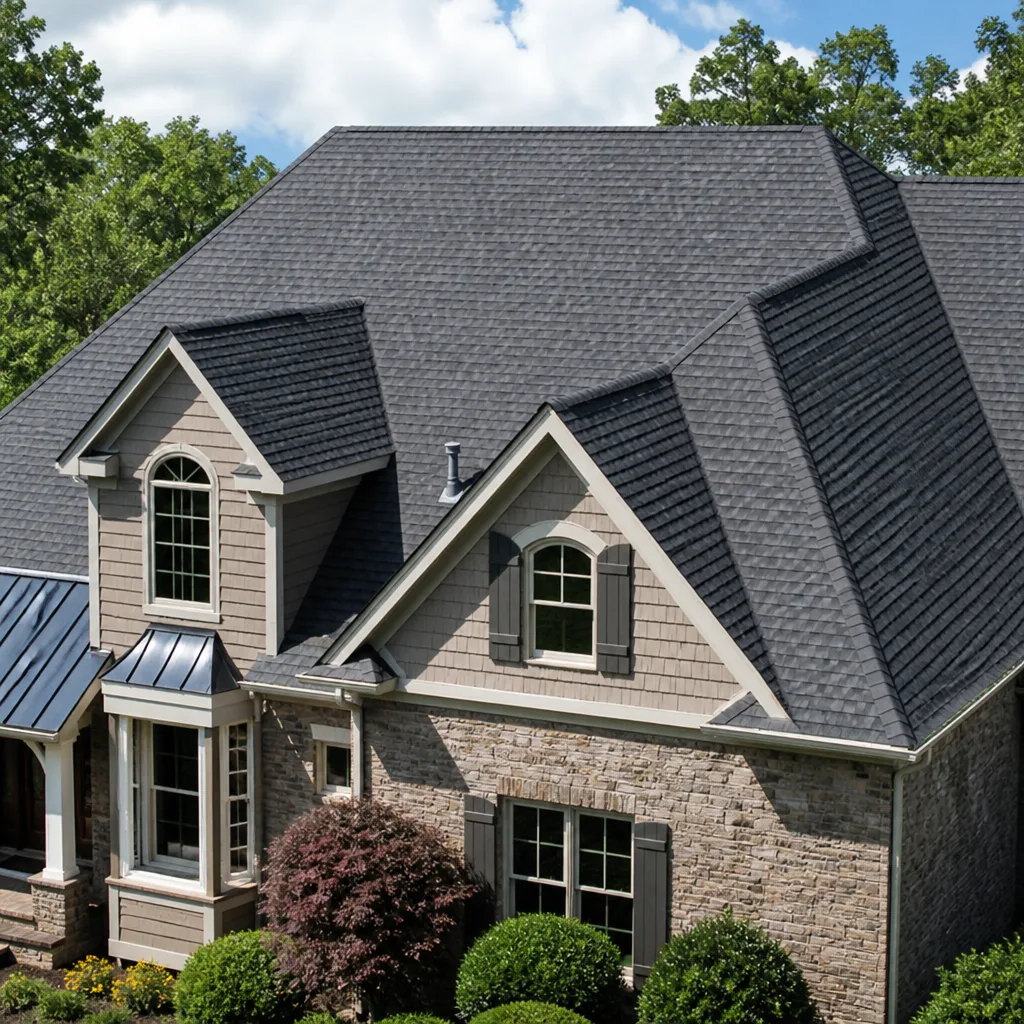 Owens Corning
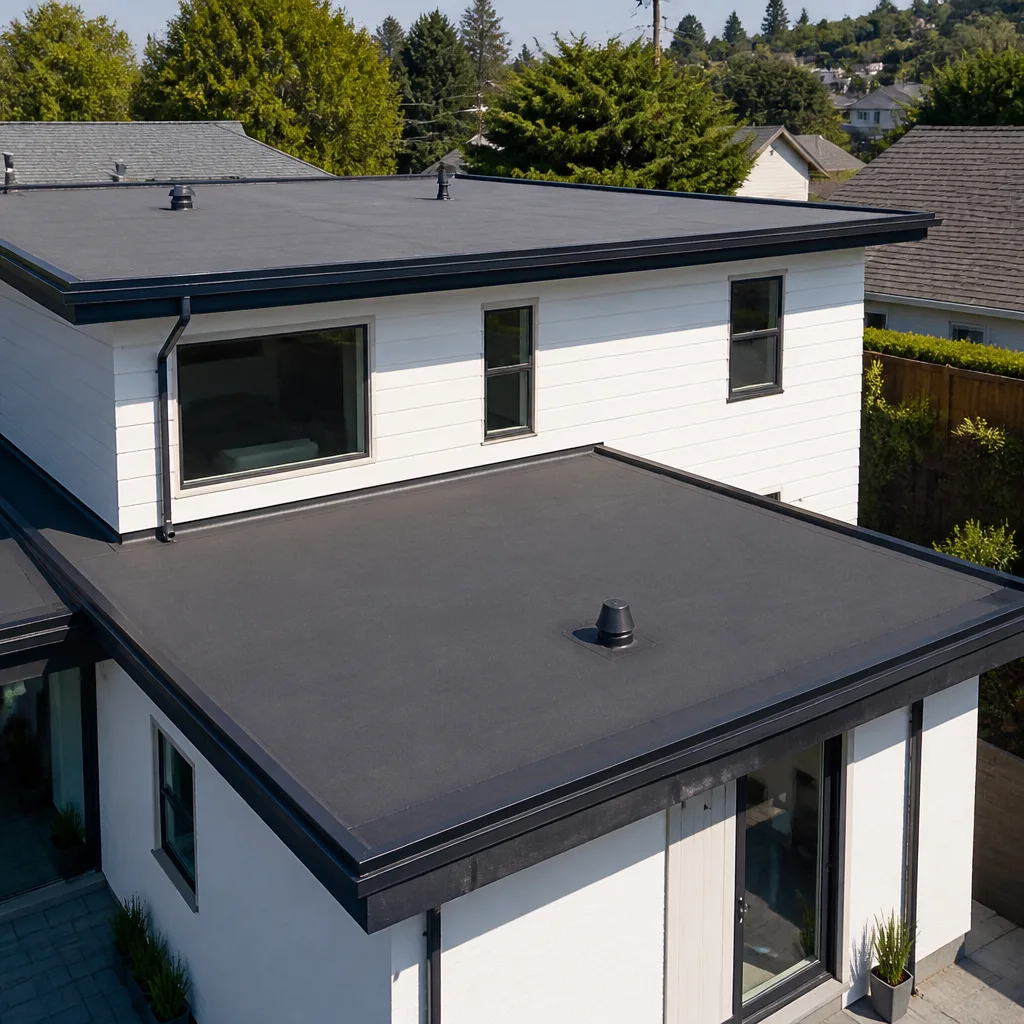 Flat & low-slope
Free roof inspection with deck photos before we talk money - GAF and Owens Corning certified installation
The Complete Roof Replacement & Installation Guide for Boulder City Homeowners
Boulder City has its own cool roof rules under Title 24, and they don’t line up with Clark County’s. That one fact has cost more than a few homeowners a failed inspection after a hailstorm, because out-of-state crews that roll in after a storm routinely install a product they carry in bulk, not the product this city actually approves. A roof replacement in Boulder City comes down to four decisions most people don’t know exist: underlayment type, ventilation ratio, cool roof compliance, and decking upgrade. Get any one of them wrong and your new roof quietly underperforms the old one. We’ll walk through all four here, plus how to compare quotes honestly and what a finished job should look like before you sign off.
Quick Answer
A full roof replacement in Boulder City involves choosing a cool roof product that meets the city’s specific reflectance and emittance requirements, sizing ventilation to the Mojave heat, and inspecting the decking before any new material goes down. Most Boulder City homes need a full tear-off rather than a layover, and the permit has to be closed out with an inspection. The four decisions that determine whether your replacement actually performs are underlayment, ventilation ratio, cool roof compliance, and decking condition.
Styles & brands we work with
- Architectural shingles
- Metal roofing
- Tile roofing
- GAF
- Owens Corning
- Flat & low-slope
Table of Contents
- What Does Boulder City’s Cool Roof Requirement Mean for Your Replacement?
- Why Ventilation Ratio Matters More Here Than Anywhere Else
- The Deck Inspection: What Should Be Photographed Before a Single Shingle Goes Down
- How to Compare Replacement Quotes Honestly
- The Five Line Items That Reveal a Real Bid From a Cheap One
- Underlayment: What’s Under the Shingle Matters More Than the Shingle
- Post-Installation Checklist: What to Check Before You Sign Off
- Common Mistakes to Avoid
What Does Boulder City’s Cool Roof Requirement Mean for Your Replacement?
Boulder City enforces its own cool roof standards for residential roofing, and they are stricter in specific ways than what’s common across the rest of Clark County. A cool roof product is rated on two numbers: solar reflectance (how much sunlight it bounces back) and thermal emittance (how efficiently it releases absorbed heat). Boulder City’s requirements set minimums for both, and the product has to be pre-approved or rated to meet them. A shingle that’s fine in Henderson can fail the Boulder City inspection if it doesn’t carry the right rating.
Which products meet it? Several lines from the major manufacturers do, and which ones depends on color and product family:
- CertainTeed Landmark and Presidential lines include cool-rated color options that carry the reflectance values Boulder City looks for.
- Owens Corning Duration and Oakridge shingles offer cool-color variants rated for high-reflectance markets.
- IKO and Atlas both publish reflectance and emittance data for their cool-color products.
- Tile and metal roofing products also qualify, and some carry higher ratings than asphalt.
The key point: don’t take a contractor’s word that the product is “cool roof compliant.” Ask for the manufacturer’s reflectance and emittance documentation in writing before the material is ordered. If a crew can’t produce it, that’s a warning. In a city where summer attic temperatures affect how long your shingles last, the cool roof standard isn’t bureaucracy – it’s a material that keeps your house cooler and lasts longer under Mojave sun. For a closer look at the install itself, see our page on Roof Replacement & Installation in Boulder City.
Why Ventilation Ratio Matters More Here Than Anywhere Else
In most of the country, attic ventilation is a nice-to-have. In Boulder City it changes how many years you get out of a roof. The standard calculation is a 1:150 ratio for most roofs – one square foot of net-free vent area for every 150 square feet of attic floor. If you have a vapor barrier or certain intake conditions, that can relax to 1:300. The ratio itself is simple; getting it right on a desert roof is where crews cut corners.
Here’s the number that matters. An under-ventilated attic in a Boulder City summer can push attic temperatures well above 150°F. That heat cooks the underside of the shingle all summer long, and heat is the single biggest cause of premature shingle failure. A well-ventilated attic can run 40 to 50 degrees cooler. Over the life of a roof, that difference can translate into several extra years of service – not months. On a 25-year shingle, it can mean the difference between 18 years and 25.
Here’s what a correct ventilation plan includes:
- Balanced intake and exhaust. Ridge vents and soffit vents need to be sized together, not guessed at.
- No blocked soffits. Insulation blown over the intake vents is one of the most common ventilation failures we find.
- Ridge vent sizing calculated, not estimated. Ask to see the math on the vent square footage.
- Baffles at the eaves. These keep insulation from choking off airflow.
Ask any contractor bidding the job what vent ratio they’re planning and how they calculated it. If the answer is “standard” or “we always put in a ridge vent,” press harder.
The Deck Inspection: What Should Be Photographed Before a Single Shingle Goes Down
The deck is the wood sheathing under your roof. It’s where a replacement either starts right or starts over a problem that will show up years later. When a crew tears off the old roofing, they get the one chance in 20 years to see what’s actually holding up the shingles. What they see then – and document – determines what needs to be replaced.
Here’s what should be photographed before any new material goes down:
- Soft spots and rot. Any section of decking that flexes or shows rot gets marked and photographed.
- Water staining in the attic. Stains tell you where the old roof leaked and how far the damage spread.
- Nail pops and fastener condition. Rusted or backed-out fasteners on the old deck signal moisture intrusion.
- Deck board gaps and thickness. Spacing and thickness matter for how the new shingles lay.
- Any deck boards that need replacing. A legitimate contractor documents these and gives you a written per-board price.
When Bill hands over the deck photos before any money talk, that’s not showmanship – it’s the only honest way to price deck repairs. A quote that assumes “some deck repairs” without seeing the deck is a number that will move. Ask any contractor to photograph the deck before signing anything, and ask what the per-sheet replacement price is in the contract.
How to Compare Replacement Quotes Honestly
Two bids can look identical on the bottom line and be hundreds of dollars apart in what they actually deliver. The honest way to compare quotes is line by line. Here’s a numbered way to do it:
- Ask for a tear-off line and a layover line separately. A bid that doesn’t specify tear-off is a bid that might skip it.
- Confirm the underlayment type in writing. A synthetic underlayment and a 15-pound felt are not the same roof.
- Ask how many squares they counted. A roof is measured in squares – ask any bidder how many they counted and mark it next to your own measurement.
- Check the ventilation scope. If the venting isn’t listed, it isn’t included.
- Confirm permit responsibility. Who pulls it, who pays for it, and who’s responsible for the inspection close-out.
A low bid is often a bid with thin underlayment, no ventilation upgrade, and a deck allowance that will balloon once the tear-off starts. An honest bid is specific. Free second opinions on any written estimate are worth taking – a second set of eyes on the line items is the best way to catch what a cheap quote leaves out.
The Five Line Items That Reveal a Real Bid From a Cheap One
If you only look at five things on a replacement quote, look at these. Each one tells you whether the low price is a bargain or a future problem.
- Underlayment spec. Synthetic underlayment, ice-and-water shield at penetrations, and the product name – all listed.
- Ventilation scope. Ridge vent, soffit vent, and baffle quantities with the ratio calculation shown.
- Deck repair pricing. A per-sheet price for decking, stated upfront, not discovered later.
- Cool roof product and documentation. The exact product line and its reflectance/emittance compliance.
- Permit and inspection line. Pulled by the contractor and included in the price.
If any of the five is missing, ask why before you compare the totals. The line items are the real contract. A written, itemized quote that names the shingle brand, the underlayment, the vent count, and the permit in the price is the only bid you can honestly compare to another. If you’re also weighing a different roof material, our breakdown of Metal Roofing in Boulder City covers how that choice changes the line items.
Underlayment: What’s Under the Shingle Matters More Than the Shingle
You’ll never see the underlayment again once the shingles go down, and that’s exactly why it’s where cheap bids cut first. The underlayment is the water barrier between your deck and your shingles. On a Mojave roof, it faces extreme heat, UV exposure at every gap, and the thermal cycling of 100-plus-degree summer days. A thin felt underlayment can dry out, crack, and lose its seal years before the shingles fail.
What to insist on:
- Synthetic underlayment rated for high-heat climates, with the product name on the quote.
- Ice-and-water shield at every roof penetration – valleys, chimneys, skylights, and the eaves.
- Manufacturer-specified nailing pattern. The nailing pattern earns the wind rating, not the shingle wrapper.
The underlayment is invisible, so a fast crew can save money there and you’ll never know until a leak shows up. Ask the product name. Ask for it in writing. If a bid says “standard underlayment,” that’s not an answer.
Post-Installation Checklist: What to Check Before You Sign Off
A finished roofing job isn’t finished until you’ve walked it. Before you sign off and make the final payment, run this checklist. Take photos of each item.
- Drip edge installed along all eaves and rakes, and visible from the ground.
- Ice-and-water shield at all penetrations and valleys – ask to see the install photos if they weren’t taken during the job.
- Ventilation installed as specified: ridge vent and soffit vents both present.
- Flashing at chimney, skylights, and wall transitions, all sealed and flashing cleanly.
- Decking – ask for the before/after photos of any deck replacement.
- Permit close-out. The final inspection passed and the permit signed off with the city.
- Gutter and yard cleanup. Nails pulled from the driveway with a magnet, debris hauled away.
- Written warranty in hand, and the workmanship promise in writing.
Don’t sign off on the job before the permit is closed out. A roof that passed inspection and a roof that merely looks done are two different roofs. If your current roof isn’t ready for replacement and only needs a targeted fix, see Roof Repair in Boulder City for what’s involved.
Common Mistakes to Avoid
- Accepting a layover when you need a tear-off. A layover means you never see the deck, and in Boulder City’s climate it can trap heat and moisture – ask what the tear-off reveals.
- Letting a crew install a cool roof product that doesn’t meet Boulder City’s rating. A roof that fails inspection is your problem, not the out-of-state crew’s.
- Paying for a roof without checking the vent ratio. Under-ventilated attics run hotter and shingles fail years early.
- Signing a quote that doesn’t name the underlayment. “Standard underlayment” is where a cheap bid hides its savings.
- Assuming the permit is included. Confirm in writing who pulls it and who pays for it.
- Paying the final bill before the permit is closed and the inspection passed. The paperwork is part of the job.
- Taking a quote from a crew with no local address. If they can’t tell you where their shop is, ask how you’d reach them next spring.
When to Call a Professional
Reach for a professional roofer the moment you find shingles in the yard after a wind event, notice ceiling stains after winter rain, or see daylight through the attic deck. If your roof is over 20 years old and you’re planning another summer, it’s time for an inspection even without a visible leak. And if a contractor asks you to sign off on deck repairs without photos, call a second roofer before you sign. Shepherd & Sons Roofing Boulder City offers free estimates in Boulder City – call (844) 761-8186 – and a free second opinion on any written estimate. The crew on the roof knows what to look for because they’ve done this work for up to 30 years, and the written 90-Day Done Right Promise means one call brings us back if something isn’t right.
See the difference
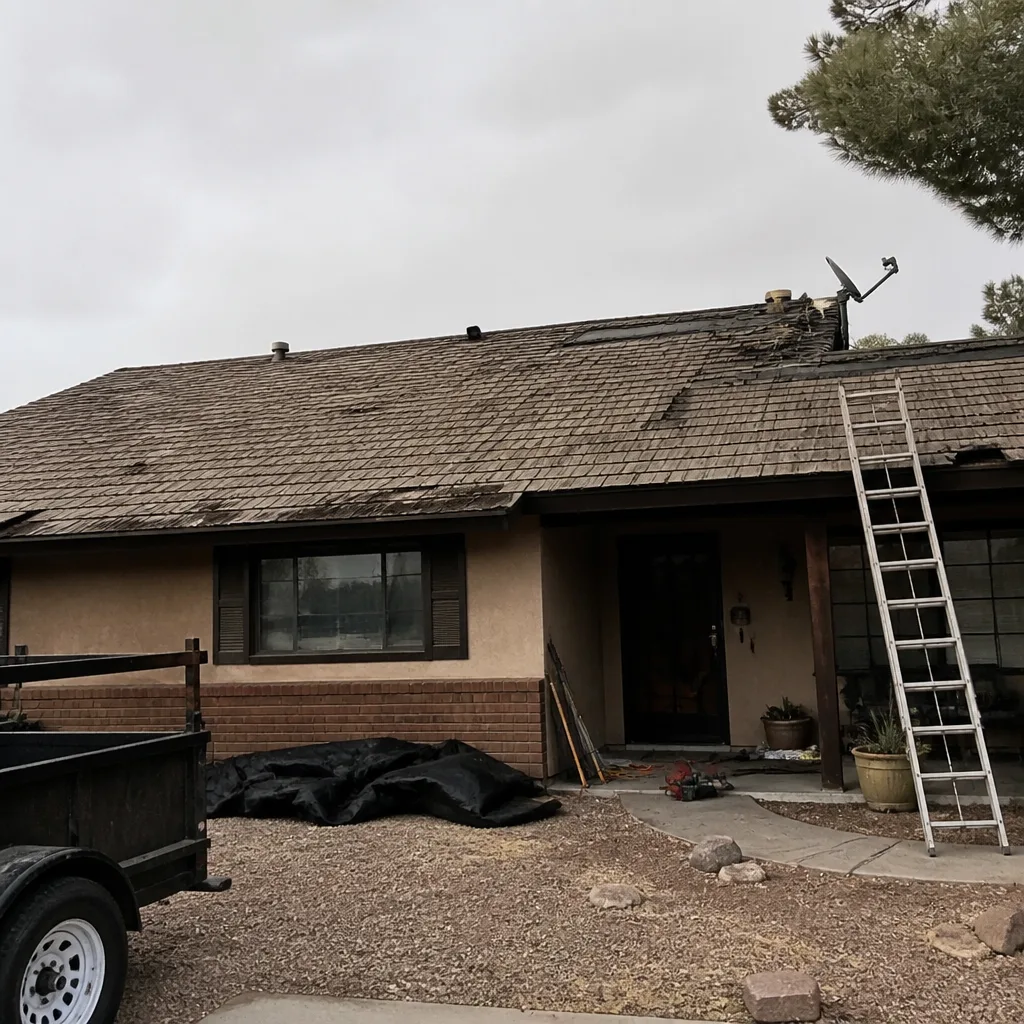 Before
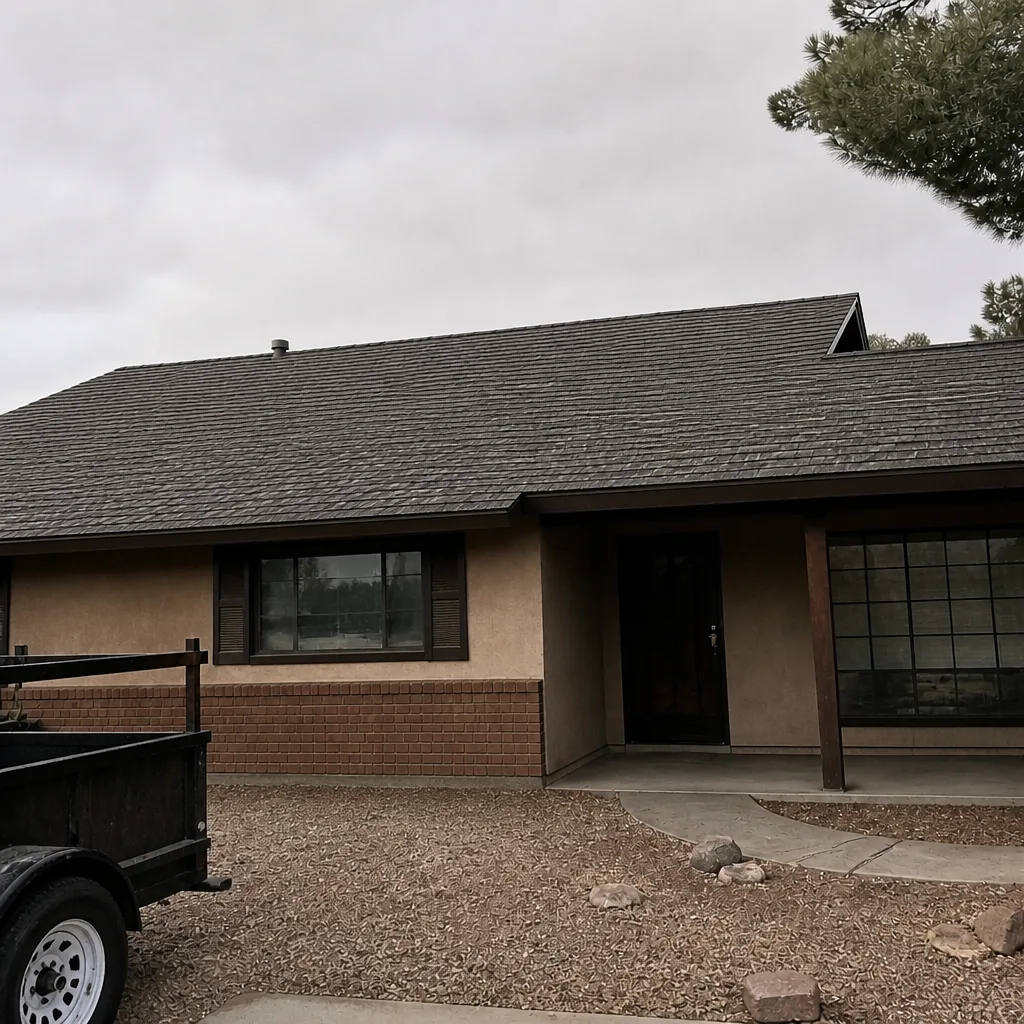 After
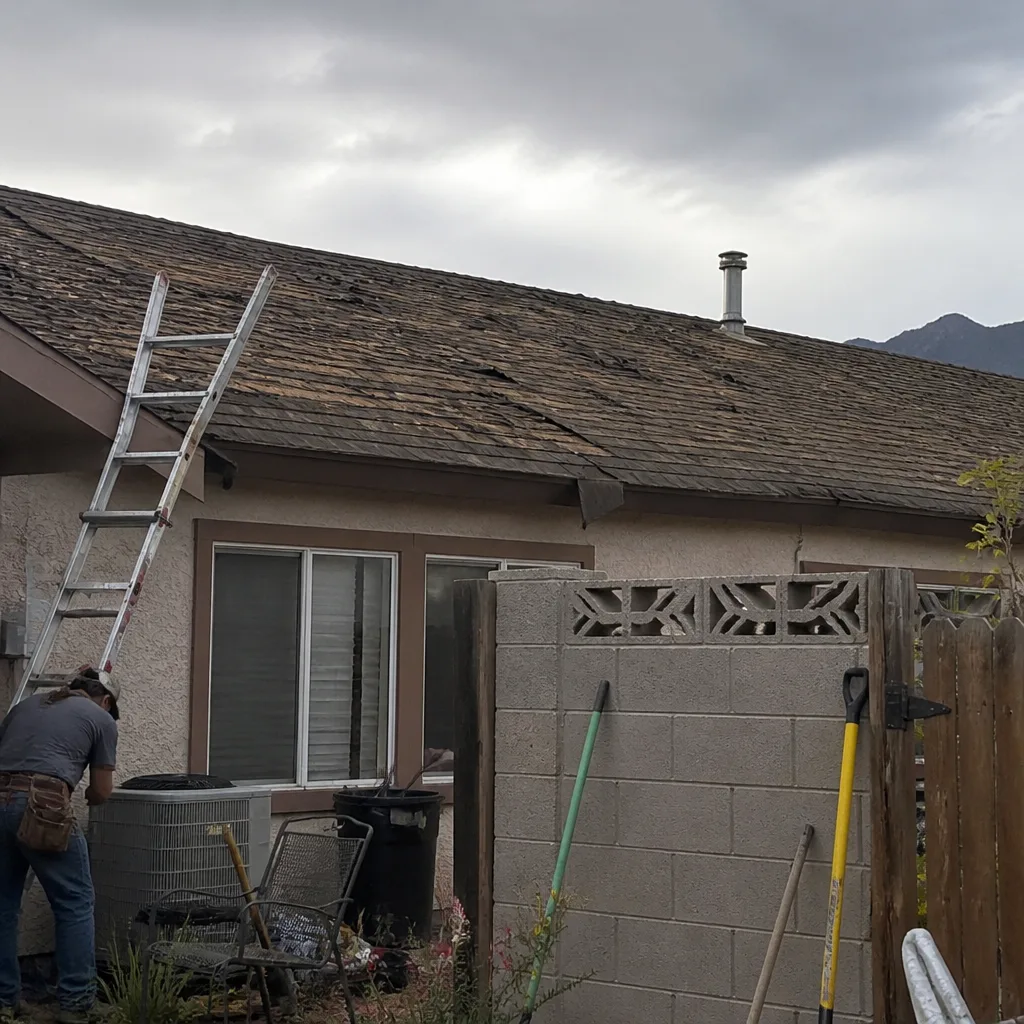 Before
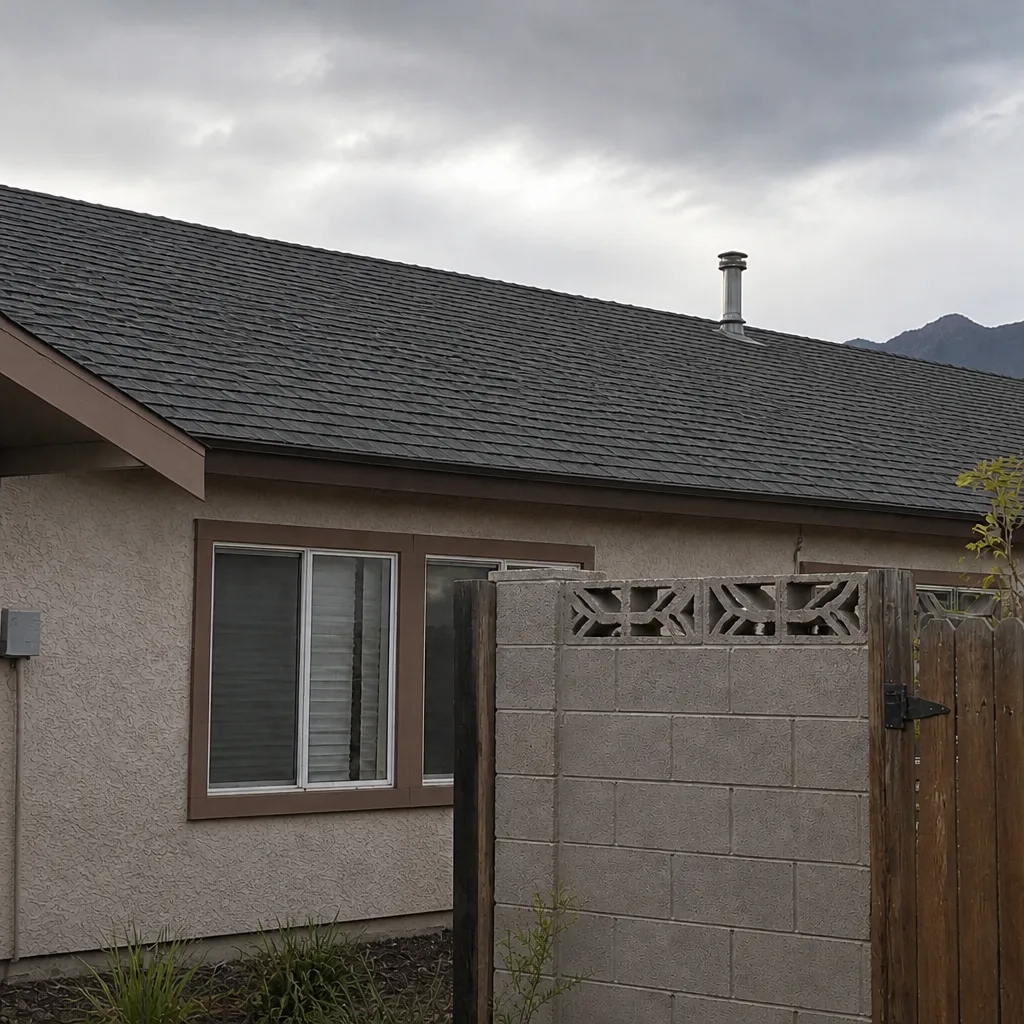 After
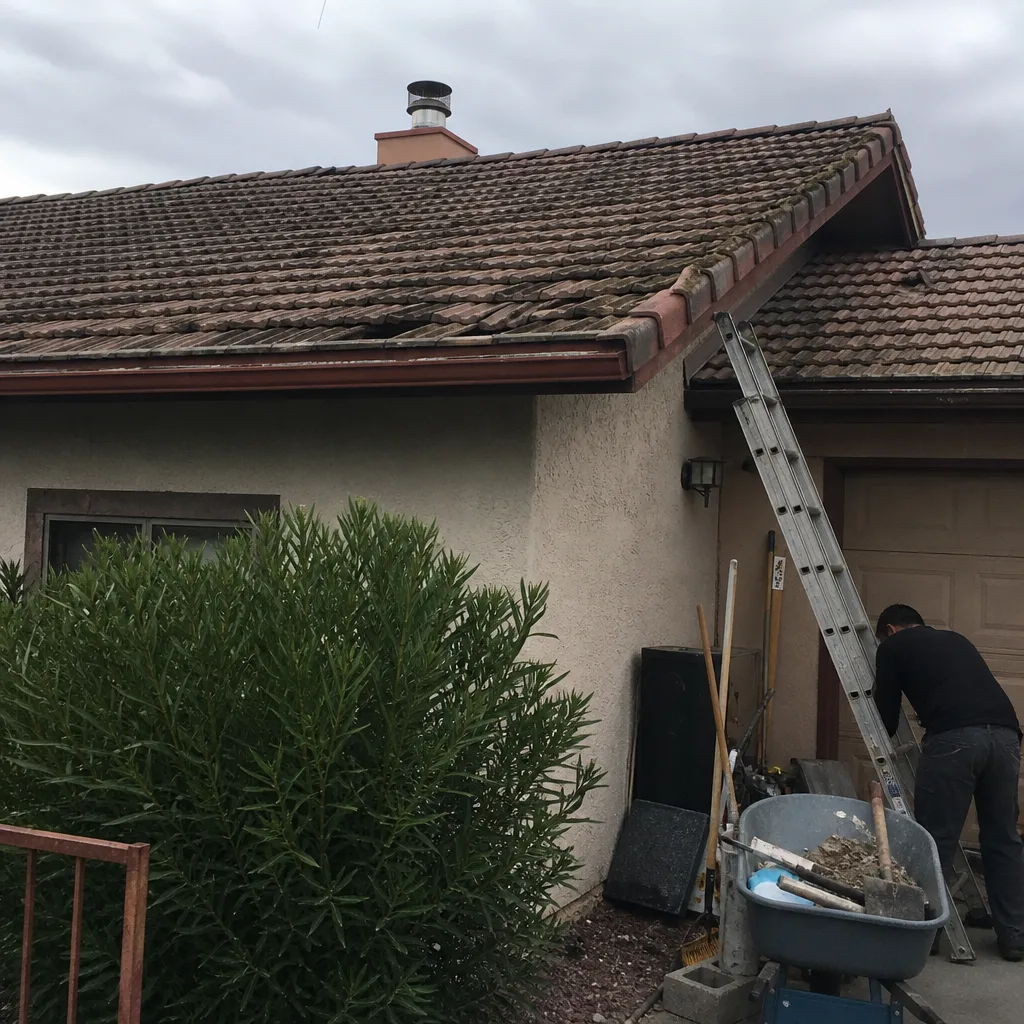 Before
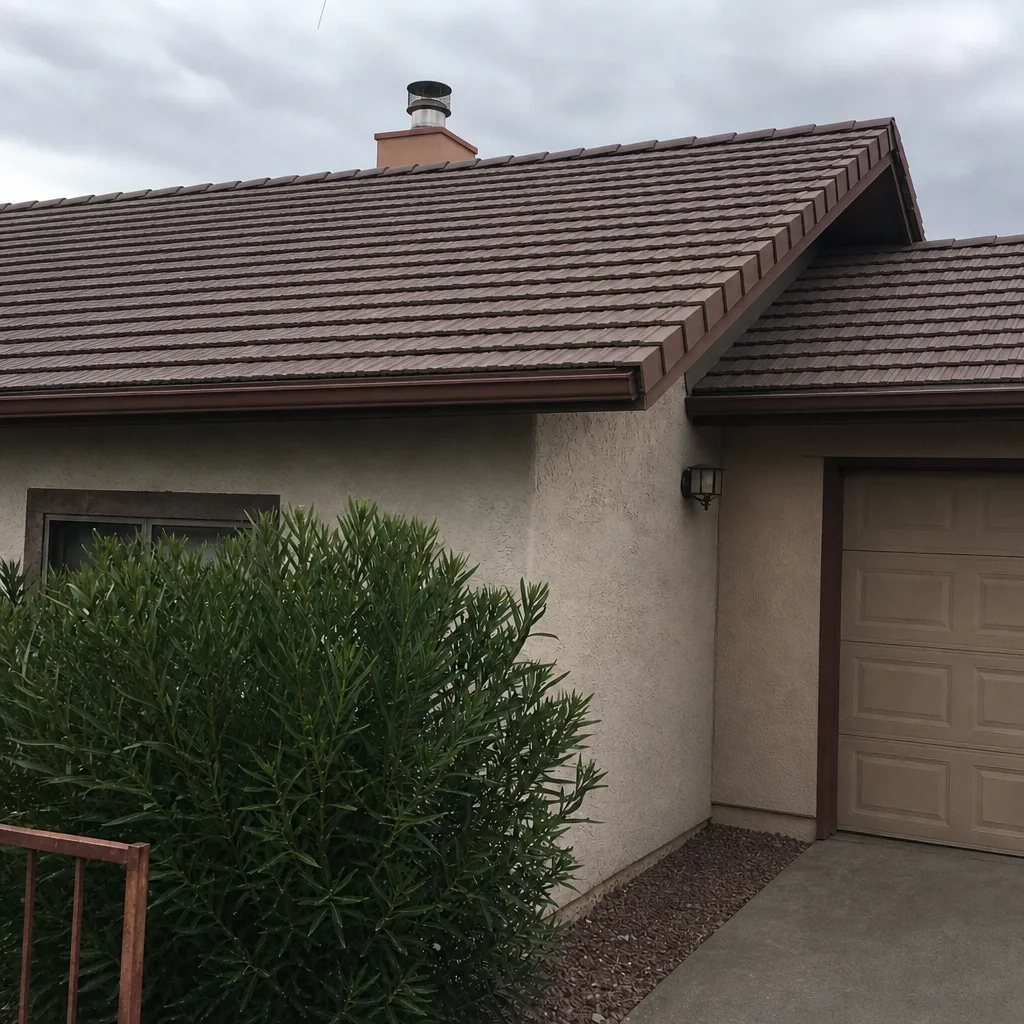 After
Frequently Asked Questions
A full tear-off replacement on a typical Boulder City home runs in the range of a five-figure investment, and the exact number depends on square count, deck condition, underlayment spec, and whether cool roof compliance adds material cost. The honest way to know is a written, itemized quote. Call (844) 761-8186 for a free estimate in Boulder City.
Yes. Boulder City enforces its own cool roof standards with minimum reflectance and emittance values, and the product you install has to meet them. Ask for the manufacturer’s documentation in writing before the material is ordered, and confirm the product is on the approved list for the city.
It shouldn’t, if deck repair is priced per-sheet in the contract upfront. Deck repairs are the main reason quotes move, and the fix is to have a written per-board or per-sheet price before the tear-off. A quote that hides deck pricing behind a vague allowance is a quote likely to grow. Call (844) 761-8186 for a line-item estimate with no surprises.
A legitimate replacement includes the permit pulled in the contractor’s name, with a final inspection and close-out before you make the last payment. If a bid shows the permit as an extra, or “customer responsibility,” ask why. We handle the permit and the inspection close-out on every replacement job.
Most single-family replacements take a few days of actual work, plus the time to order the compliant material and schedule the inspection. The timeline depends on square count, deck repairs, and whether the material needs ordering. Ask each bidder for a written start date and a written completion estimate before signing.
Ask the contractor to show the calculation: the 1:150 or 1:300 ratio, the intake and exhaust square footage, and the baffle plan. If they can’t show it, ask for it. A balanced ridge-and-soffit vent plan is the difference between a roof that lasts the full rated life and one that doesn’t.
The Bottom Line
Replacing a roof in Boulder City is four decisions dressed up as one: the cool roof product that meets the city’s standards, the ventilation ratio that keeps the attic cool, the deck inspection that’s documented with photos before the new material, and the underlayment that lives under the shingles. Compare quotes by their five line items, not their bottom line. Ask for the permit, the inspection close-out, and the written warranty before you make the final payment. And ask the man on the roof where his shop is – the name on the truck should be the name on the license. When you’re ready for a written estimate in Boulder City, start at the Shepherd & Sons Roofing Boulder City home page.
Get Your Free Estimate
Shepherd & Sons Roofing Boulder City is owner-operated, licensed, and answers its own phone with a live person, 24/7. Every roofing job carries the written 90-Day Done Right Promise. Call (844) 761-8186 to schedule your free estimate in Boulder City, or to get a free second opinion on any written estimate you’ve already received. We’ll show you the deck photos before we talk money.
Written by the team at Shepherd & Sons Roofing Boulder City.